Japan Industrial Metal Market Size & Growth Rate
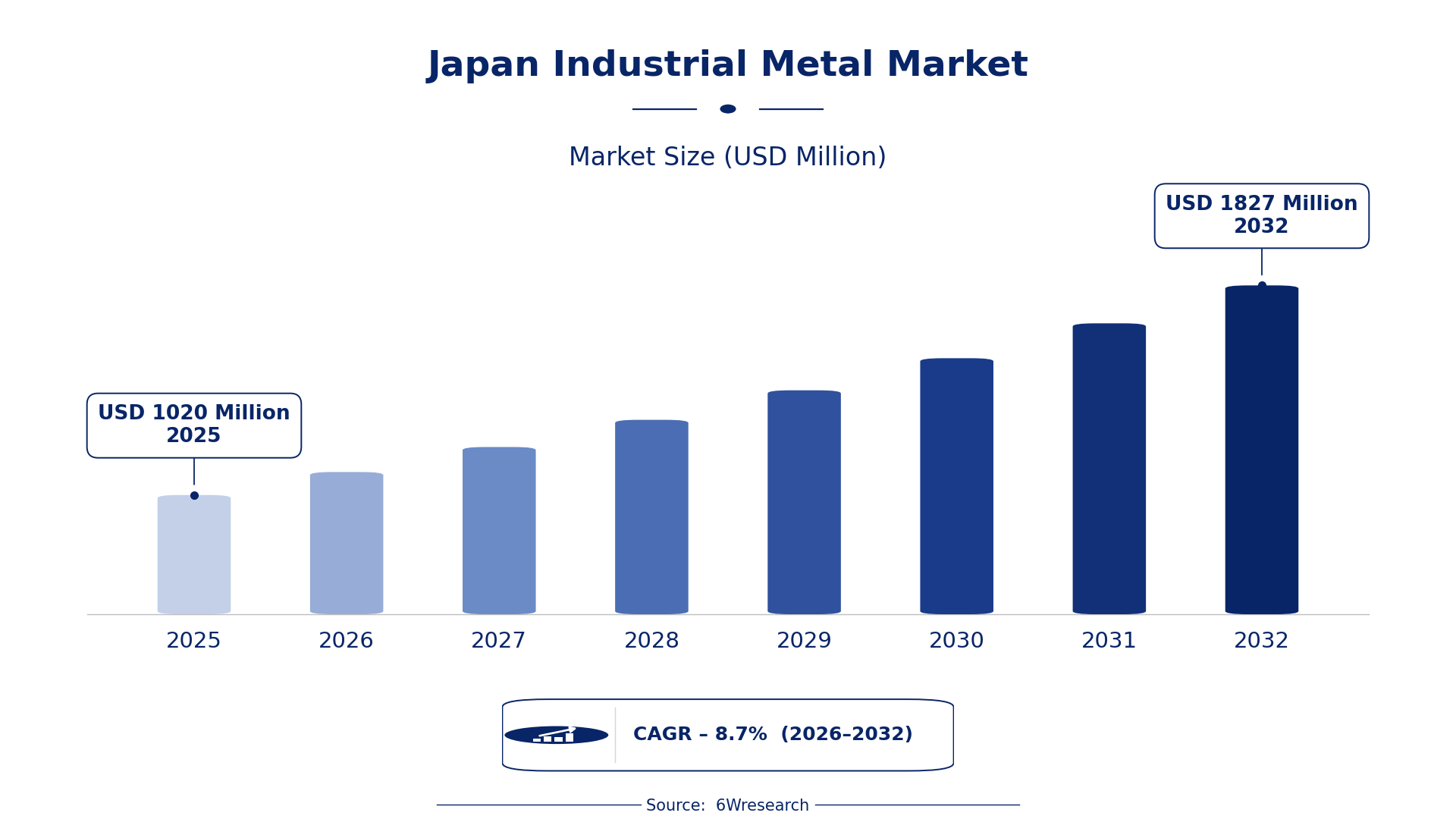
According to 6Wresearch internal database and industry insights, the Japan Industrial Metal Market was valued at USD 1,020 Million in 2025 and is projected to reach USD 1,827 Million by 2032, growing at a CAGR of approximately 8.7% during 2026–2032.
Japan Industrial Metal Market Highlights
| Report Metric | Details |
| Report Name | Japan Industrial Metal Market (2026-2032) |
| Market Size 2025 | USD 1,020 Million |
| Market Size 2032 | USD 1,827 Million |
| Absolute Growth 2025–2032 | USD 807 Million |
| CAGR 2026–2032 | 8.7% |
| Peak Annual Growth | 9.3% in 2032 |
| Forecast Period | 2026–2032 |
| Historical Data | 2022–2025 |
| Base Year | 2025 |
| Leading Product Type, 2025 | Sheet Metal (43% share) |
| Leading Metal Type, 2025 | Steel (53% share) |
| Leading Application Area, 2025 | Construction Components (42% share) |
| Leading Distribution Channel, 2025 | Direct Sales (39% share) |
| Leading End User Industry, 2025 | Heavy Industry (40% share) |
| Fastest-Growing Product Type | Forged Products (12.4% CAGR) |
| Fastest-Growing Metal Type | Aluminum (12.2% CAGR) |
| Fastest-Growing Application Area | Electrical Equipment (10.9% CAGR) |
| Fastest-Growing Distribution Channel | Distributors (11.4% CAGR) |
| Fastest-Growing End User Industry | Electronics (11.8% CAGR) |
| Growing Sector | Electrical Equipment |
| Key End Users | Construction Components, Machinery Manufacturing, Electrical Equipment, Aerospace Components |
Japan Industrial Metal Market Year-wise Growth Rate and Key Drivers (2022–2032)
This graph illustrates the annual growth rates of the market from 2022 to 2032, highlighting a steady upward trajectory and projected market expansion over the forecast period.
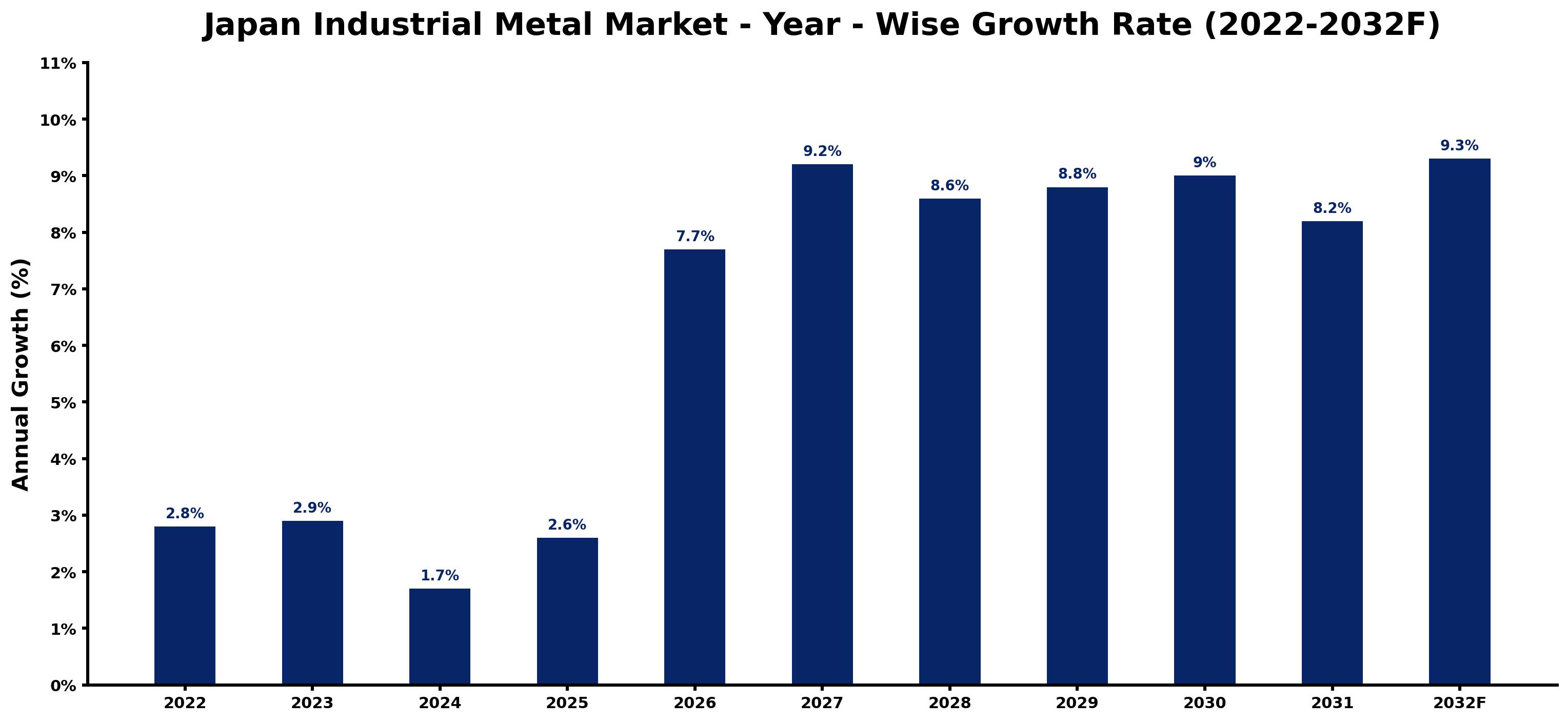
The following figures match every annual growth estimate with the main market development of that year, giving the reasoning behind each rise or slowdown.
| Year | Estimated Annual Growth (%) | Market Rationale |
| 2022 | 2.8 | The market experienced steady growth, driven by strong demand from heavy industries. |
| 2023 | 2.9 | Growth accelerated as the automotive sector increased its consumption of metals. |
| 2024 | 1.7 | The market saw slower growth due to fluctuations in global demand for industrial metals. |
| 2025 | 2.6 | Demand rebounded as construction projects resumed following delays. |
| 2026 | 7.7 | Growth is expected to surge as public and private investments in decarbonisation initiatives begin to materialise. |
| 2027 | 9.2 | The market will continue to expand, supported by rising aerospace manufacturing activities. |
| 2028 | 8.6 | Growth is projected to moderate as supply chain challenges affect production levels. |
| 2029 | 8.8 | Demand will increase again as the electronics sector ramps up production. |
| 2030 | 9.0 | The market is expected to experience strong growth driven by infrastructure development projects. |
| 2031 | 8.2 | Growth will slow as the market stabilises after rapid expansion in previous years. |
| 2032 | 9.3 | The market is projected to peak with investments in green technology and infrastructure. |
Note: Market size estimations and growth projections presented in this report are based on 6Wresearch's proprietary forecasting methodology, utilizing the latest available industry data, government publications, and primary research inputs.
Japan Industrial Metal Market Synopsis
Industrial metals in Japan encompass steel, aluminum, copper, and nickel, produced through casting, forging, and rolling. Key buyer groups include heavy industries and the automotive sector, which fuel demand. The Japan Industrial Metal Market is growing due to substantial investments in decarbonisation, with around JPY 150 trillion earmarked over the next decade, alongside a burgeoning aerospace industry expected to expand by 5% annually.
Market Dynamics Impact Analysis (2026–2032)
| Factor | Type | Impact | Primary Segment Affected |
| Rising investments in decarbonisation initiatives are increasing demand for industrial metals. | Driver | High | Steel |
| The automotive sector's recovery is boosting consumption of metals for vehicle production. | Driver | High | Aluminum |
| Growing infrastructure projects present opportunities for suppliers of construction materials. | Opportunity | High | Construction Components |
| The expansion of the aerospace sector creates demand for high-performance materials. | Opportunity | Medium | Aerospace Components |
| Supply chain disruptions have caused delays in material availability for manufacturers. | Restraint | High | Heavy Industry |
| Fluctuations in global metal prices can impact local market stability. | Restraint | Medium | Copper |
| Competition from lower-cost imports can pressure local producers' pricing strategies. | Challenge | High | Steel |
| Technological advancements require continuous investment, which can strain smaller suppliers. | Challenge | Medium | Aluminum |
Evaluation of Drivers in Japan Industrial Metal Market (2026–2032)
Demand rests on the following drivers, each shown with the segment it touches most.
| Drivers | Primary Segment Affected | Why It Matters (Evidence) |
| Increased automotive production is driving the demand for aluminum. | Aluminum | The automotive sector accounted for 30% of total metal consumption in 2022. |
| Rising infrastructure investments are boosting steel consumption. | Steel | Japan targets a 46% cut in greenhouse-gas emissions by 2030, prompting construction projects. |
| Growing aerospace manufacturing is increasing demand for high-strength forged products. | Forged Products | The aerospace industry is projected to grow by 5% annually, driving material needs. |
| The expansion of construction projects is increasing demand for construction components. | Construction Components | Aluminum alloys are extensively used in the construction sector, supporting growth. |
| Technological advancements in manufacturing are increasing the need for specialized metals. | Electrical Equipment | ISO 9001 standards adopted by manufacturers ensure quality and reliability. |
Volumes grow on the back of increased automotive production, which accounted for 30% of total metal consumption in 2022, leading to higher aluminum demand. Infrastructure investments, targeting a 46% reduction in greenhouse-gas emissions by 2030, boost steel consumption significantly. The aerospace sector, projected to grow by 5% annually, drives demand for high-strength forged products. The expansion of construction projects increases the need for construction components, particularly aluminum alloys used in building applications. Advancements in manufacturing further raise the need for specialized metals in electrical equipment, ensuring quality and reliability through established standards.
Evaluation of Restraints in Japan Industrial Metal Market
The table below lists the restraints and the evidence behind each.
| Market Restraint | Primary Segment Affected | Why It Matters (Evidence) |
| Supply chain disruptions have caused delays in material availability for manufacturers. | Heavy Industry | Over 1,000 registered metalworking companies face challenges sourcing raw materials due to global supply issues. |
| Fluctuations in global metal prices can impact local market stability. | Copper | Price volatility affects purchasing decisions among manufacturers and can lead to reduced orders. |
| Competition from lower-cost imports pressures local producers' pricing strategies. | Steel | Imported steel products often undercut local prices, affecting market share for domestic producers. |
| Technological advancements require continuous investment, which can strain smaller suppliers. | Aluminum | Smaller manufacturers may struggle to keep up with the latest technologies, impacting their competitiveness. |
| Regulatory compliance costs can burden manufacturers, affecting their profit margins. | Electrical Equipment | Compliance with PRTR Law requires significant reporting efforts, increasing operational costs. |
Japan Industrial Metal Market Challenges
Producers in the automotive sector encounter operational costs up to 15% higher due to a skills shortage in advanced manufacturing techniques, which delays production timelines and inflates expenses. Competition from cheaper imports has led to a 10% decline in profit margins for local producers, compelling them to increase prices for construction buyers. Supply chain disruptions, worsened by global logistics challenges, can delay metal deliveries by weeks, resulting in excess inventory costs for producers. In the construction sector, fluctuating prices can inflate project budgets by 20%, complicating financial planning for buyers.
Trends in the Japan Industrial Metal Market
The following changes are redrawing the Japan Industrial Metal Market.
- Shift from Traditional to Sustainable Materials: Construction companies are increasingly adopting sustainable materials, driven by environmental regulations. For instance, the Japan Aluminum Association promotes sustainable practices, with aluminum demand reaching 2 million tons in 2021.
- Transition to Advanced Manufacturing Techniques: The aerospace sector is moving towards advanced manufacturing techniques, improving efficiency and quality. This shift is evidenced by the projected 5% annual growth in the aerospace industry, necessitating high-performance materials.
- Emergence of Digital Sales Channels: Distributors are increasingly utilizing digital platforms to reach clients, reflecting a broader trend in industrial sales. This shift has led to a projected 11.4% growth in the distributor segment by 2032.
- Prioritisation of Green Technology Investments: Heavy industries are prioritising investments in green technologies to meet decarbonisation targets. Japan's GX Basic Policy aims for JPY 150 trillion in investments over the next decade, driving demand for new materials.
Investment Opportunities in the Japan Industrial Metal Market
Several openings in the Japan Industrial Metal Market merit attention from investors.
- Local Partnerships for Sustainable Practices: This is an ideal moment for local partnerships centred on sustainable practices in aluminum production. The Japan Aluminum Association champions these initiatives, promoting collaboration with local suppliers.
- Investment in Aerospace Components: With the aerospace industry projected to grow by 5% annually, suppliers should invest in high-performance materials. Collaborating with aerospace manufacturers in the Tokyo region can facilitate market entry.
- Expansion of Electrical Equipment Production: The rising demand for electrical equipment offers an opportunity for suppliers of specialised metals. Engaging with manufacturers in the electronics sector can strengthen market presence.
- Development of Innovative Construction Materials: Investing in innovative construction materials is timely, given the emphasis on sustainability. Collaborating with construction firms in the Tokyo region can provide valuable insights and market access.
Government Initiatives in the Japan Industrial Metal Market
The Economic Security Promotion Act, enacted in 2022, supports supply-chain resilience for critical products, including industrial metals. This law encourages manufacturers to strengthen their production capabilities and ensures a stable supply of essential materials. Additionally, the Green Growth Strategy identifies growth sectors and promotes investment in sustainable practices, further supporting the industrial metal market.
The Ministry of Economy, Trade and Industry's support for metal innovation programs benefits buyers in the construction sector. These initiatives provide funding for research and development, enabling companies to adopt advanced technologies. The Japan Iron and Steel Federation oversees industry standards, ensuring that products meet quality requirements, which is important for buyers seeking reliable materials.
Future Insight of the Japan Industrial Metal Market
New advanced metal production facilities will emerge by 2032, spurred by the JPY 150 trillion decarbonisation investment initiative. This funding will enable the adoption of efficient manufacturing processes, improving production capabilities for suppliers. The aerospace sector's projected 5% annual growth will drive demand for high-quality metals, encouraging suppliers to enhance their offerings. As Japan aims for net zero emissions by 2050, buyers will benefit from increased availability of sustainable metal options, aligning with stricter environmental standards.
Market Segmentation Analysis
Japan Industrial Metal Market report covers a detailed analysis of the following market segments:
By Product Type – Sheet Metal Leads, Forged Products Expected to Grow Fastest
According to Saurav Kr Singh, Senior Research Analyst at 6Wresearch, the largest product type category in 2025 was Sheet Metal, at 43% of revenue. Sheet metal holds the largest share because it is extensively used in construction and manufacturing, essential for building infrastructure. The reliance on sheet metal in the Tokyo region, a major hub for metal manufacturing, exemplifies its critical role in various applications. Forged Products are projected to grow fastest, at a CAGR of 12.4% during 2026–2032. Forged products are experiencing rapid growth as they are critical for high-strength applications in aerospace, projected to grow by 5% annually. This trend indicates a continuous shift towards more durable materials in advanced manufacturing processes, further solidifying the lead of sheet metal. Suppliers should focus on enhancing their offerings in forged products to meet the increasing demand from the aerospace industry.
By Metal Type – Steel Leads, Aluminum Expected to Grow Fastest
With 53% of metal type revenue in 2025, Steel was the largest category. Steel is the dominant metal type, primarily utilised in construction and heavy industry, with Japan producing approximately 100 million tons in 2022. This extensive production underscores its importance in various sectors, particularly in construction where steel is a fundamental material. The quickest growth will come from Aluminum, forecast to expand at a CAGR of 12.2% between 2026 and 2032. Aluminum is witnessing the fastest growth due to its application in lightweight structures and automotive components, aligning with the automotive sector's 30% share of total metal consumption. This trend highlights a shift towards materials that improve fuel efficiency and reduce emissions, while steel continues to lead. Buyers in the automotive sector should consider increasing their aluminium procurement to align with industry trends towards lightweight materials.
By Application Area – Construction Components Lead, Electrical Equipment Expected to Grow Fastest
Construction Components accounted for 42% of the market by application area in 2025. Construction components lead the application area as they are vital for building and infrastructure projects across Japan. The ongoing investments in decarbonisation and infrastructure development further solidify this segment's position in the market. Over 2026–2032, Electrical Equipment is expected to post the fastest growth, at a CAGR of 10.9%. Electrical equipment is the fastest-growing area, driven by the need for high-quality materials in electrical wiring and components, essential for modern technology. This growth reflects the increasing demand for efficient electrical systems across various industries, while construction components maintain their lead. Suppliers should enhance their product offerings in electrical equipment to capitalise on the growing demand for advanced electrical systems.
By Distribution Channel – Direct Sales Leads, Distributors Expected to Grow Fastest
In 2025, Direct Sales led the distribution channel split with a 39% share. Direct sales dominate the distribution channel, serving as the common method for industrial transactions in Japan's metal market. This approach allows manufacturers to maintain close relationships with their clients and ensure tailored solutions that meet specific needs. Distributors are set to record the highest CAGR in this split, 11.4% over 2026–2032. Distributors are the fastest-growing channel as they play a crucial role in reaching various industrial clients effectively. Their importance is underscored by the need for efficient supply chains in the industrial sector, while direct sales continue to be the preferred method. Suppliers should strengthen their partnerships with distributors to expand their market reach and improve service delivery.
By End User Industry – Heavy Industry Leads, Electronics Expected to Grow Fastest
Heavy Industry held 40% of the Japan Industrial Metal Market by end user industry in 2025. Heavy industry is the leading end user of industrial metals in Japan, consuming a substantial portion of the total production. This sector's reliance on metals for manufacturing processes highlights its critical role in the economy. Electronics is projected to grow fastest, at a CAGR of 11.8% during 2026–2032. Electronics is the fastest-growing end user, driven by the increasing demand for manufacturing electronic devices that require high-quality metals. This trend indicates a shift towards advanced technology and innovation in the electronics sector. Buyers in the electronics industry should focus on securing high-quality metal supplies to support their production needs.
Key Attractiveness of the Report
- 10 Years of Market Numbers
- Historical Data Starting from 2022 to 2025
- Base Year 2025
- Forecast Data until 2032
- Key Performance Indicators Impacting the Market
- Major Upcoming Developments and Projects
Key Highlights of the Report:
- Japan Industrial Metal Market Outlook
- Market Size of Japan Industrial Metal Market, 2025
- Forecast of Japan Industrial Metal Market, 2032
- Historical Data and Forecast of Japan Industrial Metal Revenues & Volume for the Period 2022-2032F
- Japan Industrial Metal Market Trend Evolution
- Japan Industrial Metal Market Drivers and Challenges
- Japan Industrial Metal Price Trends
- Japan Industrial Metal Porter's Five Forces
- Japan Industrial Metal Industry Life Cycle
- Historical Data and Forecast of Japan Industrial Metal Market Revenues & Volume By Product Type for the Period 2022-2032F
- Historical Data and Forecast of Japan Industrial Metal Market Revenues & Volume By Sheet Metal for the Period 2022-2032F
- Historical Data and Forecast of Japan Industrial Metal Market Revenues & Volume By Rods and Bars for the Period 2022-2032F
- Historical Data and Forecast of Japan Industrial Metal Market Revenues & Volume By Cast Metal Products for the Period 2022-2032F
- Historical Data and Forecast of Japan Industrial Metal Market Revenues & Volume By Forged Products for the Period 2022-2032F
- Historical Data and Forecast of Japan Industrial Metal Market Revenues & Volume By Metal Type for the Period 2022-2032F
- Historical Data and Forecast of Japan Industrial Metal Market Revenues & Volume By Steel for the Period 2022-2032F
- Historical Data and Forecast of Japan Industrial Metal Market Revenues & Volume By Aluminum for the Period 2022-2032F
- Historical Data and Forecast of Japan Industrial Metal Market Revenues & Volume By Copper for the Period 2022-2032F
- Historical Data and Forecast of Japan Industrial Metal Market Revenues & Volume By Nickel for the Period 2022-2032F
- Historical Data and Forecast of Japan Industrial Metal Market Revenues & Volume By Application Area for the Period 2022-2032F
- Historical Data and Forecast of Japan Industrial Metal Market Revenues & Volume By Construction Components for the Period 2022-2032F
- Historical Data and Forecast of Japan Industrial Metal Market Revenues & Volume By Machinery Manufacturing for the Period 2022-2032F
- Historical Data and Forecast of Japan Industrial Metal Market Revenues & Volume By Electrical Equipment for the Period 2022-2032F
- Historical Data and Forecast of Japan Industrial Metal Market Revenues & Volume By Aerospace Components for the Period 2022-2032F
- Historical Data and Forecast of Japan Industrial Metal Market Revenues & Volume By Distribution Channel for the Period 2022-2032F
- Historical Data and Forecast of Japan Industrial Metal Market Revenues & Volume By Direct Sales for the Period 2022-2032F
- Historical Data and Forecast of Japan Industrial Metal Market Revenues & Volume By Distributors for the Period 2022-2032F
- Historical Data and Forecast of Japan Industrial Metal Market Revenues & Volume By Online Platforms for the Period 2022-2032F
- Historical Data and Forecast of Japan Industrial Metal Market Revenues & Volume By Industrial Suppliers for the Period 2022-2032F
- Historical Data and Forecast of Japan Industrial Metal Market Revenues & Volume By End User Industry for the Period 2022-2032F
- Historical Data and Forecast of Japan Industrial Metal Market Revenues & Volume By Heavy Industry for the Period 2022-2032F
- Historical Data and Forecast of Japan Industrial Metal Market Revenues & Volume By Automotive for the Period 2022-2032F
- Historical Data and Forecast of Japan Industrial Metal Market Revenues & Volume By Electronics for the Period 2022-2032F
- Historical Data and Forecast of Japan Industrial Metal Market Revenues & Volume By Aerospace and Defense for the Period 2022-2032F
- Japan Industrial Metal Import Export Trade Statistics
- Market Opportunity Assessment By Product Type
- Market Opportunity Assessment By Metal Type
- Market Opportunity Assessment By Application Area
- Market Opportunity Assessment By Distribution Channel
- Market Opportunity Assessment By End User Industry
- Japan Industrial Metal Top Companies Market Share
- Japan Industrial Metal Competitive Benchmarking By Technical and Operational Parameters
- Japan Industrial Metal Company Profiles
- Japan Industrial Metal Key Strategic Recommendations
Market Covered
Segments analysed in this report are listed below.
By Product Type
- Sheet Metal
- Rods and Bars
- Cast Metal Products
- Forged Products
By Metal Type
- Steel
- Aluminum
- Copper
- Nickel
By Application Area
- Construction Components
- Machinery Manufacturing
- Electrical Equipment
- Aerospace Components
By Distribution Channel
- Direct Sales
- Distributors
- Online Platforms
- Industrial Suppliers
By End User Industry
- Heavy Industry
- Automotive
- Electronics
- Aerospace and Defense































