Japan Interior Furniture Market Size & Growth Rate
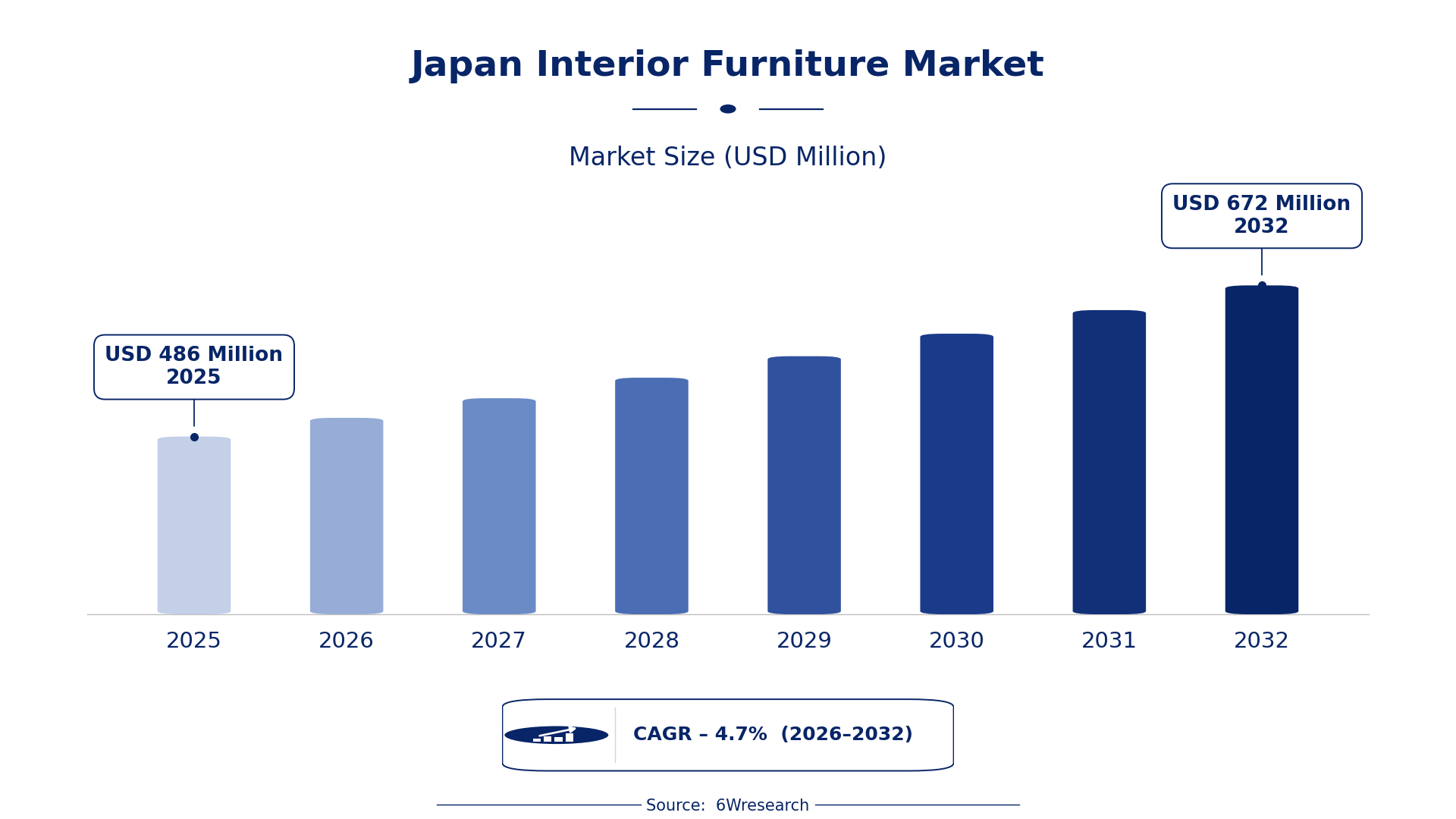
According to 6Wresearch internal database and industry insights, the Japan Interior Furniture Market was valued at USD 486 Million in 2025 and is projected to reach USD 672 Million by 2032, growing at a CAGR of approximately 4.7% during 2026–2032.
Japan Interior Furniture Market Highlights
| Report Metric | Details |
| Report Name | Japan Interior Furniture Market (2026-2032) |
| Market Size 2025 | USD 486 Million |
| Market Size 2032 | USD 672 Million |
| Absolute Growth 2025–2032 | USD 186 Million |
| CAGR 2026–2032 | 4.7% |
| Peak Annual Growth | 6.0% in 2032 |
| Forecast Period | 2026–2032 |
| Historical Data | 2022–2025 |
| Base Year | 2025 |
| Leading Furniture Type, 2025 | Modular Kitchen Units (42% share) |
| Leading Material Type, 2025 | MDF / Stainless Steel (45% share) |
| Leading Distribution Channel, 2025 | Home Improvement Chains (41% share) |
| Leading End User, 2025 | Residential Kitchens (46% share) |
| Fastest-Growing Furniture Type | Office Desks & Chairs (6.7% CAGR) |
| Fastest-Growing Material Type | Metal / Mesh (7.1% CAGR) |
| Fastest-Growing Distribution Channel | B2B Supply Channels (6.3% CAGR) |
| Fastest-Growing End User | Corporate Offices (6.1% CAGR) |
| Growing Sector | Residential Kitchens |
| Key End Users | Individual Households, Corporate Offices, Apartment Dwellers |
Japan Interior Furniture Market Year-wise Growth Rate and Key Drivers (2022–2032)
This graph illustrates the annual growth rates of the market from 2022 to 2032, highlighting a steady upward trajectory and projected market expansion over the forecast period.
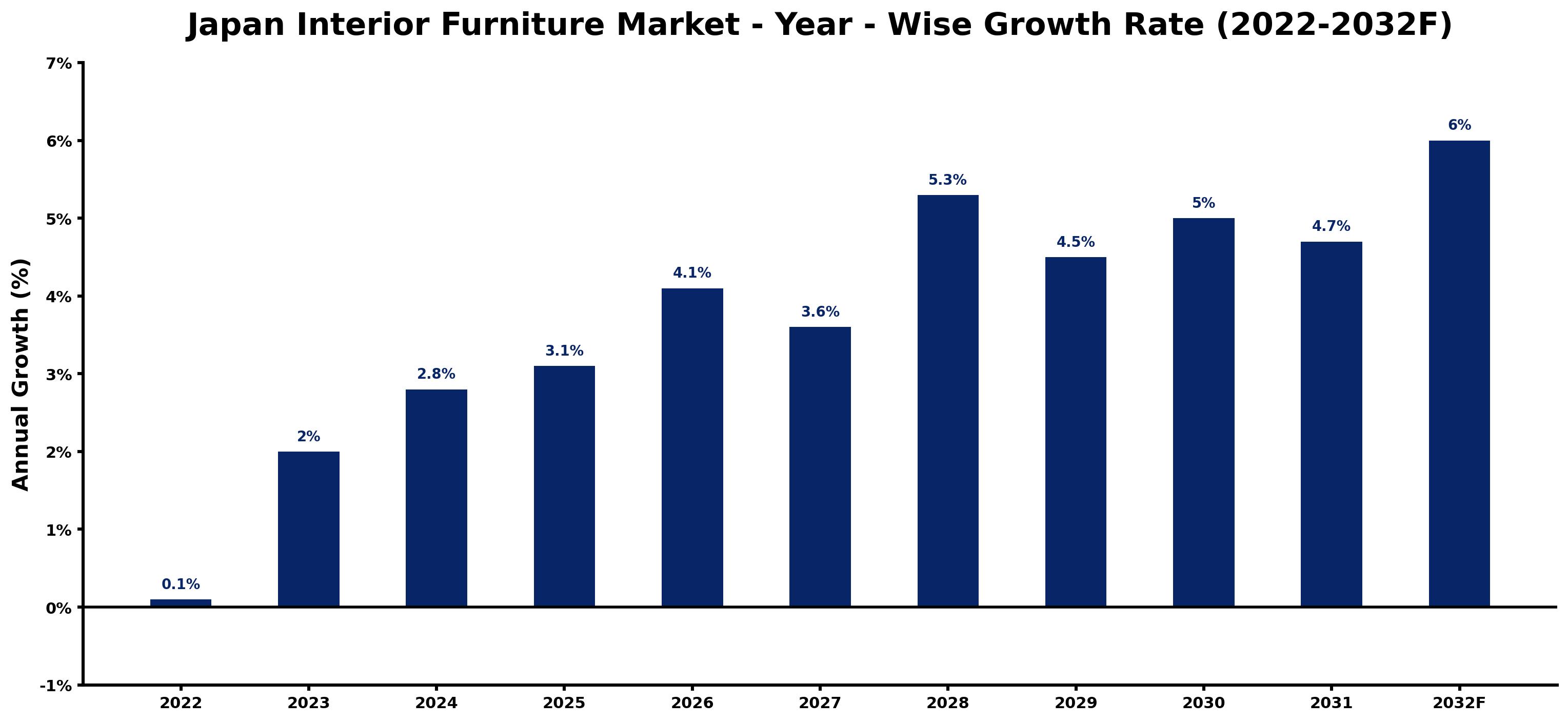
Each row of the following table gives one year's estimated growth and the event or demand shift that explains it.
| Year | Estimated Annual Growth (%) | Market Rationale |
| 2022 | 0.1 | The market showed slight growth as consumer interest in home improvement increased. |
| 2023 | 2.0 | Consumer interest in home improvement projects led to faster growth in furniture sales. |
| 2024 | 2.8 | Increased urbanisation resulted in higher demand for space-efficient furniture solutions. |
| 2025 | 3.1 | The trend towards minimalism positively influenced furniture purchases across demographics. |
| 2026 | 4.1 | Growing corporate investment in ergonomic solutions is expected to boost furniture demand. |
| 2027 | 3.6 | A slowdown is expected as consumers adjust to previous spending levels in furniture. |
| 2028 | 5.3 | Rising disposable incomes will encourage more furniture purchases in urban households. |
| 2029 | 4.5 | Demand is projected to stabilise as consumers become more selective in their choices. |
| 2030 | 5.0 | The ongoing trend of remote work will increase office furniture needs. |
| 2031 | 4.7 | Consumer preferences are shifting towards sustainable materials, impacting furniture purchases. |
| 2032 | 6.0 | A surge in demand for new designs is expected to drive growth in the furniture market. |
Note: Market size estimations and growth projections presented in this report are based on 6Wresearch's proprietary forecasting methodology, utilizing the latest available industry data, government publications, and primary research inputs.
Japan Interior Furniture Market Synopsis
Interior furniture in Japan encompasses a range of items designed for both residential and commercial spaces, including modular units, desks, and sofas, primarily crafted from wood, metal, and fabric. The Japan Interior Furniture Market is growing as urbanisation increases, with Tokyo representing 30% of national demand. Recent efforts to promote sustainable production, combined with a rising trend towards minimalism, are stimulating consumer interest and contributing to anticipated market growth by 2032.
Market Dynamics Impact Analysis (2026–2032)
| Factor | Type | Impact | Primary Segment Affected |
| Urbanisation drives demand for space-efficient furniture solutions. | Driver | High | Modular Kitchen Units |
| Corporate investment in ergonomic solutions enhances workplace functionality. | Driver | High | Office Desks & Chairs |
| The rising trend towards minimalism creates opportunities for innovative designs. | Opportunity | High | Living Room Sofas |
| Increasing interest in eco-friendly materials opens new market segments. | Opportunity | Medium | Bedroom Furniture Sets |
| High production costs limit affordability for some consumers. | Restraint | High | MDF / Stainless Steel |
| Strict regulations on hazardous materials may restrict production options. | Restraint | Medium | Hardwood / Engineered |
| Supply chain disruptions can delay product availability for retailers. | Challenge | High | Furniture Showrooms |
| Competition from low-cost imports pressures local manufacturers. | Challenge | Medium | Online Marketplaces |
Evaluation of Drivers in Japan Interior Furniture Market (2026–2032)
Demand rests on the following drivers, each shown with the segment it touches most.
| Drivers | Primary Segment Affected | Why It Matters (Evidence) |
| Urbanisation in Tokyo increases demand for modular kitchen units. | Modular Kitchen Units | Approximately 30% of national furniture demand comes from the Tokyo Metropolitan area. |
| Corporate offices are investing in ergonomic office desks and chairs. | Office Desks & Chairs | Corporate offices are increasingly adopting ergonomic solutions to improve employee comfort. |
| The trend towards minimalism influences living room furniture choices. | Living Room Sofas | Minimalist design preferences are driving demand for sleek, functional sofas. |
| Sustainable production methods are gaining traction among consumers. | Bedroom Furniture Sets | The government allocated 500 million yen to promote eco-friendly materials in furniture. |
| Online sales channels are expanding rapidly in the furniture market. | Online Marketplaces | Online sales of furniture have increased by 20% in the last year. |
Several shifts outside the market lift sales. Over the past five years, urbanisation has intensified, particularly in the Tokyo Metropolitan area, which accounts for 30% of national furniture demand. Corporate offices are increasingly investing in ergonomic office desks and chairs, reflecting a growing focus on employee comfort, with many firms adopting these solutions to enhance productivity. The trend towards minimalism influences consumer preferences for living room sofas, prompting demand for sleek designs.
Evaluation of Restraints in Japan Interior Furniture Market
The main factors holding the market back are set out below.
| Market Restraint | Primary Segment Affected | Why It Matters (Evidence) |
| High production costs hinder affordability for consumers. | MDF / Stainless Steel | Production costs for durable materials can limit pricing strategies for manufacturers. |
| Strict regulations on hazardous materials complicate manufacturing processes. | Hardwood / Engineered | Compliance with regulations can increase production timelines and costs for producers. |
| Supply chain disruptions can lead to delays in product availability. | Furniture Showrooms | Global supply chain issues affect timely delivery of furniture products to consumers. |
| Competition from low-cost imports pressures local manufacturers. | Online Marketplaces | Affordable imports can attract price-sensitive consumers away from local brands. |
| Consumer preferences for sustainable products may limit options. | Living Room Sofas | Manufacturers may struggle to meet eco-friendly demands without higher costs. |
Japan Interior Furniture Market Challenges
Buyers encounter rising costs due to stringent regulations on hazardous materials in furniture production, which have increased prices by 15% for compliant products. While these regulations aim to protect consumer safety, they also result in delays, causing longer wait times for orders. Supply chain challenges arise as furniture showrooms are mainly located in urban areas, leading to delivery delays of up to three weeks for buyers in rural regions. Competition from imports, which make up 40% of the market, pressures domestic producers to lower prices, potentially compromising quality and craftsmanship for buyers prioritising durability.
Trends in the Japan Interior Furniture Market
These developments are changing demand patterns in the Japan Interior Furniture Market.
- Increase in Online Furniture Sales: Online marketplaces are gaining popularity, with furniture sales rising by 20% last year. This shift is transforming how consumers shop for interior furniture, offering greater convenience.
- Growing Demand for Ergonomic Solutions: Corporate offices are increasingly embracing ergonomic furniture solutions, reflecting a change in workplace design. This trend is driven by the need for better employee health and productivity.
- Minimalism Influencing Design Preferences: The minimalism trend is reshaping furniture design, with consumers favouring sleek and functional pieces. This shift is particularly pronounced in urban areas where space is at a premium.
- Shift Towards Sustainable Furniture: In 2023, a programme promoting sustainable furniture production was launched, allocating 500 million yen. This initiative encourages manufacturers to embrace eco-friendly materials, aligning with consumer preferences for sustainability.
Investment Opportunities in the Japan Interior Furniture Market
Below are the investment opportunities with the strongest case in the Japan Interior Furniture Market.
- Urban Areas Demand Space-Efficient Furniture: Urban households require space-efficient furniture solutions, particularly modular kitchen units. Collaborating with local manufacturers can effectively address this demand.
- Corporate Offices Seeking Ergonomic Solutions: Corporate offices are increasingly in search of ergonomic furniture, driven by health and productivity concerns. Investing in ergonomic office desks and chairs can effectively meet this growing need.
- Growing Market for Eco-Friendly Furniture: With rising consumer interest in sustainability, there is an opportunity to provide eco-friendly furniture. The Japan Furniture Association promotes local craftsmanship, making it a viable entry point.
- Expansion of Online Sales Channels: Online marketplaces are rapidly expanding, offering opportunities for suppliers to connect with consumers directly. Establishing partnerships with e-commerce platforms can facilitate market entry.
Government Initiatives in the Japan Interior Furniture Market
The Economic Security Promotion Act, enacted in 2022, supports supply-chain resilience for critical products, including furniture. This law builds on the Chemical Substances Control Law, which mandates the evaluation of hazardous materials in production, ensuring safer manufacturing practices for interior furniture.
In 2023, the Ministry of Economy, Trade and Industry allocated 500 million yen to promote sustainable furniture production. This funding aims to assist manufacturers in adopting eco-friendly practices, aligning with national sustainability goals.
Future Insight of the Japan Interior Furniture Market
By 2032, urban households will increasingly prefer modular kitchen units as space optimisation becomes essential. The government's commitment to promoting eco-friendly materials will encourage suppliers to innovate and align with sustainable practices. Online sales are projected to continue growing, driven by consumer demand for convenience. The annual Furniture Fair in Tokyo will showcase new design trends, prompting suppliers to adapt and meet evolving consumer expectations.
Market Segmentation Analysis
Japan Interior Furniture Market report covers a detailed analysis of the following market segments:
By Furniture Type – Modular Kitchen Units Lead, Office Desks & Chairs Expected to Grow Fastest
According to Hittika Dhall, Research Associate at 6Wresearch, with 42% of furniture type revenue in 2025, Modular Kitchen Units was the largest category. Modular kitchen units hold the largest share due to their critical role in optimising space in urban kitchens, especially in Tokyo where compact living is prevalent. These units cater to the needs of consumers seeking both functionality and style in limited spaces. Office Desks & Chairs are set to record the highest CAGR in this split, 6.7% over 2026–2032. The segment of office desks and chairs is expanding rapidly as the demand for ergonomic solutions increases among corporate offices. The trend towards creating comfortable work environments is a key factor driving this segment's growth. Suppliers should prioritise modular designs and ergonomic features to align with the preferences of urban consumers and corporate buyers.
By Material Type – MDF / Stainless Steel Leads, Metal / Mesh Expected to Grow Fastest
The largest material type category in 2025 was MDF / Stainless Steel, at 45% of revenue. MDF and stainless steel lead the market as they offer durability and aesthetic appeal, making them popular choices for various furniture applications. Their widespread use is particularly notable in urban settings where design and functionality are paramount. Metal / Mesh is projected to grow fastest, at a CAGR of 7.1% during 2026–2032. The metal and mesh segment is growing swiftly due to the rising popularity of contemporary office furniture that utilises these materials for a modern look. The increasing demand for sleek, minimalist designs in workspaces is propelling this trend. Manufacturers should focus on incorporating metal and mesh materials to meet the rising consumer demand for modern office furniture.
By Distribution Channel – Home Improvement Chains Lead, B2B Supply Channels Expected to Grow Fastest
Home Improvement Chains held 41% of the Japan Interior Furniture Market by distribution channel in 2025. Home improvement chains dominate the distribution landscape, offering a wide selection of furniture that meets consumer needs effectively. Their extensive network in urban centres like Tokyo ensures they reach a large customer base, solidifying their leading position. The quickest growth will come from B2B Supply Channels, forecast to expand at a CAGR of 6.3% between 2026 and 2032. B2B supply channels are witnessing rapid growth as businesses seek more efficient procurement methods for office furniture. The rising trend of companies investing in ergonomic solutions drives this segment's expansion, indicating a shift in purchasing strategies. Suppliers should focus on strengthening B2B partnerships to capitalise on the growing demand from corporate clients seeking streamlined purchasing options.
By End User – Residential Kitchens Lead, Corporate Offices Expected to Grow Fastest
Residential Kitchens accounted for 46% of the market by end user in 2025. Residential kitchens account for the largest share among end users, driven by the high demand for kitchen units in Japanese homes. The emphasis on functional and aesthetically pleasing kitchen designs is particularly strong in urban areas where space is at a premium. Over 2026–2032, Corporate Offices are expected to post the fastest growth, at a CAGR of 6.1%. Corporate offices represent the fastest-growing end user segment as companies focus on modernising their workspaces to improve employee productivity. The shift towards flexible and ergonomic office solutions is accelerating this growth. Suppliers should tailor their products to meet the specific requirements of corporate clients, emphasising ergonomic and adaptable furniture solutions.
Key Attractiveness of the Report
- 10 Years of Market Numbers
- Historical Data Starting from 2022 to 2025
- Base Year 2025
- Forecast Data until 2032
- Key Performance Indicators Impacting the Market
- Major Upcoming Developments and Projects
Key Highlights of the Report:
- Japan Interior Furniture Market Outlook
- Market Size of Japan Interior Furniture Market, 2025
- Forecast of Japan Interior Furniture Market, 2032
- Historical Data and Forecast of Japan Interior Furniture Revenues & Volume for the Period 2022-2032F
- Japan Interior Furniture Market Trend Evolution
- Japan Interior Furniture Market Drivers and Challenges
- Japan Interior Furniture Price Trends
- Japan Interior Furniture Porter's Five Forces
- Japan Interior Furniture Industry Life Cycle
- Historical Data and Forecast of Japan Interior Furniture Market Revenues & Volume By Furniture Type for the Period 2022-2032F
- Historical Data and Forecast of Japan Interior Furniture Market Revenues & Volume By Modular Kitchen Units for the Period 2022-2032F
- Historical Data and Forecast of Japan Interior Furniture Market Revenues & Volume By Office Desks & Chairs for the Period 2022-2032F
- Historical Data and Forecast of Japan Interior Furniture Market Revenues & Volume By Bedroom Furniture Sets for the Period 2022-2032F
- Historical Data and Forecast of Japan Interior Furniture Market Revenues & Volume By Living Room Sofas for the Period 2022-2032F
- Historical Data and Forecast of Japan Interior Furniture Market Revenues & Volume By Material Type for the Period 2022-2032F
- Historical Data and Forecast of Japan Interior Furniture Market Revenues & Volume By MDF / Stainless Steel for the Period 2022-2032F
- Historical Data and Forecast of Japan Interior Furniture Market Revenues & Volume By Metal / Mesh for the Period 2022-2032F
- Historical Data and Forecast of Japan Interior Furniture Market Revenues & Volume By Hardwood / Engineered for the Period 2022-2032F
- Historical Data and Forecast of Japan Interior Furniture Market Revenues & Volume By Leather / Fabric for the Period 2022-2032F
- Historical Data and Forecast of Japan Interior Furniture Market Revenues & Volume By Distribution Channel for the Period 2022-2032F
- Historical Data and Forecast of Japan Interior Furniture Market Revenues & Volume By Home Improvement Chains for the Period 2022-2032F
- Historical Data and Forecast of Japan Interior Furniture Market Revenues & Volume By B2B Supply Channels for the Period 2022-2032F
- Historical Data and Forecast of Japan Interior Furniture Market Revenues & Volume By Furniture Showrooms for the Period 2022-2032F
- Historical Data and Forecast of Japan Interior Furniture Market Revenues & Volume By Online Marketplaces for the Period 2022-2032F
- Historical Data and Forecast of Japan Interior Furniture Market Revenues & Volume By End User for the Period 2022-2032F
- Historical Data and Forecast of Japan Interior Furniture Market Revenues & Volume By Residential Kitchens for the Period 2022-2032F
- Historical Data and Forecast of Japan Interior Furniture Market Revenues & Volume By Corporate Offices for the Period 2022-2032F
- Historical Data and Forecast of Japan Interior Furniture Market Revenues & Volume By Apartment Dwellers for the Period 2022-2032F
- Historical Data and Forecast of Japan Interior Furniture Market Revenues & Volume By Individual Households for the Period 2022-2032F
- Japan Interior Furniture Import Export Trade Statistics
- Market Opportunity Assessment By Furniture Type
- Market Opportunity Assessment By Material Type
- Market Opportunity Assessment By Distribution Channel
- Market Opportunity Assessment By End User
- Japan Interior Furniture Top Companies Market Share
- Japan Interior Furniture Competitive Benchmarking By Technical and Operational Parameters
- Japan Interior Furniture Company Profiles
- Japan Interior Furniture Key Strategic Recommendations
Market Covered
Segments analysed in this report are listed below.
By Furniture Type
- Modular Kitchen Units
- Office Desks & Chairs
- Bedroom Furniture Sets
- Living Room Sofas
By Material Type
- MDF / Stainless Steel
- Metal / Mesh
- Hardwood / Engineered
- Leather / Fabric
By Distribution Channel
- Home Improvement Chains
- B2B Supply Channels
- Furniture Showrooms
- Online Marketplaces
By End User
- Residential Kitchens
- Corporate Offices
- Apartment Dwellers
- Individual Households































