Japan Live Aquatic Animal Market Size & Growth Rate
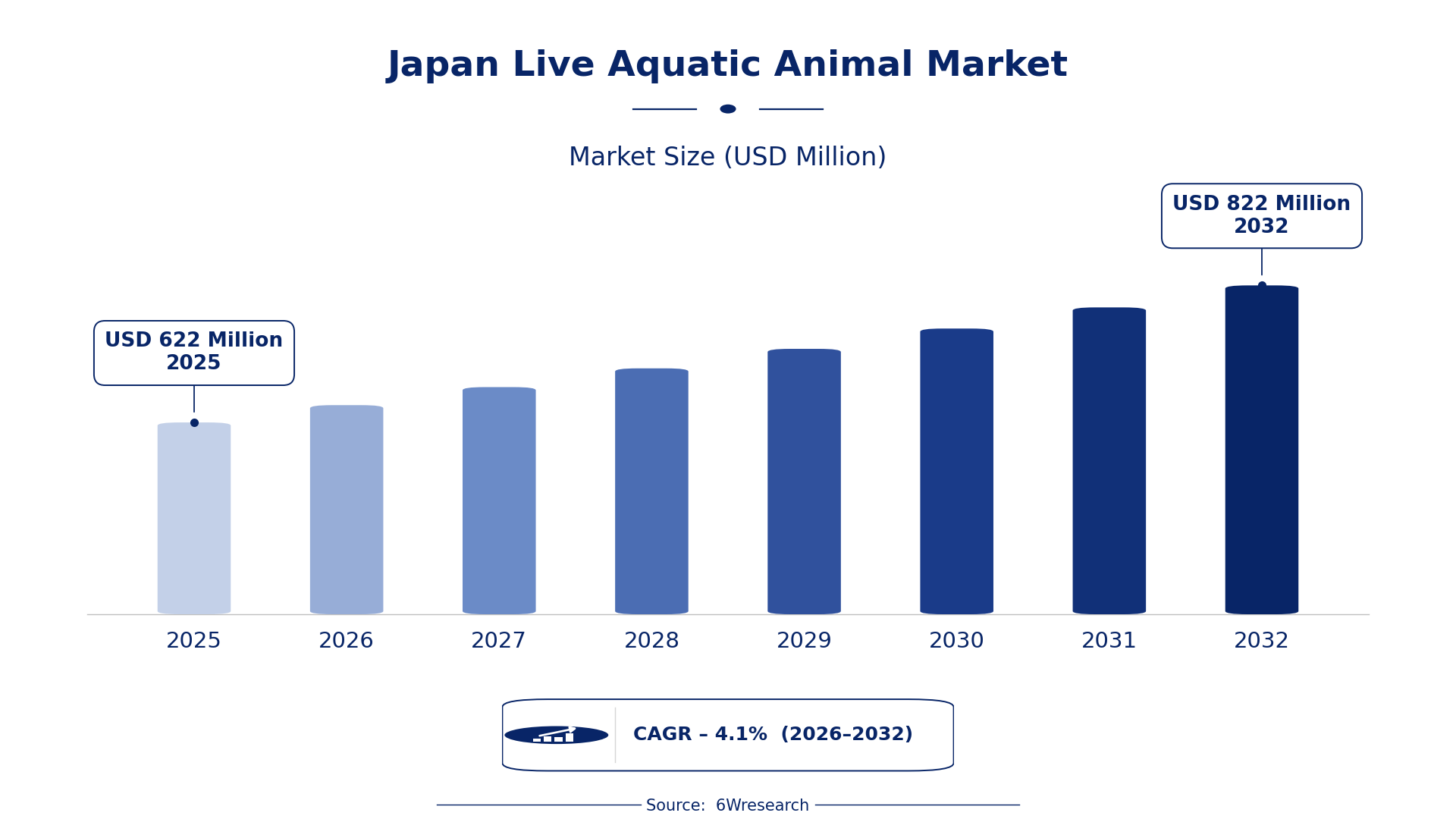
According to 6Wresearch internal database and industry insights, the Japan Live Aquatic Animal Market was valued at USD 622 Million in 2025 and is projected to reach USD 822 Million by 2032, growing at a CAGR of approximately 4.1% during 2026–2032.
Japan Live Aquatic Animal Market Highlights
| Report Metric | Details |
| Report Name | Japan Live Aquatic Animal Market (2026-2032) |
| Market Size 2025 | USD 622 Million |
| Market Size 2032 | USD 822 Million |
| Absolute Growth 2025–2032 | USD 200 Million |
| CAGR 2026–2032 | 4.1% |
| Peak Annual Growth | 5.6% in 2027 |
| Forecast Period | 2026–2032 |
| Historical Data | 2022–2025 |
| Base Year | 2025 |
| Leading Animal Type, 2025 | Live Fish (37% share) |
| Leading Destination, 2025 | Aquaculture (38% share) |
| Leading Distribution Channel, 2025 | Direct Sales (45% share) |
| Leading End User, 2025 | Marine Pet Enthusiasts (40% share) |
| Fastest-Growing Animal Type | Live Shrimp/Crustacea (5.6% CAGR) |
| Fastest-Growing Destination | Research Institutions (5.2% CAGR) |
| Fastest-Growing Distribution Channel | Online Platforms (6.0% CAGR) |
| Fastest-Growing End User | Hatchery Operators (5.4% CAGR) |
| Growing Sector | Aquaculture |
| Key End Users | Marine Pet Enthusiasts, Research Institutions, Hatchery Operators |
Japan Live Aquatic Animal Market Year-wise Growth Rate and Key Drivers (2022–2032)
This graph illustrates the annual growth rates of the market from 2022 to 2032, highlighting a steady upward trajectory and projected market expansion over the forecast period.
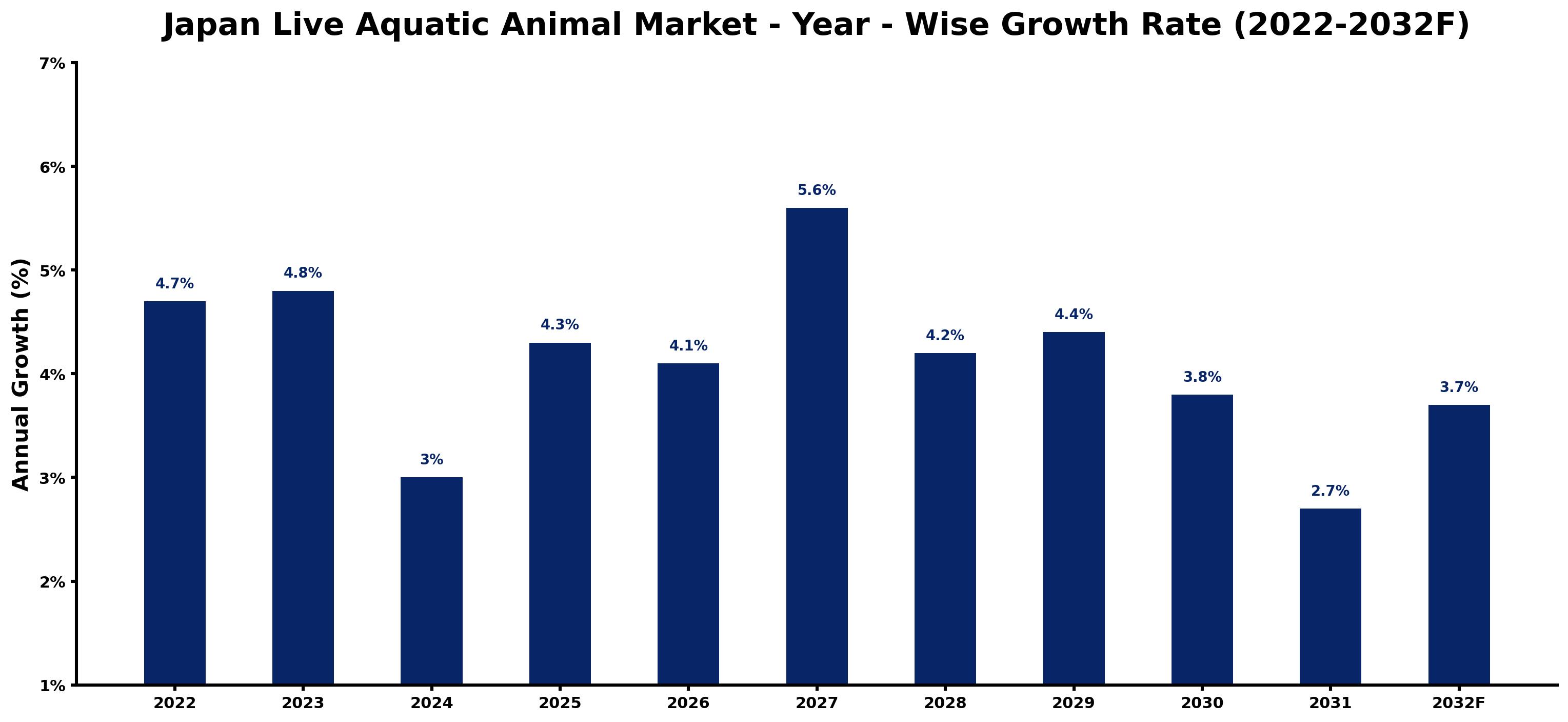
The yearly estimates that follow link every growth rate to its principal driver, so readers can see why the pace changed in each period.
| Year | Estimated Annual Growth (%) | Market Rationale |
| 2022 | 4.7 | The market showed a solid performance with a notable increase in consumer interest. |
| 2023 | 4.8 | Growth was driven by heightened demand for ornamental aquatic species among hobbyists. |
| 2024 | 3.0 | The market experienced a slowdown as consumer spending stabilised after previous peaks. |
| 2025 | 4.3 | Demand surged again due to the popularity of home aquariums and marine pets. |
| 2026 | 4.1 | Market growth is anticipated to slow slightly as consumers adjust to rising prices. |
| 2027 | 5.6 | A peak in growth is projected, driven by increased aquaculture production and exports. |
| 2028 | 4.2 | Growth is expected to decelerate as the market stabilises after reaching its peak in the previous year. |
| 2029 | 4.4 | The market is anticipated to rebound with renewed interest in marine conservation and research. |
| 2030 | 3.8 | Growth is projected to slow as consumers become more selective in their purchases. |
| 2031 | 2.7 | The market will continue to grow, albeit at a slower pace as competition intensifies. |
| 2032 | 3.7 | A resurgence in demand is expected as aquaculture production targets are met. |
Note: Market size estimations and growth projections presented in this report are based on 6Wresearch's proprietary forecasting methodology, utilizing the latest available industry data, government publications, and primary research inputs.
Japan Live Aquatic Animal Market Synopsis
Live aquatic animals, including fish, crustaceans, and invertebrates, are sourced from marine and freshwater environments for ornamental, research, and food purposes. The Japan Live Aquatic Animal Market is growing due to rising domestic demand from marine pet enthusiasts and the aquaculture sector, with over 500,000 tons of seafood produced in 2022. Increased interest in marine conservation and research initiatives is driving new demand, as demonstrated by a marked rise in coral reef restoration efforts since 2020, which further supports market growth.
Market Dynamics Impact Analysis (2026–2032)
| Factor | Type | Impact | Primary Segment Affected |
| Growing interest in marine conservation | Driver | High | Marine Pet Enthusiasts |
| Expansion of online sales channels | Driver | High | Direct Sales |
| Increased funding for aquaculture initiatives | Opportunity | High | Aquaculture |
| Rising consumer expenditure on marine pets | Opportunity | Medium | Marine Pet Enthusiasts |
| Regulatory compliance costs for aquaculture | Restraint | High | Aquaculture |
| Limited availability of certain species | Restraint | Medium | Live Fish |
| High competition among suppliers | Challenge | High | Specialty Stores |
| Technological barriers in aquaculture | Challenge | Medium | Aquaculture |
Evaluation of Drivers in Japan Live Aquatic Animal Market (2026–2032)
Demand rests on the following drivers, each shown with the segment it touches most.
| Drivers | Primary Segment Affected | Why It Matters (Evidence) |
| Increased domestic consumption of ornamental species | Live Fish | The average annual expenditure on marine pets per household is approximately ¥30,000, leading to higher purchases of live fish. |
| Growth in online sales platforms | Online Platforms | Online sales of live aquatic animals have grown by 15% in the last year, attracting more buyers. |
| Expansion of aquaculture production | Aquaculture | The aquaculture sector produced over 500,000 tons of seafood in 2022, driving demand for live aquatic species. |
| Rising interest in marine research | Research Institutions | Research institutions in Japan conduct over 200 marine biology studies annually, increasing demand for live specimens. |
| Support for marine conservation programs | Coral Fragments | Japan's coral reef restoration efforts have increased by 20% since 2020, boosting demand for coral fragments. |
The strongest pull on demand comes from increased domestic consumption of ornamental species, with households spending approximately ¥30,000 annually on marine pets. Growth in online sales platforms has also been notable, as online sales of live aquatic animals increased by 15% last year. The aquaculture sector produced significant volumes of seafood in 2022, driving demand for aquatic species among various buyers. Research institutions conduct numerous marine biology studies annually, creating a need for live specimens in educational settings. Japan's coral reef restoration efforts have seen a marked increase since 2020, generating additional demand for specific species used in restoration projects.
Evaluation of Restraints in Japan Live Aquatic Animal Market
The following restraints limit how fast demand can grow.
| Market Restraint | Primary Segment Affected | Why It Matters (Evidence) |
| Regulatory compliance costs for aquaculture | Aquaculture | Producers face high costs to meet ISO 14001 standards for environmental management, impacting profitability. |
| Limited availability of certain species | Live Fish | Sustainable fishing practices restrict the supply of popular live fish species, constraining market growth. |
| High operational costs for hatcheries | Hatchery Operators | Hatchery operators incur high costs in maintaining quality standards, affecting their competitiveness. |
| Market competition leading to price reductions | Specialty Stores | Intense competition among specialty stores drives prices down, squeezing margins for retailers. |
| Technological barriers in aquaculture | Aquaculture | Adopting advanced aquaculture technologies requires substantial investment, which can deter smaller operators. |
Japan Live Aquatic Animal Market Challenges
Buyers in the live aquatic animal market face a skills shortage among aquaculture workers, resulting from inadequate training programs, which leads to a 15% drop in production efficiency. Rising operational costs due to increased regulatory scrutiny burden producers, compelling them to raise prices by an average of 10% for buyers. Retailers encounter intensified competition from online platforms, which have expanded significantly, making it challenging for local stores to retain customers. Fluctuating demand for specific species complicates inventory management, potentially causing losses of up to ¥5,000 per month for retailers.
Trends in the Japan Live Aquatic Animal Market
The following changes are redrawing the Japan Live Aquatic Animal Market.
- Shift towards Online Sales Platforms: A shift towards online sales platforms is changing how live aquatic animals are purchased, with online sales growing by 15% last year. This trend allows consumers to access a wider variety of species and provides convenience for buyers.
- Increased Focus on Marine Conservation: Marine conservation initiatives are gaining traction, with coral reef restoration efforts increasing significantly since 2020. This focus is driving demand for specific live aquatic species used in restoration projects, benefiting suppliers.
- Rise in Marine Research Collaborations: The year 2022 marked a notable rise in collaborations between marine biology labs and universities, improving research capabilities. With numerous studies conducted annually, this trend creates demand for live specimens in academic settings.
- Growth in Aquaculture Production: Aquaculture production is on the rise, with significant volumes of seafood produced in 2022. This growth indicates a strong demand for live aquatic animals, particularly for breeding and stocking purposes.
Investment Opportunities in the Japan Live Aquatic Animal Market
Investors looking at the Japan Live Aquatic Animal Market should consider the following areas.
- Marine Pet Enthusiasts Seeking Exotic Species: Marine pet enthusiasts are increasingly seeking exotic species for home aquariums, with an average annual expenditure of ¥30,000 per household. Suppliers can tap into this market by offering unique aquatic animals that cater to these preferences.
- Investment in Sustainable Aquaculture Practices: The aquaculture sector is set for growth, with the government targeting a 10% increase in production by 2025. Investors can support sustainable practices by partnering with local hatcheries and farms to improve production capabilities.
- Research Institutions Expanding Marine Studies: Research institutions are expanding their marine studies, conducting numerous studies annually. Suppliers can benefit by providing live specimens for educational and research purposes, meeting the increasing demand from academic institutions.
- Okinawa Region's Biodiversity Opportunities: The Okinawa region is known for its rich biodiversity in marine life, presenting opportunities for suppliers to source unique species. This is particularly timely as demand for local species increases, creating a market for sustainable sourcing.
Government Initiatives in the Japan Live Aquatic Animal Market
The Next-Generation Medical Infrastructure Act (2017) supports marine biology research by allowing certified bodies to anonymise data for research. This measure facilitates access to important data for studies involving live aquatic animals, improving research capabilities in the sector.
In 2022, the Fisheries Agency of Japan allocated ¥1 billion to support hatchery development. This funding, administered by the agency, aims to boost aquaculture production and ensure sustainable practices in the industry.
Future Insight of the Japan Live Aquatic Animal Market
By 2032, advancements in aquaculture technology will reshape demand, improving production methods and reducing environmental impact. The government's support for hatchery development will enhance species availability, catering to diverse consumer preferences. Collaboration between research institutions and universities will drive innovation in marine studies, benefiting both suppliers and buyers. As online sales of live aquatic animals grow, reaching a projected increase of 15%, buyers will enjoy improved access to a wider variety of products, creating a more competitive retail environment.
Market Segmentation Analysis
Japan Live Aquatic Animal Market report covers a detailed analysis of the following market segments:
By Animal Type – Live Fish Leads, Live Shrimp/Crustacea Expected to Grow Fastest
According to Saurav Kr Singh, Senior Research Analyst at 6Wresearch, with 37% of animal type revenue in 2025, Live Fish was the largest category. Live fish hold the largest share due to their widespread use in ornamental aquariums and aquaculture, supported by over 3,000 registered aquariums in Japan. This segment caters to both domestic consumers and the aquaculture sector, ensuring consistent demand. The quickest growth will come from Live Shrimp/Crustacea, forecast to expand at a CAGR of 5.6% between 2026 and 2032. The swift growth of live shrimp and crustacea is fuelled by their essential role in aquaculture and their popularity among urban marine hobbyists. As more consumers engage in marine pet care, this segment's appeal is likely to expand further. Suppliers should focus on enhancing their live shrimp product lines to capitalise on the growing consumer interest.
By Destination – Aquaculture Leads, Research Institutions Expected to Grow Fastest
In 2025, Aquaculture led the destination split with a 38% share. Aquaculture dominates the market as a crucial industry for food production, with over 500,000 tons of seafood produced in 2022. The solid infrastructure and regulatory support from the Ministry of Agriculture, Forestry and Fisheries reinforce its leading status. Research Institutions are projected to grow fastest, at a CAGR of 5.2% during 2026–2032. Research institutions are experiencing rapid growth due to an increasing number of marine biology studies, which exceed 200 annually. This heightened focus on marine research is expected to continue driving demand. Buyers in research should explore collaborations with aquaculture suppliers to ensure a steady supply of live aquatic animals for their studies.
By Distribution Channel – Direct Sales Leads, Online Platforms Expected to Grow Fastest
Direct Sales held 45% of the Japan Live Aquatic Animal Market by distribution channel in 2025. Direct sales are the predominant method for selling live aquatic animals, facilitating immediate transactions and direct engagement with consumers. This well-established channel is trusted by buyers, ensuring a consistent product flow. Online Platforms are set to record the highest CAGR in this split, 6.0% over 2026–2032. Online platforms are quickly becoming a preferred distribution channel, experiencing a growth rate of 15% in the last year. This trend reflects a shift towards convenience among consumers, prompting suppliers to strengthen their online presence. Suppliers need to invest in online sales strategies to cater to the rising demand for purchasing live aquatic species through digital platforms.
By End User – Marine Pet Enthusiasts Lead, Hatchery Operators Expected to Grow Fastest
The largest end user category in 2025 was Marine Pet Enthusiasts, at 40% of revenue. Marine pet enthusiasts represent the largest consumer group for live aquatic animals, driven by a strong interest in maintaining aquariums and caring for marine pets. Their average annual expenditure of approximately ¥30,000 demonstrates their commitment to this hobby. Over 2026–2032, Hatchery Operators are expected to post the fastest growth, at a CAGR of 5.4%. Hatchery operators are the fastest-growing segment, as they play a critical role in breeding and supplying aquatic species for aquaculture. The government's target to increase aquaculture production by 10% by 2025 further supports this growth. Suppliers should target hatchery operators to align with the anticipated increase in aquaculture production and ensure a reliable supply chain.
Key Attractiveness of the Report
- 10 Years of Market Numbers
- Historical Data Starting from 2022 to 2025
- Base Year 2025
- Forecast Data until 2032
- Key Performance Indicators Impacting the Market
- Major Upcoming Developments and Projects
Key Highlights of the Report:
- Japan Live Aquatic Animal Market Outlook
- Market Size of Japan Live Aquatic Animal Market, 2025
- Forecast of Japan Live Aquatic Animal Market, 2032
- Historical Data and Forecast of Japan Live Aquatic Animal Revenues & Volume for the Period 2022-2032F
- Japan Live Aquatic Animal Market Trend Evolution
- Japan Live Aquatic Animal Market Drivers and Challenges
- Japan Live Aquatic Animal Price Trends
- Japan Live Aquatic Animal Porter's Five Forces
- Japan Live Aquatic Animal Industry Life Cycle
- Historical Data and Forecast of Japan Live Aquatic Animal Market Revenues & Volume By Animal Type for the Period 2022-2032F
- Historical Data and Forecast of Japan Live Aquatic Animal Market Revenues & Volume By Live Fish for the Period 2022-2032F
- Historical Data and Forecast of Japan Live Aquatic Animal Market Revenues & Volume By Coral Fragments for the Period 2022-2032F
- Historical Data and Forecast of Japan Live Aquatic Animal Market Revenues & Volume By Live Shrimp/Crustacea for the Period 2022-2032F
- Historical Data and Forecast of Japan Live Aquatic Animal Market Revenues & Volume By Live Invertebrates for the Period 2022-2032F
- Historical Data and Forecast of Japan Live Aquatic Animal Market Revenues & Volume By Destination for the Period 2022-2032F
- Historical Data and Forecast of Japan Live Aquatic Animal Market Revenues & Volume By Aquariums for the Period 2022-2032F
- Historical Data and Forecast of Japan Live Aquatic Animal Market Revenues & Volume By Reefs/Aquariums for the Period 2022-2032F
- Historical Data and Forecast of Japan Live Aquatic Animal Market Revenues & Volume By Aquaculture for the Period 2022-2032F
- Historical Data and Forecast of Japan Live Aquatic Animal Market Revenues & Volume By Research Institutions for the Period 2022-2032F
- Historical Data and Forecast of Japan Live Aquatic Animal Market Revenues & Volume By Distribution Channel for the Period 2022-2032F
- Historical Data and Forecast of Japan Live Aquatic Animal Market Revenues & Volume By Direct Sales for the Period 2022-2032F
- Historical Data and Forecast of Japan Live Aquatic Animal Market Revenues & Volume By Online Platforms for the Period 2022-2032F
- Historical Data and Forecast of Japan Live Aquatic Animal Market Revenues & Volume By Industrial Suppliers for the Period 2022-2032F
- Historical Data and Forecast of Japan Live Aquatic Animal Market Revenues & Volume By Specialty Stores for the Period 2022-2032F
- Historical Data and Forecast of Japan Live Aquatic Animal Market Revenues & Volume By End User for the Period 2022-2032F
- Historical Data and Forecast of Japan Live Aquatic Animal Market Revenues & Volume By Hobbyist Retail Stores for the Period 2022-2032F
- Historical Data and Forecast of Japan Live Aquatic Animal Market Revenues & Volume By Marine Pet Enthusiasts for the Period 2022-2032F
- Historical Data and Forecast of Japan Live Aquatic Animal Market Revenues & Volume By Hatchery Operators for the Period 2022-2032F
- Historical Data and Forecast of Japan Live Aquatic Animal Market Revenues & Volume By Marine Biology Labs for the Period 2022-2032F
- Japan Live Aquatic Animal Import Export Trade Statistics
- Market Opportunity Assessment By Animal Type
- Market Opportunity Assessment By Destination
- Market Opportunity Assessment By Distribution Channel
- Market Opportunity Assessment By End User
- Japan Live Aquatic Animal Top Companies Market Share
- Japan Live Aquatic Animal Competitive Benchmarking By Technical and Operational Parameters
- Japan Live Aquatic Animal Company Profiles
- Japan Live Aquatic Animal Key Strategic Recommendations
Market Covered
This report examines the market across the segments below.
By Animal Type
- Live Fish
- Coral Fragments
- Live Shrimp/Crustacea
- Live Invertebrates
By Destination
- Aquariums
- Reefs/Aquariums
- Aquaculture
- Research Institutions
By Distribution Channel
- Direct Sales
- Online Platforms
- Industrial Suppliers
- Specialty Stores
By End User
- Hobbyist Retail Stores
- Marine Pet Enthusiasts
- Hatchery Operators
- Marine Biology Labs






































