Japan Livestock Hygiene Market Size & Growth Rate
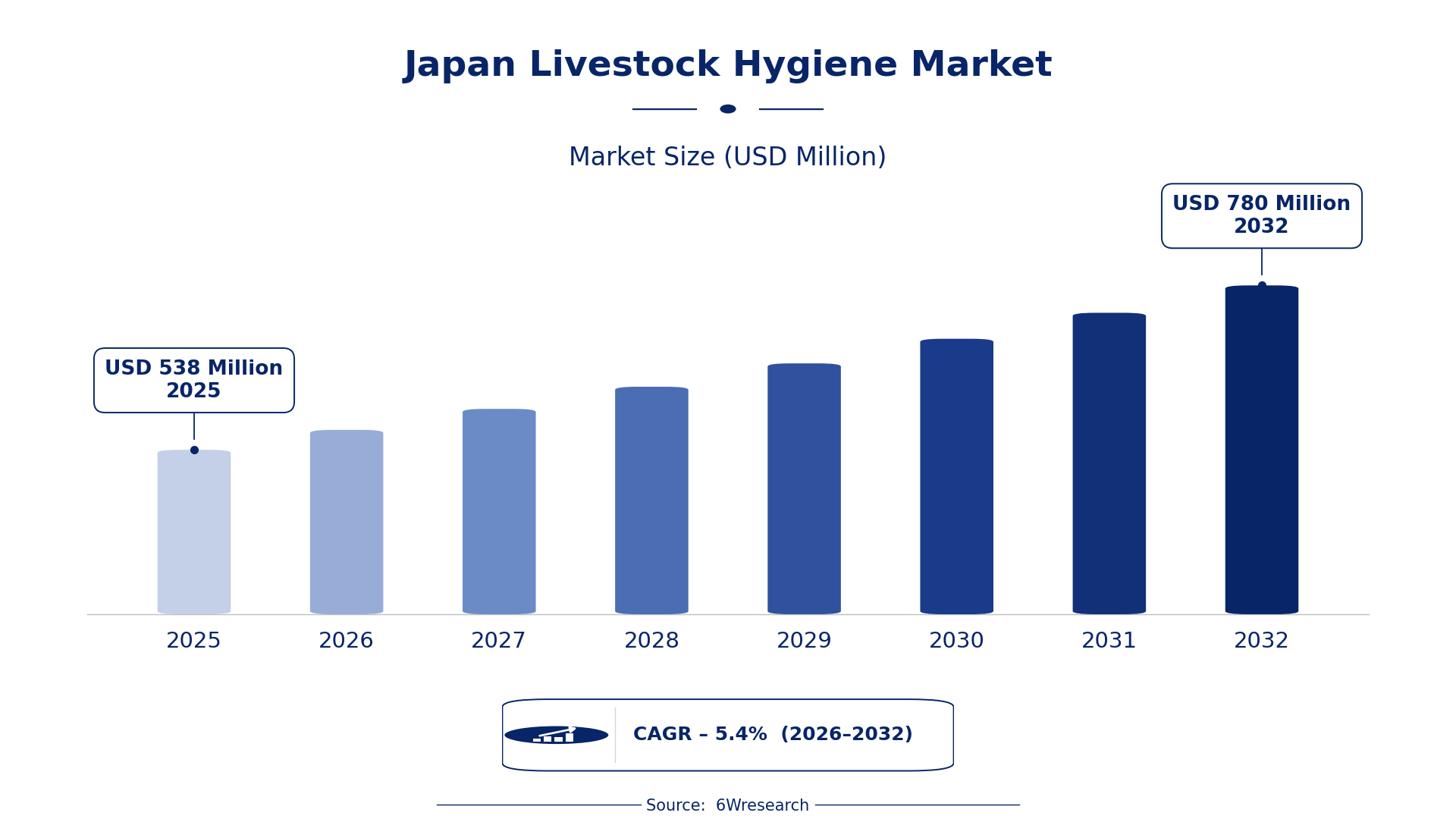
According to 6Wresearch internal database and industry insights, the Japan Livestock Hygiene Market was valued at USD 538 Million in 2025 and is projected to reach USD 780 Million by 2032, growing at a CAGR of approximately 5.4% during 2026–2032.
Japan Livestock Hygiene Market Highlights
| Report Metric | Details |
| Report Name | Japan Livestock Hygiene Market (2026-2032) |
| Market Size 2025 | USD 538 Million |
| Market Size 2032 | USD 780 Million |
| Absolute Growth 2025–2032 | USD 242 Million |
| CAGR 2026–2032 | 5.4% |
| Peak Annual Growth | 6.2% in 2028 |
| Forecast Period | 2026–2032 |
| Historical Data | 2022–2025 |
| Base Year | 2025 |
| Leading Hygiene Product, 2025 | Teat Sanitizers (41% share) |
| Leading Use Case, 2025 | Milking Hygiene (35% share) |
| Leading Distribution Channel, 2025 | Direct Sales (42% share) |
| Leading End User, 2025 | Dairy Operations (52% share) |
| Fastest-Growing Hygiene Product | Biosecurity Kits (7.9% CAGR) |
| Fastest-Growing Use Case | Outbreak Prevention (7.3% CAGR) |
| Fastest-Growing Distribution Channel | Online Platforms (7.1% CAGR) |
| Fastest-Growing End User | Veterinary Practices (7.2% CAGR) |
| Growing Sector | dairy operations |
| Key End Users | dairy farms, veterinary practices, beef farms, agricultural suppliers |
Japan Livestock Hygiene Market Year-wise Growth Rate and Key Drivers (2022–2032)
This graph illustrates the annual growth rates of the market from 2022 to 2032, highlighting a steady upward trajectory and projected market expansion over the forecast period.
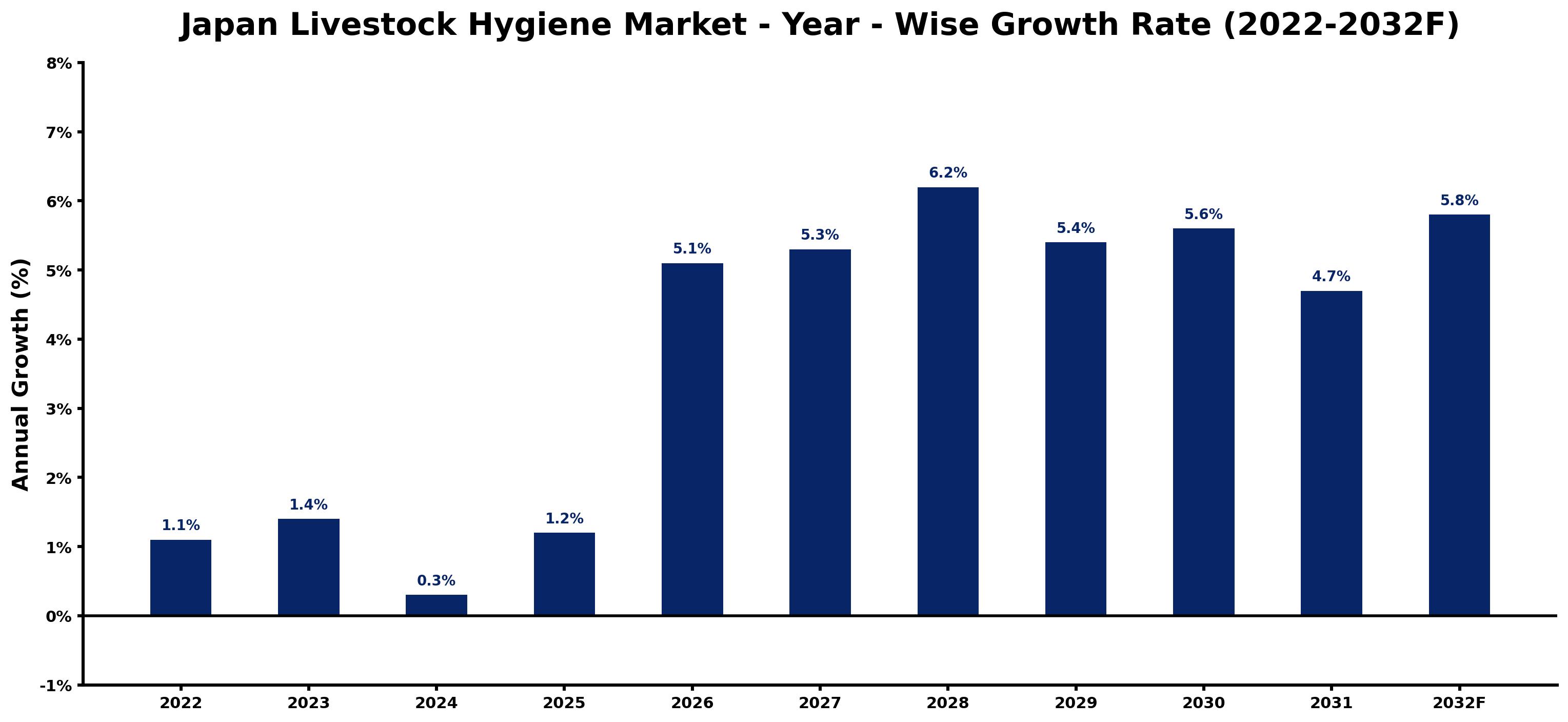
The following figures match every annual growth estimate with the main market development of that year, giving the reasoning behind each rise or slowdown.
| Year | Estimated Annual Growth (%) | Market Rationale |
| 2022 | 1.1 | The market showed steady growth with increasing awareness of hygiene practices. |
| 2023 | 1.4 | Growth accelerated due to heightened focus on disease prevention in livestock. |
| 2024 | 0.3 | Growth slowed as market conditions stabilised after previous increases. |
| 2025 | 1.2 | Demand rose again as dairy operations expanded their hygiene measures. |
| 2026 | 5.1 | The market is expected to grow faster as biosecurity becomes a priority. |
| 2027 | 5.3 | Increased investments in hygiene products will support continued growth. |
| 2028 | 6.2 | The peak growth will be driven by rising adoption of advanced hygiene solutions. |
| 2029 | 5.4 | Growth is expected to slow as the market matures and competition intensifies. |
| 2030 | 5.6 | Demand is projected to pick up again with new product innovations entering the market. |
| 2031 | 4.7 | The market is expected to experience a slowdown as growth stabilises at a sustainable rate. |
| 2032 | 5.8 | Growth will remain strong as hygiene standards continue to evolve. |
Note: Market size estimations and growth projections presented in this report are based on 6Wresearch's proprietary forecasting methodology, utilizing the latest available industry data, government publications, and primary research inputs.
Japan Livestock Hygiene Market Synopsis
Livestock hygiene products are chemical formulations designed to maintain the health and cleanliness of livestock environments. In Japan, the Livestock Hygiene Market is expanding due to increasing domestic demand from dairy and beef farms, with over 1.5 million dairy cows contributing to this growth. Key factors driving this market include a greater emphasis on disease prevention and the adoption of advanced hygiene practices, supported by initiatives from the Ministry of Agriculture, Forestry and Fisheries.
Market Dynamics Impact Analysis (2026–2032)
| Factor | Type | Impact | Primary Segment Affected |
| Rising focus on disease prevention in livestock operations | Driver | High | Biosecurity Kits |
| Increased adoption of hygiene products in dairy operations | Driver | High | Teat Sanitizers |
| Growing need for hoof health maintenance in cattle | Opportunity | Medium | Footbath Disinfectants |
| Expansion of online platforms for purchasing hygiene products | Opportunity | Medium | Online Platforms |
| High costs associated with maintaining hygiene standards | Restraint | High | Milking Hygiene |
| Limited availability of specialty stores for hygiene products | Restraint | Medium | Specialty Stores |
| Competition from international hygiene product suppliers | Challenge | High | Teat Sanitizers |
| Fluctuations in raw material prices affecting production costs | Challenge | Medium | Shed Sprays |
Evaluation of Drivers in Japan Livestock Hygiene Market (2026–2032)
These are the developments adding the most demand over the forecast period.
| Drivers | Primary Segment Affected | Why It Matters (Evidence) |
| Increased focus on biosecurity measures | Biosecurity Kits | Biosecurity kits are essential for preventing disease outbreaks, with over 70% of dairy farms utilising them. |
| Rising adoption of teat sanitizers | Teat Sanitizers | Teat sanitizers are used in 90% of dairy operations to ensure milking hygiene, driving demand. |
| Growing awareness of hoof health maintenance | Footbath Disinfectants | Footbath disinfectants are commonly used in over 70% of dairy farms, highlighting their importance. |
| Expansion of online purchasing channels | Online Platforms | Online platforms have seen a 25% increase in user engagement, making it easier for buyers to access products. |
| Increased veterinary practices using hygiene products | Veterinary Practices | Veterinary practices have increased their use of hygiene products by 30% since 2020, reflecting a growing market. |
Buyers are adding capacity as the livestock hygiene market evolves. The demand for biosecurity kits has surged, essential for preventing outbreaks in livestock. In dairy operations, teat sanitizers are widely adopted, ensuring milking hygiene, with 90% of farms utilising them. Footbath disinfectants are commonly employed, with over 70% of dairy farms relying on them for hoof health maintenance. The rise of online platforms has facilitated a 25% increase in user engagement, making hygiene products more accessible to buyers. Veterinary practices have increased their use of hygiene products by 30% since 2020, further driving market growth.
Evaluation of Restraints in Japan Livestock Hygiene Market
These restraints slow adoption and weigh on supplier margins.
| Market Restraint | Primary Segment Affected | Why It Matters (Evidence) |
| High costs associated with maintaining hygiene standards | Milking Hygiene | The average annual expenditure on hygiene products per farm is around ¥300,000, impacting profitability. |
| Limited availability of specialty stores for hygiene products | Specialty Stores | Specialty stores have limited availability compared to direct sales, restricting access for some buyers. |
| Pressure from international hygiene product suppliers | Teat Sanitizers | Local suppliers face pressure from international competitors, affecting market share. |
| Fluctuations in raw material prices affecting production costs | Shed Sprays | Rising raw material costs can lead to increased prices for end-users, impacting demand. |
| Lack of awareness among smaller farms about hygiene practices | Footbath Disinfectants | Smaller farms may not prioritise hygiene, limiting the market for essential products. |
Japan Livestock Hygiene Market Challenges
Dairy producers in Japan encounter challenges with outdated sanitation technology, delaying disease prevention efforts that affect over 1.5 million dairy cows. Increased competition among suppliers has led to lower quality products, which can jeopardise livestock health and result in higher veterinary costs. The average annual expenditure of ¥300,000 on hygiene products strains small-scale farms, limiting their ability to maintain necessary cleanliness. A shortage of skilled workers hinders the proper application of hygiene protocols, impacting veterinary practices that have increased product usage by 30% since 2020.
Trends in the Japan Livestock Hygiene Market
These developments are changing demand patterns in the Japan Livestock Hygiene Market.
- Dairy Operations Prioritising Hygiene: Dairy operations are increasingly prioritising hygiene to maintain milk quality and prevent disease. In 2023, 90% of dairy operations adopted teat sanitizers, reflecting a shift in practices.
- Online Platforms Gaining Traction: Purchasing hygiene products online is becoming more popular, with a 25% increase in user engagement in 2023. This trend indicates a shift towards convenient purchasing options for buyers.
- Increased Use of Biosecurity Kits: Biosecurity kits are becoming more common in livestock operations, driven by recommendations from health agencies. Over 70% of dairy farms now utilise these kits to prevent outbreaks.
- Focus on Hoof Health Maintenance: Hoof health maintenance is receiving increased attention, with footbath disinfectants used in over 70% of dairy farms. This trend highlights the importance of hoof care in livestock hygiene.
Investment Opportunities in the Japan Livestock Hygiene Market
The following areas offer the clearest openings for investors and suppliers in the Japan Livestock Hygiene Market.
- Tokyo Region as a Distribution Hub: The Tokyo region serves as a major hub for distributing livestock hygiene products, with the livestock sector valued at approximately ¥2 trillion, creating investment opportunities for suppliers.
- Supplying Biosecurity Kits: There is a growing need for biosecurity kits in livestock operations, especially in dairy farms. Suppliers can target this demand by collaborating with veterinary practices for distribution.
- Dairy Operations Expanding Hygiene Measures: Dairy operations are expanding their hygiene measures, creating opportunities for suppliers of teat sanitizers and disinfectants. Engaging with local dairy associations can facilitate market entry.
- Partnering with Online Platforms: Partnering with online platforms can improve product visibility and sales. Given the 25% increase in user engagement, this route offers a strategic entry point for suppliers.
Government Initiatives in the Japan Livestock Hygiene Market
The livestock hygiene market is influenced by various policies, including the Next-Generation Medical Infrastructure Act (2017) and the Clinical Trials Act (2017). These laws promote research and development in veterinary hygiene, ensuring that products meet safety and efficacy standards. The Ministry of Agriculture, Forestry and Fisheries (MAFF) supports initiatives aimed at improving livestock health, allocating ¥500 million in 2023 for related projects.
The Japan Livestock Hygiene Association provides guidelines for best practices in hygiene, ensuring that producers adhere to the JIS Z 2801 standard for antimicrobial product testing. The Animal Health and Welfare Agency also recommends biosecurity kits, which are essential for disease prevention, further supporting buyers in maintaining livestock health.
Future Insight of the Japan Livestock Hygiene Market
The introduction of advanced sanitation facilities will improve disease prevention on farms, directly benefiting livestock health. By 2032, the implementation of new antimicrobial standards will support producers in managing over 10 million livestock more effectively. Enhanced online purchasing options will streamline access to hygiene products for buyers, fostering a more competitive market. Training programmes will provide essential skills to workers, ensuring the effective application of hygiene practices across the sector.
Market Segmentation Analysis
Japan Livestock Hygiene Market report covers a detailed analysis of the following market segments:
By Hygiene Product – Teat Sanitizers Lead, Biosecurity Kits Expected to Grow Fastest
According to Saurav Kr Singh, Senior Research Analyst at 6Wresearch, in 2025, Teat Sanitizers led the hygiene product split with a 41% share. Teat sanitizers hold the largest share due to their critical role in ensuring milking hygiene, which is paramount for dairy operations. With 90% of dairy operations relying on these products, their widespread use reinforces their dominant position in the market. Biosecurity Kits are projected to grow fastest, at a CAGR of 7.9% during 2026–2032. Biosecurity kits are rapidly gaining traction as the focus on disease prevention intensifies, particularly following recent government initiatives to bolster livestock health. This surge in demand reflects a broader recognition of the importance of comprehensive hygiene measures in the industry. Suppliers should focus on expanding their offerings of biosecurity kits to meet the growing emphasis on disease prevention.
By Use Case – Milking Hygiene Leads, Outbreak Prevention Expected to Grow Fastest
Milking Hygiene took 35% of use case revenue in 2025, more than any other category. Milking hygiene is the leading use case as it is necessary for maintaining the health of livestock and ensuring quality dairy production. The focus on hygiene in dairy operations highlights its importance in the overall livestock hygiene market. Over 2026–2032, Outbreak Prevention is expected to post the fastest growth, at a CAGR of 7.3%. Outbreak prevention is the fastest-growing use case, driven by heightened concerns over disease transmission in livestock. The emphasis on biosecurity measures has led to increased investment in products aimed at preventing outbreaks. Buyers are likely to prioritise products that support outbreak prevention as part of their hygiene protocols.
By Distribution Channel – Direct Sales Leads, Online Platforms Expected to Grow Fastest
Direct Sales accounted for 42% of the market by distribution channel in 2025. Direct sales dominate the distribution of livestock hygiene products, providing farmers with a reliable means to acquire necessary supplies. This channel's established presence within the agricultural sector ensures consistent availability of hygiene products to meet farmer needs. The quickest growth will come from Online Platforms, forecast to expand at a CAGR of 7.1% between 2026 and 2032. Online platforms are experiencing the fastest growth, driven by their convenience and the increasing trend of digital purchasing among farmers. A notable 25% rise in user engagement on these platforms indicates a shift towards more accessible buying methods in the market. Suppliers must enhance their online strategies to capitalise on the increasing trend of digital purchasing.
By End User – Dairy Operations Lead, Veterinary Practices Expected to Grow Fastest
With 52% of end user revenue in 2025, Dairy Operations was the largest category. Dairy operations represent the largest end user segment, focusing specifically on milking hygiene to ensure the health of their livestock. With over 1.5 million dairy cows in Japan, the demand for hygiene products is substantial within this sector. Veterinary Practices are set to record the highest CAGR in this split, 7.2% over 2026–2032. Veterinary practices are the fastest-growing end user segment, reflecting a critical need for hygiene products in animal health management. The 30% increase in usage of hygiene products by veterinary practices since 2020 highlights this trend. Suppliers should tailor their products to meet the specific needs of veterinary practices as they expand their hygiene product usage.
Key Attractiveness of the Report
- 10 Years of Market Numbers
- Historical Data Starting from 2022 to 2025
- Base Year 2025
- Forecast Data until 2032
- Key Performance Indicators Impacting the Market
- Major Upcoming Developments and Projects
Key Highlights of the Report:
- Japan Livestock Hygiene Market Outlook
- Market Size of Japan Livestock Hygiene Market, 2025
- Forecast of Japan Livestock Hygiene Market, 2032
- Historical Data and Forecast of Japan Livestock Hygiene Revenues & Volume for the Period 2022-2032F
- Japan Livestock Hygiene Market Trend Evolution
- Japan Livestock Hygiene Market Drivers and Challenges
- Japan Livestock Hygiene Price Trends
- Japan Livestock Hygiene Porter's Five Forces
- Japan Livestock Hygiene Industry Life Cycle
- Historical Data and Forecast of Japan Livestock Hygiene Market Revenues & Volume By Hygiene Product for the Period 2022-2032F
- Historical Data and Forecast of Japan Livestock Hygiene Market Revenues & Volume By Footbath Disinfectants for the Period 2022-2032F
- Historical Data and Forecast of Japan Livestock Hygiene Market Revenues & Volume By Teat Sanitizers for the Period 2022-2032F
- Historical Data and Forecast of Japan Livestock Hygiene Market Revenues & Volume By Shed Sprays for the Period 2022-2032F
- Historical Data and Forecast of Japan Livestock Hygiene Market Revenues & Volume By Biosecurity Kits for the Period 2022-2032F
- Historical Data and Forecast of Japan Livestock Hygiene Market Revenues & Volume By Use Case for the Period 2022-2032F
- Historical Data and Forecast of Japan Livestock Hygiene Market Revenues & Volume By Hoof Health for the Period 2022-2032F
- Historical Data and Forecast of Japan Livestock Hygiene Market Revenues & Volume By Milking Hygiene for the Period 2022-2032F
- Historical Data and Forecast of Japan Livestock Hygiene Market Revenues & Volume By Air & Surface Sanit. for the Period 2022-2032F
- Historical Data and Forecast of Japan Livestock Hygiene Market Revenues & Volume By Outbreak Prevention for the Period 2022-2032F
- Historical Data and Forecast of Japan Livestock Hygiene Market Revenues & Volume By Distribution Channel for the Period 2022-2032F
- Historical Data and Forecast of Japan Livestock Hygiene Market Revenues & Volume By Direct Sales for the Period 2022-2032F
- Historical Data and Forecast of Japan Livestock Hygiene Market Revenues & Volume By Online Platforms for the Period 2022-2032F
- Historical Data and Forecast of Japan Livestock Hygiene Market Revenues & Volume By Industrial Suppliers for the Period 2022-2032F
- Historical Data and Forecast of Japan Livestock Hygiene Market Revenues & Volume By Specialty Stores for the Period 2022-2032F
- Historical Data and Forecast of Japan Livestock Hygiene Market Revenues & Volume By End User for the Period 2022-2032F
- Historical Data and Forecast of Japan Livestock Hygiene Market Revenues & Volume By Dairy & Beef Farms for the Period 2022-2032F
- Historical Data and Forecast of Japan Livestock Hygiene Market Revenues & Volume By Dairy Operations for the Period 2022-2032F
- Historical Data and Forecast of Japan Livestock Hygiene Market Revenues & Volume By Barn & Poultry Houses for the Period 2022-2032F
- Historical Data and Forecast of Japan Livestock Hygiene Market Revenues & Volume By Veterinary Practices for the Period 2022-2032F
- Japan Livestock Hygiene Import Export Trade Statistics
- Market Opportunity Assessment By Hygiene Product
- Market Opportunity Assessment By Use Case
- Market Opportunity Assessment By Distribution Channel
- Market Opportunity Assessment By End User
- Japan Livestock Hygiene Top Companies Market Share
- Japan Livestock Hygiene Competitive Benchmarking By Technical and Operational Parameters
- Japan Livestock Hygiene Company Profiles
- Japan Livestock Hygiene Key Strategic Recommendations
Market Covered
The following segment groups are covered in the report.
By Hygiene Product
- Footbath Disinfectants
- Teat Sanitizers
- Shed Sprays
- Biosecurity Kits
By Use Case
- Hoof Health
- Milking Hygiene
- Air & Surface Sanit.
- Outbreak Prevention
By Distribution Channel
- Direct Sales
- Online Platforms
- Industrial Suppliers
- Specialty Stores
By End User
- Dairy & Beef Farms
- Dairy Operations
- Barn & Poultry Houses
- Veterinary Practices






































