Japan Livestock Medication Market Size & Growth Rate
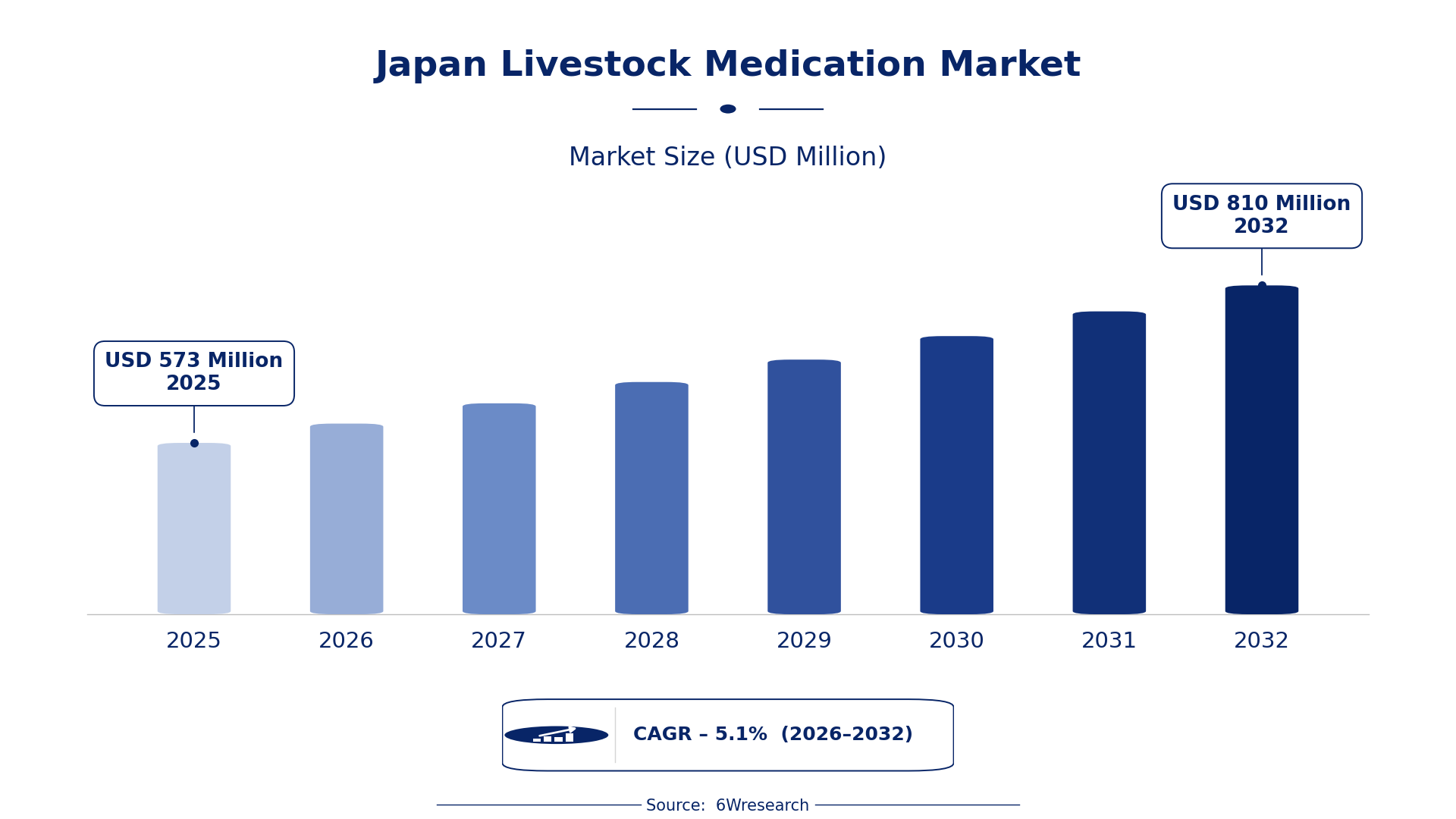
According to 6Wresearch internal database and industry insights, the Japan Livestock Medication Market was valued at USD 573 Million in 2025 and is projected to reach USD 810 Million by 2032, growing at a CAGR of approximately 5.1% during 2026–2032.
Japan Livestock Medication Market Highlights
| Report Metric | Details |
| Report Name | Japan Livestock Medication Market (2026-2032) |
| Market Size 2025 | USD 573 Million |
| Market Size 2032 | USD 810 Million |
| Absolute Growth 2025–2032 | USD 237 Million |
| CAGR 2026–2032 | 5.1% |
| Peak Annual Growth | 6.4% in 2027 |
| Forecast Period | 2026–2032 |
| Historical Data | 2022–2025 |
| Base Year | 2025 |
| Leading Medication Type, 2025 | Broad-Spectrum Antibiotics (44% share) |
| Leading Route of Administration, 2025 | Oral/Injectable (41% share) |
| Leading Distribution Channel, 2025 | Pharmacies & Clinics (42% share) |
| Leading End User, 2025 | Large-Scale Producers (47% share) |
| Fastest-Growing Medication Type | Anti-parasitic Agents (7.0% CAGR) |
| Fastest-Growing Route of Administration | Feed/Injectable (6.7% CAGR) |
| Fastest-Growing Distribution Channel | Online Platforms (6.6% CAGR) |
| Fastest-Growing End User | Smallholder Farmers (6.3% CAGR) |
| Growing Sector | Smallholder Farmers |
| Key End Users | Large-Scale Producers, Smallholder Farmers, Vet Hospitals, Reproductive Farms |
Japan Livestock Medication Market Year-wise Growth Rate and Key Drivers (2022–2032)
This graph illustrates the annual growth rates of the market from 2022 to 2032, highlighting a steady upward trajectory and projected market expansion over the forecast period.
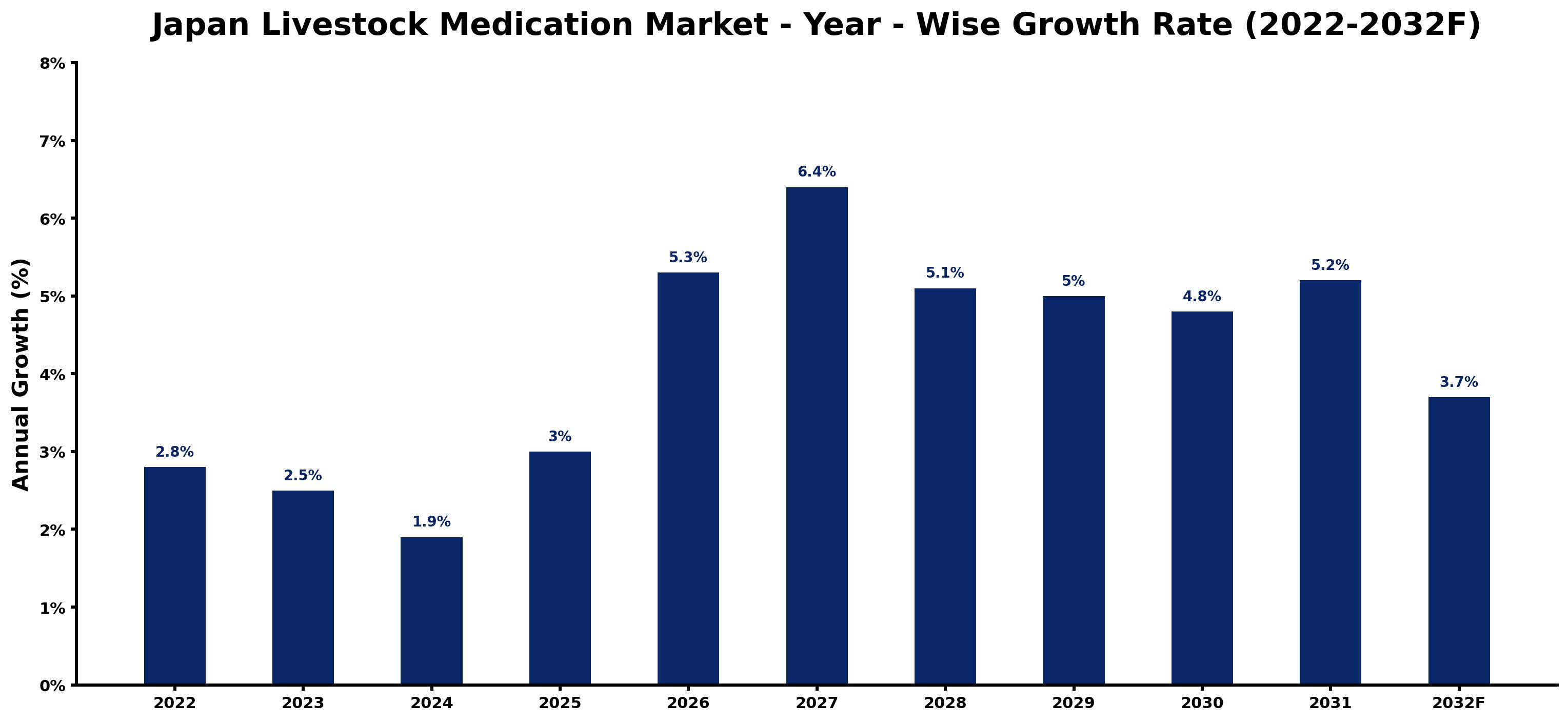
The table below sets out the estimated growth rate for each year and the main factor behind it.
| Year | Estimated Annual Growth (%) | Market Rationale |
| 2022 | 2.8 | The market showed steady growth driven by consistent demand from livestock producers. |
| 2023 | 2.5 | Growth slowed due to market saturation and increased competition among suppliers. |
| 2024 | 1.9 | The market continued to slow as producers faced rising operational costs. |
| 2025 | 3.0 | Growth accelerated as new veterinary clinics opened, improving access to medications. |
| 2026 | 5.3 | Demand is expected to surge as the adoption of online platforms for purchasing livestock medications increases. |
| 2027 | 6.4 | The market is projected to peak due to heightened awareness of livestock health and welfare standards. |
| 2028 | 5.1 | Growth is expected to slow as the market begins to stabilise after the peak year. |
| 2029 | 5.0 | The market will continue to grow, albeit at a slower pace, as producers adjust to new regulations. |
| 2030 | 4.8 | Growth is projected to decelerate as the market matures, leading to a more competitive environment. |
| 2031 | 5.2 | Demand will increase again as smallholder farmers seek to improve livestock productivity. |
| 2032 | 3.7 | Growth is expected to slow as market conditions stabilise and competition intensifies. |
Note: Market size estimations and growth projections presented in this report are based on 6Wresearch's proprietary forecasting methodology, utilizing the latest available industry data, government publications, and primary research inputs.
Japan Livestock Medication Market Synopsis
Livestock medication encompasses pharmaceuticals designed to treat and prevent diseases in animals, including antibiotics, anti-parasitics, anti-inflammatories, and hormonal therapies. The Japan Livestock Medication Market is growing due to heightened awareness of animal health, a rising livestock population, and an expanding network of veterinary clinics, with over 10,000 clinics providing essential services. Government initiatives, such as the 'Livestock Health Improvement Program', are stimulating demand, contributing to a market valued at approximately 200 billion yen in 2023.
Market Dynamics Impact Analysis (2026–2032)
| Factor | Type | Impact | Primary Segment Affected |
| Rising awareness of livestock health standards | Driver | High | Broad-Spectrum Antibiotics |
| Increased livestock population | Driver | High | Anti-parasitic Agents |
| Growth of online purchasing platforms | Opportunity | Medium | Feed/Injectable |
| Expansion of veterinary clinics | Opportunity | High | Injectable |
| Regulatory challenges in drug approvals | Restraint | High | Hormonal Therapies |
| Aging livestock farmer population | Restraint | Medium | Anti-inflammatory Drugs |
| High operational costs for smallholder farmers | Challenge | High | Large-Scale Producers |
| Competition from alternative livestock health solutions | Challenge | Medium | Smallholder Farmers |
Evaluation of Drivers in Japan Livestock Medication Market (2026–2032)
The following drivers explain most of the expected growth.
| Drivers | Primary Segment Affected | Why It Matters (Evidence) |
| Increased livestock population | Broad-Spectrum Antibiotics | Japan's livestock population reached approximately 4.5 million cattle, boosting demand for medications to maintain health. |
| Growing veterinary clinic network | Anti-parasitic Agents | With over 10,000 veterinary clinics, access to medications has improved, leading to higher consumption. |
| Government health programs | Hormonal Therapies | The 'Livestock Health Improvement Program' supports research and innovation, increasing the need for hormonal treatments. |
| Rising awareness of animal welfare | Anti-inflammatory Drugs | The Animal Welfare Act has heightened demand for medications that ensure humane treatment of livestock. |
| Shift towards online purchasing | Feed/Injectable | The adoption of online platforms for purchasing livestock medications has increased by 25% since 2020. |
The primary driver of demand is the increased livestock population, which reached around 4.5 million cattle in 2023, necessitating effective medications. The expanding network of over 10,000 veterinary clinics has enhanced access to treatments, particularly for anti-parasitic agents. Growing awareness of animal welfare standards has led to a surge in demand for anti-inflammatory drugs that ensure humane treatment. The trend towards online purchasing platforms has also improved medication accessibility since 2020, further propelling market growth.
Evaluation of Restraints in Japan Livestock Medication Market
The table below lists the restraints and the evidence behind each.
| Market Restraint | Primary Segment Affected | Why It Matters (Evidence) |
| Regulatory challenges in drug approvals | Hormonal Therapies | Stringent regulations under the Clinical Trials Act slow the approval process for new medications, affecting availability. |
| Aging livestock farmer population | Anti-inflammatory Drugs | With an average age of 66, many farmers may struggle to adopt new technologies or treatments. |
| High operational costs for smallholder farmers | Large-Scale Producers | Rising costs of veterinary services, averaging around 10,000 yen per visit, limit purchasing power. |
| Competition from alternative livestock health solutions | Smallholder Farmers | Emerging alternatives may divert attention from traditional livestock medications, impacting sales. |
| Market saturation in urban veterinary clinics | Injectable | The high number of clinics in urban areas leads to intense competition and price pressure. |
Japan Livestock Medication Market Challenges
Producers, especially smallholder farmers, encounter difficulties due to outdated technology in livestock medication, resulting in treatment delays and higher mortality rates. Regulatory hurdles complicate the approval process for new veterinary drugs, often extending timelines by up to 12 months for veterinary clinics, which hampers timely care delivery. The average cost of veterinary services, approximately 10,000 yen per visit, places a strain on producers' budgets, limiting their ability to maintain animal health. Supply chain disruptions from stringent regulations can lead to critical medication shortages, forcing clinics to postpone treatments and adversely affecting livestock productivity.
Trends in the Japan Livestock Medication Market
Below are the shifts with the largest effect on the Japan Livestock Medication Market.
- Rise of Online Purchasing Platforms: The adoption of online platforms for purchasing livestock medications has surged by 25% since 2020, allowing farmers to access products more conveniently. This shift is particularly beneficial for rural clinics, improving their procurement capabilities.
- Focus on Animal Welfare: There is a growing emphasis on animal welfare in Japan, driven by the Animal Welfare Act. This focus is leading to increased demand for humane treatment medications, benefiting suppliers who provide compliant products.
- Expansion of Veterinary Clinics: The number of veterinary clinics has exceeded 10,000, improving access to livestock medications. This growth is vital for smallholder farmers who rely on local clinics for timely treatments.
- Increase in Livestock Population: Japan's livestock population reached approximately 4.5 million cattle in 2023, creating a higher demand for effective medications. This trend supports suppliers who can meet the rising needs of the livestock industry.
Investment Opportunities in the Japan Livestock Medication Market
The openings below show where demand in the Japan Livestock Medication Market is visible and how suppliers can enter.
- Partnerships with Veterinary Clinics: Now is an opportune moment to collaborate with veterinary clinics, which are broadening their services. Partnering with over 10,000 clinics can enhance distribution channels for livestock medications.
- Supply of Anti-parasitic Agents: Smallholder farmers are increasingly in search of effective anti-parasitic agents to ensure livestock health. Suppliers can capitalise on this demand by offering targeted products.
- Investment in Online Platforms: Investing in online platforms for livestock medication sales is timely, given the 25% increase in adoption since 2020. This strategy can reach a wider audience, particularly in rural areas.
- Development of Innovative Products: The current focus on animal welfare presents opportunities for developing new products that meet evolving standards. Suppliers can gain by aligning with the regulations established by the Animal Welfare Act.
Government Initiatives in the Japan Livestock Medication Market
The 'Clinical Trials Act' (2017) establishes the framework for conducting and disclosing clinical research, ensuring that new veterinary medications meet safety and efficacy standards. This act complements existing regulations, streamlining the approval process for livestock medications.
The Pharmaceuticals and Medical Devices Agency (PMDA) reviews pharmaceuticals and medical devices, ensuring that new veterinary drugs are safe for use. The agency also monitors post-market safety, which is crucial for maintaining high standards in livestock health.
Future Insight of the Japan Livestock Medication Market
Investment in veterinary medicine is projected to increase significantly by 2032, driven by government programmes like the 'National Livestock Breeding Program' aimed at improving livestock quality. This will generate higher demand for effective livestock medications, enhancing care for farmers. The rise of digital platforms for purchasing medications will improve accessibility for rural clinics. Ongoing research initiatives will establish new standards in veterinary pharmaceuticals, ensuring better compliance and care for livestock, benefiting both buyers and suppliers.
Market Segmentation Analysis
Japan Livestock Medication Market report covers a detailed analysis of the following market segments:
By Medication Type – Broad-Spectrum Antibiotics Lead, Anti-parasitic Agents Expected to Grow Fastest
According to Saurav Kr Singh, Senior Research Analyst at 6Wresearch, the largest medication type category in 2025 was Broad-Spectrum Antibiotics, at 44% of revenue. Broad-spectrum antibiotics are vital for treating bacterial infections in livestock, making them a preferred choice among veterinary professionals. Their importance is highlighted by the substantial demand from large-scale producers who rely on these medications for maintaining animal health. Over 2026–2032, Anti-parasitic Agents are expected to post the fastest growth, at a CAGR of 7.0%. The increasing use of anti-parasitic agents is attributed to the growing recognition of the negative impact of parasites on livestock productivity. With an estimated annual consumption of 1,500 tons, the focus on effective parasite control is becoming more pronounced in the industry. Suppliers should prioritise the availability of anti-parasitic agents to meet the rising demand in the market.
By Route of Administration – Oral/Injectable Leads, Feed/Injectable Expected to Grow Fastest
In 2025, Oral/Injectable led the route of administration split with a 41% share. Oral routes are commonly used for administering medications to livestock, ensuring effective treatment outcomes. This method is particularly favoured among large-scale producers who manage extensive herds and require reliable health interventions. The quickest growth will come from Feed/Injectable, forecast to expand at a CAGR of 6.7% between 2026 and 2032. Feed routes are gaining traction due to their efficiency in delivering medications, especially in larger operations. This trend reflects a movement towards more streamlined livestock management practices that focus on effective health solutions. Suppliers should consider developing products that align with feed administration to cater to the shifting market preferences.
By Distribution Channel – Pharmacies & Clinics Lead, Online Platforms Expected to Grow Fastest
With 42% of distribution channel revenue in 2025, Pharmacies & Clinics was the largest category. Pharmacies and clinics are the dominant distribution channels for veterinary medications, providing vital access for livestock producers. Their established infrastructure ensures that large-scale producers can conveniently obtain necessary treatments for their animals. Online Platforms are projected to grow fastest, at a CAGR of 6.6% during 2026–2032. Online platforms are experiencing rapid growth, with a 25% increase in adoption since 2020, as they offer convenience and competitive pricing. This shift reflects changing purchasing habits among livestock producers who seek more accessible options. Suppliers need to strengthen their online distribution strategies to cater to the increasing number of producers opting for digital purchasing.
By End User – Large-Scale Producers Lead, Smallholder Farmers Expected to Grow Fastest
Large-Scale Producers accounted for 47% of the market by end user in 2025. Large-scale producers are the primary users of livestock medications, managing significant populations that necessitate consistent health management. Their substantial purchasing power is crucial in influencing the veterinary pharmaceuticals market. Smallholder Farmers are set to record the highest CAGR in this split, 6.3% over 2026–2032. Smallholder farmers are becoming increasingly important users of livestock medications, motivated by their need to ensure the health of their animals. Their heightened awareness of health management is driving the growth of this segment within the market. Suppliers should tailor their marketing strategies to effectively meet the specific needs of smallholder farmers.
Key Attractiveness of the Report
- 10 Years of Market Numbers
- Historical Data Starting from 2022 to 2025
- Base Year 2025
- Forecast Data until 2032
- Key Performance Indicators Impacting the Market
- Major Upcoming Developments and Projects
Key Highlights of the Report:
- Japan Livestock Medication Market Outlook
- Market Size of Japan Livestock Medication Market, 2025
- Forecast of Japan Livestock Medication Market, 2032
- Historical Data and Forecast of Japan Livestock Medication Revenues & Volume for the Period 2022-2032F
- Japan Livestock Medication Market Trend Evolution
- Japan Livestock Medication Market Drivers and Challenges
- Japan Livestock Medication Price Trends
- Japan Livestock Medication Porter's Five Forces
- Japan Livestock Medication Industry Life Cycle
- Historical Data and Forecast of Japan Livestock Medication Market Revenues & Volume By Medication Type for the Period 2022-2032F
- Historical Data and Forecast of Japan Livestock Medication Market Revenues & Volume By Broad-Spectrum Antibiotics for the Period 2022-2032F
- Historical Data and Forecast of Japan Livestock Medication Market Revenues & Volume By Anti-parasitic Agents for the Period 2022-2032F
- Historical Data and Forecast of Japan Livestock Medication Market Revenues & Volume By Anti-inflammatory Drugs for the Period 2022-2032F
- Historical Data and Forecast of Japan Livestock Medication Market Revenues & Volume By Hormonal Therapies for the Period 2022-2032F
- Historical Data and Forecast of Japan Livestock Medication Market Revenues & Volume By Route of Administration for the Period 2022-2032F
- Historical Data and Forecast of Japan Livestock Medication Market Revenues & Volume By Oral/Injectable for the Period 2022-2032F
- Historical Data and Forecast of Japan Livestock Medication Market Revenues & Volume By Feed/Injectable for the Period 2022-2032F
- Historical Data and Forecast of Japan Livestock Medication Market Revenues & Volume By Injectable for the Period 2022-2032F
- Historical Data and Forecast of Japan Livestock Medication Market Revenues & Volume By IM/Subcutaneous for the Period 2022-2032F
- Historical Data and Forecast of Japan Livestock Medication Market Revenues & Volume By Distribution Channel for the Period 2022-2032F
- Historical Data and Forecast of Japan Livestock Medication Market Revenues & Volume By Pharmacies & Clinics for the Period 2022-2032F
- Historical Data and Forecast of Japan Livestock Medication Market Revenues & Volume By Online Platforms for the Period 2022-2032F
- Historical Data and Forecast of Japan Livestock Medication Market Revenues & Volume By Industrial Suppliers for the Period 2022-2032F
- Historical Data and Forecast of Japan Livestock Medication Market Revenues & Volume By Specialty Stores for the Period 2022-2032F
- Historical Data and Forecast of Japan Livestock Medication Market Revenues & Volume By End User for the Period 2022-2032F
- Historical Data and Forecast of Japan Livestock Medication Market Revenues & Volume By Large-Scale Producers for the Period 2022-2032F
- Historical Data and Forecast of Japan Livestock Medication Market Revenues & Volume By Smallholder Farmers for the Period 2022-2032F
- Historical Data and Forecast of Japan Livestock Medication Market Revenues & Volume By Vet Hospitals for the Period 2022-2032F
- Historical Data and Forecast of Japan Livestock Medication Market Revenues & Volume By Reproductive Farms for the Period 2022-2032F
- Japan Livestock Medication Import Export Trade Statistics
- Market Opportunity Assessment By Medication Type
- Market Opportunity Assessment By Route of Administration
- Market Opportunity Assessment By Distribution Channel
- Market Opportunity Assessment By End User
- Japan Livestock Medication Top Companies Market Share
- Japan Livestock Medication Competitive Benchmarking By Technical and Operational Parameters
- Japan Livestock Medication Company Profiles
- Japan Livestock Medication Key Strategic Recommendations
Market Covered
This report examines the market across the segments below.
By Medication Type
- Broad-Spectrum Antibiotics
- Anti-parasitic Agents
- Anti-inflammatory Drugs
- Hormonal Therapies
By Route of Administration
- Oral/Injectable
- Feed/Injectable
- Injectable
- IM/Subcutaneous
By Distribution Channel
- Pharmacies & Clinics
- Online Platforms
- Industrial Suppliers
- Specialty Stores
By End User
- Large-Scale Producers
- Smallholder Farmers
- Vet Hospitals
- Reproductive Farms






































