Japan Metal Forging Market Size & Growth Rate
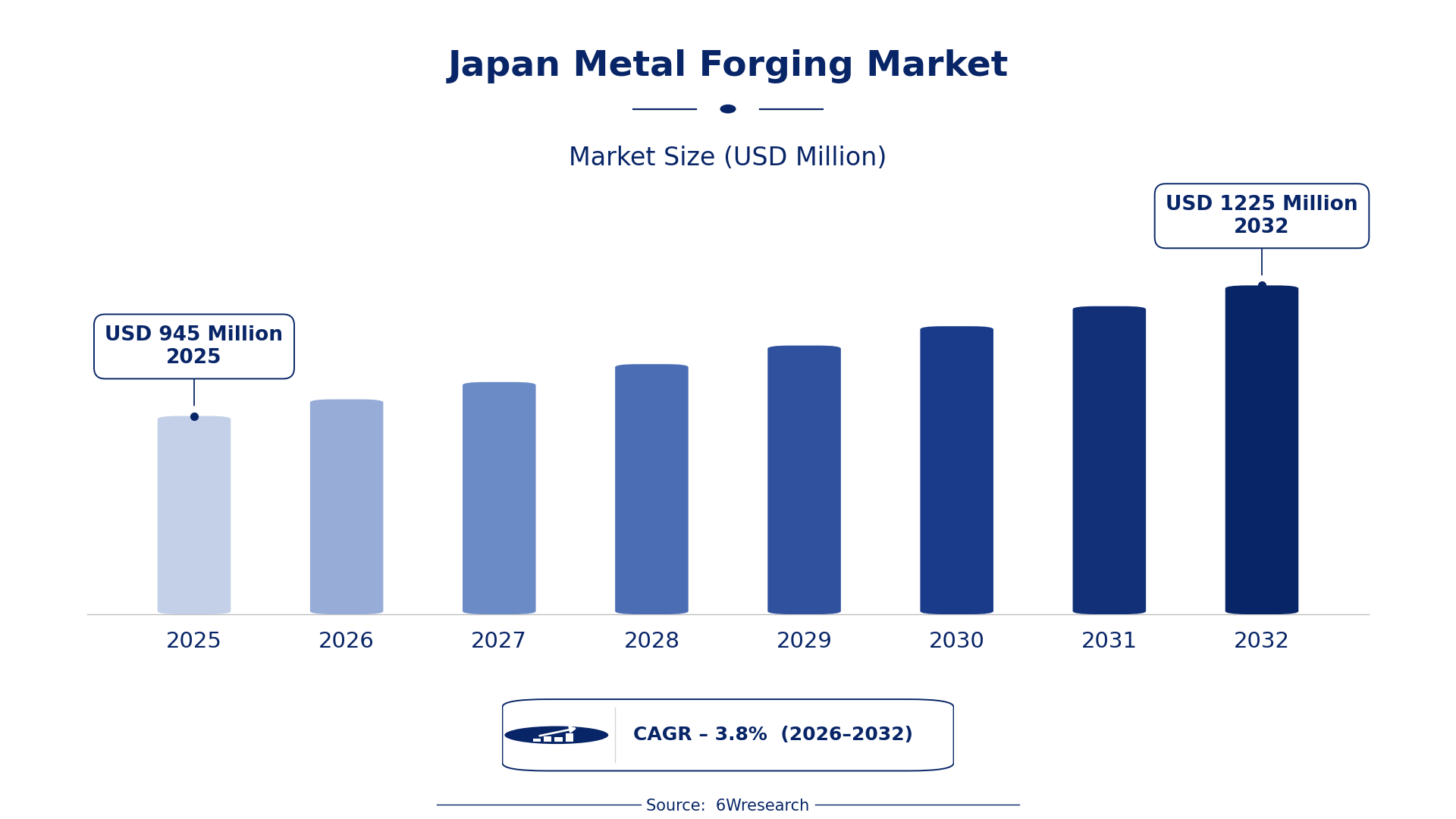
According to 6Wresearch internal database and industry insights, the Japan Metal Forging Market was valued at USD 945 Million in 2025 and is projected to reach USD 1,225 Million by 2032, growing at a CAGR of approximately 3.8% during 2026–2032.
Japan Metal Forging Market Highlights
| Report Metric | Details |
| Report Name | Japan Metal Forging Market (2026-2032) |
| Market Size 2025 | USD 945 Million |
| Market Size 2032 | USD 1,225 Million |
| Absolute Growth 2025–2032 | USD 280 Million |
| CAGR 2026–2032 | 3.8% |
| Peak Annual Growth | 4.5% in 2026 |
| Forecast Period | 2026–2032 |
| Historical Data | 2022–2025 |
| Base Year | 2025 |
| Leading Raw Material, 2025 | Carbon Steel (30% share) |
| Leading Applications, 2025 | Automotive (39% share) |
| Fastest-Growing Raw Material | Alloy steel (5.5% CAGR) |
| Fastest-Growing Applications | Aerospace (5.3% CAGR) |
| Growing Sector | automotive |
| Key End Users | automotive, aerospace, construction, oil & gas |
Japan Metal Forging Market Year-wise Growth Rate and Key Drivers (2022–2032)
This graph illustrates the annual growth rates of the market from 2022 to 2032, highlighting a steady upward trajectory and projected market expansion over the forecast period.
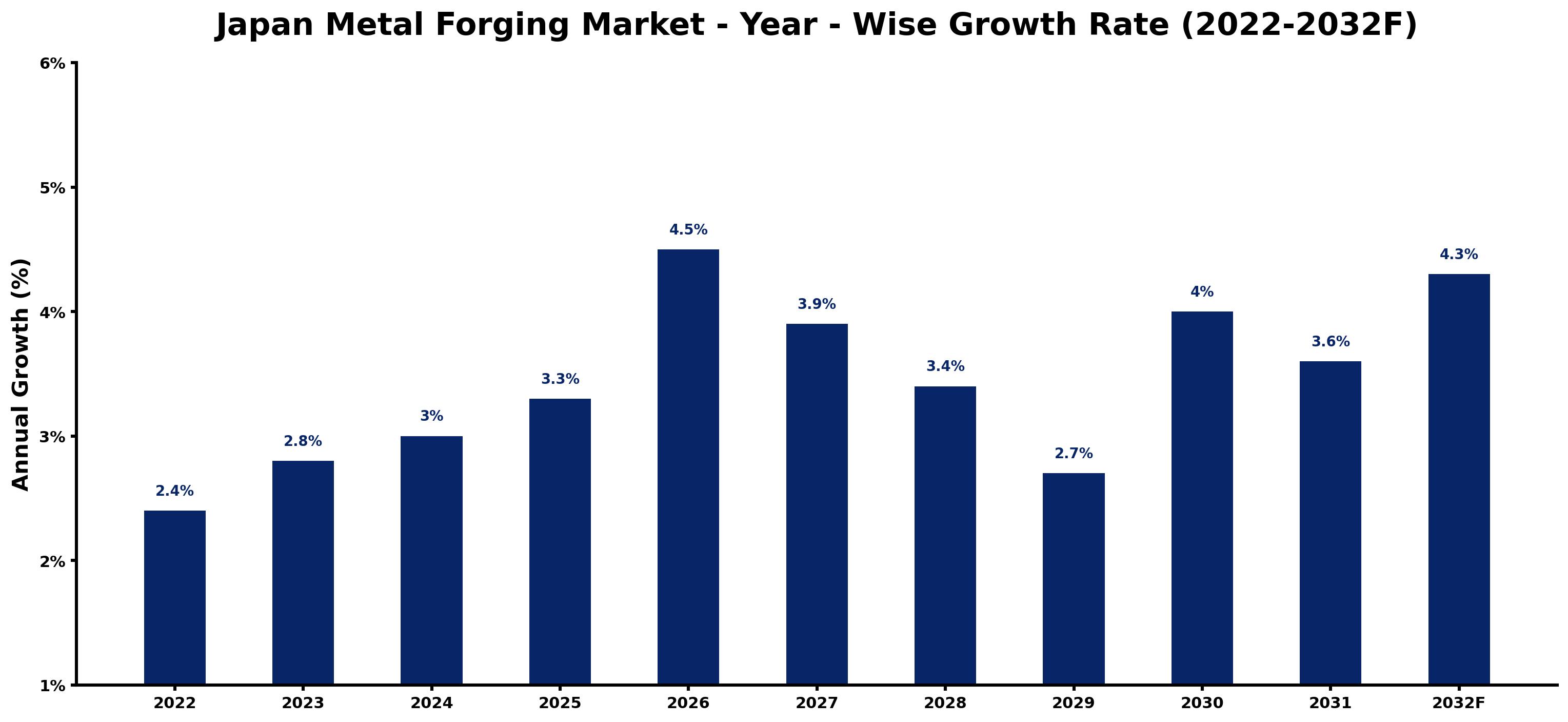
The following figures match every annual growth estimate with the main market development of that year, giving the reasoning behind each rise or slowdown.
| Year | Estimated Annual Growth (%) | Market Rationale |
| 2022 | 2.4 | The market experienced steady demand from the automotive sector, maintaining its growth. |
| 2023 | 2.8 | Production increases in the automotive industry stimulated demand for forged components. |
| 2024 | 3.0 | Growth in the aerospace sector contributed to higher requirements for high-strength forged parts. |
| 2025 | 3.3 | Continued vehicle manufacturing expansion drove demand for carbon steel forgings. |
| 2026 | 4.5 | Recovery in the automotive sector and innovation in electric vehicles will spur demand for forgings. |
| 2027 | 3.9 | A slowdown in growth will occur as the market adjusts to previous high demand levels. |
| 2028 | 3.4 | Demand growth will moderate as the aerospace sector stabilises after rapid expansion. |
| 2029 | 2.7 | The market will continue to grow, albeit at a slower pace due to market saturation. |
| 2030 | 4.0 | Increased construction activities will lead to a resurgence in demand for forged steel products. |
| 2031 | 3.6 | The market will experience a slowdown as growth stabilises after previous peaks. |
| 2032 | 4.3 | Demand for forged products is expected to rise as aerospace production increases. |
Note: Market size estimations and growth projections presented in this report are based on 6Wresearch's proprietary forecasting methodology, utilizing the latest available industry data, government publications, and primary research inputs.
Japan Metal Forging Market Synopsis
Metal forging is a manufacturing process that shapes metal through compressive forces, typically by heating it to a malleable state. This process produces components for industries such as automotive, aerospace, and construction. The Japan Metal Forging Market is growing due to strong demand from the automotive sector, which produced over 8 million vehicles in 2022. The aerospace industry is also expanding, increasing the need for high-strength forged parts. The Tokyo region serves as a key hub for metal forging, housing numerous manufacturers and suppliers that support market growth.
Market Dynamics Impact Analysis (2026–2032)
| Factor | Type | Impact | Primary Segment Affected |
| Growth in the automotive sector drives demand for carbon steel forgings. | Driver | High | Carbon Steel |
| The aerospace industry's expansion increases the need for high-performance forgings. | Driver | High | Alloy steel |
| The construction industry's growth creates opportunities for forged steel products. | Opportunity | High | Stainless Steel |
| The shift towards lightweight materials in electric vehicles presents new supply opportunities. | Opportunity | Medium | Aluminum |
| Rising raw material costs may limit profitability for manufacturers. | Restraint | High | Carbon Steel |
| Competition from low-cost imports can pressure local producers. | Restraint | Medium | Alloy steel |
| Supply chain disruptions can delay production timelines for manufacturers. | Challenge | High | Aluminum |
| Technological advancements require continuous investment in modernising equipment. | Challenge | Medium | Stainless Steel |
Evaluation of Drivers in Japan Metal Forging Market (2026–2032)
Below are the drivers that matter most for revenue growth, with supporting evidence.
| Drivers | Primary Segment Affected | Why It Matters (Evidence) |
| Increased vehicle production in Japan fuels demand for carbon steel forgings. | Carbon Steel | Japan's automotive industry produced over 8 million vehicles in 2022, increasing requirements for components. |
| The growing aerospace sector drives demand for high-performance alloy steel forgings. | Alloy steel | The aerospace sector is expanding, leading to increased needs for high-strength forged parts. |
| Rising construction activities boost demand for stainless steel forgings. | Stainless Steel | Japan's construction industry is expected to grow in 2023, increasing the need for forged products. |
| The transition to electric vehicles increases the use of aluminum forgings. | Aluminum | Aluminum forgings are increasingly used in electric vehicles to reduce weight and improve efficiency. |
| Technological advancements in manufacturing processes improve production capabilities. | Magnesium | Innovations in forging techniques allow for better utilisation of magnesium in specialized applications. |
A wider customer base explains much of the growth, as the automotive sector's production of over 8 million vehicles in 2022 increased demand for carbon steel forgings. The aerospace industry is expanding, with a projected growth rate that raises the need for high-performance alloy steel forgings. The construction sector's anticipated growth in 2023 will drive demand for stainless steel forgings. These factors contribute to rising demand for forged products across various industries, particularly in the Tokyo region, which houses numerous manufacturers and suppliers. The combination of automotive, aerospace, and construction sectors creates a strong demand environment for metal forging.
Evaluation of Restraints in Japan Metal Forging Market
Below are the constraints most often cited by buyers and suppliers, with the segment each affects.
| Market Restraint | Primary Segment Affected | Why It Matters (Evidence) |
| Rising raw material costs may limit the profitability of manufacturers. | Carbon Steel | Increased prices for raw materials can squeeze margins for producers, affecting pricing strategies. |
| Competition from low-cost imports can pressure local producers. | Alloy steel | Local manufacturers face challenges from cheaper imports, impacting market share and pricing. |
| Supply chain disruptions can delay production timelines for manufacturers. | Aluminum | Global supply chain issues can lead to delays in sourcing materials, affecting delivery schedules. |
| Technological advancements require continuous investment in modernising equipment. | Stainless Steel | Manufacturers must invest in new technologies to remain competitive, which can strain budgets. |
| Fluctuating demand in the automotive sector can create uncertainty for producers. | Carbon Steel | Changes in vehicle production levels can lead to unpredictable demand for forged components. |
Japan Metal Forging Market Challenges
Producers in Japan face stringent regulations on greenhouse gas emissions, which increase compliance costs and extend production timelines. These regulations require investment in cleaner technologies, potentially costing manufacturers up to JPY 150 trillion over ten years. A skills gap arises as experienced workers retire, risking a 20% decline in productivity for companies dependent on skilled labour. Buyers encounter fluctuating prices for forged components, driven by demand changes in the automotive sector, which produced over 8 million vehicles in 2022, complicating their budgeting and procurement strategies.
Trends in the Japan Metal Forging Market
The following changes are redrawing the Japan Metal Forging Market.
- Shift in Automotive Demand: Automotive manufacturers are increasingly focusing on lightweight materials, such as aluminum, to improve vehicle efficiency. In 2022, over 8 million vehicles were produced in Japan, driving demand for aluminum forgings.
- Growing Aerospace Production: The aerospace sector is expanding, resulting in a higher demand for high-strength forged parts. By 2025, Japan aims to increase domestic aerospace component production by 20%, creating opportunities for alloy steel forgings.
- Increased Construction Activities: The construction industry is expected to grow in 2023, boosting demand for forged steel products. This trend is clear as stainless steel forgings are essential for high-rise buildings and infrastructure projects.
- Focus on Decarbonisation: Japan's commitment to reducing greenhouse gas emissions by 46% by 2030 is prompting investments in sustainable manufacturing practices. This shift will increase demand for environmentally friendly forged products.
Investment Opportunities in the Japan Metal Forging Market
Where to invest in the Japan Metal Forging Market: the main openings are set out below.
- Timing for Investment in Lightweight Materials: Now is an opportune time to invest in aluminum forgings, as demand for lightweight materials in electric vehicles is rising. The automotive sector's shift towards efficiency creates a market opportunity.
- Expansion in the Tokyo Region: The Tokyo region, a major hub for metal forging, presents opportunities for new manufacturers. With a growing number of suppliers, entering this market through local partnerships can be advantageous.
- Supply of High-Performance Forgings: Investing in high-performance alloy steel forgings is timely, as the aerospace sector's growth increases demand. Collaborating with aerospace manufacturers can facilitate market entry and expansion.
- Certification for Quality Standards: Obtaining ISO 9001 certification can improve market credibility for forging companies. This standard is widely adopted, and compliance can attract more buyers in the automotive and aerospace sectors.
Government Initiatives in the Japan Metal Forging Market
The Economic Security Promotion Act (2022) supports supply-chain resilience for critical products in the metal forging sector. This measure encourages manufacturers to improve their production capabilities and ensure a stable supply of forged components, which benefits buyers by reducing uncertainty in sourcing materials. The act aims to strengthen domestic manufacturing and improve competitiveness in the market, with a focus on critical materials.
In 2023, the Ministry of Economy, Trade and Industry allocated JPY 150 trillion for decarbonisation investments over the next decade. This funding aims to support innovation and sustainability in the metal forging sector, which will boost competitiveness and market growth by enabling manufacturers to adopt greener practices.
Future Insight of the Japan Metal Forging Market
Investment in decarbonisation will create robust demand for forged components, particularly in the construction industry, which will expand significantly. By 2032, the shift towards lightweight materials will increase the adoption of aluminum forgings in electric vehicles, enhancing efficiency. The aerospace sector's goal to boost domestic production of components by 20% by 2025 will further elevate the need for high-strength forged parts. Standards set by the Japan Forging Association will ensure quality management, benefiting both buyers and suppliers.
Market Segmentation Analysis
Japan Metal Forging Market report covers a detailed analysis of the following market segments:
By Raw Material – Carbon Steel Leads, Alloy steel Expected to Grow Fastest
According to Sumit Sagar, AM at 6Wresearch, Carbon Steel took 30% of raw material revenue in 2025, more than any other category. Carbon steel holds the largest share in Japan's metal forging market as it is extensively utilised in automotive components, where both strength and ductility are essential. Its application in over 60% of automotive products illustrates its critical importance to this sector. The quickest growth will come from Alloy steel, forecast to expand at a CAGR of 5.5% between 2026 and 2032. Alloy steel is experiencing rapid growth due to its rising use in high-performance applications in both the aerospace and automotive industries. With the aerospace sector projected to expand, the demand for alloy steel forgings is anticipated to increase significantly. This trend indicates that suppliers must focus on enhancing their alloy steel offerings to cater to the growing demand in high-performance applications.
By Applications – Automotive Leads, Aerospace Expected to Grow Fastest
Automotive accounted for 39% of the market by applications in 2025. The automotive sector is the largest consumer of forged products in Japan, driven by the production of over 8 million vehicles in 2022. This substantial output creates a continuous demand for various forged components essential for vehicle manufacturing. Aerospace is set to record the highest CAGR in this split, 5.3% over 2026–2032. The aerospace sector is anticipated to grow the fastest, as it requires high-strength forged parts to support its expansion. With the government's target to increase domestic aerospace production by 20% by 2025, the demand for aerospace forgings will surge. Buyers in the aerospace industry should prepare for increased competition for high-strength forged components as demand escalates.
Key Attractiveness of the Report
- 10 Years of Market Numbers
- Historical Data Starting from 2022 to 2025
- Base Year 2025
- Forecast Data until 2032
- Key Performance Indicators Impacting the Market
- Major Upcoming Developments and Projects
Key Highlights of the Report:
- Japan Metal Forging Market Outlook
- Market Size of Japan Metal Forging Market, 2025
- Forecast of Japan Metal Forging Market, 2032
- Historical Data and Forecast of Japan Metal Forging Revenues & Volume for the Period 2022-2032
- Japan Metal Forging Market Trend Evolution
- Japan Metal Forging Market Drivers and Challenges
- Japan Metal Forging Price Trends
- Japan Metal Forging Porter's Five Forces
- Japan Metal Forging Industry Life Cycle
- Historical Data and Forecast of Japan Metal Forging Market Revenues & Volume By Raw Material for the Period 2022-2032
- Historical Data and Forecast of Japan Metal Forging Market Revenues & Volume By Carbon Steel for the Period 2022-2032
- Historical Data and Forecast of Japan Metal Forging Market Revenues & Volume By Alloy steel for the Period 2022-2032
- Historical Data and Forecast of Japan Metal Forging Market Revenues & Volume By Aluminum for the Period 2022-2032
- Historical Data and Forecast of Japan Metal Forging Market Revenues & Volume By Magnesium for the Period 2022-2032
- Historical Data and Forecast of Japan Metal Forging Market Revenues & Volume By Stainless Steel for the Period 2022-2032
- Historical Data and Forecast of Japan Metal Forging Market Revenues & Volume By Titanium for the Period 2022-2032
- Historical Data and Forecast of Japan Metal Forging Market Revenues & Volume By Others for the Period 2022-2032
- Historical Data and Forecast of Japan Metal Forging Market Revenues & Volume By Applications for the Period 2022-2032
- Historical Data and Forecast of Japan Metal Forging Market Revenues & Volume By Automotive for the Period 2022-2032
- Historical Data and Forecast of Japan Metal Forging Market Revenues & Volume By Aerospace for the Period 2022-2032
- Historical Data and Forecast of Japan Metal Forging Market Revenues & Volume By Oil & Gas for the Period 2022-2032
- Historical Data and Forecast of Japan Metal Forging Market Revenues & Volume By Construction for the Period 2022-2032
- Historical Data and Forecast of Japan Metal Forging Market Revenues & Volume By Agriculture for the Period 2022-2032
- Historical Data and Forecast of Japan Metal Forging Market Revenues & Volume By Others for the Period 2022-2032
- Japan Metal Forging Import Export Trade Statistics
- Market Opportunity Assessment By Raw Material
- Market Opportunity Assessment By Applications
- Japan Metal Forging Top Companies Market Share
- Japan Metal Forging Competitive Benchmarking By Technical and Operational Parameters
- Japan Metal Forging Company Profiles
- Japan Metal Forging Key Strategic Recommendations
Market Covered
Coverage by segment is as follows.
By Raw Material
- Carbon Steel
- Alloy steel
- Aluminum
- Magnesium
- Stainless Steel
- Titanium
- Others
By Applications
- Automotive
- Aerospace
- Oil & Gas
- Construction
- Agriculture
- Others






































