Japan Mulch Fabrics Market Size & Growth Rate
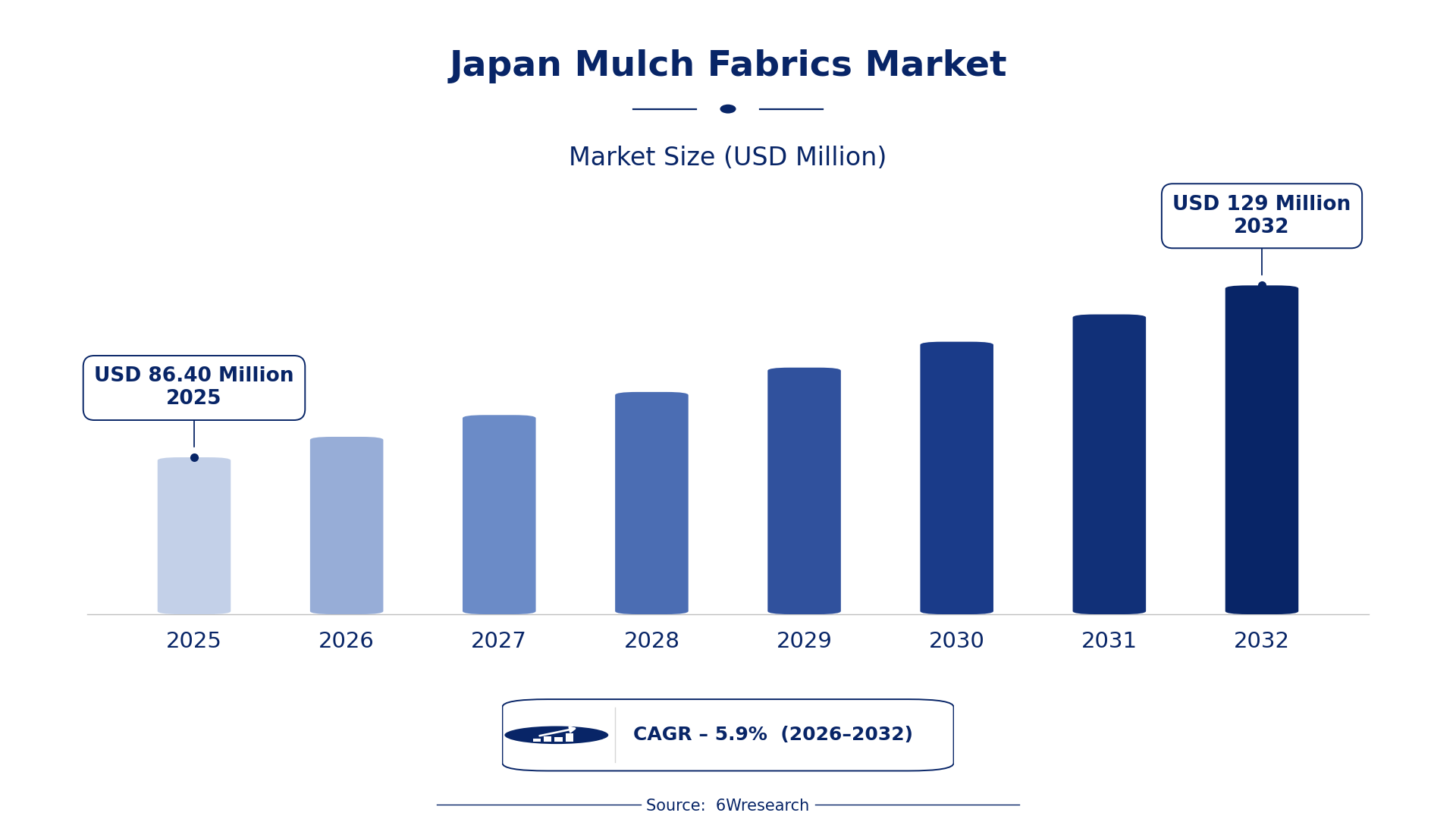
According to 6Wresearch internal database and industry insights, the Japan Mulch Fabrics Market was valued at USD 86.40 Million in 2025 and is projected to reach USD 129 Million by 2032, growing at a CAGR of approximately 5.9% during 2026–2032.
Japan Mulch Fabrics Market Highlights
| Report Metric | Details |
| Report Name | Japan Mulch Fabrics Market (2026-2032) |
| Market Size 2025 | USD 86.40 Million |
| Market Size 2032 | USD 129 Million |
| Absolute Growth 2025–2032 | USD 42.60 Million |
| CAGR 2026–2032 | 5.9% |
| Peak Annual Growth | 6.8% in 2032 |
| Forecast Period | 2026–2032 |
| Historical Data | 2022–2025 |
| Base Year | 2025 |
| Leading Fabric Type, 2025 | Woven Mulch Fabric (42% share) |
| Leading Material Type, 2025 | Polypropylene (41% share) |
| Leading Distribution Channel, 2025 | Agricultural Retailers (38% share) |
| Leading End User, 2025 | Farmers (51% share) |
| Fastest-Growing Fabric Type | Biodegradable Fabric (8.5% CAGR) |
| Fastest-Growing Material Type | Starch-Based (8.2% CAGR) |
| Fastest-Growing Distribution Channel | Online Platforms (7.6% CAGR) |
| Fastest-Growing End User | Organic Growers (7.9% CAGR) |
| Growing Sector | Organic Growers |
| Key End Users | Farmers, Home Gardeners, Organic Growers, Landscaping Contractors |
Japan Mulch Fabrics Market Year-wise Growth Rate and Key Drivers (2022–2032)
This graph illustrates the annual growth rates of the market from 2022 to 2032, highlighting a steady upward trajectory and projected market expansion over the forecast period.
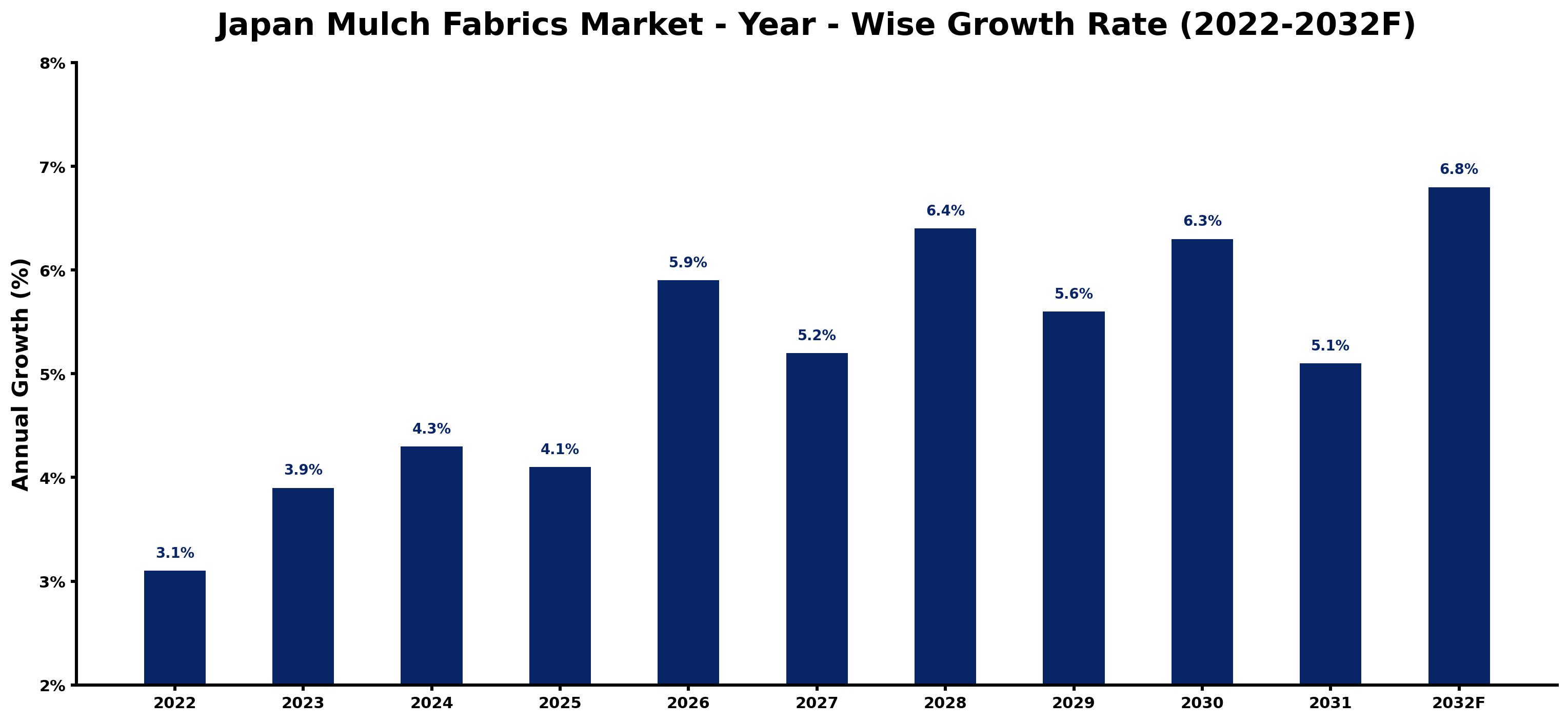
Annual growth estimates for each year appear below with the principal reason behind them, explaining the shifts that set the pace of the market.
| Year | Estimated Annual Growth (%) | Market Rationale |
| 2022 | 3.1 | The market experienced steady growth as farmers adopted mulch fabrics for improved crop yields. |
| 2023 | 3.9 | Increased interest in sustainable practices led to faster growth in mulch fabric adoption among farmers. |
| 2024 | 4.3 | The rise in vegetable production in the Kanto region contributed to accelerated market growth. |
| 2025 | 4.1 | Growth slowed slightly as the market adjusted to supply chain challenges and changing consumer preferences. |
| 2026 | 5.9 | The introduction of new biodegradable fabric types is expected to drive demand. |
| 2027 | 5.2 | Growth is anticipated to slow as market saturation begins to affect sales among traditional fabric types. |
| 2028 | 6.4 | The trend towards eco-friendly materials is likely to boost sales of biodegradable options. |
| 2029 | 5.6 | A slowdown is expected as competition intensifies among suppliers in the mulch fabrics market. |
| 2030 | 6.3 | Technological advancements in fabric durability are projected to support market growth. |
| 2031 | 5.1 | Growth is expected to slow as the market stabilises following years of rapid expansion. |
| 2032 | 6.8 | The market is projected to peak as demand for sustainable agricultural practices continues to rise. |
Note: Market size estimations and growth projections presented in this report are based on 6Wresearch's proprietary forecasting methodology, utilizing the latest available industry data, government publications, and primary research inputs.
Japan Mulch Fabrics Market Synopsis
Mulch fabrics are agricultural materials that cover soil to suppress weeds and retain moisture, primarily made from polypropylene and biodegradable substances. The Japan Mulch Fabrics Market is growing as sustainable farming practices gain traction, with mulch fabrics reducing water usage by up to 50%. The horticulture market, valued at over 1 trillion yen annually, drives demand, especially in the Kanto region, renowned for its vegetable production.
Market Dynamics Impact Analysis (2026–2032)
| Factor | Type | Impact | Primary Segment Affected |
| Growing interest in sustainable agriculture practices among farmers | Driver | High | Biodegradable Fabric |
| The increasing area of cultivated land in Japan supports mulch fabric usage | Driver | High | Woven Mulch Fabric |
| Rising urban gardening activities create demand for mulch fabrics | Opportunity | High | Home Gardeners |
| The government's target to increase organic farming land to 3% by 2025 creates a market for biodegradable options | Opportunity | High | Organic Growers |
| Aging farmer population may limit adoption of new technologies | Restraint | Medium | Farmers |
| Competition among suppliers may lead to price pressures, affecting profitability | Restraint | Medium | Agricultural Retailers |
| Supply chain disruptions can delay product availability for buyers | Challenge | High | Horticulture Suppliers |
| Technological advancements in alternative materials may challenge traditional fabric sales | Challenge | Medium | Non-Woven Mulch Fabric |
Evaluation of Drivers in Japan Mulch Fabrics Market (2026–2032)
Key forces behind demand, with the segment each one moves most, are listed below.
| Drivers | Primary Segment Affected | Why It Matters (Evidence) |
| Increased adoption of biodegradable mulch fabrics | Biodegradable Fabric | Organic growers are increasingly seeking eco-friendly solutions, with biodegradable types gaining popularity in the market. |
| Rising vegetable production in the Kanto region | Woven Mulch Fabric | The Kanto region's focus on vegetable cultivation boosts demand for woven mulch fabrics, effective for moisture retention. |
| Growth in urban gardening activities | Home Gardeners | Approximately 30% of Japanese households engage in home gardening, increasing the need for mulch fabrics in urban settings. |
| Government initiatives promoting sustainable agriculture | Organic Growers | Support for sustainable practices encourages organic growers to adopt biodegradable mulch fabrics. |
| Technological advancements in fabric durability | UV-Stabilized Fabric | Improvements in UV-stabilized fabrics increase their lifespan, appealing to farmers looking for long-lasting solutions. |
Several shifts outside the market lift sales. The increasing area of cultivated land, approximately 4.5 million hectares, supports the rising demand for mulch fabrics. Urban gardening activities are expanding, with around 30% of households participating, leading to higher purchases of mulch fabrics. Improvements in UV-stabilized fabrics increase their lifespan, appealing to farmers looking for long-lasting solutions.
Evaluation of Restraints in Japan Mulch Fabrics Market
The table below lists the restraints and the evidence behind each.
| Market Restraint | Primary Segment Affected | Why It Matters (Evidence) |
| Aging farmer population limits the adoption of new technologies | Farmers | With the average age of farmers at 66 years, there is a reluctance to adopt new practices, impacting market growth. |
| Intense competition among suppliers may lead to price pressures | Agricultural Retailers | As competition increases, suppliers may lower prices, affecting profitability and investment in product development. |
| Supply chain disruptions can delay product availability | Horticulture Suppliers | Recent global supply chain issues have caused delays in the delivery of mulch fabrics, impacting sales. |
| Limited awareness of mulch fabric benefits among new farmers | Organic Growers | Younger farmers may lack knowledge about the advantages of mulch fabrics, hindering market penetration. |
| Regulatory challenges in material sourcing may restrict options | Non-Woven Mulch Fabric | Compliance with stringent environmental regulations can limit the availability of certain fabric types. |
Japan Mulch Fabrics Market Challenges
Outdated technology limits mulch fabric production efficiency, resulting in higher costs for suppliers. Many producers rely on older machinery, which can extend production time by 20%, delaying deliveries to farmers. A skills gap exists as the average age of farmers is 66 years, leading to fewer younger workers familiar with modern agricultural techniques. Regulatory requirements challenge smaller producers, as compliance with Japanese Agricultural Standards can consume up to 15% of their operational budget. Competition from imported alternatives pressures local suppliers to reduce prices, squeezing their profit margins.
Trends in the Japan Mulch Fabrics Market
These developments are changing demand patterns in the Japan Mulch Fabrics Market.
- Shift towards Biodegradable Mulch Fabrics in Kanto Region: The Kanto region is experiencing a shift towards biodegradable mulch fabrics, with organic growers leading the way. In 2023, the Ministry of Agriculture launched a program to support sustainable farming techniques, boosting sales of eco-friendly options.
- Rise in Urban Gardening Practices: Urban gardening is increasingly popular in Japan, with approximately 30% of households engaging in gardening activities. This trend is driving demand for mulch fabrics, particularly among home gardeners seeking effective solutions.
- Increased Focus on Sustainable Agriculture: Japan's agricultural sector is prioritising sustainability, with the government promoting initiatives to reduce plastic use. The Plastic Resource Circulation Act encourages the adoption of biodegradable materials, influencing mulch fabric production.
- Growing Demand for UV-Stabilized Fabrics: There is a rising demand for UV-stabilized mulch fabrics among farmers looking for durable solutions. These fabrics are designed to withstand sunlight, extending their lifespan and effectiveness in various agricultural applications.
Investment Opportunities in the Japan Mulch Fabrics Market
The openings below show where demand in the Japan Mulch Fabrics Market is visible and how suppliers can enter.
- Biodegradable Mulch Fabrics: With the rising interest in sustainable practices, the market for biodegradable mulch fabrics is expanding. The 2023 program by the Ministry of Agriculture supports organic growers, creating a demand for eco-friendly options.
- Urban Gardening Supplies: As urban gardening becomes more popular, there is a growing need for mulch fabrics. Approximately 30% of Japanese households engage in gardening, presenting opportunities for suppliers to cater to this segment.
- Sustainable Agriculture Solutions: The government's push for sustainable agriculture opens avenues for suppliers of eco-friendly mulch fabrics. The Plastic Resource Circulation Act encourages the adoption of biodegradable materials, creating a market gap.
- Durable UV-Stabilized Products: The demand for UV-stabilized fabrics is increasing among farmers seeking durable solutions. Suppliers can invest in developing advanced products to meet this growing need.
Government Initiatives in the Japan Mulch Fabrics Market
The Plastic Resource Circulation Act, enacted in 2021, promotes the reduction, reuse, and recycling of plastics, encouraging the use of biodegradable alternatives. This law impacts producers by necessitating compliance with new standards, influencing the types of mulch fabrics available in the market.
The Ministry of Agriculture oversees various initiatives supporting sustainable farming practices. In 2023, they launched a program aimed at increasing organic farming land to 3% by 2025, which directly benefits organic growers and promotes the use of biodegradable mulch fabrics.
Future Insight of the Japan Mulch Fabrics Market
Technological advancements in mulch fabric production will reshape demand by 2032, particularly with the rise of eco-friendly materials. The government's sustainable farming initiative will encourage suppliers to innovate and adopt greener practices. By 2025, the target to increase organic farming land to 3% will broaden the market for environmentally friendly products. Urban gardening's growing popularity will stimulate the horticulture market, valued at over 1 trillion yen annually, prompting suppliers to diversify their offerings.
Market Segmentation Analysis
Japan Mulch Fabrics Market report covers a detailed analysis of the following market segments:
By Fabric Type – Woven Mulch Fabric Leads, Biodegradable Fabric Expected to Grow Fastest
According to Saurav Kr Singh, Senior Research Analyst at 6Wresearch, in 2025, Woven Mulch Fabric led the fabric type split with a 42% share. Woven mulch fabric holds the largest share due to its extensive use in commercial vegetable farms, where over 60% of farms rely on it for effective weed control and moisture retention. This high adoption rate among farmers in the Kanto region, known for vegetable production, underscores its importance in agricultural practices. Biodegradable Fabric is projected to grow fastest, at a CAGR of 8.5% during 2026–2032. The biodegradable fabric segment is experiencing rapid growth as organic growers increasingly seek environmentally friendly agricultural practices. This shift is supported by government initiatives promoting sustainable farming, which further drives demand for biodegradable options. Suppliers should focus on developing biodegradable options to align with growing environmental concerns among buyers.
By Material Type – Polypropylene Leads, Starch-Based Expected to Grow Fastest
Polypropylene took 41% of material type revenue in 2025, more than any other category. Polypropylene leads the market because of its durability and cost-effectiveness, making it the preferred choice for many farmers. Its widespread use across various agricultural applications ensures a strong installed base in Japan's farming sector. The quickest growth will come from Starch-Based, forecast to expand at a CAGR of 8.2% between 2026 and 2032. Starch-based materials are gaining traction as sustainable farming practices become more popular among growers. The increasing emphasis on eco-friendly solutions is propelling the demand for starch-based mulch fabrics, particularly among those transitioning to organic farming. Buyers are likely to prioritise sustainable material options, prompting suppliers to innovate in this area.
By Distribution Channel – Agricultural Retailers Lead, Online Platforms Expected to Grow Fastest
With 38% of distribution channel revenue in 2025, Agricultural Retailers was the largest category. Agricultural retailers hold the largest share as they are the main source for farmers purchasing mulch fabrics. Their established networks and tailored offerings cater specifically to the needs of the agricultural sector, especially in regions with high vegetable production. Online Platforms are set to record the highest CAGR in this split, 7.6% over 2026–2032. Online platforms are expanding quickly, particularly appealing to home gardeners looking for convenience and a broader selection. This growth is driven by the increasing number of households engaging in gardening activities, reflecting a shift in consumer preferences. Suppliers must adapt their strategies to strengthen online sales channels to meet the rising demand from home gardeners.
By End User – Farmers Lead, Organic Growers Expected to Grow Fastest
Farmers accounted for 51% of the market by end user in 2025. Farmers represent the largest user group for mulch fabrics, utilising them extensively to improve crop yields and soil health. This substantial demand from the agricultural sector highlights the critical role of mulch fabrics in farming operations. Over 2026–2032, Organic Growers are expected to post the fastest growth, at a CAGR of 7.9%. Organic growers are driving the fastest growth due to their specific demand for biodegradable mulch options. The increasing focus on organic farming practices is creating a niche market that suppliers can target effectively. Suppliers must tailor their offerings to meet the unique needs of organic growers to capitalise on this growth opportunity.
Key Attractiveness of the Report
- 10 Years of Market Numbers
- Historical Data Starting from 2022 to 2025
- Base Year 2025
- Forecast Data until 2032
- Key Performance Indicators Impacting the Market
- Major Upcoming Developments and Projects
Key Highlights of the Report:
- Japan Mulch Fabrics Market Outlook
- Market Size of Japan Mulch Fabrics Market, 2025
- Forecast of Japan Mulch Fabrics Market, 2032
- Historical Data and Forecast of Japan Mulch Fabrics Revenues & Volume for the Period 2022-2032F
- Japan Mulch Fabrics Market Trend Evolution
- Japan Mulch Fabrics Market Drivers and Challenges
- Japan Mulch Fabrics Price Trends
- Japan Mulch Fabrics Porter's Five Forces
- Japan Mulch Fabrics Industry Life Cycle
- Historical Data and Forecast of Japan Mulch Fabrics Market Revenues & Volume By Fabric Type for the Period 2022-2032F
- Historical Data and Forecast of Japan Mulch Fabrics Market Revenues & Volume By Woven Mulch Fabric for the Period 2022-2032F
- Historical Data and Forecast of Japan Mulch Fabrics Market Revenues & Volume By Non-Woven Mulch Fabric for the Period 2022-2032F
- Historical Data and Forecast of Japan Mulch Fabrics Market Revenues & Volume By Biodegradable Fabric for the Period 2022-2032F
- Historical Data and Forecast of Japan Mulch Fabrics Market Revenues & Volume By UV-Stabilized Fabric for the Period 2022-2032F
- Historical Data and Forecast of Japan Mulch Fabrics Market Revenues & Volume By Material Type for the Period 2022-2032F
- Historical Data and Forecast of Japan Mulch Fabrics Market Revenues & Volume By Polypropylene for the Period 2022-2032F
- Historical Data and Forecast of Japan Mulch Fabrics Market Revenues & Volume By Polyester for the Period 2022-2032F
- Historical Data and Forecast of Japan Mulch Fabrics Market Revenues & Volume By Starch-Based for the Period 2022-2032F
- Historical Data and Forecast of Japan Mulch Fabrics Market Revenues & Volume By HDPE for the Period 2022-2032F
- Historical Data and Forecast of Japan Mulch Fabrics Market Revenues & Volume By Distribution Channel for the Period 2022-2032F
- Historical Data and Forecast of Japan Mulch Fabrics Market Revenues & Volume By Agricultural Retailers for the Period 2022-2032F
- Historical Data and Forecast of Japan Mulch Fabrics Market Revenues & Volume By Online Platforms for the Period 2022-2032F
- Historical Data and Forecast of Japan Mulch Fabrics Market Revenues & Volume By Horticulture Suppliers for the Period 2022-2032F
- Historical Data and Forecast of Japan Mulch Fabrics Market Revenues & Volume By Direct Sales for the Period 2022-2032F
- Historical Data and Forecast of Japan Mulch Fabrics Market Revenues & Volume By End User for the Period 2022-2032F
- Historical Data and Forecast of Japan Mulch Fabrics Market Revenues & Volume By Farmers for the Period 2022-2032F
- Historical Data and Forecast of Japan Mulch Fabrics Market Revenues & Volume By Home Gardeners for the Period 2022-2032F
- Historical Data and Forecast of Japan Mulch Fabrics Market Revenues & Volume By Organic Growers for the Period 2022-2032F
- Historical Data and Forecast of Japan Mulch Fabrics Market Revenues & Volume By Landscaping Contractors for the Period 2022-2032F
- Japan Mulch Fabrics Import Export Trade Statistics
- Market Opportunity Assessment By Fabric Type
- Market Opportunity Assessment By Material Type
- Market Opportunity Assessment By Distribution Channel
- Market Opportunity Assessment By End User
- Japan Mulch Fabrics Top Companies Market Share
- Japan Mulch Fabrics Competitive Benchmarking By Technical and Operational Parameters
- Japan Mulch Fabrics Company Profiles
- Japan Mulch Fabrics Key Strategic Recommendations
Market Covered
The report covers the following segments.
By Fabric Type
- Woven Mulch Fabric
- Non-Woven Mulch Fabric
- Biodegradable Fabric
- UV-Stabilized Fabric
By Material Type
- Polypropylene
- Polyester
- Starch-Based
- HDPE
By Distribution Channel
- Agricultural Retailers
- Online Platforms
- Horticulture Suppliers
- Direct Sales
By End User
- Farmers
- Home Gardeners
- Organic Growers
- Landscaping Contractors






































