Japan Myopia Market Size & Growth Rate
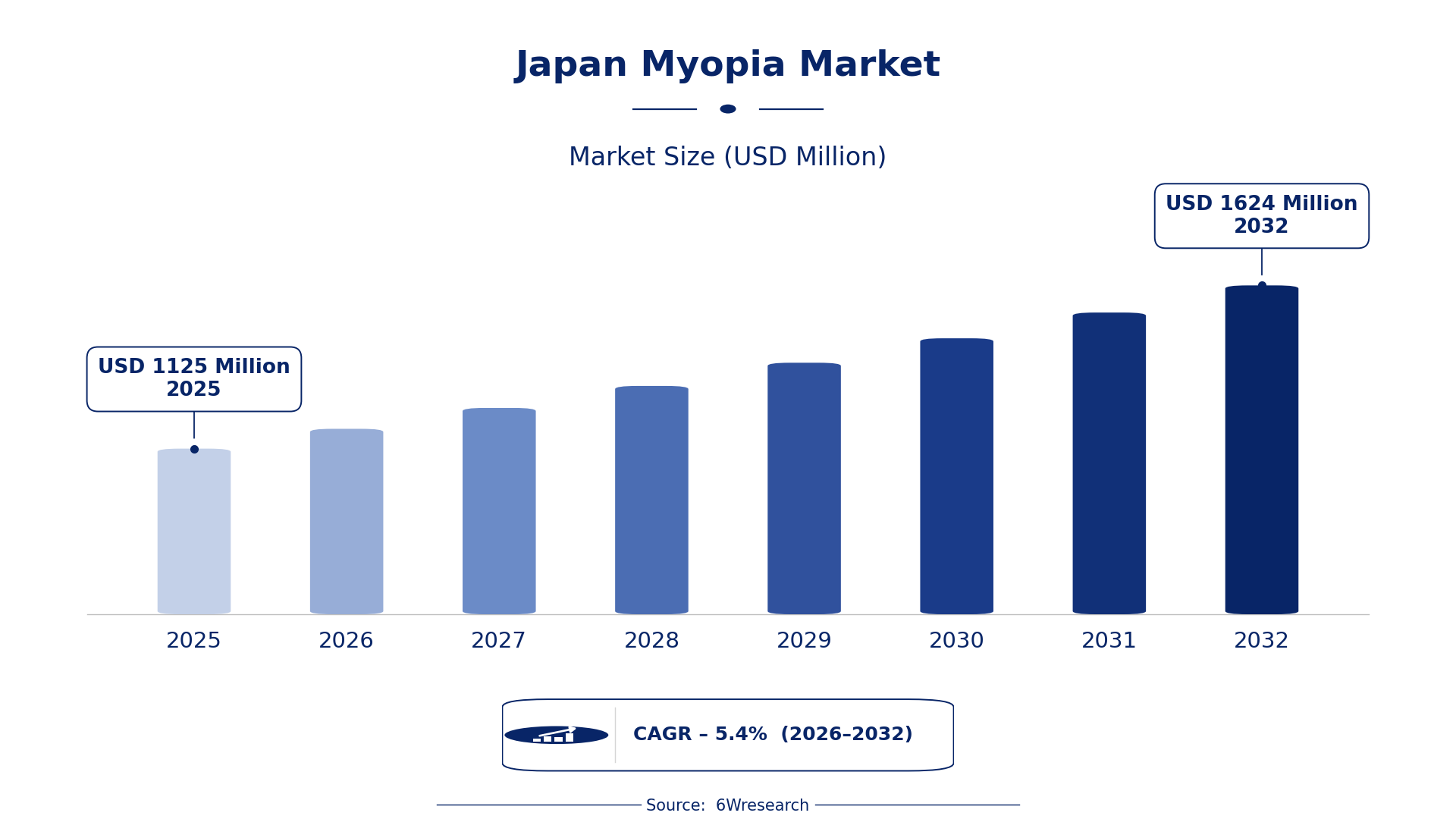
According to 6Wresearch internal database and industry insights, the Japan Myopia Market was valued at USD 1,125 Million in 2025 and is projected to reach USD 1,624 Million by 2032, growing at a CAGR of approximately 5.4% during 2026–2032.
Japan Myopia Market Highlights
| Report Metric | Details |
| Report Name | Japan Myopia Market (2026-2032) |
| Market Size 2025 | USD 1,125 Million |
| Market Size 2032 | USD 1,624 Million |
| Absolute Growth 2025–2032 | USD 499 Million |
| CAGR 2026–2032 | 5.4% |
| Peak Annual Growth | 6.8% in 2026 |
| Forecast Period | 2026–2032 |
| Historical Data | 2022–2025 |
| Base Year | 2025 |
| Leading Type, 2025 | Congenital Myopia (40% share) |
| Leading Treatment, 2025 | Corrective Lenses (68% share) |
| Leading Product, 2025 | Eye glasses (28% share) |
| Leading Route of Administration, 2025 | Ophthalmic (56% share) |
| Leading End User, 2025 | Hospitals (47% share) |
| Fastest-Growing Type | Pathological or Degenerative Myopia (7.7% CAGR) |
| Fastest-Growing Treatment | Therapeutics (6.6% CAGR) |
| Fastest-Growing Product | Ortho K lenses (7.9% CAGR) |
| Fastest-Growing End User | Specialty clinics (7.0% CAGR) |
| Growing Sector | Specialty clinics |
| Key End Users | Hospitals, Specialty clinics, Eye Care centers, Pharmacies |
Japan Myopia Market Year-wise Growth Rate and Key Drivers (2022–2032)
This graph illustrates the annual growth rates of the market from 2022 to 2032, highlighting a steady upward trajectory and projected market expansion over the forecast period.
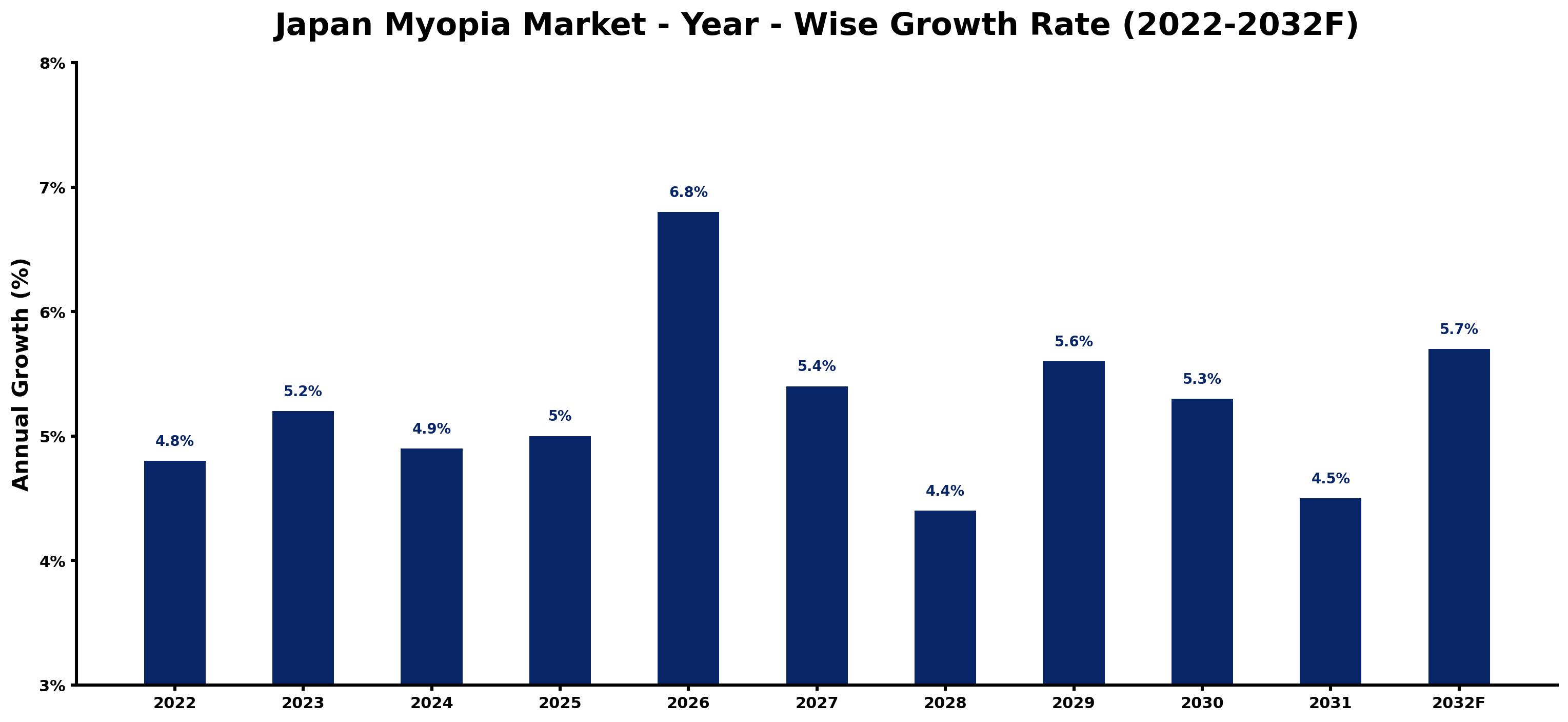
Annual growth estimates for each year appear below with the principal reason behind them, explaining the shifts that set the pace of the market.
| Year | Estimated Annual Growth (%) | Market Rationale |
| 2022 | 4.8 | The market experienced steady growth due to a high prevalence of myopia among children. |
| 2023 | 5.2 | Demand increased as awareness of myopia treatment options expanded among parents and healthcare providers. |
| 2024 | 4.9 | Growth slowed as market saturation began to affect new customer acquisition for corrective lenses. |
| 2025 | 5.0 | The introduction of new corrective technologies spurred faster growth in the market for eye care services. |
| 2026 | 6.8 | A surge in demand for treatment options is expected to lead to peak growth this year. |
| 2027 | 5.4 | Growth is projected to slow as competition intensifies among providers of corrective lenses and treatments. |
| 2028 | 4.4 | The market will continue to grow, but at a reduced rate due to increased pricing pressures on consumers. |
| 2029 | 5.6 | Demand is expected to rebound as new eye care initiatives gain traction among consumers and healthcare providers. |
| 2030 | 5.3 | Growth is projected to slow as regulatory changes impact the introduction of new products in the market. |
| 2031 | 4.5 | Market growth will decelerate as consumer preferences shift towards alternative treatments for myopia. |
| 2032 | 5.7 | A renewed focus on pediatric eye health is expected to drive demand higher for corrective lenses. |
Note: Market size estimations and growth projections presented in this report are based on 6Wresearch's proprietary forecasting methodology, utilizing the latest available industry data, government publications, and primary research inputs.
Japan Myopia Market Synopsis
Myopia, a prevalent refractive error, is mainly addressed through corrective lenses like glasses and contact lenses. With approximately 30% of school-aged children in Japan affected, the Japan Myopia Market is on the rise. This growth is propelled by heightened awareness of eye health, the advent of new treatment technologies, and an increasing number of eye care facilities, with over 8,000 centres operating nationwide to meet the demand for effective myopia management.
Market Dynamics Impact Analysis (2026–2032)
| Factor | Type | Impact | Primary Segment Affected |
| High prevalence of myopia among school-aged children drives demand for corrective lenses. | Driver | High | Corrective Lenses |
| The introduction of innovative treatment technologies creates new purchasing opportunities. | Driver | High | Therapeutics |
| The growing number of eye care centers presents opportunities for new entrants. | Opportunity | High | Eye Care centers |
| Increasing awareness of eye health among parents drives demand for myopia treatments. | Opportunity | High | Hospitals |
| Market saturation limits growth potential for new corrective lens providers. | Restraint | Medium | Corrective Lenses |
| Rising costs of innovative treatments may restrict access for some consumers. | Restraint | Medium | Therapeutics |
| Supply chain disruptions affect the availability of corrective lenses and treatments. | Challenge | High | Corrective Lenses |
| Intense competition among providers may lead to price wars, impacting margins. | Challenge | High | Therapeutics |
Evaluation of Drivers in Japan Myopia Market (2026–2032)
The main growth drivers and the segments they affect most are set out below.
| Drivers | Primary Segment Affected | Why It Matters (Evidence) |
| High prevalence of myopia among children drives demand for corrective lenses. | Corrective Lenses | With approximately 30% of school-aged children affected, hospitals and clinics see increased purchases of corrective lenses. |
| The introduction of new treatment technologies creates new purchasing opportunities. | Therapeutics | As new options become available, eye care centers are investing in advanced solutions to meet patient needs. |
| Growing awareness of eye health among parents drives demand for myopia treatments. | Hospitals | Programs promoting eye health awareness have led to increased consultations and treatments at healthcare facilities. |
| The expansion of eye care centers improves access to myopia treatments. | Eye Care centers | With over 8,000 centers in Japan, more patients are seeking corrective solutions, boosting market growth. |
| Rising disposable income allows consumers to invest in premium corrective lenses. | Corrective Lenses | As incomes rise, consumers are more willing to spend on high-quality eyewear, enhancing market dynamics. |
A wider customer base explains much of the growth, as the prevalence of myopia among school-aged children stands at around 30%. This figure drives hospitals to increase their purchases of corrective lenses. The introduction of new treatment technologies, such as Ortho K lenses, has also contributed to rising demand, with eye care centers investing heavily in these solutions. Increased awareness of eye health, especially among parents, has led to a surge in consultations at hospitals, further boosting market growth. With over 8,000 eye care centers across Japan, access to treatment options is improving, encouraging more patients to seek corrective measures.
Evaluation of Restraints in Japan Myopia Market
The main factors holding the market back are set out below.
| Market Restraint | Primary Segment Affected | Why It Matters (Evidence) |
| Market saturation limits growth potential for new corrective lens providers. | Corrective Lenses | As more providers enter the market, existing companies face challenges in maintaining market share amid fierce competition. |
| Rising costs of treatments may restrict access for some consumers. | Therapeutics | Higher prices can deter patients from opting for advanced treatment options, impacting overall market growth. |
| Supply chain disruptions affect the availability of corrective lenses and treatments. | Corrective Lenses | Delays in raw material supply can lead to shortages in the market, affecting service delivery to patients. |
| Regulatory changes can slow down the introduction of new products. | Therapeutics | Stricter regulations may delay the approval of treatment technologies, hindering market innovation. |
| Consumer preferences are shifting towards alternative treatments, impacting demand. | Corrective Lenses | As awareness of different treatment options grows, traditional corrective lenses may see reduced interest among patients. |
Japan Myopia Market Challenges
Buyers of corrective lenses face intense competition as numerous providers enter the market, which drives down prices and reduces profit margins. Regulatory hurdles arise from stringent oversight by the Ministry of Health, Labour and Welfare, complicating product approvals and delaying market entry by up to six months for suppliers. Technology adoption is slow, with many clinics hesitant to invest in modern myopia management tools, resulting in outdated practices that can compromise patient outcomes. Skills shortages persist, particularly in urban areas like Tokyo, where the demand for qualified eye care professionals exceeds supply, leading to longer wait times for patients seeking treatment.
Trends in the Japan Myopia Market
The following changes are redrawing the Japan Myopia Market.
- Awareness Campaigns in Tokyo: A government initiative launched in 2023 is promoting children's eye health in Tokyo. This programme seeks to educate parents, resulting in a 15% increase in consultations at eye care centres.
- Preference for Ortho K Lenses: Specialty clinics are noting a rising preference for Ortho K lenses, which are projected to grow at a CAGR of 7.9% from 2026 to 2032. This trend indicates a shift towards non-invasive myopia correction methods, appealing to younger patients.
- Investment in Myopia Treatment Technologies: The introduction of a subsidy for myopia treatment technologies in 2023 is spurring investment in advanced solutions. This funding, totalling USD 50 million, is anticipated to support the development of new treatment options across Japan.
- Emergence of Specialty Clinics: Specialty clinics are becoming significant players in the myopia treatment market, with a projected CAGR of 7.0% from 2026 to 2032. Their emphasis on tailored treatments is drawing in more patients seeking specialised care.
Investment Opportunities in the Japan Myopia Market
The following areas offer the clearest openings for investors and suppliers in the Japan Myopia Market.
- Ideal Timing for Eye Care Investment: With a growing prevalence of myopia, now is an ideal time to invest in corrective lens production, especially in urban areas like Tokyo, where demand is high for effective vision correction.
- Demand for Advanced Treatment Options: The market shows a gap in advanced treatment technologies, with a projected increase in demand for innovative solutions over the next five years, particularly in hospitals and specialty clinics.
- Entry through Local Partnerships: Establishing partnerships with local eye care centers can facilitate entry into the myopia treatment market, capitalizing on the increasing demand for specialized care and services.
- Focus on Expanding Eye Care Centers: Investment in eye care centers, which are expanding rapidly, presents opportunities for suppliers to meet the increasing demand for myopia treatments and corrective solutions.
Government Initiatives in the Japan Myopia Market
The NHI drug price standard, revised regularly, establishes reimbursement prices for medical services related to myopia treatment. This law ensures that providers receive fair compensation, influencing pricing strategies across the market. Additionally, it helps maintain the affordability of treatments for patients in need of corrective lenses.
In 2023, the Ministry of Health, Labour and Welfare launched a program allocating USD 10 million to promote eye health awareness among children. This initiative aims to improve early detection and treatment of myopia, benefiting both providers and patients by increasing access to necessary services.
Future Insight of the Japan Myopia Market
The introduction of new eye health awareness programmes will improve preventive care for children by 2032, aiming to lower myopia onset rates. Enhanced treatment protocols from the Japanese Ophthalmological Society will benefit both suppliers and buyers. Subsidies for advanced myopia treatment technologies will increase accessibility, driving market evolution. The expansion of over 8,000 eye care centres will enhance service delivery, ensuring that the needs of the growing population are effectively met.
Market Segmentation Analysis
Japan Myopia Market report covers a detailed analysis of the following market segments:
By Type – Congenital Myopia Leads, Pathological or Degenerative Myopia Expected to Grow Fastest
According to Summon Dutta, Assistant Manager at 6Wresearch, in 2025, Congenital Myopia led the type split with a 40% share. Congenital myopia holds the largest share as it necessitates direct intervention from healthcare providers, ensuring a steady demand for effective treatment. This is particularly pronounced in urban areas like Tokyo, where eye care services are readily accessible for managing such cases. The quickest growth will come from Pathological or Degenerative Myopia, forecast to expand at a CAGR of 7.7% between 2026 and 2032. Pathological or degenerative myopia is witnessing rapid growth due to its need for specialised treatment and monitoring, with increasing awareness and government initiatives promoting eye health contributing to this trend. The recent introduction of subsidies for innovative treatment technologies in 2023 is a significant factor driving this growth. Suppliers should focus on developing targeted solutions for congenital and pathological myopia to capture emerging market opportunities.
By Treatment – Corrective Lenses Lead, Therapeutics Expected to Grow Fastest
Corrective Lenses held 68% of the Japan Myopia Market by treatment in 2025. Corrective lenses dominate the market as they are the primary method for correcting myopia, widely prescribed by eye care professionals across Japan. The high prevalence of myopia among school-aged children further solidifies the demand for these products. Therapeutics are projected to grow fastest, at a CAGR of 6.6% during 2026–2032. Therapeutics are growing rapidly as they are increasingly used alongside corrective measures, improving overall management of myopia. The recent government programme promoting eye health awareness among children is expected to drive further adoption of therapeutic interventions. Buyers will benefit from a broader range of treatment options as suppliers innovate in the therapeutic space.
By Product – Eye glasses Lead, Ortho K lenses Expected to Grow Fastest
With 28% of product revenue in 2025, Eye glasses was the largest category. Eye glasses are the most common form of corrective lenses for myopia, making them the leading product in the market. Their widespread acceptance and availability in over 8,000 eye care centers across Japan contribute to their dominance. Over 2026–2032, Ortho K lenses are expected to post the fastest growth, at a CAGR of 7.9%. Ortho K lenses are gaining traction due to their unique overnight correction capabilities, appealing to both children and adults seeking convenience. The increasing prevalence of myopia among school-aged children is likely to drive further interest in this product. Suppliers should consider expanding their offerings in Ortho K lenses to meet the growing demand.
By Route of Administration – Ophthalmic Leads and Records the Fastest Growth
The largest route of administration category in 2025 was Ophthalmic, at 56% of revenue. Ophthalmic administration is crucial for delivering treatments directly to the eye, establishing it as the leading route in myopia management. The effectiveness of this method is vital for achieving optimal therapeutic outcomes for patients requiring corrective measures. Ophthalmic is also forecast to expand faster than any other category, at a CAGR of 6.7% over 2026–2032. Ophthalmic administration is also the fastest-growing route as its direct application aligns with the increasing emphasis on precision in myopia treatment. The surge in advanced ophthalmic products is anticipated to further accelerate this segment's growth. Suppliers need to invest in ophthalmic product development to maintain competitiveness in this rapidly expanding segment.
By End User – Hospitals Lead, Specialty clinics Expected to Grow Fastest
Hospitals accounted for 47% of the market by end user in 2025. Hospitals serve as the primary facilities providing myopia treatment, which secures their position as the largest market share holder. Their capability to offer comprehensive eye care services makes them an essential part of the myopia treatment ecosystem. The quickest growth will come from Specialty clinics, forecast to expand at a CAGR of 7.0% between 2026 and 2032. Specialty clinics are experiencing rapid growth as they concentrate specifically on eye care and myopia management, drawing patients seeking specialised services. The rising prevalence of myopia is leading more patients to these clinics for customised treatment options. Suppliers should target specialty clinics with tailored solutions to capitalise on their increasing market presence.
Key Attractiveness of the Report
- 10 Years of Market Numbers
- Historical Data Starting from 2022 to 2025
- Base Year 2025
- Forecast Data until 2032
- Key Performance Indicators Impacting the Market
- Major Upcoming Developments and Projects
Key Highlights of the Report:
- Japan Myopia Market Outlook
- Market Size of Japan Myopia Market, 2025
- Forecast of Japan Myopia Market, 2032
- Historical Data and Forecast of Japan Myopia Revenues & Volume for the Period 2022-2032
- Japan Myopia Market Trend Evolution
- Japan Myopia Market Drivers and Challenges
- Japan Myopia Price Trends
- Japan Myopia Porter's Five Forces
- Japan Myopia Industry Life Cycle
- Historical Data and Forecast of Japan Myopia Market Revenues & Volume By Type for the Period 2022-2032
- Historical Data and Forecast of Japan Myopia Market Revenues & Volume By Congenital Myopia for the Period 2022-2032
- Historical Data and Forecast of Japan Myopia Market Revenues & Volume By Simple or Developmental Myopia for the Period 2022-2032
- Historical Data and Forecast of Japan Myopia Market Revenues & Volume By Pathological or Degenerative Myopia for the Period 2022-2032
- Historical Data and Forecast of Japan Myopia Market Revenues & Volume By Acquired Myopia for the Period 2022-2032
- Historical Data and Forecast of Japan Myopia Market Revenues & Volume By Treatment for the Period 2022-2032
- Historical Data and Forecast of Japan Myopia Market Revenues & Volume By Therapeutics for the Period 2022-2032
- Historical Data and Forecast of Japan Myopia Market Revenues & Volume By Corrective Lenses for the Period 2022-2032
- Historical Data and Forecast of Japan Myopia Market Revenues & Volume By Product for the Period 2022-2032
- Historical Data and Forecast of Japan Myopia Market Revenues & Volume By Eye glasses for the Period 2022-2032
- Historical Data and Forecast of Japan Myopia Market Revenues & Volume By Contact lens for the Period 2022-2032
- Historical Data and Forecast of Japan Myopia Market Revenues & Volume By Ortho K lenses for the Period 2022-2032
- Historical Data and Forecast of Japan Myopia Market Revenues & Volume By Phakic introcular lenses for the Period 2022-2032
- Historical Data and Forecast of Japan Myopia Market Revenues & Volume By Tablets for the Period 2022-2032
- Historical Data and Forecast of Japan Myopia Market Revenues & Volume By Eye drops for the Period 2022-2032
- Historical Data and Forecast of Japan Myopia Market Revenues & Volume By Injectable for the Period 2022-2032
- Historical Data and Forecast of Japan Myopia Market Revenues & Volume By Route of Administration for the Period 2022-2032
- Historical Data and Forecast of Japan Myopia Market Revenues & Volume By Oral for the Period 2022-2032
- Historical Data and Forecast of Japan Myopia Market Revenues & Volume By Parenteral for the Period 2022-2032
- Historical Data and Forecast of Japan Myopia Market Revenues & Volume By Ophthalmic for the Period 2022-2032
- Historical Data and Forecast of Japan Myopia Market Revenues & Volume By End User for the Period 2022-2032
- Historical Data and Forecast of Japan Myopia Market Revenues & Volume By Hospitals for the Period 2022-2032
- Historical Data and Forecast of Japan Myopia Market Revenues & Volume By Specialty clinics for the Period 2022-2032
- Historical Data and Forecast of Japan Myopia Market Revenues & Volume By Eye Care centers for the Period 2022-2032
- Historical Data and Forecast of Japan Myopia Market Revenues & Volume By Pharmacies for the Period 2022-2032
- Historical Data and Forecast of Japan Myopia Market Revenues & Volume By Distribution Channel for the Period 2022-2032
- Historical Data and Forecast of Japan Myopia Market Revenues & Volume By Offline for the Period 2022-2032
- Historical Data and Forecast of Japan Myopia Market Revenues & Volume By Online for the Period 2022-2032
- Japan Myopia Import Export Trade Statistics
- Market Opportunity Assessment By Type
- Market Opportunity Assessment By Treatment
- Market Opportunity Assessment By Product
- Market Opportunity Assessment By Route of Administration
- Market Opportunity Assessment By End User
- Market Opportunity Assessment By Distribution Channel
- Japan Myopia Top Companies Market Share
- Japan Myopia Competitive Benchmarking By Technical and Operational Parameters
- Japan Myopia Company Profiles
- Japan Myopia Key Strategic Recommendations
Market Covered
The report covers the following segments.
By Type
- Congenital Myopia
- Simple or Developmental Myopia
- Pathological or Degenerative Myopia
- Acquired Myopia
By Treatment
- Therapeutics
- Corrective Lenses
By Product
- Eye glasses
- Contact lens
- Ortho K lenses
- Phakic introcular lenses
- Tablets
- Eye drops
- Injectable
By Route of Administration
- Oral
- Parenteral
- Ophthalmic
By End User
- Hospitals
- Specialty clinics
- Eye Care centers
- Pharmacies































