Japan Natural Enemies Market Size & Growth Rate
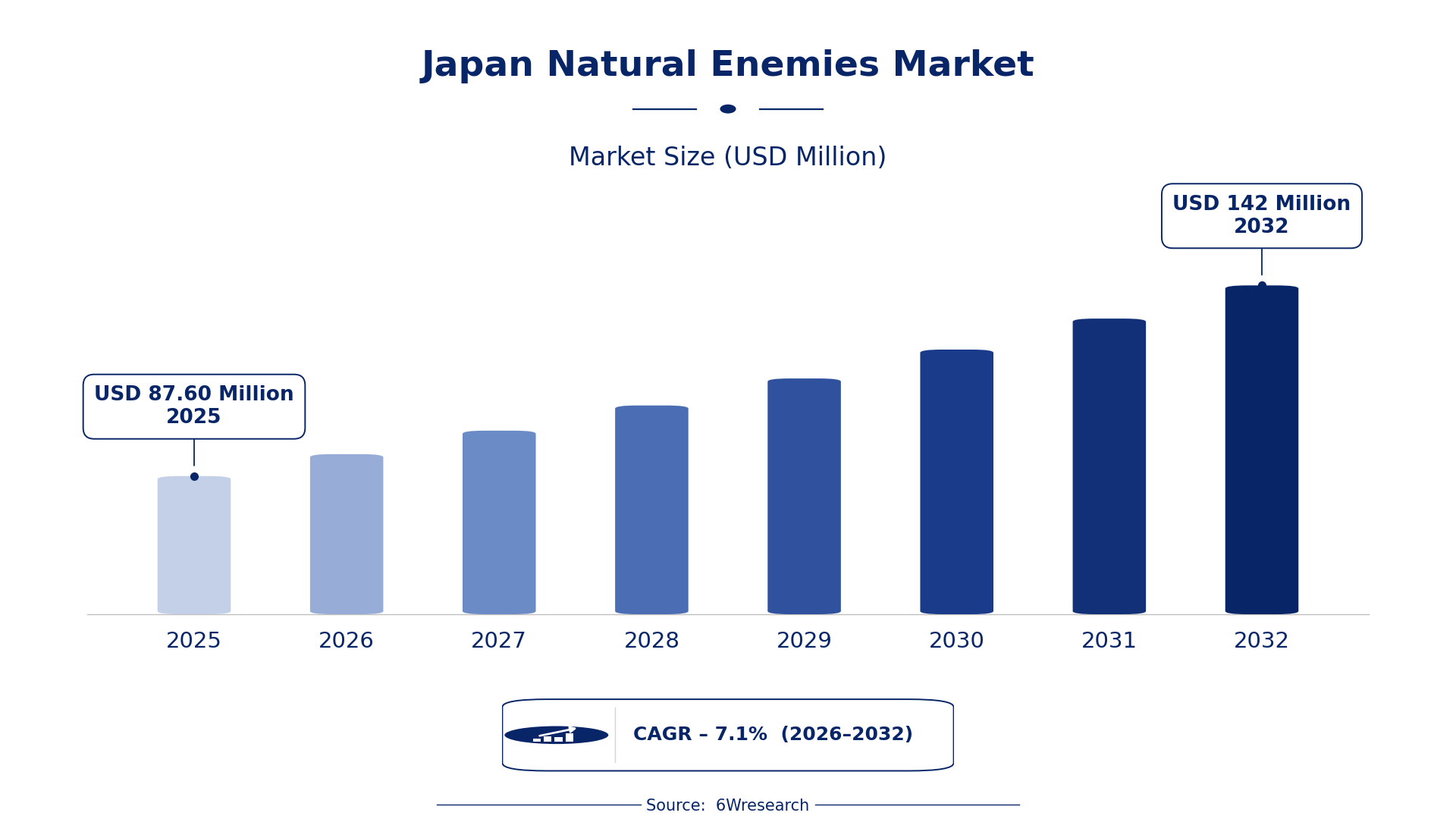
According to 6Wresearch internal database and industry insights, the Japan Natural Enemies Market was valued at USD 87.60 Million in 2025 and is projected to reach USD 142 Million by 2032, growing at a CAGR of approximately 7.1% during 2026–2032.
Japan Natural Enemies Market Highlights
| Report Metric | Details |
| Report Name | Japan Natural Enemies Market (2026-2032) |
| Market Size 2025 | USD 87.60 Million |
| Market Size 2032 | USD 142 Million |
| Absolute Growth 2025–2032 | USD 54.40 Million |
| CAGR 2026–2032 | 7.1% |
| Peak Annual Growth | 8.3% in 2028 |
| Forecast Period | 2026–2032 |
| Historical Data | 2022–2025 |
| Base Year | 2025 |
| Leading Agent Type, 2025 | Predatory Mites (45% share) |
| Leading Organism Type, 2025 | Mite Species (46% share) |
| Leading Distribution Channel, 2025 | Agrochemical Distributors (48% share) |
| Leading End User, 2025 | Fruit Growers (40% share) |
| Fastest-Growing Agent Type | Parasitic Wasps (9.7% CAGR) |
| Fastest-Growing Organism Type | Insect Parasitoid (9.9% CAGR) |
| Fastest-Growing Distribution Channel | Online Agri-Portals (9.0% CAGR) |
| Fastest-Growing End User | Vegetable Farmers (9.3% CAGR) |
| Growing Sector | sustainable agriculture |
| Key End Users | Fruit Growers, Vegetable Farmers, Greenhouse Operators, Home Gardeners |
Japan Natural Enemies Market Year-wise Growth Rate and Key Drivers (2022–2032)
This graph illustrates the annual growth rates of the market from 2022 to 2032, highlighting a steady upward trajectory and projected market expansion over the forecast period.
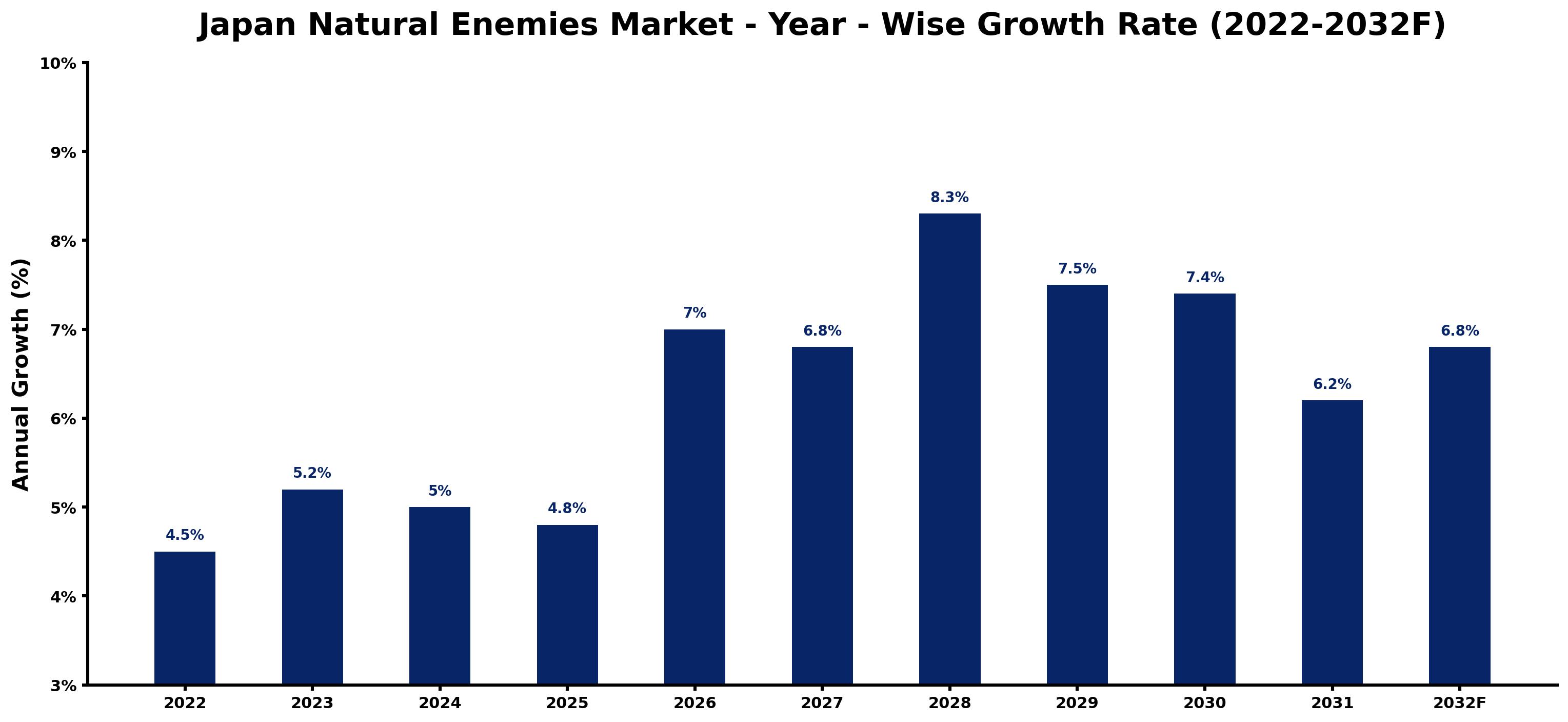
The table below sets out the estimated growth rate for each year and the main factor behind it.
| Year | Estimated Annual Growth (%) | Market Rationale |
| 2022 | 4.5 | The market was active, with growers increasingly adopting biological pest control methods. |
| 2023 | 5.2 | Demand rose as growers sought sustainable solutions to reduce chemical pesticide use. |
| 2024 | 5.0 | Growth slowed slightly as market adjustments occurred following previous increases. |
| 2025 | 4.8 | Continued interest in natural enemies maintained market growth, though at a slower pace. |
| 2026 | 7.0 | Investment in sustainable agriculture is expected to boost demand for biological control agents. |
| 2027 | 6.8 | Demand growth is projected to slow as the market stabilises after rapid increases in prior years. |
| 2028 | 8.3 | The peak demand year will see heightened investment in innovative pest management solutions. |
| 2029 | 7.5 | Growth is expected to moderate as the market adjusts to the peak demand levels seen in 2028. |
| 2030 | 7.4 | A further slowdown is projected as the market begins to stabilise after peak growth. |
| 2031 | 6.2 | The market will continue to grow, albeit at a slower rate than previous years. |
| 2032 | 6.8 | Demand is expected to rise again as new pest management solutions are introduced. |
Note: Market size estimations and growth projections presented in this report are based on 6Wresearch's proprietary forecasting methodology, utilizing the latest available industry data, government publications, and primary research inputs.
Japan Natural Enemies Market Synopsis
Natural enemies serve as biological control agents that manage pest populations, produced through breeding programs and applied in various forms such as larvae or adult insects. The Japan Natural Enemies Market is growing due to rising demand from domestic growers, particularly in the Kanto region, where greenhouse vegetable production thrives. The Ministry of Agriculture, Forestry and Fisheries advocates integrated pest management strategies, prompting further investment in sustainable farming practices. The number of organic farms reached 24,000 in 2022, indicating a shift towards environmentally friendly agricultural methods.
Market Dynamics Impact Analysis (2026–2032)
| Factor | Type | Impact | Primary Segment Affected |
| Rising interest in sustainable farming practices | Driver | High | Predatory Mites |
| Increased adoption of organic farming methods | Driver | High | Parasitic Wasps |
| Growing urban gardening trends | Opportunity | Medium | Ladybugs |
| Expansion of online purchasing channels | Opportunity | Medium | Online Agri-Portals |
| Aging farmer population | Restraint | High | Fruit Growers |
| Limited awareness of biological control methods | Restraint | Medium | Vegetable Farmers |
| Supply chain disruptions affecting availability | Challenge | High | Agrochemical Distributors |
| Competition from chemical pesticides | Challenge | Medium | Greenhouse Operators |
Evaluation of Drivers in Japan Natural Enemies Market (2026–2032)
These are the developments adding the most demand over the forecast period.
| Drivers | Primary Segment Affected | Why It Matters (Evidence) |
| Investment in sustainable agriculture initiatives | Predatory Mites | In 2023, a government program allocated ¥500 million for sustainable agriculture, increasing demand for biological control methods. |
| Growth in organic farming | Parasitic Wasps | The number of organic farms in Japan reached 24,000 in 2022, driving demand for effective pest control solutions. |
| Urban gardening projects | Ladybugs | Natural enemies are increasingly used in urban gardening projects across Tokyo, promoting sustainable practices among home gardeners. |
| Technological advancements in breeding programs | Entomopathogenic Nematodes | Research institutions in Japan are developing new natural enemy species, expanding pest control options for farmers. |
| Educational resources for pest management | Insect Parasitoid | Resources from academic institutions improve awareness and adoption of biological control methods. |
The rise in organic farms, which reached 24,000 in 2022, fuels demand for biological control methods. Urban gardening projects in Tokyo are increasingly incorporating natural enemies, reflecting a shift towards sustainable practices. Research institutions are developing new natural enemy species, broadening pest management options for farmers. Educational resources from local universities are improving awareness of biological control methods, driving adoption among growers.
Evaluation of Restraints in Japan Natural Enemies Market
Below are the constraints most often cited by buyers and suppliers, with the segment each affects.
| Market Restraint | Primary Segment Affected | Why It Matters (Evidence) |
| Aging farmer population limits innovation | Fruit Growers | The average age of farmers in Japan is 66, indicating a need for new pest management solutions. |
| Limited awareness of biological control methods | Vegetable Farmers | Many farmers still rely on traditional methods, with only 30% adopting biological control. |
| Supply chain disruptions affect product availability | Agrochemical Distributors | Delays in product delivery can impact sales and limit access to natural enemies. |
| Competition from chemical pesticides | Greenhouse Operators | Chemical pesticides are often preferred due to their immediate effectiveness, limiting natural enemy adoption. |
| Regulatory hurdles for new products | Ladybugs | New species of natural enemies must undergo rigorous testing, delaying market entry. |
Japan Natural Enemies Market Challenges
In the Kanto region, growers face challenges in pest management, with only 30% having adopted biological control methods, leading buyers to rely on chemical pesticides and increasing costs by 15% for those pursuing organic options. Competition intensifies as farmers struggle to differentiate their produce, resulting in a 10% decline in profit margins for those unable to adapt. Limited access to effective pest management technologies hampers producers, causing delays in responding to pest outbreaks, which can extend to three weeks. Supply chain issues arise from a shortage of new natural enemy species, diminishing pest control effectiveness and impacting yields by up to 20% for fruit crops.
Trends in the Japan Natural Enemies Market
The following changes are redrawing the Japan Natural Enemies Market.
- Government Support for Sustainable Agriculture: The Ministry of Agriculture, Forestry and Fisheries promotes integrated pest management strategies, encouraging the use of natural enemies. In 2023, a national conference underscored their role in sustainable farming, leading to greater acceptance among growers.
- Rising Adoption of Urban Gardening: Urban gardening projects in Tokyo are increasingly utilising natural enemies, with an estimated 30% adoption rate among urban gardeners. This trend reflects a growing interest in sustainable practices within urban environments.
- Shift Towards Online Purchasing Channels: The rise of online agri-portals is transforming how growers access natural enemies, with a projected CAGR of 9.0% for this segment. This shift facilitates easier access to biological control agents for a broader audience.
- Increased Focus on Research and Development: Research institutions in Japan are actively developing new natural enemy species tailored to local pests, broadening pest management options. This focus is expected to boost the market as new solutions emerge.
Investment Opportunities in the Japan Natural Enemies Market
The following opportunities in the Japan Natural Enemies Market pair current demand with a clear way in.
- Timing for Sustainable Solutions: With the number of organic farms reaching 24,000, there is a strong demand for natural enemies. Suppliers can target organic growers in the Kanto region to meet this need.
- Investment in Research and Development: Investment in developing new natural enemy species is important as demand for effective pest control rises. Research institutions are key partners in this effort, providing new solutions.
- Expansion of Online Sales Channels: The growing trend of online purchasing offers opportunities for suppliers to reach a wider audience. Collaborating with online agri-portals can facilitate market entry.
- Focus on Urban Gardening Supplies: The increasing interest in urban gardening presents an opportunity to supply natural enemies. Targeting home gardeners in urban areas can drive sales, particularly in Tokyo.
Government Initiatives in the Japan Natural Enemies Market
The GX Promotion Act of 2023 establishes a framework for promoting sustainable agriculture and pest management practices. This law builds upon previous regulations by encouraging the use of natural enemies, ensuring that producers adopt environmentally friendly methods and practices.
In 2023, the Ministry of Agriculture, Forestry and Fisheries allocated ¥500 million for sustainable agriculture initiatives, administered by the Digital Agency. This funding supports projects that promote the adoption of biological control methods among growers.
Future Insight of the Japan Natural Enemies Market
A shift towards sustainable agriculture is anticipated by 2032, driven by government initiatives that allocate ¥500 million for biological control programs. Suppliers will respond by developing advanced pest management technologies tailored for local conditions. Urban gardening in Tokyo is set to expand, increasing demand for natural enemies as city dwellers seek eco-friendly solutions. Research institutions will focus on breeding new species to combat local pests, improving pest management strategies and boosting agricultural productivity for growers.
Market Segmentation Analysis
Japan Natural Enemies Market report covers a detailed analysis of the following market segments:
By Agent Type – Predatory Mites Lead, Parasitic Wasps Expected to Grow Fastest
According to Saurav Kr Singh, Senior Research Analyst at 6Wresearch, Predatory Mites took 45% of agent type revenue in 2025, more than any other category. Predatory mites are extensively used in various crops, particularly in the Kanto region where greenhouse vegetable production is prominent. Their proven effectiveness in pest control has solidified their position as a preferred choice among growers across Japan. Parasitic Wasps are projected to grow fastest, at a CAGR of 9.7% during 2026–2032. Parasitic wasps are rapidly gaining popularity due to their efficiency in managing specific pest species, with notable adoption in urban gardening projects in Tokyo. This trend reflects a shift towards more sustainable pest management practices among growers. Suppliers should prioritise the availability of parasitic wasps to align with the increasing demand from urban and organic farming initiatives.
By Organism Type – Mite Species Lead, Insect Parasitoid Expected to Grow Fastest
The largest organism type category in 2025 was Mite Species, at 46% of revenue. Mite species are extensively used in research and development, contributing to their dominant position in the market. Their versatility and effectiveness in various applications have made them a staple in pest management strategies. Insect Parasitoid is set to record the highest CAGR in this split, 9.9% over 2026–2032. Insect parasitoids are becoming increasingly popular in academic studies, highlighting their potential for future pest control innovations. This interest is likely to drive further research and development in this area. Buyers may benefit from investing in insect parasitoids as they represent a growing area of research and application in pest management.
By Distribution Channel – Agrochemical Distributors Lead, Online Agri-Portals Expected to Grow Fastest
Agrochemical Distributors held 48% of the Japan Natural Enemies Market by distribution channel in 2025. Agrochemical distributors are essential for the distribution of natural enemies, providing a reliable supply to various agricultural sectors. Their extensive networks ensure that products reach a wide range of users, including large-scale farmers in the Kanto region. Over 2026–2032, Online Agri-Portals are expected to post the fastest growth, at a CAGR of 9.0%. Online agri-portals are rapidly gaining traction as a purchasing method, particularly among younger farmers who prefer digital solutions. This shift is evident as more farmers seek convenient access to pest management products, reflecting broader trends in the agricultural market. Suppliers must strengthen their digital strategies to meet the increasing demand from buyers who favour online purchasing.
By End User – Fruit Growers Lead, Vegetable Farmers Expected to Grow Fastest
With 40% of end user revenue in 2025, Fruit Growers was the largest category. Fruit growers represent the largest segment of natural enemies users, primarily due to their focus on improving crop yields while reducing chemical pesticide use. Their significant reliance on biological control methods highlights their critical role in the market. The quickest growth will come from Vegetable Farmers, forecast to expand at a CAGR of 9.3% between 2026 and 2032. Vegetable farmers are experiencing a surge in demand for natural enemies, driven by the rising adoption of sustainable farming practices. This growth is likely to continue as more farmers implement integrated pest management techniques to enhance productivity. Suppliers should tailor their products to meet the evolving needs of vegetable farmers to capitalise on this growing market segment.
Key Attractiveness of the Report
- 10 Years of Market Numbers
- Historical Data Starting from 2022 to 2025
- Base Year 2025
- Forecast Data until 2032
- Key Performance Indicators Impacting the Market
- Major Upcoming Developments and Projects
Key Highlights of the Report:
- Japan Natural Enemies Market Outlook
- Market Size of Japan Natural Enemies Market, 2025
- Forecast of Japan Natural Enemies Market, 2032
- Historical Data and Forecast of Japan Natural Enemies Revenues & Volume for the Period 2022-2032F
- Japan Natural Enemies Market Trend Evolution
- Japan Natural Enemies Market Drivers and Challenges
- Japan Natural Enemies Price Trends
- Japan Natural Enemies Porter's Five Forces
- Japan Natural Enemies Industry Life Cycle
- Historical Data and Forecast of Japan Natural Enemies Market Revenues & Volume By Agent Type for the Period 2022-2032F
- Historical Data and Forecast of Japan Natural Enemies Market Revenues & Volume By Predatory Mites for the Period 2022-2032F
- Historical Data and Forecast of Japan Natural Enemies Market Revenues & Volume By Parasitic Wasps for the Period 2022-2032F
- Historical Data and Forecast of Japan Natural Enemies Market Revenues & Volume By Entomopathogenic Nematodes for the Period 2022-2032F
- Historical Data and Forecast of Japan Natural Enemies Market Revenues & Volume By Ladybugs for the Period 2022-2032F
- Historical Data and Forecast of Japan Natural Enemies Market Revenues & Volume By Organism Type for the Period 2022-2032F
- Historical Data and Forecast of Japan Natural Enemies Market Revenues & Volume By Mite Species for the Period 2022-2032F
- Historical Data and Forecast of Japan Natural Enemies Market Revenues & Volume By Insect Parasitoid for the Period 2022-2032F
- Historical Data and Forecast of Japan Natural Enemies Market Revenues & Volume By Soil Nematodes for the Period 2022-2032F
- Historical Data and Forecast of Japan Natural Enemies Market Revenues & Volume By Beetles for the Period 2022-2032F
- Historical Data and Forecast of Japan Natural Enemies Market Revenues & Volume By Distribution Channel for the Period 2022-2032F
- Historical Data and Forecast of Japan Natural Enemies Market Revenues & Volume By Agrochemical Distributors for the Period 2022-2032F
- Historical Data and Forecast of Japan Natural Enemies Market Revenues & Volume By Online Agri-Portals for the Period 2022-2032F
- Historical Data and Forecast of Japan Natural Enemies Market Revenues & Volume By Direct Sales for the Period 2022-2032F
- Historical Data and Forecast of Japan Natural Enemies Market Revenues & Volume By Specialist Insect Suppliers for the Period 2022-2032F
- Historical Data and Forecast of Japan Natural Enemies Market Revenues & Volume By End User for the Period 2022-2032F
- Historical Data and Forecast of Japan Natural Enemies Market Revenues & Volume By Fruit Growers for the Period 2022-2032F
- Historical Data and Forecast of Japan Natural Enemies Market Revenues & Volume By Vegetable Farmers for the Period 2022-2032F
- Historical Data and Forecast of Japan Natural Enemies Market Revenues & Volume By Greenhouse Operators for the Period 2022-2032F
- Historical Data and Forecast of Japan Natural Enemies Market Revenues & Volume By Home Gardeners for the Period 2022-2032F
- Japan Natural Enemies Import Export Trade Statistics
- Market Opportunity Assessment By Agent Type
- Market Opportunity Assessment By Organism Type
- Market Opportunity Assessment By Distribution Channel
- Market Opportunity Assessment By End User
- Japan Natural Enemies Top Companies Market Share
- Japan Natural Enemies Competitive Benchmarking By Technical and Operational Parameters
- Japan Natural Enemies Company Profiles
- Japan Natural Enemies Key Strategic Recommendations
Market Covered
The study includes the following segmentation.
By Agent Type
- Predatory Mites
- Parasitic Wasps
- Entomopathogenic Nematodes
- Ladybugs
By Organism Type
- Mite Species
- Insect Parasitoid
- Soil Nematodes
- Beetles
By Distribution Channel
- Agrochemical Distributors
- Online Agri-Portals
- Direct Sales
- Specialist Insect Suppliers
By End User
- Fruit Growers
- Vegetable Farmers
- Greenhouse Operators
- Home Gardeners






































