Japan Nephritis Market Size & Growth Rate
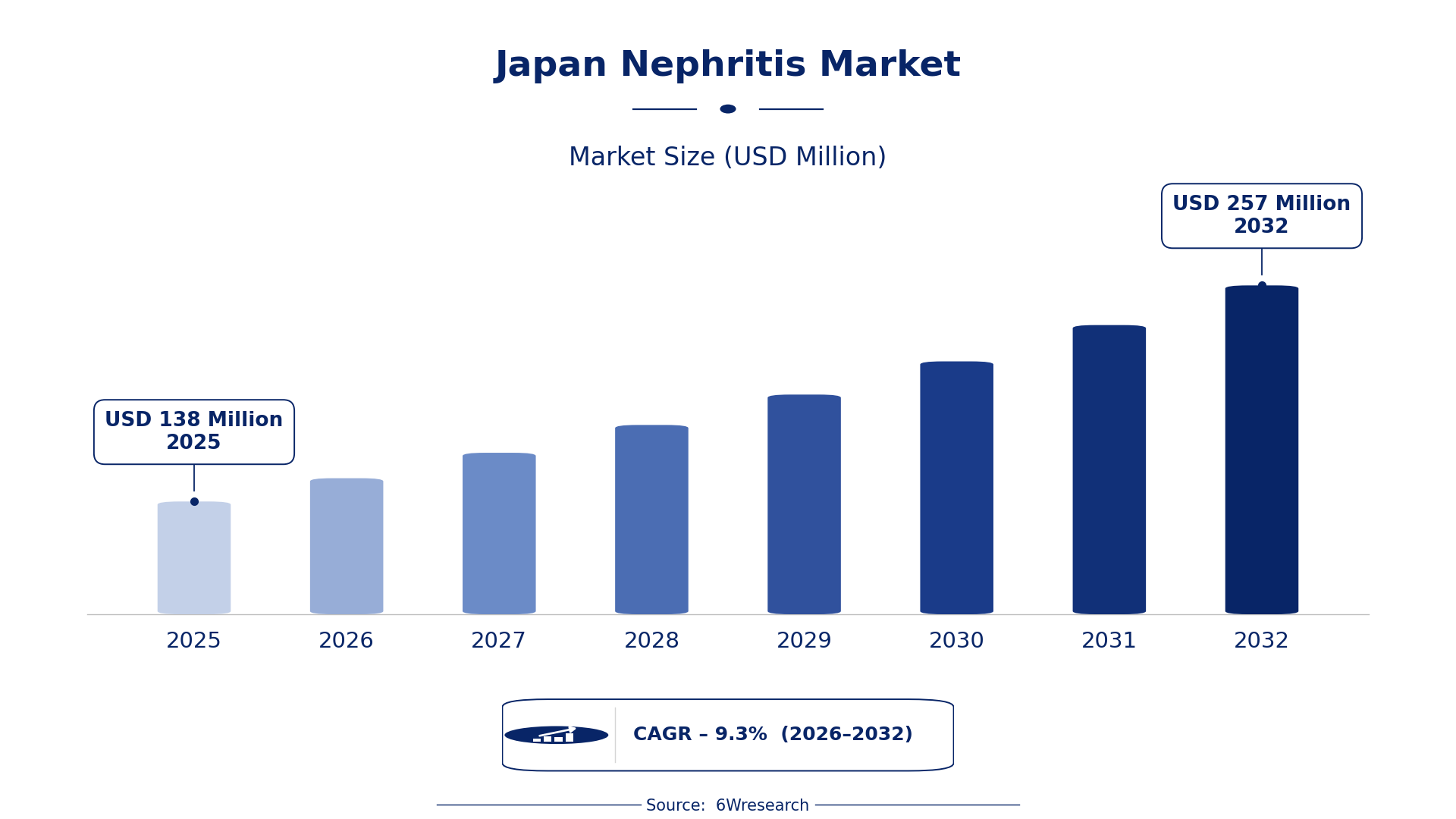
According to 6Wresearch internal database and industry insights, the Japan Nephritis Market was valued at USD 138 Million in 2025 and is projected to reach USD 257 Million by 2032, growing at a CAGR of approximately 9.3% during 2026–2032.
Japan Nephritis Market Highlights
| Report Metric | Details |
| Report Name | Japan Nephritis Market (2026-2032) |
| Market Size 2025 | USD 138 Million |
| Market Size 2032 | USD 257 Million |
| Absolute Growth 2025–2032 | USD 119 Million |
| CAGR 2026–2032 | 9.3% |
| Peak Annual Growth | 10.3% in 2032 |
| Forecast Period | 2026–2032 |
| Historical Data | 2022–2025 |
| Base Year | 2025 |
| Leading Type, 2025 | Glomerulonephritis (55% share) |
| Leading Treatment, 2025 | Corticosteroids (39% share) |
| Leading Route of Administration, 2025 | Oral (61% share) |
| Leading End-Users, 2025 | Hospitals (43% share) |
| Leading Distribution Channel, 2025 | Hospital Pharmacy (55% share) |
| Fastest-Growing Type | NephropathyGoodpasture Syndrome (12.6% CAGR) |
| Fastest-Growing Treatment | ACE Inhibitors (12.9% CAGR) |
| Fastest-Growing Route of Administration | Parenteral (11.7% CAGR) |
| Fastest-Growing End-Users | Homecare (12.5% CAGR) |
| Fastest-Growing Distribution Channel | Online Pharmacy (12.0% CAGR) |
| Growing Sector | Homecare Services |
| Key End Users | Hospitals, Specialty Clinics, Homecare Providers |
Japan Nephritis Market Year-wise Growth Rate and Key Drivers (2022–2032)
This graph illustrates the annual growth rates of the market from 2022 to 2032, highlighting a steady upward trajectory and projected market expansion over the forecast period.
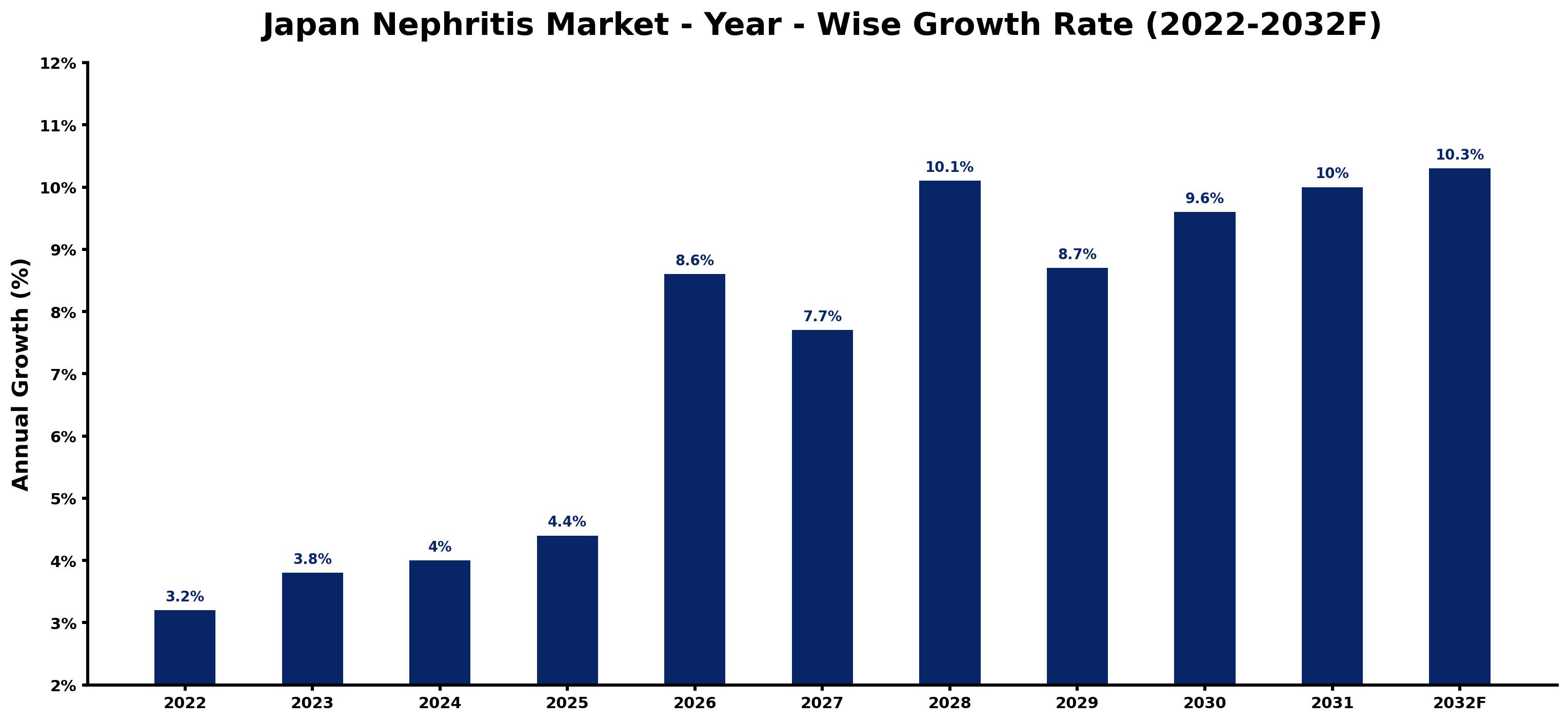
Annual growth estimates for each year appear below with the principal reason behind them, explaining the shifts that set the pace of the market.
| Year | Estimated Annual Growth (%) | Market Rationale |
| 2022 | 3.2 | The market showed steady demand from healthcare providers across Japan. |
| 2023 | 3.8 | Growth accelerated due to increased awareness of nephritis treatments. |
| 2024 | 4.0 | Demand continued to rise as more patients sought medical care. |
| 2025 | 4.4 | The market peaked in growth as treatment options expanded. |
| 2026 | 8.6 | Investment in nephrology research is expected to lead to higher treatment adoption rates. |
| 2027 | 7.7 | Growth will slow slightly as the market begins to stabilise after peaks. |
| 2028 | 10.1 | The introduction of new therapies is projected to spur renewed interest in treatments. |
| 2029 | 8.7 | Market growth is expected to slow again as competition intensifies among providers. |
| 2030 | 9.6 | Increased public health campaigns will drive further patient engagement. |
| 2031 | 10.0 | The market is projected to rebound with advancements in treatment methodologies. |
| 2032 | 10.3 | Demand is expected to surge due to a growing patient population and new therapies. |
Note: Market size estimations and growth projections presented in this report are based on 6Wresearch's proprietary forecasting methodology, utilizing the latest available industry data, government publications, and primary research inputs.
Japan Nephritis Market Synopsis
Nephritis is an inflammatory kidney condition primarily caused by autoimmune disorders or infections, diagnosed through clinical evaluation and laboratory tests. The Japan Nephritis Market is expanding, driven by approximately 1.2 million diagnosed patients and increased engagement from healthcare providers. The rising prevalence of nephritis and ongoing research in nephrology are propelling market demand, with substantial investments in treatment options and patient care facilities.
Market Dynamics Impact Analysis (2026–2032)
| Factor | Type | Impact | Primary Segment Affected |
| Growing prevalence of nephritis among the population | Driver | High | Glomerulonephritis |
| Increased investment in nephrology research | Driver | High | Immunosuppressive Therapy |
| Expansion of homecare services for chronic patients | Opportunity | High | Homecare |
| Rising adoption of online pharmacies for medication access | Opportunity | Medium | Online Pharmacy |
| Limited access to nephrology specialists in rural areas | Restraint | High | Others |
| High costs associated with advanced nephritis treatments | Restraint | Medium | ACE Inhibitors |
| Shortage of trained nephrology professionals | Challenge | High | Hospitals |
| Increasing competition among treatment providers | Challenge | Medium | Specialty Clinics |
Evaluation of Drivers in Japan Nephritis Market (2026–2032)
The factors lifting demand, and the evidence behind each, are summarised below.
| Drivers | Primary Segment Affected | Why It Matters (Evidence) |
| Rising patient population diagnosed with nephritis | Glomerulonephritis | Approximately 1.2 million patients in Japan are diagnosed, increasing demand for treatment. |
| Increased funding for kidney disease research | Immunosuppressive Therapy | The Japanese government allocated ¥5 billion for kidney disease research in 2023. |
| Growing adoption of corticosteroids as a treatment option | Corticosteroids | Corticosteroids are prescribed to 60% of nephritis patients for renal protection. |
| Expansion of telemedicine for chronic kidney disease management | Homecare | Telemedicine is improving patient access to nephrology specialists, enhancing care delivery. |
| Increased awareness of nephritis treatment guidelines | ACE Inhibitors | Guidelines established by the Japanese Society of Nephrology support better treatment practices. |
Orders keep climbing as the number of diagnosed nephritis patients in Japan reaches approximately 1.2 million, driving demand for effective treatments. The widespread use of corticosteroids as a first-line treatment is improving patient outcomes. As awareness of treatment guidelines rises, more patients are seeking timely interventions, contributing to market growth. Telemedicine is improving access to care for chronic patients, increasing engagement with nephrology specialists.
Evaluation of Restraints in Japan Nephritis Market
The table below lists the restraints and the evidence behind each.
| Market Restraint | Primary Segment Affected | Why It Matters (Evidence) |
| Limited access to nephrology specialists in rural areas | Others | The Tokyo region has 30% of nephrology specialists, creating disparities in care. |
| High costs associated with advanced nephritis treatments | ACE Inhibitors | The average hospital stay for nephritis treatment is 10 days, increasing patient expenses. |
| Shortage of trained nephrology professionals | Hospitals | Approximately 8,000 nephrologists in Japan are insufficient to meet rising demand. |
| Inconsistent availability of medications across regions | Corticosteroids | Patients in rural areas face challenges accessing necessary treatments. |
| Limited patient awareness of nephritis symptoms | Immunosuppressive Therapy | Public health campaigns are needed to promote early detection. |
Japan Nephritis Market Challenges
Producers of nephritis treatments face technology-related challenges as the integration of advanced diagnostic tools remains limited, delaying timely patient evaluations. Regulatory changes imposed by the Japanese Society of Nephrology can hinder swift access to updated treatment protocols, impacting 1.2 million patients who rely on timely interventions. Skills shortages in nephrology, with only 8,000 specialists available, create bottlenecks in patient care, leading to longer wait times for treatment. Buyers in rural areas experience complications due to the higher prevalence of nephritis, resulting in extended hospital stays that average 10 days, straining healthcare resources.
Trends in the Japan Nephritis Market
These developments are changing demand patterns in the Japan Nephritis Market.
- Shift towards Homecare Services: In 2020, homecare services for nephritis patients increased by 15%, reflecting a growing preference for at-home treatment options. This shift allows patients to manage their conditions more comfortably, impacting how healthcare providers deliver care.
- Rise of Online Pharmacy Sales: In 2023, online pharmacies saw a 25% increase in nephritis medication sales, indicating a shift in patient purchasing behaviour. This trend improves access to medications, particularly for those in remote areas.
- Increased Focus on Telemedicine: Since the establishment of the Digital Agency in 2021, telemedicine initiatives have gained traction, particularly for chronic kidney disease management. This approach improves patient engagement and access to specialist care.
- Expansion of Nephrology Clinical Trials: In 2023, clinical trials for new nephritis therapies were ongoing at 50 research institutions, showcasing a commitment to advancing treatment options. This trend is expected to lead to more therapies entering the market.
Investment Opportunities in the Japan Nephritis Market
The following areas offer the clearest openings for investors and suppliers in the Japan Nephritis Market.
- Urban Specialty Clinics: Specialty clinics in major urban areas are expanding, with a growing number of nephrology specialists available. This presents an opportunity for investment, as urban populations seek improved care options.
- Investing in Homecare Services: Investing in homecare services is timely, with rising demand for at-home treatment options. Collaborating with healthcare providers can facilitate entry into this growing segment.
- Online Pharmacy Expansion: With a 25% increase in online pharmacy sales, there is a clear gap for suppliers to enter this market. Establishing partnerships with existing online platforms can improve distribution.
- Research and Development in Nephrology: The Japanese government allocated ¥5 billion for kidney disease research in 2023, creating opportunities for investment in new therapies. Engaging with research institutions can lead to fruitful collaborations.
Government Initiatives in the Japan Nephritis Market
The NHI drug price standard, which is revised regularly, sets reimbursement prices for nephritis treatments, ensuring affordability for patients. This measure directly impacts healthcare providers, as they must adhere to these pricing guidelines to receive reimbursements for prescribed medications. The average reimbursement rates contribute to the financial sustainability of nephrology services across Japan.
The Long-Term Care Insurance Act funds nursing care and support services, benefiting older nephritis patients who require ongoing treatment. Healthcare providers can utilise this funding to improve patient care and support services, ensuring that patients have access to necessary treatments and resources.
Future Insight of the Japan Nephritis Market
By 2032, telemedicine will transform nephritis management, enhancing access for patients in remote areas. Government funding for kidney disease research will drive advancements in treatment methodologies. The widespread implementation of ISO 9001 standards will improve operational efficiencies in nephrology departments, benefiting both patients and suppliers. Public health initiatives will focus on early detection, potentially decreasing nephritis-related hospital admissions, which currently account for 5% of total hospitalizations.
Market Segmentation Analysis
Japan Nephritis Market report covers a detailed analysis of the following market segments:
By Type – Glomerulonephritis Leads, NephropathyGoodpasture Syndrome Expected to Grow Fastest
According to Dhaval Chaurasia, Assistant Manager at 6Wresearch, with 55% of type revenue in 2025, Glomerulonephritis was the largest category. Glomerulonephritis accounts for a substantial portion of nephritis cases, primarily due to its direct link to autoimmune disorders. The established treatment protocols by the Japanese Society of Nephrology further solidify its prominence in the market. NephropathyGoodpasture Syndrome is set to record the highest CAGR in this split, 12.6% over 2026–2032. NephropathyGoodpasture Syndrome is gaining attention as the prevalence of autoimmune diseases increases, driving demand for targeted therapies. Recent clinical trials focused on this syndrome indicate a growing investment in research and development. Suppliers should focus on developing targeted therapies for autoimmune conditions to meet the rising demand.
By Treatment – Corticosteroids Lead, ACE Inhibitors Expected to Grow Fastest
The largest treatment category in 2025 was Corticosteroids, at 39% of revenue. Corticosteroids are a cornerstone in the management of nephritis, particularly for glomerulonephritis, due to their effectiveness in controlling inflammation. Their integration into treatment guidelines established by the Japanese Society of Nephrology reinforces their dominant position in the market. Over 2026–2032, ACE Inhibitors are expected to post the fastest growth, at a CAGR of 12.9%. ACE Inhibitors are increasingly prescribed for their ability to manage hypertension while offering renal protection, particularly as nephritis cases rise. The 60% prescription rate among patients indicates a strong shift towards this treatment modality, suggesting that their market share will continue to grow. Suppliers must prioritise the availability of ACE Inhibitors to meet the increasing demand in nephritis treatment.
By Route of Administration – Oral Leads, Parenteral Expected to Grow Fastest
In 2025, Oral led the route of administration split with a 61% share. Oral administration remains the most common route for nephritis medications, offering convenience and ease of use for patients. This preference is supported by the established treatment protocols that favour oral medications. The quickest growth will come from Parenteral, forecast to expand at a CAGR of 11.7% between 2026 and 2032. Parenteral administration is becoming more prevalent due to its necessity in severe cases where rapid intervention is required. The increasing hospitalisation rates for nephritis highlight the need for effective parenteral treatments. Suppliers should consider expanding their product lines to include parenteral options for severe cases.
By End-Users – Hospitals Lead, Homecare Expected to Grow Fastest
Hospitals accounted for 43% of the market by end-users in 2025. Hospitals serve as the primary treatment facilities for nephritis, accommodating a large number of patients needing intensive care. With nephritis-related hospital admissions accounting for 5% of total hospitalisations, hospitals are essential for effective patient management. Homecare is projected to grow fastest, at a CAGR of 12.5% during 2026–2032. Homecare services are becoming increasingly popular for chronic nephritis patients, reflecting a shift towards outpatient care. The 15% increase in homecare services since 2020 indicates a growing preference for managing conditions outside of traditional hospital settings. Suppliers should focus on creating tailored solutions for homecare to meet the evolving needs of chronic nephritis patients.
By Distribution Channel – Hospital Pharmacy Leads, Online Pharmacy Expected to Grow Fastest
Hospital Pharmacy took 55% of distribution channel revenue in 2025, more than any other category. Hospital pharmacies are the main distribution points for nephritis medications, providing immediate access to treatments during hospital stays. This direct access is crucial for managing acute cases effectively, highlighting the pharmacy's importance in patient care. Online Pharmacy is set to record the highest CAGR in this split, 12.0% over 2026–2032. Online pharmacies are experiencing significant growth, with a 25% rise in medication sales, as they offer convenient access for patients managing their conditions at home. This trend points to a shift towards digital solutions in medication distribution, suggesting further expansion is likely. Suppliers should strengthen their online distribution strategies to cater to the increasing demand for online pharmacy services.
Key Attractiveness of the Report
- 10 Years of Market Numbers
- Historical Data Starting from 2022 to 2025
- Base Year 2025
- Forecast Data until 2032
- Key Performance Indicators Impacting the Market
- Major Upcoming Developments and Projects
Key Highlights of the Report:
- Japan Nephritis Market Outlook
- Market Size of Japan Nephritis Market, 2025
- Forecast of Japan Nephritis Market, 2032
- Historical Data and Forecast of Japan Nephritis Revenues & Volume for the Period 2022-2032
- Japan Nephritis Market Trend Evolution
- Japan Nephritis Market Drivers and Challenges
- Japan Nephritis Price Trends
- Japan Nephritis Porter's Five Forces
- Japan Nephritis Industry Life Cycle
- Historical Data and Forecast of Japan Nephritis Market Revenues & Volume By Type for the Period 2022-2032
- Historical Data and Forecast of Japan Nephritis Market Revenues & Volume By Glomerulonephritis for the Period 2022-2032
- Historical Data and Forecast of Japan Nephritis Market Revenues & Volume By NephropathyGoodpasture Syndrome for the Period 2022-2032
- Historical Data and Forecast of Japan Nephritis Market Revenues & Volume By Others for the Period 2022-2032
- Historical Data and Forecast of Japan Nephritis Market Revenues & Volume By Treatment for the Period 2022-2032
- Historical Data and Forecast of Japan Nephritis Market Revenues & Volume By Corticosteroids for the Period 2022-2032
- Historical Data and Forecast of Japan Nephritis Market Revenues & Volume By ACE Inhibitors for the Period 2022-2032
- Historical Data and Forecast of Japan Nephritis Market Revenues & Volume By Immunosuppressive Therapy for the Period 2022-2032
- Historical Data and Forecast of Japan Nephritis Market Revenues & Volume By Others for the Period 2022-2032
- Historical Data and Forecast of Japan Nephritis Market Revenues & Volume By Route of Administration for the Period 2022-2032
- Historical Data and Forecast of Japan Nephritis Market Revenues & Volume By Oral for the Period 2022-2032
- Historical Data and Forecast of Japan Nephritis Market Revenues & Volume By Parenteral for the Period 2022-2032
- Historical Data and Forecast of Japan Nephritis Market Revenues & Volume By End-Users for the Period 2022-2032
- Historical Data and Forecast of Japan Nephritis Market Revenues & Volume By Hospitals for the Period 2022-2032
- Historical Data and Forecast of Japan Nephritis Market Revenues & Volume By Homecare for the Period 2022-2032
- Historical Data and Forecast of Japan Nephritis Market Revenues & Volume By Specialty Clinics for the Period 2022-2032
- Historical Data and Forecast of Japan Nephritis Market Revenues & Volume By Others for the Period 2022-2032
- Historical Data and Forecast of Japan Nephritis Market Revenues & Volume By Distribution Channel for the Period 2022-2032
- Historical Data and Forecast of Japan Nephritis Market Revenues & Volume By Hospital Pharmacy for the Period 2022-2032
- Historical Data and Forecast of Japan Nephritis Market Revenues & Volume By Online Pharmacy for the Period 2022-2032
- Historical Data and Forecast of Japan Nephritis Market Revenues & Volume By Retail Pharmacy for the Period 2022-2032
- Japan Nephritis Import Export Trade Statistics
- Market Opportunity Assessment By Type
- Market Opportunity Assessment By Treatment
- Market Opportunity Assessment By Route of Administration
- Market Opportunity Assessment By End-Users
- Market Opportunity Assessment By Distribution Channel
- Japan Nephritis Top Companies Market Share
- Japan Nephritis Competitive Benchmarking By Technical and Operational Parameters
- Japan Nephritis Company Profiles
- Japan Nephritis Key Strategic Recommendations
Market Covered
The following segment groups are covered in the report.
By Type
- Glomerulonephritis
- NephropathyGoodpasture Syndrome
- Others
By Treatment
- Corticosteroids
- ACE Inhibitors
- Immunosuppressive Therapy
- Others
By Route of Administration
- Oral
- Parenteral
By End-Users
- Hospitals
- Homecare
- Specialty Clinics
- Others
By Distribution Channel
- Hospital Pharmacy
- Online Pharmacy
- Retail Pharmacy































