Japan Neurofibromatosis Market Size & Growth Rate
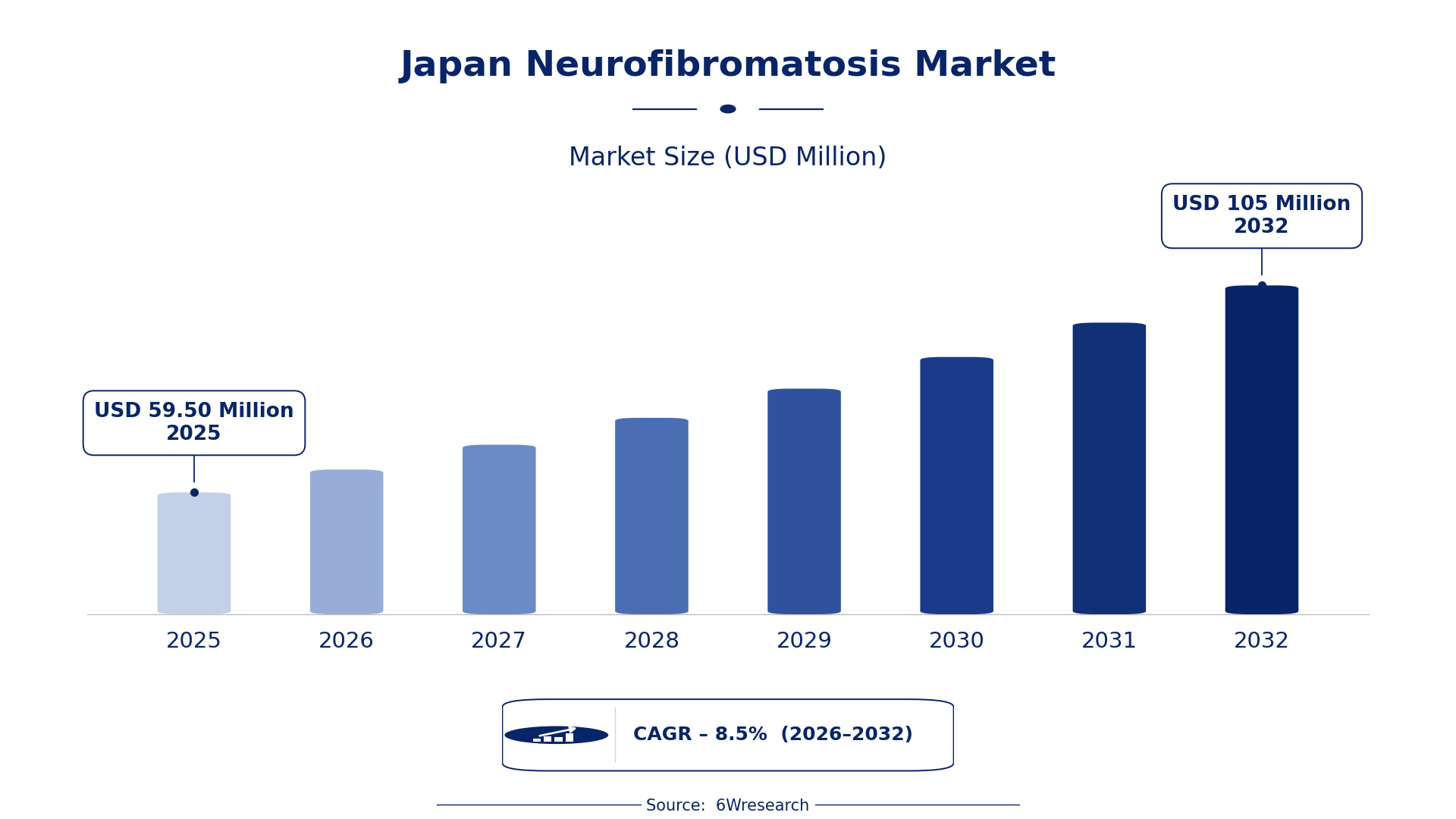
According to 6Wresearch internal database and industry insights, the Japan Neurofibromatosis Market was valued at USD 59.50 Million in 2025 and is projected to reach USD 105 Million by 2032, growing at a CAGR of approximately 8.5% during 2026–2032.
Japan Neurofibromatosis Market Highlights
| Report Metric | Details |
| Report Name | Japan Neurofibromatosis Market (2026-2032) |
| Market Size 2025 | USD 59.50 Million |
| Market Size 2032 | USD 105 Million |
| Absolute Growth 2025–2032 | USD 45.50 Million |
| CAGR 2026–2032 | 8.5% |
| Peak Annual Growth | 10.1% in 2032 |
| Forecast Period | 2026–2032 |
| Historical Data | 2022–2025 |
| Base Year | 2025 |
| Leading Disease Type, 2025 | Neurofibromatosis 1 (NF1) (46% share) |
| Leading Treatment, 2025 | Drug Therapy (50% share) |
| Leading End User, 2025 | Hospitals (51% share) |
| Leading Distribution Channel, 2025 | Hospital Pharmacy (48% share) |
| Fastest-Growing Disease Type | Neurofibromatosis 2 (NF2) (11.8% CAGR) |
| Fastest-Growing Treatment | Surgery (11.2% CAGR) |
| Fastest-Growing End User | Specialty Clinics (11.4% CAGR) |
| Fastest-Growing Distribution Channel | Retail Pharmacy (11.6% CAGR) |
| Growing Sector | Healthcare |
| Key End Users | Hospitals, Specialty Clinics, Ambulatory Surgical Centers |
Japan Neurofibromatosis Market Year-wise Growth Rate and Key Drivers (2022–2032)
This graph illustrates the annual growth rates of the market from 2022 to 2032, highlighting a steady upward trajectory and projected market expansion over the forecast period.
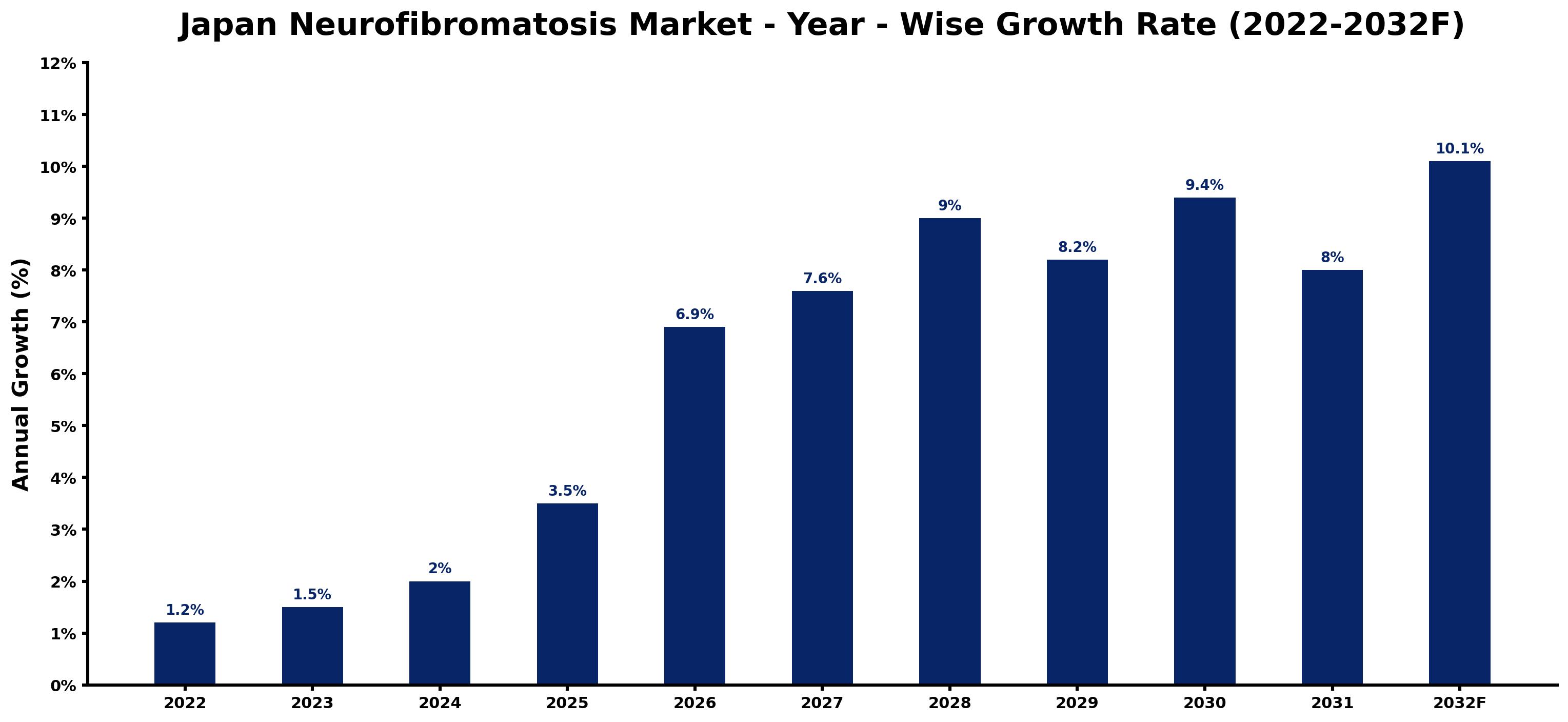
The table below sets out the estimated growth rate for each year and the main factor behind it.
| Year | Estimated Annual Growth (%) | Market Rationale |
| 2022 | 1.2 | The market experienced modest growth due to limited awareness and treatment options. |
| 2023 | 1.5 | Increased diagnosis rates contributed to faster growth compared to the previous year. |
| 2024 | 2.0 | The introduction of new therapies is expected to further accelerate market expansion. |
| 2025 | 3.5 | Growing hospital capabilities will lead to improved treatment access and options. |
| 2026 | 6.9 | Investment in rare disease research is projected to create new treatment pathways. |
| 2027 | 7.6 | Rising patient numbers will continue to drive demand for effective therapies. |
| 2028 | 9.0 | Technological advancements in treatment options will support market growth. |
| 2029 | 8.2 | A slight slowdown is projected as market maturation begins to set in. |
| 2030 | 9.4 | Demand will surge again due to the introduction of new therapies. |
| 2031 | 8.0 | Market growth will slow as competition intensifies among treatment providers. |
| 2032 | 10.1 | The peak growth year is driven by increased investment in research and development. |
Note: Market size estimations and growth projections presented in this report are based on 6Wresearch's proprietary forecasting methodology, utilizing the latest available industry data, government publications, and primary research inputs.
Japan Neurofibromatosis Market Synopsis
Neurofibromatosis is a genetic disorder characterised by the growth of tumours on nerves, primarily caused by gene mutations. In Japan, approximately 40,000 individuals were diagnosed in 2022, with a strong focus on drug therapy to manage symptoms. The Japan Neurofibromatosis Market is expanding, driven by increased awareness, advancements in treatment options, and government funding for rare disease research, projected to reach USD 105 million by 2032. This growth reflects a commitment to improving patient outcomes and access to care.
Market Dynamics Impact Analysis (2026–2032)
| Factor | Type | Impact | Primary Segment Affected |
| Increased awareness of neurofibromatosis among healthcare providers | Driver | High | Neurofibromatosis 1 (NF1) |
| Growing investment in rare disease research | Driver | High | Drug Therapy |
| Emerging specialty clinics focusing on neurofibromatosis treatment | Opportunity | Medium | Specialty Clinics |
| Expansion of hospital capabilities for treating neurofibromatosis | Opportunity | High | Hospitals |
| Limited treatment options for specific cases of NF2 | Restraint | Medium | Neurofibromatosis 2 (NF2) |
| High costs associated with advanced therapies | Restraint | High | Drug Therapy |
| Competition among treatment providers leading to pricing pressures | Challenge | Medium | Surgery |
| Regulatory hurdles for new treatments and therapies | Challenge | High | Drug Therapy |
Evaluation of Drivers in Japan Neurofibromatosis Market (2026–2032)
The main growth drivers and the segments they affect most are set out below.
| Drivers | Primary Segment Affected | Why It Matters (Evidence) |
| Increased funding for rare disease research | Drug Therapy | The Ministry of Health allocated ¥500 million for rare disease research, supporting drug development. |
| Growing number of hospitals equipped for treatment | Hospitals | Over 1,200 hospitals in Japan are now equipped to treat neurofibromatosis, increasing patient access. |
| Rising number of diagnosed patients | Neurofibromatosis 1 (NF1) | Approximately 40,000 individuals were diagnosed in 2022, driving demand for effective treatments. |
| Advancements in drug therapies | Drug Therapy | Ongoing clinical trials for medications like MEK inhibitors are expanding treatment options. |
| Emergence of specialty clinics | Specialty Clinics | Specialty clinics focusing on genetic disorders are improving treatment access. |
Several shifts outside the market lift sales. Increased funding for rare disease research, with ¥500 million allocated in 2023, has driven demand for effective therapies. The growing number of hospitals equipped for treatment, now exceeding 1,200, has improved patient access. The rise in diagnosed patients, with around 40,000 individuals identified in 2022, has further contributed to demand for neurofibromatosis treatments. Clinical trials for MEK inhibitors are expanding treatment options, while specialty clinics focusing on genetic disorders enhance care accessibility.
Evaluation of Restraints in Japan Neurofibromatosis Market
The key brakes on demand, and where they bite hardest, are shown below.
| Market Restraint | Primary Segment Affected | Why It Matters (Evidence) |
| Limited treatment options for Neurofibromatosis 2 | Neurofibromatosis 2 (NF2) | Specific treatment needs exist, with radiation therapy used in only 15% of NF2 cases. |
| High costs associated with advanced therapies | Drug Therapy | The financial burden of new therapies can deter patient access and adherence. |
| Regulatory hurdles for new treatments | Drug Therapy | Strict regulations can delay the approval of new therapies in Japan. |
| Competition among treatment providers | Surgery | Intense competition leads to pricing pressures, impacting profitability for providers. |
| Limited awareness among patients and families | Specialty Clinics | Low awareness can hinder timely diagnosis and treatment access. |
Japan Neurofibromatosis Market Challenges
High costs of neurofibromatosis therapies can exceed ¥1 million annually per patient, creating financial strain for families seeking care. A lack of trained healthcare professionals, especially in rural areas, delays diagnoses for around 40,000 individuals, increasing the risk of complications. Supply chain interruptions are affecting the availability of essential medications, with ongoing clinical trials delaying new therapies from reaching hospitals, which impacts timely treatment options. Fierce competition among suppliers leads to price reductions that may compromise the quality of care and limit treatment choices for patients.
Trends in the Japan Neurofibromatosis Market
The following changes are redrawing the Japan Neurofibromatosis Market.
- Shift towards Advanced Drug Therapies: Since 2022, there has been a notable shift towards advanced drug therapies for neurofibromatosis, with clinical trials for MEK inhibitors gaining traction. This trend is anticipated to improve treatment efficacy and patient outcomes.
- Emergence of Specialty Clinics: Specialty clinics focusing on neurofibromatosis treatment have emerged, particularly in urban areas like Tokyo. These clinics are projected to increase patient access, with a growth rate of 11.4% for specialty clinics by 2032.
- Increased Government Funding: In 2023, the Ministry of Health allocated ¥500 million for rare disease research, including neurofibromatosis. This funding is expected to drive innovation and improve treatment options for patients.
- Expansion of Hospital Capabilities: The number of hospitals equipped to treat neurofibromatosis has increased, enhancing patient access and treatment outcomes.
Investment Opportunities in the Japan Neurofibromatosis Market
The following opportunities in the Japan Neurofibromatosis Market pair current demand with a clear way in.
- Hospitals seeking advanced treatment options: Hospitals in Japan are increasingly looking for advanced treatment options for neurofibromatosis, driven by the growing patient population. This presents an opportunity for suppliers to provide new therapies.
- Partnerships with specialty clinics: Forming partnerships with specialty clinics can improve access to neurofibromatosis treatments. Collaborating with clinics in urban areas can facilitate the introduction of new therapies.
- Supply of new drug therapies: The demand for new drug therapies is rising, particularly in urban centres. Suppliers can focus on providing advanced medications to meet this growing need.
- Investment in outpatient facilities: Investment in ambulatory surgical centers is essential, as they perform around 1,000 surgeries annually for neurofibromatosis-related tumors. This sector presents opportunities for growth and development.
Government Initiatives in the Japan Neurofibromatosis Market
The NHI drug price standard, revised regularly, sets reimbursement prices for neurofibromatosis treatments, ensuring that patients have access to necessary medications without excessive out-of-pocket costs. This law complements the Medical Care Act of 1948, which establishes standards for hospitals and clinics treating neurofibromatosis, ensuring adequate facilities and staffing to meet patient needs.
In 2023, the Ministry of Health allocated ¥500 million for rare disease research, including neurofibromatosis, which is managed by the Digital Agency. This funding supports clinical trials and the development of new therapies, enhancing treatment options for patients and improving overall care quality.
Future Insight of the Japan Neurofibromatosis Market
By 2032, Japan will experience a policy-driven shift towards improved support for neurofibromatosis, with increased funding for research and development. The Ministry of Health's allocation for rare disease research will lead to advancements in drug therapies and genetic counseling services. Collaboration between urban genetic disorder clinics and patient support programs will enhance patient outcomes and streamline access to care. The establishment of additional specialty clinics will facilitate early diagnosis and intervention, benefiting families and healthcare providers in the neurofibromatosis market.
Market Segmentation Analysis
Japan Neurofibromatosis Market report covers a detailed analysis of the following market segments:
By Disease Type – Neurofibromatosis 1 (NF1) Leads, Neurofibromatosis 2 (NF2) Expected to Grow Fastest
According to Summon Dutta, Assistant Manager at 6Wresearch, the largest disease type category in 2025 was Neurofibromatosis 1 (NF1), at 46% of revenue. Neurofibromatosis 1 (NF1) holds the largest share due to its prevalence, with around 40,000 individuals diagnosed in Japan. This condition is commonly treated in over 1,200 hospitals equipped to manage neurofibromatosis cases. The quickest growth will come from Neurofibromatosis 2 (NF2), forecast to expand at a CAGR of 11.8% between 2026 and 2032. Neurofibromatosis 2 (NF2) is experiencing rapid growth as specific treatment needs arise, particularly with ongoing clinical trials for targeted therapies. The increasing awareness and support from the Japanese Society of Neurofibromatosis further contribute to this segment's expansion. Suppliers should focus on developing targeted therapies for NF2 to capitalise on its growing demand.
By Treatment – Drug Therapy Leads, Surgery Expected to Grow Fastest
Drug Therapy took 50% of treatment revenue in 2025, more than any other category. Drug therapy is the primary method for treating neurofibromatosis, focusing on symptom management and complication prevention. For example, medications like MEK inhibitors are crucial for NF1 patients, ensuring effective care and support. Over 2026–2032, Surgery is expected to post the fastest growth, at a CAGR of 11.2%. Surgery is growing rapidly due to the increasing necessity for tumour removal, with approximately 1,000 surgeries carried out annually for related issues. This trend indicates a shift towards integrating more surgical options into treatment plans. Providers must prepare for the rising demand for surgical interventions by ensuring facilities are equipped accordingly.
By End User – Hospitals Lead, Specialty Clinics Expected to Grow Fastest
With 51% of end user revenue in 2025, Hospitals was the largest category. Hospitals serve as the main end-users for neurofibromatosis treatments, providing comprehensive patient care and management. With over 1,200 hospitals available in Japan, they are well-equipped to deliver essential treatment options for this disorder. Specialty Clinics are set to record the highest CAGR in this split, 11.4% over 2026–2032. Specialty clinics are expanding quickly due to their concentrated focus on specific conditions like neurofibromatosis, especially in urban areas such as Tokyo and Osaka. This growth reflects the increasing demand for specialised care tailored to patient needs. Investing in specialty clinics may provide suppliers with a strategic edge in targeting specific patient demographics.
By Distribution Channel – Hospital Pharmacy Leads, Retail Pharmacy Expected to Grow Fastest
Hospital Pharmacy held 48% of the Japan Neurofibromatosis Market by distribution channel in 2025. Hospital pharmacies are the dominant distribution channel for neurofibromatosis medications, ensuring direct access to vital treatments for patients. Their critical role lies in providing hospitals with timely supplies of necessary drugs. Retail Pharmacy is projected to grow fastest, at a CAGR of 11.6% during 2026–2032. Retail pharmacies are witnessing rapid growth as they offer indirect access to some treatments, appealing to patients seeking convenience. This shift suggests a change in patient preferences towards obtaining medications outside traditional hospital environments. Suppliers should focus on building partnerships with retail pharmacies to improve product accessibility.
Key Attractiveness of the Report
- 10 Years of Market Numbers
- Historical Data Starting from 2022 to 2025
- Base Year 2025
- Forecast Data until 2032
- Key Performance Indicators Impacting the Market
- Major Upcoming Developments and Projects
Key Highlights of the Report:
- Japan Neurofibromatosis Market Outlook
- Market Size of Japan Neurofibromatosis Market, 2025
- Forecast of Japan Neurofibromatosis Market, 2032
- Historical Data and Forecast of Japan Neurofibromatosis Revenues & Volume for the Period 2022-2032
- Japan Neurofibromatosis Market Trend Evolution
- Japan Neurofibromatosis Market Drivers and Challenges
- Japan Neurofibromatosis Price Trends
- Japan Neurofibromatosis Porter's Five Forces
- Japan Neurofibromatosis Industry Life Cycle
- Historical Data and Forecast of Japan Neurofibromatosis Market Revenues & Volume By Disease Type for the Period 2022-2032
- Historical Data and Forecast of Japan Neurofibromatosis Market Revenues & Volume By Neurofibromatosis 1 (NF1) for the Period 2022-2032
- Historical Data and Forecast of Japan Neurofibromatosis Market Revenues & Volume By Neurofibromatosis 2 (NF2) for the Period 2022-2032
- Historical Data and Forecast of Japan Neurofibromatosis Market Revenues & Volume By Schwannomatosis for the Period 2022-2032
- Historical Data and Forecast of Japan Neurofibromatosis Market Revenues & Volume By Treatment for the Period 2022-2032
- Historical Data and Forecast of Japan Neurofibromatosis Market Revenues & Volume By Drug Therapy for the Period 2022-2032
- Historical Data and Forecast of Japan Neurofibromatosis Market Revenues & Volume By Surgery for the Period 2022-2032
- Historical Data and Forecast of Japan Neurofibromatosis Market Revenues & Volume By Radiation Therapy and Chemotherapy for the Period 2022-2032
- Historical Data and Forecast of Japan Neurofibromatosis Market Revenues & Volume By End User for the Period 2022-2032
- Historical Data and Forecast of Japan Neurofibromatosis Market Revenues & Volume By Hospitals for the Period 2022-2032
- Historical Data and Forecast of Japan Neurofibromatosis Market Revenues & Volume By Specialty Clinics for the Period 2022-2032
- Historical Data and Forecast of Japan Neurofibromatosis Market Revenues & Volume By Ambulatory Surgical Centers for the Period 2022-2032
- Historical Data and Forecast of Japan Neurofibromatosis Market Revenues & Volume By Others for the Period 2022-2032
- Historical Data and Forecast of Japan Neurofibromatosis Market Revenues & Volume By Distribution Channel for the Period 2022-2032
- Historical Data and Forecast of Japan Neurofibromatosis Market Revenues & Volume By Hospital Pharmacy for the Period 2022-2032
- Historical Data and Forecast of Japan Neurofibromatosis Market Revenues & Volume By Retail Pharmacy for the Period 2022-2032
- Historical Data and Forecast of Japan Neurofibromatosis Market Revenues & Volume By Online Pharmacy for the Period 2022-2032
- Japan Neurofibromatosis Import Export Trade Statistics
- Market Opportunity Assessment By Disease Type
- Market Opportunity Assessment By Treatment
- Market Opportunity Assessment By End User
- Market Opportunity Assessment By Distribution Channel
- Japan Neurofibromatosis Top Companies Market Share
- Japan Neurofibromatosis Competitive Benchmarking By Technical and Operational Parameters
- Japan Neurofibromatosis Company Profiles
- Japan Neurofibromatosis Key Strategic Recommendations
Market Covered
Segments analysed in this report are listed below.
By Disease Type
- Neurofibromatosis 1 (NF1)
- Neurofibromatosis 2 (NF2)
- Schwannomatosis
By Treatment
- Drug Therapy
- Surgery
- Radiation Therapy and Chemotherapy
By End User
- Hospitals
- Specialty Clinics
- Ambulatory Surgical Centers
- Others
By Distribution Channel
- Hospital Pharmacy
- Retail Pharmacy
- Online Pharmacy






































