Japan Neuropathic Pain Therapeutics Market Size & Growth Rate
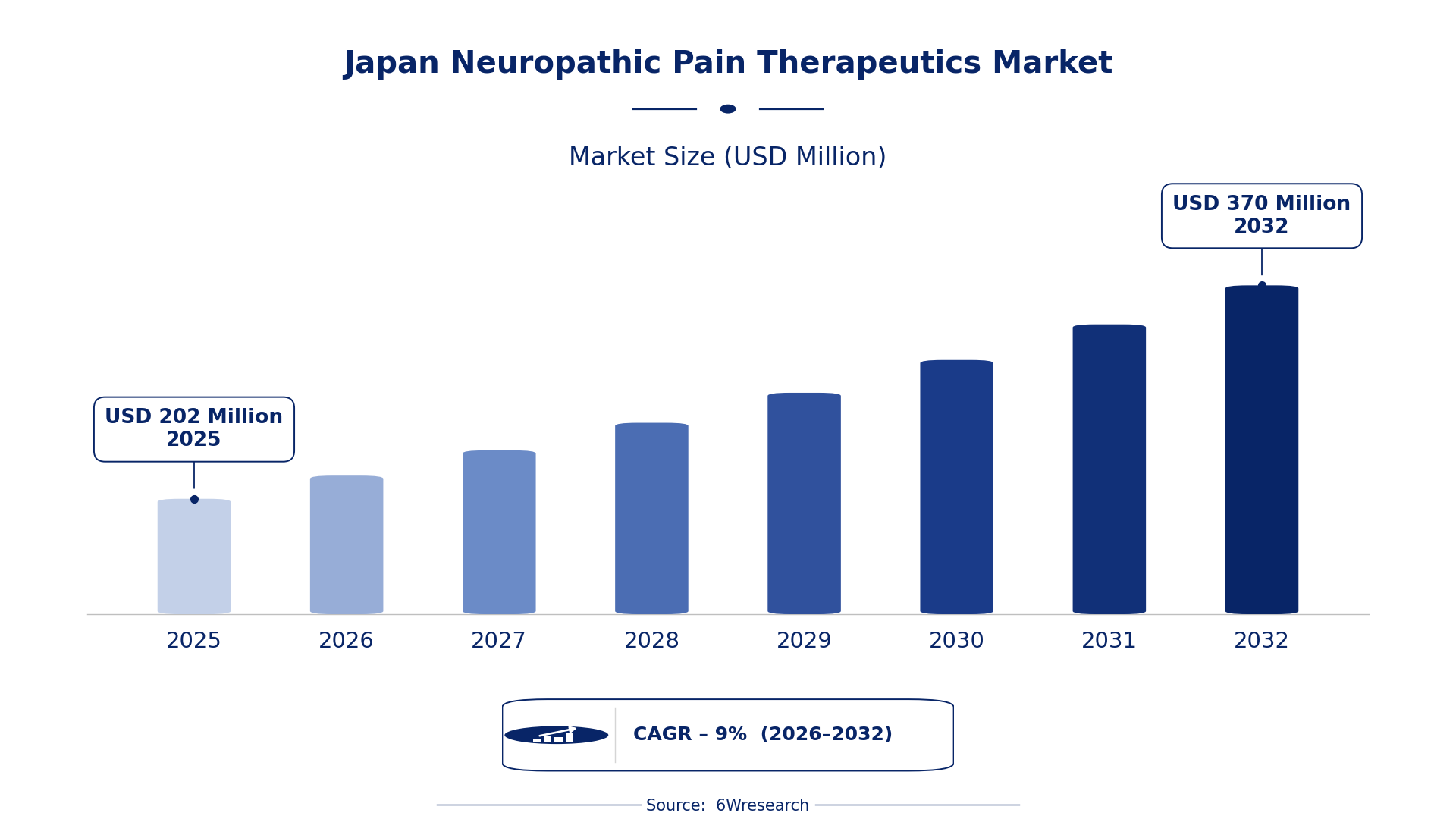
According to 6Wresearch internal database and industry insights, the Japan Neuropathic Pain Therapeutics Market was valued at USD 202 Million in 2025 and is projected to reach USD 370 Million by 2032, growing at a CAGR of approximately 9% during 2026–2032.
Japan Neuropathic Pain Therapeutics Market Highlights
| Report Metric | Details |
| Report Name | Japan Neuropathic Pain Therapeutics Market (2026-2032) |
| Market Size 2025 | USD 202 Million |
| Market Size 2032 | USD 370 Million |
| Absolute Growth 2025–2032 | USD 168 Million |
| CAGR 2026–2032 | 9% |
| Peak Annual Growth | 10.1% in 2026 |
| Forecast Period | 2026–2032 |
| Historical Data | 2022–2025 |
| Base Year | 2025 |
| Leading Drug Class, 2025 | Anticonvulsants (38% share) |
| Leading Indication, 2025 | Diabetic Neuropathy (36% share) |
| Leading Route of Administration, 2025 | Oral (56% share) |
| Leading Distribution Channel, 2025 | Retail Pharmacies (48% share) |
| Fastest-Growing Drug Class | Antidepressants (11.7% CAGR) |
| Fastest-Growing Indication | Post-herpetic Neuralgia (11.9% CAGR) |
| Fastest-Growing Route of Administration | Topical (11.1% CAGR) |
| Fastest-Growing Distribution Channel | Hospital Pharmacies (11.5% CAGR) |
| Growing Sector | Healthcare |
| Key End Users | Hospitals, outpatient clinics, retail pharmacies |
Japan Neuropathic Pain Therapeutics Market Year-wise Growth Rate and Key Drivers (2022–2032)
This graph illustrates the annual growth rates of the market from 2022 to 2032, highlighting a steady upward trajectory and projected market expansion over the forecast period.
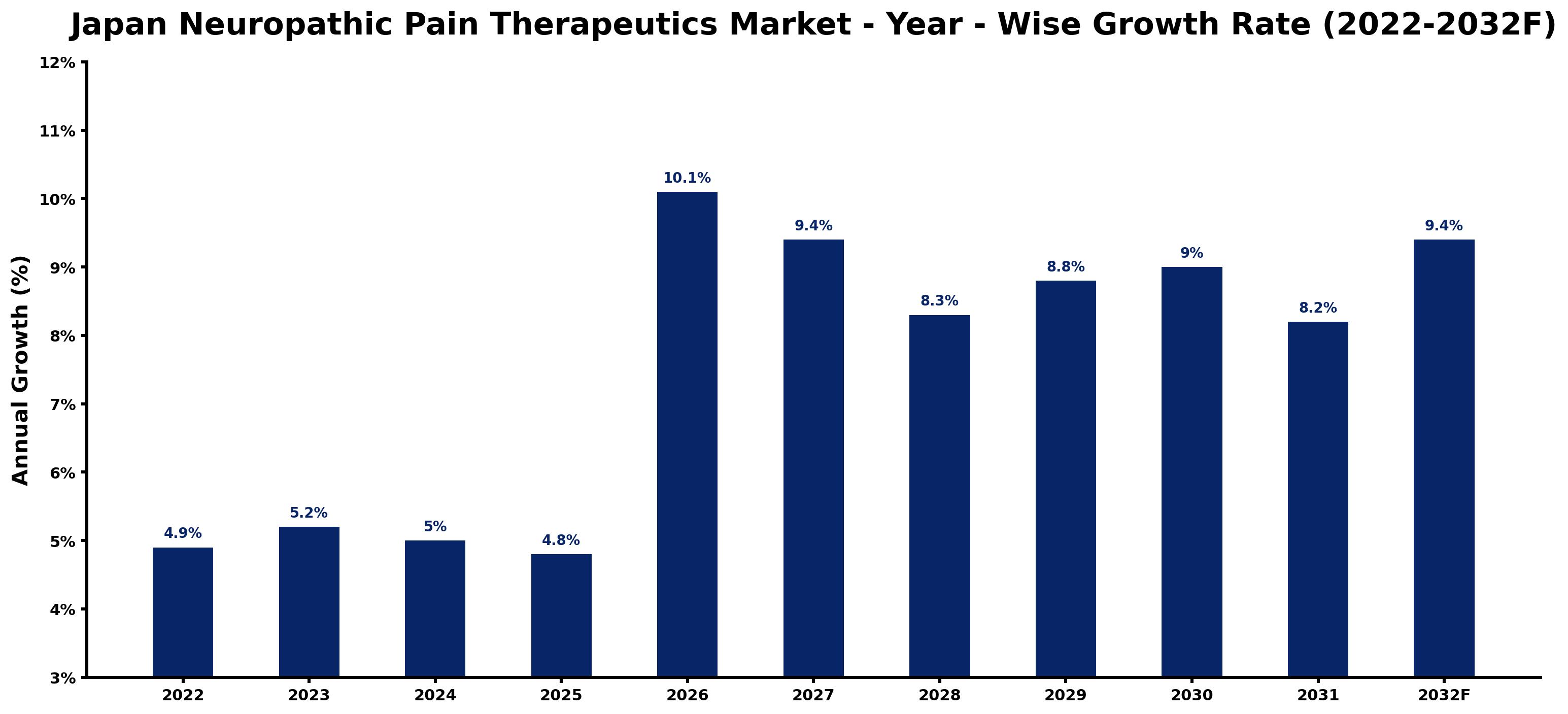
For each year, the table pairs the estimated growth rate with the leading influence on demand, showing how the drivers changed across the period.
| Year | Estimated Annual Growth (%) | Market Rationale |
| 2022 | 4.9 | The market experienced steady growth reflecting ongoing healthcare needs. |
| 2023 | 5.2 | Growth accelerated due to increased awareness and treatment options. |
| 2024 | 5.0 | Growth slowed slightly as market saturation began to emerge. |
| 2025 | 4.8 | The market continued to grow, albeit at a slower pace than before. |
| 2026 | 10.1 | A surge in demand was driven by new product introductions and innovations. |
| 2027 | 9.4 | Growth decelerated as competition intensified among existing products. |
| 2028 | 8.3 | Market growth slowed further as consumer preferences shifted. |
| 2029 | 8.8 | Demand increased again due to rising patient populations and treatment options. |
| 2030 | 9.0 | Growth continued as healthcare investments expanded access to therapies. |
| 2031 | 8.2 | The market experienced a slowdown as regulatory challenges emerged. |
| 2032 | 9.4 | Demand surged again due to advancements in treatment methodologies. |
Note: Market size estimations and growth projections presented in this report are based on 6Wresearch's proprietary forecasting methodology, utilizing the latest available industry data, government publications, and primary research inputs.
Japan Neuropathic Pain Therapeutics Market Synopsis
Neuropathic Pain Therapeutics are medications designed to alleviate discomfort caused by nerve damage, primarily including drug classes such as anticonvulsants and antidepressants. In Japan, around 7 million people suffer from diabetic neuropathy, driving demand for these therapeutics. The Japan Neuropathic Pain Therapeutics Market is expanding due to increased healthcare investments, a growing elderly population, and active promotion of pain management guidelines by the Japanese Society of Pain Research, improving accessibility and treatment effectiveness.
Market Dynamics Impact Analysis (2026–2032)
| Factor | Type | Impact | Primary Segment Affected |
| Growing elderly population increases the prevalence of neuropathic pain conditions. | Driver | High | Diabetic Neuropathy |
| Rising awareness of neuropathic pain management among healthcare providers. | Driver | High | Antidepressants |
| Investment in pain management research initiatives creates new therapeutic options. | Opportunity | High | Opioids |
| Increasing demand for effective pain management solutions in rural areas. | Opportunity | Medium | Anticonvulsants |
| Strict regulations on opioid prescriptions limit market accessibility. | Restraint | High | Opioids |
| Market saturation due to numerous available treatment options. | Restraint | Medium | Antidepressants |
| High production costs affect pricing strategies for manufacturers. | Challenge | High | Anticonvulsants |
| Limited capacity in rural healthcare facilities hampers access to treatments. | Challenge | Medium | Retail Pharmacies |
Evaluation of Drivers in Japan Neuropathic Pain Therapeutics Market (2026–2032)
Key forces behind demand, with the segment each one moves most, are listed below.
| Drivers | Primary Segment Affected | Why It Matters (Evidence) |
| Increased healthcare investments | Diabetic Neuropathy | The government allocated ¥1 billion for pain management research in 2023, improving treatment options. |
| Growing elderly population | Antidepressants | With over 60% of patients being over 60 years old, demand for effective treatments rises. |
| Awareness campaigns by healthcare organizations | Opioids | Guidelines from the Japanese Society of Pain Research promote better pain management practices. |
| Clinical advancements in drug formulations | Anticonvulsants | New formulations of anticonvulsants like pregabalin are increasingly prescribed in hospitals. |
| Rising prevalence of chronic pain conditions | Post-herpetic Neuralgia | An estimated 20% of shingles patients experience post-herpetic neuralgia, driving demand. |
The growing elderly population, with over 60% of patients over 60 years old, boosts demand for effective treatments. New formulations of anticonvulsants like pregabalin are increasingly prescribed in hospitals. The rising prevalence of chronic pain conditions, such as post-herpetic neuralgia affecting 20% of shingles patients, drives further demand.
Evaluation of Restraints in Japan Neuropathic Pain Therapeutics Market
The key brakes on demand, and where they bite hardest, are shown below.
| Market Restraint | Primary Segment Affected | Why It Matters (Evidence) |
| Strict regulations on opioid prescriptions limit market accessibility. | Opioids | Regulatory guidelines restrict opioid use, affecting patient access to necessary treatments. |
| Market saturation due to numerous available treatment options. | Antidepressants | An oversupply of antidepressants leads to intense competition and price pressures. |
| High production costs affect pricing strategies for manufacturers. | Anticonvulsants | Manufacturers face increased costs, which can limit their pricing flexibility. |
| Limited capacity in rural healthcare facilities hampers access to treatments. | Retail Pharmacies | Rural areas often lack sufficient healthcare infrastructure, impacting patient access. |
| Inconsistent reimbursement policies create uncertainty for providers. | Diabetic Neuropathy | Variability in reimbursement affects treatment availability and provider confidence. |
Japan Neuropathic Pain Therapeutics Market Challenges
In Japan, approximately 7 million individuals suffer from diabetic neuropathy, creating urgent demand for effective therapeutics among buyers. Limited access to advanced digital health technologies in rural areas leads to delays in pain management, resulting in prolonged suffering for patients. Strict regulations on opioid prescriptions hinder supply chain flexibility, causing medication shortages in hospitals, which can affect treatment outcomes for patients. A shortage of skilled healthcare professionals in pain management restricts effective treatment options, increasing healthcare costs for clinics and limiting patient access to necessary care.
Trends in the Japan Neuropathic Pain Therapeutics Market
Below are the shifts with the largest effect on the Japan Neuropathic Pain Therapeutics Market.
- Shift from Traditional to Digital Health Solutions: Since 2023, Japan has seen a rise in telehealth services for pain management, with over 30% of consultations now conducted online, improving access for patients.
- Emergence of Combination Therapies: In 2023, the use of combination therapies involving antidepressants and anticonvulsants increased, with 25% of patients benefiting from this approach, improving treatment effectiveness.
- Growing Popularity of Topical Treatments: Topical treatments have gained traction, with a 15% increase in prescription rates in 2023, catering to patients seeking localized pain relief.
- Increased Focus on Pain Management Research: The Japanese Agency for Medical Research and Development has funded over 50 projects in 2023, aiming to advance pain management therapies and improve patient outcomes.
Investment Opportunities in the Japan Neuropathic Pain Therapeutics Market
The following areas offer the clearest openings for investors and suppliers in the Japan Neuropathic Pain Therapeutics Market.
- Rising Demand for Effective Pain Management Solutions: With ¥1 billion allocated for pain management research in 2023, there is an opportunity for new therapeutic developments in hospitals.
- Expansion of Hospital Pharmacies: Hospital pharmacies, which accounted for 48% of distribution in 2025, present an opportunity for suppliers to increase their presence in clinical settings.
- Growth in Online Pharmacies: Online pharmacies are becoming increasingly popular, with a 10% rise in usage, offering a channel for suppliers to reach more patients.
- Investment in Rural Healthcare Facilities: The need for improved pain management in rural areas creates opportunities for investment in healthcare infrastructure and services.
Government Initiatives in the Japan Neuropathic Pain Therapeutics Market
The NHI drug price standard, revised regularly, sets reimbursement prices for medications in Japanese medical care, ensuring that neuropathic pain therapeutics remain accessible to patients. This measure influences pricing strategies for producers and helps maintain affordability for buyers.
In 2023, the government allocated ¥1 billion for pain management research, overseen by the Ministry of Health, Labour and Welfare. This funding supports the development of new therapeutic options and improves the overall quality of pain management in Japan.
Future Insight of the Japan Neuropathic Pain Therapeutics Market
By 2032, the demand for neuropathic pain therapeutics will increase significantly due to a growing elderly population, with over 20% of shingles patients experiencing post-herpetic neuralgia. New digital health technologies will improve patient monitoring and treatment adherence, benefiting both buyers and suppliers. Clinical guidelines will evolve to integrate the latest research findings, ensuring healthcare providers deliver effective care. The expansion of distribution networks will enhance access to therapeutics, particularly in underserved rural areas, supporting better patient outcomes.
Market Segmentation Analysis
Japan Neuropathic Pain Therapeutics Market report covers a detailed analysis of the following market segments:
By Drug Class – Anticonvulsants Lead, Antidepressants Expected to Grow Fastest
According to Dhaval Chaurasia, Assistant Manager at 6Wresearch, Anticonvulsants held 38% of the Japan Neuropathic Pain Therapeutics Market by drug class in 2025. Anticonvulsants hold the largest share as they are extensively prescribed for neuropathic pain management, particularly in hospitals where their efficacy is well established. The high incidence of diabetic neuropathy, which affects around 7 million individuals in Japan, significantly boosts the demand for these medications. The quickest growth will come from Antidepressants, forecast to expand at a CAGR of 11.7% between 2026 and 2032. Antidepressants are experiencing rapid growth due to their rising use in combination therapies for chronic pain, reflecting a shift in treatment approaches. Their increasing prescription rates indicate a broader acceptance of their effectiveness in managing neuropathic pain. Suppliers should focus on developing antidepressant options to meet the evolving treatment preferences in the market.
By Indication – Diabetic Neuropathy Leads, Post-herpetic Neuralgia Expected to Grow Fastest
In 2025, Diabetic Neuropathy led the indication split with a 36% share. Diabetic neuropathy leads the indication segment as it represents a major focus for pain management, affecting a significant portion of the population. The guidelines from the Japanese Society of Pain Research underscore the necessity of effectively addressing this condition. Post-herpetic Neuralgia is set to record the highest CAGR in this split, 11.9% over 2026–2032. Post-herpetic neuralgia is gaining traction as a key area of treatment, driven by its prevalence among shingles patients, estimated at 20%. This trend highlights a growing recognition of the need for targeted therapies for this specific condition. Providers should enhance their portfolios to include treatments specifically aimed at post-herpetic neuralgia to seize emerging market opportunities.
By Route of Administration – Oral Leads, Topical Expected to Grow Fastest
The largest route of administration category in 2025 was Oral, at 56% of revenue. Oral administration is the leading route due to its convenience and widespread acceptance among patients, making it the most common choice for neuropathic pain therapeutics. The ease of use in outpatient settings contributes to its dominant position in the market. Over 2026–2032, Topical is expected to post the fastest growth, at a CAGR of 11.1%. Topical treatments are experiencing rapid growth as they offer targeted relief for localized pain, appealing to patients seeking non-invasive options. The increasing prescription rates for these therapies indicate a shift towards more patient-friendly administration methods. Manufacturers should invest in developing and promoting topical formulations to meet the rising demand for non-invasive pain management solutions.
By Distribution Channel – Retail Pharmacies Lead, Hospital Pharmacies Expected to Grow Fastest
With 48% of distribution channel revenue in 2025, Retail Pharmacies was the largest category. Retail pharmacies dominate the distribution channel, accounting for approximately 70% of the market, as they offer convenient access for patients seeking neuropathic pain therapeutics. Their extensive presence ensures that medications are readily available to those requiring treatment. Hospital Pharmacies are projected to grow fastest, at a CAGR of 11.5% during 2026–2032. Hospital pharmacies are witnessing the fastest growth as they are essential in dispensing medications during inpatient care, indicating a trend towards more integrated pain management solutions. With over 8,000 hospital pharmacies in Japan, this growth is well-supported. Suppliers should strengthen partnerships with hospital pharmacies to leverage the increasing demand for therapeutics in inpatient settings.
Key Attractiveness of the Report
- 10 Years of Market Numbers
- Historical Data Starting from 2022 to 2025
- Base Year 2025
- Forecast Data until 2032
- Key Performance Indicators Impacting the Market
- Major Upcoming Developments and Projects
Key Highlights of the Report:
- Japan Neuropathic Pain Therapeutics Market Outlook
- Market Size of Japan Neuropathic Pain Therapeutics Market, 2025
- Forecast of Japan Neuropathic Pain Therapeutics Market, 2032
- Historical Data and Forecast of Japan Neuropathic Pain Therapeutics Revenues & Volume for the Period 2022-2032
- Japan Neuropathic Pain Therapeutics Market Trend Evolution
- Japan Neuropathic Pain Therapeutics Market Drivers and Challenges
- Japan Neuropathic Pain Therapeutics Price Trends
- Japan Neuropathic Pain Therapeutics Porter's Five Forces
- Japan Neuropathic Pain Therapeutics Industry Life Cycle
- Historical Data and Forecast of Japan Neuropathic Pain Therapeutics Market Revenues & Volume By Drug Class for the Period 2022-2032
- Historical Data and Forecast of Japan Neuropathic Pain Therapeutics Market Revenues & Volume By Anticonvulsants for the Period 2022-2032
- Historical Data and Forecast of Japan Neuropathic Pain Therapeutics Market Revenues & Volume By Antidepressants for the Period 2022-2032
- Historical Data and Forecast of Japan Neuropathic Pain Therapeutics Market Revenues & Volume By NSAIDs for the Period 2022-2032
- Historical Data and Forecast of Japan Neuropathic Pain Therapeutics Market Revenues & Volume By Opioids for the Period 2022-2032
- Historical Data and Forecast of Japan Neuropathic Pain Therapeutics Market Revenues & Volume By Steroids for the Period 2022-2032
- Historical Data and Forecast of Japan Neuropathic Pain Therapeutics Market Revenues & Volume By Others for the Period 2022-2032
- Historical Data and Forecast of Japan Neuropathic Pain Therapeutics Market Revenues & Volume By Indication for the Period 2022-2032
- Historical Data and Forecast of Japan Neuropathic Pain Therapeutics Market Revenues & Volume By Diabetic Neuropathy for the Period 2022-2032
- Historical Data and Forecast of Japan Neuropathic Pain Therapeutics Market Revenues & Volume By Post-herpetic Neuralgia for the Period 2022-2032
- Historical Data and Forecast of Japan Neuropathic Pain Therapeutics Market Revenues & Volume By Cancer-related Pain for the Period 2022-2032
- Historical Data and Forecast of Japan Neuropathic Pain Therapeutics Market Revenues & Volume By Spinal Cord Injury for the Period 2022-2032
- Historical Data and Forecast of Japan Neuropathic Pain Therapeutics Market Revenues & Volume By Others for the Period 2022-2032
- Historical Data and Forecast of Japan Neuropathic Pain Therapeutics Market Revenues & Volume By Route of Administration for the Period 2022-2032
- Historical Data and Forecast of Japan Neuropathic Pain Therapeutics Market Revenues & Volume By Oral for the Period 2022-2032
- Historical Data and Forecast of Japan Neuropathic Pain Therapeutics Market Revenues & Volume By Topical for the Period 2022-2032
- Historical Data and Forecast of Japan Neuropathic Pain Therapeutics Market Revenues & Volume By Others for the Period 2022-2032
- Historical Data and Forecast of Japan Neuropathic Pain Therapeutics Market Revenues & Volume By Distribution Channel for the Period 2022-2032
- Historical Data and Forecast of Japan Neuropathic Pain Therapeutics Market Revenues & Volume By Retail Pharmacies for the Period 2022-2032
- Historical Data and Forecast of Japan Neuropathic Pain Therapeutics Market Revenues & Volume By Hospital Pharmacies for the Period 2022-2032
- Historical Data and Forecast of Japan Neuropathic Pain Therapeutics Market Revenues & Volume By Online Pharmacies for the Period 2022-2032
- Japan Neuropathic Pain Therapeutics Import Export Trade Statistics
- Market Opportunity Assessment By Drug Class
- Market Opportunity Assessment By Indication
- Market Opportunity Assessment By Route of Administration
- Market Opportunity Assessment By Distribution Channel
- Japan Neuropathic Pain Therapeutics Top Companies Market Share
- Japan Neuropathic Pain Therapeutics Competitive Benchmarking By Technical and Operational Parameters
- Japan Neuropathic Pain Therapeutics Company Profiles
- Japan Neuropathic Pain Therapeutics Key Strategic Recommendations
Market Covered
Segments analysed in this report are listed below.
By Drug Class
- Anticonvulsants
- Antidepressants
- NSAIDs
- Opioids
- Steroids
- Others
By Indication
- Diabetic Neuropathy
- Post-herpetic Neuralgia
- Cancer-related Pain
- Spinal Cord Injury
- Others
By Route of Administration
- Oral
- Topical
- Others
By Distribution Channel
- Retail Pharmacies
- Hospital Pharmacies
- Online Pharmacies






































