Japan Next Generation Surgical Robotics Market Size & Growth Rate
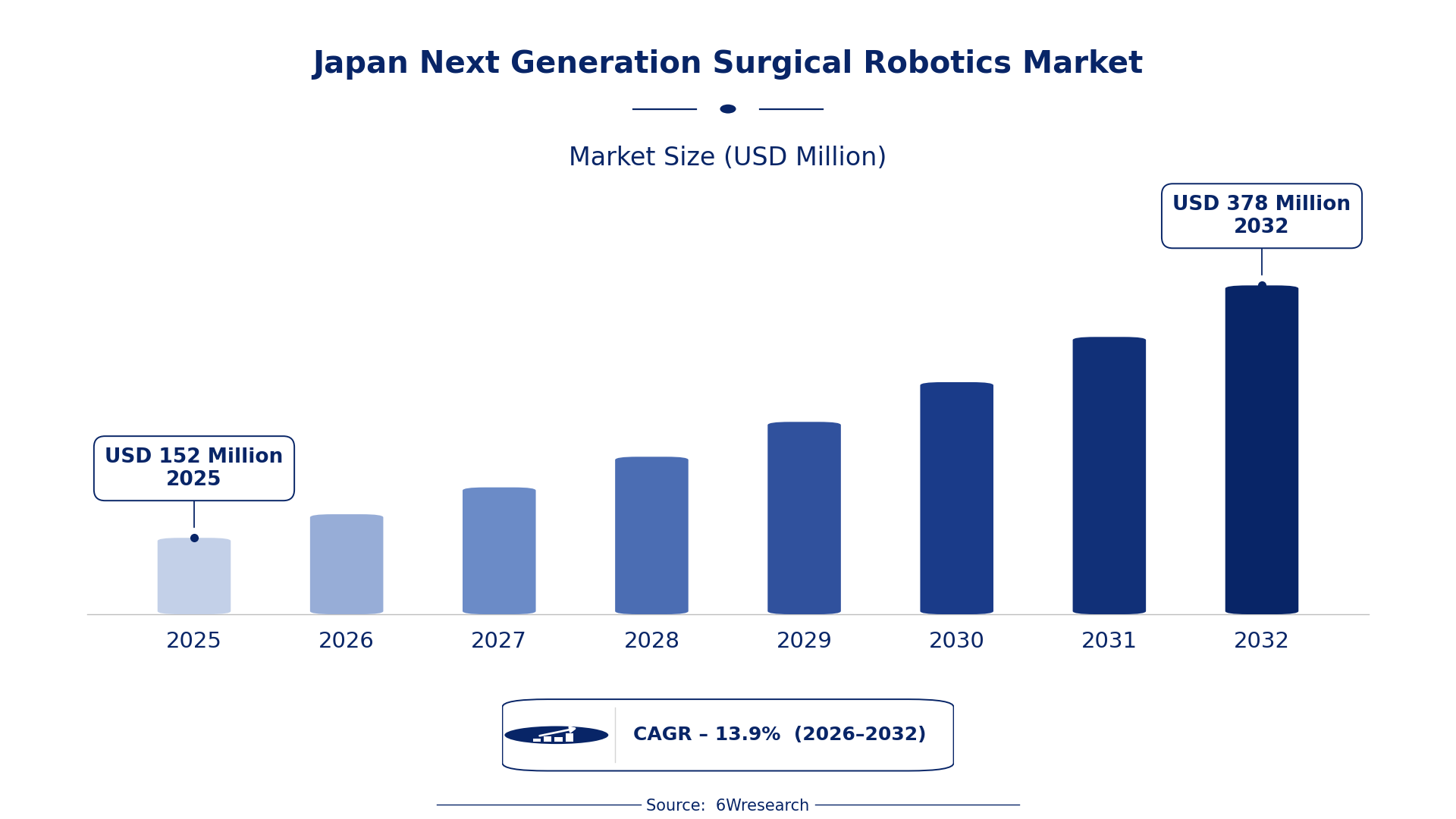
According to 6Wresearch internal database and industry insights, the Japan Next Generation Surgical Robotics Market was valued at USD 152 Million in 2025 and is projected to reach USD 378 Million by 2032, growing at a CAGR of approximately 13.9% during 2026–2032.
Japan Next Generation Surgical Robotics Market Highlights
| Report Metric | Details |
| Report Name | Japan Next Generation Surgical Robotics Market (2026-2032) |
| Market Size 2025 | USD 152 Million |
| Market Size 2032 | USD 378 Million |
| Absolute Growth 2025–2032 | USD 226 Million |
| CAGR 2026–2032 | 13.9% |
| Peak Annual Growth | 14.3% in 2032 |
| Forecast Period | 2026–2032 |
| Historical Data | 2022–2025 |
| Base Year | 2025 |
| Leading Product, 2025 | Systems (47% share) |
| Leading Applications, 2025 | Urological Surgery (50% share) |
| Leading End-users, 2025 | Hospitals (65% share) |
| Fastest-Growing Product | Services (19.2% CAGR) |
| Fastest-Growing Applications | Orthopedic Surgery (18.1% CAGR) |
| Fastest-Growing End-users | Ambulatory Surgery Centers (17.1% CAGR) |
| Growing Sector | surgical robotics |
| Key End Users | hospitals, surgical centers, healthcare providers |
Japan Next Generation Surgical Robotics Market Year-wise Growth Rate and Key Drivers (2022–2032)
This graph illustrates the annual growth rates of the market from 2022 to 2032, highlighting a steady upward trajectory and projected market expansion over the forecast period.
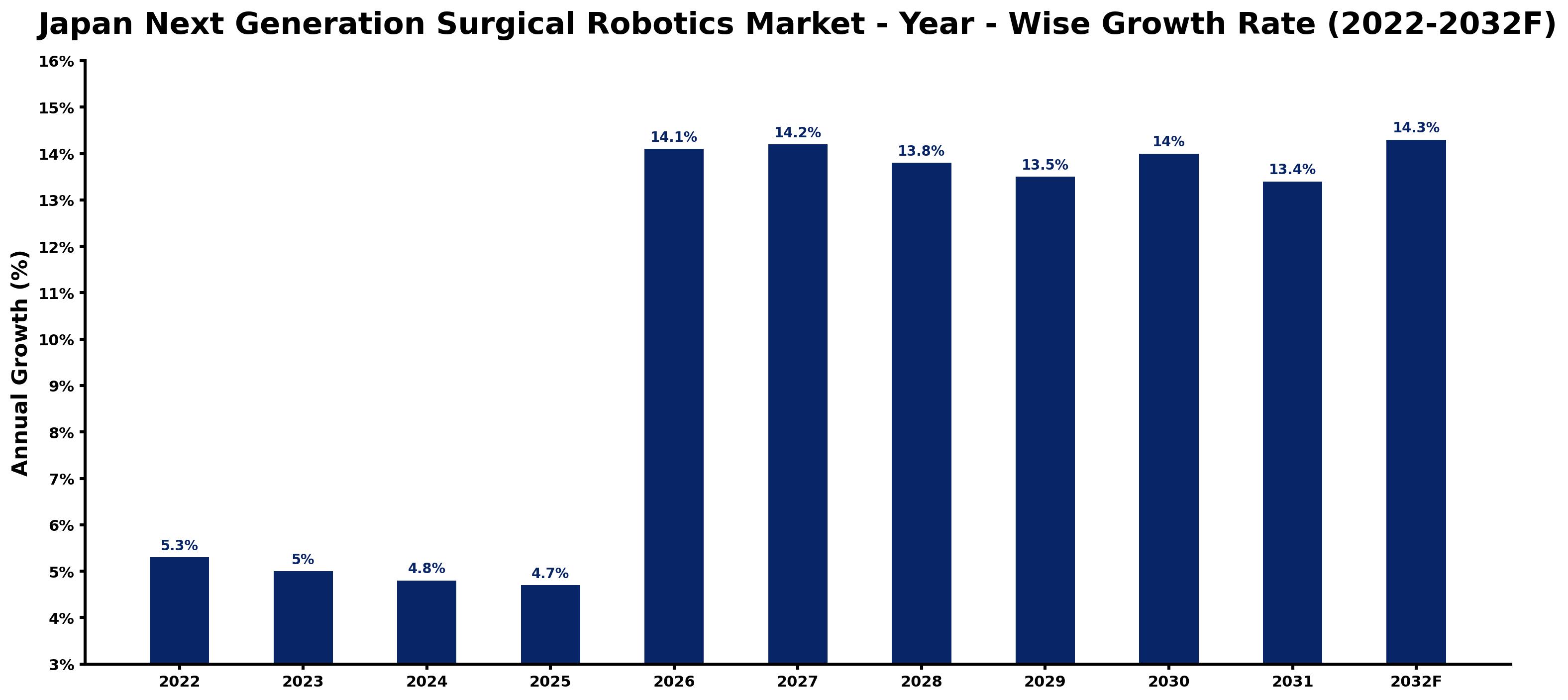
Each row of the following table gives one year's estimated growth and the event or demand shift that explains it.
| Year | Estimated Annual Growth (%) | Market Rationale |
| 2022 | 5.3 | The market showed strong activity with a notable increase in robotic surgeries. |
| 2023 | 5.0 | Growth slowed slightly as hospitals adjusted to new technologies and training. |
| 2024 | 4.8 | The market continued to grow, but at a reduced pace due to market saturation. |
| 2025 | 4.7 | Demand remained steady, driven by ongoing investments in surgical robotics. |
| 2026 | 14.1 | Growth accelerated as hospitals expanded their robotic surgery offerings. |
| 2027 | 14.2 | Demand continued to rise, supported by advancements in surgical technology. |
| 2028 | 13.8 | The growth rate slowed as market maturity began to set in. |
| 2029 | 13.5 | Demand remained strong, but growth moderated due to increased competition. |
| 2030 | 14.0 | Growth picked up again as new robotic systems entered the market. |
| 2031 | 13.4 | The market experienced a slight slowdown as hospitals focused on optimisation. |
| 2032 | 14.3 | Demand surged as advanced robotic systems gained wider acceptance. |
Note: Market size estimations and growth projections presented in this report are based on 6Wresearch's proprietary forecasting methodology, utilizing the latest available industry data, government publications, and primary research inputs.
Japan Next Generation Surgical Robotics Market Synopsis
Next Generation Surgical Robotics refers to advanced robotic systems used in surgical procedures, designed to improve precision and control. The Japan Next Generation Surgical Robotics Market is expanding as over 8,000 hospitals adopt these technologies, driven by an aging population where over 28% are aged 65 and older, increasing the need for minimally invasive surgeries. Government initiatives aimed at improving surgical training are further stimulating market growth, with healthcare expenditure reaching approximately 42 trillion yen in 2023.
Market Dynamics Impact Analysis (2026–2032)
| Factor | Type | Impact | Primary Segment Affected |
| Growing adoption of robotic systems in hospitals | Driver | High | Systems |
| Increased demand for minimally invasive surgeries | Driver | High | Urological Surgery |
| Expansion of robotic-assisted surgery programs | Opportunity | High | Orthopedic Surgery |
| Rising healthcare expenditure supporting advanced technologies | Opportunity | High | Hospitals |
| High initial investment costs for robotic systems | Restraint | High | Systems |
| Limited availability of skilled personnel for operation | Restraint | Medium | Services |
| Technological obsolescence of existing systems | Challenge | High | Instruments and Accessories |
| Competition from alternative surgical methods | Challenge | Medium | Gynaecological Surgery |
Evaluation of Drivers in Japan Next Generation Surgical Robotics Market (2026–2032)
Demand rests on the following drivers, each shown with the segment it touches most.
| Drivers | Primary Segment Affected | Why It Matters (Evidence) |
| Increased healthcare expenditure | Hospitals | Japan's healthcare expenditure reached approximately 42 trillion yen in 2023, prompting hospitals to invest in advanced surgical technologies. |
| Aging population | Urological Surgery | With over 28% of Japan's population aged 65 and older, there is a growing need for surgical interventions, driving demand for robotic systems. |
| Technological advancements in robotics | Systems | The introduction of over 1,500 robotic surgical systems enhances surgical precision, leading hospitals to adopt these technologies more widely. |
| Government initiatives for surgical training | Services | The 2023 program to enhance surgical training with robotics encourages hospitals to invest in robotic systems and services. |
| Growing acceptance of minimally invasive procedures | Orthopedic Surgery | Robotic-assisted surgeries have increased by 25% in major urban hospitals, leading to higher demand for advanced surgical systems. |
A wider customer base explains much of the growth, as increased healthcare expenditure reached approximately 42 trillion yen in 2023, prompting hospitals to invest in advanced surgical technologies. The aging population, with over 28% of Japan's population aged 65 and older, drives demand for surgical interventions, resulting in a rise in robotic systems adoption. Technological advancements have introduced over 1,500 robotic surgical systems, improving surgical precision and encouraging hospitals to expand their offerings.
Evaluation of Restraints in Japan Next Generation Surgical Robotics Market
These restraints slow adoption and weigh on supplier margins.
| Market Restraint | Primary Segment Affected | Why It Matters (Evidence) |
| High initial investment costs | Systems | The cost of acquiring advanced robotic systems can deter smaller hospitals from investing, limiting market growth. |
| Limited skilled personnel | Services | A shortage of trained professionals to operate robotic systems restricts the ability of hospitals to fully utilise these technologies. |
| Technological obsolescence | Instruments and Accessories | Rapid advancements in robotic technology may render existing systems outdated, affecting purchasing decisions. |
| Competition from alternative surgical methods | Gynaecological Surgery | The availability of alternative surgical techniques can limit the uptake of robotic systems in certain procedures. |
| Regulatory challenges | Urological Surgery | Compliance with stringent regulations can delay the introduction of new robotic systems into the market. |
Japan Next Generation Surgical Robotics Market Challenges
Manufacturers of surgical robotics face the risk of technological obsolescence, as many systems do not incorporate the latest navigation software, delaying updates and diminishing competitiveness. Importers experience supply chain delays due to evolving regulations from the Ministry of Health, Labour and Welfare, which can extend lead times for critical components and disrupt delivery schedules for hospitals. Buyers contend with intense competition among healthcare facilities, driving prices down and limiting their ability to invest in advanced robotic systems. Rising costs from Japan's minimum wage increase to JPY 1,055 per hour in October 2024 further strain hospital budgets, compelling them to reassess investments in surgical technologies.
Trends in the Japan Next Generation Surgical Robotics Market
The following changes are redrawing the Japan Next Generation Surgical Robotics Market.
- Tokyo Leading in Robotic Surgery Adoption: Tokyo is experiencing a surge in robotic surgery adoption, with a reported 30% increase in robotic-assisted surgeries in major urban hospitals. This trend highlights the city's commitment to advanced healthcare technologies.
- Shift Towards Minimally Invasive Procedures: The healthcare industry is increasingly favouring minimally invasive surgeries, with robotic systems playing a key role. In 2023, robotic-assisted surgeries rose by 30%, reflecting changing surgical preferences.
- Emergence of Advanced Surgical Training Programs: The 2023 initiative to improve surgical training with robotics is reshaping how surgeons are trained. This program aims to improve surgical outcomes and increase the adoption of robotic systems, with funding of 5 billion yen allocated for training.
- Growing Demand for Robotic Systems in Orthopedic Surgery: Orthopedic surgery is experiencing a notable shift towards robotic assistance, with an expected increase in robotic-assisted procedures by 18.1% from 2026 to 2032. This growth is driven by the need for precision in surgical interventions.
Investment Opportunities in the Japan Next Generation Surgical Robotics Market
The openings below show where demand in the Japan Next Generation Surgical Robotics Market is visible and how suppliers can enter.
- Timing for Investment in Robotics: With Japan's healthcare expenditure reaching approximately 42 trillion yen, now is an opportune time to invest in robotic systems. Hospitals are increasingly seeking advanced technologies to improve surgical outcomes.
- Gap in Skilled Personnel: With a shortage of skilled personnel for robotic surgeries, there is an opportunity to invest in training programs. Hospitals across Japan are looking for solutions to improve their workforce capabilities.
- Supply of Robotic Instruments and Accessories: The demand for instruments and accessories essential for robotic operations is rising. Hospitals are actively seeking suppliers to meet this growing need as robotic surgeries expand.
- Market for Robotic Services Expanding: The services segment is projected to grow, indicating a need for support and maintenance for robotic systems. Hospitals are looking for reliable service providers to ensure optimal operation.
Government Initiatives in the Japan Next Generation Surgical Robotics Market
The AI Promotion Act initiated in 2025 establishes a national framework for AI research, development, and use, which directly impacts the Next Generation Surgical Robotics Market by promoting the integration of AI technologies in surgical procedures. This measure is expected to improve the capabilities of robotic systems and patient outcomes, benefiting hospitals and surgical centres.
The Consumer Affairs Agency oversees compliance with the Act against Unjustifiable Premiums and Misleading Representations, ensuring that buyers of surgical robotics can trust the information provided about these systems. This regulation helps maintain transparency and quality standards in the market, which is important for hospitals investing in advanced surgical technologies.
Future Insight of the Japan Next Generation Surgical Robotics Market
Hospitals will adopt advanced surgical robotics at an increasing rate by 2032, driven by the government's initiative to enhance surgical training with robotics. The number of robotic surgical systems is expected to surpass 2,000 units, broadening access to minimally invasive surgeries. The Japanese Society of Robotic Surgery will likely enforce more rigorous best practices, elevating care standards across the sector. As the population ages, the demand for robotic-assisted procedures will rise, presenting growth opportunities for both buyers and suppliers in this evolving market.
Market Segmentation Analysis
Japan Next Generation Surgical Robotics Market report covers a detailed analysis of the following market segments:
By Product – Systems Lead, Services Expected to Grow Fastest
According to Ravi Bhandari, Research Head at 6Wresearch, Systems accounted for 47% of the market by product in 2025. Systems are essential for robotic surgeries, with over 1,500 units currently operational in Japan. Their role in enhancing surgical precision ensures they remain the preferred choice among healthcare facilities. Services are projected to grow fastest, at a CAGR of 19.2% during 2026–2032. Services are experiencing rapid growth as hospitals increasingly seek ongoing maintenance and support for their robotic systems. The recent government initiative to improve surgical training with robotics will likely drive further demand for these services. Suppliers should prioritise developing comprehensive service offerings to meet the increasing needs of healthcare institutions.
By Applications – Urological Surgery Leads, Orthopedic Surgery Expected to Grow Fastest
With 50% of applications revenue in 2025, Urological Surgery was the largest category. Urological Surgery is extensively utilised in Japan, with robotic systems applied in various procedures across numerous healthcare facilities. This widespread application underscores the effectiveness of robotic technology, reinforcing its leading market position. The quickest growth will come from Orthopedic Surgery, forecast to expand at a CAGR of 18.1% between 2026 and 2032. Orthopedic Surgery is seeing notable growth as hospitals adopt robotic systems for enhanced precision in complex surgical procedures. The 25% increase in robotic-assisted surgeries in major urban hospitals significantly contributes to this growth. Investing in advanced robotic systems could provide substantial advantages for buyers in the orthopedic surgery sector, enhancing overall surgical outcomes.
By End-users – Hospitals Lead, Ambulatory Surgery Centers Expected to Grow Fastest
Hospitals took 65% of end-users revenue in 2025, more than any other category. Hospitals are the primary users of surgical robotics, with over 8,000 facilities in Japan integrating these advanced technologies into their operations. Their considerable investment in robotic systems underscores their vital role in the healthcare sector. Over 2026–2032, Ambulatory Surgery Centers are expected to post the fastest growth, at a CAGR of 17.1%. Ambulatory Surgery Centers are increasingly recognising the benefits of robotic assistance, signalling a shift towards more minimally invasive surgical options. This trend is expected to accelerate as patient preferences for outpatient procedures continue to grow. Suppliers should focus on engaging ambulatory surgery centres to capitalise on opportunities in this expanding market segment.
Key Attractiveness of the Report
- 10 Years of Market Numbers
- Historical Data Starting from 2022 to 2025
- Base Year 2025
- Forecast Data until 2032
- Key Performance Indicators Impacting the Market
- Major Upcoming Developments and Projects
Key Highlights of the Report:
- Japan Next Generation Surgical Robotics Market Outlook
- Market Size of Japan Next Generation Surgical Robotics Market, 2025
- Forecast of Japan Next Generation Surgical Robotics Market, 2032
- Historical Data and Forecast of Japan Next Generation Surgical Robotics Revenues & Volume for the Period 2022-2032
- Japan Next Generation Surgical Robotics Market Trend Evolution
- Japan Next Generation Surgical Robotics Market Drivers and Challenges
- Japan Next Generation Surgical Robotics Price Trends
- Japan Next Generation Surgical Robotics Porter's Five Forces
- Japan Next Generation Surgical Robotics Industry Life Cycle
- Historical Data and Forecast of Japan Next Generation Surgical Robotics Market Revenues & Volume By Product for the Period 2022-2032
- Historical Data and Forecast of Japan Next Generation Surgical Robotics Market Revenues & Volume By Systems for the Period 2022-2032
- Historical Data and Forecast of Japan Next Generation Surgical Robotics Market Revenues & Volume By Services for the Period 2022-2032
- Historical Data and Forecast of Japan Next Generation Surgical Robotics Market Revenues & Volume By Instruments and Accessories for the Period 2022-2032
- Historical Data and Forecast of Japan Next Generation Surgical Robotics Market Revenues & Volume By Applications for the Period 2022-2032
- Historical Data and Forecast of Japan Next Generation Surgical Robotics Market Revenues & Volume By Urological Surgery for the Period 2022-2032
- Historical Data and Forecast of Japan Next Generation Surgical Robotics Market Revenues & Volume By Orthopedic Surgery for the Period 2022-2032
- Historical Data and Forecast of Japan Next Generation Surgical Robotics Market Revenues & Volume By Gynaecological Surgery for the Period 2022-2032
- Historical Data and Forecast of Japan Next Generation Surgical Robotics Market Revenues & Volume By End-users for the Period 2022-2032
- Historical Data and Forecast of Japan Next Generation Surgical Robotics Market Revenues & Volume By Hospitals for the Period 2022-2032
- Historical Data and Forecast of Japan Next Generation Surgical Robotics Market Revenues & Volume By Ambulatory Surgery Centers for the Period 2022-2032
- Japan Next Generation Surgical Robotics Import Export Trade Statistics
- Market Opportunity Assessment By Product
- Market Opportunity Assessment By Applications
- Market Opportunity Assessment By End-users
- Japan Next Generation Surgical Robotics Top Companies Market Share
- Japan Next Generation Surgical Robotics Competitive Benchmarking By Technical and Operational Parameters
- Japan Next Generation Surgical Robotics Company Profiles
- Japan Next Generation Surgical Robotics Key Strategic Recommendations
Market Covered
Segments analysed in this report are listed below.
By Product
- Systems
- Services
- Instruments and Accessories
By Applications
- Urological Surgery
- Orthopedic Surgery
- Gynaecological Surgery
By End-users
- Hospitals
- Ambulatory Surgery Centers






































