Japan Organic Soil Enhancers Market Size & Growth Rate
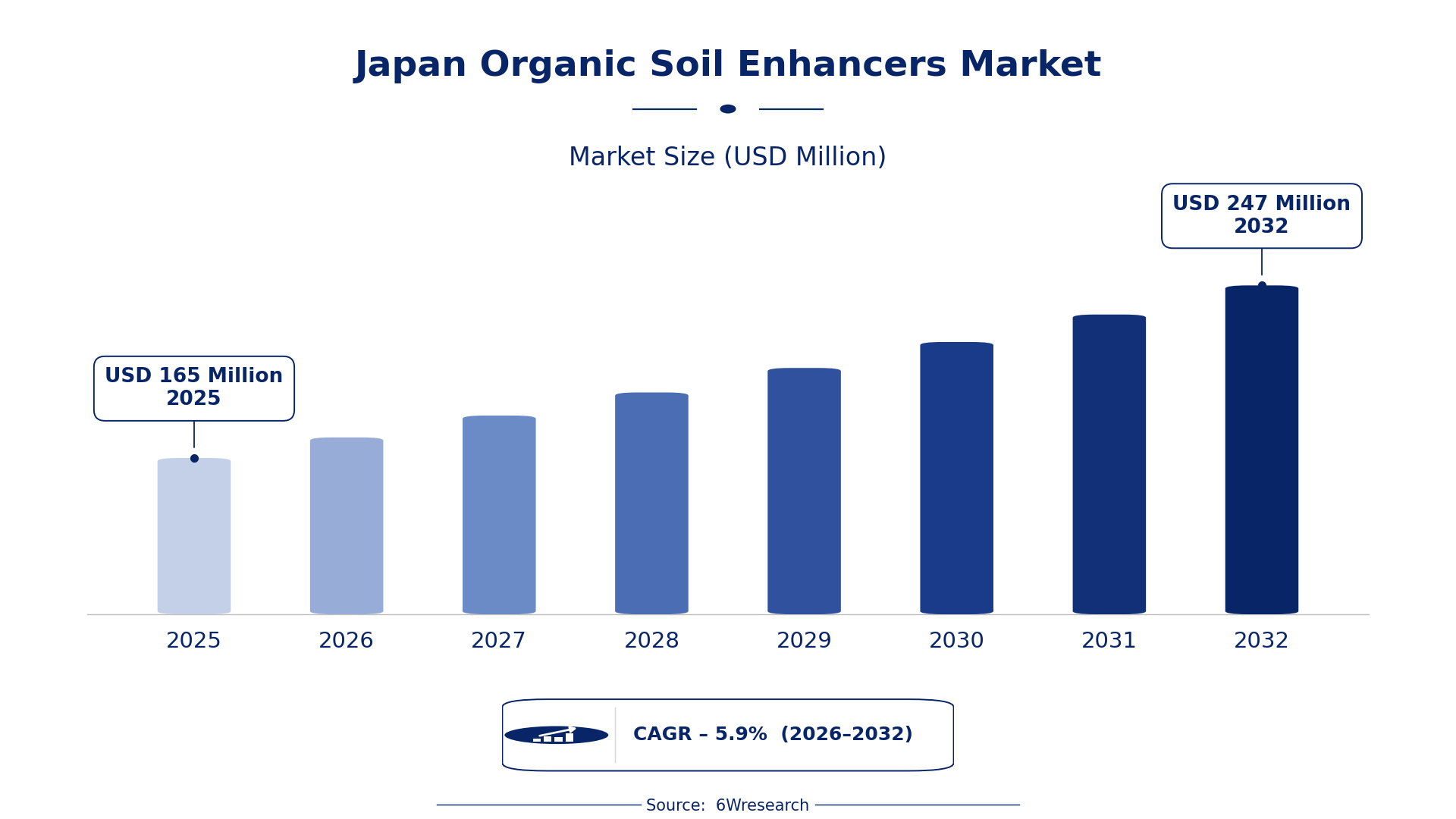
According to 6Wresearch internal database and industry insights, the Japan Organic Soil Enhancers Market was valued at USD 165 Million in 2025 and is projected to reach USD 247 Million by 2032, growing at a CAGR of approximately 5.9% during 2026–2032.
Japan Organic Soil Enhancers Market Highlights
| Report Metric | Details |
| Report Name | Japan Organic Soil Enhancers Market (2026-2032) |
| Market Size 2025 | USD 165 Million |
| Market Size 2032 | USD 247 Million |
| Absolute Growth 2025–2032 | USD 82 Million |
| CAGR 2026–2032 | 5.9% |
| Peak Annual Growth | 6.5% in 2030 |
| Forecast Period | 2026–2032 |
| Historical Data | 2022–2025 |
| Base Year | 2025 |
| Leading Product Type, 2025 | Organic Compost (42% share) |
| Leading Composition Type, 2025 | Plant Waste (46% share) |
| Leading Distribution Channel, 2025 | Direct Sales (43% share) |
| Leading End User, 2025 | Organic Farms (46% share) |
| Fastest-Growing Product Type | Biochar Soil Enhancer (8.3% CAGR) |
| Fastest-Growing Composition Type | Worm-Based (8.0% CAGR) |
| Fastest-Growing Distribution Channel | Online Platforms (7.5% CAGR) |
| Fastest-Growing End User | Horticulture (7.6% CAGR) |
| Growing Sector | Horticulture |
| Key End Users | Organic Farms, Horticulture, Nurseries, Gardeners |
Japan Organic Soil Enhancers Market Year-wise Growth Rate and Key Drivers (2022–2032)
This graph illustrates the annual growth rates of the market from 2022 to 2032, highlighting a steady upward trajectory and projected market expansion over the forecast period.
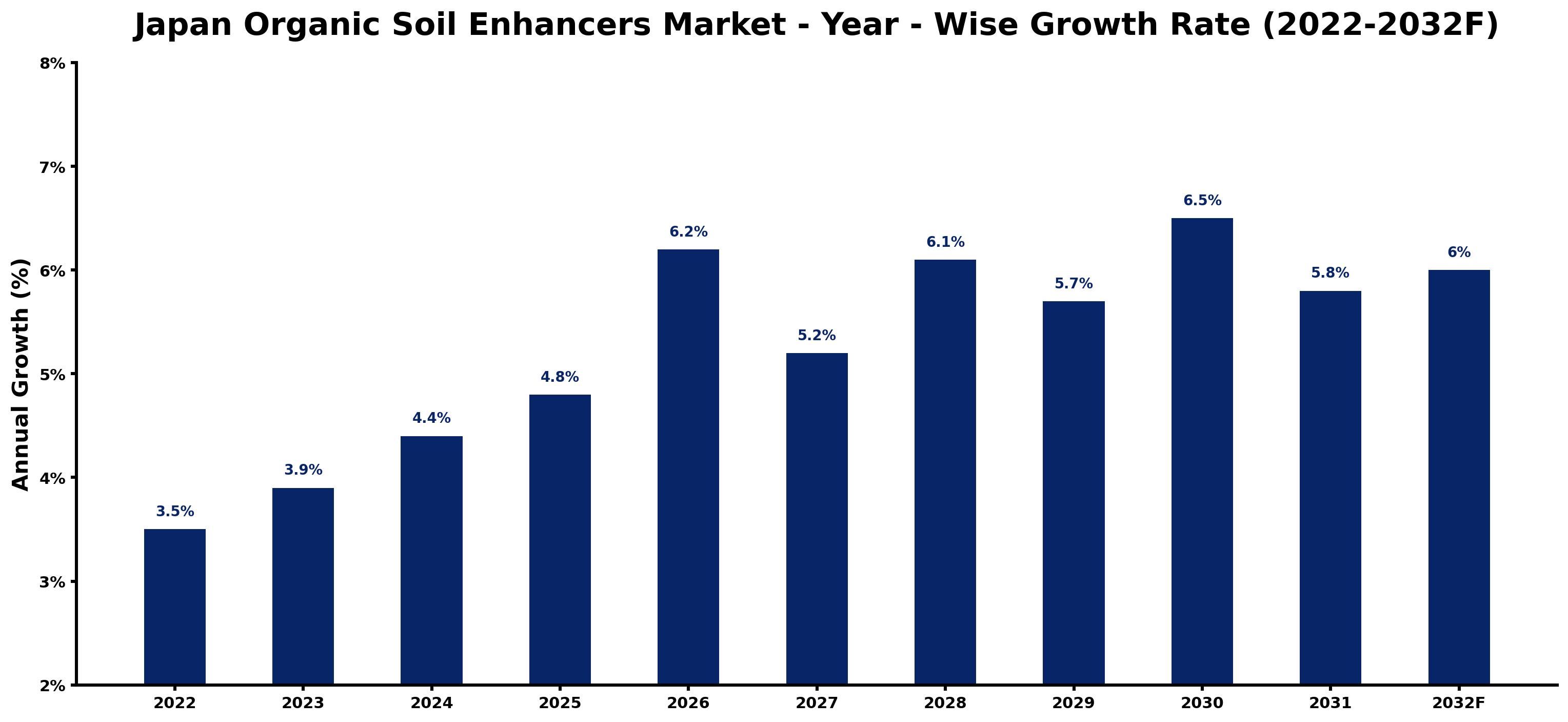
Below, each year's estimated growth is shown next to the factor that most influenced it.
| Year | Estimated Annual Growth (%) | Market Rationale |
| 2022 | 3.5 | The organic farming area reached 1.5 million hectares, indicating steady activity in sustainable agriculture. |
| 2023 | 3.9 | Organic compost production grew, reflecting rising interest in environmentally friendly practices. |
| 2024 | 4.4 | Urban gardeners in Tokyo increasingly adopted vermicompost, driving market expansion and product diversity. |
| 2025 | 4.8 | Horticulture's usage of organic soil products contributed to market growth, particularly in urban settings. |
| 2026 | 6.2 | The introduction of new biochar production methods is projected to spur demand for soil products. |
| 2027 | 5.2 | Market growth is expected to slow as competition intensifies among suppliers in the organic sector. |
| 2028 | 6.1 | Increased online sales of organic soil products will boost overall demand, attracting new buyers. |
| 2029 | 5.7 | The market is anticipated to continue growing, though at a slower pace due to saturation in certain segments. |
| 2030 | 6.5 | A peak in growth is projected as the government invests heavily in organic farming initiatives to support sustainability. |
| 2031 | 5.8 | Market growth is expected to decelerate slightly as buyers become more selective in their purchases. |
| 2032 | 6.0 | Demand will remain strong as organic farms continue to increase annually, fostering a competitive market. |
Note: Market size estimations and growth projections presented in this report are based on 6Wresearch's proprietary forecasting methodology, utilizing the latest available industry data, government publications, and primary research inputs.
Japan Organic Soil Enhancers Market Synopsis
Organic soil products derived from natural materials improve soil health and fertility through processes like composting and biochar production. The Japan Organic Soil Enhancers Market is expanding, driven by rising demand from organic farms and urban gardeners, with the organic farming area reaching 1.5 million hectares in 2022. A ¥1 billion allocation for organic farming initiatives in 2023 and a 25% growth in online sales in 2023 are propelling this growth.
Market Dynamics Impact Analysis (2026–2032)
| Factor | Type | Impact | Primary Segment Affected |
| Growing organic farming area | Driver | High | Organic Compost |
| Increased urban gardening | Driver | High | Vermicompost |
| Rising demand for sustainable practices | Opportunity | High | Biochar Soil Enhancer |
| Expansion of online sales channels | Opportunity | Medium | Online Platforms |
| Competition among suppliers | Restraint | High | Organic Farms |
| Limited awareness of benefits | Restraint | Medium | Horticulture |
| High production costs | Challenge | High | Organic Compost |
| Regulatory compliance challenges | Challenge | Medium | Biochar Soil Enhancer |
Evaluation of Drivers in Japan Organic Soil Enhancers Market (2026–2032)
The main growth drivers and the segments they affect most are set out below.
| Drivers | Primary Segment Affected | Why It Matters (Evidence) |
| Increase in organic farming area | Organic Compost | Japan's organic farming area reached 1.5 million hectares in 2022, leading to higher purchases of organic compost. |
| Growth of urban gardening | Vermicompost | Urban gardening trends in Japan have led to increased demand for nutrient-rich soil amendments, with vermicompost usage rising significantly. |
| Government support for organic agriculture | Biochar Soil Enhancer | The government allocated ¥1 billion for organic initiatives, encouraging the use of biochar in farming. |
| Rising online sales of organic soil products | Online Platforms | Online sales grew by 25% in 2023, attracting more buyers seeking convenient purchasing options. |
| Focus on sustainable farming practices | Seaweed-Based Enhancer | Seaweed-based products are widely used in coastal regions, improving soil moisture retention and crop yields. |
Orders keep climbing as Japan's organic farming area reached 1.5 million hectares in 2022, prompting farmers to purchase more soil products. The trend of urban gardening has significantly increased demand for nutrient-rich amendments, particularly vermicompost. Online sales of organic soil products grew by 25% in 2023, providing convenient access for consumers. This focus on sustainable practices continues to drive purchases of seaweed-based products, particularly in coastal agricultural regions.
Evaluation of Restraints in Japan Organic Soil Enhancers Market
These are the pressures that could keep growth below its potential.
| Market Restraint | Primary Segment Affected | Why It Matters (Evidence) |
| Limited availability of skilled labour | Organic Compost | Producers struggle to find expertise in organic practices, delaying production timelines and increasing costs. |
| High competition among suppliers | Organic Compost | Increased competition for organic soil products has surged by 25% in online sales, driving up prices. |
| Regulatory hurdles in certification | Vermicompost | Compliance with JAS standards can take up to six months, delaying market entry for new products. |
| Pressure for sustainable practices | Organic Compost | Producers face increasing demands to innovate sustainably, straining resources and slowing growth. |
| Market saturation | Organic Compost | The market is reaching saturation, limiting growth opportunities for new entrants. |
Japan Organic Soil Enhancers Market Challenges
Producers struggle with a shortage of skilled labour, as organic farming requires specific expertise that is scarce in Japan. This skill gap delays production and forces farmers to rely on less effective methods, impacting their yield. Buyers face rising costs due to increased competition for soil enhancers, with online sales growing by 25% in 2023. This competition reduces purchasing options and drives prices higher. Regulatory challenges complicate the certification process under JAS standards, which can take up to six months, delaying new product launches and limiting market access for suppliers.
Trends in the Japan Organic Soil Enhancers Market
Four trends stand out in the Japan Organic Soil Enhancers Market.
- Shift Towards Online Sales: The trend of purchasing organic soil products online is growing, with online sales increasing by 25% in 2023. This shift allows consumers to access a wider range of products conveniently.
- Urban Gardening on the Rise: Urban gardening is becoming increasingly popular in Japan, particularly in cities like Tokyo. This trend is driving demand for nutrient-rich soil products, creating new market opportunities for suppliers.
- Focus on Sustainable Practices: There is a growing emphasis on sustainable farming practices among Japanese farmers. This shift is leading to increased usage of organic soil products that support environmental goals.
- Government Investment in Organic Farming: The Japanese government has allocated ¥1 billion for organic farming initiatives in 2023. This investment is expected to improve production capabilities and stimulate market growth.
Investment Opportunities in the Japan Organic Soil Enhancers Market
The opportunities below stand out in the Japan Organic Soil Enhancers Market for new entrants and existing suppliers.
- Organic Farms Seeking Quality Products: Organic farms in Japan are increasingly looking for high-quality soil products to improve yields. With the organic farming area reaching 1.5 million hectares, suppliers can tap into this growing market.
- Partnerships for Distribution: Establishing partnerships with local agricultural suppliers can facilitate access to organic farms. This strategy will enable suppliers to penetrate the market effectively.
- Gap in Sustainable Soil Products: There is a gap in the availability of sustainable soil products, with demand rising. Suppliers can focus on developing eco-friendly options to meet this need.
- Investment in Biochar Production: Investing in biochar production facilities can cater to the growing market. The government's support for biochar initiatives presents a promising opportunity for suppliers.
Government Initiatives in the Japan Organic Soil Enhancers Market
The Waste Management and Public Cleansing Act (1970) regulates the treatment and disposal of waste, ensuring that organic soil products meet safety standards. This law requires producers to adhere to strict guidelines for waste management, impacting their operational processes and ensuring compliance with environmental regulations. The Act mandates regular reporting and monitoring, influencing production costs and timelines.
The Consumer Affairs Agency oversees the approval of organic farming initiatives, including the allocation of ¥1 billion for organic farming in 2023. This funding supports projects aimed at improving organic soil product production and distribution, ensuring that buyers have access to certified products that meet national standards.
Future Insight of the Japan Organic Soil Enhancers Market
A shift towards net zero emissions by 2050 will transform the soil enhancer market, compelling suppliers to adjust their product lines. By 2032, the government's ¥1 billion investment in organic farming will improve production capabilities, benefiting both buyers and suppliers. The growing popularity of biochar production will create new opportunities for soil improvement, while urban gardening trends in Tokyo will increase demand for compost products. Enhanced support for organic agriculture will drive innovation among suppliers, meeting the rising consumer demand for sustainable solutions.
Market Segmentation Analysis
Japan Organic Soil Enhancers Market report covers a detailed analysis of the following market segments:
By Product Type – Organic Compost Leads, Biochar Soil Enhancer Expected to Grow Fastest
According to Aarti Yadav, Research Associate at 6Wresearch, with 42% of product type revenue in 2025, Organic Compost was the largest category. Organic compost holds the largest share as it is widely used for improving soil fertility in various agricultural regions of Japan. Its popularity is particularly evident in areas where organic farming is well established, such as Hokkaido and Kumamoto. Over 2026–2032, Biochar Soil Enhancer is expected to post the fastest growth, at a CAGR of 8.3%. The biochar soil enhancer is experiencing rapid growth due to its effectiveness in carbon sequestration and soil improvement. As sustainable agricultural practices gain traction, the demand for biochar is set to increase significantly. Suppliers should prioritise biochar offerings to align with the growing interest in sustainable soil enhancement solutions.
By Composition Type – Plant Waste Leads, Worm-Based Expected to Grow Fastest
Plant Waste held 46% of the Japan Organic Soil Enhancers Market by composition type in 2025. Plant waste is the leading composition type as it is a key ingredient in composting and soil enhancement. Its widespread availability and cost-effectiveness make it a preferred choice among organic farmers throughout Japan. Worm-Based is set to record the highest CAGR in this split, 8.0% over 2026–2032. Worm-based enhancers are gaining popularity as they are crucial for creating nutrient-dense compost, appealing to environmentally conscious consumers. This trend is further propelled by the rise in urban gardening activities. Buyers may find value in exploring worm-based enhancers to improve soil quality and support sustainable gardening practices.
By Distribution Channel – Direct Sales Leads, Online Platforms Expected to Grow Fastest
The largest distribution channel category in 2025 was Direct Sales, at 43% of revenue. Direct sales remain the primary distribution channel, effectively connecting suppliers with organic farmers seeking soil enhancers. This approach ensures that farmers receive products tailored to their specific agricultural needs. The quickest growth will come from Online Platforms, forecast to expand at a CAGR of 7.5% between 2026 and 2032. Online platforms are rapidly growing as a distribution channel, offering consumers convenient access to organic soil enhancers. The 25% increase in online sales in 2023 highlights a shift towards digital purchasing methods. Suppliers should enhance their online strategies to engage with the expanding consumer base interested in organic soil enhancers.
By End User – Organic Farms Lead, Horticulture Expected to Grow Fastest
Organic Farms accounted for 46% of the market by end user in 2025. Organic farms represent the largest segment of consumers for organic soil enhancers, utilising these products to optimise crop yields and maintain soil health. The continuous growth of organic farming in Japan supports this trend and drives demand. Horticulture is projected to grow fastest, at a CAGR of 7.6% during 2026–2032. Horticulture is the fastest-growing end user segment, fuelled by rising interest in plant cultivation within urban environments. As more individuals engage in horticultural activities, the need for effective soil enhancers will continue to rise. Suppliers should consider focusing on horticultural users to capitalise on the growing trend of urban gardening.
Key Attractiveness of the Report
- 10 Years of Market Numbers
- Historical Data Starting from 2022 to 2025
- Base Year 2025
- Forecast Data until 2032
- Key Performance Indicators Impacting the Market
- Major Upcoming Developments and Projects
Key Highlights of the Report:
- Japan Organic Soil Enhancers Market Outlook
- Market Size of Japan Organic Soil Enhancers Market, 2025
- Forecast of Japan Organic Soil Enhancers Market, 2032
- Historical Data and Forecast of Japan Organic Soil Enhancers Revenues & Volume for the Period 2022-2032F
- Japan Organic Soil Enhancers Market Trend Evolution
- Japan Organic Soil Enhancers Market Drivers and Challenges
- Japan Organic Soil Enhancers Price Trends
- Japan Organic Soil Enhancers Porter's Five Forces
- Japan Organic Soil Enhancers Industry Life Cycle
- Historical Data and Forecast of Japan Organic Soil Enhancers Market Revenues & Volume By Product Type for the Period 2022-2032F
- Historical Data and Forecast of Japan Organic Soil Enhancers Market Revenues & Volume By Organic Compost for the Period 2022-2032F
- Historical Data and Forecast of Japan Organic Soil Enhancers Market Revenues & Volume By Biochar Soil Enhancer for the Period 2022-2032F
- Historical Data and Forecast of Japan Organic Soil Enhancers Market Revenues & Volume By Vermicompost for the Period 2022-2032F
- Historical Data and Forecast of Japan Organic Soil Enhancers Market Revenues & Volume By Seaweed-Based Enhancer for the Period 2022-2032F
- Historical Data and Forecast of Japan Organic Soil Enhancers Market Revenues & Volume By Composition Type for the Period 2022-2032F
- Historical Data and Forecast of Japan Organic Soil Enhancers Market Revenues & Volume By Plant Waste for the Period 2022-2032F
- Historical Data and Forecast of Japan Organic Soil Enhancers Market Revenues & Volume By Charcoal-Based for the Period 2022-2032F
- Historical Data and Forecast of Japan Organic Soil Enhancers Market Revenues & Volume By Worm-Based for the Period 2022-2032F
- Historical Data and Forecast of Japan Organic Soil Enhancers Market Revenues & Volume By Algae Derived for the Period 2022-2032F
- Historical Data and Forecast of Japan Organic Soil Enhancers Market Revenues & Volume By Distribution Channel for the Period 2022-2032F
- Historical Data and Forecast of Japan Organic Soil Enhancers Market Revenues & Volume By Direct Sales for the Period 2022-2032F
- Historical Data and Forecast of Japan Organic Soil Enhancers Market Revenues & Volume By Online Platforms for the Period 2022-2032F
- Historical Data and Forecast of Japan Organic Soil Enhancers Market Revenues & Volume By Specialty Stores for the Period 2022-2032F
- Historical Data and Forecast of Japan Organic Soil Enhancers Market Revenues & Volume By Agricultural Suppliers for the Period 2022-2032F
- Historical Data and Forecast of Japan Organic Soil Enhancers Market Revenues & Volume By End User for the Period 2022-2032F
- Historical Data and Forecast of Japan Organic Soil Enhancers Market Revenues & Volume By Organic Farms for the Period 2022-2032F
- Historical Data and Forecast of Japan Organic Soil Enhancers Market Revenues & Volume By Horticulture for the Period 2022-2032F
- Historical Data and Forecast of Japan Organic Soil Enhancers Market Revenues & Volume By Gardeners for the Period 2022-2032F
- Historical Data and Forecast of Japan Organic Soil Enhancers Market Revenues & Volume By Nurseries for the Period 2022-2032F
- Japan Organic Soil Enhancers Import Export Trade Statistics
- Market Opportunity Assessment By Product Type
- Market Opportunity Assessment By Composition Type
- Market Opportunity Assessment By Distribution Channel
- Market Opportunity Assessment By End User
- Japan Organic Soil Enhancers Top Companies Market Share
- Japan Organic Soil Enhancers Competitive Benchmarking By Technical and Operational Parameters
- Japan Organic Soil Enhancers Company Profiles
- Japan Organic Soil Enhancers Key Strategic Recommendations
Market Covered
The study includes the following segmentation.
By Product Type
- Organic Compost
- Biochar Soil Enhancer
- Vermicompost
- Seaweed-Based Enhancer
By Composition Type
- Plant Waste
- Charcoal-Based
- Worm-Based
- Algae Derived
By Distribution Channel
- Direct Sales
- Online Platforms
- Specialty Stores
- Agricultural Suppliers
By End User
- Organic Farms
- Horticulture
- Gardeners
- Nurseries






































