Japan Pajamas Market Size & Growth Rate
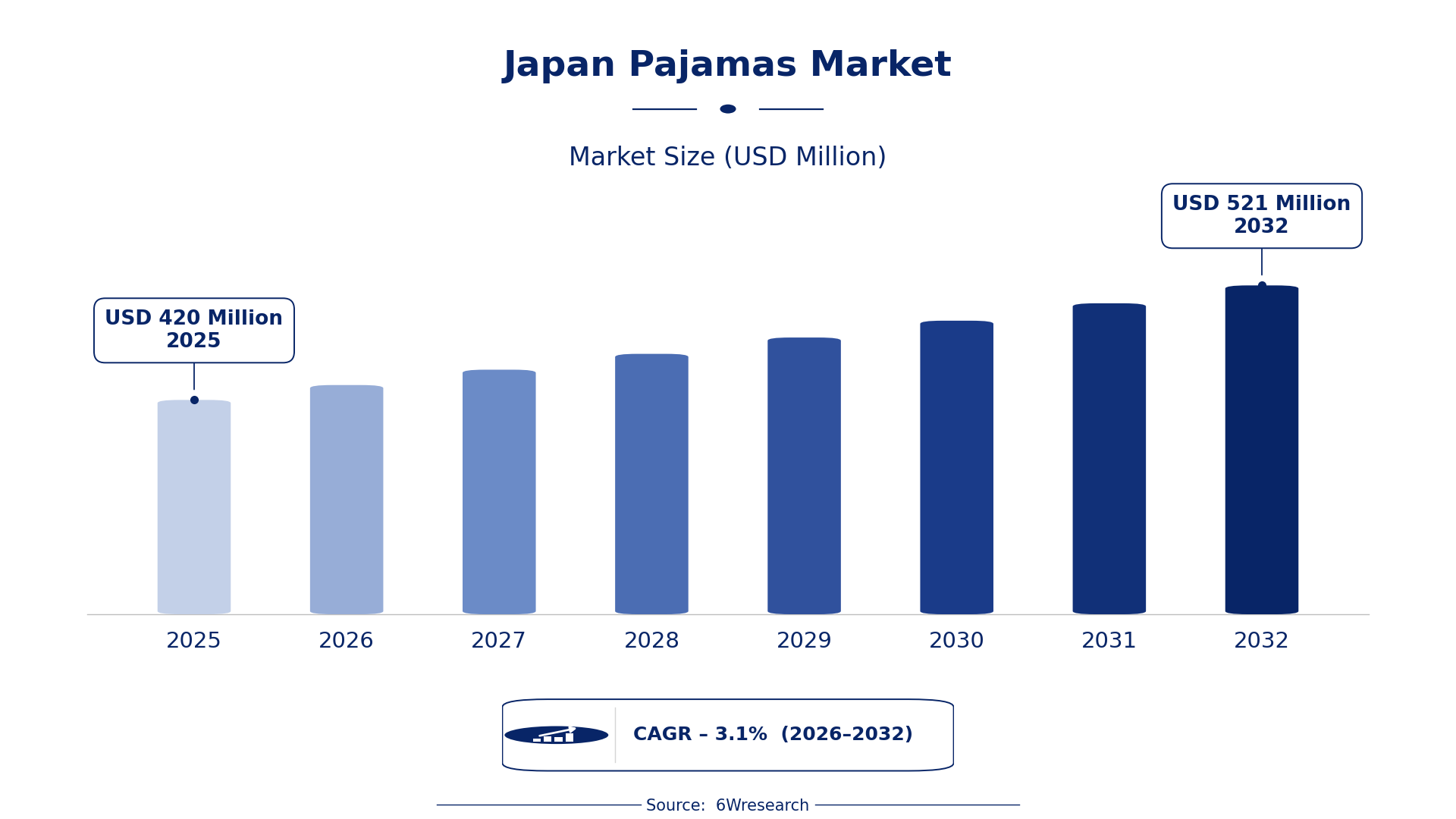
According to 6Wresearch internal database and industry insights, the Japan Pajamas Market was valued at USD 420 Million in 2025 and is projected to reach USD 521 Million by 2032, growing at a CAGR of approximately 3.1% during 2026–2032.
Japan Pajamas Market Highlights
| Report Metric | Details |
| Report Name | Japan Pajamas Market (2026-2032) |
| Market Size 2025 | USD 420 Million |
| Market Size 2032 | USD 521 Million |
| Absolute Growth 2025–2032 | USD 101 Million |
| CAGR 2026–2032 | 3.1% |
| Peak Annual Growth | 3.9% in 2032 |
| Forecast Period | 2026–2032 |
| Historical Data | 2022–2025 |
| Base Year | 2025 |
| Leading Type, 2025 | Two-Piece Set (50% share) |
| Leading Material, 2025 | Cotton (48% share) |
| Leading Target Demographic, 2025 | Men (36% share) |
| Leading Distribution Channel, 2025 | Online Stores (39% share) |
| Fastest-Growing Type | Nightshirt (4.4% CAGR) |
| Fastest-Growing Material | Silk (4.9% CAGR) |
| Fastest-Growing Target Demographic | Women (4.1% CAGR) |
| Fastest-Growing Distribution Channel | Retail Stores (4.5% CAGR) |
| Growing Sector | Retail Stores |
| Key End Users | Online Stores, Retail Stores, Specialty Shops, Department Stores |
Japan Pajamas Market Year-wise Growth Rate and Key Drivers (2022–2032)
This graph illustrates the annual growth rates of the market from 2022 to 2032, highlighting a steady upward trajectory and projected market expansion over the forecast period.
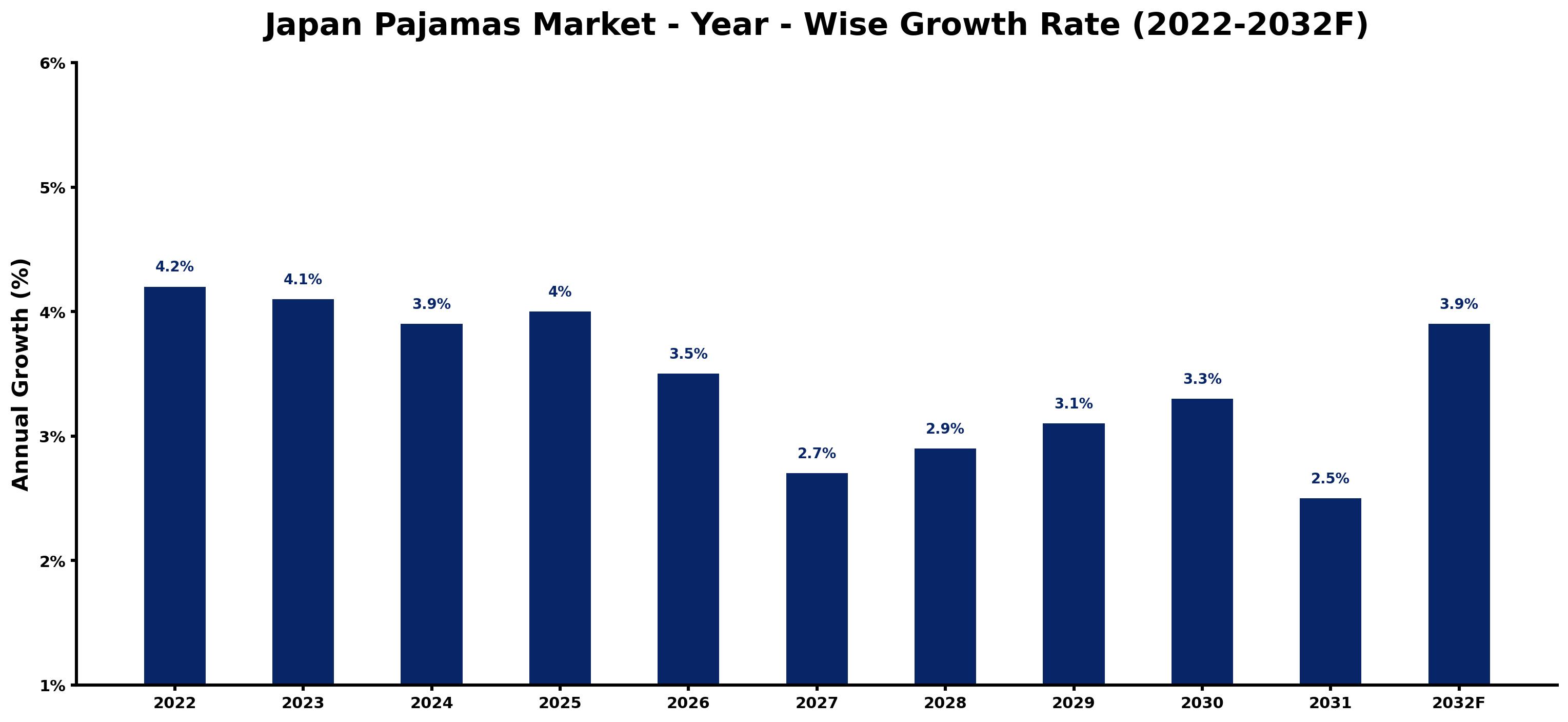
For each year, the table pairs the estimated growth rate with the leading influence on demand, showing how the drivers changed across the period.
| Year | Estimated Annual Growth (%) | Market Rationale |
| 2022 | 4.2 | The market experienced strong consumer interest in sleepwear during this year. |
| 2023 | 4.1 | Sales growth slowed slightly due to increasing competition among retailers. |
| 2024 | 3.9 | Demand continued to grow as households maintained spending on comfortable clothing. |
| 2025 | 4.0 | Growth accelerated as online shopping became more popular among consumers. |
| 2026 | 3.5 | Sales growth is expected to decelerate as market saturation begins to set in. |
| 2027 | 2.7 | Demand is projected to slow further as consumers become more selective in their purchases. |
| 2028 | 2.9 | Growth is expected to pick up again as remote work continues to influence pajama sales. |
| 2029 | 3.1 | Sales will increase as lifestyle changes lead to more home-based activities. |
| 2030 | 3.3 | The market is projected to see a steady rise as seasonal promotions boost retail traffic. |
| 2031 | 2.5 | Growth will slow as consumer preferences begin to stabilise. |
| 2032 | 3.9 | Demand is expected to surge again as appealing designs attract new buyers. |
Note: Market size estimations and growth projections presented in this report are based on 6Wresearch's proprietary forecasting methodology, utilizing the latest available industry data, government publications, and primary research inputs.
Japan Pajamas Market Synopsis
Pajamas are garments designed for sleep or lounging, typically made from soft materials like cotton and flannel. They serve as nighttime sleepwear and casual home wear. The Japan Pajamas Market is expanding due to rising household spending on sleepwear, with the average household spending around ¥10,000 annually. The shift towards online shopping has also contributed to this growth, with a 20% increase in online purchases over the last year. The increasing popularity of loungewear pajamas among remote workers is driving new demand, reflecting changing consumer preferences.
Market Dynamics Impact Analysis (2026–2032)
| Factor | Type | Impact | Primary Segment Affected |
| Rising household spending on sleepwear | Driver | High | Two-Piece Set |
| Increased online shopping for pajamas | Driver | High | Online Stores |
| Growing demand for comfortable home wear | Opportunity | High | Loungewear Pajamas |
| Expansion of pajama sections in department stores | Opportunity | Medium | Department Stores |
| Market saturation leading to slower growth | Restraint | High | Nightshirt |
| Competition from alternative leisurewear | Restraint | Medium | Onesies |
| High production costs affecting pricing | Challenge | High | Cotton |
| Consumer preference shifts towards luxury options | Challenge | Medium | Silk |
Evaluation of Drivers in Japan Pajamas Market (2026–2032)
Key forces behind demand, with the segment each one moves most, are listed below.
| Drivers | Primary Segment Affected | Why It Matters (Evidence) |
| Increased household spending on sleepwear | Two-Piece Set | The average household in Japan spends around ¥10,000 annually on sleepwear, driving demand for comfortable options. |
| Growth in online shopping | Online Stores | Online shopping for pajamas has grown by 20% in the last year, attracting more consumers to this channel. |
| Popularity of loungewear | Loungewear Pajamas | The rise of remote work has increased demand for comfortable loungewear, resulting in more purchases. |
| Seasonal sales events | Department Stores | Pajamas are often included in seasonal sales events, boosting retail traffic and encouraging purchases. |
| Increased focus on textile quality | Cotton | The Japanese textile industry adheres to JIS standards for quality, building consumer trust in cotton products. |
Several shifts outside the market lift sales. The average household in Japan spends around ¥10,000 annually on sleepwear, which drives demand for comfortable options. The rise of remote work has increased demand for comfortable loungewear, resulting in more purchases. Seasonal sales events boost retail traffic and encourage purchases. The adherence to JIS standards by the Japanese textile industry builds consumer trust in cotton products, ensuring that buyers are satisfied with their purchases. As pajama styles evolve, retailers are adapting to meet changing consumer preferences, further stimulating market growth.
Evaluation of Restraints in Japan Pajamas Market
The table below lists the restraints and the evidence behind each.
| Market Restraint | Primary Segment Affected | Why It Matters (Evidence) |
| Market saturation leading to slower growth | Nightshirt | As more brands enter the market, growth rates have begun to decline due to heightened competition. |
| Competition from alternative leisurewear | Onesies | Consumers are increasingly opting for versatile leisurewear, which impacts pajama sales. |
| High production costs affecting pricing | Cotton | Rising costs in textile manufacturing can result in higher prices for consumers, reducing demand. |
| Consumer preference shifts towards luxury options | Silk | As consumers seek luxury items, traditional pajama sales may decline in favour of higher-end products. |
| Limited marketing for specialty shops | Specialty Shops | Specialty pajama shops often lack the marketing budget to compete with larger retailers, restricting their reach. |
Japan Pajamas Market Challenges
In Tokyo, specialty pajama shops face intense competition from department stores, which forces suppliers to lower prices and reduces profit margins by up to 20%. Many manufacturers struggle with outdated textile technology, causing delays that can extend product launch timelines by three months for retailers. Sourcing issues for cotton and flannel have led to increased production costs, raising expenses by 15% for producers. Buyers are affected by rising prices, as the average household spends around ¥10,000 annually on sleepwear, making them cautious about purchasing decisions.
Trends in the Japan Pajamas Market
Several trends are reshaping the Japan Pajamas Market; the most important are set out below.
- Shift from Traditional to Loungewear Pajamas: The popularity of loungewear pajamas has surged, particularly among remote workers. In 2022, sales of loungewear pajamas increased by 15%, reflecting changing consumer preferences.
- Transition from Retail to Online Shopping: Online shopping for pajamas has become increasingly popular, with a 20% growth in the last year. This trend is reshaping how consumers purchase sleepwear in Japan.
- Emergence of Sustainable Pajama Options: Sustainable pajama options are gaining traction, driven by consumer awareness. In 2023, a new government initiative supports sustainable textile production, influencing market trends.
- Growth of Pajama Sections in Department Stores: Department stores are expanding their pajama sections to cater to rising demand. In 2022, many stores dedicated more space to sleepwear, improving consumer access.
Investment Opportunities in the Japan Pajamas Market
The openings below show where demand in the Japan Pajamas Market is visible and how suppliers can enter.
- Partner with Local Manufacturers: With the average household spending around ¥10,000 annually on sleepwear, collaborating with local manufacturers can improve market reach. Specialty shops in urban areas like Tokyo are ideal for partnerships.
- Target Remote Workers: The rise of remote work has created a demand for comfortable loungewear pajamas. Companies can focus on this demographic to capture new market opportunities.
- Invest in Sustainable Production: As the government aims for JPY 150 trillion in decarbonisation investment over 10 years, there is a gap for sustainable pajama production. Local textile manufacturers can benefit from this trend.
- Expand Online Presence: With online shopping for pajamas growing by 20%, enhancing online sales channels is essential. Retailers should consider partnerships with e-commerce platforms to reach more consumers.
Government Initiatives in the Japan Pajamas Market
The 2023 GX Basic Policy aims to support sustainable textile production with an investment target of JPY 150 trillion over the next decade. This initiative builds on the Industrial Standardization Act, which governs quality standards for textiles. By promoting eco-friendly practices, the policy encourages pajama producers to adopt sustainable materials and processes, enhancing their market appeal and meeting consumer demand for environmentally responsible products.
The Digital Agency, established in September 2021, oversees the implementation of digital transformation in various sectors, including textiles. It approves funding for projects that enhance manufacturing efficiency through digital technologies, enabling pajama manufacturers to modernise operations and improve product quality. This support is vital for producers aiming to compete in a rapidly evolving market.
Future Insight of the Japan Pajamas Market
By 2032, households will increasingly demand sustainable pajama options as government initiatives support eco-friendly textile production. Online shopping will grow significantly, with households projected to spend more on sleepwear, reflecting a shift towards digital retail. Advancements in textile technology will enable suppliers to produce higher-quality pajamas efficiently, enhancing consumer satisfaction. Events showcasing sleepwear trends will continue to influence preferences, ensuring that pajama styles remain appealing and relevant.
Market Segmentation Analysis
Japan Pajamas Market report covers a detailed analysis of the following market segments:
By Type – Two-Piece Set Leads, Nightshirt Expected to Grow Fastest
According to Sachin Kumar Rai, Senior Research Analyst at 6Wresearch, the largest type category in 2025 was Two-Piece Set, at 50% of revenue. The Two-Piece Set remains the preferred choice for sleepwear in Japan, appealing to consumers who value both comfort and style. Its popularity is reflected in the consistent purchasing patterns of households, particularly in urban areas like Tokyo. Nightshirt is set to record the highest CAGR in this split, 4.4% over 2026–2032. The Nightshirt is gaining traction due to its traditional design, which resonates with consumers seeking simplicity and comfort. The increase in home activities has further accelerated demand for this classic sleepwear option. Suppliers should consider expanding their Nightshirt offerings to align with the growing consumer interest in this segment.
By Material – Cotton Leads, Silk Expected to Grow Fastest
In 2025, Cotton led the material split with a 48% share. Cotton pajamas dominate the market in Japan, as they are highly regarded for their comfort and breathability, making them a staple in numerous households. The average household's annual expenditure on sleepwear reflects the strong preference for this material. Over 2026–2032, Silk is expected to post the fastest growth, at a CAGR of 4.9%. Silk pajamas are becoming increasingly popular as a luxury choice, especially for special occasions, which propels their rapid market growth. The heightened consumer interest in premium sleepwear is driving this trend forward. Manufacturers should explore expanding their silk pajama lines to cater to the growing demand for high-quality sleepwear.
By Target Demographic – Men Leads, Women Expected to Grow Fastest
Men took 36% of target demographic revenue in 2025, more than any other category. Men's pajamas dominate the market as they feature designs specifically tailored to male preferences, ensuring a loyal customer base. This segment's strong presence in department stores reinforces its leading position. The quickest growth will come from Women, forecast to expand at a CAGR of 4.1% between 2026 and 2032. The Women's pajama segment is witnessing rapid growth, driven by a diverse array of styles that appeal to female consumers prioritising both fashion and comfort. This trend is likely to continue as more women seek comfortable options for home wear. Retailers should enhance their women's pajama selections to capitalise on this expanding demographic.
By Distribution Channel – Online Stores Lead, Retail Stores Expected to Grow Fastest
Online Stores held 39% of the Japan Pajamas Market by distribution channel in 2025. Online Stores have emerged as the primary distribution channel for pajamas, reflecting a shift in consumer purchasing preferences towards convenience and accessibility. The notable increase in online shopping for pajamas reinforces this channel's leading status. Retail Stores are projected to grow fastest, at a CAGR of 4.5% during 2026–2032. Retail Stores are experiencing a resurgence in demand as traditional shopping remains popular, particularly among consumers who prefer to physically examine products. This channel's enduring appeal suggests it will continue to thrive alongside online sales. Suppliers must ensure a balanced approach in both online and retail channels to effectively cater to varied consumer preferences.
Key Attractiveness of the Report
- 10 Years of Market Numbers
- Historical Data Starting from 2022 to 2025
- Base Year 2025
- Forecast Data until 2032
- Key Performance Indicators Impacting the Market
- Major Upcoming Developments and Projects
Key Highlights of the Report:
- Japan Pajamas Market Outlook
- Market Size of Japan Pajamas Market,2025
- Forecast of Japan Pajamas Market, 2032
- Historical Data and Forecast of Japan Pajamas Revenues & Volume for the Period 2022-2032
- Japan Pajamas Market Trend Evolution
- Japan Pajamas Market Drivers and Challenges
- Japan Pajamas Price Trends
- Japan Pajamas Porter's Five Forces
- Japan Pajamas Industry Life Cycle
- Historical Data and Forecast of Japan Pajamas Market Revenues & Volume By Type for the Period 2022-2032
- Historical Data and Forecast of Japan Pajamas Market Revenues & Volume By Two-Piece Set for the Period 2022-2032
- Historical Data and Forecast of Japan Pajamas Market Revenues & Volume By Nightshirt for the Period 2022-2032
- Historical Data and Forecast of Japan Pajamas Market Revenues & Volume By Onesies for the Period 2022-2032
- Historical Data and Forecast of Japan Pajamas Market Revenues & Volume By Loungewear Pajamas for the Period 2022-2032
- Historical Data and Forecast of Japan Pajamas Market Revenues & Volume By Material for the Period 2022-2032
- Historical Data and Forecast of Japan Pajamas Market Revenues & Volume By Cotton for the Period 2022-2032
- Historical Data and Forecast of Japan Pajamas Market Revenues & Volume By Silk for the Period 2022-2032
- Historical Data and Forecast of Japan Pajamas Market Revenues & Volume By Flannel for the Period 2022-2032
- Historical Data and Forecast of Japan Pajamas Market Revenues & Volume By Polyester Blend for the Period 2022-2032
- Historical Data and Forecast of Japan Pajamas Market Revenues & Volume By Target Demographic for the Period 2022-2032
- Historical Data and Forecast of Japan Pajamas Market Revenues & Volume By Men for the Period 2022-2032
- Historical Data and Forecast of Japan Pajamas Market Revenues & Volume By Women for the Period 2022-2032
- Historical Data and Forecast of Japan Pajamas Market Revenues & Volume By Kids for the Period 2022-2032
- Historical Data and Forecast of Japan Pajamas Market Revenues & Volume By Unisex for the Period 2022-2032
- Historical Data and Forecast of Japan Pajamas Market Revenues & Volume By Distribution Channel for the Period 2022-2032
- Historical Data and Forecast of Japan Pajamas Market Revenues & Volume By Online Stores for the Period 2022-2032
- Historical Data and Forecast of Japan Pajamas Market Revenues & Volume By Retail Stores for the Period 2022-2032
- Historical Data and Forecast of Japan Pajamas Market Revenues & Volume By Specialty Shops for the Period 2022-2032
- Historical Data and Forecast of Japan Pajamas Market Revenues & Volume By Department Stores for the Period 2022-2032
- Japan Pajamas Import Export Trade Statistics
- Market Opportunity Assessment By Type
- Market Opportunity Assessment By Material
- Market Opportunity Assessment By Target Demographic
- Market Opportunity Assessment By Distribution Channel
- Japan Pajamas Top Companies Market Share
- Japan Pajamas Competitive Benchmarking By Technical and Operational Parameters
- Japan Pajamas Company Profiles
- Japan Pajamas Key Strategic Recommendations
Market Covered
The study includes the following segmentation.
By Type
- Two-Piece Set
- Nightshirt
- Onesies
- Loungewear Pajamas
By Material
- Cotton
- Silk
- Flannel
- Polyester Blend
By Target Demographic
- Men
- Women
- Kids
- Unisex
By Distribution Channel
- Online Stores
- Retail Stores
- Specialty Shops
- Department Stores































