Japan Phenol Market Size Growth Rate
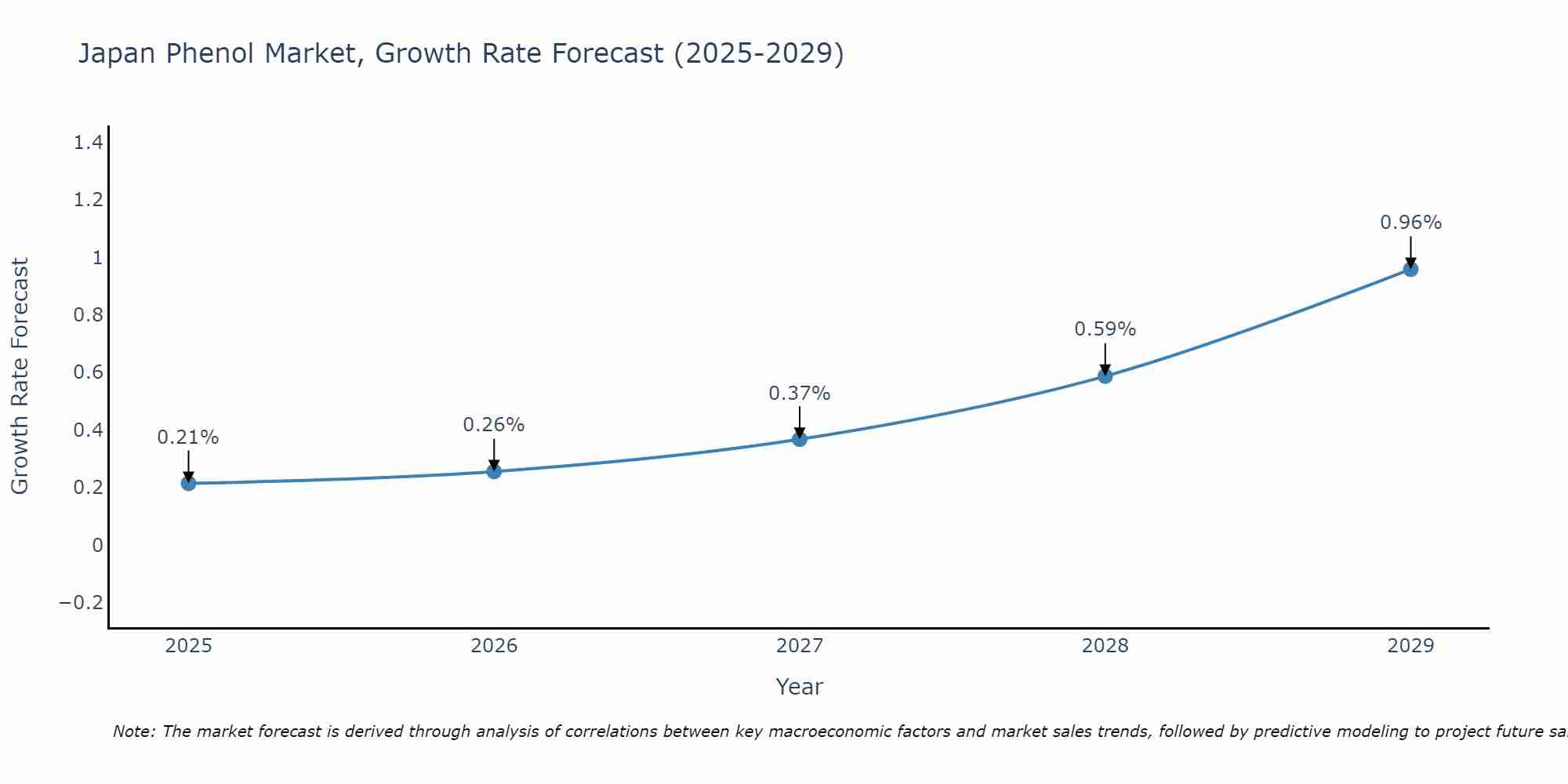
The Japan Phenol Market is poised for steady growth rate improvements from 2025 to 2029. The growth rate starts at 0.21% in 2025 and reaches 0.96% by 2029.
Japan Phenol Market Overview
The Japan Phenol Market is characterized by steady growth driven by strong demand from various end-use industries such as automotive, electronics, and construction. Phenol, a precursor to various chemicals like bisphenol-A and phenolic resins, is widely used in the production of plastics, adhesives, and coatings. The market is influenced by factors such as increasing industrialization, technological advancements, and stringent regulations promoting the use of eco-friendly materials. Key players in the Japan Phenol Market include Mitsubishi Chemical Corporation, Mitsui Chemicals, and Idemitsu Kosan Co., Ltd. The market is also witnessing a shift towards the production of bio-based phenol to meet sustainability goals. Overall, the Japan Phenol Market is poised for continued growth, driven by expanding application areas and innovation in production processes.
Japan Phenol Market Trends
The Japan Phenol Market is currently witnessing an increasing demand due to its widespread applications in industries such as electronics, automotive, and construction. The market is driven by factors such as the growing production of consumer electronics, rising automotive manufacturing, and infrastructure development projects in the country. Additionally, the increasing focus on sustainability and environmentally friendly products has led to a shift towards bio-based phenol production methods. This trend is expected to drive the market further as companies aim to reduce their carbon footprint and meet regulatory requirements. Overall, the Japan Phenol Market is poised for steady growth in the coming years, with a focus on innovation, sustainability, and technological advancements shaping the industry landscape.
Japan Phenol Market Challenges
In the Japan Phenol Market, one of the key challenges faced is the fluctuation in raw material prices, particularly due to the reliance on imported feedstocks such as benzene and propylene. This can impact the overall production costs and profit margins of phenol manufacturers in Japan. Additionally, increasing competition from other Asian countries with lower production costs and the need to comply with stringent environmental regulations pose significant challenges for the market players. Furthermore, the demand-supply dynamics in the global market can also influence the pricing and availability of phenol in Japan. Navigating these challenges requires constant monitoring of market trends, efficient supply chain management, and investment in sustainable production practices to ensure competitiveness and profitability in the Japan Phenol Market.
Japan Phenol Market Investment Opportunities
The Japan Phenol Market presents several investment opportunities due to its steady growth driven by increasing demand from industries such as electronics, automotive, and construction. With a strong focus on innovation and technological advancements, there is potential for investments in research and development of new phenol-based products to cater to evolving market needs. Additionally, the shift towards sustainable and eco-friendly practices in Japan opens up opportunities for investments in green phenol production processes and initiatives. Investing in established phenol manufacturers or companies with a strong presence in the Japanese market could also be a lucrative option to capitalize on the growing demand for phenol in various industries. Overall, the Japan Phenol Market offers diverse investment avenues for those looking to leverage the market`s growth potential and industry trends.
Japan Phenol Market Government Policy
The Japanese government has implemented various policies to regulate and support the phenol market in the country. One key policy is the Chemical Substance Control Law, which requires companies to report the production and usage of phenol to the authorities. This law aims to ensure the safe handling and use of phenol to protect human health and the environment. Additionally, the government has introduced initiatives to promote the development of eco-friendly and sustainable production methods for phenol, aligning with the country`s commitment to environmental protection and sustainability goals. Overall, these policies play a crucial role in monitoring and regulating the phenol market in Japan, ensuring compliance with safety standards and promoting responsible practices in the industry.
Japan Phenol Market Future Outlook
The Japan Phenol Market is poised for moderate growth in the coming years, driven by factors such as increasing demand for phenol derivatives in industries like automotive, electronics, and construction. With a focus on sustainable practices and environmental regulations becoming more stringent, there is a shift towards bio-based phenol production methods, which is likely to further propel market expansion. Additionally, ongoing research and development efforts to enhance phenol production efficiency and reduce costs are expected to contribute to market growth. However, challenges related to market volatility, raw material availability, and competitive pricing dynamics may pose some obstacles to the market`s progression. Overall, the Japan Phenol Market is anticipated to maintain steady growth momentum in the foreseeable future.
Key Highlights of the Report:
- Japan Phenol Market Outlook
- Market Size of Japan Phenol Market, 2021
- Forecast of Japan Phenol Market, 2027
- Historical Data and Forecast of Japan Phenol Revenues & Volume for the Period 2018 - 2027
- Japan Phenol Market Trend Evolution
- Japan Phenol Market Drivers and Challenges
- Japan Phenol Price Trends
- Japan Phenol Porter's Five Forces
- Japan Phenol Industry Life Cycle
- Historical Data and Forecast of Japan Phenol Market Revenues & Volume By End-users for the Period 2018 - 2027
- Historical Data and Forecast of Japan Phenol Market Revenues & Volume By Bisphenol A for the Period 2018 - 2027
- Historical Data and Forecast of Japan Phenol Market Revenues & Volume By Phenolic Resins for the Period 2018 - 2027
- Historical Data and Forecast of Japan Phenol Market Revenues & Volume By Caprolactam for the Period 2018 - 2027
- Historical Data and Forecast of Japan Phenol Market Revenues & Volume By Alkyl Phenyls for the Period 2018 - 2027
- Historical Data and Forecast of Japan Phenol Market Revenues & Volume By Others for the Period 2018 - 2027
- Japan Phenol Import Export Trade Statistics
- Market Opportunity Assessment By End-users
- Japan Phenol Top Companies Market Share
- Japan Phenol Competitive Benchmarking By Technical and Operational Parameters
- Japan Phenol Company Profiles
- Japan Phenol Key Strategic Recommendations






































