Japan Pigeon Pea Market Size & Growth Rate
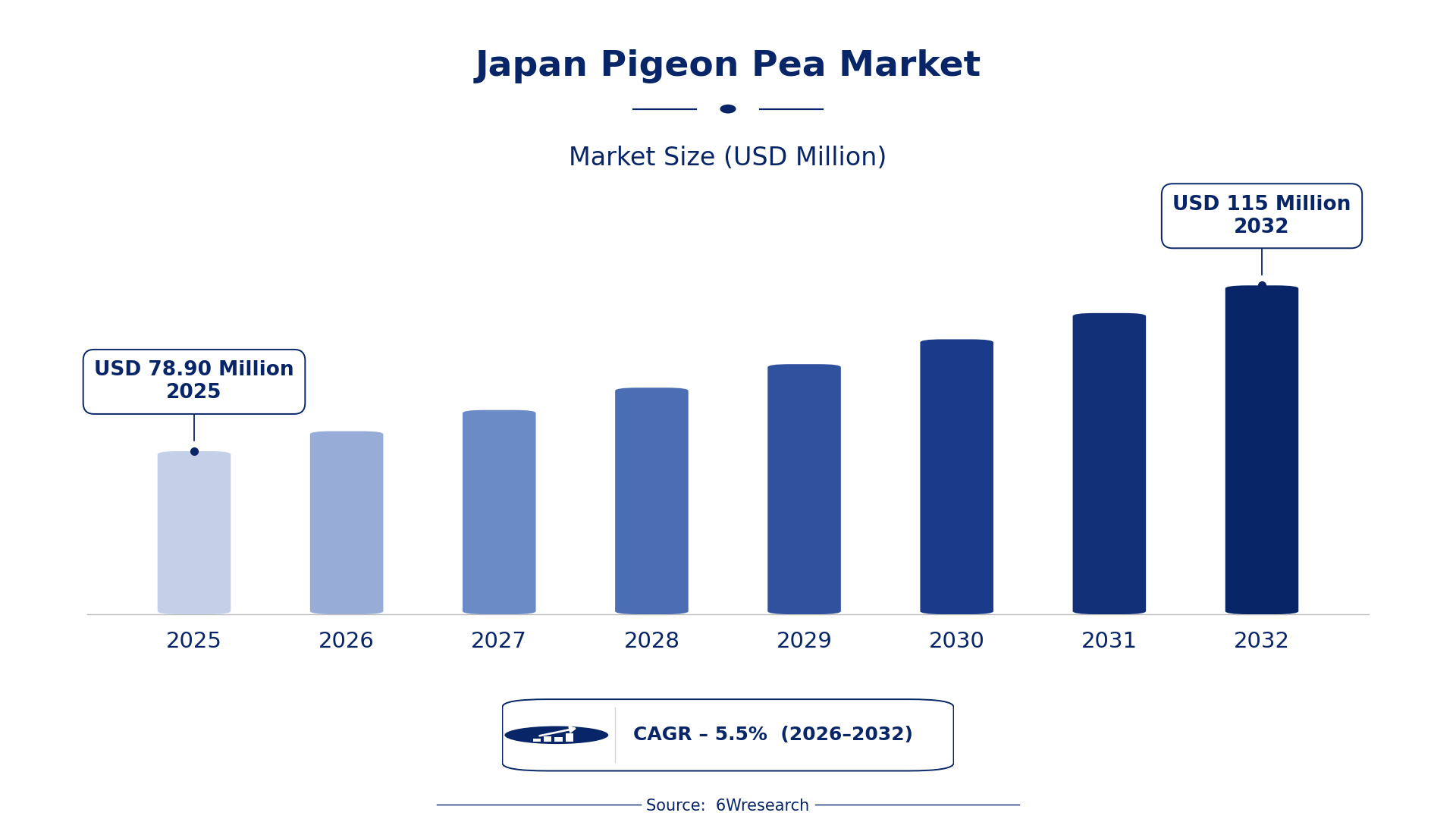
According to 6Wresearch internal database and industry insights, the Japan Pigeon Pea Market was valued at USD 78.90 Million in 2025 and is projected to reach USD 115 Million by 2032, growing at a CAGR of approximately 5.5% during 2026–2032.
Japan Pigeon Pea Market Highlights
| Report Metric | Details |
| Report Name | Japan Pigeon Pea Market (2026-2032) |
| Market Size 2025 | USD 78.90 Million |
| Market Size 2032 | USD 115 Million |
| Absolute Growth 2025–2032 | USD 36.10 Million |
| CAGR 2026–2032 | 5.5% |
| Peak Annual Growth | 6.4% in 2028 |
| Forecast Period | 2026–2032 |
| Historical Data | 2022–2025 |
| Base Year | 2025 |
| Leading Product Type, 2025 | Split Pigeon Pea (45% share) |
| Leading Form, 2025 | Raw (43% share) |
| Leading Distribution Channel, 2025 | Wholesale Market (47% share) |
| Leading Application Area, 2025 | Food Processing (48% share) |
| Leading End User, 2025 | Retailers (46% share) |
| Fastest-Growing Product Type | Whole Pigeon Pea (7.9% CAGR) |
| Fastest-Growing Form | Dried (7.5% CAGR) |
| Fastest-Growing Distribution Channel | Retail Stores (7.1% CAGR) |
| Fastest-Growing Application Area | Household Consumption (6.5% CAGR) |
| Fastest-Growing End User | Consumers (6.9% CAGR) |
| Growing Sector | Health Food |
| Key End Users | Food Industry, Retailers, Consumers, End Consumers |
Japan Pigeon Pea Market Year-wise Growth Rate and Key Drivers (2022–2032)
This graph illustrates the annual growth rates of the market from 2022 to 2032, highlighting a steady upward trajectory and projected market expansion over the forecast period.
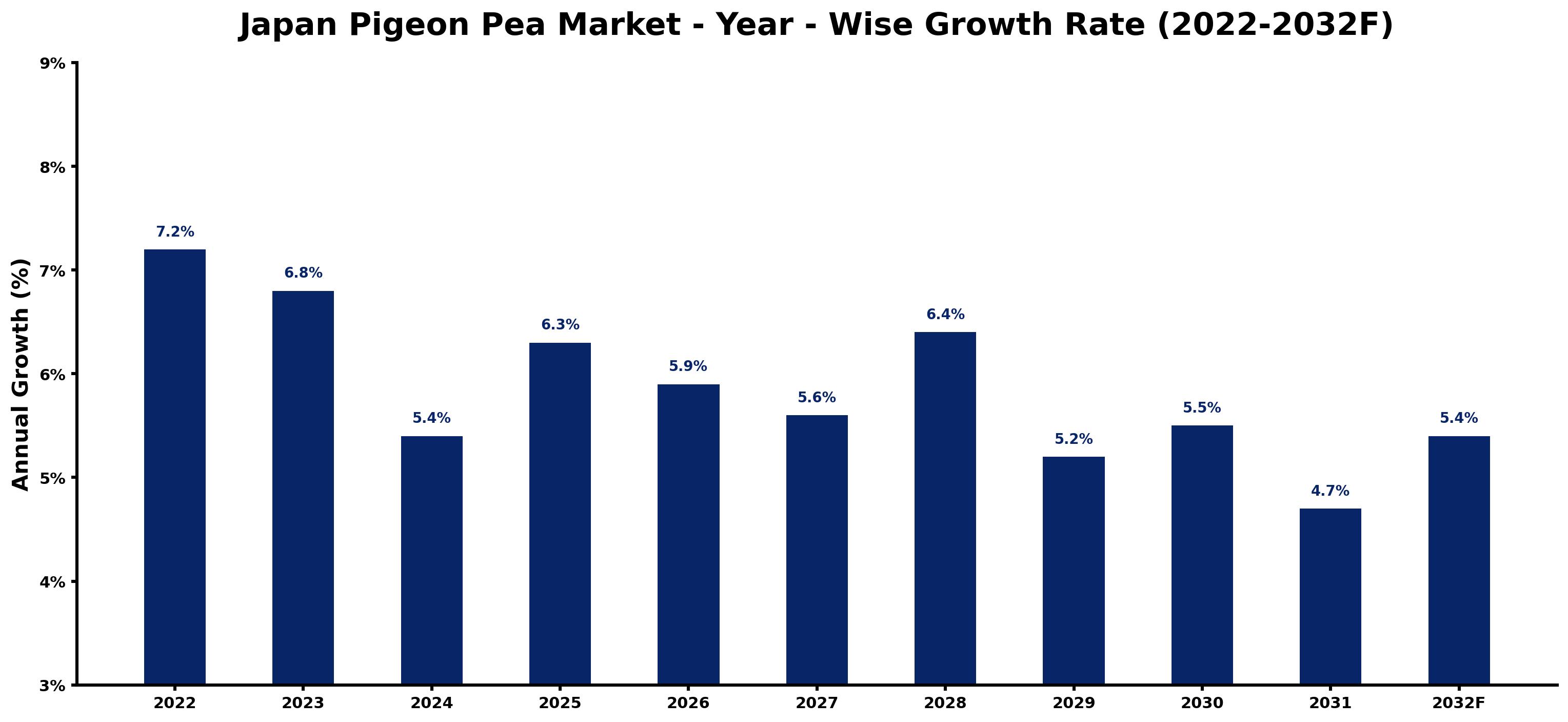
Year by year, the estimates below pair each growth rate with the development that shaped it.
| Year | Estimated Annual Growth (%) | Market Rationale |
| 2022 | 7.2 | The market experienced strong demand from food processing and household consumption. |
| 2023 | 6.8 | Growth slowed as market saturation in certain food applications limited expansion. |
| 2024 | 5.4 | Demand continued to decelerate due to shifting consumer preferences towards alternative legumes. |
| 2025 | 6.3 | Increased interest in health foods drove a resurgence in pigeon pea consumption. |
| 2026 | 5.9 | Growth is expected to slow as competition from other legumes intensifies. |
| 2027 | 5.6 | The market will maintain growth, supported by rising health consciousness among buyers. |
| 2028 | 6.4 | A renewed focus on sustainable agriculture will boost demand for pigeon pea products. |
| 2029 | 5.2 | Growth is projected to decelerate as consumer preferences shift towards convenience foods. |
| 2030 | 5.5 | Demand will increase with the rise of online sales channels for pigeon pea products. |
| 2031 | 4.7 | The market will grow at a slower pace due to increased competition from imports. |
| 2032 | 5.4 | A growing interest in organic products will revitalise demand for pigeon pea. |
Note: Market size estimations and growth projections presented in this report are based on 6Wresearch's proprietary forecasting methodology, utilizing the latest available industry data, government publications, and primary research inputs.
Japan Pigeon Pea Market Synopsis
Pigeon pea is a leguminous crop cultivated primarily for human consumption, recognised for its high protein content. In Japan, average annual consumption stands at approximately 10,000 tons, driven by the food processing industry and household use. The Japan Pigeon Pea Market is expanding due to rising health awareness, increased online sales, and a commitment to sustainable agricultural practices, with the government promoting initiatives such as the Green Food System.
Market Dynamics Impact Analysis (2026–2032)
| Factor | Type | Impact | Primary Segment Affected |
| Rising health consciousness among consumers | Driver | High | Health Food |
| Increased online sales of pigeon pea products | Driver | High | Canned Pigeon Pea |
| Growing demand for organic pigeon pea | Opportunity | Medium | Organic Pigeon Pea |
| Expansion of the food processing industry | Opportunity | High | Food Processing |
| Competition from alternative legumes | Restraint | High | Whole Pigeon Pea |
| Market saturation in certain food applications | Restraint | Medium | Canned Pigeon Pea |
| Rising costs of production due to sustainable practices | Challenge | Medium | Split Pigeon Pea |
| Limited consumer awareness of pigeon pea benefits | Challenge | High | Raw |
Evaluation of Drivers in Japan Pigeon Pea Market (2026–2032)
Demand rests on the following drivers, each shown with the segment it touches most.
| Drivers | Primary Segment Affected | Why It Matters (Evidence) |
| Increased health awareness | Health Food | Health-conscious consumers are purchasing more pigeon pea products, driving nutritional value in meals. |
| Growth in online sales channels | Canned Pigeon Pea | Online sales of pigeon pea products increased by 20%, attracting tech-savvy consumers. |
| Rising demand for organic products | Organic Pigeon Pea | The promotion of sustainable agriculture encourages organic farming, appealing to health-focused buyers. |
| Expansion of food processing | Food Processing | The food processing industry employs over 1 million people, driving demand for pigeon pea as an ingredient. |
| Cultural integration in traditional dishes | Whole Pigeon Pea | Pigeon pea is often used in traditional Japanese dishes, increasing its appeal in local cuisine. |
Much of the new demand traces back to the increasing health awareness among buyers, with the average annual consumption of pigeon pea in Japan reaching approximately 10,000 tons. The food processing sector, employing over 1 million people, drives greater purchases of pigeon pea as a key ingredient. Cultural integration of pigeon pea into traditional Japanese dishes further fuels demand, increasing meal nutritional value. The rise of online sales channels has attracted consumers who prefer convenience, contributing to a 20% increase in sales. Health food events in 2023 highlighted the benefits of legumes, encouraging more individuals to incorporate pigeon pea into their diets.
Evaluation of Restraints in Japan Pigeon Pea Market
These are the pressures that could keep growth below its potential.
| Market Restraint | Primary Segment Affected | Why It Matters (Evidence) |
| Competition from alternative legumes | Whole Pigeon Pea | The rise of other legumes has led to a decrease in market share for pigeon pea products. |
| Market saturation in certain food applications | Canned Pigeon Pea | As consumer preferences shift, the market for canned pigeon pea has become saturated. |
| Rising production costs due to sustainable practices | Split Pigeon Pea | Sustainable agriculture practices increase production costs, affecting pricing strategies. |
| Limited consumer awareness of benefits | Raw | Many consumers remain unaware of the nutritional benefits of pigeon pea, limiting demand. |
| Regulatory compliance costs | Dried | Strict food safety regulations require significant investment in compliance, impacting profitability. |
Japan Pigeon Pea Market Challenges
In Japan, food processors face challenges in finding skilled workers familiar with traditional preparation techniques, which delays production and raises training costs for employers. Buyers encounter price volatility due to limited local cultivation, forcing them to pay up to 15% more during peak demand seasons. Suppliers deal with high compliance costs associated with JIS standards, which can consume 10% of operational expenses, affecting their pricing strategies. Competition from imported legumes intensifies, as foreign products often undercut local prices, leading to a 20% decrease in market share for domestic producers.
Trends in the Japan Pigeon Pea Market
Several trends are reshaping the Japan Pigeon Pea Market; the most important are set out below.
- Shift towards Organic Pigeon Pea: In 2023, health food events highlighted the benefits of organic pigeon pea, reflecting a growing consumer preference for health-conscious options. This shift has led to a 25% increase in organic product offerings.
- Increase in Online Sales: Online platforms for pigeon pea products have surged, with a 20% increase in sales last year. This trend is reshaping how consumers access and purchase food products.
- Growing Demand for Ready-to-Eat Products: The ready-to-eat segment is expanding, with a 10% increase in demand for canned pigeon pea. This change caters to busy consumers seeking convenient meal options.
- Focus on Sustainable Agriculture: The Japanese government promotes sustainable practices through the Green Food System, encouraging farmers to adopt eco-friendly methods. This initiative has led to a 30% increase in sustainable pigeon pea production.
Investment Opportunities in the Japan Pigeon Pea Market
The opportunities below stand out in the Japan Pigeon Pea Market for new entrants and existing suppliers.
- Gap in Organic Pigeon Pea Market: With organic pigeon pea consumption rising, there is a 30% gap in supply. Collaborating with local farmers for organic certification can meet this demand.
- Expansion into Retail Stores: Retail stores represent a growing channel for pigeon pea products, with a 7.1% increase in sales. Partnering with retailers can strengthen market presence and sales.
- Health Food Sector Growth: The health food sector is expanding, with a 15% increase in demand for nutritious products. Targeting health-conscious consumers can drive sales of pigeon pea.
- Timing for Ready-to-Eat Products: The ready-to-eat market is growing rapidly, with a 10% increase in demand. Investing in convenient pigeon pea products can capture this emerging trend.
Government Initiatives in the Japan Pigeon Pea Market
The Food Recycling Law, enacted in 2000, mandates food businesses to reduce waste and recycle it into feed and fertiliser. This law complements the Food Sanitation Act, ensuring that pigeon pea products meet safety standards and promote sustainable practices in agriculture. The law has led to a 30% reduction in food waste across the industry, benefiting local farmers and consumers alike.
The Ministry of Agriculture, Forestry and Fisheries (MAFF) supports local farmers through funding and approvals for sustainable farming initiatives. This agency ensures compliance with food safety regulations, providing grants that have funded over 200 projects in the last year, promoting the cultivation of pigeon pea.
Future Insight of the Japan Pigeon Pea Market
By 2032, advancements in precision agriculture will enable local farmers to boost yields and meet rising domestic demand. The Green Food System will promote sustainable farming practices that improve the quality of local produce. Health food trends will drive the introduction of new products, expanding market opportunities. Retail sales of canned pigeon pea reached 5,000 tons in 2022, reflecting growing consumer interest that suppliers can leverage.
Market Segmentation Analysis
Japan Pigeon Pea Market report covers a detailed analysis of the following market segments:
By Product Type – Split Pigeon Pea Leads, Whole Pigeon Pea Expected to Grow Fastest
According to Vasu Joshi, Associate Consultant at 6Wresearch, Split Pigeon Pea took 45% of product type revenue in 2025, more than any other category. Split Pigeon Pea holds the largest share due to its extensive use in various food applications, catering to both traditional and modern culinary practices. For instance, it is a staple in many processed food items, reflecting its strong demand in the food industry. Over 2026–2032, Whole Pigeon Pea is expected to post the fastest growth, at a CAGR of 7.9%. Whole Pigeon Pea is experiencing rapid growth as consumers increasingly prefer whole legumes for direct consumption in dishes, driven by health trends promoting natural foods. The rise in health food events in Japan has further accelerated this trend, highlighting the benefits of whole legumes. Suppliers should focus on expanding their offerings of whole pigeon pea to meet the growing consumer demand.
By Form – Raw Leads, Dried Expected to Grow Fastest
Raw held 43% of the Japan Pigeon Pea Market by form in 2025. Raw pigeon pea occupies a prominent position as it is a crucial component in food processing, especially in traditional dishes that enhance nutritional value. Its indispensable role in the food industry, particularly in regions like Kumamoto, guarantees ongoing demand from processors. The quickest growth will come from Dried, forecast to expand at a CAGR of 7.5% between 2026 and 2032. Dried pigeon pea is witnessing swift growth due to its convenience for storage and cooking, appealing to consumers who prefer easy meal preparations. The increasing trend of home cooking has notably amplified the demand for dried legumes in recent years. Suppliers should focus on increasing the availability of dried pigeon pea to cater to the growing consumer interest in convenient cooking options.
By Distribution Channel – Wholesale Market Leads, Retail Stores Expected to Grow Fastest
With 47% of distribution channel revenue in 2025, Wholesale Market was the largest category. The Wholesale Market leads as the primary distribution channel, serving as the main source for bulk sales to food processors and retailers, thus ensuring a reliable supply chain. This channel is essential for fulfilling the industrial demand for pigeon pea products throughout Japan. Retail Stores are projected to grow fastest, at a CAGR of 7.1% during 2026–2032. Retail Stores are experiencing the fastest growth as they emerge as the primary purchasing point for consumers seeking pigeon pea products. The shift towards retail shopping has been accelerated by the rising interest in home cooking, drawing more customers to these outlets. Suppliers should enhance collaborations with retail stores to capitalise on the increasing consumer purchasing trend.
By Application Area – Food Processing Leads, Household Consumption Expected to Grow Fastest
Food Processing accounted for 48% of the market by application area in 2025. Food Processing is the largest application area for pigeon pea, as it is a major ingredient in a variety of processed foods. The food processing industry in Japan, employing over 1 million people, relies heavily on pigeon pea for its nutritional value and versatility. Household Consumption is set to record the highest CAGR in this split, 6.5% over 2026–2032. Household Consumption is experiencing the fastest growth as more consumers incorporate pigeon pea into their everyday cooking. The rising interest in health-conscious diets has led to increased use of legumes in home-prepared meals. Suppliers should consider targeting household consumers to tap into the increasing trend of home cooking.
By End User – Retailers Lead, Consumers Expected to Grow Fastest
In 2025, Retailers led the end user split with a 46% share. Retailers are the dominant end-user segment as they play a crucial role in distributing pigeon pea products to consumers. Their established networks and supplier relationships ensure a steady flow of products to effectively meet market demand. Over 2026–2032, Consumers are expected to post the fastest growth, at a CAGR of 6.9%. Consumers are the fastest-growing end-user group as they increasingly seek pigeon pea for its health benefits and culinary versatility. The heightened focus on personal health and wellness has significantly driven this segment's rapid expansion. Suppliers must emphasise consumer education and targeted marketing strategies to effectively engage this growing segment.
Key Attractiveness of the Report
- 10 Years of Market Numbers
- Historical Data Starting from 2022 to 2025
- Base Year 2025
- Forecast Data until 2032
- Key Performance Indicators Impacting the Market
- Major Upcoming Developments and Projects
Key Highlights of the Report:
- Japan Pigeon Pea Market Outlook
- Market Size of Japan Pigeon Pea Market, 2025
- Forecast of Japan Pigeon Pea Market, 2032
- Historical Data and Forecast of Japan Pigeon Pea Market Revenues & Volume for the Period 2022-2032F
- Japan Pigeon Pea Market Trend Evolution
- Japan Pigeon Pea Market Drivers and Challenges
- Japan Pigeon Pea Market Price Trends
- Japan Pigeon Pea Market Porter's Five Forces
- Japan Pigeon Pea Market Industry Life Cycle
- Historical Data and Forecast of Japan Pigeon Pea Market Revenues & Volume By Product Type for the Period 2022-2032F
- Historical Data and Forecast of Japan Pigeon Pea Market Revenues & Volume By Split Pigeon Pea for the Period 2022-2032F
- Historical Data and Forecast of Japan Pigeon Pea Market Revenues & Volume By Whole Pigeon Pea for the Period 2022-2032F
- Historical Data and Forecast of Japan Pigeon Pea Market Revenues & Volume By Canned Pigeon Pea for the Period 2022-2032F
- Historical Data and Forecast of Japan Pigeon Pea Market Revenues & Volume By Organic Pigeon Pea for the Period 2022-2032F
- Historical Data and Forecast of Japan Pigeon Pea Market Revenues & Volume By Form for the Period 2022-2032F
- Historical Data and Forecast of Japan Pigeon Pea Market Revenues & Volume By Raw for the Period 2022-2032F
- Historical Data and Forecast of Japan Pigeon Pea Market Revenues & Volume By Dried for the Period 2022-2032F
- Historical Data and Forecast of Japan Pigeon Pea Market Revenues & Volume By Preserved for the Period 2022-2032F
- Historical Data and Forecast of Japan Pigeon Pea Market Revenues & Volume By Eco-Friendly for the Period 2022-2032F
- Historical Data and Forecast of Japan Pigeon Pea Market Revenues & Volume By Distribution Channel for the Period 2022-2032F
- Historical Data and Forecast of Japan Pigeon Pea Market Revenues & Volume By Wholesale Market for the Period 2022-2032F
- Historical Data and Forecast of Japan Pigeon Pea Market Revenues & Volume By Retail Stores for the Period 2022-2032F
- Historical Data and Forecast of Japan Pigeon Pea Market Revenues & Volume By Online Platforms for the Period 2022-2032F
- Historical Data and Forecast of Japan Pigeon Pea Market Revenues & Volume By Specialty Stores for the Period 2022-2032F
- Historical Data and Forecast of Japan Pigeon Pea Market Revenues & Volume By Application Area for the Period 2022-2032F
- Historical Data and Forecast of Japan Pigeon Pea Market Revenues & Volume By Food Processing for the Period 2022-2032F
- Historical Data and Forecast of Japan Pigeon Pea Market Revenues & Volume By Household Consumption for the Period 2022-2032F
- Historical Data and Forecast of Japan Pigeon Pea Market Revenues & Volume By Ready-to-Eat Products for the Period 2022-2032F
- Historical Data and Forecast of Japan Pigeon Pea Market Revenues & Volume By Health Food for the Period 2022-2032F
- Historical Data and Forecast of Japan Pigeon Pea Market Revenues & Volume By End User for the Period 2022-2032F
- Historical Data and Forecast of Japan Pigeon Pea Market Revenues & Volume By Retailers for the Period 2022-2032F
- Historical Data and Forecast of Japan Pigeon Pea Market Revenues & Volume By Consumers for the Period 2022-2032F
- Historical Data and Forecast of Japan Pigeon Pea Market Revenues & Volume By Food Industry for the Period 2022-2032F
- Historical Data and Forecast of Japan Pigeon Pea Market Revenues & Volume By End Consumers for the Period 2022-2032F
- Japan Pigeon Pea Market Import Export Trade Statistics
- Market Opportunity Assessment By Product Type
- Market Opportunity Assessment By Form
- Market Opportunity Assessment By Distribution Channel
- Market Opportunity Assessment By Application Area
- Market Opportunity Assessment By End User
- Japan Pigeon Pea Market Top Companies Market Share
- Japan Pigeon Pea Market Competitive Benchmarking By Technical and Operational Parameters
- Japan Pigeon Pea Market Company Profiles
- Japan Pigeon Pea Market Key Strategic Recommendations
Market Covered
The study includes the following segmentation.
By Product Type
- Split Pigeon Pea
- Whole Pigeon Pea
- Canned Pigeon Pea
- Organic Pigeon Pea
By Form
- Raw
- Dried
- Preserved
- Eco-Friendly
By Distribution Channel
- Wholesale Market
- Retail Stores
- Online Platforms
- Specialty Stores
By Application Area
- Food Processing
- Household Consumption
- Ready-to-Eat Products
- Health Food
By End User
- Retailers
- Consumers
- Food Industry
- End Consumers






































