Japan Protein Feed Additives Market Size & Growth Rate
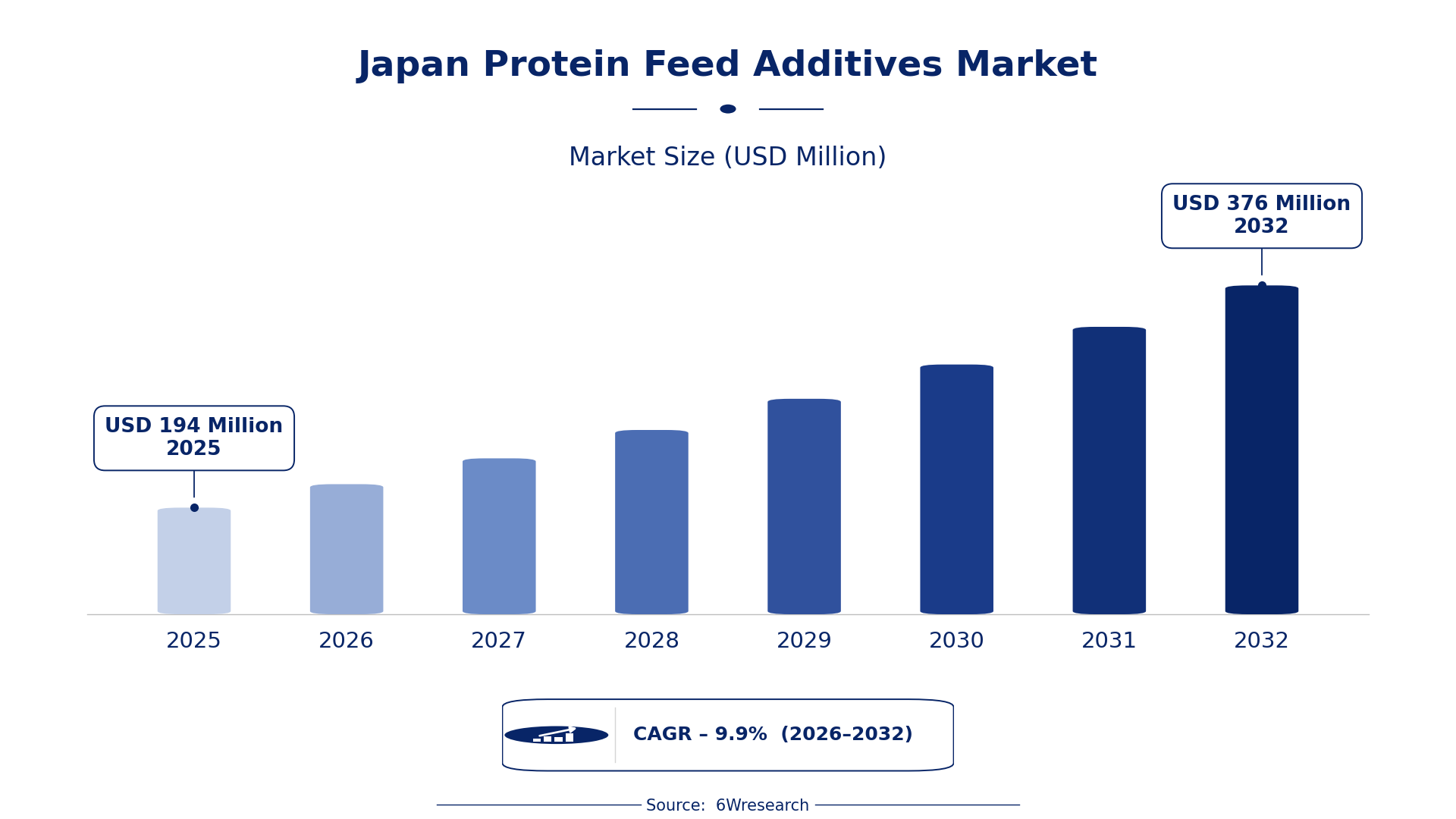
According to 6Wresearch internal database and industry insights, the Japan Protein Feed Additives Market was valued at USD 194 Million in 2025 and is projected to reach USD 376 Million by 2032, growing at a CAGR of approximately 9.9% during 2026–2032.
Japan Protein Feed Additives Market Highlights
| Report Metric | Details |
| Report Name | Japan Protein Feed Additives Market (2026-2032) |
| Market Size 2025 | USD 194 Million |
| Market Size 2032 | USD 376 Million |
| Absolute Growth 2025–2032 | USD 182 Million |
| CAGR 2026–2032 | 9.9% |
| Peak Annual Growth | 12.7% in 2032 |
| Forecast Period | 2026–2032 |
| Historical Data | 2022–2025 |
| Base Year | 2025 |
| Leading Additive Type, 2025 | Soy Protein Additives (48% share) |
| Leading Source Type, 2025 | Plant-based (40% share) |
| Leading Distribution Channel, 2025 | Direct Sales (48% share) |
| Leading End User, 2025 | Cattle Feed Producers (46% share) |
| Fastest-Growing Additive Type | Insect Protein Powder (14.0% CAGR) |
| Fastest-Growing Source Type | Insect-derived (14.2% CAGR) |
| Fastest-Growing Distribution Channel | Online Platforms (13.1% CAGR) |
| Fastest-Growing End User | Aquafeed Companies (12.9% CAGR) |
| Growing Sector | Aquaculture |
| Key End Users | Cattle Feed Producers, Poultry Industry, Aquafeed Companies, Pet Food Manufacturers |
Japan Protein Feed Additives Market Year-wise Growth Rate and Key Drivers (2022–2032)
This graph illustrates the annual growth rates of the market from 2022 to 2032, highlighting a steady upward trajectory and projected market expansion over the forecast period.
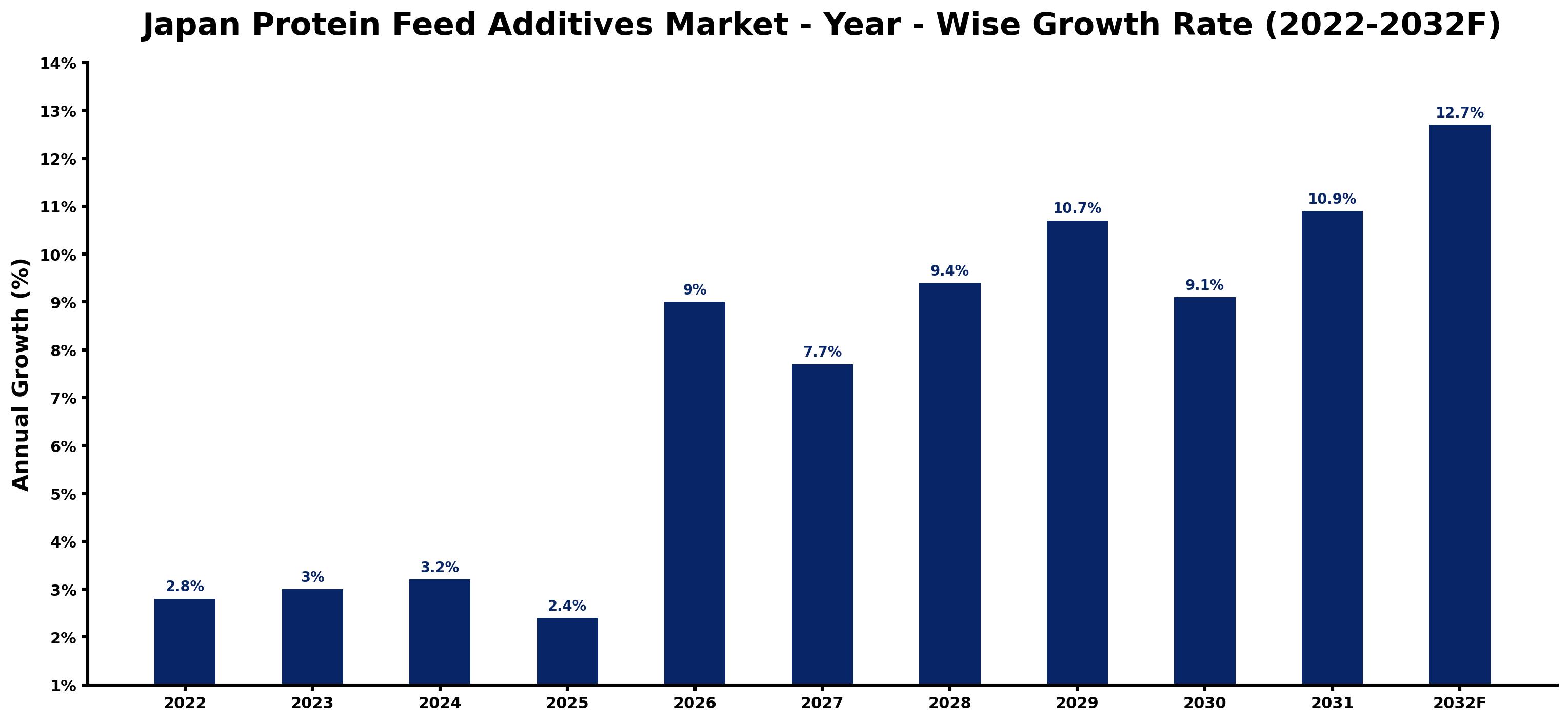
The yearly estimates that follow link every growth rate to its principal driver, so readers can see why the pace changed in each period.
| Year | Estimated Annual Growth (%) | Market Rationale |
| 2022 | 2.8 | Demand from cattle producers drove steady growth in protein feed additives. |
| 2023 | 3.0 | The poultry industry's need for high-quality feed spurred increased purchases. |
| 2024 | 3.2 | Growth continued as producers sought to enhance feed efficiency. |
| 2025 | 2.4 | A slowdown occurred as market adjustments took place in formulations. |
| 2026 | 9.0 | Rising interest in sustainable protein sources is expected to boost market activity. |
| 2027 | 7.7 | Growth is projected to slow slightly as the market stabilises after rapid expansion. |
| 2028 | 9.4 | Increased adoption of insect protein powder will contribute to renewed growth. |
| 2029 | 10.7 | Demand is expected to surge as aquafeed companies expand their use of protein additives. |
| 2030 | 9.1 | Market growth will slow as producers adjust to new supply conditions. |
| 2031 | 10.9 | The ongoing shift towards sustainable sources is projected to drive higher demand. |
| 2032 | 12.7 | Peak growth is expected as the market embraces novel protein solutions. |
Note: Market size estimations and growth projections presented in this report are based on 6Wresearch's proprietary forecasting methodology, utilizing the latest available industry data, government publications, and primary research inputs.
Japan Protein Feed Additives Market Synopsis
Protein feed additives are substances added to animal feed to improve nutritional value and promote growth in livestock and aquaculture. These additives, primarily derived from plant and insect sources, are essential for improving feed efficiency and animal health. The Japan Protein Feed Additives Market is expanding due to rising demand from domestic cattle and poultry producers, alongside a growing interest in sustainable protein sources, particularly insect protein powder, which is gaining traction supported by several pilot projects launched in 2023.
Market Dynamics Impact Analysis (2026–2032)
| Factor | Type | Impact | Primary Segment Affected |
| Rising cattle population drives demand for protein feed additives. | Driver | High | Cattle Feed Producers |
| Increasing production of poultry meat necessitates high-quality feed. | Driver | High | Poultry Industry |
| Growing interest in sustainable protein sources presents investment opportunities. | Opportunity | High | Insect Protein Powder |
| The aquaculture sector's expansion creates demand for protein additives. | Opportunity | Medium | Aquafeed Companies |
| Regulatory compliance costs can burden producers of feed additives. | Restraint | High | Soy Protein Additives |
| Limited awareness of new protein sources may hinder market growth. | Restraint | Medium | Insect Protein Powder |
| High production costs for innovative protein sources challenge suppliers. | Challenge | High | Insect Protein Powder |
| Competition from traditional feed sources can limit market penetration. | Challenge | Medium | Plant-based |
Evaluation of Drivers in Japan Protein Feed Additives Market (2026–2032)
The factors lifting demand, and the evidence behind each, are summarised below.
| Drivers | Primary Segment Affected | Why It Matters (Evidence) |
| Increasing cattle population drives feed additive demand. | Cattle Feed Producers | Japan's cattle population is approximately 4 million, necessitating higher protein content in feed. |
| High poultry meat production requires quality feed. | Poultry Industry | The poultry industry in Japan produces around 1.5 million tons of meat annually, driving feed quality demands. |
| Growing popularity of insect protein enhances market potential. | Insect Protein Powder | Pilot projects launched in 2023 indicate rising interest in sustainable protein sources for feed. |
| Aquaculture sector growth increases protein additive usage. | Aquafeed Companies | Japan's aquaculture sector is valued at approximately 300 billion yen, highlighting the importance of protein additives. |
| Online sales growth reflects changing purchasing habits. | Online Platforms | Online sales of feed additives increased by 20% in the last year, indicating a shift towards digital purchasing. |
A wider customer base explains much of the growth, as Japan's cattle population of approximately 4 million drives demand for protein feed additives. The poultry industry, producing around 1.5 million tons of meat annually, requires high-quality feed, further boosting purchases. The aquaculture sector, valued at approximately 300 billion yen, increasingly relies on protein additives to improve feed quality. The rising popularity of insect protein, supported by pilot projects launched in 2023, is also contributing to market expansion. The shift towards online sales, which increased by 20% in the last year, reflects changing purchasing habits among producers.
Evaluation of Restraints in Japan Protein Feed Additives Market
The table below lists the restraints and the evidence behind each.
| Market Restraint | Primary Segment Affected | Why It Matters (Evidence) |
| Regulatory compliance costs increase production expenses. | Soy Protein Additives | The Feed Safety Law imposes strict regulations on feed additives, raising compliance costs for producers. |
| Limited awareness of insect protein may slow adoption rates. | Insect Protein Powder | Producers may hesitate to invest in insect protein due to unfamiliarity with its benefits. |
| High production costs for sustainable protein sources challenge profitability. | Insect Protein Powder | The emerging insect protein sector faces high production costs, impacting market viability. |
| Competition from traditional feed sources limits market share. | Plant-based | Established plant-based sources dominate the market, making it difficult for new entrants to gain traction. |
| Market volatility affects pricing strategies for additives. | Soy Protein Additives | Fluctuating raw material prices can disrupt pricing strategies and profit margins. |
Japan Protein Feed Additives Market Challenges
Cattle producers encounter challenges with outdated technology for feed formulation, inflating costs by up to 15% annually. Suppliers of protein feed additives face difficulties in sourcing raw materials, as global price fluctuations can disrupt supply chains, delaying deliveries and impacting production schedules for buyers. The poultry sector experiences increased demand for high-quality feed, compelling buyers to invest more in additives, which raises operational costs by around 10%. Regulatory requirements under the Feed Safety Law necessitate additional documentation, causing delays that can extend lead times for producers by several weeks.
Trends in the Japan Protein Feed Additives Market
The shifts below are changing how Japan Protein Feed Additives Market products are bought and supplied.
- Shift towards Sustainable Protein Sources: Japan is experiencing a shift towards sustainable protein sources, particularly insect protein, which is gaining traction in the feed market. In 2023, several pilot projects were launched, indicating a growing interest in this alternative. This trend is expected to reshape purchasing patterns among livestock producers.
- Increase in Online Distribution Channels: Online platforms for feed additives have seen a 20% increase in sales over the last year, reflecting changing consumer behaviour. This trend allows producers to reach niche markets more effectively, improving accessibility for buyers seeking specialty products.
- Growing Demand for High-Quality Poultry Feed: The poultry industry's annual production of around 1.5 million tons of meat is driving demand for high-quality feed additives. Producers are increasingly seeking protein sources that improve growth rates and feed efficiency, influencing purchasing decisions in the sector.
- Research Advancements in Algae Protein Additives: Research into algae protein additives for aquaculture applications is expanding, with ongoing studies exploring their nutritional benefits. This focus on innovation could lead to new product developments and increased adoption among aquafeed companies.
Investment Opportunities in the Japan Protein Feed Additives Market
The following opportunities in the Japan Protein Feed Additives Market pair current demand with a clear way in.
- Gap in Sustainable Protein Supply: With the government's target to increase sustainable feed sources by 30% by 2025, there is a gap for investment in insect protein production. This presents opportunities for aquafeed companies seeking to diversify their protein sources.
- Timing for Additive Development: The current emphasis on sustainability in agriculture creates a prime opportunity for developing new protein additives. Producers in the aquaculture sector are particularly interested in sustainable solutions, making this an ideal time for investment.
- Entry through Partnerships in Research: Collaborating with research institutions can facilitate the development of new protein sources. Aquafeed companies looking to innovate should consider partnerships to improve their product offerings and meet evolving market demands.
- Increasing Demand from Pet Food Manufacturers: The pet food sector, producing around 1 million tons annually, is increasingly seeking high-quality protein additives. Suppliers can enter this market by providing tailored solutions that meet specific nutritional needs.
Government Initiatives in the Japan Protein Feed Additives Market
The Food Recycling Law, enacted in 2000, mandates food businesses to reduce waste and recycle it into feed, fertiliser, and energy. This law encourages the use of by-products in feed production, supporting the protein feed additives market. The Food Sanitation Act amendment in 2018 established a positive list system for synthetic resins, improving food safety standards for feed additives.
Funding of 500 million yen has been allocated to support sustainable protein sources. The Ministry of Agriculture, Forestry and Fisheries oversees this initiative, promoting the adoption of new protein solutions in the feed industry.
Future Insight of the Japan Protein Feed Additives Market
New pilot projects for insect protein powder will reshape sourcing strategies for producers by 2032, allowing them to diversify their feed options. Advanced online platforms for purchasing protein feed additives will streamline procurement processes, benefiting buyers with faster access to products. Research into algae protein additives will lead to innovative applications in aquaculture, supporting the sector valued at 300 billion yen. The government's target to increase sustainable feed sources by 30% by 2025 will drive suppliers to adjust their offerings to meet specific market requirements.
Market Segmentation Analysis
Japan Protein Feed Additives Market report covers a detailed analysis of the following market segments:
By Additive Type – Soy Protein Additives Lead, Insect Protein Powder Expected to Grow Fastest
According to Uttkarsh, Research Associate at 6Wresearch, the largest additive type category in 2025 was Soy Protein Additives, at 48% of revenue. Soy protein additives dominate the market due to their cost-effectiveness and widespread use among livestock producers. Their crucial role in enhancing protein content in cattle feed is particularly important given Japan's cattle population of approximately 4 million. Insect Protein Powder is set to record the highest CAGR in this split, 14.0% over 2026–2032. The rise of insect protein powder is attributed to its recognition as a sustainable protein source, with several pilot projects launched in 2023. This trend aligns with government initiatives promoting sustainable feed practices, indicating a shift in industry standards. Suppliers should focus on developing sustainable protein options to meet the evolving market demands.
By Source Type – Plant-based Leads, Insect-derived Expected to Grow Fastest
With 40% of source type revenue in 2025, Plant-based was the largest category. Plant-based sources are the primary type of protein additives, largely due to established supply chains and widespread acceptance among producers. The significant reliance on soy protein additives in livestock sectors highlights their importance in the market. Insect-derived is projected to grow fastest, at a CAGR of 14.2% during 2026–2032. Insect-derived protein is rapidly gaining traction as a sustainable alternative, driven by increased awareness and regulatory support for sustainable practices. The government's New Agricultural Policy encourages the adoption of these sources, enhancing their market appeal. Buyers should explore diversifying their protein sources to include more sustainable options as market preferences shift.
By Distribution Channel – Direct Sales Leads, Online Platforms Expected to Grow Fastest
Direct Sales accounted for 48% of the market by distribution channel in 2025. Direct sales are the leading distribution method for protein feed additives, especially for bulk purchases by producers. This channel facilitates efficient transactions and strengthens relationships between suppliers and end users. Over 2026–2032, Online Platforms are expected to post the fastest growth, at a CAGR of 13.1%. Online platforms are experiencing significant growth, with a 20% increase in sales over the past year, reflecting changing purchasing habits among consumers. This trend indicates a growing preference for convenience and access to niche products. Suppliers need to improve their online presence to attract the increasing number of buyers who prefer digital purchasing.
By End User – Cattle Feed Producers Lead, Aquafeed Companies Expected to Grow Fastest
Cattle Feed Producers held 46% of the Japan Protein Feed Additives Market by end user in 2025. Cattle feed producers represent the largest end user of protein feed additives, driven by the substantial cattle population and the demand for high-quality feed. Their significant consumption ensures a stable market for various protein additives. The quickest growth will come from Aquafeed Companies, forecast to expand at a CAGR of 12.9% between 2026 and 2032. Aquafeed companies are rapidly increasing their use of protein additives, particularly as the aquaculture sector, valued at around 300 billion yen, continues to expand. This growth underscores the rising importance of protein additives in enhancing aquaculture health and productivity. Suppliers should strategically target aquafeed companies to capitalise on growth opportunities in this expanding market.
Key Attractiveness of the Report
- 10 Years of Market Numbers
- Historical Data Starting from 2022 to 2025
- Base Year 2025
- Forecast Data until 2032
- Key Performance Indicators Impacting the Market
- Major Upcoming Developments and Projects
Key Highlights of the Report:
- Japan Protein Feed Additives Market Outlook
- Market Size of Japan Protein Feed Additives Market, 2025
- Forecast of Japan Protein Feed Additives Market, 2032
- Historical Data and Forecast of Japan Protein Feed Additives Revenues & Volume for the Period 2022-2032F
- Japan Protein Feed Additives Market Trend Evolution
- Japan Protein Feed Additives Market Drivers and Challenges
- Japan Protein Feed Additives Price Trends
- Japan Protein Feed Additives Porter's Five Forces
- Japan Protein Feed Additives Industry Life Cycle
- Historical Data and Forecast of Japan Protein Feed Additives Market Revenues & Volume By Additive Type for the Period 2022-2032F
- Historical Data and Forecast of Japan Protein Feed Additives Market Revenues & Volume By Soy Protein Additives for the Period 2022-2032F
- Historical Data and Forecast of Japan Protein Feed Additives Market Revenues & Volume By Whey Protein Additives for the Period 2022-2032F
- Historical Data and Forecast of Japan Protein Feed Additives Market Revenues & Volume By Insect Protein Powder for the Period 2022-2032F
- Historical Data and Forecast of Japan Protein Feed Additives Market Revenues & Volume By Algae Protein Additives for the Period 2022-2032F
- Historical Data and Forecast of Japan Protein Feed Additives Market Revenues & Volume By Source Type for the Period 2022-2032F
- Historical Data and Forecast of Japan Protein Feed Additives Market Revenues & Volume By Plant-based for the Period 2022-2032F
- Historical Data and Forecast of Japan Protein Feed Additives Market Revenues & Volume By Animal-based for the Period 2022-2032F
- Historical Data and Forecast of Japan Protein Feed Additives Market Revenues & Volume By Insect-derived for the Period 2022-2032F
- Historical Data and Forecast of Japan Protein Feed Additives Market Revenues & Volume By Algae-based for the Period 2022-2032F
- Historical Data and Forecast of Japan Protein Feed Additives Market Revenues & Volume By Distribution Channel for the Period 2022-2032F
- Historical Data and Forecast of Japan Protein Feed Additives Market Revenues & Volume By Direct Sales for the Period 2022-2032F
- Historical Data and Forecast of Japan Protein Feed Additives Market Revenues & Volume By Online Platforms for the Period 2022-2032F
- Historical Data and Forecast of Japan Protein Feed Additives Market Revenues & Volume By Specialty Stores for the Period 2022-2032F
- Historical Data and Forecast of Japan Protein Feed Additives Market Revenues & Volume By Industrial Suppliers for the Period 2022-2032F
- Historical Data and Forecast of Japan Protein Feed Additives Market Revenues & Volume By End User for the Period 2022-2032F
- Historical Data and Forecast of Japan Protein Feed Additives Market Revenues & Volume By Cattle Feed Producers for the Period 2022-2032F
- Historical Data and Forecast of Japan Protein Feed Additives Market Revenues & Volume By Poultry Industry for the Period 2022-2032F
- Historical Data and Forecast of Japan Protein Feed Additives Market Revenues & Volume By Pet Food Manufacturers for the Period 2022-2032F
- Historical Data and Forecast of Japan Protein Feed Additives Market Revenues & Volume By Aquafeed Companies for the Period 2022-2032F
- Japan Protein Feed Additives Import Export Trade Statistics
- Market Opportunity Assessment By Additive Type
- Market Opportunity Assessment By Source Type
- Market Opportunity Assessment By Distribution Channel
- Market Opportunity Assessment By End User
- Japan Protein Feed Additives Top Companies Market Share
- Japan Protein Feed Additives Competitive Benchmarking By Technical and Operational Parameters
- Japan Protein Feed Additives Company Profiles
- Japan Protein Feed Additives Key Strategic Recommendations
Market Covered
The study includes the following segmentation.
By Additive Type
- Soy Protein Additives
- Whey Protein Additives
- Insect Protein Powder
- Algae Protein Additives
By Source Type
- Plant-based
- Animal-based
- Insect-derived
- Algae-based
By Distribution Channel
- Direct Sales
- Online Platforms
- Specialty Stores
- Industrial Suppliers
By End User
- Cattle Feed Producers
- Poultry Industry
- Pet Food Manufacturers
- Aquafeed Companies






































