Japan Ready-to-Drink Protein Beverages Market Size & Growth Rate
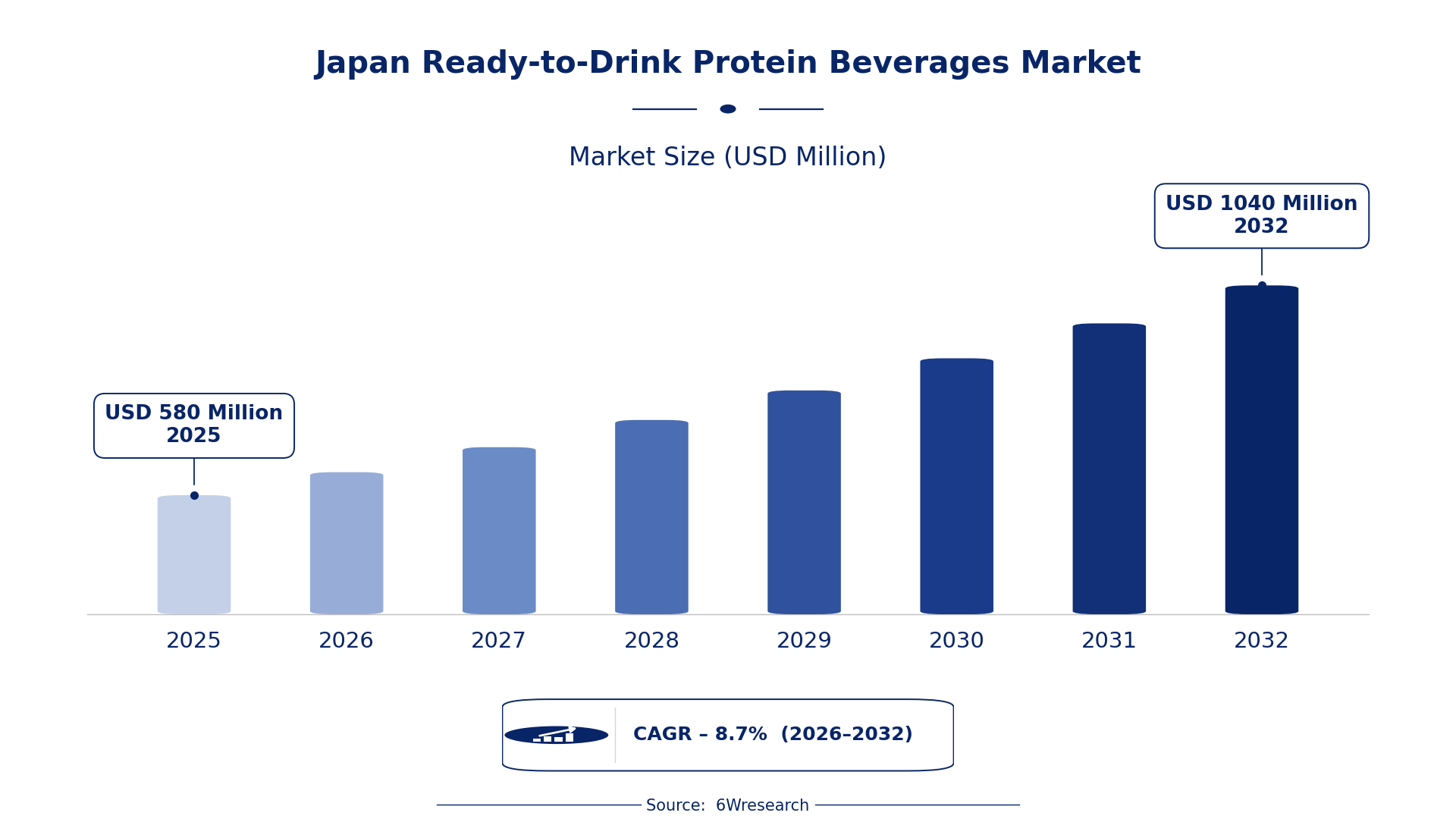
According to 6Wresearch internal database and industry insights, the Japan Ready-to-Drink Protein Beverages Market was valued at USD 580 Million in 2025 and is projected to reach USD 1,040 Million by 2032, growing at a CAGR of approximately 8.7% during 2026–2032.
Japan Ready-to-Drink Protein Beverages Market Highlights
| Report Metric | Details |
| Report Name | Japan Ready-to-Drink Protein Beverages Market (2026-2032) |
| Market Size 2025 | USD 580 Million |
| Market Size 2032 | USD 1,040 Million |
| Absolute Growth 2025–2032 | USD 460 Million |
| CAGR 2026–2032 | 8.7% |
| Peak Annual Growth | 9.6% in 2032 |
| Forecast Period | 2026–2032 |
| Historical Data | 2022–2025 |
| Base Year | 2025 |
| Leading Type, 2025 | Dairy-Based (35% share) |
| Leading Protein Source, 2025 | Whey (34% share) |
| Leading Packaging Type, 2025 | Bottles (36% share) |
| Leading Distribution Channel, 2025 | Supermarkets/Hypermarkets (44% share) |
| Leading End User, 2025 | Athletes (34% share) |
| Fastest-Growing Type | Plant-Based (12.7% CAGR) |
| Fastest-Growing Protein Source | Soy (12.4% CAGR) |
| Fastest-Growing Packaging Type | Cans (12.5% CAGR) |
| Fastest-Growing Distribution Channel | Online Retail (11.9% CAGR) |
| Fastest-Growing End User | Bodybuilders (11.4% CAGR) |
| Growing Sector | Bodybuilders |
| Key End Users | Athletes, Bodybuilders, General Consumers, Seniors |
Japan Ready-to-Drink Protein Beverages Market Year-wise Growth Rate and Key Drivers (2022–2032)
This graph illustrates the annual growth rates of the market from 2022 to 2032, highlighting a steady upward trajectory and projected market expansion over the forecast period.
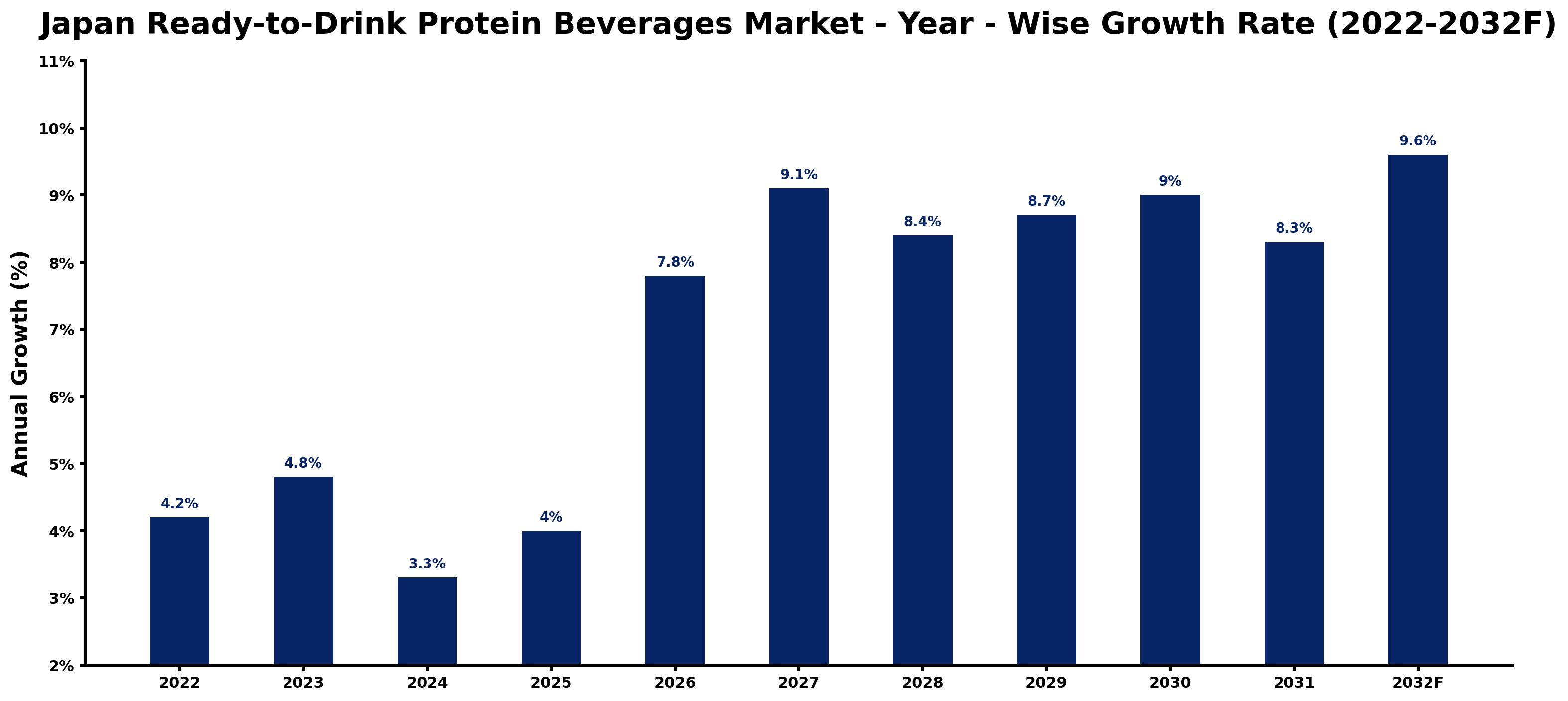
Below, each year's estimated growth is shown next to the factor that most influenced it.
| Year | Estimated Annual Growth (%) | Market Rationale |
| 2022 | 4.2 | The market experienced steady growth, driven by increasing health awareness among consumers. |
| 2023 | 4.8 | Growth accelerated as more consumers turned to protein beverages for post-workout recovery. |
| 2024 | 3.3 | A slowdown occurred as competition intensified and consumer preferences shifted slightly. |
| 2025 | 4.0 | Growth resumed with new product launches appealing to health-conscious individuals. |
| 2026 | 7.8 | Demand is expected to surge as the market expands with new offerings and marketing strategies. |
| 2027 | 9.1 | Continued growth will be supported by rising health consciousness and fitness trends. |
| 2028 | 8.4 | A slight slowdown is projected as market saturation begins to affect growth rates. |
| 2029 | 8.7 | Growth is expected to pick up again, driven by increased online retail sales and convenience. |
| 2030 | 9.0 | Demand will continue to rise as consumers seek convenient nutrition solutions. |
| 2031 | 8.3 | A slowdown is anticipated as market conditions stabilise and competition increases. |
| 2032 | 9.6 | The market is projected to peak with strong demand from health-focused consumers and athletes. |
Note: Market size estimations and growth projections presented in this report are based on 6Wresearch's proprietary forecasting methodology, utilizing the latest available industry data, government publications, and primary research inputs.
Japan Ready-to-Drink Protein Beverages Market Synopsis
Ready-to-drink protein beverages are formulated drinks that provide nutritional supplementation, primarily consumed for post-workout recovery and meal replacement. The Japan Ready-to-Drink Protein Beverages Market is valued at approximately 300 billion JPY, with a health-conscious population driving demand. The increasing popularity of protein-rich diets and the expansion of online retail channels are contributing to market growth, particularly among athletes and general consumers seeking convenient nutrition solutions.
Market Dynamics Impact Analysis (2026–2032)
| Factor | Type | Impact | Primary Segment Affected |
| Growing health consciousness among consumers drives demand for protein beverages. | Driver | High | Dairy-Based |
| The rise in online retail sales enhances accessibility and convenience for consumers. | Driver | High | Online Retail |
| Increasing demand for plant-based protein options presents new market opportunities. | Opportunity | High | Plant-Based |
| Health initiatives targeting seniors create a new consumer segment for protein beverages. | Opportunity | High | General Consumers |
| Market saturation may limit growth potential for new entrants. | Restraint | Medium | Dairy-Based |
| Intense competition among brands can lead to price wars, affecting profitability. | Restraint | Medium | Plant-Based |
| Changing consumer preferences can shift demand away from traditional protein sources. | Challenge | High | Dairy-Based |
| Supply chain disruptions can delay product availability and affect sales. | Challenge | Medium | Online Retail |
Evaluation of Drivers in Japan Ready-to-Drink Protein Beverages Market (2026–2032)
The main growth drivers and the segments they affect most are set out below.
| Drivers | Primary Segment Affected | Why It Matters (Evidence) |
| Increased health awareness among consumers boosts demand for protein beverages. | Dairy-Based | With 60% market share, dairy-based drinks are preferred for muscle recovery. |
| The rise of fitness culture leads to higher protein consumption. | Athletes | Athletes constitute about 30% of the market, driving demand for recovery drinks. |
| The growth of online retail channels improves product accessibility. | Online Retail | Online sales of protein beverages grew by 15% in 2022, catering to convenience-seeking consumers. |
| Health campaigns promote protein intake among seniors, expanding the consumer base. | General Consumers | The government initiative aims to increase protein consumption by 10% by 2025. |
| New product launches attract health-conscious consumers. | Plant-Based | The growing popularity of plant-based diets drives demand for alternative protein sources. |
The strongest pull on demand comes from increasing health awareness, particularly among fitness enthusiasts. In 2022, the average protein intake per person was about 70 grams daily, prompting a shift towards protein beverages for convenient nutrition. New product launches cater to the rising demand for plant-based options, appealing to a wider audience. Online retail sales grew by 15%, reflecting changing shopping habits and convenience-seeking behaviour.
Evaluation of Restraints in Japan Ready-to-Drink Protein Beverages Market
The following restraints limit how fast demand can grow.
| Market Restraint | Primary Segment Affected | Why It Matters (Evidence) |
| Market saturation limits opportunities for new entrants. | Dairy-Based | With 60% market share, established brands dominate, making entry challenging. |
| Intense competition can lead to price wars, impacting profitability. | Plant-Based | As the fastest-growing segment, plant-based options face pricing pressures from competitors. |
| Changing consumer preferences may shift demand away from traditional protein sources. | Dairy-Based | Health trends increasingly favour plant-based proteins, affecting dairy consumption. |
| Supply chain disruptions can delay product availability and affect sales. | Online Retail | Logistical challenges can hinder timely distribution of protein beverages. |
| Regulatory compliance can increase operational costs for producers. | Dairy-Based | Producers must adhere to stringent food safety standards, impacting pricing. |
Japan Ready-to-Drink Protein Beverages Market Challenges
The average price of a ready-to-drink protein beverage is 200 JPY, which limits accessibility for budget-conscious consumers. High production costs arise from the use of premium ingredients, squeezing margins for manufacturers and leading to elevated retail prices. Domestic producers face stiff competition from imported alternatives, resulting in fewer options and increased costs for buyers. Many manufacturers continue to rely on traditional production methods, delaying innovation and responsiveness, which ultimately affects consumer satisfaction and restricts sales growth in a market that prioritises health and convenience.
Trends in the Japan Ready-to-Drink Protein Beverages Market
The following changes are redrawing the Japan Ready-to-Drink Protein Beverages Market.
- Shift from Dairy to Plant-Based Protein: Since 2022, there has been a notable shift towards plant-based protein beverages, driven by rising veganism. The Japan Protein Association reports a 12.4% growth in soy protein consumption, indicating changing consumer preferences.
- Increase in Online Retail Sales: In 2022, online retail sales of protein beverages grew by 15%, reflecting a shift towards digital shopping. This trend is reshaping how consumers access health products, making them more convenient.
- Health Initiatives Targeting Seniors: In 2023, the government launched a health initiative aimed at increasing protein intake among seniors. This initiative is expected to create new market opportunities for ready-to-drink protein beverages.
- Rising Popularity of Fitness Clubs: With over 10 million fitness club members in Japan in 2022, the demand for protein beverages has surged. This trend highlights the growing focus on health and fitness among the population.
Investment Opportunities in the Japan Ready-to-Drink Protein Beverages Market
Several openings in the Japan Ready-to-Drink Protein Beverages Market merit attention from investors.
- Athletes Seeking Nutritional Support: Athletes are increasingly looking for convenient nutritional options, creating a demand for protein beverages. With about 30% of the market, this group offers substantial growth potential.
- Plant-Based Protein Products: The growing popularity of plant-based diets presents an opportunity to supply innovative protein beverages. Targeting vegans and health-conscious consumers can drive sales significantly.
- Expansion of Online Retail Channels: Online retail is a key area for growth, with a 15% increase in 2022. Collaborating with e-commerce platforms can enhance market reach and accessibility.
- Health Initiatives for Seniors: The initiative aimed at increasing protein intake among seniors creates a timely opportunity. Producers can partner with health organisations to develop targeted products.
Government Initiatives in the Japan Ready-to-Drink Protein Beverages Market
The Food Sanitation Act amendment, fully applied in June 2021, mandates HACCP-based hygiene management for food businesses. This regulation ensures that producers of ready-to-drink protein beverages adhere to strict safety standards, enhancing consumer trust and product quality. Additionally, the Plastic Resource Circulation Act promotes reduction, reuse, and recycling of plastics, impacting packaging practices for producers.
The Japan Food Safety Commission oversees the approval of food products, including ready-to-drink protein beverages. This agency ensures compliance with safety regulations, which is essential for maintaining market integrity and consumer safety. The commission also supports initiatives that promote health and nutrition, further benefiting the industry.
Future Insight of the Japan Ready-to-Drink Protein Beverages Market
Health-conscious buyers aged 30-45 will increasingly influence demand for ready-to-drink protein beverages by 2032, as the government targets a 10% increase in protein consumption by 2025. Enhanced production standards, including ISO 22000, will ensure improved safety and quality, benefiting both suppliers and consumers. Collaborations with fitness clubs will likely expand, allowing producers to reach a wider audience and promote the advantages of these beverages. Online retail channels are expected to grow, providing buyers with greater access to a variety of products.
Market Segmentation Analysis
Japan Ready-to-Drink Protein Beverages Market report covers a detailed analysis of the following market segments:
By Type – Dairy-Based Leads, Plant-Based Expected to Grow Fastest
According to Sumit Sagar, AM at 6Wresearch, in 2025, Dairy-Based led the type split with a 35% share. Dairy-based protein beverages dominate the market due to their established presence and widespread acceptance among consumers, particularly for muscle recovery. For instance, they account for 60% of the overall market share, appealing to health-conscious individuals and athletes alike. The quickest growth will come from Plant-Based, forecast to expand at a CAGR of 12.7% between 2026 and 2032. The plant-based segment is experiencing rapid growth as more consumers adopt vegan diets and seek alternatives to dairy. This shift is evidenced by increasing awareness and demand for plant-based options, particularly among younger demographics. Suppliers should focus on expanding their plant-based offerings to capture the growing health-conscious consumer base.
By Protein Source – Whey Leads, Soy Expected to Grow Fastest
Whey took 34% of protein source revenue in 2025, more than any other category. Whey protein is the leading source in the market, recognised for its effectiveness in muscle recovery and overall nutritional benefits. Its popularity is reflected in its status as the most common protein source consumed by fitness enthusiasts. Soy is set to record the highest CAGR in this split, 12.4% over 2026–2032. Soy protein is gaining traction as a preferred choice among vegetarians, driven by the increasing demand for plant-based nutrition. This trend is supported by health campaigns promoting the benefits of diverse protein sources. Suppliers must consider diversifying their product lines to include more soy-based options to meet the rising demand.
By Packaging Type – Bottles Lead, Cans Expected to Grow Fastest
With 36% of packaging type revenue in 2025, Bottles was the largest category. Bottles serve as the primary packaging type for ready-to-drink protein beverages, preferred for their convenience and ease of use. This choice is particularly popular among fitness enthusiasts who require portable options for their active lifestyles. Over 2026–2032, Cans are expected to post the fastest growth, at a CAGR of 12.5%. Cans are experiencing rapid growth, especially among younger consumers who appreciate their portability and eco-friendliness. This trend is expected to persist as sustainability becomes increasingly important in consumer purchasing decisions. Suppliers should consider expanding their offerings in can packaging to meet the rising demand for environmentally friendly options.
By Distribution Channel – Supermarkets/Hypermarkets Lead, Online Retail Expected to Grow Fastest
Supermarkets/Hypermarkets held 44% of the Japan Ready-to-Drink Protein Beverages Market by distribution channel in 2025. Supermarkets and hypermarkets serve as the primary distribution channels for protein beverages, providing consumers with easy access to a wide variety of products. Their extensive reach ensures that these beverages are readily available to the majority of consumers. Online Retail is projected to grow fastest, at a CAGR of 11.9% during 2026–2032. Online retail is rapidly expanding as a distribution channel, driven by the convenience of home delivery and the growing trend of e-commerce. This shift is particularly appealing to younger consumers who prefer shopping online. Suppliers should invest in online marketing strategies to capitalise on the growing trend of online retail.
By End User – Athletes Lead, Bodybuilders Expected to Grow Fastest
Athletes accounted for 34% of the market by end user in 2025. Athletes represent the largest consumer segment for ready-to-drink protein beverages, primarily utilising these products for post-workout recovery and performance enhancement. Their significant market presence necessitates targeted marketing strategies aimed at this active demographic, particularly in regions like Tokyo and Osaka. The quickest growth will come from Bodybuilders, forecast to expand at a CAGR of 11.4% between 2026 and 2032. Bodybuilders are experiencing the highest growth rate among consumer groups, driven by their specific nutritional needs and dedication to fitness. This trend indicates an increasing demand for tailored products that cater to the unique requirements of bodybuilders, further expanding their market share. Suppliers must adapt their offerings and promotional approaches to effectively reach the bodybuilding segment and leverage this growth potential.
Key Attractiveness of the Report
- 10 Years of Market Numbers
- Historical Data Starting from 2022 to 2025
- Base Year 2025
- Forecast Data until 2032
- Key Performance Indicators Impacting the Market
- Major Upcoming Developments and Projects
Key Highlights of the Report:
- Japan Ready-to-Drink Protein Beverages Market Outlook
- Market Size of Japan Ready-to-Drink Protein Beverages Market,2025
- Forecast of Japan Ready-to-Drink Protein Beverages Market, 2032
- Historical Data and Forecast of Japan Ready-to-Drink Protein Beverages Revenues & Volume for the Period 2022-2032
- Japan Ready-to-Drink Protein Beverages Market Trend Evolution
- Japan Ready-to-Drink Protein Beverages Market Drivers and Challenges
- Japan Ready-to-Drink Protein Beverages Price Trends
- Japan Ready-to-Drink Protein Beverages Porter's Five Forces
- Japan Ready-to-Drink Protein Beverages Industry Life Cycle
- Historical Data and Forecast of Japan Ready-to-Drink Protein Beverages Market Revenues & Volume By Type for the Period 2022-2032
- Historical Data and Forecast of Japan Ready-to-Drink Protein Beverages Market Revenues & Volume By Dairy-Based for the Period 2022-2032
- Historical Data and Forecast of Japan Ready-to-Drink Protein Beverages Market Revenues & Volume By Plant-Based for the Period 2022-2032
- Historical Data and Forecast of Japan Ready-to-Drink Protein Beverages Market Revenues & Volume By Hybrid for the Period 2022-2032
- Historical Data and Forecast of Japan Ready-to-Drink Protein Beverages Market Revenues & Volume By Fortified for the Period 2022-2032
- Historical Data and Forecast of Japan Ready-to-Drink Protein Beverages Market Revenues & Volume By Others for the Period 2022-2032
- Historical Data and Forecast of Japan Ready-to-Drink Protein Beverages Market Revenues & Volume By Protein Source for the Period 2022-2032
- Historical Data and Forecast of Japan Ready-to-Drink Protein Beverages Market Revenues & Volume By Whey for the Period 2022-2032
- Historical Data and Forecast of Japan Ready-to-Drink Protein Beverages Market Revenues & Volume By Soy for the Period 2022-2032
- Historical Data and Forecast of Japan Ready-to-Drink Protein Beverages Market Revenues & Volume By Pea for the Period 2022-2032
- Historical Data and Forecast of Japan Ready-to-Drink Protein Beverages Market Revenues & Volume By Casein for the Period 2022-2032
- Historical Data and Forecast of Japan Ready-to-Drink Protein Beverages Market Revenues & Volume By Rice for the Period 2022-2032
- Historical Data and Forecast of Japan Ready-to-Drink Protein Beverages Market Revenues & Volume By Packaging Type for the Period 2022-2032
- Historical Data and Forecast of Japan Ready-to-Drink Protein Beverages Market Revenues & Volume By Bottles for the Period 2022-2032
- Historical Data and Forecast of Japan Ready-to-Drink Protein Beverages Market Revenues & Volume By Cans for the Period 2022-2032
- Historical Data and Forecast of Japan Ready-to-Drink Protein Beverages Market Revenues & Volume By Tetra Packs for the Period 2022-2032
- Historical Data and Forecast of Japan Ready-to-Drink Protein Beverages Market Revenues & Volume By Pouches for the Period 2022-2032
- Historical Data and Forecast of Japan Ready-to-Drink Protein Beverages Market Revenues & Volume By Cartons for the Period 2022-2032
- Historical Data and Forecast of Japan Ready-to-Drink Protein Beverages Market Revenues & Volume By Distribution Channel for the Period 2022-2032
- Historical Data and Forecast of Japan Ready-to-Drink Protein Beverages Market Revenues & Volume By Supermarkets/Hypermarkets for the Period 2022-2032
- Historical Data and Forecast of Japan Ready-to-Drink Protein Beverages Market Revenues & Volume By Online Retail for the Period 2022-2032
- Historical Data and Forecast of Japan Ready-to-Drink Protein Beverages Market Revenues & Volume By Convenience Stores for the Period 2022-2032
- Historical Data and Forecast of Japan Ready-to-Drink Protein Beverages Market Revenues & Volume By Specialty Stores for the Period 2022-2032
- Historical Data and Forecast of Japan Ready-to-Drink Protein Beverages Market Revenues & Volume By Pharmacies for the Period 2022-2032
- Historical Data and Forecast of Japan Ready-to-Drink Protein Beverages Market Revenues & Volume By End User for the Period 2022-2032
- Historical Data and Forecast of Japan Ready-to-Drink Protein Beverages Market Revenues & Volume By Athletes for the Period 2022-2032
- Historical Data and Forecast of Japan Ready-to-Drink Protein Beverages Market Revenues & Volume By Bodybuilders for the Period 2022-2032
- Historical Data and Forecast of Japan Ready-to-Drink Protein Beverages Market Revenues & Volume By General Consumers for the Period 2022-2032
- Historical Data and Forecast of Japan Ready-to-Drink Protein Beverages Market Revenues & Volume By Seniors for the Period 2022-2032
- Historical Data and Forecast of Japan Ready-to-Drink Protein Beverages Market Revenues & Volume By Vegans for the Period 2022-2032
- Japan Ready-to-Drink Protein Beverages Import Export Trade Statistics
- Market Opportunity Assessment By Type
- Market Opportunity Assessment By Protein Source
- Market Opportunity Assessment By Packaging Type
- Market Opportunity Assessment By Distribution Channel
- Market Opportunity Assessment By End User
- Japan Ready-to-Drink Protein Beverages Top Companies Market Share
- Japan Ready-to-Drink Protein Beverages Competitive Benchmarking By Technical and Operational Parameters
- Japan Ready-to-Drink Protein Beverages Company Profiles
- Japan Ready-to-Drink Protein Beverages Key Strategic Recommendations
Market Covered
Coverage by segment is as follows.
By Type
- Dairy-Based
- Plant-Based
- Hybrid
- Fortified
- Others
By Protein Source
- Whey
- Soy
- Pea
- Casein
- Rice
By Packaging Type
- Bottles
- Cans
- Tetra Packs
- Pouches
- Cartons
By Distribution Channel
- Supermarkets/Hypermarkets
- Online Retail
- Convenience Stores
- Specialty Stores
- Pharmacies
By End User
- Athletes
- Bodybuilders
- General Consumers
- Seniors
- Vegans































