Japan Ready‑to‑Eat Meal Packaging Market Size & Growth Rate
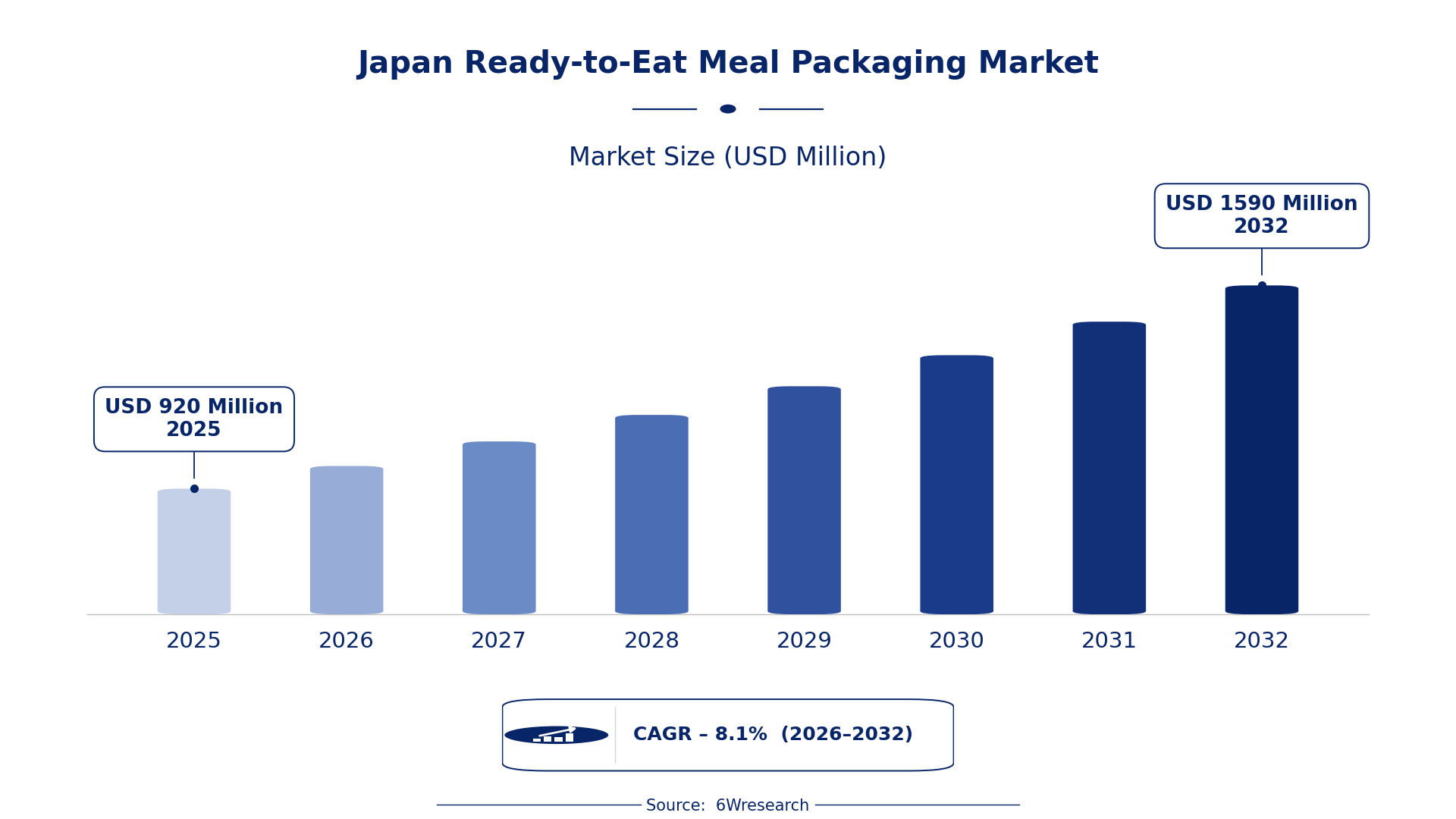
According to 6Wresearch internal database and industry insights, the Japan Ready‑to‑Eat Meal Packaging Market was valued at USD 920 Million in 2025 and is projected to reach USD 1,590 Million by 2032, growing at a CAGR of approximately 8.1% during 2026–2032.
Japan Ready‑to‑Eat Meal Packaging Market Highlights
| Report Metric | Details |
| Report Name | Japan Ready‑to‑Eat Meal Packaging Market (2026-2032) |
| Market Size 2025 | USD 920 Million |
| Market Size 2032 | USD 1,590 Million |
| Absolute Growth 2025–2032 | USD 670 Million |
| CAGR 2026–2032 | 8.1% |
| Peak Annual Growth | 9.2% in 2026 |
| Forecast Period | 2026–2032 |
| Historical Data | 2022–2025 |
| Base Year | 2025 |
| Leading Meal Type, 2025 | Frozen Meals (36% share) |
| Leading Cuisine Style, 2025 | International (Asian, Mediterranean) (49% share) |
| Leading Packaging Format, 2025 | Microwavable Trays (37% share) |
| Leading End User, 2025 | Busy Families (48% share) |
| Fastest-Growing Meal Type | Fresh Meals (11.3% CAGR) |
| Fastest-Growing Cuisine Style | Low-Calorie/Gluten-Free (10.9% CAGR) |
| Fastest-Growing End User | Office Professionals (10.2% CAGR) |
| Growing Sector | Ready-to-eat meals |
| Key End Users | Busy Families, Office Professionals, Health-Conscious Consumers |
Japan Ready‑to‑Eat Meal Packaging Market Year-wise Growth Rate and Key Drivers (2022–2032)
This graph illustrates the annual growth rates of the market from 2022 to 2032, highlighting a steady upward trajectory and projected market expansion over the forecast period.
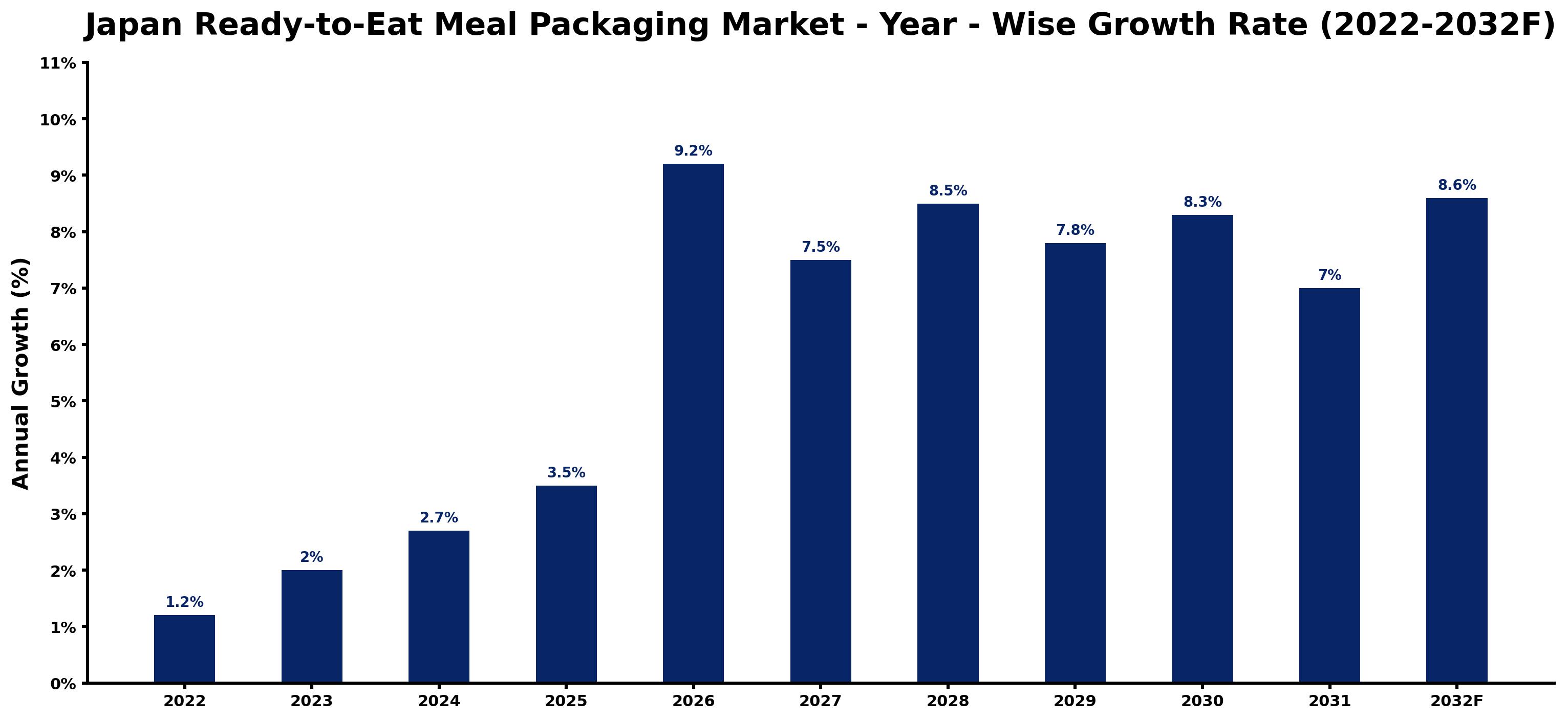
For each year, the table pairs the estimated growth rate with the leading influence on demand, showing how the drivers changed across the period.
| Year | Estimated Annual Growth (%) | Market Rationale |
| 2022 | 1.2 | The market showed steady demand for convenient meal solutions among consumers. |
| 2023 | 2.0 | Growth accelerated as more households sought quick meal options amid busy lifestyles. |
| 2024 | 2.7 | Demand continued to rise due to the popularity of frozen meals for long-term storage. |
| 2025 | 3.5 | The market experienced its highest growth rate as consumers embraced ready-to-eat meals. |
| 2026 | 9.2 | A surge in demand for fresh meals is anticipated to drive the market to its peak growth rate. |
| 2027 | 7.5 | Growth is projected to slow slightly as the market begins to stabilise after rapid expansion. |
| 2028 | 8.5 | Increased health consciousness among consumers will contribute to a rebound in growth. |
| 2029 | 7.8 | The market will continue to grow, albeit at a slower pace as competition intensifies. |
| 2030 | 8.3 | Demand for convenient meal packaging will remain strong, driven by busy lifestyles. |
| 2031 | 7.0 | Growth is expected to slow as market saturation begins to impact new product introductions. |
| 2032 | 8.6 | A renewed focus on sustainability in packaging is projected to drive growth. |
Note: Market size estimations and growth projections presented in this report are based on 6Wresearch's proprietary forecasting methodology, utilizing the latest available industry data, government publications, and primary research inputs.
Japan Ready‑to‑Eat Meal Packaging Market Synopsis
Ready-to-eat meal packaging includes materials designed for minimal preparation, utilising plastics and aluminum to ensure convenience and extended shelf life. The Japan Ready‑to‑Eat Meal Packaging Market is expanding due to a population of approximately 125 million seeking convenient meal solutions, the Tokyo metropolitan area as a key production hub, and a rise in health-conscious consumers influencing packaging choices. This growth is reflected in the increasing demand for frozen meals, which surged by 15% in 2022 compared to the previous year.
Market Dynamics Impact Analysis (2026–2032)
| Factor | Type | Impact | Primary Segment Affected |
| Growing demand for convenient meal solutions among busy families | Driver | High | Fresh Meals |
| Increased health consciousness leading to demand for low-calorie and gluten-free options | Driver | High | Low-Calorie/Gluten-Free |
| Rising consumer preference for sustainable packaging solutions | Opportunity | Medium | Microwavable Trays |
| Expansion of the food service industry, driving packaging innovations | Opportunity | High | Frozen Meals |
| Competition from alternative meal solutions affecting market share | Restraint | Medium | Frozen Meals |
| Regulatory compliance costs for packaging materials impacting producers | Restraint | High | Shelf-Stable Meals |
| High costs associated with sustainable packaging materials | Challenge | Medium | Microwavable Trays |
| Consumer preferences shifting rapidly, making it hard to keep up | Challenge | High | Fresh Meals |
Evaluation of Drivers in Japan Ready‑to‑Eat Meal Packaging Market (2026–2032)
These are the developments adding the most demand over the forecast period.
| Drivers | Primary Segment Affected | Why It Matters (Evidence) |
| Growing demand for convenience | Frozen Meals | The demand for frozen meals increased by 15% in 2022, encouraging suppliers to enhance production capabilities and meet consumer preferences. |
| Health-conscious consumer trends | Low-Calorie/Gluten-Free | The average age of Japan's population is increasing, leading to a rise in demand for healthier meal options, driving innovation in packaging. |
| Expansion of food service industry | Fresh Meals | The Japanese food service industry is projected to reach ¥20 trillion by 2025, prompting investments in packaging solutions that cater to this growing sector. |
| Convenience store proliferation | Microwavable Trays | Convenience stores in Japan sell over 1 million ready-to-eat meals daily, indicating a strong market for quick meal packaging solutions. |
| Government health initiatives | Heat-and-Eat Casseroles | The 'Healthy Japan 21' program promotes balanced diets, influencing the demand for convenient meal packaging that supports health-focused eating. |
Volumes grow on the back of the Tokyo metropolitan area being a major hub for ready-to-eat meal production, resulting in increased consumer purchases. The average age of the population is rising, influencing demand for healthier meal choices, particularly low-calorie options. Convenience stores sell over 1 million ready-to-eat meals daily, indicating a strong preference for quick meal solutions. The food service industry is expected to reach ¥20 trillion by 2025, driving demand for new packaging solutions that cater to evolving consumer preferences.
Evaluation of Restraints in Japan Ready‑to‑Eat Meal Packaging Market
These restraints slow adoption and weigh on supplier margins.
| Market Restraint | Primary Segment Affected | Why It Matters (Evidence) |
| High costs associated with sustainable packaging materials | Microwavable Trays | Producers face increased expenses in sourcing eco-friendly materials, affecting profitability. |
| Regulatory compliance costs for packaging materials impacting producers | Shelf-Stable Meals | Compliance with JIS standards raises production costs, limiting market competitiveness. |
| Market saturation leading to slower growth rates | Fresh Meals | An increase in available products makes it harder for new entries to gain traction. |
| Competition from alternative meal solutions affecting market share | Frozen Meals | As more options become available, consumer loyalty may shift, impacting sales. |
| Consumer preferences shifting rapidly, making it hard to keep up | Microwavable Trays | Producers struggle to adapt quickly to changing tastes, risking inventory obsolescence. |
Japan Ready‑to‑Eat Meal Packaging Market Challenges
Convenience stores sell over 1 million ready-to-eat meals daily, but supply chain disruptions can delay deliveries, forcing retailers to limit stock and miss sales opportunities. Many suppliers struggle with outdated technology, which slows production processes and extends lead times for retailers. Frequent updates to comply with JIS standards increase costs for suppliers, potentially raising prices for consumers. Rising raw material costs, particularly for plastics and aluminium, inflate packaging expenses, squeezing profit margins for producers and resulting in higher prices for buyers.
Trends in the Japan Ready‑to‑Eat Meal Packaging Market
Four trends stand out in the Japan Ready‑to‑Eat Meal Packaging Market.
- Shift Towards Health-Conscious Meal Options: The demand for low-calorie and gluten-free meals is increasing, reflecting changing consumer preferences. In 2023, the market for low-calorie meals grew by 10.9%, indicating a shift towards healthier eating.
- Increase in Sustainable Packaging Solutions: In 2023, the government initiated a campaign to reduce food waste, influencing packaging designs. This initiative is expected to drive demand for biodegradable materials in meal packaging.
- Growth of Convenience Store Meal Offerings: Convenience stores continue to broaden their ready-to-eat meal selections, selling over 1 million meals daily. This trend underscores the growing consumer reliance on quick meal solutions.
- Rising Popularity of Fresh Meal Options: Fresh meals are gaining traction, with a projected CAGR of 11.3% from 2026 to 2032. This growth is propelled by consumer preference for healthier, convenient meal solutions.
Investment Opportunities in the Japan Ready‑to‑Eat Meal Packaging Market
Below are the investment opportunities with the strongest case in the Japan Ready‑to‑Eat Meal Packaging Market.
- Timing for Sustainable Packaging: With the government’s Plastic Resource Circulation Act in effect, there is an increasing need for sustainable packaging solutions. The food service sector is expected to reach ¥20 trillion by 2025, encouraging suppliers to invest in eco-friendly materials to comply with new regulations.
- Expansion in Urban Areas: The Tokyo metropolitan area remains a key hub for ready-to-eat meals, with a notable demand for fresh meals. Suppliers should explore partnerships with local convenience stores to improve distribution channels and serve urban consumers.
- Focus on Health-Conscious Products: The growing health-conscious consumer base presents an opportunity for suppliers to create low-calorie and gluten-free meal packaging. This trend is supported by the increasing average age of the population, which seeks easier meal preparation options.
- Innovations in Packaging Technology: As the food service industry expands, there is an opportunity to invest in advanced packaging technologies. Suppliers can benefit from government initiatives that encourage innovation in meal packaging to minimise food waste.
Government Initiatives in the Japan Ready‑to‑Eat Meal Packaging Market
The Food Sanitation Act amendment (2018) established a positive list system for synthetic resins used in food packaging, ensuring safety and quality for buyers. Compliance with these regulations is essential for producers to maintain market access. The amendment is fully applied as of June 2021, impacting production processes and material selection.
The Plastic Resource Circulation Act (2021) encourages reduction, reuse, and recycling of plastics, supported by the Ministry of the Environment and the Ministry of Economy, Trade and Industry. This initiative promotes sustainable practices among producers, with funding available for projects that align with these goals.
Future Insight of the Japan Ready‑to‑Eat Meal Packaging Market
Households will increasingly demand convenient meal solutions, prompting suppliers to adopt advanced packaging technologies by 2032. The government's 'Healthy Japan 21' program will drive innovations in meal packaging, focusing on health and sustainability. As the food service industry is set to reach ¥20 trillion by 2025, suppliers will invest in new designs that cater to evolving consumer preferences. With initiatives to reduce food waste, packaging will transform to become more eco-friendly, benefiting buyers seeking sustainable options and suppliers aiming to comply with new regulations.
Market Segmentation Analysis
Japan Ready‑to‑Eat Meal Packaging Market report covers a detailed analysis of the following market segments:
By Meal Type – Frozen Meals Lead, Fresh Meals Expected to Grow Fastest
According to Saurav Kr Singh, Senior Research Analyst at 6Wresearch, Frozen Meals took 36% of meal type revenue in 2025, more than any other category. Frozen meals are highly sought after for their long-term storage capabilities, appealing to consumers who prefer convenience. For instance, the demand for frozen meals surged by 15% in 2022, reflecting their popularity among busy households. Over 2026–2032, Fresh Meals are expected to post the fastest growth, at a CAGR of 11.3%. Fresh meals are experiencing rapid growth due to the increasing consumer preference for healthier, convenient options. The rise in health-conscious eating habits is illustrated by initiatives like 'Healthy Japan 21' that promote balanced diets. Suppliers should focus on expanding their fresh meal offerings to meet the growing consumer demand.
By Cuisine Style – International (Asian, Mediterranean) Leads, Low-Calorie/Gluten-Free Expected to Grow Fastest
International (Asian, Mediterranean) held 49% of the Japan Ready‑to‑Eat Meal Packaging Market by cuisine style in 2025. International cuisine, particularly Asian and Mediterranean, holds the largest market share due to Japan's diverse culinary preferences and the widespread appeal of these flavours. The extensive variety available at convenience stores showcases the strong consumer demand for these meal options. Low-Calorie/Gluten-Free is set to record the highest CAGR in this split, 10.9% over 2026–2032. The low-calorie and gluten-free segment is experiencing rapid growth as health-conscious consumers increasingly seek meals that align with their dietary needs. This shift is evident in the expanding range of ready-to-eat meals catering to these preferences, indicating a broader trend towards healthier eating. Suppliers should prioritise the development of health-oriented meal options to capitalise on the growing consumer interest in nutritious choices.
By Packaging Format – Microwavable Trays Lead and Record the Fastest Growth
With 37% of packaging format revenue in 2025, Microwavable Trays was the largest category. Microwavable trays dominate the market due to their unparalleled convenience, making them the preferred choice for consumers seeking quick meal solutions. Their adaptability to various meal types further solidifies their leading position in the packaging format sector. Its lead should widen, with a projected CAGR of 11.8% during 2026–2032, the highest in this split. Microwavable trays are also the fastest-growing packaging format, as their convenience aligns perfectly with the increasing demand for ready-to-eat meals. This dual advantage ensures that their market share will continue to expand in response to evolving consumer preferences. Suppliers are encouraged to invest in the innovation of microwavable tray designs to enhance user experience and sustain competitive advantage.
By End User – Busy Families Lead, Office Professionals Expected to Grow Fastest
In 2025, Busy Families led the end user split with a 48% share. Busy families represent the largest consumer segment, driven by their need for convenient meal solutions that fit their hectic lifestyles. This demographic significantly influences the types of meals packaged and marketed within the industry. Office Professionals are projected to grow fastest, at a CAGR of 10.2% during 2026–2032. Office professionals are the fastest-growing segment, as they increasingly seek quick lunch options that cater to their busy work schedules. This trend is likely to continue as more individuals return to office environments post-pandemic. Suppliers should focus on tailored marketing strategies to effectively reach and engage office professionals.
Key Attractiveness of the Report
- 10 Years of Market Numbers
- Historical Data Starting from 2022 to 2025
- Base Year 2025
- Forecast Data until 2032
- Key Performance Indicators Impacting the Market
- Major Upcoming Developments and Projects
Key Highlights of the Report:
- Japan Ready‑to‑Eat Meal Packaging Market Outlook
- Market Size of Japan Ready‑to‑Eat Meal Packaging Market, 2025
- Forecast of Japan Ready‑to‑Eat Meal Packaging Market, 2032
- Historical Data and Forecast of Japan Ready‑to‑Eat Meal Packaging Revenues & Volume for the Period 2022-2032F
- Japan Ready‑to‑Eat Meal Packaging Market Trend Evolution
- Japan Ready‑to‑Eat Meal Packaging Market Drivers and Challenges
- Japan Ready‑to‑Eat Meal Packaging Price Trends
- Japan Ready‑to‑Eat Meal Packaging Porter's Five Forces
- Japan Ready‑to‑Eat Meal Packaging Industry Life Cycle
- Historical Data and Forecast of Japan Ready‑to‑Eat Meal Packaging Market Revenues & Volume By Meal Type for the Period 2022-2032F
- Historical Data and Forecast of Japan Ready‑to‑Eat Meal Packaging Market Revenues & Volume By Fresh Meals for the Period 2022-2032F
- Historical Data and Forecast of Japan Ready‑to‑Eat Meal Packaging Market Revenues & Volume By Frozen Meals for the Period 2022-2032F
- Historical Data and Forecast of Japan Ready‑to‑Eat Meal Packaging Market Revenues & Volume By Shelf-Stable Meals for the Period 2022-2032F
- Historical Data and Forecast of Japan Ready‑to‑Eat Meal Packaging Market Revenues & Volume By Heat-and-Eat Casseroles for the Period 2022-2032F
- Historical Data and Forecast of Japan Ready‑to‑Eat Meal Packaging Market Revenues & Volume By Cuisine Style for the Period 2022-2032F
- Historical Data and Forecast of Japan Ready‑to‑Eat Meal Packaging Market Revenues & Volume By International (Asian, Mediterranean) for the Period 2022-2032F
- Historical Data and Forecast of Japan Ready‑to‑Eat Meal Packaging Market Revenues & Volume By Low-Calorie/Gluten-Free for the Period 2022-2032F
- Historical Data and Forecast of Japan Ready‑to‑Eat Meal Packaging Market Revenues & Volume By High-Protein/Keto for the Period 2022-2032F
- Historical Data and Forecast of Japan Ready‑to‑Eat Meal Packaging Market Revenues & Volume By Comfort Foods for the Period 2022-2032F
- Historical Data and Forecast of Japan Ready‑to‑Eat Meal Packaging Market Revenues & Volume By Packaging Format for the Period 2022-2032F
- Historical Data and Forecast of Japan Ready‑to‑Eat Meal Packaging Market Revenues & Volume By Vacuum-sealed Trays for the Period 2022-2032F
- Historical Data and Forecast of Japan Ready‑to‑Eat Meal Packaging Market Revenues & Volume By Freezer Bags/Trays for the Period 2022-2032F
- Historical Data and Forecast of Japan Ready‑to‑Eat Meal Packaging Market Revenues & Volume By Retort Pouches for the Period 2022-2032F
- Historical Data and Forecast of Japan Ready‑to‑Eat Meal Packaging Market Revenues & Volume By Microwavable Trays for the Period 2022-2032F
- Historical Data and Forecast of Japan Ready‑to‑Eat Meal Packaging Market Revenues & Volume By End User for the Period 2022-2032F
- Historical Data and Forecast of Japan Ready‑to‑Eat Meal Packaging Market Revenues & Volume By Office Professionals for the Period 2022-2032F
- Historical Data and Forecast of Japan Ready‑to‑Eat Meal Packaging Market Revenues & Volume By Busy Families for the Period 2022-2032F
- Historical Data and Forecast of Japan Ready‑to‑Eat Meal Packaging Market Revenues & Volume By Outdoor Enthusiasts for the Period 2022-2032F
- Historical Data and Forecast of Japan Ready‑to‑Eat Meal Packaging Market Revenues & Volume By Elderly Consumers for the Period 2022-2032F
- Japan Ready‑to‑Eat Meal Packaging Import Export Trade Statistics
- Market Opportunity Assessment By Meal Type
- Market Opportunity Assessment By Cuisine Style
- Market Opportunity Assessment By Packaging Format
- Market Opportunity Assessment By End User
- Japan Ready‑to‑Eat Meal Packaging Top Companies Market Share
- Japan Ready‑to‑Eat Meal Packaging Competitive Benchmarking By Technical and Operational Parameters
- Japan Ready‑to‑Eat Meal Packaging Company Profiles
- Japan Ready‑to‑Eat Meal Packaging Key Strategic Recommendations
Market Covered
Segments analysed in this report are listed below.
By Meal Type
- Fresh Meals
- Frozen Meals
- Shelf-Stable Meals
- Heat-and-Eat Casseroles
By Cuisine Style
- International (Asian, Mediterranean)
- Low-Calorie/Gluten-Free
- High-Protein/Keto
- Comfort Foods
By Packaging Format
- Vacuum-sealed Trays
- Freezer Bags/Trays
- Retort Pouches
- Microwavable Trays
By End User
- Office Professionals
- Busy Families
- Outdoor Enthusiasts
- Elderly Consumers































