Japan Recreational Sports Market Size & Growth Rate
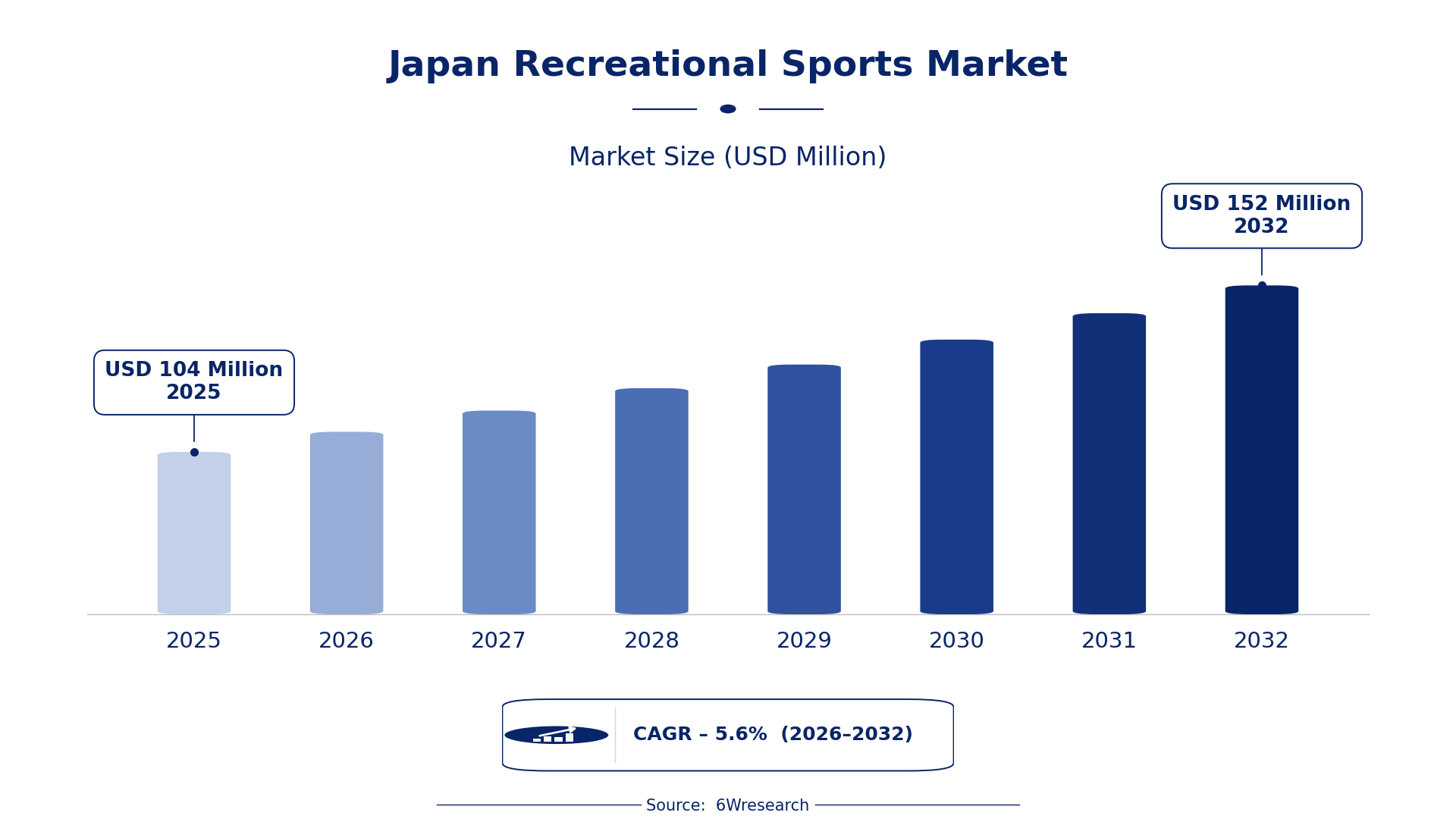
According to 6Wresearch internal database and industry insights, the Japan Recreational Sports Market was valued at USD 104 Million in 2025 and is projected to reach USD 152 Million by 2032, growing at a CAGR of approximately 5.6% during 2026–2032.
Japan Recreational Sports Market Highlights
| Report Metric | Details |
| Report Name | Japan Recreational Sports Market (2026-2032) |
| Market Size 2025 | USD 104 Million |
| Market Size 2032 | USD 152 Million |
| Absolute Growth 2025–2032 | USD 48 Million |
| CAGR 2026–2032 | 5.6% |
| Peak Annual Growth | 6.8% in 2028 |
| Forecast Period | 2026–2032 |
| Historical Data | 2022–2025 |
| Base Year | 2025 |
| Leading Sport Type, 2025 | Soccer/Football (32% share) |
| Leading Facility Type, 2025 | Outdoor Fields (44% share) |
| Leading Active Region, 2025 | Local Clubs (40% share) |
| Leading End User, 2025 | Youth & Adult Players (38% share) |
| Fastest-Growing Sport Type | Basketball (8.2% CAGR) |
| Fastest-Growing Facility Type | Indoor Courts (7.5% CAGR) |
| Fastest-Growing Active Region | Gyms/Recreation Centers (6.9% CAGR) |
| Fastest-Growing End User | Amateur Players (7.4% CAGR) |
| Growing Sector | Recreational Sports Participation |
| Key End Users | Youth Players, Adult Players, Community Centers, Local Clubs |
Japan Recreational Sports Market Year-wise Growth Rate and Key Drivers (2022–2032)
This graph illustrates the annual growth rates of the market from 2022 to 2032, highlighting a steady upward trajectory and projected market expansion over the forecast period.
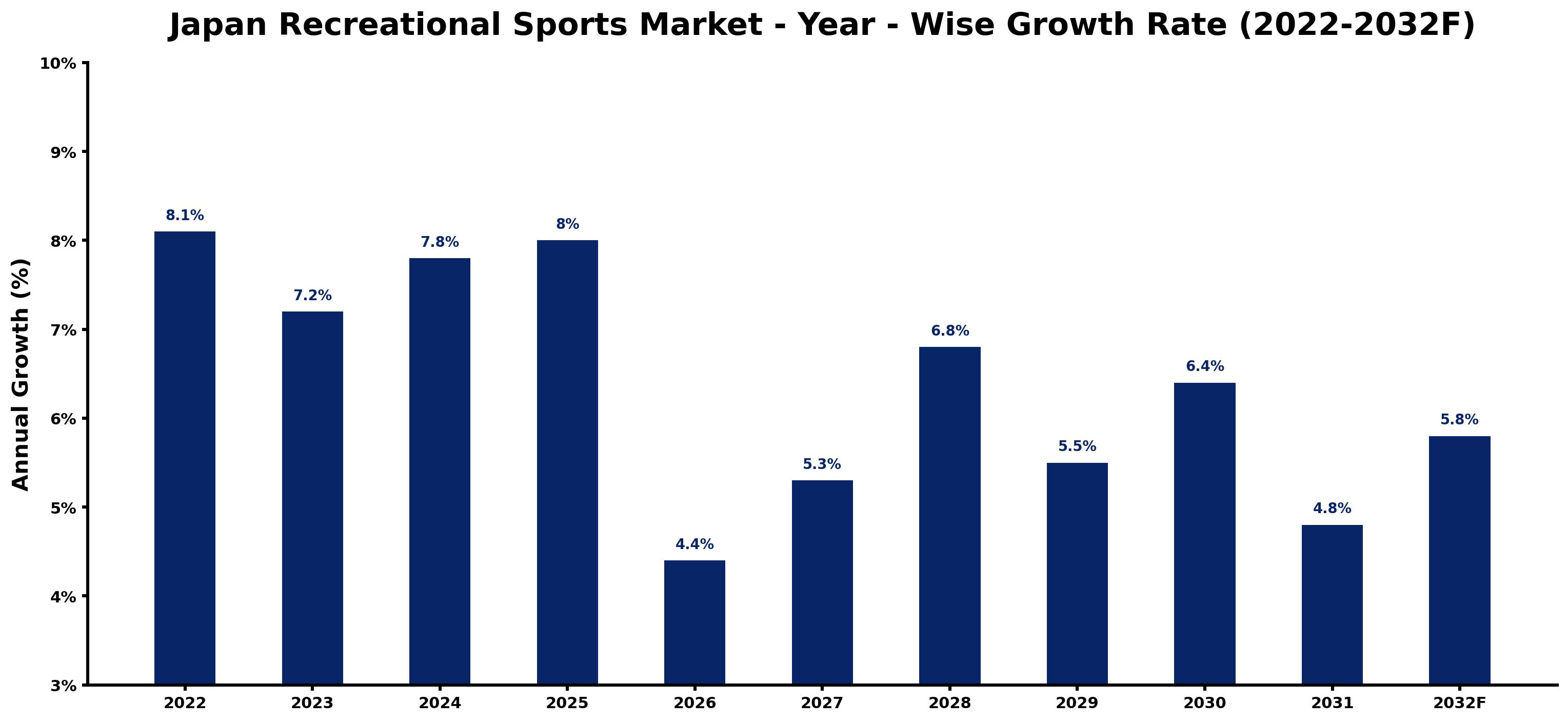
The table below sets out the estimated growth rate for each year and the main factor behind it.
| Year | Estimated Annual Growth (%) | Market Rationale |
| 2022 | 8.1 | The market experienced strong engagement in recreational activities, driven by community events and health awareness. |
| 2023 | 7.2 | Participation in organized sports slowed slightly as facilities faced capacity challenges and limited access. |
| 2024 | 7.8 | Increased interest in community sports led to a rise in participation rates, particularly in schools. |
| 2025 | 8.0 | Demand surged as local clubs expanded their offerings and hosted more events for participants. |
| 2026 | 4.4 | Growth is expected to slow due to market saturation in certain recreational activities and infrastructure limits. |
| 2027 | 5.3 | A renewed focus on health and fitness is projected to spark increased participation in various sports. |
| 2028 | 6.8 | The introduction of new sports programs will boost overall market growth and community involvement. |
| 2029 | 5.5 | Interest in recreational activities is expected to slow as competition increases among providers. |
| 2030 | 6.4 | Growth will pick up again as urban areas invest in sports facilities and community programs. |
| 2031 | 4.8 | Participation rates are projected to stabilise as community engagement remains strong and facilities improve. |
| 2032 | 5.8 | The market is expected to grow as new sports initiatives are launched, enhancing local participation. |
Note: Market size estimations and growth projections presented in this report are based on 6Wresearch's proprietary forecasting methodology, utilizing the latest available industry data, government publications, and primary research inputs.
Japan Recreational Sports Market Synopsis
Recreational sports in Japan encompass various physical activities that promote enjoyment and fitness, often organised in community settings. The Japan Recreational Sports Market is driven by increasing health awareness and community engagement, with over 2,000 soccer clubs registered and a government programme launched to promote sports in schools. These elements contribute to a thriving market, reflecting a strong demand for recreational activities and community involvement.
Market Dynamics Impact Analysis (2026–2032)
| Factor | Type | Impact | Primary Segment Affected |
| Growing health awareness among the population | Driver | High | Soccer/Football |
| Increased community engagement through local clubs | Driver | High | Local Clubs |
| Expansion of sports facilities in urban areas | Opportunity | High | Outdoor Fields |
| Rising participation in school sports programs | Opportunity | High | Basketball |
| Limited availability of facilities in rural areas | Restraint | Medium | Indoor Courts |
| High competition among recreational sports providers | Restraint | Medium | Community Centers |
| Aging infrastructure of existing facilities | Challenge | High | Gyms/Recreation Centers |
| Limited funding for new sports initiatives | Challenge | High | Specialized Venues |
Evaluation of Drivers in Japan Recreational Sports Market (2026–2032)
These are the developments adding the most demand over the forecast period.
| Drivers | Primary Segment Affected | Why It Matters (Evidence) |
| Increased health consciousness among adults | Recreational Adults | This trend has led to a 60% participation rate in exercise activities, driving demand for recreational sports. |
| Growth of community sports programs | Local Clubs | Local clubs host over 500 amateur tournaments annually, engaging participants and fostering community spirit. |
| Expansion of school sports initiatives | Basketball | The promotion of sports in schools has led to basketball being played in over 1,500 schools nationwide. |
| Investment in sports facilities | Outdoor Fields | The government allocated ¥10 billion for improvements, enhancing access to recreational sports for communities. |
| Rising interest in tennis and pickleball | Tennis/Pickleball | Participation in tennis has increased by 15% in urban areas since 2020, reflecting growing demand for diverse activities. |
A wider customer base explains much of the growth, as community engagement in sports has surged. Local clubs host over 500 amateur tournaments annually, which increases competition and community spirit. The allocation of ¥10 billion for facility improvements improves access to recreational sports across various regions. Participation in tennis has risen by 15% in urban areas since 2020, showcasing a shift towards diverse recreational activities. The growing health consciousness among adults, with 60% participating in exercise activities, further drives demand for recreational sports and facilities.
Evaluation of Restraints in Japan Recreational Sports Market
Several factors work against faster growth; the main ones are summarised below.
| Market Restraint | Primary Segment Affected | Why It Matters (Evidence) |
| Limited access to sports facilities in rural areas | Indoor Courts | Many rural communities lack adequate facilities, affecting participation rates and limiting engagement. |
| High competition among recreational sports providers | Community Centers | This competition can dilute resources and limit unique offerings to attract participants effectively. |
| Aging infrastructure of existing facilities | Gyms/Recreation Centers | Older facilities may not meet modern safety standards, deterring potential users and affecting participation. |
| Insufficient funding for new sports initiatives | Specialized Venues | Limited budgets restrict the development of new venues, impacting overall growth and community access. |
| Regulatory challenges in facility construction | Outdoor Fields | Complex regulations can delay the establishment of new sports facilities, hindering expansion efforts. |
Japan Recreational Sports Market Challenges
Limited access to recreational facilities hinders participation rates in Japan, particularly in rural areas where only 300 community recreation centres exist, delaying health benefits for local populations. Buyers face slow technology adoption in sports programmes, with only 15% of schools integrating digital tools, which restricts engagement opportunities for students. Competition for funding among various activities leads to uneven resource allocation, causing delays in facility upgrades that affect producers of sports equipment. A shortage of skilled coaches and programme managers impacts the effectiveness of community initiatives, reducing the quality of experiences for over 1 million participants annually.
Trends in the Japan Recreational Sports Market
The trends below show where the Japan Recreational Sports Market is heading.
- Shift towards Community Engagement in Sports: Local clubs are becoming the focal point for recreational sports, with 40% of participants engaging through these venues. This shift indicates a growing preference for community-based activities and social interaction.
- Rise in School Sports Participation: The promotion of sports in schools has led to an increase in youth engagement, particularly in basketball, which is now played in over 1,500 schools nationwide, fostering a culture of fitness.
- Growth of Indoor Sports Facilities: The demand for indoor courts is rising, driven by the need for year-round play, with a projected CAGR of 7.5% in the coming years, reflecting changing participation patterns.
- Increased Focus on Health and Fitness: With 60% of adults participating in recreational sports, there is a strong trend towards health and fitness, influencing facility development and programme offerings across the country.
Investment Opportunities in the Japan Recreational Sports Market
Investors looking at the Japan Recreational Sports Market should consider the following areas.
- Entry through Local Partnerships: With a growing demand for recreational sports facilities, local partnerships are essential for market entry. The government allocated ¥10 billion for facility improvements in 2023, creating opportunities for investment in community centers and local clubs. Collaborating with these entities can enhance service offerings and increase participation rates.
- Timing for Sports Equipment Supply: The demand for quality sports equipment is rising, with over 100,000 registered tennis players as of 2023. Suppliers can capitalise on this growth by offering JIS-certified products, ensuring safety and quality. Engaging with local clubs can facilitate market entry and build brand trust.
- Investment in Indoor Facilities: The increasing popularity of indoor sports, particularly basketball, presents a timely investment opportunity. With a projected CAGR of 7.5% for indoor courts from 2026 to 2032, suppliers can focus on developing and upgrading these facilities to meet rising demand.
- Focus on Youth Engagement: The youth segment represents a significant growth area in recreational sports, with local clubs actively engaging young players. By investing in programmes tailored for youth participation, suppliers can tap into a market with substantial potential, supported by community initiatives.
Government Initiatives in the Japan Recreational Sports Market
The Industrial Standardization Act governs product and test standards, ensuring safety and quality in sports equipment, which is important for maintaining public trust in recreational activities. The Water Supply Act and the Sewerage Act set necessary standards for recreational facilities, ensuring safe drinking water and proper wastewater management, impacting facility operations and compliance costs for sports providers.
The Japan Sports Agency oversees various initiatives to promote recreational sports, including funding for community programmes and facility improvements. In 2023, the agency allocated ¥10 billion to improve sports infrastructure, benefiting local clubs and recreational centres by enhancing their capacity to serve participants.
Future Insight of the Japan Recreational Sports Market
A policy-driven shift will reshape the recreational sports market by 2032, increasing participation in activities. The government allocated ¥10 billion for sports facility improvements, enhancing infrastructure for buyers and suppliers. New standards like JIS for sports equipment will ensure safety and quality, benefiting all stakeholders. Community engagement programmes will expand, fostering partnerships that encourage diverse participation. Enhanced digital platforms will facilitate better training and resources, creating a more inclusive environment for recreational activities.
Market Segmentation Analysis
Japan Recreational Sports Market report covers a detailed analysis of the following market segments:
By Sport Type – Soccer/Football Leads, Basketball Expected to Grow Fastest
According to Saurav Kr Singh, Senior Research Analyst at 6Wresearch, Soccer/Football held 32% of the Japan Recreational Sports Market by sport type in 2025. Soccer holds the largest share due to its extensive organisation across various levels, with over 2,000 registered clubs in Japan. This widespread participation fosters a strong community connection and engagement in the sport. Basketball is set to record the highest CAGR in this split, 8.2% over 2026–2032. Basketball's rapid growth is driven by its popularity in schools, where it is played in over 1,500 institutions, attracting young participants. This trend indicates a rising interest that will likely continue to expand. Suppliers should focus on developing products tailored for school programmes to capitalise on this growing interest.
By Facility Type – Outdoor Fields Lead, Indoor Courts Expected to Grow Fastest
In 2025, Outdoor Fields led the facility type split with a 44% share. Outdoor fields dominate the market as they are essential for team sports and community events, facilitating participation for numerous local leagues. Their availability supports a broad range of recreational activities, making them indispensable. Over 2026–2032, Indoor Courts are expected to post the fastest growth, at a CAGR of 7.5%. Indoor courts are experiencing the fastest growth as they provide vital spaces for year-round play and training, accommodating various sports regardless of weather conditions. This versatility is attracting more users seeking consistent practice opportunities. Investing in indoor facility development will be crucial for suppliers aiming to meet the increasing demand for all-weather sports venues.
By Active Region – Local Clubs Lead, Gyms/Recreation Centers Expected to Grow Fastest
With 40% of active region revenue in 2025, Local Clubs was the largest category. Local clubs are the leading segment as they serve as the backbone of community sports engagement, providing structured environments for participation. Their role in hosting events and tournaments strengthens local sports culture. Gyms/Recreation Centers are projected to grow fastest, at a CAGR of 6.9% during 2026–2032. Gyms and recreation centers are growing rapidly as they serve as key venues for fitness and sports activities, catering to a diverse audience seeking health and wellness options. Their adaptability to different sports enhances their appeal. Suppliers should consider partnerships with gyms to offer tailored programmes that attract a broader range of participants.
By End User – Youth & Adult Players Lead, Amateur Players Expected to Grow Fastest
The largest end user category in 2025 was Youth & Adult Players, at 38% of revenue. Youth and adult players represent the largest share of participants in recreational sports, being the primary demographic engaged in various activities. Their involvement is crucial for sustaining local leagues and community events. The quickest growth will come from Amateur Players, forecast to expand at a CAGR of 7.4% between 2026 and 2032. Amateur players are the fastest-growing segment, reflecting a significant interest in local leagues and informal competitions. This trend indicates a shift towards more accessible participation opportunities for all skill levels. Suppliers should develop products that cater specifically to amateur players, ensuring accessibility and affordability.
Key Attractiveness of the Report
- 10 Years of Market Numbers
- Historical Data Starting from 2022 to 2025
- Base Year 2025
- Forecast Data until 2032
- Key Performance Indicators Impacting the Market
- Major Upcoming Developments and Projects
Key Highlights of the Report:
- Japan Recreational Sports Market Outlook
- Market Size of Japan Recreational Sports Market, 2025
- Forecast of Japan Recreational Sports Market, 2032
- Historical Data and Forecast of Japan Recreational Sports Revenues & Volume for the Period 2022-2032F
- Japan Recreational Sports Market Trend Evolution
- Japan Recreational Sports Market Drivers and Challenges
- Japan Recreational Sports Price Trends
- Japan Recreational Sports Porter's Five Forces
- Japan Recreational Sports Industry Life Cycle
- Historical Data and Forecast of Japan Recreational Sports Market Revenues & Volume By Sport Type for the Period 2022-2032F
- Historical Data and Forecast of Japan Recreational Sports Market Revenues & Volume By Soccer/Football for the Period 2022-2032F
- Historical Data and Forecast of Japan Recreational Sports Market Revenues & Volume By Basketball for the Period 2022-2032F
- Historical Data and Forecast of Japan Recreational Sports Market Revenues & Volume By Tennis/Pickleball for the Period 2022-2032F
- Historical Data and Forecast of Japan Recreational Sports Market Revenues & Volume By Paddle Sports for the Period 2022-2032F
- Historical Data and Forecast of Japan Recreational Sports Market Revenues & Volume By Facility Type for the Period 2022-2032F
- Historical Data and Forecast of Japan Recreational Sports Market Revenues & Volume By Outdoor Fields for the Period 2022-2032F
- Historical Data and Forecast of Japan Recreational Sports Market Revenues & Volume By Indoor Courts for the Period 2022-2032F
- Historical Data and Forecast of Japan Recreational Sports Market Revenues & Volume By Outdoor/Indoor Courts for the Period 2022-2032F
- Historical Data and Forecast of Japan Recreational Sports Market Revenues & Volume By Lakes/Beaches for the Period 2022-2032F
- Historical Data and Forecast of Japan Recreational Sports Market Revenues & Volume By Active Region for the Period 2022-2032F
- Historical Data and Forecast of Japan Recreational Sports Market Revenues & Volume By Local Clubs for the Period 2022-2032F
- Historical Data and Forecast of Japan Recreational Sports Market Revenues & Volume By Gyms/Recreation Centers for the Period 2022-2032F
- Historical Data and Forecast of Japan Recreational Sports Market Revenues & Volume By Community Centers for the Period 2022-2032F
- Historical Data and Forecast of Japan Recreational Sports Market Revenues & Volume By Specialized Venues for the Period 2022-2032F
- Historical Data and Forecast of Japan Recreational Sports Market Revenues & Volume By End User for the Period 2022-2032F
- Historical Data and Forecast of Japan Recreational Sports Market Revenues & Volume By Youth & Adult Players for the Period 2022-2032F
- Historical Data and Forecast of Japan Recreational Sports Market Revenues & Volume By Amateur Players for the Period 2022-2032F
- Historical Data and Forecast of Japan Recreational Sports Market Revenues & Volume By Recreational Adults for the Period 2022-2032F
- Historical Data and Forecast of Japan Recreational Sports Market Revenues & Volume By Water Sports Enthusiasts for the Period 2022-2032F
- Japan Recreational Sports Import Export Trade Statistics
- Market Opportunity Assessment By Sport Type
- Market Opportunity Assessment By Facility Type
- Market Opportunity Assessment By Active Region
- Market Opportunity Assessment By End User
- Japan Recreational Sports Top Companies Market Share
- Japan Recreational Sports Competitive Benchmarking By Technical and Operational Parameters
- Japan Recreational Sports Company Profiles
- Japan Recreational Sports Key Strategic Recommendations
Market Covered
The following segment groups are covered in the report.
By Sport Type
- Soccer/Football
- Basketball
- Tennis/Pickleball
- Paddle Sports
By Facility Type
- Outdoor Fields
- Indoor Courts
- Outdoor/Indoor Courts
- Lakes/Beaches
By Active Region
- Local Clubs
- Gyms/Recreation Centers
- Community Centers
- Specialized Venues
By End User
- Youth & Adult Players
- Amateur Players
- Recreational Adults
- Water Sports Enthusiasts































