Japan Recycled Aggregates Market Size & Growth Rate
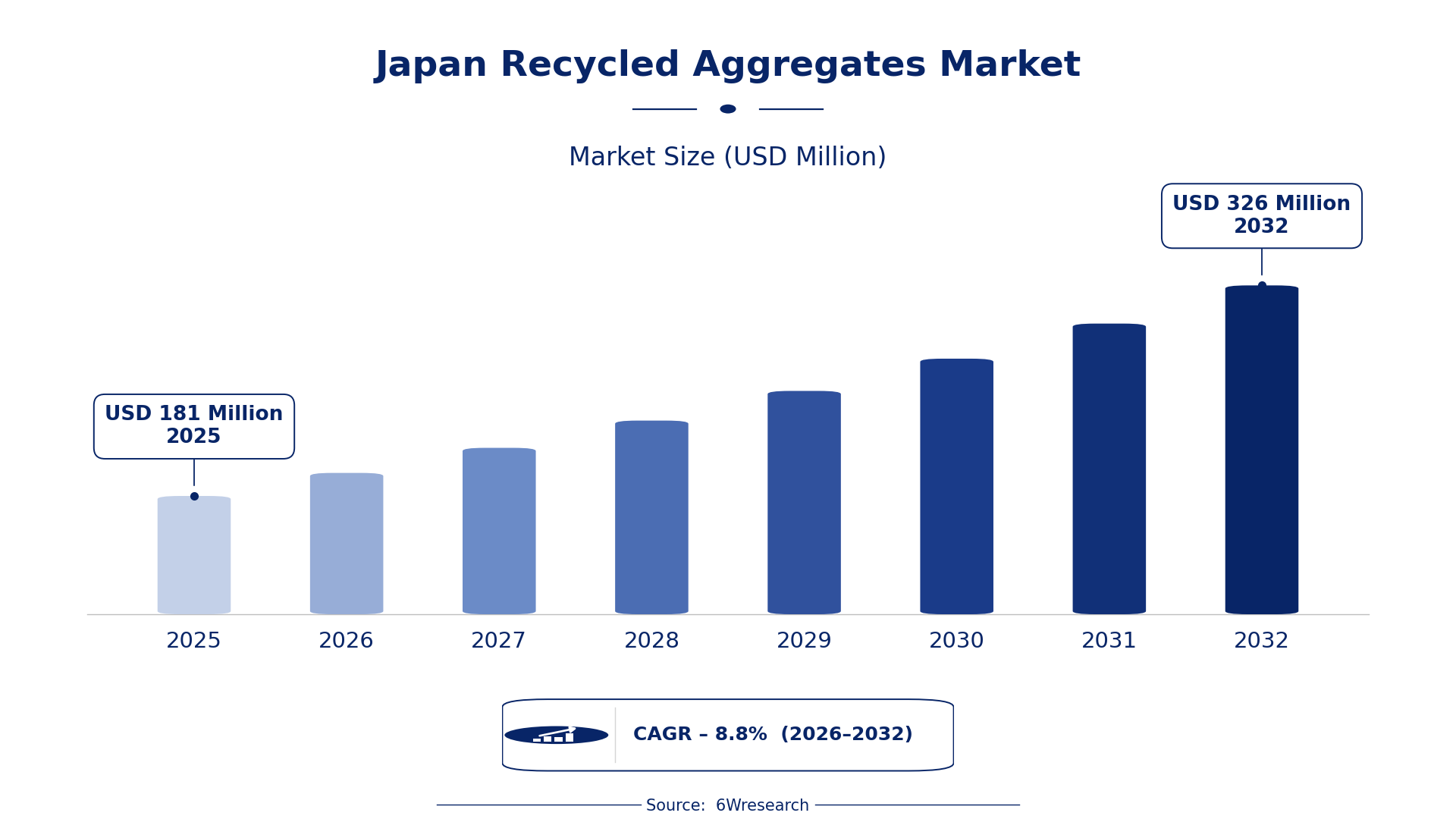
According to 6Wresearch internal database and industry insights, the Japan Recycled Aggregates Market was valued at USD 181 Million in 2025 and is projected to reach USD 326 Million by 2032, growing at a CAGR of approximately 8.8% during 2026–2032.
Japan Recycled Aggregates Market Highlights
| Report Metric | Details |
| Report Name | Japan Recycled Aggregates Market (2026-2032) |
| Market Size 2025 | USD 181 Million |
| Market Size 2032 | USD 326 Million |
| Absolute Growth 2025–2032 | USD 145 Million |
| CAGR 2026–2032 | 8.8% |
| Peak Annual Growth | 9.7% in 2032 |
| Forecast Period | 2026–2032 |
| Historical Data | 2022–2025 |
| Base Year | 2025 |
| Leading Aggregate Type, 2025 | Crushed Concrete (45% share) |
| Leading Source Material, 2025 | Demolition Waste (42% share) |
| Leading Processing Grade, 2025 | Structural/Non-Structural (37% share) |
| Leading End User, 2025 | Construction Firms (45% share) |
| Fastest-Growing Aggregate Type | Recycled Asphalt (12.8% CAGR) |
| Fastest-Growing Source Material | Building Debris (12.2% CAGR) |
| Fastest-Growing Processing Grade | Pavement Mix/Overlay (12.9% CAGR) |
| Fastest-Growing End User | Infrastructure Developers (11.2% CAGR) |
| Growing Sector | Construction |
| Key End Users | Construction Firms, Infrastructure Developers, Road Construction Agencies |
Japan Recycled Aggregates Market Year-wise Growth Rate and Key Drivers (2022–2032)
This graph illustrates the annual growth rates of the market from 2022 to 2032, highlighting a steady upward trajectory and projected market expansion over the forecast period.
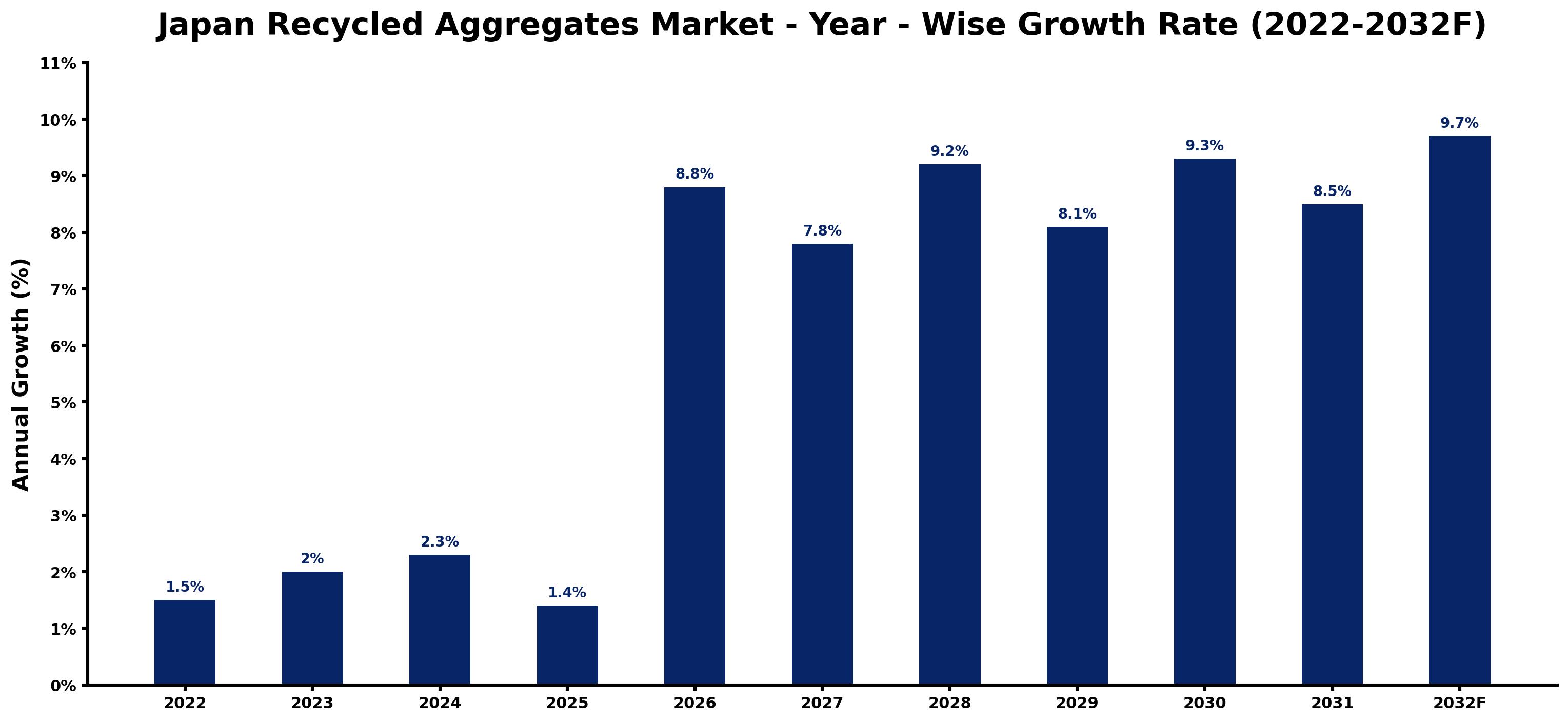
The yearly estimates that follow link every growth rate to its principal driver, so readers can see why the pace changed in each period.
| Year | Estimated Annual Growth (%) | Market Rationale |
| 2022 | 1.5 | The market experienced steady demand from ongoing construction projects. |
| 2023 | 2.0 | Increased adoption of recycled materials in public works boosted growth. |
| 2024 | 2.3 | Infrastructure investments continued to drive higher consumption rates. |
| 2025 | 1.4 | Growth slowed as some projects faced delays in approvals. |
| 2026 | 8.8 | A surge in construction activities is expected to lead to a rise in demand. |
| 2027 | 7.8 | Market expansion will continue but at a slightly reduced pace. |
| 2028 | 9.2 | Growing awareness of sustainability practices will spur further interest. |
| 2029 | 8.1 | Demand will remain strong, although growth will moderate compared to previous years. |
| 2030 | 9.3 | The introduction of new standards will encourage higher recycled aggregate use. |
| 2031 | 8.5 | Market growth will slow as some sectors face capacity constraints. |
| 2032 | 9.7 | A peak in infrastructure projects is expected to drive demand to new heights. |
Note: Market size estimations and growth projections presented in this report are based on 6Wresearch's proprietary forecasting methodology, utilizing the latest available industry data, government publications, and primary research inputs.
Japan Recycled Aggregates Market Synopsis
Recycled aggregates are materials derived from processing construction and demolition waste, produced by crushing concrete, bricks, and asphalt. In 2022, recycled aggregates accounted for 30% of total aggregate consumption in Japan, reflecting strong demand from the construction sector. Factors such as the Waste Management and Public Cleansing Act and increased infrastructure development are driving this growth, particularly in regions like Tokyo and Osaka, where initiatives aim to improve recycling rates and sustainability in construction practices.
Market Dynamics Impact Analysis (2026–2032)
| Factor | Type | Impact | Primary Segment Affected |
| Increased infrastructure projects drive demand for recycled aggregates. | Driver | High | Demolition Waste |
| Growing environmental awareness promotes the use of sustainable materials. | Driver | High | Recycled Asphalt |
| The construction sector's shift towards sustainable practices creates new opportunities. | Opportunity | High | Construction Firms |
| Rising urbanisation demands more sustainable building materials. | Opportunity | High | Infrastructure Developers |
| Limited availability of quality recycled materials constrains market growth. | Restraint | High | Recycled Asphalt |
| Regulatory compliance costs can deter smaller firms from entering the market. | Restraint | Medium | Reclaimed Brick |
| Competition from natural aggregates poses a challenge to market penetration. | Challenge | High | Crushed Concrete |
| Technological advancements in recycling processes are slow to adopt. | Challenge | Medium | Mixed Recycled Fill |
Evaluation of Drivers in Japan Recycled Aggregates Market (2026–2032)
Demand rests on the following drivers, each shown with the segment it touches most.
| Drivers | Primary Segment Affected | Why It Matters (Evidence) |
| Increased infrastructure spending in urban areas boosts demand. | Demolition Waste | In 2023, Japan's construction sector is projected to use 10 million tons of recycled aggregates, driving demand for demolition waste. |
| Consumer preference for sustainable building materials is rising. | Recycled Asphalt | Recycled asphalt is commonly used in 60% of road maintenance projects, reflecting a shift towards eco-friendly options. |
| Government initiatives promote recycling in construction. | Reclaimed Brick | The Waste Management and Public Cleansing Act encourages the use of recycled materials, increasing demand for reclaimed brick. |
| Rising urbanisation increases the need for sustainable aggregates. | Crushed Concrete | Tokyo and Osaka are leading regions for recycled aggregate production, driven by urban development. |
| Technological advancements in recycling processes improve efficiency. | Mixed Recycled Fill | Innovations in recycling technology are improving the quality of mixed recycled fill, attracting more buyers. |
Buyers are adding capacity as urban areas increasingly utilise recycled aggregates. In 2023, Japan's construction sector is projected to use 10 million tons of recycled aggregates, reflecting a rise in demand. Urban areas like Tokyo are experiencing increased infrastructure projects that drive the need for sustainable materials. Recycled asphalt is commonly used in 60% of road maintenance projects, highlighting a shift towards eco-friendly options. Advances in recycling processes are improving the quality of mixed recycled fill, attracting more buyers to this segment.
Evaluation of Restraints in Japan Recycled Aggregates Market
Several factors work against faster growth; the main ones are summarised below.
| Market Restraint | Primary Segment Affected | Why It Matters (Evidence) |
| Limited availability of quality recycled materials affects supply. | Recycled Asphalt | In 2023, 500,000 tons of mixed recycled fill were utilized, indicating potential shortages in quality materials. |
| Regulatory compliance costs can deter smaller firms from entering the market. | Reclaimed Brick | The complexity of compliance with standards like JIS A 5011 can be a barrier for new entrants. |
| Competition from natural aggregates limits market share for recycled products. | Crushed Concrete | Natural aggregates remain cheaper and more readily available, impacting demand for recycled options. |
| Inconsistent quality of recycled materials can affect buyer confidence. | Mixed Recycled Fill | Variability in the quality of recycled fill can lead to hesitance among construction firms. |
| Lack of public awareness about recycled aggregates hampers growth. | Recycled Asphalt | Despite benefits, many buyers remain unaware of the advantages of using recycled asphalt. |
Japan Recycled Aggregates Market Challenges
Construction firms in Tokyo face intense competition for recycled aggregates, which can reduce profit margins by 15% within a year. Regulatory hurdles linked to the Construction Material Recycling Law create complexities that can delay project timelines by up to four weeks for contractors. A shortage of skilled workers in recycling technology diminishes production efficiency, resulting in a 20% decline in output for suppliers. Buyers encounter inconsistent availability of recycled materials, leading to project disruptions and increased costs by 10% as they seek alternative sourcing options.
Trends in the Japan Recycled Aggregates Market
Several trends are reshaping the Japan Recycled Aggregates Market; the most important are set out below.
- Construction Firms Adopting Sustainable Practices: Construction firms are increasingly adopting sustainable practices, with recycled aggregates becoming a preferred choice. In 2023, the Tokyo Metropolitan Government set a target to increase recycled aggregate use by 20% by 2025, reflecting this trend.
- Shift Towards Eco-Friendly Infrastructure Development: The construction industry is shifting towards eco-friendly infrastructure development, utilising more recycled aggregates. The Waste Management and Public Cleansing Act promotes sustainability, aiming for a 20% increase in recycled aggregate use by 2025.
- Urban Areas Leading in Recycled Aggregate Adoption: Urban areas like Tokyo are leading in the adoption of recycled aggregates, driven by stringent regulations and sustainability goals. In 2022, recycled aggregates accounted for 30% of total aggregate consumption in Japan.
- Increased Use of Reclaimed Brick in Landscaping: There is an increased use of reclaimed brick in landscaping projects, particularly in urban areas. Over 15% of landscaping projects in cities now incorporate reclaimed brick, highlighting its growing popularity.
Investment Opportunities in the Japan Recycled Aggregates Market
The following opportunities in the Japan Recycled Aggregates Market pair current demand with a clear way in.
- Infrastructure Developers Seeking Sustainable Solutions: Infrastructure developers are seeking sustainable solutions, with a projected gap of 10 million tons in recycled aggregates by 2025. Collaborating with local recycling facilities can help meet this demand.
- Partnerships with Local Recycling Facilities: Construction firms can benefit from partnerships with local recycling facilities to secure a steady supply of materials. The increasing use of recycled aggregates presents an opportunity for collaboration.
- Investment in Advanced Recycling Technology: Investment in advanced recycling technology is essential, with the market projected to grow. Establishing joint ventures with technology providers can improve processing capabilities.
- Growing Demand from Landscaping Contractors: Landscaping contractors are increasingly interested in using recycled aggregates, particularly reclaimed brick. With over 15% of landscaping projects incorporating this material, suppliers can tap into this market.
Government Initiatives in the Japan Recycled Aggregates Market
The Waste Management and Public Cleansing Act regulates the treatment and disposal of waste, supporting recycling efforts in the construction sector. This law complements the Industrial Standardization Act, which governs product standards for recycled materials, ensuring quality and safety in the market.
The Ministry of the Environment supports recycling initiatives through funding programs that assist construction firms in adopting recycled aggregates. This funding facilitates compliance with the Construction Material Recycling Law, promoting sustainable practices among buyers.
Future Insight of the Japan Recycled Aggregates Market
The development of urban infrastructure projects will drive demand for recycled aggregates by 2032. The Tokyo Metropolitan Government's target to boost recycled aggregate use by 20% will reshape procurement strategies for construction projects. Funding from the Ministry of the Environment will support advancements in recycling processes, improving production efficiency. The introduction of new quality standards will ensure a more reliable supply chain for buyers, building greater confidence in material sourcing.
Market Segmentation Analysis
Japan Recycled Aggregates Market report covers a detailed analysis of the following market segments:
By Aggregate Type – Crushed Concrete Leads, Recycled Asphalt Expected to Grow Fastest
According to Saurav Kr Singh, Senior Research Analyst at 6Wresearch, Crushed Concrete accounted for 45% of the market by aggregate type in 2025. Crushed concrete holds the largest share as it is extensively utilised in road and building construction throughout Japan. Its established presence in major infrastructure projects, especially in urban centres, ensures a steady demand. Recycled Asphalt is set to record the highest CAGR in this split, 12.8% over 2026–2032. Recycled asphalt is witnessing significant growth as it is commonly used in 60% of road maintenance projects, reflecting a shift towards sustainable infrastructure practices. This trend will likely continue as government initiatives support increased recycling efforts. Suppliers should prioritise expanding their recycled asphalt offerings to address the rising demand in road maintenance.
By Source Material – Demolition Waste Leads, Building Debris Expected to Grow Fastest
Demolition Waste held 42% of the Japan Recycled Aggregates Market by source material in 2025. Demolition waste is the primary source for recycled aggregates, providing a substantial volume of materials for processing. Its consistent availability from ongoing construction and demolition activities ensures a reliable supply chain for the market. The quickest growth will come from Building Debris, forecast to expand at a CAGR of 12.2% between 2026 and 2032. Building debris is rapidly gaining traction as a key source due to its notable contribution to recycled aggregate supply, particularly in urban redevelopment initiatives. The growing focus on sustainability in construction further accelerates this trend. Buyers should explore sourcing building debris to leverage its increasing availability and promote sustainable construction practices.
By Processing Grade – Structural/Non-Structural Leads, Pavement Mix/Overlay Expected to Grow Fastest
The largest processing grade category in 2025 was Structural/Non-Structural, at 37% of revenue. Structural/non-structural aggregates dominate the market as they are widely used in various construction applications, essential for both new developments and renovations. Their adaptability appeals to construction firms across Japan, ensuring consistent demand. Over 2026–2032, Pavement Mix/Overlay is expected to post the fastest growth, at a CAGR of 12.9%. Pavement mix/overlay is experiencing rapid growth, primarily due to its direct application in road construction and maintenance, which is crucial for infrastructure development. The surge in road projects is anticipated to further enhance this segment's growth. Suppliers need to ensure they can meet the rising demand for pavement mix/overlay in line with the increasing number of infrastructure projects.
By End User – Construction Firms Lead, Infrastructure Developers Expected to Grow Fastest
With 45% of end user revenue in 2025, Construction Firms was the largest category. Construction firms are the primary consumers of recycled aggregates, using them extensively in various building projects. Their steady demand is reinforced by government policies that encourage the use of recycled materials. Infrastructure Developers are projected to grow fastest, at a CAGR of 11.2% during 2026–2032. Infrastructure developers represent the fastest-growing end user group, as they increasingly incorporate recycled aggregates in large-scale projects to achieve sustainability objectives. This trend is likely to persist as urban infrastructure expands. Suppliers should target infrastructure developers to tap into the growing market for recycled aggregates in large projects.
Key Attractiveness of the Report
- 10 Years of Market Numbers
- Historical Data Starting from 2022 to 2025
- Base Year 2025
- Forecast Data until 2032
- Key Performance Indicators Impacting the Market
- Major Upcoming Developments and Projects
Key Highlights of the Report:
- Japan Recycled Aggregates Market Outlook
- Market Size of Japan Recycled Aggregates Market, 2025
- Forecast of Japan Recycled Aggregates Market, 2032
- Historical Data and Forecast of Japan Recycled Aggregates Revenues & Volume for the Period 2022-2032F
- Japan Recycled Aggregates Market Trend Evolution
- Japan Recycled Aggregates Market Drivers and Challenges
- Japan Recycled Aggregates Price Trends
- Japan Recycled Aggregates Porter's Five Forces
- Japan Recycled Aggregates Industry Life Cycle
- Historical Data and Forecast of Japan Recycled Aggregates Market Revenues & Volume By Aggregate Type for the Period 2022-2032F
- Historical Data and Forecast of Japan Recycled Aggregates Market Revenues & Volume By Crushed Concrete for the Period 2022-2032F
- Historical Data and Forecast of Japan Recycled Aggregates Market Revenues & Volume By Reclaimed Brick for the Period 2022-2032F
- Historical Data and Forecast of Japan Recycled Aggregates Market Revenues & Volume By Recycled Asphalt for the Period 2022-2032F
- Historical Data and Forecast of Japan Recycled Aggregates Market Revenues & Volume By Mixed Recycled Fill for the Period 2022-2032F
- Historical Data and Forecast of Japan Recycled Aggregates Market Revenues & Volume By Source Material for the Period 2022-2032F
- Historical Data and Forecast of Japan Recycled Aggregates Market Revenues & Volume By Demolition Waste for the Period 2022-2032F
- Historical Data and Forecast of Japan Recycled Aggregates Market Revenues & Volume By Building Debris for the Period 2022-2032F
- Historical Data and Forecast of Japan Recycled Aggregates Market Revenues & Volume By Roadmillings for the Period 2022-2032F
- Historical Data and Forecast of Japan Recycled Aggregates Market Revenues & Volume By Mixed Waste for the Period 2022-2032F
- Historical Data and Forecast of Japan Recycled Aggregates Market Revenues & Volume By Processing Grade for the Period 2022-2032F
- Historical Data and Forecast of Japan Recycled Aggregates Market Revenues & Volume By Structural/Non-Structural for the Period 2022-2032F
- Historical Data and Forecast of Japan Recycled Aggregates Market Revenues & Volume By Coarse/Fine Aggregate for the Period 2022-2032F
- Historical Data and Forecast of Japan Recycled Aggregates Market Revenues & Volume By Pavement Mix/Overlay for the Period 2022-2032F
- Historical Data and Forecast of Japan Recycled Aggregates Market Revenues & Volume By Utility/Backfill for the Period 2022-2032F
- Historical Data and Forecast of Japan Recycled Aggregates Market Revenues & Volume By End User for the Period 2022-2032F
- Historical Data and Forecast of Japan Recycled Aggregates Market Revenues & Volume By Construction Firms for the Period 2022-2032F
- Historical Data and Forecast of Japan Recycled Aggregates Market Revenues & Volume By Landscaping Contractors for the Period 2022-2032F
- Historical Data and Forecast of Japan Recycled Aggregates Market Revenues & Volume By Road Construction Agencies for the Period 2022-2032F
- Historical Data and Forecast of Japan Recycled Aggregates Market Revenues & Volume By Infrastructure Developers for the Period 2022-2032F
- Japan Recycled Aggregates Import Export Trade Statistics
- Market Opportunity Assessment By Aggregate Type
- Market Opportunity Assessment By Source Material
- Market Opportunity Assessment By Processing Grade
- Market Opportunity Assessment By End User
- Japan Recycled Aggregates Top Companies Market Share
- Japan Recycled Aggregates Competitive Benchmarking By Technical and Operational Parameters
- Japan Recycled Aggregates Company Profiles
- Japan Recycled Aggregates Key Strategic Recommendations
Market Covered
Segments analysed in this report are listed below.
By Aggregate Type
- Crushed Concrete
- Reclaimed Brick
- Recycled Asphalt
- Mixed Recycled Fill
By Source Material
- Demolition Waste
- Building Debris
- Roadmillings
- Mixed Waste
By Processing Grade
- Structural/Non-Structural
- Coarse/Fine Aggregate
- Pavement Mix/Overlay
- Utility/Backfill
By End User
- Construction Firms
- Landscaping Contractors
- Road Construction Agencies
- Infrastructure Developers































