Japan Retirement Housing Market Size & Growth Rate
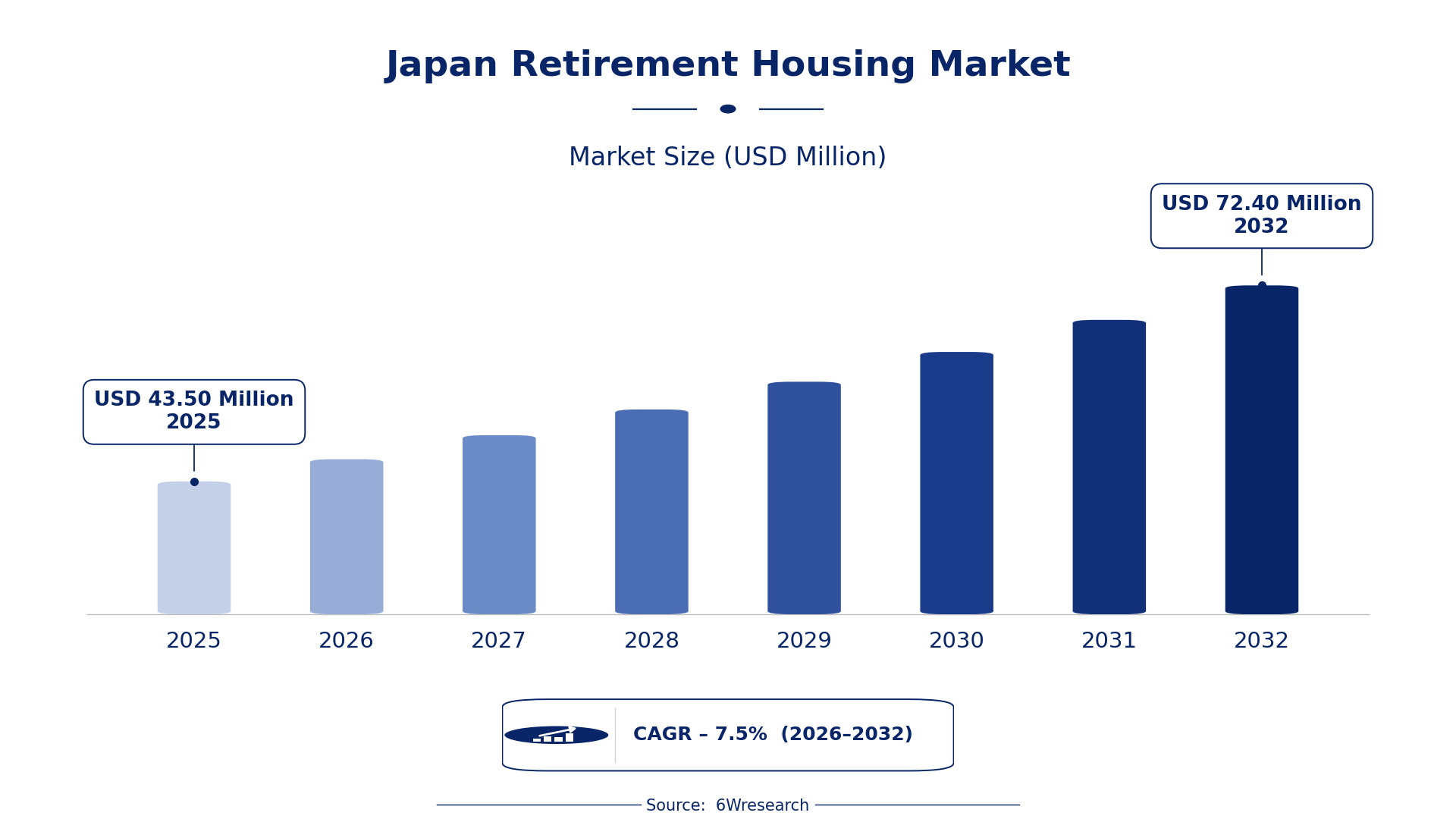
According to 6Wresearch internal database and industry insights, the Japan Retirement Housing Market was valued at USD 43.50 Million in 2025 and is projected to reach USD 72.40 Million by 2032, growing at a CAGR of approximately 7.5% during 2026–2032.
Japan Retirement Housing Market Highlights
| Report Metric | Details |
| Report Name | Japan Retirement Housing Market (2026-2032) |
| Market Size 2025 | USD 43.50 Million |
| Market Size 2032 | USD 72.40 Million |
| Absolute Growth 2025–2032 | USD 28.90 Million |
| CAGR 2026–2032 | 7.5% |
| Peak Annual Growth | 8.4% in 2028 |
| Forecast Period | 2026–2032 |
| Historical Data | 2022–2025 |
| Base Year | 2025 |
| Leading Housing Type, 2025 | Condominium-Style Units (42% share) |
| Leading Ownership Model, 2025 | Private Ownership (41% share) |
| Leading Facility Style, 2025 | Multistory Communities (46% share) |
| Leading End User, 2025 | Affluent Retirees (40% share) |
| Fastest-Growing Housing Type | Cooperative Housing (10.4% CAGR) |
| Fastest-Growing Ownership Model | Resident-Owned (9.5% CAGR) |
| Fastest-Growing Facility Style | Shared Amenities (9.7% CAGR) |
| Fastest-Growing End User | Community-Oriented Seniors (9.6% CAGR) |
| Growing Sector | Senior Living |
| Key End Users | Affluent Retirees, Low-Income Seniors, Community-Oriented Seniors |
Japan Retirement Housing Market Year-wise Growth Rate and Key Drivers (2022–2032)
This graph illustrates the annual growth rates of the market from 2022 to 2032, highlighting a steady upward trajectory and projected market expansion over the forecast period.
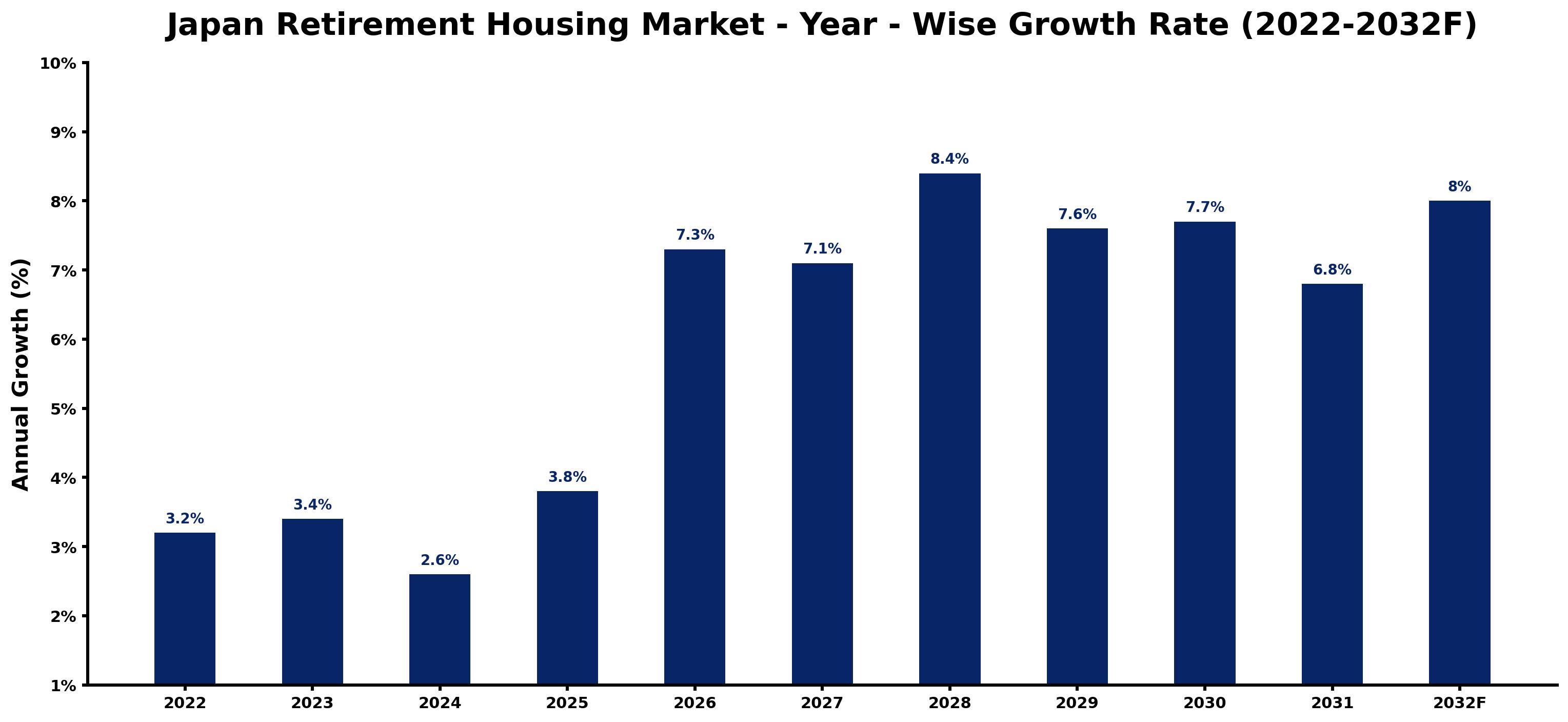
The table below sets out the estimated growth rate for each year and the main factor behind it.
| Year | Estimated Annual Growth (%) | Market Rationale |
| 2022 | 3.2 | The market experienced steady growth, reflecting ongoing demand for retirement housing. |
| 2023 | 3.4 | Growth accelerated as more affluent retirees sought quality living arrangements. |
| 2024 | 2.6 | A slight slowdown occurred as market adjustments took place amid rising costs. |
| 2025 | 3.8 | Growth rebounded as new facilities opened, catering to the aging population. |
| 2026 | 7.3 | Demand is expected to surge due to increased investments in senior living options. |
| 2027 | 7.1 | A minor slowdown is projected as market conditions stabilise post-peak. |
| 2028 | 8.4 | Growth is expected to peak as attractive housing solutions attract more buyers. |
| 2029 | 7.6 | A slowdown is anticipated as the market adjusts to the previous year's peak. |
| 2030 | 7.7 | Growth is projected to resume as new developments meet rising demand for retirement housing. |
| 2031 | 6.8 | A slight slowdown is expected as the market stabilises after rapid expansion. |
| 2032 | 8.0 | Growth will accelerate again as the government increases housing unit targets. |
Note: Market size estimations and growth projections presented in this report are based on 6Wresearch's proprietary forecasting methodology, utilizing the latest available industry data, government publications, and primary research inputs.
Japan Retirement Housing Market Synopsis
Retirement housing in Japan includes a range of living arrangements for seniors, such as condominiums and cooperatives designed with accessibility and community in mind. The Tokyo metropolitan area features a high concentration of these facilities, reflecting the increasing demand. The market is growing due to Japan's aging population, which is projected to reach 36 million elderly individuals by 2040, along with rising investments in senior living options and supportive government initiatives that improve accessibility for seniors.
Market Dynamics Impact Analysis (2026–2032)
| Factor | Type | Impact | Primary Segment Affected |
| Aging population driving demand for senior living options | Driver | High | Cooperative Housing |
| Investment in new retirement facilities increasing | Driver | High | Condominium-Style Units |
| Growth in community-oriented living arrangements | Opportunity | Medium | Community-Oriented Seniors |
| Rising demand for affordable housing solutions | Opportunity | Medium | Subsidized Housing |
| High construction costs affecting new developments | Restraint | High | Rental |
| Limited availability of land in urban areas | Restraint | High | Multistory Communities |
| Regulatory compliance costs for new facilities | Challenge | Medium | Private Ownership |
| Shortage of skilled labour in construction | Challenge | Medium | Cooperative Housing |
Evaluation of Drivers in Japan Retirement Housing Market (2026–2032)
The factors lifting demand, and the evidence behind each, are summarised below.
| Drivers | Primary Segment Affected | Why It Matters (Evidence) |
| Increased elderly population | Cooperative Housing | Japan's elderly population is projected to reach 36 million by 2040, driving demand for community living arrangements. |
| Rising investments in senior living facilities | Condominium-Style Units | Affluent retirees are seeking condominiums with luxury amenities, prompting developers to invest more in this segment. |
| Government support for affordable housing | Subsidized Housing | Subsidized housing programs assist over 200,000 low-income seniors annually, creating demand for affordable options. |
| Growing interest in shared amenities | Shared Amenities | Shared amenities are a key feature in 70% of new retirement housing developments, promoting social interaction among residents. |
| Popularity of flexible lease options | Flexible Lease Housing | Flexible lease housing options have increased by 15% since 2020, catering to seniors seeking short-term arrangements. |
Behind the steady rise in orders sits Japan's growing elderly population, which increases the need for retirement housing. The rising interest in community-oriented living arrangements drives demand for condominiums with luxury amenities. Support for affordable housing options, benefiting low-income seniors, further stimulates the market. The popularity of shared amenities in new developments promotes social interaction, appealing to potential residents. Recent growth in flexible lease options caters to seniors who prefer short-term arrangements, reflecting changing preferences in the market.
Evaluation of Restraints in Japan Retirement Housing Market
The main factors holding the market back are set out below.
| Market Restraint | Primary Segment Affected | Why It Matters (Evidence) |
| High construction costs affecting new developments | Rental | Construction costs have risen by 10% over the past year, making it challenging for developers to offer affordable rental options. |
| Limited availability of land in urban areas | Multistory Communities | Urban land scarcity restricts the development of new multistory communities, limiting housing options for seniors. |
| Regulatory compliance costs for new facilities | Private Ownership | Compliance with stringent regulations increases operational costs for privately owned retirement housing, raising prices for residents. |
| Shortage of skilled labour in construction | Cooperative Housing | A lack of skilled labour in the construction sector delays project timelines and increases costs, impacting housing availability. |
| Market saturation in certain regions | Condominium-Style Units | Saturation in popular urban areas leads to increased competition and potential price pressures, affecting profitability. |
Japan Retirement Housing Market Challenges
Japan's growing elderly population creates a pressing need for retirement housing, yet a shortage of skilled labour delays construction projects, leading to longer wait times for developers. Regulatory complexities impede the approval of new facilities, resulting in potential revenue losses for investors and extended timelines. Rising construction costs, driven by material price increases, push rental prices higher, with average monthly rents reaching approximately 150,000 yen, which burdens residents. Intense competition among urban facilities compels providers to invest in luxury amenities, straining budgets and limiting options for cost-sensitive seniors.
Trends in the Japan Retirement Housing Market
Four trends stand out in the Japan Retirement Housing Market.
- Shift towards Community-Oriented Living: The Tokyo metropolitan area is seeing a shift towards community-oriented living, with 30% of the retirement housing market comprising community-focused seniors. This trend reflects a growing preference for social engagement among retirees.
- Rising Popularity of Flexible Lease Options: Flexible lease housing options have risen by 15% since 2020, appealing to seniors seeking short-term arrangements. This trend allows relocating elderly individuals to adapt more easily to changing circumstances.
- Growth in Shared Amenities: Shared amenities are becoming standard in 70% of new retirement housing developments, promoting social interaction among residents. This trend indicates a shift towards more communal living environments.
- Expansion of Subsidized Housing Programs: Subsidized housing programs support over 200,000 low-income seniors annually, ensuring access to affordable living options. This expansion addresses the increasing need for affordable retirement housing.
Investment Opportunities in the Japan Retirement Housing Market
Where to invest in the Japan Retirement Housing Market: the main openings are set out below.
- Partner with Local Developers: Local developers are looking for partnerships to expand retirement housing options, particularly in urban areas. With the elderly population projected to reach 36 million by 2040, there is a strong demand for new facilities.
- Invest in Affordable Housing Solutions: The government plans to increase retirement housing units by 50,000 by 2025, creating investment opportunities in affordable housing. This initiative targets low-income seniors, ensuring accessibility.
- Supply Shared Amenities: The trend towards shared amenities in retirement housing offers an opportunity for suppliers to provide communal facilities. With 70% of new developments featuring these amenities, there is a growing market for related services.
- Focus on Flexible Lease Housing: With flexible lease housing options increasing by 15% since 2020, suppliers can meet the needs of relocating elderly individuals. This approach allows for short-term arrangements that appeal to seniors.
Government Initiatives in the Japan Retirement Housing Market
The Long-Term Care Insurance Act, in effect since 2000, funds nursing care and support services for older individuals, directly benefiting retirement housing providers. Additionally, the Building Energy Efficiency Act mandates energy standards for new buildings, ensuring that retirement housing meets modern efficiency requirements and improves living conditions for seniors.
The Ministry of Health, Labour and Welfare oversees funding for nursing care and support services, improving the quality of retirement housing. The Tokyo Metropolitan Government also provides subsidies for low-income senior housing, helping to ensure accessibility for vulnerable populations.
Future Insight of the Japan Retirement Housing Market
Investment in retirement housing will rise by 2032, driven by government initiatives aiming to add 50,000 units by 2025 and the need to accommodate an aging population. This demand will lead suppliers to adopt ISO 9001 standards, ensuring quality and safety in facilities. New community designs will prioritise shared amenities, encouraging social interaction among residents. As rental models account for 40% of the market, the expansion of flexible leasing options will address varying financial needs and preferences.
Market Segmentation Analysis
Japan Retirement Housing Market report covers a detailed analysis of the following market segments:
By Housing Type – Condominium-Style Units Lead, Cooperative Housing Expected to Grow Fastest
According to Saurav Kr Singh, Senior Research Analyst at 6Wresearch, the largest housing type category in 2025 was Condominium-Style Units, at 42% of revenue. Condominium-style units are a preferred choice for affluent retirees in Japan, providing a desirable mix of independence and luxury. The high concentration of these units in the Tokyo metropolitan area illustrates the demand for upscale living arrangements tailored to seniors. The quickest growth will come from Cooperative Housing, forecast to expand at a CAGR of 10.4% between 2026 and 2032. Cooperative housing has gained traction, with a 10% increase in popularity since 2021, primarily due to its emphasis on community living among seniors. This model resonates with elderly individuals seeking social connections and support within their living environment. Suppliers should focus on developing community-oriented features to attract the growing number of seniors seeking such living arrangements.
By Ownership Model – Private Ownership Leads, Resident-Owned Expected to Grow Fastest
With 41% of ownership model revenue in 2025, Private Ownership was the largest category. Private ownership is dominant as it allows affluent retirees to invest in their living spaces, ensuring both security and autonomy. This model is particularly appealing in urban areas where property values are significantly high, attracting buyers looking for long-term stability. Resident-Owned is projected to grow fastest, at a CAGR of 9.5% during 2026–2032. The resident-owned model is witnessing rapid growth, promoting community engagement and fostering a sense of belonging among seniors. This trend reflects a shift towards collaborative living arrangements that enhance social ties and interactions. Buyers may increasingly prefer ownership models that facilitate community participation, prompting suppliers to adapt their offerings to meet this demand.
By Facility Style – Multistory Communities Lead, Shared Amenities Expected to Grow Fastest
Multistory Communities took 46% of facility style revenue in 2025, more than any other category. Multistory communities are prevalent in urban settings, accommodating a large number of residents while providing essential services tailored for seniors. Their design caters effectively to the needs of affluent retirees who value convenience and opportunities for social interaction. Shared Amenities are set to record the highest CAGR in this split, 9.7% over 2026–2032. The increasing popularity of shared amenities significantly enhances social interaction among residents, reflecting a growing preference for communal living spaces. This trend indicates that residents are seeking environments that facilitate engagement and connection with others. Suppliers should incorporate shared amenities into their developments to align with the preferences of contemporary residents.
By End User – Affluent Retirees Lead, Community-Oriented Seniors Expected to Grow Fastest
In 2025, Affluent Retirees led the end user split with a 40% share. Affluent retirees constitute the largest segment of the retirement housing market, actively seeking high-quality housing options that reflect their lifestyle. Their demand drives the construction of luxury facilities tailored to their preferences. Over 2026–2032, Community-Oriented Seniors are expected to post the fastest growth, at a CAGR of 9.6%. Community-oriented seniors are emerging as a fast-growing segment, focusing on social engagement and support within their living environments. This trend highlights the importance of community in the retirement housing sector. Providers should tailor their services to cater to the social needs of seniors, ensuring a supportive living environment.
Key Attractiveness of the Report
- 10 Years of Market Numbers
- Historical Data Starting from 2022 to 2025
- Base Year 2025
- Forecast Data until 2032
- Key Performance Indicators Impacting the Market
- Major Upcoming Developments and Projects
Key Highlights of the Report:
- Japan Retirement Housing Market Outlook
- Market Size of Japan Retirement Housing Market, 2025
- Forecast of Japan Retirement Housing Market, 2032
- Historical Data and Forecast of Japan Retirement Housing Revenues & Volume for the Period 2022-2032F
- Japan Retirement Housing Market Trend Evolution
- Japan Retirement Housing Market Drivers and Challenges
- Japan Retirement Housing Price Trends
- Japan Retirement Housing Porter's Five Forces
- Japan Retirement Housing Industry Life Cycle
- Historical Data and Forecast of Japan Retirement Housing Market Revenues & Volume By Housing Type for the Period 2022-2032F
- Historical Data and Forecast of Japan Retirement Housing Market Revenues & Volume By Condominium-Style Units for the Period 2022-2032F
- Historical Data and Forecast of Japan Retirement Housing Market Revenues & Volume By Cooperative Housing for the Period 2022-2032F
- Historical Data and Forecast of Japan Retirement Housing Market Revenues & Volume By Subsidized Housing for the Period 2022-2032F
- Historical Data and Forecast of Japan Retirement Housing Market Revenues & Volume By Flexible Lease Housing for the Period 2022-2032F
- Historical Data and Forecast of Japan Retirement Housing Market Revenues & Volume By Ownership Model for the Period 2022-2032F
- Historical Data and Forecast of Japan Retirement Housing Market Revenues & Volume By Private Ownership for the Period 2022-2032F
- Historical Data and Forecast of Japan Retirement Housing Market Revenues & Volume By Resident-Owned for the Period 2022-2032F
- Historical Data and Forecast of Japan Retirement Housing Market Revenues & Volume By Public / Non-Profit for the Period 2022-2032F
- Historical Data and Forecast of Japan Retirement Housing Market Revenues & Volume By Rental for the Period 2022-2032F
- Historical Data and Forecast of Japan Retirement Housing Market Revenues & Volume By Facility Style for the Period 2022-2032F
- Historical Data and Forecast of Japan Retirement Housing Market Revenues & Volume By Multistory Communities for the Period 2022-2032F
- Historical Data and Forecast of Japan Retirement Housing Market Revenues & Volume By Shared Amenities for the Period 2022-2032F
- Historical Data and Forecast of Japan Retirement Housing Market Revenues & Volume By Low-Income Style for the Period 2022-2032F
- Historical Data and Forecast of Japan Retirement Housing Market Revenues & Volume By Clustered Apartments for the Period 2022-2032F
- Historical Data and Forecast of Japan Retirement Housing Market Revenues & Volume By End User for the Period 2022-2032F
- Historical Data and Forecast of Japan Retirement Housing Market Revenues & Volume By Affluent Retirees for the Period 2022-2032F
- Historical Data and Forecast of Japan Retirement Housing Market Revenues & Volume By Community-Oriented Seniors for the Period 2022-2032F
- Historical Data and Forecast of Japan Retirement Housing Market Revenues & Volume By Low-Income Seniors for the Period 2022-2032F
- Historical Data and Forecast of Japan Retirement Housing Market Revenues & Volume By Relocating Elderly for the Period 2022-2032F
- Japan Retirement Housing Import Export Trade Statistics
- Market Opportunity Assessment By Housing Type
- Market Opportunity Assessment By Ownership Model
- Market Opportunity Assessment By Facility Style
- Market Opportunity Assessment By End User
- Japan Retirement Housing Top Companies Market Share
- Japan Retirement Housing Competitive Benchmarking By Technical and Operational Parameters
- Japan Retirement Housing Company Profiles
- Japan Retirement Housing Key Strategic Recommendations
Market Covered
The study includes the following segmentation.
By Housing Type
- Condominium-Style Units
- Cooperative Housing
- Subsidized Housing
- Flexible Lease Housing
By Ownership Model
- Private Ownership
- Resident-Owned
- Public / Non-Profit
- Rental
By Facility Style
- Multistory Communities
- Shared Amenities
- Low-Income Style
- Clustered Apartments
By End User
- Affluent Retirees
- Community-Oriented Seniors
- Low-Income Seniors
- Relocating Elderly































