Japan Sample Collection Market Size & Growth Rate
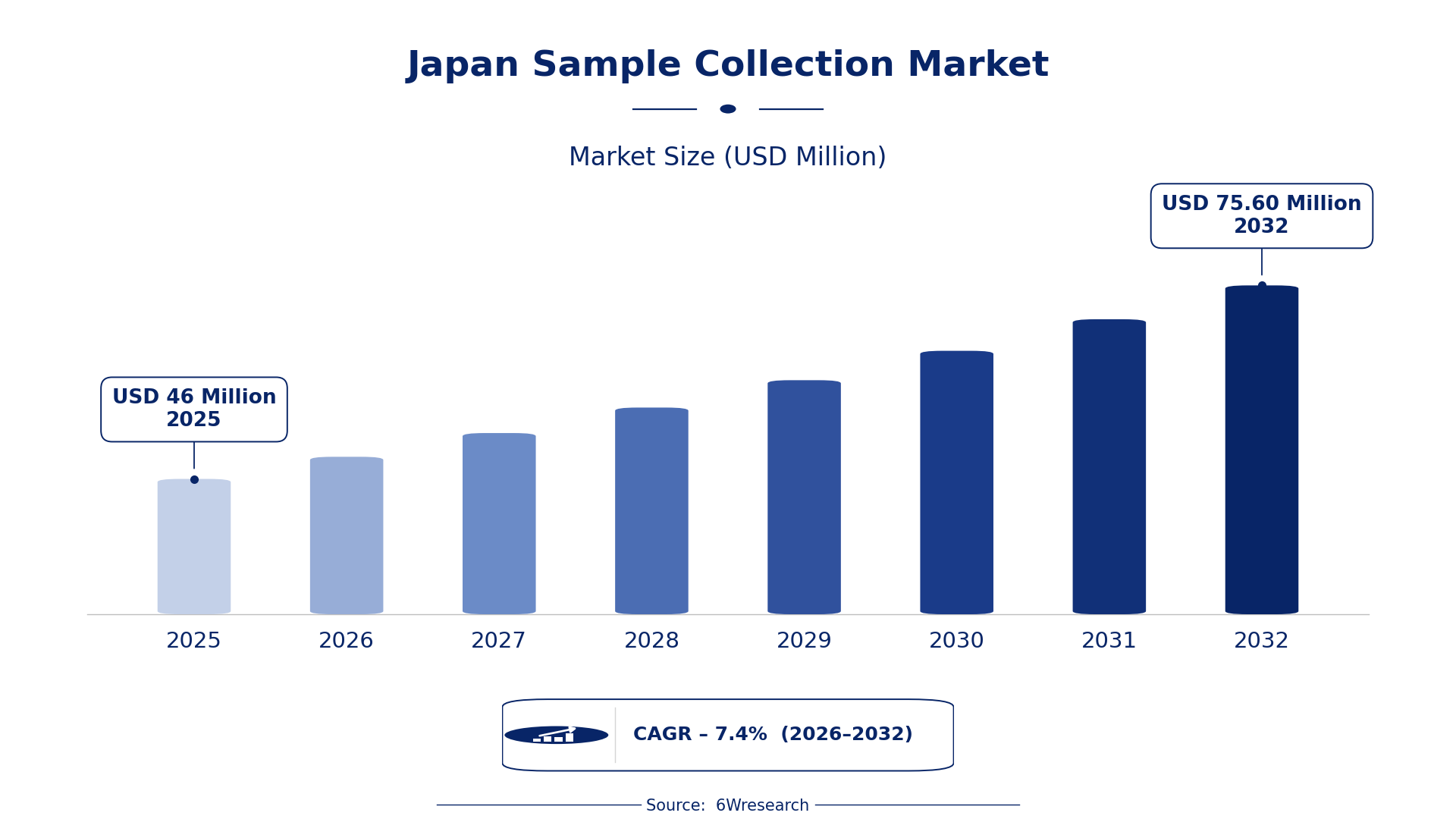
According to 6Wresearch internal database and industry insights, the Japan Sample Collection Market was valued at USD 46 Million in 2025 and is projected to reach USD 75.60 Million by 2032, growing at a CAGR of approximately 7.4% during 2026–2032.
Japan Sample Collection Market Highlights
| Report Metric | Details |
| Report Name | Japan Sample Collection Market (2026-2032) |
| Market Size 2025 | USD 46 Million |
| Market Size 2032 | USD 75.60 Million |
| Absolute Growth 2025–2032 | USD 29.60 Million |
| CAGR 2026–2032 | 7.4% |
| Peak Annual Growth | 8.7% in 2028 |
| Forecast Period | 2026–2032 |
| Historical Data | 2022–2025 |
| Base Year | 2025 |
| Leading Sample Type, 2025 | Blood (55% share) |
| Leading Method, 2025 | Automated (57% share) |
| Leading Application, 2025 | Diagnostics (67% share) |
| Leading End Users, 2025 | Hospital (45% share) |
| Fastest-Growing Sample Type | Urine (10.2% CAGR) |
| Fastest-Growing Application | Treatment (9.6% CAGR) |
| Fastest-Growing End Users | Diagnostics Centers (9.4% CAGR) |
| Growing Sector | Healthcare |
| Key End Users | Hospitals, Diagnostic Centers, Blood Banks |
Japan Sample Collection Market Year-wise Growth Rate and Key Drivers (2022–2032)
This graph illustrates the annual growth rates of the market from 2022 to 2032, highlighting a steady upward trajectory and projected market expansion over the forecast period.
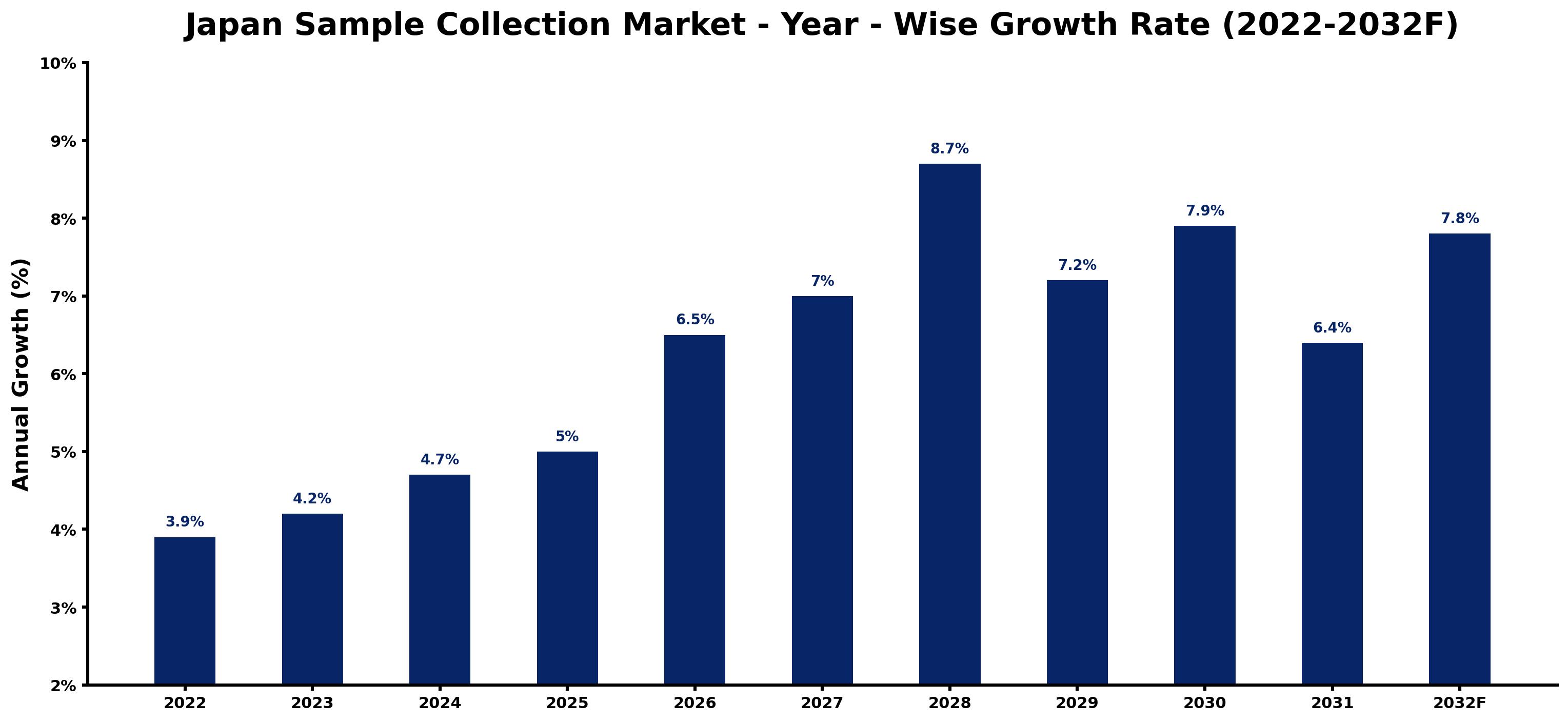
Below, each year's estimated growth is shown next to the factor that most influenced it.
| Year | Estimated Annual Growth (%) | Market Rationale |
| 2022 | 3.9 | The market experienced steady growth due to high patient footfall in hospitals. |
| 2023 | 4.2 | Growth accelerated as automated sample collection methods gained popularity. |
| 2024 | 4.7 | Demand continued to rise with increased health awareness among the population. |
| 2025 | 5.0 | The market peaked historically as hospitals expanded their sample collection services. |
| 2026 | 6.5 | Growth is expected to strengthen as urban hospitals adopt more automated techniques. |
| 2027 | 7.0 | The rising number of diagnostic centers is projected to contribute to higher demand. |
| 2028 | 8.7 | The market is expected to reach its peak growth rate, driven by national health initiatives. |
| 2029 | 7.2 | Growth is projected to slow slightly as market conditions stabilise after peak demand. |
| 2030 | 7.9 | Demand is expected to increase again as technological advancements in diagnostics emerge. |
| 2031 | 6.4 | Growth will moderate as market maturity sets in, but demand will remain strong. |
| 2032 | 7.8 | The market will continue to grow, supported by ongoing health initiatives. |
Note: Market size estimations and growth projections presented in this report are based on 6Wresearch's proprietary forecasting methodology, utilizing the latest available industry data, government publications, and primary research inputs.
Japan Sample Collection Market Synopsis
Sample collection involves gathering biological specimens for analysis, primarily in healthcare settings. Various methods, particularly automated techniques, are increasingly preferred for their efficiency. The Japan Sample Collection Market is expanding due to rising health awareness, the increasing number of diagnostic centers, and the adoption of automated methods. With over 8,000 hospitals and a population of around 125 million, demand for sample collection is further driven by national health initiatives aimed at improving diagnostic testing. In 2023, the government allocated ¥5 billion for health technology improvements, boosting the overall capacity of the healthcare system.
Market Dynamics Impact Analysis (2026–2032)
| Factor | Type | Impact | Primary Segment Affected |
| Growing adoption of automated sample collection methods | Driver | High | Automated |
| Increasing number of diagnostic centers | Driver | High | Diagnostics Centers |
| Expansion of hospitals offering sample collection services | Opportunity | High | Hospital |
| Rising health awareness among the population | Opportunity | High | Blood |
| Regulatory compliance costs for sample collection | Restraint | Medium | Blood |
| Limited manual sample collection methods | Restraint | Medium | Manual |
| High costs of implementing automated systems | Challenge | High | Automated |
| Competition from emerging diagnostic technologies | Challenge | Medium | Diagnostics |
Evaluation of Drivers in Japan Sample Collection Market (2026–2032)
The main growth drivers and the segments they affect most are set out below.
| Drivers | Primary Segment Affected | Why It Matters (Evidence) |
| Increased patient visits to hospitals | Hospital | Over 10 million patients visit hospitals annually for sample collection, driving demand. |
| Growing number of diagnostic centers | Diagnostics Centers | Approximately 1,500 diagnostic centers in Japan are expanding sample collection services. |
| Adoption of automated collection methods | Automated | Urban hospitals are increasingly adopting automated sample collection techniques for efficiency. |
| Health initiatives promoting diagnostic testing | Blood | The national health initiative launched in 2023 aims to improve diagnostic testing. |
| Rising population contributing to healthcare demand | Urine | With a population of around 125 million, demand for urine tests remains high. |
Much of the new demand traces back to the increasing number of diagnostic centers, which total around 1,500 nationwide. The average number of patients visiting hospitals for sample collection exceeds 10 million annually, driving higher demand for services. Urban hospitals are adopting automated sample collection methods, improving efficiency and accuracy. The growing population of Japan, approximately 125 million, continues to contribute to the rising need for various sample types, particularly urine tests for routine health check-ups.
Evaluation of Restraints in Japan Sample Collection Market
These restraints slow adoption and weigh on supplier margins.
| Market Restraint | Primary Segment Affected | Why It Matters (Evidence) |
| Regulatory compliance costs for sample collection practices | Blood | Compliance with JIS standards increases operational costs for blood collection facilities. |
| Limited use of manual sample collection methods | Manual | The shift towards automation reduces the demand for manual collection techniques. |
| High initial costs for automated systems | Automated | High initial costs deter some facilities from implementing automated sample collection. |
| Competition from emerging diagnostic technologies | Diagnostics | New technologies may divert funding away from traditional sample collection methods. |
| Training costs for new automated systems | Urine | Facilities face additional costs in training staff to operate automated systems. |
Japan Sample Collection Market Challenges
High patient volumes create pressure on sample collection services, resulting in longer wait times for hospitals needing timely diagnostics. In 2022, over 10 million patients sought sample collection, which can delay results by several days for healthcare providers. Complex compliance with JIS standards raises operational costs for diagnostic centers, potentially increasing service fees by up to 15%. Regulatory oversight from the Ministry of Health, Labour and Welfare can slow the adoption of new technologies, delaying improvements that could streamline supply chains for clinics and hospitals.
Trends in the Japan Sample Collection Market
Several trends are reshaping the Japan Sample Collection Market; the most important are set out below.
- Shift Towards Automated Sample Collection: Urban hospitals in Japan are increasingly adopting automated sample collection methods, improving efficiency. In 2023, over 50% of hospitals reported using automated techniques, reflecting a notable change in practice.
- Expansion of Diagnostic Centers: The number of diagnostic centers in Japan is growing, with approximately 1,500 facilities now operational. This expansion supports increased sample collection and analysis capabilities across the country.
- Increased Health Awareness: Health awareness among the Japanese population is rising, leading to more routine health check-ups. In 2023, over 10 million patients visited hospitals for sample collection, indicating a shift in health-seeking behaviour.
- Emphasis on Quality Standards: JIS and ISO 15189 standards are increasingly prioritised in sample collection practices. Compliance with these standards ensures quality and reliability in diagnostic testing across healthcare facilities.
Investment Opportunities in the Japan Sample Collection Market
The opportunities below stand out in the Japan Sample Collection Market for new entrants and existing suppliers.
- Growing Demand for Automated Solutions: With the rising adoption of automated sample collection methods, hospitals are seeking efficient solutions. The government allocated ¥5 billion for health technology improvements in 2023, creating investment opportunities.
- Expansion of Hospital Services: Hospitals are expanding their sample collection services to meet rising demand. This trend presents opportunities for suppliers of diagnostic equipment and testing services.
- Investment in Diagnostic Centers: The increasing number of diagnostic centers offers investment opportunities in medical equipment and technology. Collaborating with local healthcare providers can facilitate market entry.
- Focus on Routine Health Check-ups: The emphasis on routine health check-ups is driving demand for sample collection. Suppliers can target hospitals and clinics to meet this growing need.
Government Initiatives in the Japan Sample Collection Market
The Clinical Trials Act, effective from 2018, sets rules for conducting and disclosing clinical research, impacting sample collection practices. Compliance with this act ensures that facilities maintain high standards in sample collection and analysis, which is essential for accurate diagnostics. The government allocated ¥5 billion for health technology improvements in 2023, supporting advancements in sample collection methods and technologies.
The Ministry of Health, Labour and Welfare oversees regulations related to sample collection. In practice, hospitals and diagnostic centers must adhere to these regulations, ensuring that sample collection methods meet JIS standards for quality and safety. In 2023, the ministry approved several projects aimed at improving diagnostic capabilities across healthcare facilities.
Future Insight of the Japan Sample Collection Market
Technological advancements will reshape sample collection demand by 2032, leading to more efficient processes. The national health initiative launched in 2023 aims to enhance diagnostic testing capabilities, which will increase the volume of samples collected significantly. Government investment of ¥5 billion in health technology improvements will drive sector advancements. Buyers will benefit from quicker turnaround times, while suppliers will need to adapt to evolving standards and practices in sample collection.
Market Segmentation Analysis
Japan Sample Collection Market report covers a detailed analysis of the following market segments:
By Sample Type – Blood Leads, Urine Expected to Grow Fastest
According to Ravi Bhandari, Research Head at 6Wresearch, the largest sample type category in 2025 was Blood, at 55% of revenue. Blood sample collection holds the largest share due to its critical role in diagnostics and treatment monitoring, with over 10 million patients visiting hospitals annually for this service. The extensive network of over 8,000 hospitals facilitates a high volume of blood collection activities across Japan. Urine is set to record the highest CAGR in this split, 10.2% over 2026–2032. Urine sample collection is experiencing rapid growth, primarily due to its frequent use in routine health check-ups, essential for early detection of health issues. The national health initiative launched in 2023 emphasises the increasing importance of urine testing in preventive healthcare. Suppliers should consider expanding their urine collection product offerings to meet the rising demand in the healthcare sector.
By Method – Automated Leads and Records the Fastest Growth
Automated accounted for 57% of the market by method in 2025. Automated sample collection methods dominate the market owing to their efficiency and widespread adoption in urban hospitals, which enhances the speed and accuracy of diagnostics. This trend aligns with the healthcare sector's emphasis on streamlining processes and reducing human error. The same category is also set to grow fastest, at a CAGR of 9.6% during 2026–2032. The automated method is also the fastest-growing segment, as hospitals increasingly recognise its benefits in improving operational efficiency and patient throughput. This dual role of automation in both leadership and growth will likely strengthen its market position further. Buyers should prioritise investment in automated solutions to improve competitiveness and service delivery in sample collection.
By Application – Diagnostics Lead, Treatment Expected to Grow Fastest
With 67% of application revenue in 2025, Diagnostics was the largest category. Diagnostics is the leading application of sample collection, as it is the primary reason for gathering specimens in healthcare settings, ensuring accurate patient assessments. The reliance on diagnostic testing continues to grow, supported by stringent JIS standards governing practices. Treatment is projected to grow fastest, at a CAGR of 9.6% during 2026–2032. Treatment application is the fastest-growing segment, as healthcare providers increasingly utilise sample collection to inform treatment decisions and monitor patient progress. This shift indicates a broader understanding of the role of diagnostics in holistic patient care. Suppliers must adapt their strategies to cater to the growing importance of sample collection in treatment applications.
By End Users – Hospital Leads, Diagnostics Centers Expected to Grow Fastest
In 2025, Hospital led the end users split with a 45% share. Hospitals represent the largest end user of sample collection services, largely due to their extensive patient base and the critical need for accurate diagnostics. With over 10 million patients visiting hospitals annually, they are the primary drivers of demand for sample collection. The quickest growth will come from Diagnostics Centers, forecast to expand at a CAGR of 9.4% between 2026 and 2032. Diagnostics centers are the fastest-growing end user segment, as the number of diagnostic facilities continues to rise, reflecting an increasing focus on specialised testing services. This growth indicates a shift towards more decentralised healthcare delivery models. Suppliers should target diagnostics centers to capitalise on the expanding market for sample collection services.
Key Attractiveness of the Report
- 10 Years of Market Numbers
- Historical Data Starting from 2022 to 2025
- Base Year 2025
- Forecast Data until 2032
- Key Performance Indicators Impacting the Market
- Major Upcoming Developments and Projects
Key Highlights of the Report:
- Japan Sample Collection Market Outlook
- Market Size of Japan Sample Collection Market, 2025
- Forecast of Japan Sample Collection Market, 2032
- Historical Data and Forecast of Japan Sample Collection Revenues & Volume for the Period 2022-2032
- Japan Sample Collection Market Trend Evolution
- Japan Sample Collection Market Drivers and Challenges
- Japan Sample Collection Price Trends
- Japan Sample Collection Porter's Five Forces
- Japan Sample Collection Industry Life Cycle
- Historical Data and Forecast of Japan Sample Collection Market Revenues & Volume By Sample Type for the Period 2022-2032
- Historical Data and Forecast of Japan Sample Collection Market Revenues & Volume By Blood for the Period 2022-2032
- Historical Data and Forecast of Japan Sample Collection Market Revenues & Volume By Stool for the Period 2022-2032
- Historical Data and Forecast of Japan Sample Collection Market Revenues & Volume By Urine for the Period 2022-2032
- Historical Data and Forecast of Japan Sample Collection Market Revenues & Volume By Method for the Period 2022-2032
- Historical Data and Forecast of Japan Sample Collection Market Revenues & Volume By Manual for the Period 2022-2032
- Historical Data and Forecast of Japan Sample Collection Market Revenues & Volume By Automated for the Period 2022-2032
- Historical Data and Forecast of Japan Sample Collection Market Revenues & Volume By Application for the Period 2022-2032
- Historical Data and Forecast of Japan Sample Collection Market Revenues & Volume By Diagnostics for the Period 2022-2032
- Historical Data and Forecast of Japan Sample Collection Market Revenues & Volume By Treatment for the Period 2022-2032
- Historical Data and Forecast of Japan Sample Collection Market Revenues & Volume By End Users for the Period 2022-2032
- Historical Data and Forecast of Japan Sample Collection Market Revenues & Volume By Hospital for the Period 2022-2032
- Historical Data and Forecast of Japan Sample Collection Market Revenues & Volume By Diagnostics Centers for the Period 2022-2032
- Historical Data and Forecast of Japan Sample Collection Market Revenues & Volume By Blood Banks for the Period 2022-2032
- Historical Data and Forecast of Japan Sample Collection Market Revenues & Volume By Others for the Period 2022-2032
- Japan Sample Collection Import Export Trade Statistics
- Market Opportunity Assessment By Sample Type
- Market Opportunity Assessment By Method
- Market Opportunity Assessment By Application
- Market Opportunity Assessment By End Users
- Japan Sample Collection Top Companies Market Share
- Japan Sample Collection Competitive Benchmarking By Technical and Operational Parameters
- Japan Sample Collection Company Profiles
- Japan Sample Collection Key Strategic Recommendations
Market Covered
The study includes the following segmentation.
By Sample Type
- Blood
- Stool
- Urine
By Method
- Manual
- Automated
By Application
- Diagnostics
- Treatment
By End Users
- Hospital
- Diagnostics Centers
- Blood Banks
- Others






































