Japan Scratch-Resistant Aircraft Window Market Size & Growth Rate
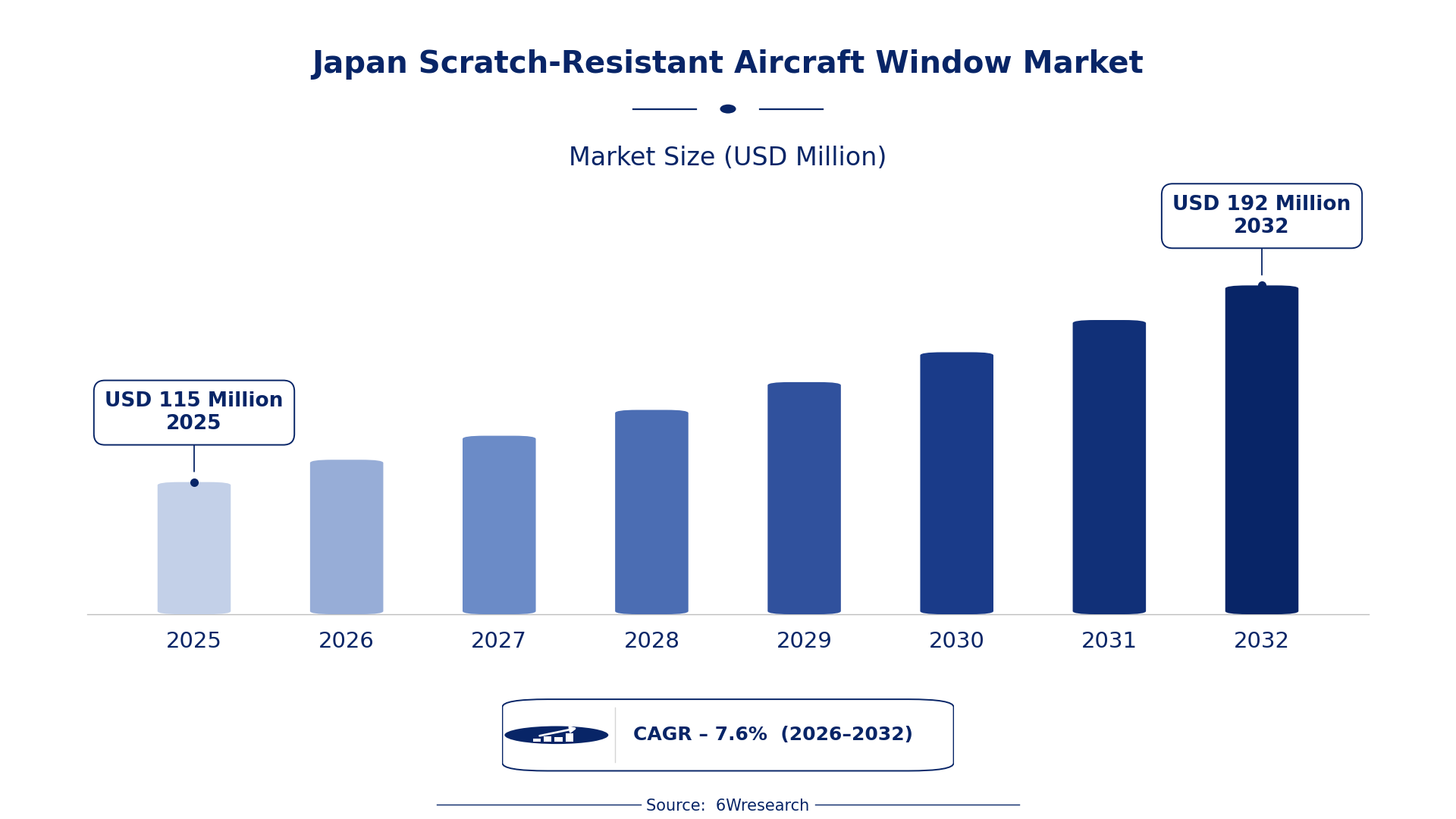
According to 6Wresearch internal database and industry insights, the Japan Scratch-Resistant Aircraft Window Market was valued at USD 115 Million in 2025 and is projected to reach USD 192 Million by 2032, growing at a CAGR of approximately 7.6% during 2026–2032.
Japan Scratch-Resistant Aircraft Window Market Highlights
| Report Metric | Details |
| Report Name | Japan Scratch-Resistant Aircraft Window Market (2026-2032) |
| Market Size 2025 | USD 115 Million |
| Market Size 2032 | USD 192 Million |
| Absolute Growth 2025–2032 | USD 77 Million |
| CAGR 2026–2032 | 7.6% |
| Peak Annual Growth | 8.4% in 2028 |
| Forecast Period | 2026–2032 |
| Historical Data | 2022–2025 |
| Base Year | 2025 |
| Leading Coating Type, 2025 | Hard-Coat Polymer (52% share) |
| Leading Core Material, 2025 | Polycarbonate (38% share) |
| Leading Aircraft Type, 2025 | Commercial Jets (46% share) |
| Leading End User, 2025 | Airlines (49% share) |
| Fastest-Growing Coating Type | Nano-Ceramic Coating (10.7% CAGR) |
| Fastest-Growing Core Material | Acrylic (10.5% CAGR) |
| Fastest-Growing Aircraft Type | Business Jets (10.9% CAGR) |
| Fastest-Growing End User | OEM Integration (9.6% CAGR) |
| Growing Sector | Aerospace and Defense |
| Key End Users | Airlines, OEMs, Defense Contractors, Rotorcraft Manufacturers |
Japan Scratch-Resistant Aircraft Window Market Year-wise Growth Rate and Key Drivers (2022–2032)
This graph illustrates the annual growth rates of the market from 2022 to 2032, highlighting a steady upward trajectory and projected market expansion over the forecast period.
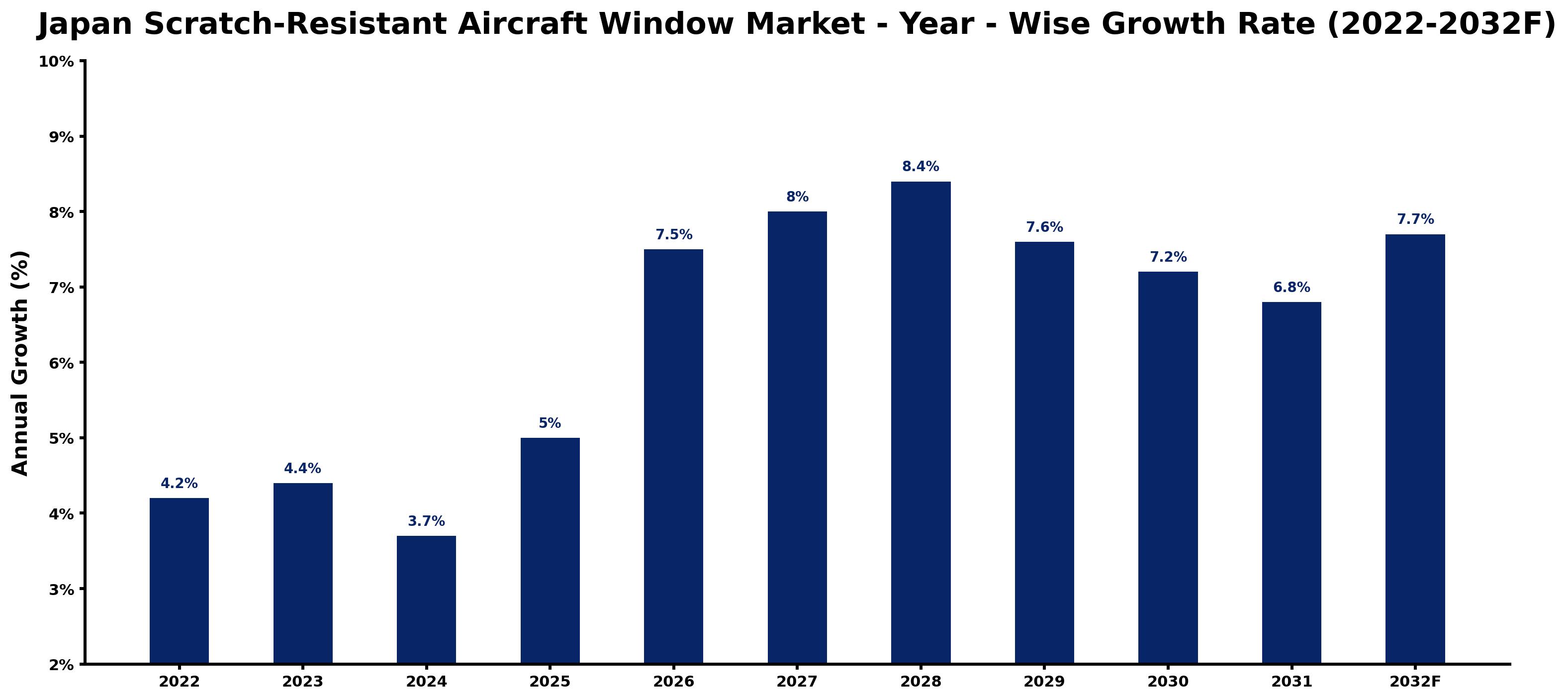
The table below sets out the estimated growth rate for each year and the main factor behind it.
| Year | Estimated Annual Growth (%) | Market Rationale |
| 2022 | 4.2 | The market experienced steady demand from domestic airlines and OEMs. |
| 2023 | 4.4 | Growth was supported by increased orders from commercial aviation sectors. |
| 2024 | 3.7 | Demand slowed slightly as production adjustments were made in the industry. |
| 2025 | 5.0 | The market saw a boost from advancements in window technologies. |
| 2026 | 7.5 | Increased investment in aerospace technology is expected to drive higher orders for windows. |
| 2027 | 8.0 | Demand will rise as airlines upgrade their fleets with modern materials. |
| 2028 | 8.4 | Growth will peak as military aircraft contracts significantly increase demand. |
| 2029 | 7.6 | Growth will moderate as the market adjusts to previous peaks in demand. |
| 2030 | 7.2 | A slowdown will occur as the market stabilises after rapid growth phases. |
| 2031 | 6.8 | The market will continue to grow, albeit at a slower pace than before. |
| 2032 | 7.7 | Demand is expected to rise again as airlines expand their fleets. |
Note: Market size estimations and growth projections presented in this report are based on 6Wresearch's proprietary forecasting methodology, utilizing the latest available industry data, government publications, and primary research inputs.
Japan Scratch-Resistant Aircraft Window Market Synopsis
Scratch-resistant aircraft windows are advanced materials designed to withstand abrasion, primarily made from polycarbonate and acrylic. The Japan Scratch-Resistant Aircraft Window Market is expanding due to increased orders from domestic airlines and military contracts. With over 300 commercial jets in operation and investments exceeding 1 billion USD in aerospace technology, the market is set for growth driven by technological advancements and rising safety standards in aviation.
Market Dynamics Impact Analysis (2026–2032)
| Factor | Type | Impact | Primary Segment Affected |
| Increased investment in aerospace technology | Driver | High | Polycarbonate |
| Growing demand from military contracts | Driver | High | Military Aircraft |
| Emerging opportunities in OEM integration | Opportunity | High | OEM Integration |
| Expansion of commercial aviation sector | Opportunity | High | Commercial Jets |
| High production costs for advanced materials | Restraint | Medium | Nano-Ceramic Coating |
| Limited availability of skilled workforce | Restraint | Medium | Acrylic |
| Supply chain disruptions affecting material availability | Challenge | High | Glass Composite |
| Technological barriers in material innovation | Challenge | Medium | Hard-Coat Polymer |
Evaluation of Drivers in Japan Scratch-Resistant Aircraft Window Market (2026–2032)
The following drivers explain most of the expected growth.
| Drivers | Primary Segment Affected | Why It Matters (Evidence) |
| Increased investment in aerospace technology | Polycarbonate | Investment in aerospace technology in Japan reached over 1 billion USD in 2023, driving demand for lightweight and durable materials. |
| Growing demand from military contracts | Military Aircraft | Ongoing contracts for advanced aircraft technologies are boosting demand for scratch-resistant windows. |
| Rising safety standards in aviation | Commercial Jets | The need for visibility and safety in commercial aviation is pushing airlines to invest in advanced window technologies. |
| Fleet modernisation initiatives | Business Jets | The trend of fleet upgrades among luxury aviation users is increasing the demand for advanced window materials. |
| Technological advancements in coatings | Nano-Ceramic Coating | Innovations in coatings are improving scratch resistance, attracting buyers focused on durability and clarity. |
Behind the steady rise in orders sits Japan's investment in aerospace technology, which reached over 1 billion USD in 2023, encouraging airlines to purchase advanced window materials. Military contracts for aircraft are driving demand, as visibility and safety become paramount. Commercial aviation is seeing increased orders as airlines modernise their fleets, while luxury aviation is expanding, with business jets requiring high-quality materials. Innovations in coatings are attracting buyers focused on durability, resulting in more purchases of scratch-resistant windows.
Evaluation of Restraints in Japan Scratch-Resistant Aircraft Window Market
The following restraints limit how fast demand can grow.
| Market Restraint | Primary Segment Affected | Why It Matters (Evidence) |
| High production costs for advanced materials | Nano-Ceramic Coating | The production costs for advanced coatings have risen, impacting pricing strategies for manufacturers. |
| Limited availability of skilled workforce | Acrylic | A shortage of skilled workers in the aerospace sector is hindering production capabilities. |
| Supply chain disruptions affecting material availability | Glass Composite | Recent supply chain issues have limited the availability of essential materials for window manufacturing. |
| Technological barriers in material innovation | Hard-Coat Polymer | Challenges in developing new materials are slowing down innovation in the scratch-resistant window segment. |
| Regulatory compliance costs | Polycarbonate | Compliance with safety and quality standards increases operational costs for manufacturers. |
Japan Scratch-Resistant Aircraft Window Market Challenges
High production costs stem from the reliance on advanced materials and coating technologies, raising prices for OEMs by up to 15%. Buyers face delays in acquiring scratch-resistant windows due to the stringent requirements of the JIS Z 2801 standard, which can extend delivery times by several weeks. Regulatory demands from the Ministry of Defense complicate procurement for military applications, leading to longer project timelines for defense contractors. A lack of local suppliers for specialized coatings limits options, forcing buyers to depend on imports, which can increase costs by 10%.
Trends in the Japan Scratch-Resistant Aircraft Window Market
Below are the shifts with the largest effect on the Japan Scratch-Resistant Aircraft Window Market.
- Shift towards Advanced Coating Technologies: The market is experiencing a shift towards advanced coating technologies, such as nano-ceramic coatings, which improve scratch resistance. In 2023, the Tokyo International Air Show showcased these advancements, indicating a growing preference for durable window materials.
- Rising Demand for Lightweight Materials: The aviation industry is increasingly prioritising lightweight materials to improve fuel efficiency. In 2023, over 300 commercial jets operated by domestic airlines are equipped with lightweight scratch-resistant windows, enhancing overall performance.
- Focus on Safety Standards: Airlines are prioritising safety standards, leading to increased orders for scratch-resistant windows. The Ministry of Defense's contracts for military aircraft highlight the importance of safety in aviation materials.
- Growth in Luxury Aviation Market: The luxury aviation segment is expanding, with business jets requiring high-quality scratch-resistant windows. This market is projected to grow at a CAGR of 10.9% from 2026 to 2032, reflecting rising demand for premium materials.
Investment Opportunities in the Japan Scratch-Resistant Aircraft Window Market
The openings below show where demand in the Japan Scratch-Resistant Aircraft Window Market is visible and how suppliers can enter.
- Joint Ventures with Local Manufacturers: Establishing partnerships with local manufacturers in Aichi Prefecture can facilitate entry into the market. With over 1 billion USD invested in aerospace technology, there is a growing need for advanced materials.
- Investment in Military Aircraft Components: The ongoing military contracts present an opportunity for suppliers to invest in components for military aircraft. The focus on advanced technologies is driving demand for high-quality materials.
- Expansion of Commercial Aviation Facilities: Investing in commercial aviation facilities in the Tokyo Metropolitan Area is timely, given the increasing demand for scratch-resistant windows. Domestic airlines are expanding their fleets, requiring more advanced window materials.
- Collaboration with Aerospace Research Agencies: Collaborating with the Aerospace Research and Development Agency can provide insights into material innovations. This agency focuses on safety through material improvements, offering a pathway for new suppliers.
Government Initiatives in the Japan Scratch-Resistant Aircraft Window Market
The Plastic Resource Circulation Act, enacted in 2021, impacts producers of scratch-resistant aircraft windows by promoting the reduction and recycling of plastics. This law encourages manufacturers to adopt sustainable practices, which may involve investing in biodegradable alternatives to traditional materials. Compliance with such regulations ensures that producers can meet market demands while adhering to environmental standards, supporting a more sustainable aviation sector.
The Ministry of Defense oversees the procurement of advanced window technologies for military aircraft, approving contracts that incorporate these innovations. This agency's funding for research and development in aerospace materials supports the integration of scratch-resistant windows into military applications, enhancing operational safety and performance. The ongoing contracts reflect a commitment to maintaining high standards in defense aviation, benefiting both producers and buyers.
Future Insight of the Japan Scratch-Resistant Aircraft Window Market
By 2032, domestic airlines will adopt advanced window technologies as ongoing investments in aerospace innovation transform the industry. The Tokyo International Air Show will showcase new materials, encouraging buyers to focus on safety features. Collaborations with the Japan Aerospace Exploration Agency will drive improvements in material durability, benefiting both buyers and suppliers. Investment in aerospace technology reached over 1 billion USD in 2023, supporting advancements in scratch-resistant windows.
Market Segmentation Analysis
Japan Scratch-Resistant Aircraft Window Market report covers a detailed analysis of the following market segments:
By Coating Type – Hard-Coat Polymer Leads, Nano-Ceramic Coating Expected to Grow Fastest
According to Saurav Kr Singh, Senior Research Analyst at 6Wresearch, Hard-Coat Polymer accounted for 52% of the market by coating type in 2025. Hard-coat polymer commands the largest share due to its prevalent use in both commercial and military aviation, ensuring durability and safety. Major airlines in the Tokyo Metropolitan Area rely on this coating for their aircraft windows, reflecting its widespread acceptance in the market. The quickest growth will come from Nano-Ceramic Coating, forecast to expand at a CAGR of 10.7% between 2026 and 2032. The nano-ceramic coating segment is growing rapidly as it offers superior scratch resistance and clarity, making it particularly appealing for high-performance aircraft. The advancements showcased at the Tokyo International Air Show in 2023 indicate a rising preference for this technology among manufacturers. Suppliers should focus on developing nano-ceramic coatings to meet the increasing demand from premium aviation sectors.
By Core Material – Polycarbonate Leads, Acrylic Expected to Grow Fastest
The largest core material category in 2025 was Polycarbonate, at 38% of revenue. Polycarbonate leads the market due to its lightweight and impact-resistant features, making it suitable for various aircraft applications. Its extensive use in over 300 commercial jets operated by domestic airlines highlights its essential role in the aviation industry. Acrylic is projected to grow fastest, at a CAGR of 10.5% during 2026–2032. Acrylic is experiencing the fastest growth because of its excellent optical clarity and lightweight properties, which are increasingly sought after in luxury aviation. Collaborations with the Japan Aerospace Exploration Agency for advanced materials research further support this upward trend. Buyers may benefit from considering acrylic options to enhance visibility and reduce weight in aircraft designs.
By Aircraft Type – Commercial Jets Lead, Business Jets Expected to Grow Fastest
In 2025, Commercial Jets led the aircraft type split with a 46% share. Commercial jets are the leading segment as they represent the primary application for passenger aircraft, driving demand for scratch-resistant windows. The concentration of airlines in the Tokyo Metropolitan Area further solidifies this segment's dominance. Business Jets are set to record the highest CAGR in this split, 10.9% over 2026–2032. Business jets are seeing the fastest growth due to rising demand for luxury and private aviation, which requires high-quality materials. The ongoing investment in aerospace technology, exceeding 1 billion USD in 2023, supports this trend. Suppliers should consider targeting the business jet market to capitalise on its rapid growth.
By End User – Airlines Lead, OEM Integration Expected to Grow Fastest
Airlines held 49% of the Japan Scratch-Resistant Aircraft Window Market by end user in 2025. Airlines constitute the largest end-user group, being the primary consumers of scratch-resistant windows for their commercial fleets. The operational scale of Japan's domestic airlines showcases their crucial role in driving market demand. Over 2026–2032, OEM Integration is expected to post the fastest growth, at a CAGR of 9.6%. OEM integration is rapidly expanding as manufacturers increasingly incorporate advanced window technologies into their production processes. This trend is further supported by ongoing contracts with the Ministry of Defense for military aircraft, which drives demand for these technologies. Suppliers should strengthen partnerships with OEMs to align with the growing integration of advanced materials in aircraft manufacturing.
Key Attractiveness of the Report
- 10 Years of Market Numbers
- Historical Data Starting from 2022 to 2025
- Base Year 2025
- Forecast Data until 2032
- Key Performance Indicators Impacting the Market
- Major Upcoming Developments and Projects
Key Highlights of the Report:
- Japan Scratch-Resistant Aircraft Window Market Outlook
- Market Size of Japan Scratch-Resistant Aircraft Window Market, 2025
- Forecast of Japan Scratch-Resistant Aircraft Window Market, 2032
- Historical Data and Forecast of Japan Scratch-Resistant Aircraft Window Revenues & Volume for the Period 2022-2032F
- Japan Scratch-Resistant Aircraft Window Market Trend Evolution
- Japan Scratch-Resistant Aircraft Window Market Drivers and Challenges
- Japan Scratch-Resistant Aircraft Window Price Trends
- Japan Scratch-Resistant Aircraft Window Porter's Five Forces
- Japan Scratch-Resistant Aircraft Window Industry Life Cycle
- Historical Data and Forecast of Japan Scratch-Resistant Aircraft Window Market Revenues & Volume By Coating Type for the Period 2022-2032F
- Historical Data and Forecast of Japan Scratch-Resistant Aircraft Window Market Revenues & Volume By Hard-Coat Polymer for the Period 2022-2032F
- Historical Data and Forecast of Japan Scratch-Resistant Aircraft Window Market Revenues & Volume By Nano-Ceramic Coating for the Period 2022-2032F
- Historical Data and Forecast of Japan Scratch-Resistant Aircraft Window Market Revenues & Volume By Diamond-Like Carbon for the Period 2022-2032F
- Historical Data and Forecast of Japan Scratch-Resistant Aircraft Window Market Revenues & Volume By Anti-Abrasion Film for the Period 2022-2032F
- Historical Data and Forecast of Japan Scratch-Resistant Aircraft Window Market Revenues & Volume By Core Material for the Period 2022-2032F
- Historical Data and Forecast of Japan Scratch-Resistant Aircraft Window Market Revenues & Volume By Polycarbonate for the Period 2022-2032F
- Historical Data and Forecast of Japan Scratch-Resistant Aircraft Window Market Revenues & Volume By Acrylic for the Period 2022-2032F
- Historical Data and Forecast of Japan Scratch-Resistant Aircraft Window Market Revenues & Volume By PMMA for the Period 2022-2032F
- Historical Data and Forecast of Japan Scratch-Resistant Aircraft Window Market Revenues & Volume By Glass Composite for the Period 2022-2032F
- Historical Data and Forecast of Japan Scratch-Resistant Aircraft Window Market Revenues & Volume By Aircraft Type for the Period 2022-2032F
- Historical Data and Forecast of Japan Scratch-Resistant Aircraft Window Market Revenues & Volume By Commercial Jets for the Period 2022-2032F
- Historical Data and Forecast of Japan Scratch-Resistant Aircraft Window Market Revenues & Volume By Business Jets for the Period 2022-2032F
- Historical Data and Forecast of Japan Scratch-Resistant Aircraft Window Market Revenues & Volume By Military Aircraft for the Period 2022-2032F
- Historical Data and Forecast of Japan Scratch-Resistant Aircraft Window Market Revenues & Volume By Helicopters for the Period 2022-2032F
- Historical Data and Forecast of Japan Scratch-Resistant Aircraft Window Market Revenues & Volume By End User for the Period 2022-2032F
- Historical Data and Forecast of Japan Scratch-Resistant Aircraft Window Market Revenues & Volume By Airlines for the Period 2022-2032F
- Historical Data and Forecast of Japan Scratch-Resistant Aircraft Window Market Revenues & Volume By OEM Integration for the Period 2022-2032F
- Historical Data and Forecast of Japan Scratch-Resistant Aircraft Window Market Revenues & Volume By Defense Contractors for the Period 2022-2032F
- Historical Data and Forecast of Japan Scratch-Resistant Aircraft Window Market Revenues & Volume By Rotorcraft OEMs for the Period 2022-2032F
- Japan Scratch-Resistant Aircraft Window Import Export Trade Statistics
- Market Opportunity Assessment By Coating Type
- Market Opportunity Assessment By Core Material
- Market Opportunity Assessment By Aircraft Type
- Market Opportunity Assessment By End User
- Japan Scratch-Resistant Aircraft Window Top Companies Market Share
- Japan Scratch-Resistant Aircraft Window Competitive Benchmarking By Technical and Operational Parameters
- Japan Scratch-Resistant Aircraft Window Company Profiles
- Japan Scratch-Resistant Aircraft Window Key Strategic Recommendations
Market Covered
The following segment groups are covered in the report.
By Coating Type
- Hard-Coat Polymer
- Nano-Ceramic Coating
- Diamond-Like Carbon
- Anti-Abrasion Film
By Core Material
- Polycarbonate
- Acrylic
- PMMA
- Glass Composite
By Aircraft Type
- Commercial Jets
- Business Jets
- Military Aircraft
- Helicopters
By End User
- Airlines
- OEM Integration
- Defense Contractors
- Rotorcraft OEMs






































