Japan Seed Inoculation Market Size & Growth Rate
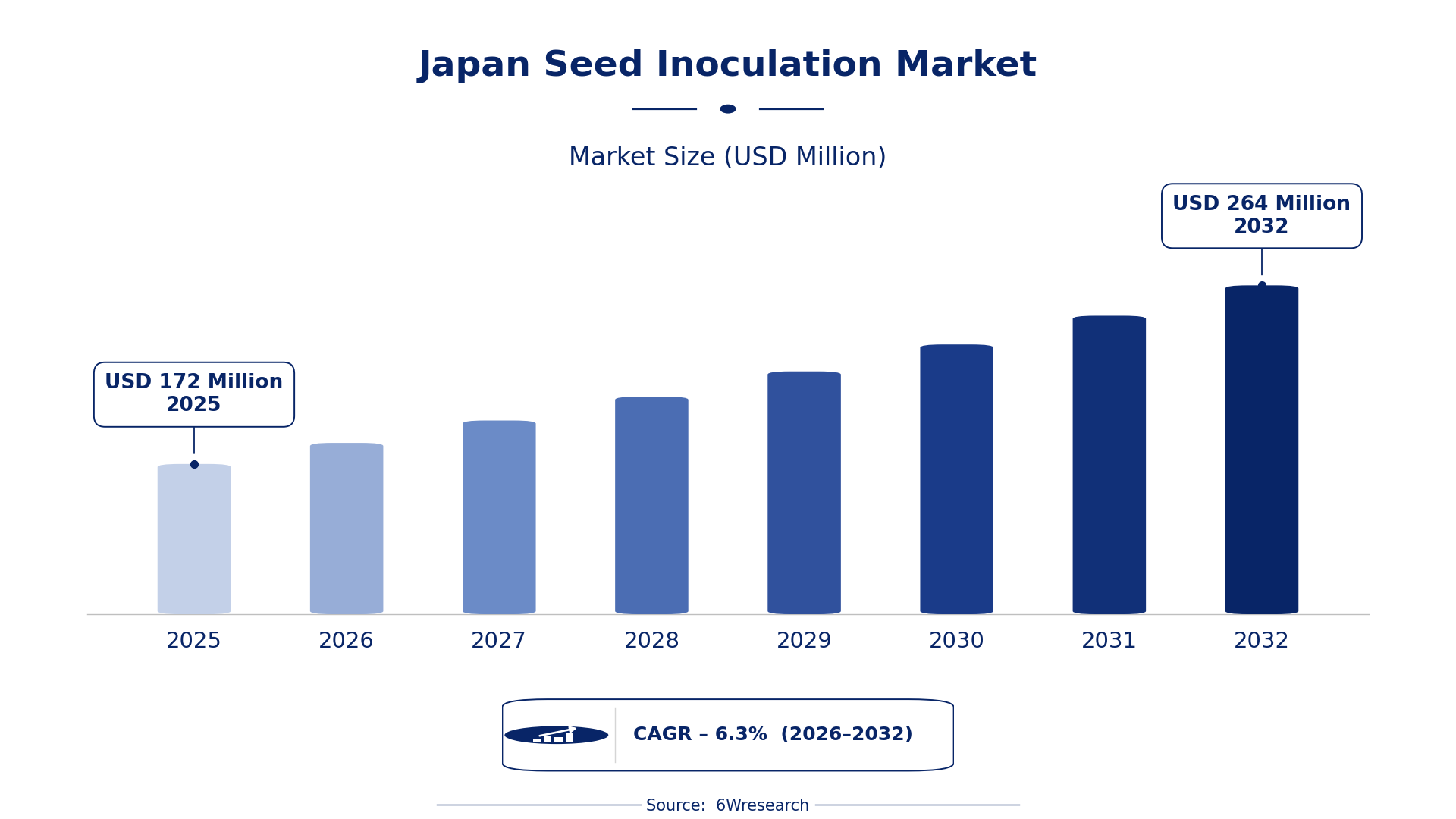
According to 6Wresearch internal database and industry insights, the Japan Seed Inoculation Market was valued at USD 172 Million in 2025 and is projected to reach USD 264 Million by 2032, growing at a CAGR of approximately 6.3% during 2026–2032.
Japan Seed Inoculation Market Highlights
| Report Metric | Details |
| Report Name | Japan Seed Inoculation Market (2026-2032) |
| Market Size 2025 | USD 172 Million |
| Market Size 2032 | USD 264 Million |
| Absolute Growth 2025–2032 | USD 92 Million |
| CAGR 2026–2032 | 6.3% |
| Peak Annual Growth | 7.5% in 2028 |
| Forecast Period | 2026–2032 |
| Historical Data | 2022–2025 |
| Base Year | 2025 |
| Leading Inoculant Type, 2025 | Rhizobium (41% share) |
| Leading Crop Type, 2025 | Legumes (54% share) |
| Leading Application Method, 2025 | Coating (40% share) |
| Leading End User, 2025 | Organic Farmers (39% share) |
| Fastest-Growing Inoculant Type | Azospirillum (8.6% CAGR) |
| Fastest-Growing Crop Type | Cereals (9.0% CAGR) |
| Fastest-Growing Application Method | Seed Soaking (8.2% CAGR) |
| Fastest-Growing End User | Agricultural Institutes (8.0% CAGR) |
| Growing Sector | Organic Farming |
| Key End Users | Organic Farmers, Agricultural Institutes, Horticulturists |
Japan Seed Inoculation Market Year-wise Growth Rate and Key Drivers (2022–2032)
This graph illustrates the annual growth rates of the market from 2022 to 2032, highlighting a steady upward trajectory and projected market expansion over the forecast period.
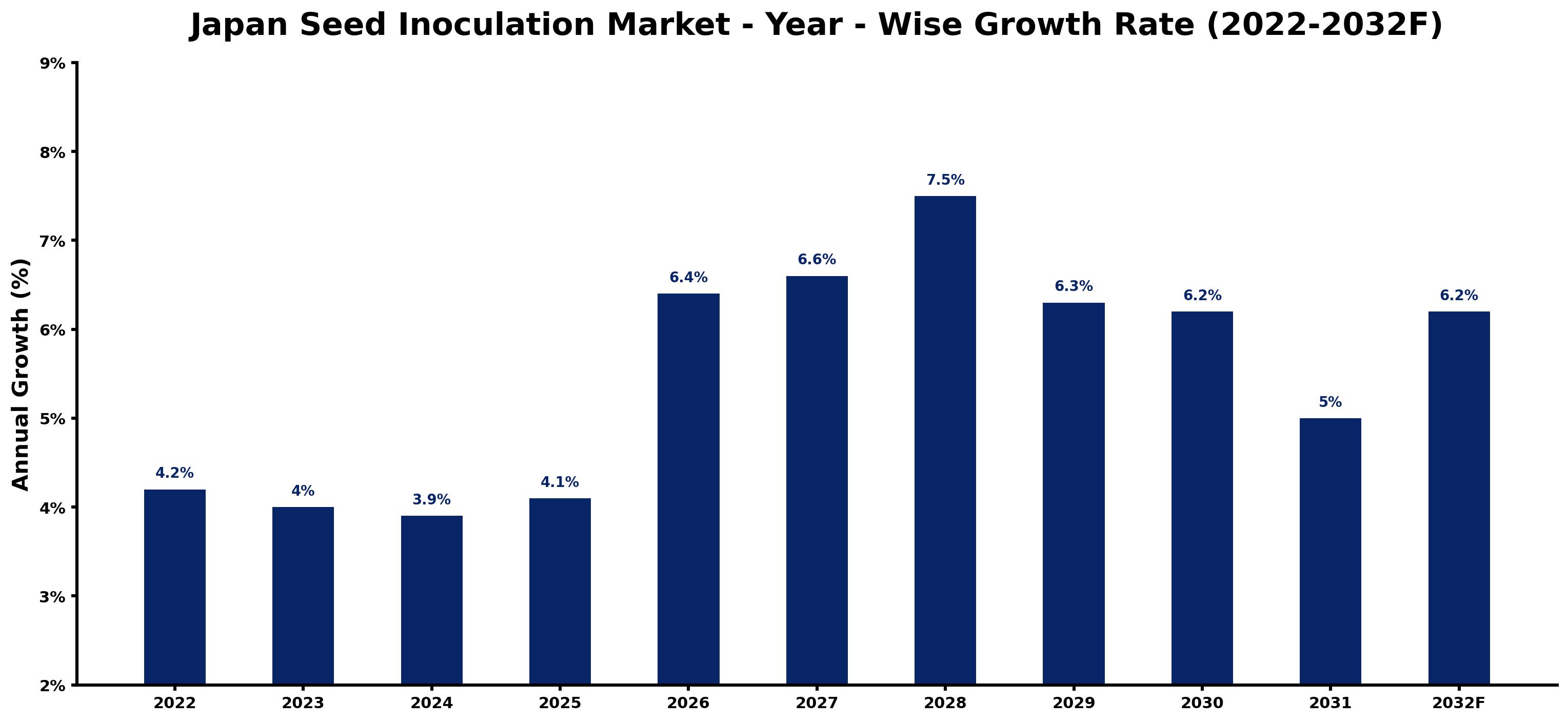
The yearly estimates that follow link every growth rate to its principal driver, so readers can see why the pace changed in each period.
| Year | Estimated Annual Growth (%) | Market Rationale |
| 2022 | 4.2 | The market showed strong performance with increased interest in sustainable farming practices. |
| 2023 | 4.0 | Growth slowed slightly due to market saturation in certain regions and crop types. |
| 2024 | 3.9 | A further slowdown occurred as farmers adjusted to new inoculation technologies. |
| 2025 | 4.1 | Demand picked up again as organic farming initiatives gained traction across Japan. |
| 2026 | 6.4 | Growth is expected to accelerate as investment in agricultural biotechnology reaches new heights. |
| 2027 | 6.6 | Continued investment and research will lead to further increases in inoculant adoption. |
| 2028 | 7.5 | The market is projected to peak with advancements in inoculant effectiveness and application methods. |
| 2029 | 6.3 | Growth will slow as the market begins to stabilise after reaching peak adoption rates. |
| 2030 | 6.2 | A slight slowdown in growth rate is expected as market maturity and increased competition emerge. |
| 2031 | 5.0 | The market will continue to grow as new technologies emerge to support farmers' needs. |
| 2032 | 6.2 | Demand is expected to rise again as organic farming continues to expand. |
Note: Market size estimations and growth projections presented in this report are based on 6Wresearch's proprietary forecasting methodology, utilizing the latest available industry data, government publications, and primary research inputs.
Japan Seed Inoculation Market Synopsis
Seed inoculation involves applying beneficial microorganisms to seeds to improve plant growth and nutrient uptake. The Japan Seed Inoculation Market is growing due to an increase in organic farming, with approximately 200,000 organic farmers in 2023. Investment in agricultural biotechnology reached 100 billion yen in 2023, while the Organic JAS certification program promotes sustainable practices, leading to increased purchases of inoculants. These elements contribute to a thriving market as demand for effective seed inoculation solutions rises.
Market Dynamics Impact Analysis (2026–2032)
| Factor | Type | Impact | Primary Segment Affected |
| Growing interest in organic farming practices | Driver | High | Rhizobium |
| Investment in agricultural biotechnology | Driver | High | Mycorrhizae |
| Increasing adoption of new inoculant technologies | Opportunity | High | Azospirillum |
| Expansion of agricultural research institutes | Opportunity | High | Phosphate Solubilizing Bacteria |
| Market saturation in certain regions | Restraint | Medium | Legumes |
| Competition from alternative agricultural practices | Restraint | Medium | Cereals |
| High costs of research and development | Challenge | High | Vegetables |
| Regulatory hurdles for new inoculant types | Challenge | Medium | Pulses |
Evaluation of Drivers in Japan Seed Inoculation Market (2026–2032)
The table below links each growth driver to the segment it affects and the evidence for it.
| Drivers | Primary Segment Affected | Why It Matters (Evidence) |
| Increased organic farming | Rhizobium | This drives demand as farmers seek sustainable practices, with around 200,000 organic farmers in Japan. |
| Investment in agricultural biotechnology | Mycorrhizae | Investment reached 100 billion yen in 2023, resulting in more effective inoculants. |
| Research on new inoculant strains | Azospirillum | Agricultural institutes focus on developing strains that improve crop performance. |
| Standardisation of application methods | Phosphate Solubilizing Bacteria | ISO 9001 standards improve application reliability, boosting farmer confidence. |
| Growing consumer demand for organic products | Legumes | The increase in organic consumer products drives demand for effective inoculants. |
Orders keep climbing as the agricultural sector increasingly adopts seed inoculation techniques, with around 200,000 organic farmers actively seeking effective solutions. Investment in agricultural biotechnology reached 100 billion yen in 2023, resulting in advancements in inoculant effectiveness. Research conducted by agricultural institutes focuses on new inoculant strains that improve crop performance and increase farmer adoption. Standardisation of application methods enhances reliability, encouraging more farmers to use these technologies. The rising consumer demand for organic products further drives the need for effective inoculants, particularly among legume growers.
Evaluation of Restraints in Japan Seed Inoculation Market
These are the pressures that could keep growth below its potential.
| Market Restraint | Primary Segment Affected | Why It Matters (Evidence) |
| Market saturation in certain regions | Legumes | With 2 million hectares dedicated to legumes, growth is limited in oversaturated areas. |
| Competition from alternative agricultural practices | Cereals | Farmers may opt for conventional methods, limiting inoculant adoption in cereals. |
| High costs of research and development | Vegetables | Developing new inoculant strains requires substantial investment, impacting pricing. |
| Regulatory hurdles for new inoculant types | Pulses | Strict regulations can delay the introduction of new inoculants to the market. |
| Limited awareness of benefits among some farmers | Azospirillum | Farmers in certain regions may not fully understand the advantages of using inoculants. |
Japan Seed Inoculation Market Challenges
Japan's strict regulations under the JIS complicate the introduction of new inoculants, delaying market access for producers and hindering innovation. Intense competition among suppliers leads to price reductions that squeeze profit margins, particularly affecting smaller producers who struggle to maintain viability. Rising production costs force buyers to pay up to 15% more for high-quality inoculants, straining their financial sustainability. Organic farmers face unpredictable demand, resulting in surplus stock and cash flow challenges during off-peak periods, which can disrupt their operations and planning.
Trends in the Japan Seed Inoculation Market
These developments are changing demand patterns in the Japan Seed Inoculation Market.
- Shift towards Organic Farming: The Organic JAS certification program has led to a shift towards organic farming in Japan, with approximately 200,000 organic farmers in 2023. This trend drives demand for effective seed inoculation solutions.
- Increased Adoption of Mycorrhizae: Mycorrhizae are increasingly adopted in vegetable cultivation, especially in the Tohoku region, where farmers seek to improve nutrient absorption. This method gains popularity due to its effectiveness in boosting crop yields.
- Standardisation of Inoculant Application Methods: Standardisation under ISO 9001 has improved the reliability of inoculant application methods. This change encourages more farmers to adopt these technologies, contributing to increased market growth.
- Focus on Research and Development: Agricultural institutes are prioritising research on new inoculant strains, with funding from the Ministry of Agriculture, Forestry and Fisheries. This focus aims to improve crop performance and boost the overall market.
Investment Opportunities in the Japan Seed Inoculation Market
The following areas offer the clearest openings for investors and suppliers in the Japan Seed Inoculation Market.
- Investment in Agricultural Technology Centres: The Tokyo Agricultural Technology Center is conducting trials on various inoculant types, with an investment of 100 billion yen in 2023. This presents an opportunity for suppliers to collaborate and develop new products.
- Partnerships with Agricultural Institutes: Collaborating with agricultural institutes can enhance research on inoculants, especially in regions like Tohoku. This approach is timely as demand for effective inoculants rises, particularly among organic farmers.
- Expansion of Organic Farming Initiatives: With the number of organic farmers reaching around 200,000, there is a growing need for effective seed inoculation solutions. Suppliers can enter this market by forming joint ventures with local farmers.
- Focus on Sustainable Practices: The increasing consumer demand for organic products creates a gap for suppliers of seed inoculants. Investing in marketing and education about these products can help capture this emerging market.
Government Initiatives in the Japan Seed Inoculation Market
The Chemical Substances Control Law (1973) mandates the evaluation and control of chemical substances in manufacturing and import, ensuring that seed inoculants meet safety standards. The Food Sanitation Act amendment of 2018, effective from June 2020, introduced a system that ensures seed inoculants comply with rigorous safety criteria, benefiting both producers and consumers. The Industrial Standardization Act governs product standards, ensuring that inoculants meet quality specifications outlined in the JIS.
The Ministry of Agriculture, Forestry and Fisheries oversees various funding programs that support research on seed inoculation technologies. These initiatives aim to improve the effectiveness of inoculants, benefiting organic farmers and agricultural institutes. The Tokyo Agricultural Technology Center plays a key role in conducting trials and approving new inoculant types, ensuring they meet established standards.
Future Insight of the Japan Seed Inoculation Market
The agricultural biotechnology investment pipeline is projected to reach 100 billion yen by 2023, driving demand for advanced inoculant solutions. By 2032, the introduction of novel microbial strains will enhance crop yields, benefiting farmers and improving food security. Ongoing trials at the Tokyo Agricultural Technology Center will refine application methods, making them more accessible for users. Government initiatives promoting organic farming will stimulate market growth, encouraging suppliers to develop a wider range of effective product offerings.
Market Segmentation Analysis
Japan Seed Inoculation Market report covers a detailed analysis of the following market segments:
By Inoculant Type – Rhizobium Leads, Azospirillum Expected to Grow Fastest
According to Saurav Kr Singh, Senior Research Analyst at 6Wresearch, the largest inoculant type category in 2025 was Rhizobium, at 41% of revenue. Rhizobium commands the largest share due to its critical role in nitrogen fixation for legumes, a staple crop in Japan. Its widespread application in the Kanto region, known for rice and soybean production, highlights its essentiality in agricultural practices. Over 2026–2032, Azospirillum is expected to post the fastest growth, at a CAGR of 8.6%. Azospirillum is witnessing rapid growth as it enhances root development in cereals, a crop type increasingly favoured by farmers. The promotion of Azospirillum in the Chubu region signifies its rising importance in boosting agricultural productivity. Suppliers should prioritise the development of Rhizobium products while also investing in Azospirillum to align with market growth.
By Crop Type – Legumes Lead, Cereals Expected to Grow Fastest
In 2025, Legumes led the crop type split with a 54% share. Legumes dominate the market as they are the primary beneficiaries of seed inoculation, particularly within Japan's agricultural landscape. The dedication of approximately 2 million hectares to legumes underscores their significance in farming operations. The quickest growth will come from Cereals, forecast to expand at a CAGR of 9.0% between 2026 and 2032. Cereals are experiencing the highest growth rate as farmers seek to enhance yields through inoculation, particularly in rice paddies where beneficial microorganisms are increasingly utilised. This shift illustrates evolving agricultural practices and priorities. Suppliers must adjust their strategies to accommodate the growing interest in cereal inoculation alongside their established focus on legumes.
By Application Method – Coating Leads, Seed Soaking Expected to Grow Fastest
Coating took 40% of application method revenue in 2025, more than any other category. Coating is the leading application method as it is widely accepted for its effectiveness in delivering inoculants directly to seeds. This method is standardised and commonly used across various farming practices in Japan, ensuring consistent results for farmers. Seed Soaking is projected to grow fastest, at a CAGR of 8.2% during 2026–2032. Seed soaking is rapidly gaining popularity as it allows for uniform distribution of inoculants, making it particularly appealing for farmers looking for efficient application methods. The effectiveness of this method is being recognised in trials conducted by agricultural institutes. Suppliers should consider expanding their product offerings to include seed soaking solutions to cater to the growing preference for this application method.
By End User – Organic Farmers Lead, Agricultural Institutes Expected to Grow Fastest
With 39% of end user revenue in 2025, Organic Farmers was the largest category. Organic farmers represent the largest segment of seed inoculation users as they focus on sustainable farming practices to improve crop yields. With around 200,000 organic farmers in Japan, their demand plays a pivotal role in shaping the market. Agricultural Institutes are set to record the highest CAGR in this split, 8.0% over 2026–2032. Agricultural institutes are the fastest-growing end user segment, concentrating on research and development of new inoculant strains to enhance crop performance. Their proactive engagement in trials fosters innovation and accelerates the adoption of new technologies. This trend indicates that suppliers should partner with agricultural institutes to create advanced inoculant solutions tailored to the needs of both researchers and farmers.
Key Attractiveness of the Report
- 10 Years of Market Numbers
- Historical Data Starting from 2022 to 2025
- Base Year 2025
- Forecast Data until 2032
- Key Performance Indicators Impacting the Market
- Major Upcoming Developments and Projects
Key Highlights of the Report:
- Japan Seed Inoculation Market Outlook
- Market Size of Japan Seed Inoculation Market, 2025
- Forecast of Japan Seed Inoculation Market, 2032
- Historical Data and Forecast of Japan Seed Inoculation Revenues & Volume for the Period 2022-2032F
- Japan Seed Inoculation Market Trend Evolution
- Japan Seed Inoculation Market Drivers and Challenges
- Japan Seed Inoculation Price Trends
- Japan Seed Inoculation Porter's Five Forces
- Japan Seed Inoculation Industry Life Cycle
- Historical Data and Forecast of Japan Seed Inoculation Market Revenues & Volume By Inoculant Type for the Period 2022-2032F
- Historical Data and Forecast of Japan Seed Inoculation Market Revenues & Volume By Rhizobium for the Period 2022-2032F
- Historical Data and Forecast of Japan Seed Inoculation Market Revenues & Volume By Azospirillum for the Period 2022-2032F
- Historical Data and Forecast of Japan Seed Inoculation Market Revenues & Volume By Mycorrhizae for the Period 2022-2032F
- Historical Data and Forecast of Japan Seed Inoculation Market Revenues & Volume By Phosphate Solubilizing Bacteria for the Period 2022-2032F
- Historical Data and Forecast of Japan Seed Inoculation Market Revenues & Volume By Crop Type for the Period 2022-2032F
- Historical Data and Forecast of Japan Seed Inoculation Market Revenues & Volume By Legumes for the Period 2022-2032F
- Historical Data and Forecast of Japan Seed Inoculation Market Revenues & Volume By Cereals for the Period 2022-2032F
- Historical Data and Forecast of Japan Seed Inoculation Market Revenues & Volume By Vegetables for the Period 2022-2032F
- Historical Data and Forecast of Japan Seed Inoculation Market Revenues & Volume By Pulses for the Period 2022-2032F
- Historical Data and Forecast of Japan Seed Inoculation Market Revenues & Volume By Application Method for the Period 2022-2032F
- Historical Data and Forecast of Japan Seed Inoculation Market Revenues & Volume By Coating for the Period 2022-2032F
- Historical Data and Forecast of Japan Seed Inoculation Market Revenues & Volume By Seed Soaking for the Period 2022-2032F
- Historical Data and Forecast of Japan Seed Inoculation Market Revenues & Volume By In-Furrow Application for the Period 2022-2032F
- Historical Data and Forecast of Japan Seed Inoculation Market Revenues & Volume By Granular Form for the Period 2022-2032F
- Historical Data and Forecast of Japan Seed Inoculation Market Revenues & Volume By End User for the Period 2022-2032F
- Historical Data and Forecast of Japan Seed Inoculation Market Revenues & Volume By Organic Farmers for the Period 2022-2032F
- Historical Data and Forecast of Japan Seed Inoculation Market Revenues & Volume By Agricultural Institutes for the Period 2022-2032F
- Historical Data and Forecast of Japan Seed Inoculation Market Revenues & Volume By Horticulturists for the Period 2022-2032F
- Historical Data and Forecast of Japan Seed Inoculation Market Revenues & Volume By Seed Processing Units for the Period 2022-2032F
- Japan Seed Inoculation Import Export Trade Statistics
- Market Opportunity Assessment By Inoculant Type
- Market Opportunity Assessment By Crop Type
- Market Opportunity Assessment By Application Method
- Market Opportunity Assessment By End User
- Japan Seed Inoculation Top Companies Market Share
- Japan Seed Inoculation Competitive Benchmarking By Technical and Operational Parameters
- Japan Seed Inoculation Company Profiles
- Japan Seed Inoculation Key Strategic Recommendations
Market Covered
Segments analysed in this report are listed below.
By Inoculant Type
- Rhizobium
- Azospirillum
- Mycorrhizae
- Phosphate Solubilizing Bacteria
By Crop Type
- Legumes
- Cereals
- Vegetables
- Pulses
By Application Method
- Coating
- Seed Soaking
- In-Furrow Application
- Granular Form
By End User
- Organic Farmers
- Agricultural Institutes
- Horticulturists
- Seed Processing Units































