Japan Silage Equipment Market Size & Growth Rate
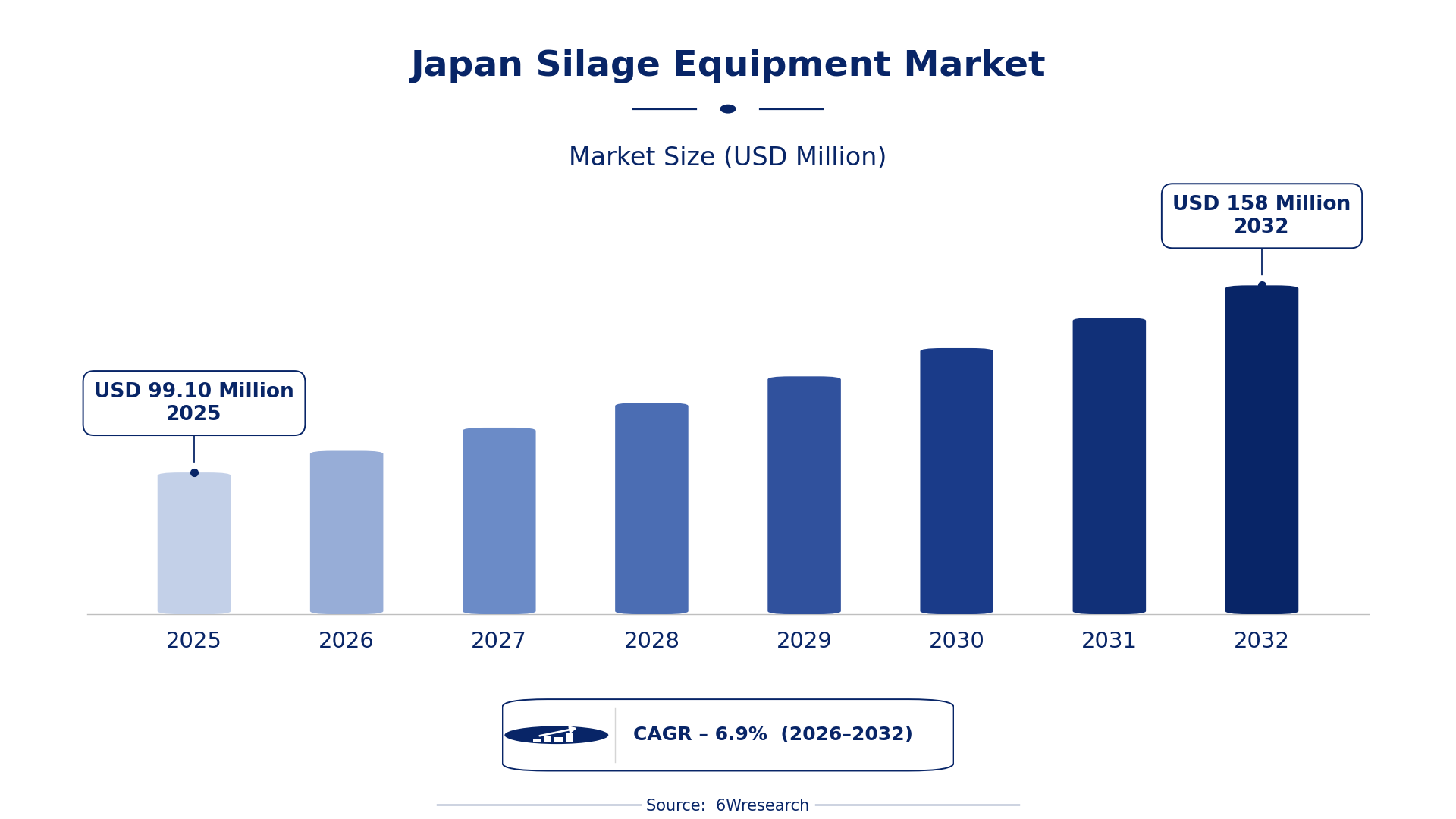
According to 6Wresearch internal database and industry insights, the Japan Silage Equipment Market was valued at USD 99.10 Million in 2025 and is projected to reach USD 158 Million by 2032, growing at a CAGR of approximately 6.9% during 2026–2032.
Japan Silage Equipment Market Highlights
| Report Metric | Details |
| Report Name | Japan Silage Equipment Market (2026-2032) |
| Market Size 2025 | USD 99.10 Million |
| Market Size 2032 | USD 158 Million |
| Absolute Growth 2025–2032 | USD 58.90 Million |
| CAGR 2026–2032 | 6.9% |
| Peak Annual Growth | 7.6% in 2026 |
| Forecast Period | 2026–2032 |
| Historical Data | 2022–2025 |
| Base Year | 2025 |
| Leading Equipment Type, 2025 | Silage Harvesters (44% share) |
| Leading Function, 2025 | Crop Cutting/Chopping (49% share) |
| Leading Power Source, 2025 | PTO-Driven (47% share) |
| Leading End User, 2025 | Dairy Farmers (52% share) |
| Fastest-Growing Equipment Type | Silage Blowers (9.5% CAGR) |
| Fastest-Growing Function | Storage Filling (9.0% CAGR) |
| Fastest-Growing Power Source | Tractor-Mounted (9.4% CAGR) |
| Fastest-Growing End User | Forage Growers (8.8% CAGR) |
| Growing Sector | Dairy Farming |
| Key End Users | Dairy Farmers, Forage Growers, Agri Contractors, Farm Equipment Operators |
Japan Silage Equipment Market Year-wise Growth Rate and Key Drivers (2022–2032)
This graph illustrates the annual growth rates of the market from 2022 to 2032, highlighting a steady upward trajectory and projected market expansion over the forecast period.
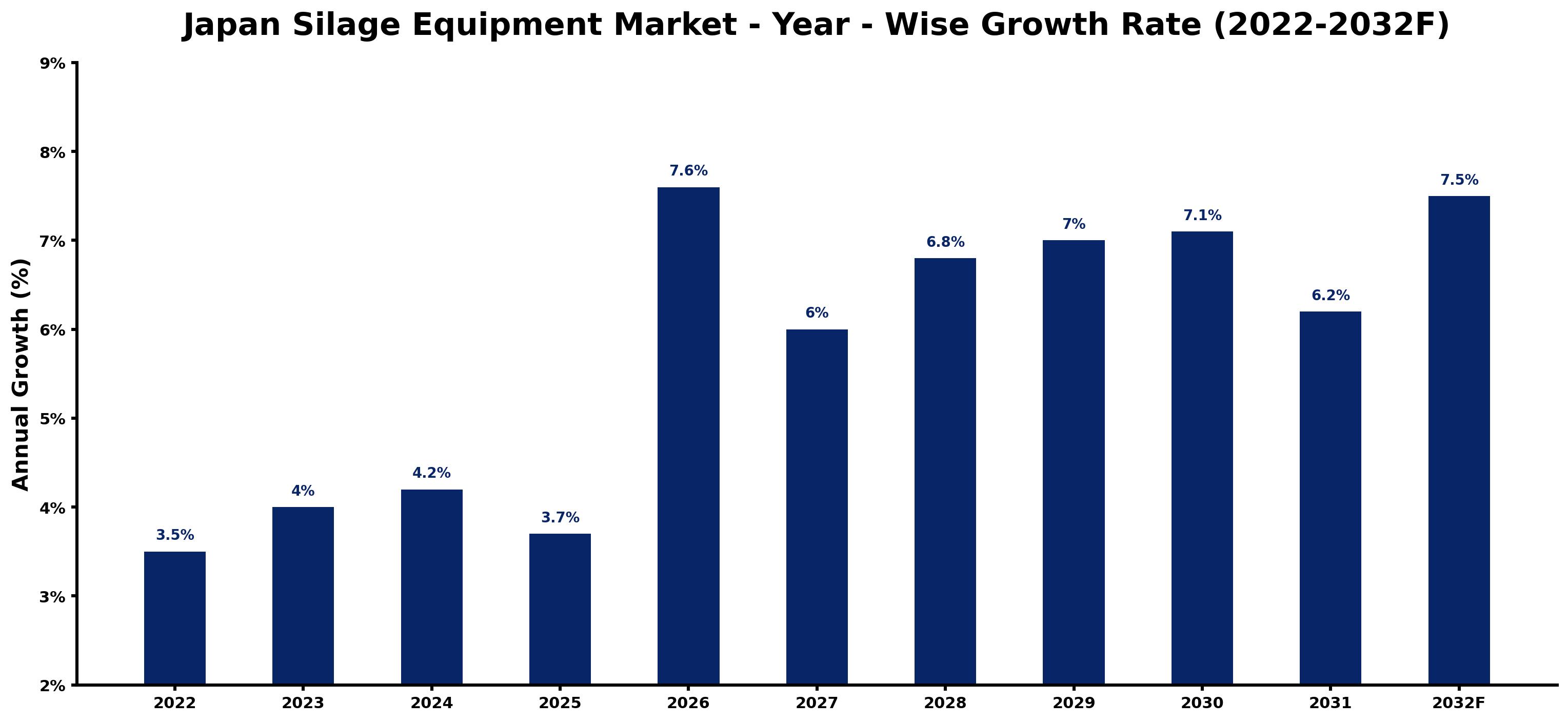
The following figures match every annual growth estimate with the main market development of that year, giving the reasoning behind each rise or slowdown.
| Year | Estimated Annual Growth (%) | Market Rationale |
| 2022 | 3.5 | Market conditions reflected stable demand for silage equipment among dairy farmers. |
| 2023 | 4.0 | Increased interest in modernisation led to higher purchases of silage equipment. |
| 2024 | 4.2 | Demand continued to rise as dairy production expanded in key regions. |
| 2025 | 3.7 | Growth slowed as market saturation began to affect new equipment sales. |
| 2026 | 7.6 | Investment in sustainable practices is expected to spur a surge in equipment demand. |
| 2027 | 6.0 | Market growth is projected to slow as buyers adjust to previous high investments. |
| 2028 | 6.8 | Demand is expected to accelerate again as new technologies improve operational efficiency. |
| 2029 | 7.0 | Increased forage production will drive further equipment purchases among farmers. |
| 2030 | 7.1 | Technological advancements are projected to attract investment in silage solutions. |
| 2031 | 6.2 | Growth is expected to slow as market maturity sets in, stabilising demand patterns. |
| 2032 | 7.5 | Rising dairy production will boost demand for modern silage equipment. |
Note: Market size estimations and growth projections presented in this report are based on 6Wresearch's proprietary forecasting methodology, utilizing the latest available industry data, government publications, and primary research inputs.
Japan Silage Equipment Market Synopsis
Silage equipment is essential for preserving forage crops through anaerobic fermentation, ensuring livestock receive high-quality feed. The Japan Silage Equipment Market is expanding due to increased dairy production, with over 300,000 dairy farms actively utilising silage. Key growth drivers include technological advancements, government support for modernisation, and rising awareness of sustainable practices among farmers.
Market Dynamics Impact Analysis (2026–2032)
| Factor | Type | Impact | Primary Segment Affected |
| Increased dairy production drives demand for efficient silage solutions. | Driver | High | Silage Harvesters |
| Technological advancements in silage equipment enhance operational efficiency. | Driver | High | Self-Propelled Silage Machines |
| Growing interest in sustainable farming practices creates demand for modern equipment. | Opportunity | High | Silage Blowers |
| Investment in agricultural modernisation presents opportunities for suppliers. | Opportunity | High | Silage Compactors |
| Rising costs of equipment can limit purchases by smaller farmers. | Restraint | Medium | Silage Harvesters |
| Aging farmer population may lead to labour shortages in the industry. | Restraint | Medium | Silage Harvesters |
| High initial investment costs deter some farmers from upgrading equipment. | Challenge | High | Silage Harvesters |
| Limited access to financing options restricts equipment acquisition for small farms. | Challenge | Medium | Silage Harvesters |
Evaluation of Drivers in Japan Silage Equipment Market (2026–2032)
The main growth drivers and the segments they affect most are set out below.
| Drivers | Primary Segment Affected | Why It Matters (Evidence) |
| Increased dairy production leads to higher silage equipment demand. | Silage Harvesters | Japan's dairy cows produced over 8 million tons of milk in 2022, prompting more efficient harvesting. |
| Technological advancements improve the efficiency of silage processing. | Self-Propelled Silage Machines | The rising adoption of self-propelled machines addresses labour shortages in agriculture. |
| Government subsidies encourage modernisation of farming equipment. | Silage Compactors | In 2023, ¥10 billion was allocated for agricultural modernization, boosting equipment purchases. |
| Growing forage production increases the need for effective silage management. | Silage Blowers | Annual forage production in Japan is around 5 million tons, necessitating better transport solutions. |
| Rising awareness of sustainable farming practices increases market demand. | Silage Harvesters | The Ministry of Agriculture promotes sustainable livestock practices, increasing interest in modern equipment. |
Several shifts outside the market lift sales. Increased dairy production, with approximately 1.2 million dairy cows producing over 8 million tons of milk annually, drives demand for efficient silage harvesting solutions. The allocation of ¥10 billion for agricultural modernization encourages farmers to invest in advanced silage compactors. Innovations in self-propelled silage machines are being adopted to improve operational efficiency. The annual forage production of around 5 million tons necessitates effective silage management solutions, increasing demand for blowers and related equipment.
Evaluation of Restraints in Japan Silage Equipment Market
Several factors work against faster growth; the main ones are summarised below.
| Market Restraint | Primary Segment Affected | Why It Matters (Evidence) |
| High initial costs deter small-scale farmers from upgrading their equipment. | Silage Harvesters | The average dairy farm in Japan has about 40 cows, limiting investment capacity for new machinery. |
| Aging farmer population leads to potential labour shortages in agriculture. | Silage Harvesters | The average age of farmers in Japan is rising, affecting operational efficiency. |
| Limited financing options restrict equipment acquisition for smaller farms. | Silage Harvesters | Many small farmers struggle to secure loans for modernising their silage equipment. |
| Rising equipment costs can limit purchases by smaller farmers. | Silage Harvesters | Increased production costs have led to higher prices for silage machinery. |
| Market saturation may slow growth as existing equipment meets current needs. | Silage Harvesters | Many farmers have already invested in silage solutions, reducing urgency for new purchases. |
Japan Silage Equipment Market Challenges
Producers face rising operational costs as Japan's national minimum wage reached JPY 1,055 per hour, increasing silage production expenses. Labour shortages compel many farms to invest in advanced equipment, yet the average age of farmers is rising, leading to a scarcity of skilled operators. Distributors encounter delays in acquiring silage equipment due to stringent safety regulations on hydraulic systems, potentially extending lead times by up to six months. Compliance with JIS standards incurs additional costs for suppliers, limiting their ability to respond swiftly to market demands.
Trends in the Japan Silage Equipment Market
Buyers and suppliers in the Japan Silage Equipment Market are adjusting to the following trends.
- Shift towards Self-Propelled Silage Machines: In 2023, the adoption of self-propelled silage machines increased due to labour shortages, with a reported rise in usage among dairy farmers.
- Transition from Traditional to Modern Silage Solutions: The Japanese government’s program promoting sustainable livestock practices has led to an increase in modern silage equipment adoption among farmers in the Tohoku region.
- Dairy Farmers Prioritising Efficiency: Dairy farmers are increasingly investing in silage compactors, resulting in a rise in demand as they seek to minimise spoilage and maximise feed quality.
- Emerging Focus on Sustainable Practices: The GX Basic Policy aims for JPY 150 trillion in decarbonisation investments, influencing farmers to adopt eco-friendly silage equipment.
Investment Opportunities in the Japan Silage Equipment Market
The following areas offer the clearest openings for investors and suppliers in the Japan Silage Equipment Market.
- Investment in Silage Blowers: With a projected rise in demand, silage blowers present an opportunity for suppliers, especially in mountainous regions where transport is challenging.
- Supply of Self-Propelled Silage Machines: The growing demand for self-propelled machines, driven by labour shortages, offers a market for manufacturers looking to enter Japan's agricultural sector.
- Improving Silage Compactor Offerings: The market for silage compactors is expanding, providing opportunities for suppliers to partner with local agricultural cooperatives.
- Focus on PTO-Driven Equipment: As farmers seek efficient solutions, the demand for PTO-driven equipment is on the rise, creating opportunities for manufacturers to introduce innovative products.
Government Initiatives in the Japan Silage Equipment Market
The Industrial Safety and Health Act of 1972 mandates employer responsibilities regarding hazardous substances and machinery, ensuring that silage equipment manufacturers comply with safety standards. The Act on the Rational Use of Energy, established in 1979, requires large energy users to improve energy efficiency, influencing the design and operational practices of silage equipment.
Oversight of agricultural modernisation initiatives falls under the Ministry of Agriculture, Forestry and Fisheries, which allocates funding for equipment upgrades. In 2023, the government allocated ¥10 billion to support farmers in acquiring modern silage equipment, ensuring compliance with safety regulations and boosting productivity.
Future Insight of the Japan Silage Equipment Market
By 2032, the introduction of automated silage machinery will revolutionise production efficiency, addressing the challenges of an ageing workforce. Innovations in technology will improve the quality of silage, directly benefiting suppliers and buyers alike. The government’s investment of ¥10 billion in agricultural modernisation will facilitate access to modern equipment. The promotion of sustainable livestock practices will encourage the adoption of eco-friendly technologies, aligning with the operational goals of the dairy industry.
Market Segmentation Analysis
Japan Silage Equipment Market report covers a detailed analysis of the following market segments:
By Equipment Type – Silage Harvesters Lead, Silage Blowers Expected to Grow Fastest
According to Saurav Kr Singh, Senior Research Analyst at 6Wresearch, with 44% of equipment type revenue in 2025, Silage Harvesters was the largest category. Silage harvesters hold the largest share due to their essential role in efficiently harvesting forage crops, which is crucial for Japan's dairy sector. With over 300,000 dairy farms in the country, the demand for effective harvesting solutions continues to be robust. Silage Blowers are set to record the highest CAGR in this split, 9.5% over 2026–2032. Silage blowers are experiencing rapid growth because they are vital for transporting silage to storage facilities, especially in Japan's mountainous regions where access can be difficult. This increasing adoption reflects farmers' efforts to optimise operations and minimise spoilage. Suppliers should focus on enhancing the capabilities of silage blowers to cater to the growing demand for effective storage solutions.
By Function – Crop Cutting/Chopping Leads, Storage Filling Expected to Grow Fastest
The largest function category in 2025 was Crop Cutting/Chopping, at 49% of revenue. Crop cutting and chopping is the leading function in silage preparation, vital for ensuring the nutritional value of feed. This process supports the approximately 1.2 million dairy cows in Japan that depend on high-quality silage for optimal milk production. Storage Filling is projected to grow fastest, at a CAGR of 9.0% during 2026–2032. Storage filling is growing quickly as it is essential for maintaining silage quality, especially with rising concerns about spoilage. Farmers are increasingly aware of the importance of feed quality, driving this segment's expansion. Buyers should invest in advanced storage filling solutions to guarantee the quality of their silage and improve livestock nutrition.
By Power Source – PTO-Driven Leads, Tractor-Mounted Expected to Grow Fastest
PTO-Driven took 47% of power source revenue in 2025, more than any other category. PTO-driven systems lead the market as they are a reliable power source for silage equipment, widely preferred by dairy farmers for their efficiency. Their compatibility with existing tractors ensures practical use across various farming operations, reinforcing their dominant position. The quickest growth will come from Tractor-Mounted, forecast to expand at a CAGR of 9.4% between 2026 and 2032. Tractor-mounted equipment is witnessing rapid growth due to its versatility and efficiency, allowing farmers to address diverse operational needs. As the average age of farmers increases, the demand for user-friendly solutions that enhance productivity is also on the rise. Suppliers should prioritise the development of more tractor-mounted options to align with farmers' evolving preferences for operational efficiency.
By End User – Dairy Farmers Lead, Forage Growers Expected to Grow Fastest
In 2025, Dairy Farmers led the end user split with a 52% share. Dairy farmers represent the largest end user group for silage equipment, as they are the primary consumers of silage for livestock feed. With the Japanese dairy industry producing over 8 million tons of milk annually, the reliance on effective silage solutions is paramount. Over 2026–2032, Forage Growers are expected to post the fastest growth, at a CAGR of 8.8%. Forage growers are the fastest-growing segment, as they play a key role in crop management and the supply of quality feed. The increasing focus on sustainable practices in agriculture is driving forage growers to invest in modern silage solutions. Suppliers should target forage growers with tailored solutions that address their specific needs in crop management and silage production.
Key Attractiveness of the Report
- 10 Years of Market Numbers
- Historical Data Starting from 2022 to 2025
- Base Year 2025
- Forecast Data until 2032
- Key Performance Indicators Impacting the Market
- Major Upcoming Developments and Projects
Key Highlights of the Report:
- Japan Silage Equipment Market Outlook
- Market Size of Japan Silage Equipment Market, 2025
- Forecast of Japan Silage Equipment Market, 2032
- Historical Data and Forecast of Japan Silage Equipment Revenues & Volume for the Period 2022-2032F
- Japan Silage Equipment Market Trend Evolution
- Japan Silage Equipment Market Drivers and Challenges
- Japan Silage Equipment Price Trends
- Japan Silage Equipment Porter's Five Forces
- Japan Silage Equipment Industry Life Cycle
- Historical Data and Forecast of Japan Silage Equipment Market Revenues & Volume By Equipment Type for the Period 2022-2032F
- Historical Data and Forecast of Japan Silage Equipment Market Revenues & Volume By Silage Harvesters for the Period 2022-2032F
- Historical Data and Forecast of Japan Silage Equipment Market Revenues & Volume By Silage Blowers for the Period 2022-2032F
- Historical Data and Forecast of Japan Silage Equipment Market Revenues & Volume By Silage Compactors for the Period 2022-2032F
- Historical Data and Forecast of Japan Silage Equipment Market Revenues & Volume By Self-Propelled Silage Machines for the Period 2022-2032F
- Historical Data and Forecast of Japan Silage Equipment Market Revenues & Volume By Function for the Period 2022-2032F
- Historical Data and Forecast of Japan Silage Equipment Market Revenues & Volume By Crop Cutting/Chopping for the Period 2022-2032F
- Historical Data and Forecast of Japan Silage Equipment Market Revenues & Volume By Storage Filling for the Period 2022-2032F
- Historical Data and Forecast of Japan Silage Equipment Market Revenues & Volume By Compression for the Period 2022-2032F
- Historical Data and Forecast of Japan Silage Equipment Market Revenues & Volume By Harvest + Transport for the Period 2022-2032F
- Historical Data and Forecast of Japan Silage Equipment Market Revenues & Volume By Power Source for the Period 2022-2032F
- Historical Data and Forecast of Japan Silage Equipment Market Revenues & Volume By PTO-Driven for the Period 2022-2032F
- Historical Data and Forecast of Japan Silage Equipment Market Revenues & Volume By Tractor-Mounted for the Period 2022-2032F
- Historical Data and Forecast of Japan Silage Equipment Market Revenues & Volume By Hydraulic for the Period 2022-2032F
- Historical Data and Forecast of Japan Silage Equipment Market Revenues & Volume By Diesel Engine for the Period 2022-2032F
- Historical Data and Forecast of Japan Silage Equipment Market Revenues & Volume By End User for the Period 2022-2032F
- Historical Data and Forecast of Japan Silage Equipment Market Revenues & Volume By Dairy Farmers for the Period 2022-2032F
- Historical Data and Forecast of Japan Silage Equipment Market Revenues & Volume By Forage Growers for the Period 2022-2032F
- Historical Data and Forecast of Japan Silage Equipment Market Revenues & Volume By Farm Equipment Operators for the Period 2022-2032F
- Historical Data and Forecast of Japan Silage Equipment Market Revenues & Volume By Agri Contractors for the Period 2022-2032F
- Japan Silage Equipment Import Export Trade Statistics
- Market Opportunity Assessment By Equipment Type
- Market Opportunity Assessment By Function
- Market Opportunity Assessment By Power Source
- Market Opportunity Assessment By End User
- Japan Silage Equipment Top Companies Market Share
- Japan Silage Equipment Competitive Benchmarking By Technical and Operational Parameters
- Japan Silage Equipment Company Profiles
- Japan Silage Equipment Key Strategic Recommendations
Market Covered
Segments analysed in this report are listed below.
By Equipment Type
- Silage Harvesters
- Silage Blowers
- Silage Compactors
- Self-Propelled Silage Machines
By Function
- Crop Cutting/Chopping
- Storage Filling
- Compression
- Harvest + Transport
By Power Source
- PTO-Driven
- Tractor-Mounted
- Hydraulic
- Diesel Engine
By End User
- Dairy Farmers
- Forage Growers
- Farm Equipment Operators
- Agri Contractors































