Japan Skin Care Oil Market Size & Growth Rate
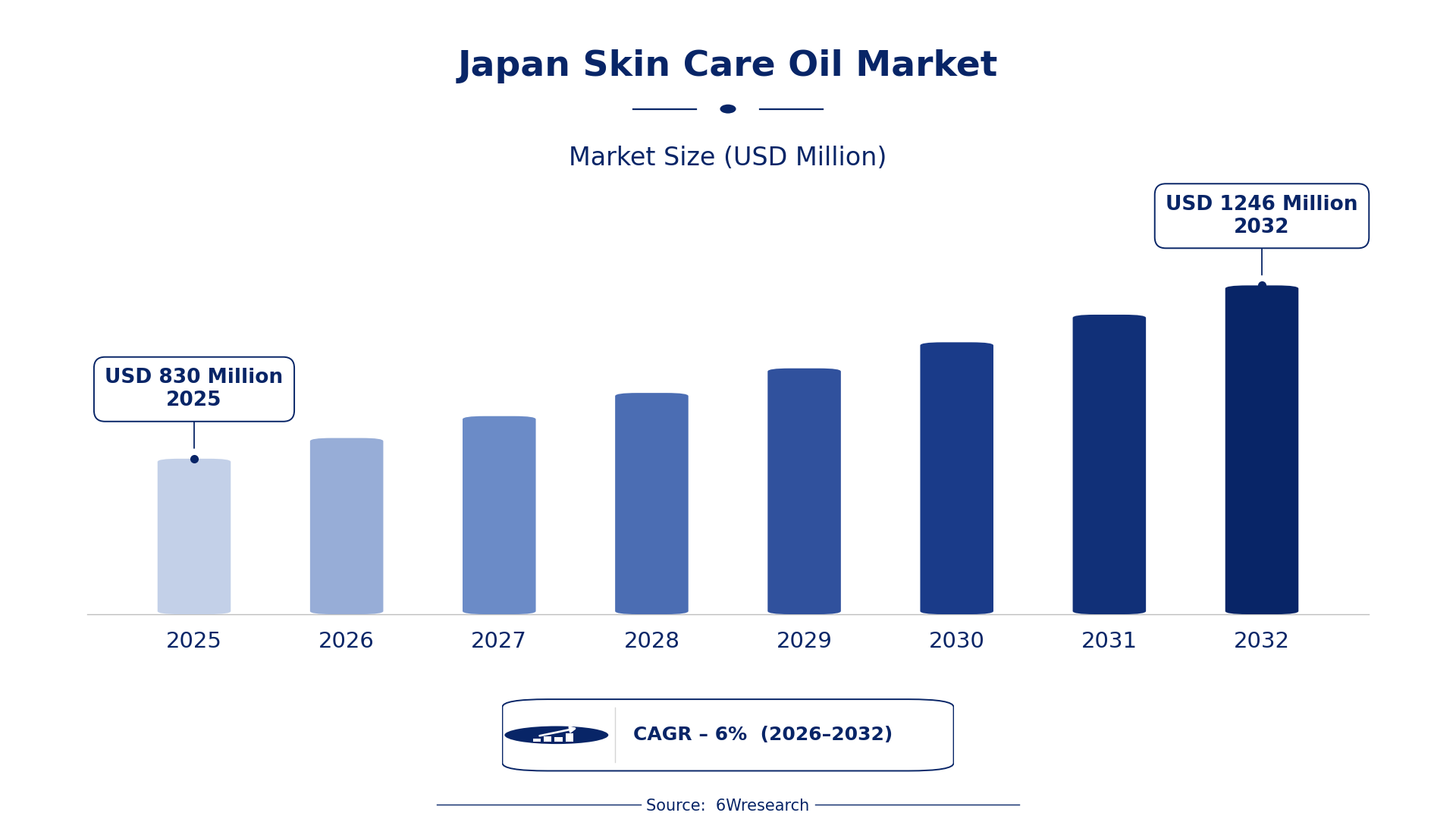
According to 6Wresearch internal database and industry insights, the Japan Skin Care Oil Market was valued at USD 830 Million in 2025 and is projected to reach USD 1,246 Million by 2032, growing at a CAGR of approximately 6% during 2026–2032.
Japan Skin Care Oil Market Highlights
| Report Metric | Details |
| Report Name | Japan Skin Care Oil Market (2026-2032) |
| Market Size 2025 | USD 830 Million |
| Market Size 2032 | USD 1,246 Million |
| Absolute Growth 2025–2032 | USD 416 Million |
| CAGR 2026–2032 | 6% |
| Peak Annual Growth | 6.6% in 2032 |
| Forecast Period | 2026–2032 |
| Historical Data | 2022–2025 |
| Base Year | 2025 |
| Leading Oil Type, 2025 | Argan Oil (38% share) |
| Leading Source, 2025 | Plant-Based (42% share) |
| Leading Skin Benefit, 2025 | Anti-aging & Moisturizing (39% share) |
| Leading End User, 2025 | Natural Beauty Brands (46% share) |
| Fastest-Growing Oil Type | Tea Tree Oil (8.5% CAGR) |
| Fastest-Growing Source | Essential Oil (8.6% CAGR) |
| Fastest-Growing Skin Benefit | Anti-inflammatory (8.3% CAGR) |
| Fastest-Growing End User | Acne Product Lines (7.8% CAGR) |
| Growing Sector | natural beauty |
| Key End Users | natural beauty brands, wellness product firms, retail cosmetic brands |
Japan Skin Care Oil Market Year-wise Growth Rate and Key Drivers (2022–2032)
This graph illustrates the annual growth rates of the market from 2022 to 2032, highlighting a steady upward trajectory and projected market expansion over the forecast period.
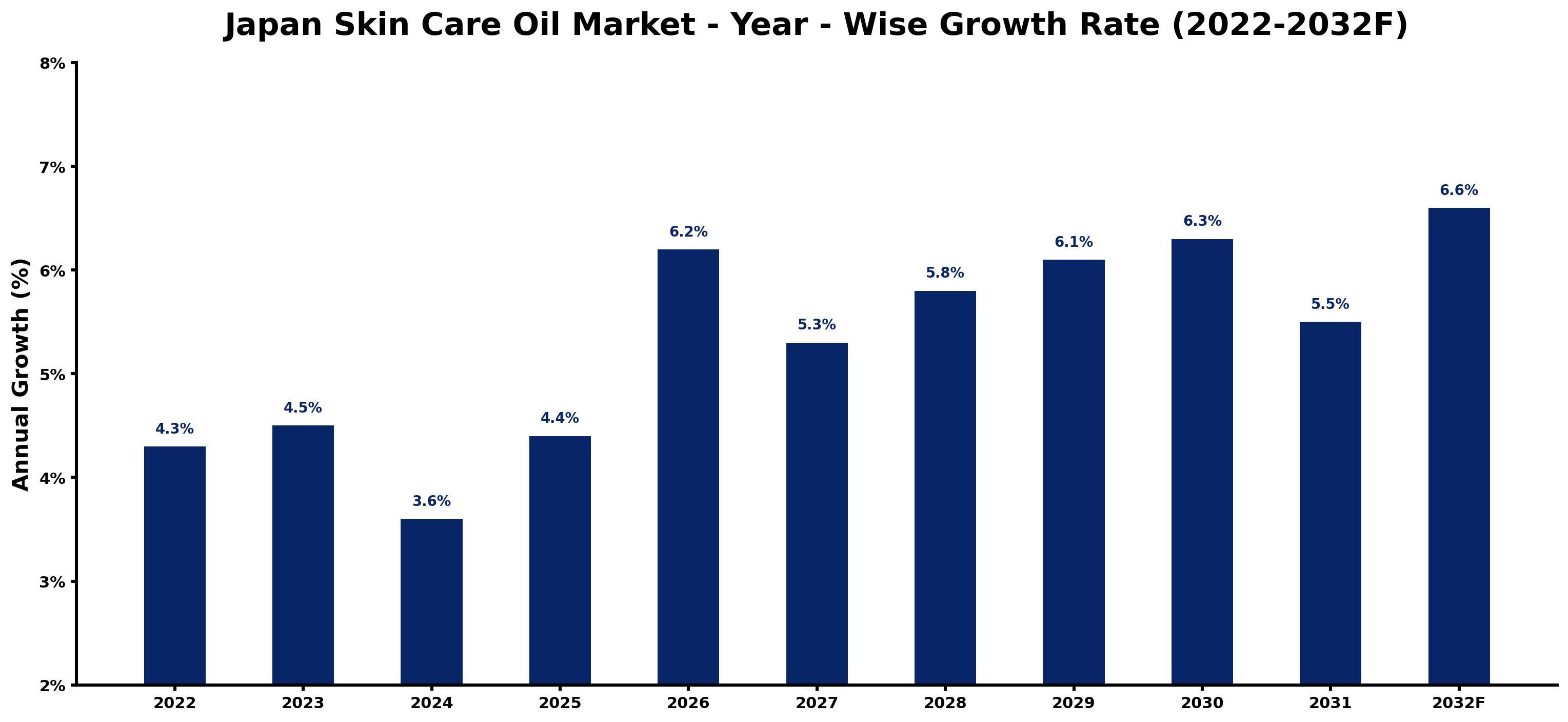
Below, each year's estimated growth is shown next to the factor that most influenced it.
| Year | Estimated Annual Growth (%) | Market Rationale |
| 2022 | 4.3 | Market conditions reflected a steady demand for skin care products amid a growing population. |
| 2023 | 4.5 | Consumer interest in natural ingredients led to increased purchases of skin care oils. |
| 2024 | 3.6 | Market growth slowed due to a temporary decline in disposable income among consumers. |
| 2025 | 4.4 | The demand for anti-aging products surged, boosting skin care oil sales. |
| 2026 | 6.2 | Rising awareness of skin health will drive higher consumption of moisturizing oils. |
| 2027 | 5.3 | The market will experience a slowdown as competition intensifies among product lines. |
| 2028 | 5.8 | Consumer preferences will shift towards multifunctional skin care oils, boosting sales. |
| 2029 | 6.1 | Increased marketing efforts by brands will contribute to a rise in product visibility. |
| 2030 | 6.3 | The trend towards sustainable products will encourage further investment in skin care oils. |
| 2031 | 5.5 | Market growth will slow as consumers become more selective about product ingredients. |
| 2032 | 6.6 | A peak in demand is anticipated as the market aligns with eco-friendly trends. |
Note: Market size estimations and growth projections presented in this report are based on 6Wresearch's proprietary forecasting methodology, utilizing the latest available industry data, government publications, and primary research inputs.
Japan Skin Care Oil Market Synopsis
Skin care oil serves as a cosmetic product derived from natural sources, primarily for moisturising and improving skin health. The Japan Skin Care Oil Market is growing due to a rising population and an increasing preference for organic products. Key buyer groups include natural beauty brands and wellness product firms, driven by the popularity of anti-aging oils and a focus on sustainable beauty practices. The natural beauty market in Japan is valued at over 1 trillion yen, highlighting the demand for skin care oils.
Market Dynamics Impact Analysis (2026–2032)
| Factor | Type | Impact | Primary Segment Affected |
| Growing consumer preference for natural ingredients | Driver | High | Plant-Based |
| Increased awareness of skin health benefits | Driver | High | Anti-aging & Moisturizing |
| Rising demand for eco-friendly products | Opportunity | High | Coconut Oil |
| Expansion of wellness product lines incorporating oils | Opportunity | Medium | Essential Oil |
| Intense competition among brands | Restraint | High | Tea Tree Oil |
| Price sensitivity among consumers | Restraint | Medium | Rosehip Oil |
| Supply chain disruptions affecting ingredient sourcing | Challenge | High | Carrier Oil |
| Regulatory changes impacting product formulations | Challenge | Medium | Seed Oil |
Evaluation of Drivers in Japan Skin Care Oil Market (2026–2032)
The main growth drivers and the segments they affect most are set out below.
| Drivers | Primary Segment Affected | Why It Matters (Evidence) |
| Increasing demand for anti-aging products | Anti-aging & Moisturizing | The rise in the aging population, with 29.3% aged 65 or older, fuels demand for effective skin care solutions. |
| Growing popularity of natural ingredients | Plant-Based | The natural beauty market in Japan, valued at over 1 trillion yen, drives brands to source plant-based oils. |
| Rising health consciousness among consumers | Coconut Oil | Retail sales of skin care products reached 300 billion yen in 2022, reflecting a shift towards health-oriented choices. |
| Increased marketing of multifunctional products | Essential Oil | The Tokyo Beauty Week in 2023 showcased trends that emphasise the versatility of essential oils in skin care. |
| Expansion of wellness-focused product lines | Tea Tree Oil | Coconut oil is widely used in wellness product formulations, boosting demand for complementary oils. |
Spending rises because consumer preferences have shifted over the past five years, with a marked increase in the demand for natural ingredients. The aging population drives the need for anti-aging solutions, while the natural beauty market, valued at over 1 trillion yen, prompts brands to innovate and expand their offerings. Retail sales of skin care products reached 300 billion yen in 2022, reflecting a growing health consciousness among consumers. The Tokyo Beauty Week in 2023 highlighted trends in multifunctional products, further boosting interest in skin care oils. As a result, brands are increasingly focusing on the development of effective and appealing formulations.
Evaluation of Restraints in Japan Skin Care Oil Market
The key brakes on demand, and where they bite hardest, are shown below.
| Market Restraint | Primary Segment Affected | Why It Matters (Evidence) |
| Intense competition among brands leading to price wars | Tea Tree Oil | The competitive environment pressures brands to lower prices, affecting profit margins. |
| Price sensitivity among consumers impacting purchasing decisions | Rosehip Oil | Economic factors have made consumers more cautious, resulting in selective buying of skin care oils. |
| Supply chain disruptions affecting ingredient sourcing | Carrier Oil | Global supply chain issues have caused delays and increased costs for sourcing essential oils. |
| Regulatory changes impacting product formulations | Seed Oil | New regulations require reformulations, increasing costs and time to market. |
| Limited consumer awareness of product benefits | Coconut Oil | Consumers may not fully understand the advantages of various oils, hindering sales. |
Japan Skin Care Oil Market Challenges
Producers incur higher costs due to compliance with ISO 16128 standards for natural cosmetics, which can raise production expenses by 15%. Local suppliers face intense competition from imported skin care oils, resulting in a 20% decline in market share for domestic brands. Rising prices for raw materials, such as coconut and argan oils, can increase costs by up to 30%, compelling buyers to rethink their sourcing strategies. A shortage of skilled formulators in the cosmetic sector delays product development timelines by approximately six months, affecting producers' ability to launch new offerings.
Trends in the Japan Skin Care Oil Market
These developments are changing demand patterns in the Japan Skin Care Oil Market.
- Natural Beauty Brands Prioritising Sustainable Ingredients: Natural beauty brands are increasingly focusing on sustainable ingredients, responding to consumer demand for eco-friendly products. In 2023, over 60% of new product launches featured plant-based formulations, reflecting a shift in consumer preferences.
- Tokyo Emerging as a Hub for Cosmetic Innovation: Tokyo is solidifying its position as a hub for cosmetic innovation, with numerous product launches in 2023. The city accounted for 25% of Japan's total cosmetic sales, showcasing its influence on market trends.
- ISO 16128 Standards Gaining Importance: The adoption of ISO 16128 standards for natural and organic cosmetics is becoming more prevalent. By 2025, over 70% of products are expected to comply, enhancing consumer trust in product claims.
- Increase in Wellness Product Formulations: The wellness sector is integrating more skin care oils into their product lines. In 2023, wellness products incorporating coconut oil saw a 15% sales increase, indicating a growing consumer interest in holistic health.
Investment Opportunities in the Japan Skin Care Oil Market
Investors looking at the Japan Skin Care Oil Market should consider the following areas.
- Supply of Plant-Based Skin Care Oils: With the natural beauty market valued at over 1 trillion yen, there is an opportunity to supply plant-based skin care oils. Natural beauty brands are actively seeking sustainable sources to meet consumer demand.
- Investment in Eco-Friendly Product Development: The growing preference for sustainable products presents an opportunity to invest in eco-friendly formulations. Wellness product firms are increasingly looking for partners to develop innovative solutions.
- Expansion into the Wellness Sector: The wellness sector is expanding rapidly, with a 15% increase in sales of products containing skin care oils. Collaborating with wellness brands can facilitate market entry and growth.
- Certification for Organic Products: Obtaining certifications for organic skin care oils can enhance marketability. The demand for certified natural products is rising, particularly among health-conscious consumers.
Government Initiatives in the Japan Skin Care Oil Market
In 2023, a program promoting sustainable beauty products was launched, building on existing regulations like the Standards for Cosmetics established in 2000. This initiative encourages producers to adopt eco-friendly practices and comply with stringent ingredient standards, improving consumer safety and trust.
In 2022, the Ministry of Health, Labour and Welfare funded initiatives to support the cosmetic industry, including grants for research into natural ingredients. The agency oversees compliance with cosmetic regulations, ensuring that products meet safety and efficacy standards.
Future Insight of the Japan Skin Care Oil Market
Retailers will adapt to changing buyer preferences for sustainable skin care products, creating new opportunities. By 2032, the government's initiative promoting eco-friendly beauty products is expected to drive a 25% increase in the natural skin care oil market. Technological advancements in extraction methods will enhance production efficiency, benefiting both suppliers and buyers. Events like the Tokyo Beauty Week will continue to showcase trends, influencing consumer choices towards natural ingredients and formulations.
Market Segmentation Analysis
Japan Skin Care Oil Market report covers a detailed analysis of the following market segments:
By Oil Type – Argan Oil Leads, Tea Tree Oil Expected to Grow Fastest
According to Saurav Kr Singh, Senior Research Analyst at 6Wresearch, with 38% of oil type revenue in 2025, Argan Oil was the largest category. Argan oil holds the largest share in Japan as it is extensively used for moisturising and anti-aging benefits, appealing to consumers focused on skin health. The increasing consumer awareness of natural ingredients further strengthens its market position. Tea Tree Oil is projected to grow fastest, at a CAGR of 8.5% during 2026–2032. Tea tree oil is experiencing rapid growth due to its recognised antibacterial properties in acne treatments, addressing a common concern among Japanese consumers. The rising incidence of skin irritations has significantly increased the demand for effective acne solutions, driving this segment's expansion. Suppliers should enhance their offerings in tea tree oil to capitalise on the growing demand for acne treatment solutions.
By Source – Plant-Based Leads, Essential Oil Expected to Grow Fastest
In 2025, Plant-Based led the source split with a 42% share. Plant-based oils dominate the market as they are essential for natural formulations in skin care, aligning with the consumer shift towards organic products. This trend is highlighted by the substantial valuation of over 1 trillion yen for natural beauty products in Japan. Essential Oil is set to record the highest CAGR in this split, 8.6% over 2026–2032. Essential oils are quickly gaining traction due to their benefits in both aromatherapy and skin care, appealing to consumers seeking holistic wellness solutions. The rising interest in wellness trends is propelling the growth of this segment as consumers look for multifunctional products. Buyers should prioritise sourcing plant-based and essential oils to meet the increasing consumer demand for natural and multifunctional skin care solutions.
By Skin Benefit – Anti-aging & Moisturizing Leads, Anti-inflammatory Expected to Grow Fastest
Anti-aging & Moisturizing accounted for 39% of the market by skin benefit in 2025. Anti-aging and moisturising benefits are the primary focus for consumers, making this segment the largest as it directly addresses the concerns of Japan's ageing population. With 29.3% of the population aged 65 or older, there is a substantial demand for effective anti-aging solutions. The quickest growth will come from Anti-inflammatory, forecast to expand at a CAGR of 8.3% between 2026 and 2032. Anti-inflammatory benefits are becoming increasingly sought after, particularly for treating skin irritations, which is vital in a market with a growing awareness of skin health. The rise in skin conditions has led to heightened interest in products that offer soothing properties, driving this segment's growth. Suppliers should consider expanding their product lines to include anti-inflammatory options to cater to the needs of consumers seeking relief from skin irritations.
By End User – Natural Beauty Brands Lead, Acne Product Lines Expected to Grow Fastest
Natural Beauty Brands held 46% of the Japan Skin Care Oil Market by end user in 2025. Natural beauty brands are the largest consumers of skin care oils, emphasising the use of high-quality natural ingredients in their products. This trend reflects a growing market for natural beauty products, indicating a shift in consumer preferences towards sustainability and efficacy. Over 2026–2032, Acne Product Lines are expected to post the fastest growth, at a CAGR of 7.8%. Acne product lines are rapidly expanding, driven by the significant market for tea tree oil and other effective ingredients that address acne concerns. The increasing prevalence of skin issues among consumers is propelling this segment's growth as brands strive to provide targeted solutions. Natural beauty brands should consider integrating more acne treatment options into their product lines to meet the rising demand for effective skin care solutions.
Key Attractiveness of the Report
- 10 Years of Market Numbers
- Historical Data Starting from 2022 to 2025
- Base Year 2025
- Forecast Data until 2032
- Key Performance Indicators Impacting the Market
- Major Upcoming Developments and Projects
Key Highlights of the Report:
- Japan Skin Care Oil Market Outlook
- Market Size of Japan Skin Care Oil Market, 2025
- Forecast of Japan Skin Care Oil Market, 2032
- Historical Data and Forecast of Japan Skin Care Oil Revenues & Volume for the Period 2022-2032F
- Japan Skin Care Oil Market Trend Evolution
- Japan Skin Care Oil Market Drivers and Challenges
- Japan Skin Care Oil Price Trends
- Japan Skin Care Oil Porter's Five Forces
- Japan Skin Care Oil Industry Life Cycle
- Historical Data and Forecast of Japan Skin Care Oil Market Revenues & Volume By Oil Type for the Period 2022-2032F
- Historical Data and Forecast of Japan Skin Care Oil Market Revenues & Volume By Argan Oil for the Period 2022-2032F
- Historical Data and Forecast of Japan Skin Care Oil Market Revenues & Volume By Tea Tree Oil for the Period 2022-2032F
- Historical Data and Forecast of Japan Skin Care Oil Market Revenues & Volume By Rosehip Oil for the Period 2022-2032F
- Historical Data and Forecast of Japan Skin Care Oil Market Revenues & Volume By Coconut Oil for the Period 2022-2032F
- Historical Data and Forecast of Japan Skin Care Oil Market Revenues & Volume By Source for the Period 2022-2032F
- Historical Data and Forecast of Japan Skin Care Oil Market Revenues & Volume By Plant-Based for the Period 2022-2032F
- Historical Data and Forecast of Japan Skin Care Oil Market Revenues & Volume By Essential Oil for the Period 2022-2032F
- Historical Data and Forecast of Japan Skin Care Oil Market Revenues & Volume By Seed Oil for the Period 2022-2032F
- Historical Data and Forecast of Japan Skin Care Oil Market Revenues & Volume By Carrier Oil for the Period 2022-2032F
- Historical Data and Forecast of Japan Skin Care Oil Market Revenues & Volume By Skin Benefit for the Period 2022-2032F
- Historical Data and Forecast of Japan Skin Care Oil Market Revenues & Volume By Anti-aging & Moisturizing for the Period 2022-2032F
- Historical Data and Forecast of Japan Skin Care Oil Market Revenues & Volume By Anti-inflammatory for the Period 2022-2032F
- Historical Data and Forecast of Japan Skin Care Oil Market Revenues & Volume By Scar & Stretch Mark Repair for the Period 2022-2032F
- Historical Data and Forecast of Japan Skin Care Oil Market Revenues & Volume By Hydration & Antibacterial for the Period 2022-2032F
- Historical Data and Forecast of Japan Skin Care Oil Market Revenues & Volume By End User for the Period 2022-2032F
- Historical Data and Forecast of Japan Skin Care Oil Market Revenues & Volume By Natural Beauty Brands for the Period 2022-2032F
- Historical Data and Forecast of Japan Skin Care Oil Market Revenues & Volume By Acne Product Lines for the Period 2022-2032F
- Historical Data and Forecast of Japan Skin Care Oil Market Revenues & Volume By Retail Cosmetic Brands for the Period 2022-2032F
- Historical Data and Forecast of Japan Skin Care Oil Market Revenues & Volume By Wellness Product Firms for the Period 2022-2032F
- Japan Skin Care Oil Import Export Trade Statistics
- Market Opportunity Assessment By Oil Type
- Market Opportunity Assessment By Source
- Market Opportunity Assessment By Skin Benefit
- Market Opportunity Assessment By End User
- Japan Skin Care Oil Top Companies Market Share
- Japan Skin Care Oil Competitive Benchmarking By Technical and Operational Parameters
- Japan Skin Care Oil Company Profiles
- Japan Skin Care Oil Key Strategic Recommendations
Market Covered
The report covers the following segments.
By Oil Type
- Argan Oil
- Tea Tree Oil
- Rosehip Oil
- Coconut Oil
By Source
- Plant-Based
- Essential Oil
- Seed Oil
- Carrier Oil
By Skin Benefit
- Anti-aging & Moisturizing
- Anti-inflammatory
- Scar & Stretch Mark Repair
- Hydration & Antibacterial
By End User
- Natural Beauty Brands
- Acne Product Lines
- Retail Cosmetic Brands
- Wellness Product Firms































