Japan Skincare Oil Market Size & Growth Rate
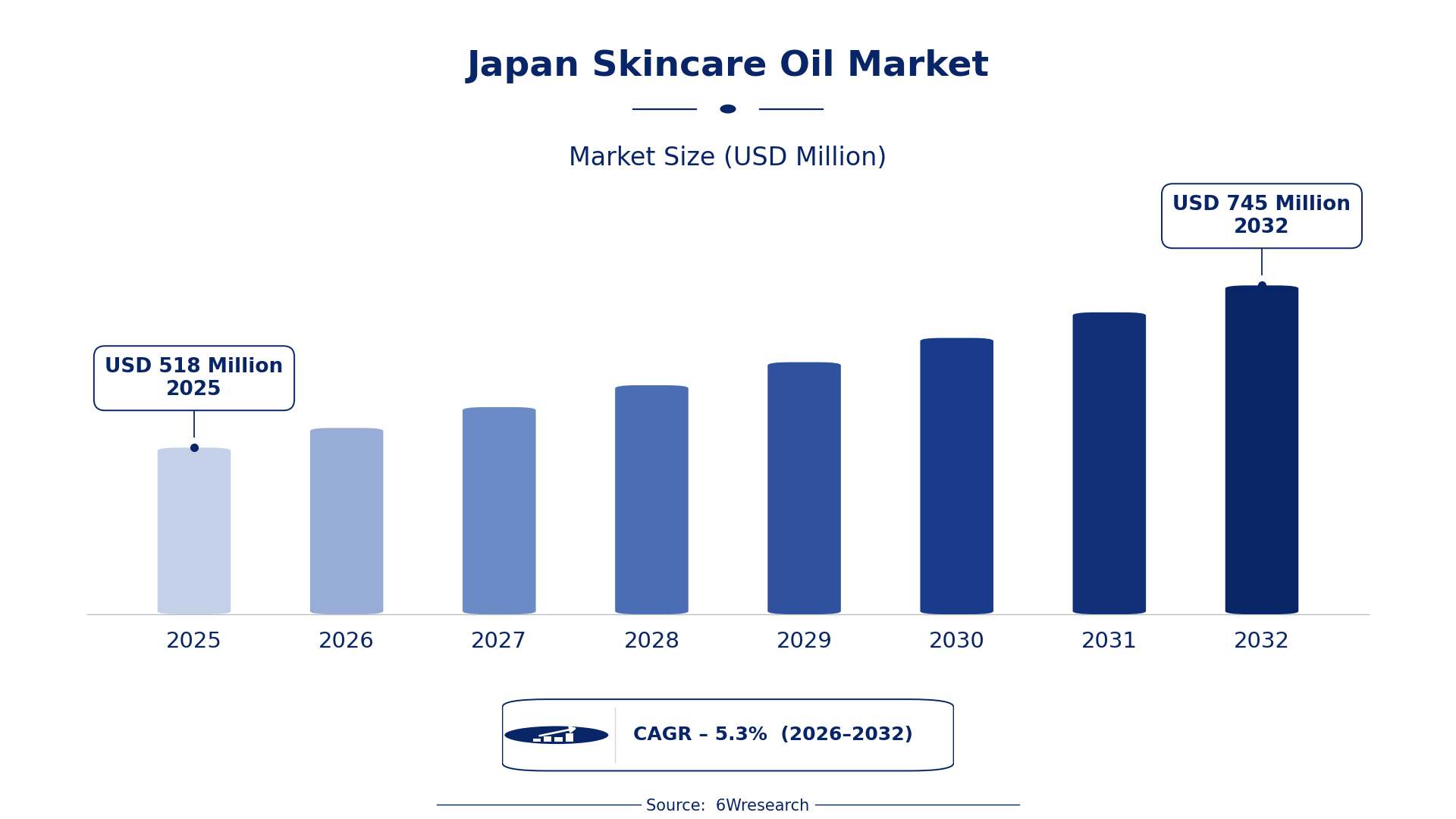
According to 6Wresearch internal database and industry insights, the Japan Skincare Oil Market was valued at USD 518 Million in 2025 and is projected to reach USD 745 Million by 2032, growing at a CAGR of approximately 5.3% during 2026–2032.
Japan Skincare Oil Market Highlights
| Report Metric | Details |
| Report Name | Japan Skincare Oil Market (2026-2032) |
| Market Size 2025 | USD 518 Million |
| Market Size 2032 | USD 745 Million |
| Absolute Growth 2025–2032 | USD 227 Million |
| CAGR 2026–2032 | 5.3% |
| Peak Annual Growth | 7.0% in 2032 |
| Forecast Period | 2026–2032 |
| Historical Data | 2022–2025 |
| Base Year | 2025 |
| Leading Oil Type, 2025 | Jojoba Oil (36% share) |
| Leading Source Ingredient, 2025 | Plant Seed (42% share) |
| Leading Functionality, 2025 | Balancing/Hydrating (42% share) |
| Leading End User, 2025 | Clean Beauty Brands (45% share) |
| Fastest-Growing Oil Type | Marula Oil (7.5% CAGR) |
| Fastest-Growing Source Ingredient | Tree Nut (8.0% CAGR) |
| Fastest-Growing Functionality | Anti-aging/Nourishing (7.3% CAGR) |
| Fastest-Growing End User | Prestige Skincare Labels (7.0% CAGR) |
| Growing Sector | Natural Skincare |
| Key End Users | Clean Beauty Brands, Prestige Skincare Labels, Natural Skincare Lines |
Japan Skincare Oil Market Year-wise Growth Rate and Key Drivers (2022–2032)
This graph illustrates the annual growth rates of the market from 2022 to 2032, highlighting a steady upward trajectory and projected market expansion over the forecast period.
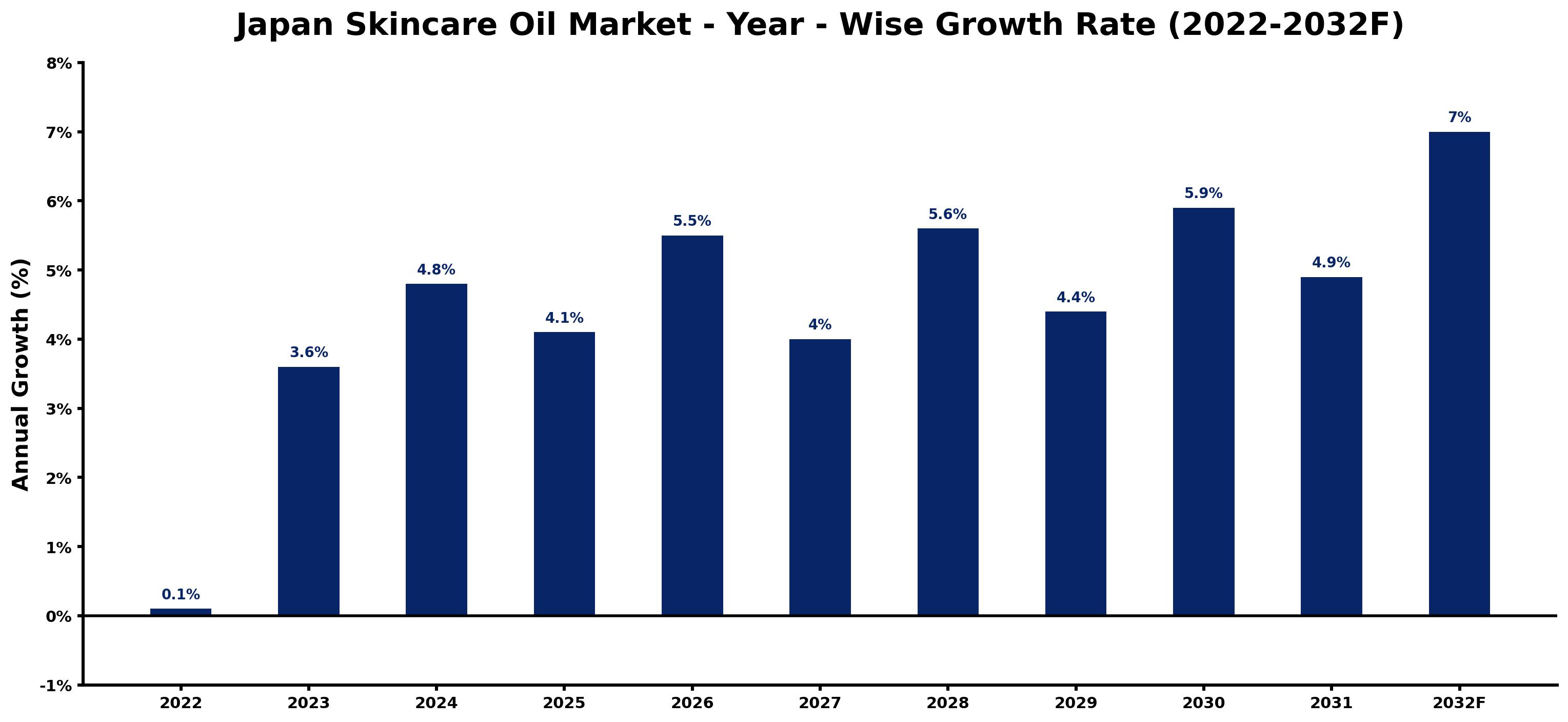
For each year, the table pairs the estimated growth rate with the leading influence on demand, showing how the drivers changed across the period.
| Year | Estimated Annual Growth (%) | Market Rationale |
| 2022 | 0.1 | The market showed minimal growth as consumers began shifting preferences towards natural ingredients. |
| 2023 | 3.6 | Growth accelerated as consumer awareness of skincare benefits increased. |
| 2024 | 4.8 | The demand for anti-aging products surged among the aging population, driving higher sales. |
| 2025 | 4.1 | Growth slowed as market saturation in certain product categories became apparent. |
| 2026 | 5.5 | Consumer interest in natural skincare options is expected to rise, boosting demand further. |
| 2027 | 4.0 | A slowdown is expected as competition intensifies among brands targeting similar demographics. |
| 2028 | 5.6 | Growth is projected to pick up again due to rising disposable incomes and spending. |
| 2029 | 4.4 | The market experiences a slight slowdown as consumers become more discerning in choices. |
| 2030 | 5.9 | Increased marketing efforts around natural ingredients are expected to drive sales higher. |
| 2031 | 4.9 | Growth slows as the market matures and consumer preferences stabilise. |
| 2032 | 7.0 | The market is set to peak with a surge in demand for premium skincare products. |
Note: Market size estimations and growth projections presented in this report are based on 6Wresearch's proprietary forecasting methodology, utilizing the latest available industry data, government publications, and primary research inputs.
Japan Skincare Oil Market Synopsis
Skincare oil, derived from natural sources like plants and nuts, is processed through cold-pressing or extraction methods. Its primary uses include moisturising, anti-aging, and soothing skin. The Japan Skincare Oil Market is expanding, driven by a growing preference for natural ingredients, with over 70% of consumers favouring such products. The Clean Beauty movement, alongside rising disposable incomes, is propelling demand, particularly for products targeting the aging population and sensitive skin.
Market Dynamics Impact Analysis (2026–2032)
| Factor | Type | Impact | Primary Segment Affected |
| Growing consumer preference for natural ingredients | Driver | High | Plant Seed |
| Rising disposable income leading to increased spending on skincare | Driver | High | Prestige Skincare Labels |
| Emerging demand for organic and clean beauty products | Opportunity | High | Clean Beauty Brands |
| Increasing focus on anti-aging skincare solutions | Opportunity | High | Anti-aging/Nourishing |
| High competition leading to price wars | Restraint | Medium | Natural Skincare Lines |
| Market saturation in certain product categories | Restraint | Medium | Balancing/Hydrating |
| Rising costs of natural ingredients affecting pricing | Challenge | High | Jojoba Oil |
| Tightening regulations on cosmetic ingredients | Challenge | Medium | Marula Oil |
Evaluation of Drivers in Japan Skincare Oil Market (2026–2032)
Key forces behind demand, with the segment each one moves most, are listed below.
| Drivers | Primary Segment Affected | Why It Matters (Evidence) |
| Increased consumer interest in natural skincare products | Plant Seed | Over 70% of consumers prefer products with natural ingredients, driving demand for plant-based oils. |
| Growing disposable income among consumers | Prestige Skincare Labels | Japan's skincare market is valued at approximately 3 trillion yen, leading to higher spending on premium products. |
| The Clean Beauty movement gaining traction | Clean Beauty Brands | Natural skincare lines are experiencing a 15% annual growth as consumers seek organic options. |
| Aging population driving demand for anti-aging products | Anti-aging/Nourishing | The trend for anti-aging products is strong among the 29.3% of the population aged 65 or older. |
| Rising awareness of skincare benefits among consumers | Natural Skincare Lines | The Japanese skincare market is projected to continue growing due to increasing consumer awareness. |
Purchasing is picking up as consumers increasingly favour natural skincare oils, with over 70% preferring such products. The skincare market, valued at approximately 3 trillion yen, is seeing a rise in disposable income, leading to higher spending on premium options. The Clean Beauty movement is gaining traction, with natural skincare lines growing at 15% annually. The aging population, which comprises 29.3% of the demographic, is driving demand for anti-aging products. As awareness of skincare benefits rises, consumers are more inclined to invest in quality offerings.
Evaluation of Restraints in Japan Skincare Oil Market
These restraints slow adoption and weigh on supplier margins.
| Market Restraint | Primary Segment Affected | Why It Matters (Evidence) |
| Intense competition among brands affecting pricing strategies | Natural Skincare Lines | High competition results in aggressive pricing strategies, impacting profit margins for producers. |
| Market saturation in certain product categories | Balancing/Hydrating | Saturation limits growth potential as consumers have numerous options to choose from. |
| Rising costs of natural ingredients affecting pricing | Jojoba Oil | Increased sourcing costs for natural oils can lead to higher retail prices for consumers. |
| Tightening regulations on cosmetic ingredients | Marula Oil | Stricter regulations require compliance, increasing operational costs for producers. |
| Consumer scepticism towards product claims | Clean Beauty Brands | As consumers become more discerning, brands must provide clear evidence of product efficacy. |
Japan Skincare Oil Market Challenges
High demand for natural ingredients creates pressure on buyers, as over 70% prefer these products, leading to increased costs and limited options. Producers encounter skills shortages in sourcing and processing natural oils, which can delay product development and inflate expenses by around 15%. Technology gaps in extraction methods hinder efficiency, affecting importers who rely on timely stock replenishment and causing delays of up to three months. Supply chain vulnerabilities arise from dependence on specific regions for ingredients like tamanu oil, resulting in extended lead times for distributors.
Trends in the Japan Skincare Oil Market
The following changes are redrawing the Japan Skincare Oil Market.
- Rise in Natural Ingredients in Skincare: Natural ingredients are increasingly favoured in formulations, with over 40% of prestige skincare lines incorporating them. This trend highlights the growing consumer demand for transparency in ingredient sourcing.
- Focus on Sustainable Practices: Sustainability is becoming a priority, with Japan targeting a 46% cut in greenhouse gas emissions by 2030. This commitment is influencing the sourcing and production practices of skincare brands.
- Increase in Anti-aging Product Demand: The trend for anti-aging products has strengthened, particularly among the aging population, which is projected to reach 36% by 2030. This demographic shift is driving innovation in product formulations.
- Shift towards Clean Beauty Standards: The Clean Beauty movement in Japan is gaining momentum, with industry associations supporting natural ingredient standards. Over 70% of consumers prefer products with natural ingredients, reflecting a shift in consumer preferences.
Investment Opportunities in the Japan Skincare Oil Market
Investors looking at the Japan Skincare Oil Market should consider the following areas.
- Investment in Anti-aging Product Development: With the aging population driving demand, investing in anti-aging product development presents a strong opportunity. Clean Beauty Brands are particularly focused on this segment.
- Expansion into Baby Skincare Products: The rising demand for baby skincare products, especially in urban areas, presents a strong opportunity. With over 12 million babies under five, targeting this demographic can yield substantial returns.
- Certification for Natural Ingredients: Obtaining certification for natural ingredients can enhance market access, especially with the Clean Beauty movement gaining traction. Compliance with ISO 16128 standards can attract more consumers.
- Partnership with Local Producers: Now is an ideal time to enter the market through partnerships with local producers, as demand for natural ingredients rises. The Tokyo Metropolitan area is a major hub for skincare product development.
Government Initiatives in the Japan Skincare Oil Market
The Standards for Cosmetics established in 2000 under the PMD Act set clear guidelines for prohibited and restricted ingredients in skincare products. This measure ensures consumer safety and mandates that producers adhere to high standards, building trust in the market. Additionally, the Waste Management and Public Cleansing Act regulates the handling and disposal of waste, further ensuring environmental safety in product development.
The Ministry of Health, Labour and Welfare enforces compliance among producers with these standards, protecting consumers while promoting safe and effective skincare products. The Long-Term Care Insurance Act provides funding for nursing care services, indirectly influencing the demand for skincare products tailored to older individuals.
Future Insight of the Japan Skincare Oil Market
Japan's commitment to reducing greenhouse-gas emissions will drive a shift towards eco-friendly production practices, prompting suppliers to innovate. By 2032, the Clean Beauty movement will enforce stricter adherence to ISO 16128 standards, ensuring higher quality for buyers. With over 12 million babies under five, the rising demand for baby skincare will lead to the development of tailored product lines in urban areas. Increased consumer awareness will further propel growth in natural skincare, encouraging producers to diversify their ingredient sourcing.
Market Segmentation Analysis
Japan Skincare Oil Market report covers a detailed analysis of the following market segments:
By Oil Type – Jojoba Oil Leads, Marula Oil Expected to Grow Fastest
According to Saurav Kr Singh, Senior Research Analyst at 6Wresearch, Jojoba Oil held 36% of the Japan Skincare Oil Market by oil type in 2025. Jojoba oil holds the largest share as it is widely used for hydration and balancing skin moisture, appealing to consumers who prefer natural ingredients. Its presence in over 60% of Japanese skincare products highlights its established significance in the market. Marula Oil is projected to grow fastest, at a CAGR of 7.5% during 2026–2032. Marula oil is witnessing rapid growth as consumers increasingly seek its nourishing and anti-aging properties, aligning with the Clean Beauty movement's emphasis on natural ingredients. The rising consumer awareness surrounding skincare benefits further supports this upward trend. Suppliers should consider expanding their marula oil offerings to capitalise on the growing demand for anti-aging products.
By Source Ingredient – Plant Seed Leads, Tree Nut Expected to Grow Fastest
With 42% of source ingredient revenue in 2025, Plant Seed was the largest category. Plant seed oils dominate the market as they serve as essential sources for various skincare oils, meeting the high consumer preference for natural ingredients. This aligns with the trend of over 70% of consumers opting for products derived from plant sources. Over 2026–2032, Tree Nut is expected to post the fastest growth, at a CAGR of 8.0%. Tree nut oils are experiencing the fastest growth due to their rich nourishing and hydrating properties, which are increasingly sought after in skincare formulations. This demand is particularly strong among consumers looking for effective natural solutions. Suppliers should consider diversifying their product lines to include more tree nut oils to capitalise on this growth.
By Functionality – Balancing/Hydrating Leads, Anti-aging/Nourishing Expected to Grow Fastest
Balancing/Hydrating accounted for 42% of the market by functionality in 2025. Balancing and hydrating functionalities are critical in the Japanese skincare market, as they directly address the needs of consumers seeking effective moisturisation. This focus is particularly relevant given the aging population's demand for skin moisture maintenance. Anti-aging/Nourishing is set to record the highest CAGR in this split, 7.3% over 2026–2032. The anti-aging and nourishing segment is growing rapidly, driven by the increasing consumer awareness of skincare benefits and the strong trend towards products that provide visible results. This focus aligns with the preferences of the aging demographic in Japan. Suppliers should prioritise the development of anti-aging products to align with market trends and consumer preferences.
By End User – Clean Beauty Brands Lead, Prestige Skincare Labels Expected to Grow Fastest
The largest end user category in 2025 was Clean Beauty Brands, at 45% of revenue. Clean beauty brands lead the market by focusing on natural ingredients, resonating with a consumer base that prioritises health and sustainability. This segment's growth is reinforced by the Clean Beauty movement, which aligns well with Japanese consumers' preferences for natural products. The quickest growth will come from Prestige Skincare Labels, forecast to expand at a CAGR of 7.0% between 2026 and 2032. Prestige skincare labels are experiencing rapid growth due to high demand for premium products that deliver effective results, particularly among affluent consumers seeking quality. This trend indicates a broader shift towards luxury skincare experiences in the market. Suppliers should enhance their product lines to cater to the luxury market, focusing on premium formulations that meet evolving consumer expectations.
Key Attractiveness of the Report
- 10 Years of Market Numbers
- Historical Data Starting from 2022 to 2025
- Base Year 2025
- Forecast Data until 2032
- Key Performance Indicators Impacting the Market
- Major Upcoming Developments and Projects
Key Highlights of the Report:
- Japan Skincare Oil Market Outlook
- Market Size of Japan Skincare Oil Market, 2025
- Forecast of Japan Skincare Oil Market, 2032
- Historical Data and Forecast of Japan Skincare Oil Revenues & Volume for the Period 2022-2032F
- Japan Skincare Oil Market Trend Evolution
- Japan Skincare Oil Market Drivers and Challenges
- Japan Skincare Oil Price Trends
- Japan Skincare Oil Porter's Five Forces
- Japan Skincare Oil Industry Life Cycle
- Historical Data and Forecast of Japan Skincare Oil Market Revenues & Volume By Oil Type for the Period 2022-2032F
- Historical Data and Forecast of Japan Skincare Oil Market Revenues & Volume By Jojoba Oil for the Period 2022-2032F
- Historical Data and Forecast of Japan Skincare Oil Market Revenues & Volume By Marula Oil for the Period 2022-2032F
- Historical Data and Forecast of Japan Skincare Oil Market Revenues & Volume By Tamanu Oil for the Period 2022-2032F
- Historical Data and Forecast of Japan Skincare Oil Market Revenues & Volume By Calendula Oil for the Period 2022-2032F
- Historical Data and Forecast of Japan Skincare Oil Market Revenues & Volume By Source Ingredient for the Period 2022-2032F
- Historical Data and Forecast of Japan Skincare Oil Market Revenues & Volume By Plant Seed for the Period 2022-2032F
- Historical Data and Forecast of Japan Skincare Oil Market Revenues & Volume By Tree Nut for the Period 2022-2032F
- Historical Data and Forecast of Japan Skincare Oil Market Revenues & Volume By Nut-Based for the Period 2022-2032F
- Historical Data and Forecast of Japan Skincare Oil Market Revenues & Volume By Flower Extract for the Period 2022-2032F
- Historical Data and Forecast of Japan Skincare Oil Market Revenues & Volume By Functionality for the Period 2022-2032F
- Historical Data and Forecast of Japan Skincare Oil Market Revenues & Volume By Balancing/Hydrating for the Period 2022-2032F
- Historical Data and Forecast of Japan Skincare Oil Market Revenues & Volume By Anti-aging/Nourishing for the Period 2022-2032F
- Historical Data and Forecast of Japan Skincare Oil Market Revenues & Volume By Wound Healing for the Period 2022-2032F
- Historical Data and Forecast of Japan Skincare Oil Market Revenues & Volume By Calming/Soothing for the Period 2022-2032F
- Historical Data and Forecast of Japan Skincare Oil Market Revenues & Volume By End User for the Period 2022-2032F
- Historical Data and Forecast of Japan Skincare Oil Market Revenues & Volume By Clean Beauty Brands for the Period 2022-2032F
- Historical Data and Forecast of Japan Skincare Oil Market Revenues & Volume By Prestige Skincare Labels for the Period 2022-2032F
- Historical Data and Forecast of Japan Skincare Oil Market Revenues & Volume By Natural Skincare Lines for the Period 2022-2032F
- Historical Data and Forecast of Japan Skincare Oil Market Revenues & Volume By Baby & Sensitive Skin Brands for the Period 2022-2032F
- Japan Skincare Oil Import Export Trade Statistics
- Market Opportunity Assessment By Oil Type
- Market Opportunity Assessment By Source Ingredient
- Market Opportunity Assessment By Functionality
- Market Opportunity Assessment By End User
- Japan Skincare Oil Top Companies Market Share
- Japan Skincare Oil Competitive Benchmarking By Technical and Operational Parameters
- Japan Skincare Oil Company Profiles
- Japan Skincare Oil Key Strategic Recommendations
Market Covered
Coverage by segment is as follows.
By Oil Type
- Jojoba Oil
- Marula Oil
- Tamanu Oil
- Calendula Oil
By Source Ingredient
- Plant Seed
- Tree Nut
- Nut-Based
- Flower Extract
By Functionality
- Balancing/Hydrating
- Anti-aging/Nourishing
- Wound Healing
- Calming/Soothing
By End User
- Clean Beauty Brands
- Prestige Skincare Labels
- Natural Skincare Lines
- Baby & Sensitive Skin Brands































