Japan Sliding Insert Module Market Size & Growth Rate
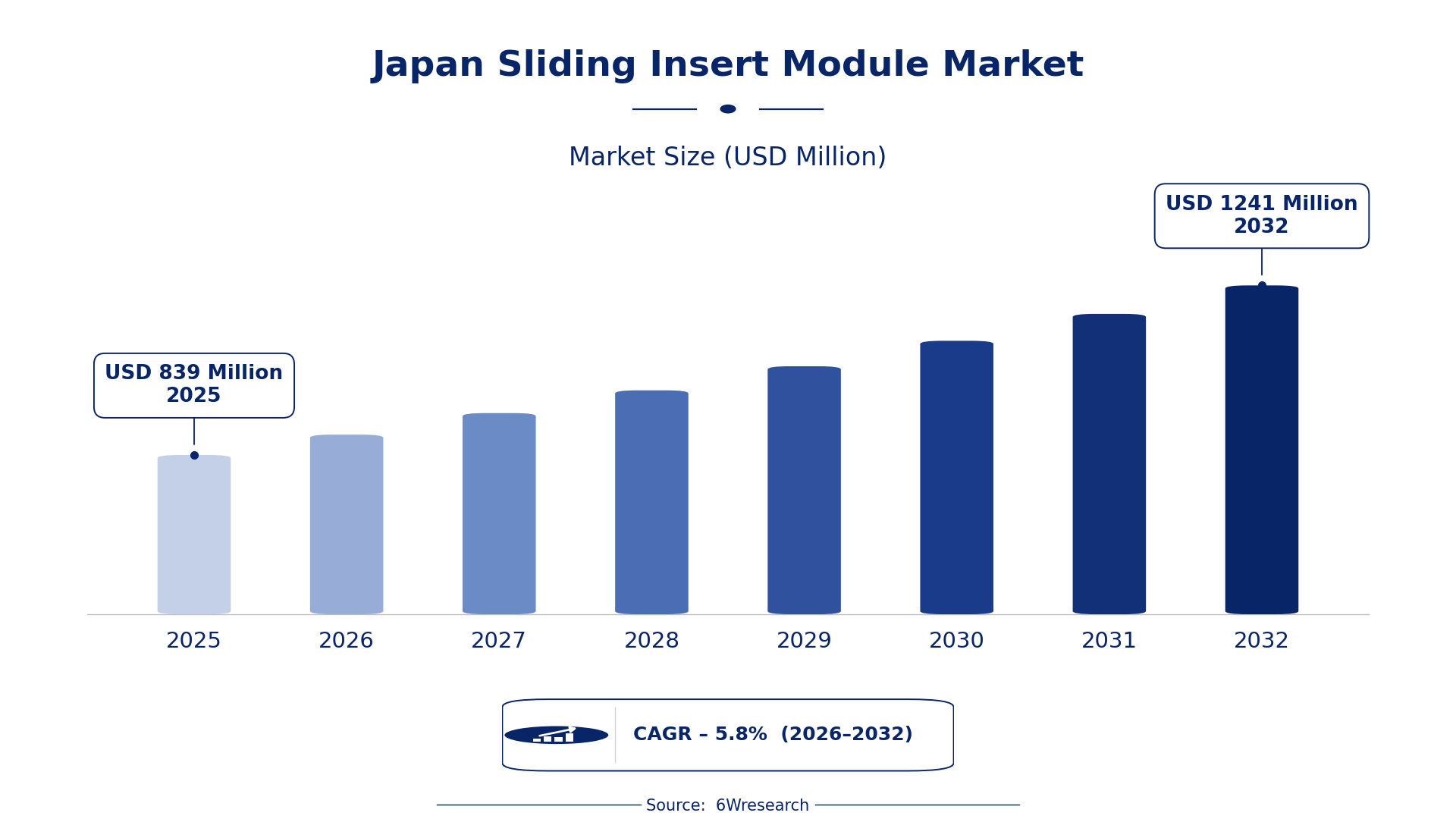
According to 6Wresearch internal database and industry insights, the Japan Sliding Insert Module Market was valued at USD 839 Million in 2025 and is projected to reach USD 1,241 Million by 2032, growing at a CAGR of approximately 5.8% during 2026–2032.
Japan Sliding Insert Module Market Highlights
| Report Metric | Details |
| Report Name | Japan Sliding Insert Module Market (2026-2032) |
| Market Size 2025 | USD 839 Million |
| Market Size 2032 | USD 1,241 Million |
| Absolute Growth 2025–2032 | USD 402 Million |
| CAGR 2026–2032 | 5.8% |
| Peak Annual Growth | 6.4% in 2032 |
| Forecast Period | 2026–2032 |
| Historical Data | 2022–2025 |
| Base Year | 2025 |
| Leading Module Type, 2025 | PCB Sliding Modules (39% share) |
| Leading Material Used, 2025 | Copper/Plastic (44% share) |
| Leading Application Area, 2025 | Consumer Electronics (34% share) |
| Leading End User, 2025 | Electronics OEMs (50% share) |
| Fastest-Growing Module Type | Electrical Insert Units (8.4% CAGR) |
| Fastest-Growing Material Used | Metal & Ceramic (8.5% CAGR) |
| Fastest-Growing Application Area | Automotive Wiring Systems (7.3% CAGR) |
| Fastest-Growing End User | Automotive Suppliers (7.9% CAGR) |
| Growing Sector | Consumer Electronics |
| Key End Users | Electronics OEMs, Automotive Suppliers, Smart Home Integrators, Electrical Panel Builders |
Japan Sliding Insert Module Market Year-wise Growth Rate and Key Drivers (2022–2032)
This graph illustrates the annual growth rates of the market from 2022 to 2032, highlighting a steady upward trajectory and projected market expansion over the forecast period.
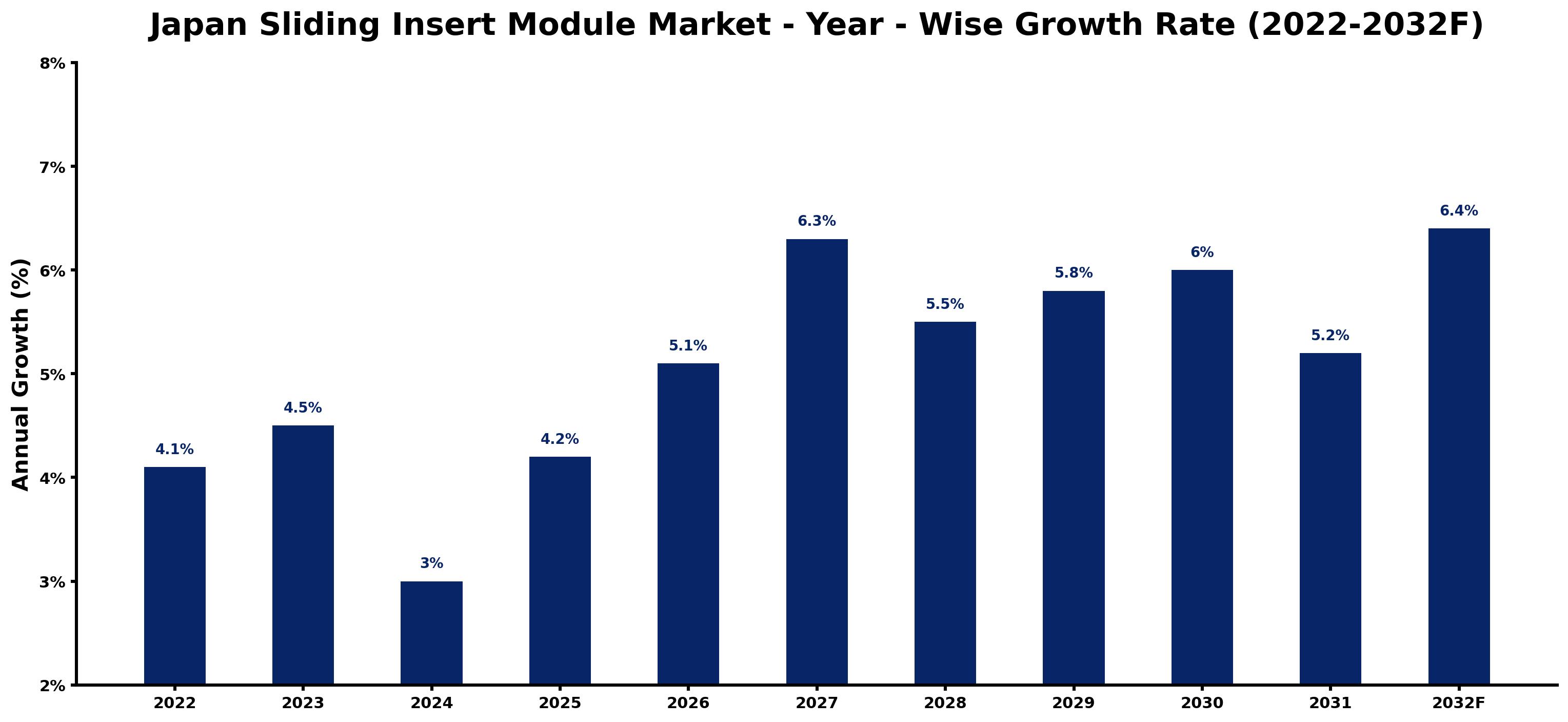
Annual growth estimates for each year appear below with the principal reason behind them, explaining the shifts that set the pace of the market.
| Year | Estimated Annual Growth (%) | Market Rationale |
| 2022 | 4.1 | The market exhibited steady growth due to strong demand from electronics manufacturers. |
| 2023 | 4.5 | Growth accelerated as production in the consumer electronics sector increased significantly. |
| 2024 | 3.0 | A slowdown occurred as market adjustments reflected changing consumer preferences. |
| 2025 | 4.2 | Demand rebounded with rising investments in automotive wiring systems and home automation. |
| 2026 | 5.1 | Growth is expected to pick up as the automotive sector focuses on electric vehicle technologies. |
| 2027 | 6.3 | The market is projected to expand rapidly, driven by increased demand for modular switch inserts. |
| 2028 | 5.5 | Growth is anticipated to slow slightly as the market stabilises after previous peaks in demand. |
| 2029 | 5.8 | Demand is expected to surge as installations of smart home devices continue to rise across Japan. |
| 2030 | 6.0 | Growth will remain strong, supported by ongoing investments in automotive electronics. |
| 2031 | 5.2 | A slight slowdown is projected as the market adjusts to evolving industry standards. |
| 2032 | 6.4 | The market is expected to peak with substantial investments in modular electrical solutions. |
Note: Market size estimations and growth projections presented in this report are based on 6Wresearch's proprietary forecasting methodology, utilizing the latest available industry data, government publications, and primary research inputs.
Japan Sliding Insert Module Market Synopsis
Sliding Insert Modules are vital components for modular connections in electrical systems, primarily composed of materials like copper and plastic. Their applications span consumer electronics, automotive wiring, and industrial settings. The Japan Sliding Insert Module Market is expanding due to strong demand from the electronics and automotive sectors, with the consumer electronics market valued at approximately 12 trillion JPY in 2022 and over 8 million vehicles produced in the automotive sector during the same year.
Market Dynamics Impact Analysis (2026–2032)
| Factor | Type | Impact | Primary Segment Affected |
| Rising demand for consumer electronics drives the need for modular connectivity solutions. | Driver | High | PCB Sliding Modules |
| Increased investment in electric vehicle technologies boosts demand for automotive wiring systems. | Driver | High | Electrical Insert Units |
| Growing adoption of smart home technologies creates opportunities for modular switch inserts. | Opportunity | High | Modular Switch Inserts |
| Expansion of industrial automation increases demand for DIN rail insert modules. | Opportunity | Medium | DIN Rail Insert Modules |
| Fluctuating raw material prices can impact production costs for manufacturers. | Restraint | High | Copper/Plastic |
| Limited awareness of modular solutions among smaller manufacturers may hinder market penetration. | Restraint | Medium | Electrical Insert Units |
| Supply chain disruptions can delay product availability for buyers in critical sectors. | Challenge | High | Consumer Electronics |
| Technological advancements require continuous investment, posing a challenge for smaller firms. | Challenge | Medium | Automotive Wiring Systems |
Evaluation of Drivers in Japan Sliding Insert Module Market (2026–2032)
The factors lifting demand, and the evidence behind each, are summarised below.
| Drivers | Primary Segment Affected | Why It Matters (Evidence) |
| Increased consumer electronics production drives demand for modular connectivity solutions. | PCB Sliding Modules | Japan's consumer electronics market was valued at approximately 12 trillion JPY in 2022, prompting manufacturers to invest in modular solutions. |
| Investment in electric vehicles boosts the need for advanced automotive wiring systems. | Electrical Insert Units | The automotive sector produced over 8 million vehicles in 2022, leading to higher demand for reliable electrical components. |
| Smart home technology adoption increases the need for customizable electrical installations. | Modular Switch Inserts | The installed base of smart home devices in Japan reached 10 million units in 2023, driving demand for modular solutions. |
| Industrial automation trends promote the use of modular designs in electrical panels. | DIN Rail Insert Modules | Industrial panels are increasingly adopting modular designs for efficiency, increasing demand for these components. |
| Growing awareness of energy efficiency drives demand for sustainable materials in electrical systems. | Copper/Plastic | The push for sustainability in manufacturing is encouraging the use of eco-friendly materials in electrical components. |
Volumes grow on the back of rising consumer electronics production, which reached approximately 12 trillion JPY in 2022, increasing the need for modular connectivity solutions. The automotive sector, producing over 8 million vehicles in 2022, also fuels demand for reliable wiring solutions. Smart home technology adoption, with 10 million installed devices in 2023, boosts the requirement for customizable electrical installations. Industrial automation trends promote the use of modular designs in electrical panels as manufacturers seek efficiency. The emphasis on sustainable materials encourages the use of eco-friendly solutions in electrical systems, aligning with buyer preferences.
Evaluation of Restraints in Japan Sliding Insert Module Market
Below are the constraints most often cited by buyers and suppliers, with the segment each affects.
| Market Restraint | Primary Segment Affected | Why It Matters (Evidence) |
| Fluctuating raw material prices can impact production costs. | Copper/Plastic | Increased costs for copper due to global supply chain issues can affect pricing strategies for manufacturers. |
| Limited awareness of modular solutions among smaller manufacturers may hinder market penetration. | Electrical Insert Units | Many smaller firms lack knowledge of the benefits of modular designs, resulting in slower adoption rates. |
| Supply chain disruptions can delay product availability for buyers in critical sectors. | Consumer Electronics | Global supply chain challenges have led to shortages of essential components, affecting production timelines. |
| Technological advancements require continuous investment, posing a challenge for smaller firms. | Automotive Wiring Systems | Smaller manufacturers may struggle to keep pace with rapid technological changes, impacting their competitiveness. |
| Regulatory compliance costs can burden manufacturers, affecting pricing strategies. | DIN Rail Insert Modules | Meeting industry standards requires investment in testing and certification, increasing operational costs. |
Japan Sliding Insert Module Market Challenges
Buyers in Japan are facing rising costs for sliding insert modules due to increased copper prices, which have surged by 15% in the last year. This price hike stems from global supply chain disruptions, compelling buyers to pay more for essential components. Technology adoption is slow as the gradual integration of smart home systems causes a 20% delay in modular switch insert installations compared to projections. Suppliers encounter challenges with JIS C 8303 compliance, which can postpone product launches by up to six months, diminishing their competitiveness in the market. Regulatory changes regarding electrical safety may impose unexpected costs on producers, raising operational expenses by approximately 10%.
Trends in the Japan Sliding Insert Module Market
These developments are changing demand patterns in the Japan Sliding Insert Module Market.
- Shift towards Smart Home Integration: Japan is experiencing a surge in smart home technology adoption, with the installed base of smart devices reaching 10 million units in 2023. This trend compels suppliers to develop modular solutions that cater to the growing demand for connectivity.
- Transition from Traditional to Modular Electrical Designs: The adoption of modular designs in industrial panels has gained momentum, as many manufacturers recognise the efficiency benefits. This shift is increasing the demand for DIN Rail Insert Modules, reflecting a change in industry standards.
- Emergence of Sustainable Materials: The trend towards sustainability is reshaping the materials used in electrical components, with Copper/Plastic becoming increasingly popular. This shift aligns with the growing emphasis on eco-friendly practices among manufacturers in Japan.
- Growth of Automotive Wiring Systems: The automotive sector is experiencing a shift towards advanced wiring solutions, driven by the rise of electric vehicles. Consequently, the demand for Electrical Insert Units is expected to increase, reflecting changing industry needs.
Investment Opportunities in the Japan Sliding Insert Module Market
The openings below show where demand in the Japan Sliding Insert Module Market is visible and how suppliers can enter.
- Electronics OEMs Seeking Modular Solutions: Electronics OEMs are actively looking for modular connectivity solutions to improve product designs. With Japan's consumer electronics market valued at approximately 12 trillion JPY in 2022, suppliers can target this segment for growth.
- Investment in Smart Home Technologies: The growing installed base of smart home devices presents an opportunity for suppliers of modular switch inserts. With the government aiming to increase smart home adoption by 30% by 2025, collaboration with smart home integrators can facilitate market entry.
- Automotive Suppliers Focusing on EV Wiring: Automotive suppliers are increasingly investing in modular wiring solutions to support electric vehicle production. With over 8 million vehicles produced in 2022, there is a clear demand for innovative electrical components.
- Industrial Automation Expanding Demand: The rise of industrial automation is driving demand for modular designs in electrical systems. Suppliers can capitalise on this trend by providing DIN Rail Insert Modules to manufacturers seeking efficiency.
Government Initiatives in the Japan Sliding Insert Module Market
The Economic Security Promotion Act, enacted in 2022, enhances supply-chain resilience for critical products, including electrical components. This law builds on previous regulations by ensuring that manufacturers adhere to standards promoting reliability and sustainability in production processes. The act aims to secure essential materials and support local production, benefiting the Sliding Insert Module market.
In 2023, the government allocated 10 billion JPY to support the adoption of smart home technologies through various initiatives. The Ministry of Economy, Trade and Industry oversees these efforts, aiming to increase smart home adoption by 30% by 2025. This funding directly impacts the demand for modular solutions in the Sliding Insert Module market, encouraging innovation and development.
Future Insight of the Japan Sliding Insert Module Market
Investment in smart home technologies will significantly boost demand for sliding insert modules as the government encourages adoption through subsidies. The automotive sector will transition to electric vehicles, requiring advanced modular wiring designs to meet evolving standards. The installed base of smart home devices is projected to reach 30 million units by 2032, creating a substantial need for efficient electrical connectors. New industry standards will streamline production processes, benefiting suppliers and ensuring higher quality products for buyers.
Market Segmentation Analysis
Japan Sliding Insert Module Market report covers a detailed analysis of the following market segments:
By Module Type – PCB Sliding Modules Lead, Electrical Insert Units Expected to Grow Fastest
According to Saurav Kr Singh, Senior Research Analyst at 6Wresearch, the largest module type category in 2025 was PCB Sliding Modules, at 39% of revenue. PCB Sliding Modules dominate the market because they are essential for modular connectivity in consumer electronics, which had a valuation of approximately 12 trillion JPY in 2022. Their widespread use in devices such as smartphones and home appliances drives consistent demand. The quickest growth will come from Electrical Insert Units, forecast to expand at a CAGR of 8.4% between 2026 and 2032. Electrical Insert Units are experiencing rapid growth due to their increasing importance in various electrical systems, particularly as smart home technologies gain traction. The government's aim to increase smart home adoption by 30% by 2025 will further accelerate this segment's expansion. Suppliers should focus on enhancing their product lines in Electrical Insert Units to capitalise on the growing smart home sector.
By Material Used – Copper/Plastic Leads, Metal & Ceramic Expected to Grow Fastest
Copper/Plastic took 44% of material used revenue in 2025, more than any other category. Copper/Plastic materials dominate the market due to their superior conductivity and insulation properties, making them ideal for a variety of applications. Their extensive use in consumer electronics and automotive wiring systems solidifies their leading position. Metal & Ceramic is projected to grow fastest, at a CAGR of 8.5% during 2026–2032. Metal & Ceramic materials are expected to see rapid growth as they are increasingly applied in specialized sectors that require high-performance solutions. The demand for durable materials in various industries will likely accelerate their adoption. Buyers should consider diversifying their material sources to include Metal & Ceramic options for improved performance in specific applications.
By Application Area – Consumer Electronics Leads, Automotive Wiring Systems Expected to Grow Fastest
Consumer Electronics accounted for 34% of the market by application area in 2025. Consumer Electronics commands the largest share as it generates substantial demand for modular connections across numerous devices. The installed base of smart home devices, which reached 10 million units in 2023, underscores the ongoing requirement for these connections. Over 2026–2032, Automotive Wiring Systems are expected to post the fastest growth, at a CAGR of 7.3%. Automotive Wiring Systems are set for rapid growth due to increased investments in electric vehicle technology, which requires advanced wiring solutions. The production of over 8 million vehicles in 2022 highlights the strong market potential for these systems. Suppliers must adapt their strategies to meet the rising demand in the automotive sector, especially for wiring solutions tailored to electric vehicles.
By End User – Electronics OEMs Lead, Automotive Suppliers Expected to Grow Fastest
Electronics OEMs held 50% of the Japan Sliding Insert Module Market by end user in 2025. Electronics OEMs are the leading end users as they depend heavily on sliding insert modules for the production of diverse electronic devices. Their substantial role in the manufacturing process guarantees a steady demand for these components. Automotive Suppliers are set to record the highest CAGR in this split, 7.9% over 2026–2032. Automotive Suppliers are growing at the fastest rate as they are integral to the supply of modern vehicle components. The shift towards electric vehicles is anticipated to significantly boost their demand for sliding insert modules. Suppliers should prioritise building partnerships with Automotive Suppliers to seize growth opportunities in the changing automotive landscape.
Key Attractiveness of the Report
- 10 Years of Market Numbers
- Historical Data Starting from 2022 to 2025
- Base Year 2025
- Forecast Data until 2032
- Key Performance Indicators Impacting the Market
- Major Upcoming Developments and Projects
Key Highlights of the Report:
- Japan Sliding Insert Module Market Outlook
- Market Size of Japan Sliding Insert Module Market, 2025
- Forecast of Japan Sliding Insert Module Market, 2032
- Historical Data and Forecast of Japan Sliding Insert Module Revenues & Volume for the Period 2022-2032F
- Japan Sliding Insert Module Market Trend Evolution
- Japan Sliding Insert Module Market Drivers and Challenges
- Japan Sliding Insert Module Price Trends
- Japan Sliding Insert Module Porter's Five Forces
- Japan Sliding Insert Module Industry Life Cycle
- Historical Data and Forecast of Japan Sliding Insert Module Market Revenues & Volume By Module Type for the Period 2022-2032F
- Historical Data and Forecast of Japan Sliding Insert Module Market Revenues & Volume By PCB Sliding Modules for the Period 2022-2032F
- Historical Data and Forecast of Japan Sliding Insert Module Market Revenues & Volume By Electrical Insert Units for the Period 2022-2032F
- Historical Data and Forecast of Japan Sliding Insert Module Market Revenues & Volume By Modular Switch Inserts for the Period 2022-2032F
- Historical Data and Forecast of Japan Sliding Insert Module Market Revenues & Volume By DIN Rail Insert Modules for the Period 2022-2032F
- Historical Data and Forecast of Japan Sliding Insert Module Market Revenues & Volume By Material Used for the Period 2022-2032F
- Historical Data and Forecast of Japan Sliding Insert Module Market Revenues & Volume By Copper/Plastic for the Period 2022-2032F
- Historical Data and Forecast of Japan Sliding Insert Module Market Revenues & Volume By Metal & Ceramic for the Period 2022-2032F
- Historical Data and Forecast of Japan Sliding Insert Module Market Revenues & Volume By Polycarbonate/Brass for the Period 2022-2032F
- Historical Data and Forecast of Japan Sliding Insert Module Market Revenues & Volume By Thermoplastic for the Period 2022-2032F
- Historical Data and Forecast of Japan Sliding Insert Module Market Revenues & Volume By Application Area for the Period 2022-2032F
- Historical Data and Forecast of Japan Sliding Insert Module Market Revenues & Volume By Consumer Electronics for the Period 2022-2032F
- Historical Data and Forecast of Japan Sliding Insert Module Market Revenues & Volume By Automotive Wiring Systems for the Period 2022-2032F
- Historical Data and Forecast of Japan Sliding Insert Module Market Revenues & Volume By Home Automation for the Period 2022-2032F
- Historical Data and Forecast of Japan Sliding Insert Module Market Revenues & Volume By Industrial Panels for the Period 2022-2032F
- Historical Data and Forecast of Japan Sliding Insert Module Market Revenues & Volume By End User for the Period 2022-2032F
- Historical Data and Forecast of Japan Sliding Insert Module Market Revenues & Volume By Electronics OEMs for the Period 2022-2032F
- Historical Data and Forecast of Japan Sliding Insert Module Market Revenues & Volume By Automotive Suppliers for the Period 2022-2032F
- Historical Data and Forecast of Japan Sliding Insert Module Market Revenues & Volume By Smart Home Integrators for the Period 2022-2032F
- Historical Data and Forecast of Japan Sliding Insert Module Market Revenues & Volume By Electrical Panel Builders for the Period 2022-2032F
- Japan Sliding Insert Module Import Export Trade Statistics
- Market Opportunity Assessment By Module Type
- Market Opportunity Assessment By Material Used
- Market Opportunity Assessment By Application Area
- Market Opportunity Assessment By End User
- Japan Sliding Insert Module Top Companies Market Share
- Japan Sliding Insert Module Competitive Benchmarking By Technical and Operational Parameters
- Japan Sliding Insert Module Company Profiles
- Japan Sliding Insert Module Key Strategic Recommendations
Market Covered
The report covers the following segments.
By Module Type
- PCB Sliding Modules
- Electrical Insert Units
- Modular Switch Inserts
- DIN Rail Insert Modules
By Material Used
- Copper/Plastic
- Metal & Ceramic
- Polycarbonate/Brass
- Thermoplastic
By Application Area
- Consumer Electronics
- Automotive Wiring Systems
- Home Automation
- Industrial Panels
By End User
- Electronics OEMs
- Automotive Suppliers
- Smart Home Integrators
- Electrical Panel Builders































