Japan Smart Device Antenna Market Size & Growth Rate
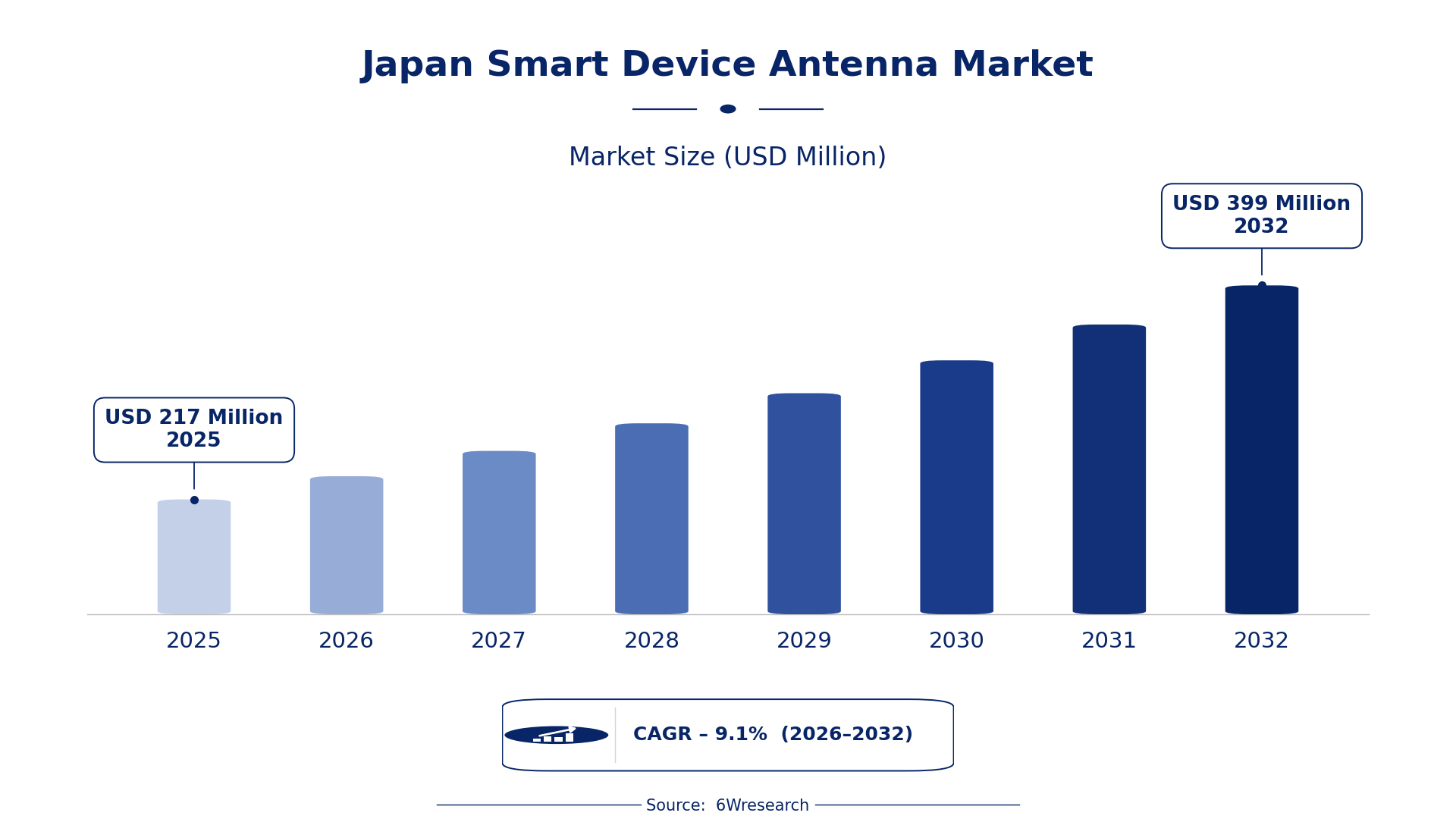
According to 6Wresearch internal database and industry insights, the Japan Smart Device Antenna Market was valued at USD 217 Million in 2025 and is projected to reach USD 399 Million by 2032, growing at a CAGR of approximately 9.1% during 2026–2032.
Japan Smart Device Antenna Market Highlights
| Report Metric | Details |
| Report Name | Japan Smart Device Antenna Market (2026-2032) |
| Market Size 2025 | USD 217 Million |
| Market Size 2032 | USD 399 Million |
| Absolute Growth 2025–2032 | USD 182 Million |
| CAGR 2026–2032 | 9.1% |
| Peak Annual Growth | 10.1% in 2027 |
| Forecast Period | 2026–2032 |
| Historical Data | 2022–2025 |
| Base Year | 2025 |
| Leading Antenna Type, 2025 | MIMO Antennas (41% share) |
| Leading Frequency Band, 2025 | 5G (38% share) |
| Leading Device Application, 2025 | Smartphones (39% share) |
| Leading End User, 2025 | Mobile OEMs (38% share) |
| Fastest-Growing Antenna Type | NFC Antennas (12.7% CAGR) |
| Fastest-Growing Device Application | IoT Appliances (12.8% CAGR) |
| Fastest-Growing End User | Smart Payment Device Makers (11.9% CAGR) |
| Growing Sector | smart devices |
| Key End Users | Mobile OEMs, IoT appliance manufacturers, smart vehicle manufacturers, wearable technology producers |
Japan Smart Device Antenna Market Year-wise Growth Rate and Key Drivers (2022–2032)
This graph illustrates the annual growth rates of the market from 2022 to 2032, highlighting a steady upward trajectory and projected market expansion over the forecast period.
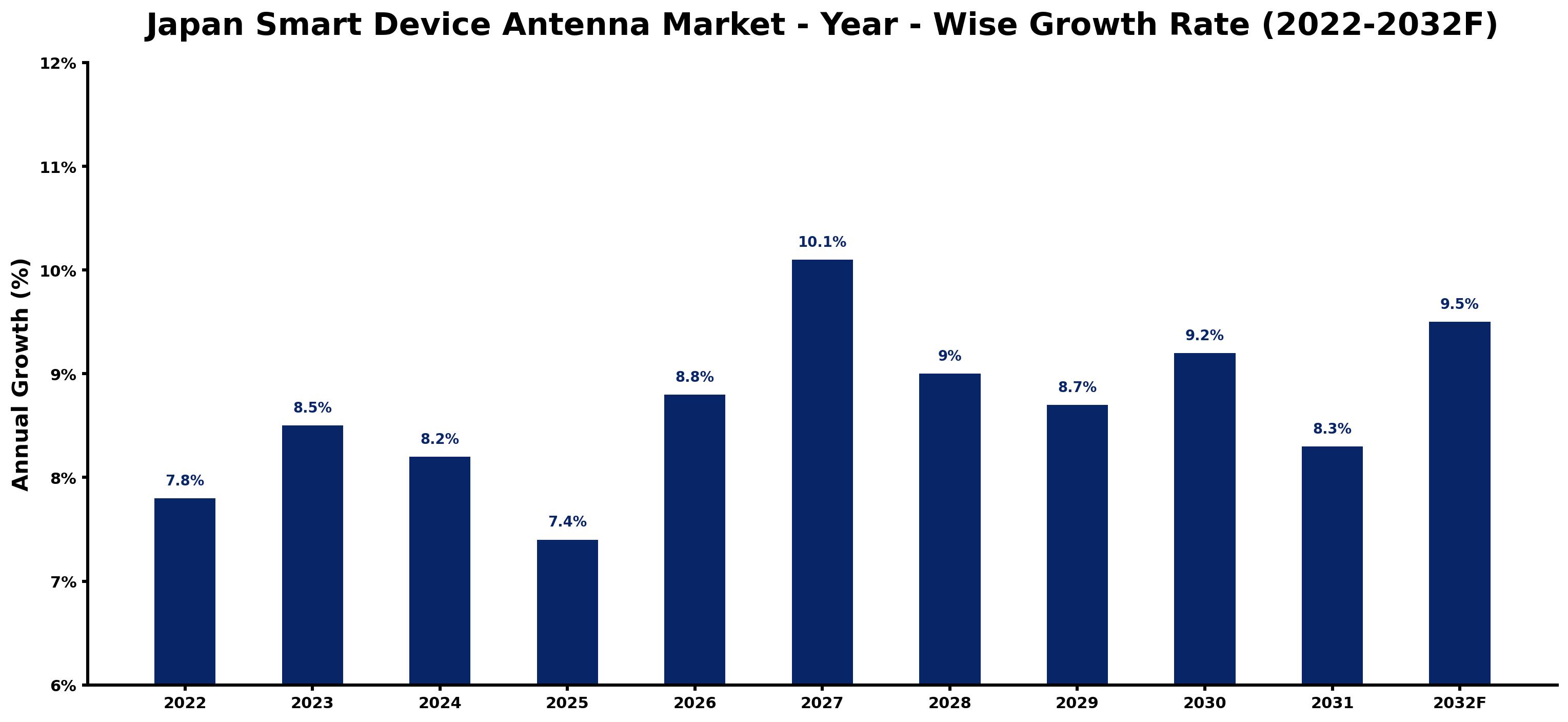
The following figures match every annual growth estimate with the main market development of that year, giving the reasoning behind each rise or slowdown.
| Year | Estimated Annual Growth (%) | Market Rationale |
| 2022 | 7.8 | The market showed steady growth due to increasing smartphone penetration. |
| 2023 | 8.5 | Demand surged as the number of 5G base stations expanded. |
| 2024 | 8.2 | Growth slowed slightly as market saturation began to impact new device sales. |
| 2025 | 7.4 | The market continued to grow, but at a slower pace due to heightened competition. |
| 2026 | 8.8 | Demand is expected to increase as new technologies and applications emerge in smart devices. |
| 2027 | 10.1 | The market is projected to peak with strong investments in 5G infrastructure and smart devices. |
| 2028 | 9.0 | Growth is anticipated to slow as the market stabilises after rapid expansion. |
| 2029 | 8.7 | Demand will continue to slow due to market saturation in certain segments. |
| 2030 | 9.2 | Growth is expected to accelerate again with rising interest in IoT applications and smart vehicles. |
| 2031 | 8.3 | The market will experience a slowdown as competition intensifies among manufacturers. |
| 2032 | 9.5 | Demand is expected to rise again with advancements in smart device technology. |
Note: Market size estimations and growth projections presented in this report are based on 6Wresearch's proprietary forecasting methodology, utilizing the latest available industry data, government publications, and primary research inputs.
Japan Smart Device Antenna Market Synopsis
Smart device antennas enable wireless communication in smartphones and IoT appliances, facilitating connectivity and location tracking. The Japan Smart Device Antenna Market is growing due to a smartphone penetration rate of approximately 80% and the rapid rollout of 5G infrastructure, with over 50,000 base stations established in 2023. Mobile OEMs and tech companies are the primary buyers, driving demand for advanced antenna technologies. With increasing investments in IoT applications, opportunities for growth are substantial.
Market Dynamics Impact Analysis (2026–2032)
| Factor | Type | Impact | Primary Segment Affected |
| Increasing smartphone penetration and adoption of 5G technology | Driver | High | MIMO Antennas |
| Rising demand for IoT appliances and smart devices | Driver | High | GPS Antennas |
| Growing number of NFC-enabled devices in the market | Opportunity | High | NFC Antennas |
| Expansion of smart city initiatives enhancing connectivity | Opportunity | High | Wi-Fi/Bluetooth Antennas |
| Intense competition among manufacturers leading to price wars | Restraint | Medium | MIMO Antennas |
| Potential supply chain disruptions affecting production timelines | Restraint | Medium | MIMO Antennas |
| Challenges in meeting JIS standards for quality assurance | Challenge | High | MIMO Antennas |
| Technological advancements requiring constant innovation | Challenge | High | MIMO Antennas |
Evaluation of Drivers in Japan Smart Device Antenna Market (2026–2032)
Key forces behind demand, with the segment each one moves most, are listed below.
| Drivers | Primary Segment Affected | Why It Matters (Evidence) |
| High smartphone penetration | MIMO Antennas | Japan's smartphone penetration rate is approximately 80%, driving demand for advanced antennas. |
| Expansion of 5G infrastructure | 5G | With over 50,000 base stations in 2023, demand for 5G antennas is surging. |
| Growth of IoT applications | GPS Antennas | The IoT market is expected to reach 1 trillion JPY by 2025, increasing the need for GPS antennas in various devices. |
| Rising adoption of wearable technology | NFC Antennas | Wearable technology adoption in Japan increased by 30% last year, boosting NFC antenna usage. |
| Demand for smart vehicles | Smart Vehicles | Japan's automotive sector is investing heavily in smart vehicle technology, increasing antenna needs. |
Much of the new demand traces back to the high smartphone penetration rate, leading to increased purchases of advanced antennas. The expansion of 5G infrastructure, with over 50,000 base stations established in 2023, has boosted demand for 5G antennas. The growth of IoT applications is driving the need for GPS antennas, particularly as the market for connected devices expands. The surge in wearable technology adoption has increased the requirement for NFC antennas. Additionally, the automotive sector's investment in smart vehicles is creating a rising demand for antennas to support connectivity in these advanced applications.
Evaluation of Restraints in Japan Smart Device Antenna Market
The key brakes on demand, and where they bite hardest, are shown below.
| Market Restraint | Primary Segment Affected | Why It Matters (Evidence) |
| Intense competition affecting pricing strategies | MIMO Antennas | The competitive environment has resulted in reduced profit margins for manufacturers, impacting their ability to invest in innovation. |
| Supply chain disruptions affecting production timelines | MIMO Antennas | Global supply chain issues have caused delays in raw material availability, hindering production schedules. |
| Challenges in meeting JIS standards for quality assurance | MIMO Antennas | Manufacturers face difficulties in complying with stringent quality regulations, which can delay product launches. |
| Technological advancements requiring constant innovation | MIMO Antennas | Rapid technological changes necessitate continuous investment in research and development to remain competitive. |
| Market saturation in certain segments | MIMO Antennas | As the market matures, growth rates are slowing due to saturation in established product categories. |
Japan Smart Device Antenna Market Challenges
Input costs for smart device antennas have risen by 15% over the last year, impacting producers' profit margins and resulting in higher prices for buyers. Technology adoption is hindered by outdated manufacturing processes, causing delays of up to six months for suppliers in product development. A shortage of skilled workers in advanced manufacturing techniques hampers production efficiency, forcing clinics to rely on imports and prolonging lead times for new product launches. Supply chain disruptions have led to a 20% increase in delivery times for buyers, complicating inventory management and negatively affecting sales forecasts.
Trends in the Japan Smart Device Antenna Market
Several trends are reshaping the Japan Smart Device Antenna Market; the most important are set out below.
- Shift towards 5G Antennas: Since 2023, there has been a marked shift towards 5G antennas as more base stations are deployed. This transition is supported by over 50,000 5G base stations now operational, improving connectivity across urban areas.
- Surge in Wearable Technology Adoption: The adoption of wearable technology has surged by 30% in the last year, impacting the demand for NFC antennas. This trend reflects a growing consumer interest in health and fitness tracking devices.
- Growth of IoT Appliances: The IoT market in Japan is projected to reach 1 trillion JPY by 2025, driving demand for smart device antennas. This growth indicates a shift towards more connected home devices and appliances.
- Expansion of Smart City Initiatives: The Tokyo Metropolitan Government is promoting smart city technologies, enhancing connectivity in urban areas. This initiative is likely to increase the demand for Wi-Fi/Bluetooth antennas.
Investment Opportunities in the Japan Smart Device Antenna Market
Several openings in the Japan Smart Device Antenna Market merit attention from investors.
- Mobile OEMs seeking advanced antenna solutions: With Japan's smartphone penetration rate at approximately 80%, there is a notable opportunity for suppliers to provide advanced antennas. Collaborating with mobile OEMs can facilitate market entry and growth.
- Timing aligns with rising IoT demand: The IoT market is projected to reach 1 trillion JPY by 2025, creating a demand for smart device antennas. Suppliers can target IoT appliance manufacturers to meet this growing need effectively.
- Smart city initiatives driving connectivity needs: The Tokyo Metropolitan Government's push for smart city technologies presents a clear opportunity for antenna manufacturers. Investing in partnerships with local governments can improve market presence and drive sales.
- Growing NFC-enabled device market: The number of NFC-enabled devices in Japan is expected to exceed 50 million by 2025, creating a demand for NFC antennas. Suppliers can focus on smart payment device makers to capitalise on this growth.
Government Initiatives in the Japan Smart Device Antenna Market
The PMD Act, updated in 2014, regulates the approval, manufacture, and quality of medical devices and pharmaceuticals, impacting smart device antennas by ensuring compliance with safety standards. This law requires manufacturers to adhere to strict guidelines, ensuring the quality of antennas used in consumer electronics. The Act also mandates regular reporting and monitoring to maintain high safety standards in the industry.
The Pharmaceuticals and Medical Devices Agency (PMDA) oversees the approval process for medical devices and monitors post-market safety. This agency's role is vital for ensuring that smart device antennas meet regulatory standards, protecting consumers and manufacturers alike. The PMDA conducts rigorous evaluations and provides guidance to ensure compliance with established safety protocols.
Future Insight of the Japan Smart Device Antenna Market
A policy-driven shift towards improved connectivity will reshape urban environments, compelling suppliers to innovate in antenna design. By 2032, smart device ownership will rise, with projections indicating over 50 million NFC-enabled devices by 2025. Enhanced standards like JIS will promote better quality and compatibility, benefiting both buyers and suppliers. The expanding IoT market will drive demand for advanced antenna solutions, opening new avenues for producers.
Market Segmentation Analysis
Japan Smart Device Antenna Market report covers a detailed analysis of the following market segments:
By Antenna Type – MIMO Antennas Lead, NFC Antennas Expected to Grow Fastest
According to Saurav Kr Singh, Senior Research Analyst at 6Wresearch, with 41% of antenna type revenue in 2025, MIMO Antennas was the largest category. MIMO antennas are essential for enhancing data throughput in smartphones, which are a cornerstone of communication in Japan. The strong demand is reflected in the high smartphone penetration rate of approximately 80%. NFC Antennas are projected to grow fastest, at a CAGR of 12.7% during 2026–2032. NFC antennas are experiencing rapid growth due to the increasing adoption of contactless payment systems in smart devices. With projections indicating that the number of NFC-enabled devices will exceed 50 million by 2025, this segment is poised for swift expansion. Suppliers should focus on developing MIMO and NFC antennas to meet the increasing demands of mobile manufacturers and payment technology providers.
By Frequency Band – 5G Leads and Records the Fastest Growth
In 2025, 5G led the frequency band split with a 38% share. 5G frequency bands are essential for next-gen mobile connectivity in smart devices, particularly as Japan expands its 5G infrastructure. The over 50,000 5G base stations established in 2023 underscore the importance of this frequency in the market. Its lead should widen, with a projected CAGR of 12.0% during 2026–2032, the highest in this split. As the leader in this segment, 5G frequency bands will continue to see growth due to ongoing advancements in mobile technology and increasing consumer demand for high-speed connectivity. This sustained interest will further widen its market lead. Manufacturers must prioritise 5G technology in their product offerings to align with the ongoing shift towards advanced mobile communications.
By Device Application – Smartphones Lead, IoT Appliances Expected to Grow Fastest
Smartphones accounted for 39% of the market by device application in 2025. Smartphones represent the primary application for antennas in consumer electronics, driving substantial market demand in Japan. The average household's ownership of three smart devices underscores the reliance on smartphones for connectivity and communication. Over 2026–2032, IoT Appliances are expected to post the fastest growth, at a CAGR of 12.8%. The growth of IoT appliances is propelled by the rising demand for smart home technologies, which require efficient antennas for optimal functionality. As these devices gain popularity, the segment is expected to witness rapid growth. Companies ought to prioritise the development of antenna solutions tailored for IoT appliances to capitalise on the expanding smart home market.
By End User – Mobile OEMs Lead, Smart Payment Device Makers Expected to Grow Fastest
Mobile OEMs took 38% of end user revenue in 2025, more than any other category. Mobile OEMs are the key users of antennas in device manufacturing, significantly influencing Japan's technology sector. Their extensive involvement in smartphone production ensures a steady demand for advanced antenna technologies. The quickest growth will come from Smart Payment Device Makers, forecast to expand at a CAGR of 11.9% between 2026 and 2032. The expansion of smart payment device makers aligns with the growing need for NFC technology in payment solutions. As this sector continues to thrive, it will create new opportunities for antenna suppliers. Suppliers should engage with mobile OEMs and smart payment device makers to strengthen their market position and respond to industry trends.
Key Attractiveness of the Report
- 10 Years of Market Numbers
- Historical Data Starting from 2022 to 2025
- Base Year 2025
- Forecast Data until 2032
- Key Performance Indicators Impacting the Market
- Major Upcoming Developments and Projects
Key Highlights of the Report:
- Japan Smart Device Antenna Market Outlook
- Market Size of Japan Smart Device Antenna Market, 2025
- Forecast of Japan Smart Device Antenna Market, 2032
- Historical Data and Forecast of Japan Smart Device Antenna Revenues & Volume for the Period 2022-2032F
- Japan Smart Device Antenna Market Trend Evolution
- Japan Smart Device Antenna Market Drivers and Challenges
- Japan Smart Device Antenna Price Trends
- Japan Smart Device Antenna Porter's Five Forces
- Japan Smart Device Antenna Industry Life Cycle
- Historical Data and Forecast of Japan Smart Device Antenna Market Revenues & Volume By Antenna Type for the Period 2022-2032F
- Historical Data and Forecast of Japan Smart Device Antenna Market Revenues & Volume By MIMO Antennas for the Period 2022-2032F
- Historical Data and Forecast of Japan Smart Device Antenna Market Revenues & Volume By NFC Antennas for the Period 2022-2032F
- Historical Data and Forecast of Japan Smart Device Antenna Market Revenues & Volume By GPS Antennas for the Period 2022-2032F
- Historical Data and Forecast of Japan Smart Device Antenna Market Revenues & Volume By Wi-Fi/Bluetooth Antennas for the Period 2022-2032F
- Historical Data and Forecast of Japan Smart Device Antenna Market Revenues & Volume By Frequency Band for the Period 2022-2032F
- Historical Data and Forecast of Japan Smart Device Antenna Market Revenues & Volume By 5G for the Period 2022-2032F
- Historical Data and Forecast of Japan Smart Device Antenna Market Revenues & Volume By Low Frequency for the Period 2022-2032F
- Historical Data and Forecast of Japan Smart Device Antenna Market Revenues & Volume By L1/L5 Dual Band for the Period 2022-2032F
- Historical Data and Forecast of Japan Smart Device Antenna Market Revenues & Volume By 2.4/5 GHz for the Period 2022-2032F
- Historical Data and Forecast of Japan Smart Device Antenna Market Revenues & Volume By Device Application for the Period 2022-2032F
- Historical Data and Forecast of Japan Smart Device Antenna Market Revenues & Volume By Smartphones, Tablets for the Period 2022-2032F
- Historical Data and Forecast of Japan Smart Device Antenna Market Revenues & Volume By Wearables for the Period 2022-2032F
- Historical Data and Forecast of Japan Smart Device Antenna Market Revenues & Volume By Smart Vehicles for the Period 2022-2032F
- Historical Data and Forecast of Japan Smart Device Antenna Market Revenues & Volume By IoT Appliances for the Period 2022-2032F
- Historical Data and Forecast of Japan Smart Device Antenna Market Revenues & Volume By End User for the Period 2022-2032F
- Historical Data and Forecast of Japan Smart Device Antenna Market Revenues & Volume By Mobile OEMs for the Period 2022-2032F
- Historical Data and Forecast of Japan Smart Device Antenna Market Revenues & Volume By Smart Payment Device Makers for the Period 2022-2032F
- Historical Data and Forecast of Japan Smart Device Antenna Market Revenues & Volume By Telematics Vendors for the Period 2022-2032F
- Historical Data and Forecast of Japan Smart Device Antenna Market Revenues & Volume By Consumer Device OEMs for the Period 2022-2032F
- Japan Smart Device Antenna Import Export Trade Statistics
- Market Opportunity Assessment By Antenna Type
- Market Opportunity Assessment By Frequency Band
- Market Opportunity Assessment By Device Application
- Market Opportunity Assessment By End User
- Japan Smart Device Antenna Top Companies Market Share
- Japan Smart Device Antenna Competitive Benchmarking By Technical and Operational Parameters
- Japan Smart Device Antenna Company Profiles
- Japan Smart Device Antenna Key Strategic Recommendations
Market Covered
Coverage by segment is as follows.
By Antenna Type
- MIMO Antennas
- NFC Antennas
- GPS Antennas
- Wi-Fi/Bluetooth Antennas
By Frequency Band
- 5G
- Low Frequency
- L1/L5 Dual Band
- 2.4/5 GHz
By Device Application
- Smartphones
- Tablets
- Wearables
- Smart Vehicles
- IoT Appliances
By End User
- Mobile OEMs
- Smart Payment Device Makers
- Telematics Vendors
- Consumer Device OEMs































