Japan Smart Ducting System Market Size & Growth Rate
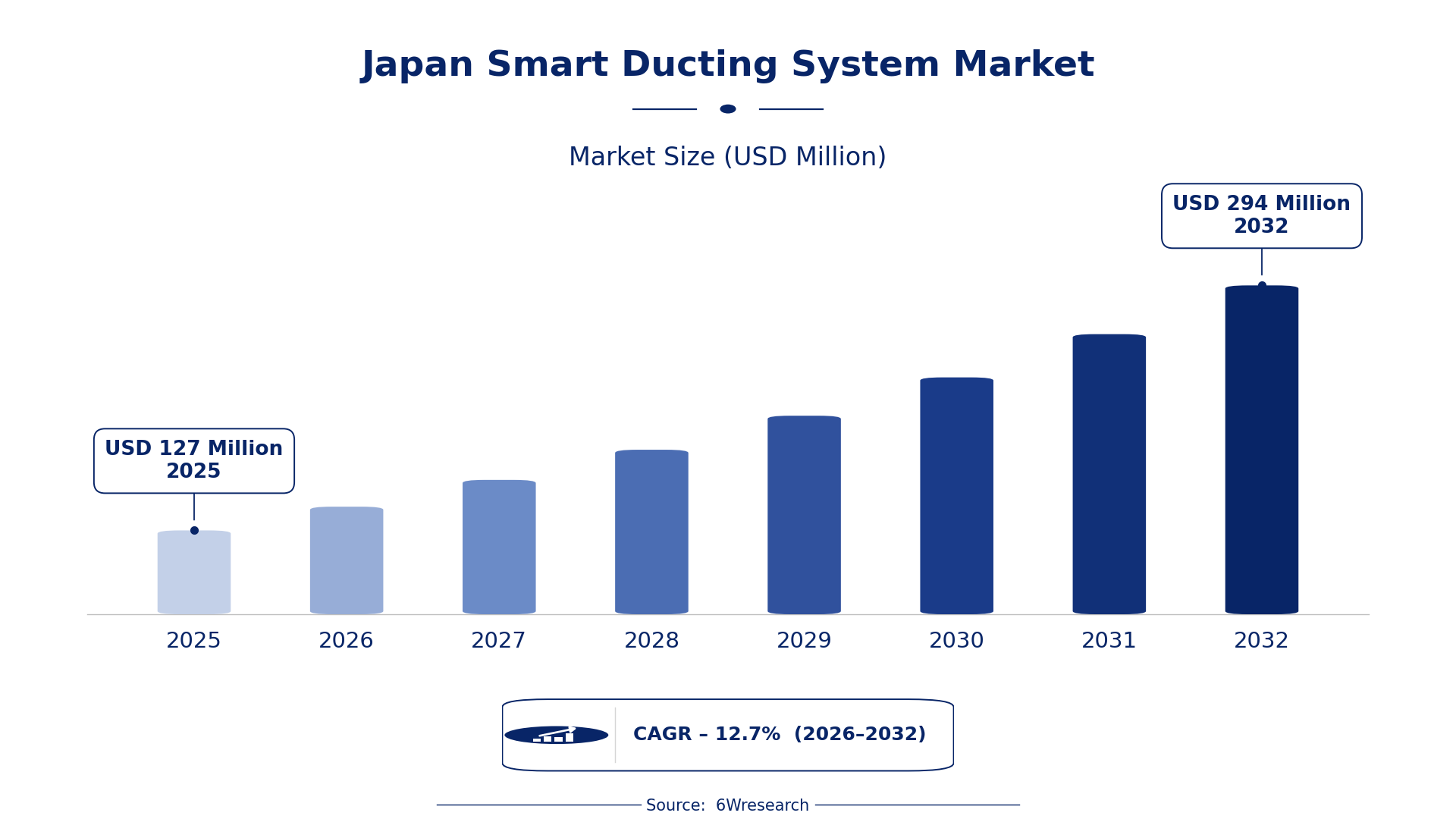
According to 6Wresearch internal database and industry insights, the Japan Smart Ducting System Market was valued at USD 127 Million in 2025 and is projected to reach USD 294 Million by 2032, growing at a CAGR of approximately 12.7% during 2026–2032.
Japan Smart Ducting System Market Highlights
| Report Metric | Details |
| Report Name | Japan Smart Ducting System Market (2026-2032) |
| Market Size 2025 | USD 127 Million |
| Market Size 2032 | USD 294 Million |
| Absolute Growth 2025–2032 | USD 167 Million |
| CAGR 2026–2032 | 12.7% |
| Peak Annual Growth | 14.2% in 2032 |
| Forecast Period | 2026–2032 |
| Historical Data | 2022–2025 |
| Base Year | 2025 |
| Leading Ducting Type, 2025 | HVAC Smart Ducts (43% share) |
| Leading Smart Control Feature, 2025 | Airflow Regulation (41% share) |
| Leading Application Area, 2025 | Office & Homes (49% share) |
| Leading End User, 2025 | HVAC Contractors (40% share) |
| Fastest-Growing Ducting Type | Sensor-Integrated Ducts (18.7% CAGR) |
| Fastest-Growing Smart Control Feature | Temp + Humidity Control (16.6% CAGR) |
| Fastest-Growing Application Area | Industrial Cooling (15.6% CAGR) |
| Fastest-Growing End User | Data Centers (17.3% CAGR) |
| Growing Sector | HVAC |
| Key End Users | HVAC Contractors, Healthcare Facilities, Building Automation Firms |
Japan Smart Ducting System Market Year-wise Growth Rate and Key Drivers (2022–2032)
This graph illustrates the annual growth rates of the market from 2022 to 2032, highlighting a steady upward trajectory and projected market expansion over the forecast period.
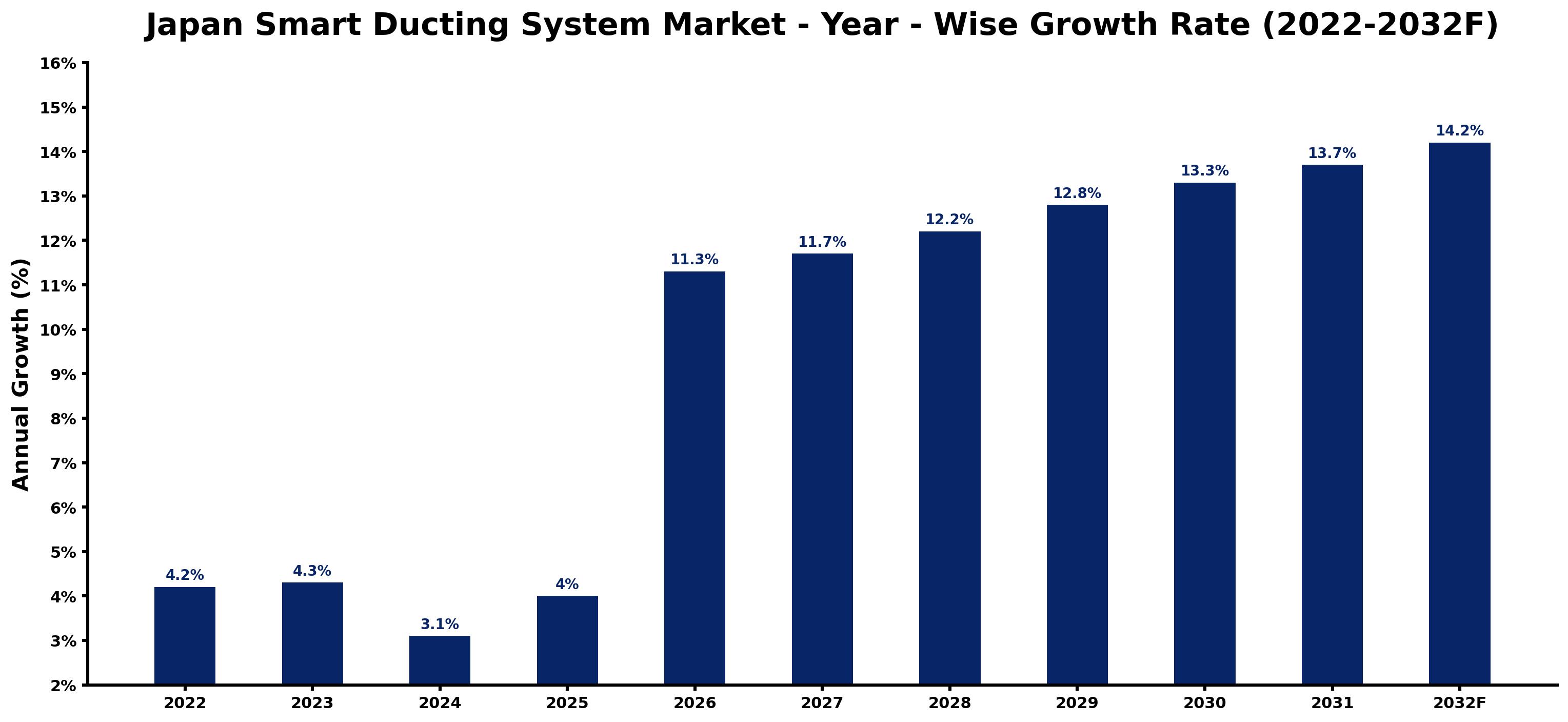
Year by year, the estimates below pair each growth rate with the development that shaped it.
| Year | Estimated Annual Growth (%) | Market Rationale |
| 2022 | 4.2 | The market showed steady growth due to ongoing construction projects and energy efficiency demands. |
| 2023 | 4.3 | Growth was faster than the previous year as urbanization increased demand for advanced HVAC solutions. |
| 2024 | 3.1 | The market experienced slower growth as some projects were delayed or postponed. |
| 2025 | 4.0 | Growth accelerated again, driven by the Tokyo 2020 Olympics' influence on smart building investments. |
| 2026 | 11.3 | Demand is expected to surge as the HVAC market begins adopting more smart technologies for energy efficiency. |
| 2027 | 11.7 | The market will continue to grow as healthcare sector expansion increases the need for advanced HVAC systems. |
| 2028 | 12.2 | Growth is projected to remain strong due to rising energy costs prompting more energy-efficient solutions. |
| 2029 | 12.8 | The market's expansion is expected to be supported by increasing urbanization and industrialization across Japan. |
| 2030 | 13.3 | Demand will strengthen as the government sets ambitious targets for greenhouse gas emissions reduction. |
| 2031 | 13.7 | The market is projected to grow further as more facilities adopt smart ducting systems for climate control. |
| 2032 | 14.2 | Growth will peak as the focus on energy efficiency and smart technologies intensifies. |
Note: Market size estimations and growth projections presented in this report are based on 6Wresearch's proprietary forecasting methodology, utilizing the latest available industry data, government publications, and primary research inputs.
Japan Smart Ducting System Market Synopsis
Smart Ducting Systems represent an advanced HVAC technology that optimizes airflow and energy efficiency through integrated sensors and AI. These systems improve indoor air quality and reduce energy consumption across various applications, including offices and hospitals. The Japan Smart Ducting System Market is expanding due to urbanization, the growth of the healthcare sector, and government incentives for energy-efficient installations, with projections indicating considerable market potential by 2032.
Market Dynamics Impact Analysis (2026–2032)
| Factor | Type | Impact | Primary Segment Affected |
| Urbanization drives demand for efficient HVAC solutions in densely populated areas. | Driver | High | HVAC Smart Ducts |
| Healthcare sector expansion increases the need for advanced air management systems. | Driver | High | Sensor-Integrated Ducts |
| Growing focus on energy efficiency creates opportunities for smart HVAC technologies. | Opportunity | High | AI Duct Flow Systems |
| Government incentives for energy-efficient installations boost market potential. | Opportunity | High | HVAC Smart Ducts |
| High initial investment costs may deter some buyers from adopting smart systems. | Restraint | Medium | Self-Cleaning Ducts |
| Limited awareness of smart ducting benefits can slow market penetration. | Restraint | Medium | Airflow Regulation |
| Supply chain disruptions can delay the availability of key components for smart systems. | Challenge | High | HVAC Smart Ducts |
| Competition from traditional ducting systems may hinder market growth. | Challenge | Medium | Sensor-Integrated Ducts |
Evaluation of Drivers in Japan Smart Ducting System Market (2026–2032)
Demand rests on the following drivers, each shown with the segment it touches most.
| Drivers | Primary Segment Affected | Why It Matters (Evidence) |
| Increasing urbanization leads to higher demand for efficient HVAC solutions. | HVAC Smart Ducts | The Tokyo metropolitan area, with over 13 million residents, requires advanced HVAC systems for comfort. |
| Expansion of the healthcare sector drives the need for advanced air management. | Sensor-Integrated Ducts | Japan has over 8,000 hospitals that require efficient HVAC solutions to maintain air quality. |
| Government incentives encourage the adoption of energy-efficient technologies. | HVAC Smart Ducts | In 2023, Japan launched a program to incentivize the installation of smart HVAC systems. |
| The rise in energy costs prompts businesses to seek energy-efficient solutions. | AI Duct Flow Systems | Smart Ducting Systems can reduce energy consumption by up to 30%, appealing to cost-conscious buyers. |
| Technological advancements in HVAC systems enhance operational efficiency. | Temp + Humidity Control | ISO 50001 promotes energy management practices that drive demand for smart ducting technologies. |
Orders keep climbing as urbanization in Japan leads to heightened demand for efficient HVAC solutions, particularly in the Tokyo metropolitan area, which has over 13 million residents. The healthcare sector's expansion drives the need for advanced air management systems, with hospitals increasingly investing in efficient HVAC technologies. Incentives for energy-efficient technologies stimulate market growth, while rising energy costs prompt businesses to adopt solutions that can reduce energy consumption by up to 30%. Technological advancements in HVAC systems improve efficiency and drive demand for smart ducting technologies.
Evaluation of Restraints in Japan Smart Ducting System Market
The key brakes on demand, and where they bite hardest, are shown below.
| Market Restraint | Primary Segment Affected | Why It Matters (Evidence) |
| High initial investment costs may deter buyers from adopting smart ducting systems. | Self-Cleaning Ducts | The upfront costs associated with advanced HVAC systems can be prohibitive for some users. |
| Limited awareness of smart ducting benefits can slow market penetration. | Airflow Regulation | Many potential buyers lack knowledge about the advantages of smart ducting technologies. |
| Supply chain disruptions can delay the availability of key components for smart systems. | HVAC Smart Ducts | Global supply chain issues may affect the timely delivery of essential parts. |
| Competition from traditional ducting systems may hinder market growth. | Sensor-Integrated Ducts | Established ducting solutions are often preferred due to familiarity and lower costs. |
| Regulatory compliance can be complex and burdensome for manufacturers. | AI Duct Flow Systems | Navigating regulations can delay product launches and increase operational costs. |
Japan Smart Ducting System Market Challenges
A shortage of skilled technicians hampers the installation of Smart Ducting Systems, delaying projects for producers who depend on timely execution. Supply chain disruptions for key components raise costs for buyers, potentially leading to budget overruns of up to 20%. Stricter regulations, such as the new law supporting energy-efficient renovations, create compliance challenges for suppliers, increasing their operational costs by approximately 15%. Buyers face escalating energy bills from outdated HVAC technologies, which can result in a 30% rise in energy consumption if not upgraded.
Trends in the Japan Smart Ducting System Market
The trends below show where the Japan Smart Ducting System Market is heading.
- Shift towards Smart HVAC Technologies in Urban Areas: In urban regions like Tokyo, there is a noticeable shift towards smart HVAC technologies as building projects increasingly adopt energy-efficient solutions. The Tokyo metropolitan government has set targets for reducing energy use in buildings, prompting a 30% reduction in energy consumption through smart ducting systems.
- Increased Demand for Advanced Air Management in Healthcare: The healthcare sector is experiencing a rise in demand for advanced air management systems, particularly in hospitals. In 2023, over 8,000 hospitals in Japan are focusing on improving air quality, leading to a significant increase in smart ducting system installations.
- Growing Adoption of Energy-Efficient Solutions: Since 2023, the Japanese government has incentivized the installation of energy-efficient HVAC systems, driving the adoption of smart ducting technologies. The HVAC market is projected to grow as energy efficiency becomes a priority for new constructions.
- Focus on Indoor Air Quality in Commercial Spaces: Commercial spaces are increasingly prioritising indoor air quality, leading to a surge in smart ducting system installations. The average temperature in Japanese homes is regulated around 22°C, prompting businesses to invest in advanced climate control solutions.
Investment Opportunities in the Japan Smart Ducting System Market
The openings below show where demand in the Japan Smart Ducting System Market is visible and how suppliers can enter.
- Government Incentives for Energy-Efficient Installations: The Japanese government is currently offering subsidies for energy-efficient building upgrades, creating opportunities for suppliers of smart ducting systems. This initiative is expected to increase installations in the coming years.
- Rising Urbanization Driving HVAC Demand: With urbanization on the rise, there is a growing need for efficient HVAC solutions in cities. Suppliers can target metropolitan areas like Tokyo, where demand for smart ducting systems is high due to population density.
- Healthcare Sector Expansion Boosting HVAC Needs: The expanding healthcare sector presents a prime opportunity for smart ducting system suppliers. Hospitals are increasingly investing in advanced air management systems to ensure optimal air quality and comfort.
- Focus on Energy Efficiency in Construction: As Japan's construction sector grows, there is a significant gap in energy-efficient HVAC solutions. Suppliers can enter this market by partnering with building contractors to provide smart ducting systems.
Government Initiatives in the Japan Smart Ducting System Market
The Economic Security Promotion Act (2022) supports the adoption of energy-efficient technologies, benefiting buyers of Smart Ducting Systems by providing financial incentives for installations. This law encourages the integration of advanced HVAC solutions in new constructions and renovations, promoting energy savings and sustainability.
The Ministry of the Environment oversees programs that incentivise energy-efficient building upgrades. Buyers can access subsidies for installing Smart Ducting Systems, making it more affordable to improve indoor air quality and reduce energy consumption in various settings.
Future Insight of the Japan Smart Ducting System Market
Hospitals will increasingly adopt Smart Ducting Systems by 2032, driven by the need for advanced air management solutions. The government will continue to offer subsidies for energy-efficient building upgrades, encouraging broader adoption. New standards will enhance energy management practices, improving overall system efficiency. Urbanisation will further drive demand for smart HVAC solutions, supporting a projected 26% reduction in greenhouse gas emissions by 2030.
Market Segmentation Analysis
Japan Smart Ducting System Market report covers a detailed analysis of the following market segments:
By Ducting Type – HVAC Smart Ducts Lead, Sensor-Integrated Ducts Expected to Grow Fastest
According to Saurav Kr Singh, Senior Research Analyst at 6Wresearch, in 2025, HVAC Smart Ducts led the ducting type split with a 43% share. HVAC Smart Ducts hold the largest share as they are essential for efficient heating and cooling in a variety of residential and commercial buildings. The high population density in the Tokyo metropolitan area necessitates these advanced systems to meet the growing demand for energy-efficient HVAC solutions. The quickest growth will come from Sensor-Integrated Ducts, forecast to expand at a CAGR of 18.7% between 2026 and 2032. Sensor-Integrated Ducts are experiencing rapid growth due to their ability to provide real-time monitoring of air quality, which is increasingly important in modern building designs. The recent government incentives for energy-saving technologies further support the expansion of this segment. Suppliers should focus on enhancing sensor capabilities to meet the increasing demand for smart technologies in HVAC systems.
By Smart Control Feature – Airflow Regulation Leads, Temp + Humidity Control Expected to Grow Fastest
The largest smart control feature category in 2025 was Airflow Regulation, at 41% of revenue. Airflow Regulation is the leading feature as it is essential for maintaining a comfortable indoor climate across various settings. Its importance is underscored by the average temperature regulation of 22°C in Japanese homes, making it a priority for consumers. Temp + Humidity Control is set to record the highest CAGR in this split, 16.6% over 2026–2032. Temp + Humidity Control is seeing the fastest growth due to its critical role in ensuring comfort in diverse environments, particularly as building standards evolve. This feature aligns with the increasing focus on energy-efficient technologies in Japan's building sector. Buyers will benefit from investing in systems that offer advanced temperature and humidity control capabilities.
By Application Area – Office & Homes Lead, Industrial Cooling Expected to Grow Fastest
Office & Homes held 49% of the Japan Smart Ducting System Market by application area in 2025. Office & Homes represent the largest application area for Smart Ducting Systems, as they are commonly used for effective climate control in residential and office environments. The ongoing urbanization in Japan drives the demand in this segment. Industrial Cooling is projected to grow fastest, at a CAGR of 15.6% during 2026–2032. Industrial Cooling is growing rapidly as manufacturing facilities require advanced HVAC solutions to manage heat loads effectively. The expansion of the industrial sector in Japan is a key factor contributing to this increase. Suppliers should target industrial clients to capitalise on the rising demand for advanced cooling solutions.
By End User – HVAC Contractors Lead, Data Centers Expected to Grow Fastest
HVAC Contractors took 40% of end user revenue in 2025, more than any other category. HVAC Contractors lead the market as they are the primary users responsible for the installation and maintenance of Smart Ducting Systems across various sectors. Their integral role in the HVAC supply chain positions them as a crucial segment for overall market growth. Over 2026–2032, Data Centers are expected to post the fastest growth, at a CAGR of 17.3%. Data Centers are growing at the fastest rate because they require efficient cooling solutions for electronic equipment, driven by the rising demand for digital services. The ongoing expansion of data-centric industries in Japan significantly fuels this need for advanced HVAC solutions. Suppliers must develop specialised products that cater to the specific cooling requirements of data centers.
Key Attractiveness of the Report
- 10 Years of Market Numbers
- Historical Data Starting from 2022 to 2025
- Base Year 2025
- Forecast Data until 2032
- Key Performance Indicators Impacting the Market
- Major Upcoming Developments and Projects
Key Highlights of the Report:
- Japan Smart Ducting System Market Outlook
- Market Size of Japan Smart Ducting System Market, 2025
- Forecast of Japan Smart Ducting System Market, 2032
- Historical Data and Forecast of Japan Smart Ducting System Revenues & Volume for the Period 2022-2032F
- Japan Smart Ducting System Market Trend Evolution
- Japan Smart Ducting System Market Drivers and Challenges
- Japan Smart Ducting System Price Trends
- Japan Smart Ducting System Porter's Five Forces
- Japan Smart Ducting System Industry Life Cycle
- Historical Data and Forecast of Japan Smart Ducting System Market Revenues & Volume By Ducting Type for the Period 2022-2032F
- Historical Data and Forecast of Japan Smart Ducting System Market Revenues & Volume By HVAC Smart Ducts for the Period 2022-2032F
- Historical Data and Forecast of Japan Smart Ducting System Market Revenues & Volume By Sensor-Integrated Ducts for the Period 2022-2032F
- Historical Data and Forecast of Japan Smart Ducting System Market Revenues & Volume By Self-Cleaning Ducts for the Period 2022-2032F
- Historical Data and Forecast of Japan Smart Ducting System Market Revenues & Volume By AI Duct Flow Systems for the Period 2022-2032F
- Historical Data and Forecast of Japan Smart Ducting System Market Revenues & Volume By Smart Control Feature for the Period 2022-2032F
- Historical Data and Forecast of Japan Smart Ducting System Market Revenues & Volume By Airflow Regulation for the Period 2022-2032F
- Historical Data and Forecast of Japan Smart Ducting System Market Revenues & Volume By Temp + Humidity Control for the Period 2022-2032F
- Historical Data and Forecast of Japan Smart Ducting System Market Revenues & Volume By Dust Accumulation Alert for the Period 2022-2032F
- Historical Data and Forecast of Japan Smart Ducting System Market Revenues & Volume By Predictive Air Efficiency for the Period 2022-2032F
- Historical Data and Forecast of Japan Smart Ducting System Market Revenues & Volume By Application Area for the Period 2022-2032F
- Historical Data and Forecast of Japan Smart Ducting System Market Revenues & Volume By Office & Homes for the Period 2022-2032F
- Historical Data and Forecast of Japan Smart Ducting System Market Revenues & Volume By Industrial Cooling for the Period 2022-2032F
- Historical Data and Forecast of Japan Smart Ducting System Market Revenues & Volume By Hospitals for the Period 2022-2032F
- Historical Data and Forecast of Japan Smart Ducting System Market Revenues & Volume By Commercial Spaces for the Period 2022-2032F
- Historical Data and Forecast of Japan Smart Ducting System Market Revenues & Volume By End User for the Period 2022-2032F
- Historical Data and Forecast of Japan Smart Ducting System Market Revenues & Volume By HVAC Contractors for the Period 2022-2032F
- Historical Data and Forecast of Japan Smart Ducting System Market Revenues & Volume By Data Centers for the Period 2022-2032F
- Historical Data and Forecast of Japan Smart Ducting System Market Revenues & Volume By Medical Infrastructure for the Period 2022-2032F
- Historical Data and Forecast of Japan Smart Ducting System Market Revenues & Volume By Building Automation Firms for the Period 2022-2032F
- Japan Smart Ducting System Import Export Trade Statistics
- Market Opportunity Assessment By Ducting Type
- Market Opportunity Assessment By Smart Control Feature
- Market Opportunity Assessment By Application Area
- Market Opportunity Assessment By End User
- Japan Smart Ducting System Top Companies Market Share
- Japan Smart Ducting System Competitive Benchmarking By Technical and Operational Parameters
- Japan Smart Ducting System Company Profiles
- Japan Smart Ducting System Key Strategic Recommendations
Market Covered
The study includes the following segmentation.
By Ducting Type
- HVAC Smart Ducts
- Sensor-Integrated Ducts
- Self-Cleaning Ducts
- AI Duct Flow Systems
By Smart Control Feature
- Airflow Regulation
- Temp + Humidity Control
- Dust Accumulation Alert
- Predictive Air Efficiency
By Application Area
- Office & Homes
- Industrial Cooling
- Hospitals
- Commercial Spaces
By End User
- HVAC Contractors
- Data Centers
- Medical Infrastructure
- Building Automation Firms































