Japan Smart Grid Energy Storage Market Size & Growth Rate
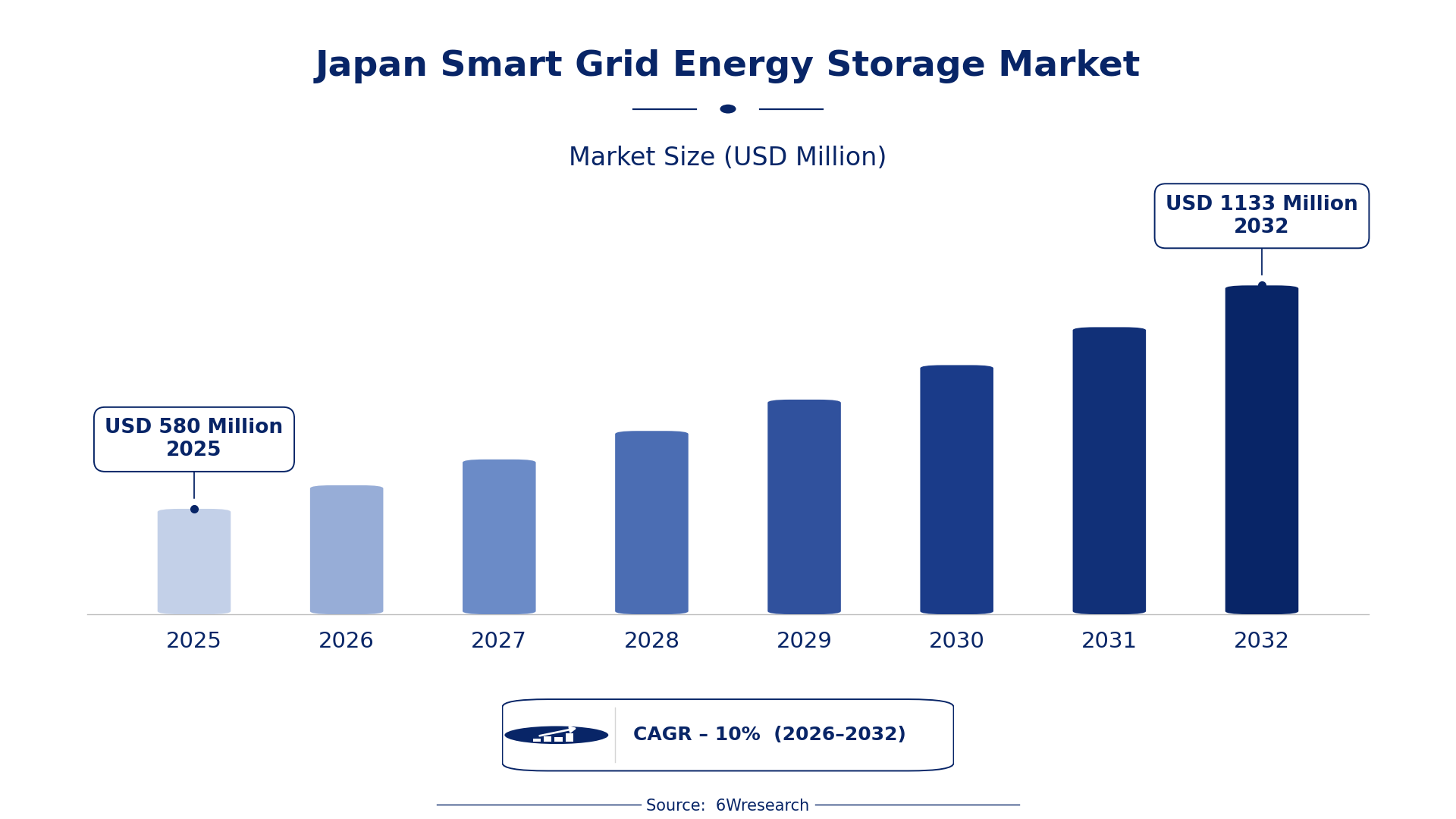
According to 6Wresearch internal database and industry insights, the Japan Smart Grid Energy Storage Market was valued at USD 580 Million in 2025 and is projected to reach USD 1,133 Million by 2032, growing at a CAGR of approximately 10% during 2026–2032.
Japan Smart Grid Energy Storage Market Highlights
| Report Metric | Details |
| Report Name | Japan Smart Grid Energy Storage Market (2026-2032) |
| Market Size 2025 | USD 580 Million |
| Market Size 2032 | USD 1,133 Million |
| Absolute Growth 2025–2032 | USD 553 Million |
| CAGR 2026–2032 | 10% |
| Peak Annual Growth | 11.0% in 2028 |
| Forecast Period | 2026–2032 |
| Historical Data | 2022–2025 |
| Base Year | 2025 |
| Leading Storage Type, 2025 | Battery Storage Systems (50% share) |
| Leading Smart Integration, 2025 | AI-Managed Charge Cycles (47% share) |
| Leading Application Area, 2025 | Distributed Grid Nodes (46% share) |
| Leading End User, 2025 | Renewable Energy Firms (47% share) |
| Fastest-Growing Storage Type | Flow Batteries (14.5% CAGR) |
| Fastest-Growing Smart Integration | Load Shifting (13.5% CAGR) |
| Fastest-Growing Application Area | Grid Balancing Stations (11.8% CAGR) |
| Fastest-Growing End User | Smart Utility Companies (13.4% CAGR) |
| Growing Sector | energy storage solutions |
| Key End Users | renewable energy firms, smart utility companies, energy tech integrators, smart infrastructure firms |
Japan Smart Grid Energy Storage Market Year-wise Growth Rate and Key Drivers (2022–2032)
This graph illustrates the annual growth rates of the market from 2022 to 2032, highlighting a steady upward trajectory and projected market expansion over the forecast period.
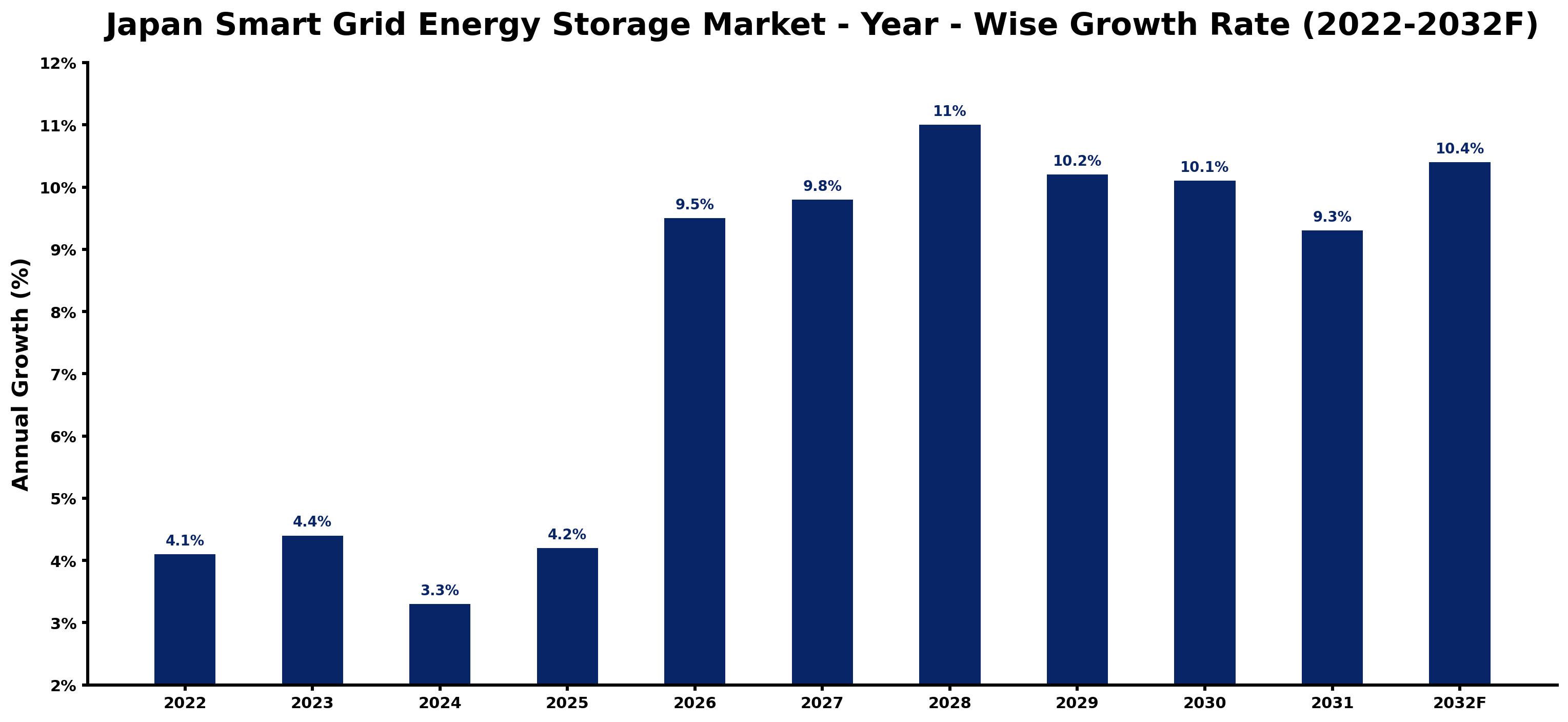
The table below sets out the estimated growth rate for each year and the main factor behind it.
| Year | Estimated Annual Growth (%) | Market Rationale |
| 2022 | 4.1 | The market experienced steady growth driven by increasing energy demand. |
| 2023 | 4.4 | Growth accelerated due to heightened investments in renewable energy technologies. |
| 2024 | 3.3 | The market saw a slowdown as some projects faced delays in implementation. |
| 2025 | 4.2 | Growth rebounded as more energy storage projects came online across regions. |
| 2026 | 9.5 | Demand surged with new initiatives aimed at improving grid stability. |
| 2027 | 9.8 | Growth continued as technological advancements improved energy efficiency. |
| 2028 | 11.0 | The peak growth year is expected to be reached, driven by significant public and private investments. |
| 2029 | 10.2 | Growth slowed slightly as the market began to stabilise after peak demand. |
| 2030 | 10.1 | The market will maintain growth, supported by ongoing energy efficiency programmes. |
| 2031 | 9.3 | Growth is projected to continue to decelerate as the market matures and competition increases. |
| 2032 | 10.4 | A resurgence in demand is expected as new technologies gain traction. |
Note: Market size estimations and growth projections presented in this report are based on 6Wresearch's proprietary forecasting methodology, utilizing the latest available industry data, government publications, and primary research inputs.
Japan Smart Grid Energy Storage Market Synopsis
Smart Grid Energy Storage technologies refer to systems that store energy for later use, enhancing the efficiency of the electricity grid. These systems, made from advanced battery technologies and hybrid systems, are essential for balancing supply and demand, integrating renewable sources, and improving reliability. The Japan Smart Grid Energy Storage Market is expanding due to significant investments in renewable energy, with the government targeting JPY 150 trillion for decarbonisation over ten years, while the population's rising energy needs drive demand for effective energy solutions.
Market Dynamics Impact Analysis (2026–2032)
| Factor | Type | Impact | Primary Segment Affected |
| Increasing investments in renewable energy projects drive demand for energy storage solutions. | Driver | High | Battery Storage Systems |
| The integration of advanced technologies enhances grid efficiency and reliability. | Driver | High | Battery Storage Systems |
| Growing urbanisation increases the need for efficient energy management solutions. | Opportunity | High | Urban Power Systems |
| The push for carbon neutrality creates demand for innovative energy storage technologies. | Opportunity | High | Renewable Energy Firms |
| High initial costs of advanced storage systems can deter adoption. | Restraint | Medium | Flow Batteries |
| Limited awareness of energy storage benefits restricts market growth. | Restraint | Medium | Hybrid Storage Systems |
| Competition from alternative energy solutions can impact market share. | Challenge | High | Battery Storage Systems |
| Technological advancements require continuous investment, posing financial risks. | Challenge | High | Battery Storage Systems |
Evaluation of Drivers in Japan Smart Grid Energy Storage Market (2026–2032)
The table below links each growth driver to the segment it affects and the evidence for it.
| Drivers | Primary Segment Affected | Why It Matters (Evidence) |
| Rising energy demand from Japan's population drives the need for energy storage solutions. | Battery Storage Systems | Japan's population of approximately 125 million increases energy consumption, necessitating efficient storage. |
| Government initiatives promote renewable energy integration, boosting storage technology adoption. | Battery Storage Systems | The 'Renewable Energy 100' initiative aims for 100% renewable energy by 2030, increasing storage needs. |
| Technological advancements in battery efficiency lead to increased adoption of energy storage systems. | Flow Batteries | The installed base of flow batteries reached around 200 MW, improving grid stability and reliability. |
| Urban development projects necessitate efficient energy management, driving demand for storage solutions. | Urban Power Systems | The 'Energy Efficiency Program' promotes advanced storage solutions, supporting market growth. |
| Investment in energy efficiency programs supports the growth of advanced storage technologies. | Hybrid Storage Systems | The 'Green Growth Strategy' includes targets for energy storage deployment, enhancing market opportunities. |
A wider customer base explains much of the growth, as Japan's population of approximately 125 million drives energy demand, necessitating efficient storage solutions. Technological advancements have improved battery efficiency, leading to a rise in flow battery adoption, with an installed capacity of around 200 MW. Urban development projects further drive the demand for energy management solutions.
Evaluation of Restraints in Japan Smart Grid Energy Storage Market
The table below lists the restraints and the evidence behind each.
| Market Restraint | Primary Segment Affected | Why It Matters (Evidence) |
| High initial costs of advanced energy storage systems can deter widespread adoption. | Flow Batteries | The cost of implementing flow battery systems can be prohibitive for many users. |
| Limited awareness of the benefits of energy storage restricts market growth. | Hybrid Storage Systems | Many potential users are unaware of how storage can improve energy efficiency. |
| Regulatory hurdles can slow down the deployment of new energy storage technologies. | Battery Storage Systems | Complex approval processes can delay project timelines and increase costs. |
| Competition from alternative energy solutions can impact market share. | Battery Storage Systems | Other energy solutions may be perceived as more cost-effective, affecting storage adoption. |
| Technological complexity may deter some users from adopting advanced storage systems. | Urban Power Systems | The need for specialised knowledge can limit market penetration among smaller firms. |
Japan Smart Grid Energy Storage Market Challenges
High production costs pose challenges for producers, as reliance on local resources for smart grid energy storage technologies inflates expenses by up to 20% and delays project timelines for buyers. Insufficient technological infrastructure restricts the adoption of advanced energy storage solutions, potentially causing project delays of six months for producers. Buyers face increased electricity costs due to inadequate grid balancing capabilities, which can lead to a 15% rise in their bills. A shortage of skilled workers in the energy sector hinders the development of new energy storage projects, resulting in completion delays of over a year for producers.
Trends in the Japan Smart Grid Energy Storage Market
The trends below show where the Japan Smart Grid Energy Storage Market is heading.
- Launch of the Smart Energy Strategy: The Ministry of the Environment's new strategy aims to improve energy efficiency and storage integration. This initiative is supported by a ¥10 billion allocation for related projects.
- Shift towards Renewable Energy Integration: Japan is increasingly focusing on integrating renewable energy sources into the grid, driven by the 'Green Growth Strategy'. This strategy targets a 46% reduction in greenhouse gas emissions by 2030.
- Urban Power Systems Gaining Traction: Urban Power Systems are becoming essential for energy management in cities, particularly in Tokyo. Local energy solutions are being promoted, with a focus on improving grid reliability and efficiency.
- Increased Adoption of AI-Managed Charge Cycles: AI-Managed Charge Cycles are being widely adopted to optimise energy usage and storage. This trend is supported by advancements in technology, improving the efficiency of energy storage systems.
Investment Opportunities in the Japan Smart Grid Energy Storage Market
The following opportunities in the Japan Smart Grid Energy Storage Market pair current demand with a clear way in.
- Partnerships for Smart Grid Projects: Now is an ideal time to invest in smart grid projects, with the government allocating ¥10 billion for initiatives. Collaborating with local energy firms can facilitate entry into this growing market.
- Supply of Advanced Battery Technologies: There is an opportunity to supply advanced battery technologies, particularly flow batteries, as demand rises. Renewable Energy Firms are increasingly seeking efficient storage solutions to improve grid stability.
- Investment in Urban Energy Management Solutions: With urbanisation on the rise, there is a pressing need for energy management solutions in cities. Engaging with local governments and urban planners can open avenues for investment in this sector.
- Focus on Decarbonisation Initiatives: The current push for decarbonisation presents opportunities for suppliers of energy storage technologies. The 'GX Basic Policy' targets substantial investments in clean energy solutions, creating a favourable environment for new entrants.
Government Initiatives in the Japan Smart Grid Energy Storage Market
The Act on the Rational Use of Energy, established in 1979, requires large energy users to improve efficiency and report consumption. This law has encouraged investments in energy storage technologies as part of broader efficiency measures, promoting the adoption of effective solutions.
The Ministry of the Environment oversees various energy initiatives, including the Battery Industry Strategy launched in 2022. This strategy aims to support domestic battery manufacturing and has allocated funding to enhance energy storage projects.
Future Insight of the Japan Smart Grid Energy Storage Market
By 2032, suppliers will adapt to evolving battery technologies and new standards, leading to improved energy storage solutions for buyers. The installed capacity of energy storage is expected to exceed 5 GW, creating expanded market opportunities. The Smart Energy Strategy will accelerate the deployment of energy storage systems, allowing buyers to benefit from more reliable grid integration. The Renewable Energy 100 initiative will further promote the use of renewable sources, improving overall grid stability and efficiency.
Market Segmentation Analysis
Japan Smart Grid Energy Storage Market report covers a detailed analysis of the following market segments:
By Storage Type – Battery Storage Systems Lead, Flow Batteries Expected to Grow Fastest
According to Saurav Kr Singh, Senior Research Analyst at 6Wresearch, Battery Storage Systems held 50% of the Japan Smart Grid Energy Storage Market by storage type in 2025. Battery storage systems dominate the market in Japan due to their extensive installed base of 800 MW, which is essential for energy management and grid stability. Their widespread application in balancing energy supply and demand supports the integration of renewable energy sources effectively. The quickest growth will come from Flow Batteries, forecast to expand at a CAGR of 14.5% between 2026 and 2032. Flow batteries are witnessing rapid growth as they are particularly suitable for large-scale energy storage applications, aligning with Japan's ambition for 100% renewable energy by 2030. This segment's expansion is likely to continue as the demand for efficient energy storage solutions increases. Suppliers should focus on advancing flow battery technologies to meet the rising need for large-scale energy storage solutions.
By Smart Integration – AI-Managed Charge Cycles Lead, Load Shifting Expected to Grow Fastest
With 47% of smart integration revenue in 2025, AI-Managed Charge Cycles was the largest category. AI-managed charge cycles lead the market as they optimise energy usage and storage, which is crucial for efficient grid operations in urban areas like Tokyo. Their ability to enhance energy management directly contributes to improved grid reliability and efficiency. Load Shifting is set to record the highest CAGR in this split, 13.5% over 2026–2032. Load shifting is gaining traction as it effectively manages peak demand, which is vital for maintaining grid stability amidst increasing energy consumption. The government's emphasis on energy efficiency further accelerates the growth of this segment. Buyers should invest in smart integration technologies to optimise energy management and reduce operational costs.
By Application Area – Distributed Grid Nodes Lead, Grid Balancing Stations Expected to Grow Fastest
In 2025, Distributed Grid Nodes led the application area split with a 46% share. Distributed grid nodes are key for enhancing local energy management and distribution, making them the preferred choice in Japan's smart grid framework. Their role in facilitating renewable energy integration is especially important in densely populated areas. Over 2026–2032, Grid Balancing Stations are expected to post the fastest growth, at a CAGR of 11.8%. Grid balancing stations are rapidly gaining importance as they are essential for maintaining grid stability while integrating renewable energy sources. The growing energy storage capacity in Japan underscores the necessity for these stations. Suppliers must prioritise the development of grid balancing solutions to ensure reliable energy distribution.
By End User – Renewable Energy Firms Lead, Smart Utility Companies Expected to Grow Fastest
Renewable Energy Firms took 47% of end user revenue in 2025, more than any other category. Renewable energy firms are the primary users of energy storage solutions, driven by Japan's commitment to reducing greenhouse gas emissions. Their significant investment in energy storage technologies is crucial for transitioning towards a sustainable energy future. Smart Utility Companies are projected to grow fastest, at a CAGR of 13.4% during 2026–2032. Smart utility companies are quickly adopting energy storage for grid management, reflecting the industry's shift towards integrating renewable sources. This trend is expected to accelerate as utilities seek to enhance grid reliability and efficiency. Buyers should collaborate with renewable energy firms to leverage energy storage solutions for improved grid management.
Key Attractiveness of the Report
- 10 Years of Market Numbers
- Historical Data Starting from 2022 to 2025
- Base Year 2025
- Forecast Data until 2032
- Key Performance Indicators Impacting the Market
- Major Upcoming Developments and Projects
Key Highlights of the Report:
- Japan Smart Grid Energy Storage Market Outlook
- Market Size of Japan Smart Grid Energy Storage Market, 2025
- Forecast of Japan Smart Grid Energy Storage Market, 2032
- Historical Data and Forecast of Japan Smart Grid Energy Storage Revenues & Volume for the Period 2022-2032F
- Japan Smart Grid Energy Storage Market Trend Evolution
- Japan Smart Grid Energy Storage Market Drivers and Challenges
- Japan Smart Grid Energy Storage Price Trends
- Japan Smart Grid Energy Storage Porter's Five Forces
- Japan Smart Grid Energy Storage Industry Life Cycle
- Historical Data and Forecast of Japan Smart Grid Energy Storage Market Revenues & Volume By Storage Type for the Period 2022-2032F
- Historical Data and Forecast of Japan Smart Grid Energy Storage Market Revenues & Volume By Battery Storage Systems for the Period 2022-2032F
- Historical Data and Forecast of Japan Smart Grid Energy Storage Market Revenues & Volume By Flow Batteries for the Period 2022-2032F
- Historical Data and Forecast of Japan Smart Grid Energy Storage Market Revenues & Volume By Flywheel Systems for the Period 2022-2032F
- Historical Data and Forecast of Japan Smart Grid Energy Storage Market Revenues & Volume By Hybrid Storage Systems for the Period 2022-2032F
- Historical Data and Forecast of Japan Smart Grid Energy Storage Market Revenues & Volume By Smart Integration for the Period 2022-2032F
- Historical Data and Forecast of Japan Smart Grid Energy Storage Market Revenues & Volume By AI-Managed Charge Cycles for the Period 2022-2032F
- Historical Data and Forecast of Japan Smart Grid Energy Storage Market Revenues & Volume By Load Shifting for the Period 2022-2032F
- Historical Data and Forecast of Japan Smart Grid Energy Storage Market Revenues & Volume By Frequency Regulation for the Period 2022-2032F
- Historical Data and Forecast of Japan Smart Grid Energy Storage Market Revenues & Volume By Solar + Battery for the Period 2022-2032F
- Historical Data and Forecast of Japan Smart Grid Energy Storage Market Revenues & Volume By Application Area for the Period 2022-2032F
- Historical Data and Forecast of Japan Smart Grid Energy Storage Market Revenues & Volume By Distributed Grid Nodes for the Period 2022-2032F
- Historical Data and Forecast of Japan Smart Grid Energy Storage Market Revenues & Volume By Grid Balancing Stations for the Period 2022-2032F
- Historical Data and Forecast of Japan Smart Grid Energy Storage Market Revenues & Volume By Industrial Microgrids for the Period 2022-2032F
- Historical Data and Forecast of Japan Smart Grid Energy Storage Market Revenues & Volume By Urban Power Systems for the Period 2022-2032F
- Historical Data and Forecast of Japan Smart Grid Energy Storage Market Revenues & Volume By End User for the Period 2022-2032F
- Historical Data and Forecast of Japan Smart Grid Energy Storage Market Revenues & Volume By Renewable Energy Firms for the Period 2022-2032F
- Historical Data and Forecast of Japan Smart Grid Energy Storage Market Revenues & Volume By Smart Utility Companies for the Period 2022-2032F
- Historical Data and Forecast of Japan Smart Grid Energy Storage Market Revenues & Volume By Energy Tech Integrators for the Period 2022-2032F
- Historical Data and Forecast of Japan Smart Grid Energy Storage Market Revenues & Volume By Smart Infrastructure Firms for the Period 2022-2032F
- Japan Smart Grid Energy Storage Import Export Trade Statistics
- Market Opportunity Assessment By Storage Type
- Market Opportunity Assessment By Smart Integration
- Market Opportunity Assessment By Application Area
- Market Opportunity Assessment By End User
- Japan Smart Grid Energy Storage Top Companies Market Share
- Japan Smart Grid Energy Storage Competitive Benchmarking By Technical and Operational Parameters
- Japan Smart Grid Energy Storage Company Profiles
- Japan Smart Grid Energy Storage Key Strategic Recommendations
Market Covered
The study includes the following segmentation.
By Storage Type
- Battery Storage Systems
- Flow Batteries
- Flywheel Systems
- Hybrid Storage Systems
By Smart Integration
- AI-Managed Charge Cycles
- Load Shifting
- Frequency Regulation
- Solar + Battery
By Application Area
- Distributed Grid Nodes
- Grid Balancing Stations
- Industrial Microgrids
- Urban Power Systems
By End User
- Renewable Energy Firms
- Smart Utility Companies
- Energy Tech Integrators
- Smart Infrastructure Firms































