Japan Smart TV Devices Market Size & Growth Rate
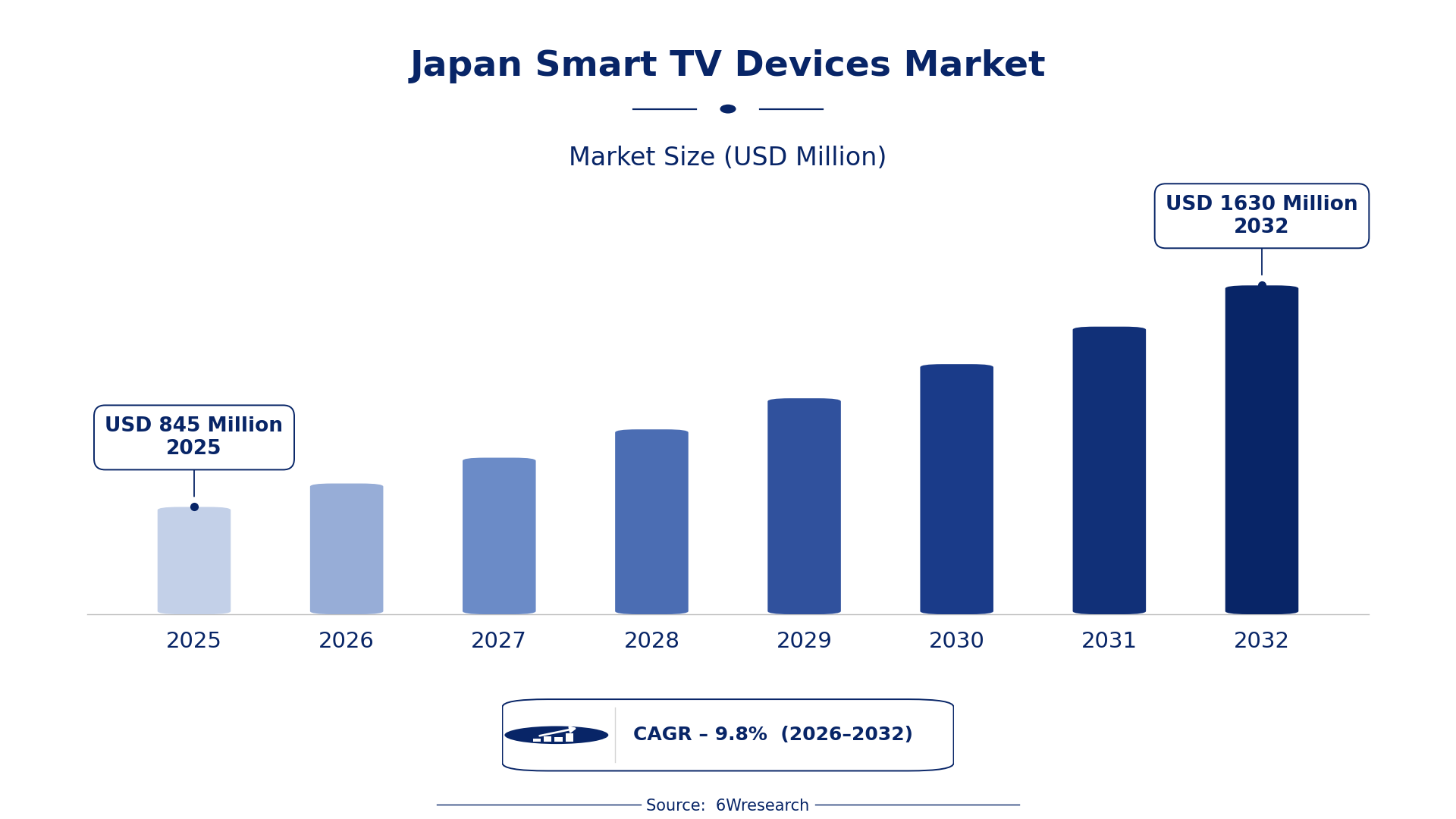
According to 6Wresearch internal database and industry insights, the Japan Smart TV Devices Market was valued at USD 845 Million in 2025 and is projected to reach USD 1,630 Million by 2032, growing at a CAGR of approximately 9.8% during 2026–2032.
Japan Smart TV Devices Market Highlights
| Report Metric | Details |
| Report Name | Japan Smart TV Devices Market (2026-2032) |
| Market Size 2025 | USD 845 Million |
| Market Size 2032 | USD 1,630 Million |
| Absolute Growth 2025–2032 | USD 785 Million |
| CAGR 2026–2032 | 9.8% |
| Peak Annual Growth | 10.7% in 2028 |
| Forecast Period | 2026–2032 |
| Historical Data | 2022–2025 |
| Base Year | 2025 |
| Leading TV Type, 2025 | Android Smart TVs (50% share) |
| Leading Smart Feature, 2025 | App & Voice Assistant Access (46% share) |
| Leading Display Resolution, 2025 | 4K/UHD/HDR (44% share) |
| Leading End User, 2025 | Home Consumers (37% share) |
| Fastest-Growing TV Type | OLED Smart TVs (14.2% CAGR) |
| Fastest-Growing Smart Feature | Color Adjustment AI (13.1% CAGR) |
| Fastest-Growing Display Resolution | OLED Panel (12.9% CAGR) |
| Fastest-Growing End User | Premium Buyers (12.8% CAGR) |
| Growing Sector | Consumer Electronics |
| Key End Users | Home Consumers, Gamers, Premium Buyers, Price-Sensitive Users |
Japan Smart TV Devices Market Year-wise Growth Rate and Key Drivers (2022–2032)
This graph illustrates the annual growth rates of the market from 2022 to 2032, highlighting a steady upward trajectory and projected market expansion over the forecast period.
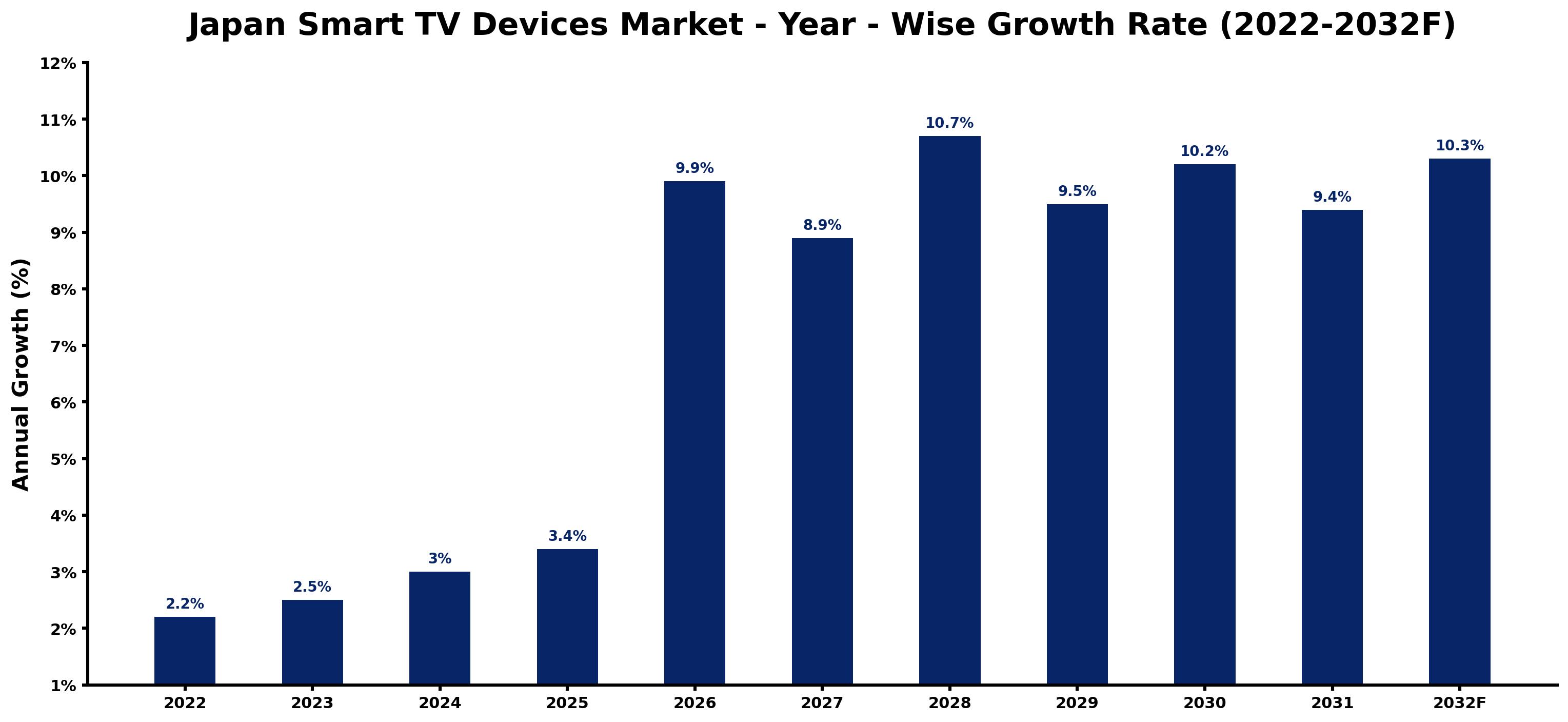
Annual growth estimates for each year appear below with the principal reason behind them, explaining the shifts that set the pace of the market.
| Year | Estimated Annual Growth (%) | Market Rationale |
| 2022 | 2.2 | The market experienced moderate growth, reflecting steady consumer interest in Smart TVs. |
| 2023 | 2.5 | Growth accelerated as more households adopted Smart TV technology and streaming services. |
| 2024 | 3.0 | Increased availability of high-definition content contributed to rising demand for Smart TVs. |
| 2025 | 3.4 | The market peaked in growth due to heightened interest in 4K/UHD viewing experiences. |
| 2026 | 9.9 | Growth is expected to surge as consumer preference shifts towards OLED Smart TVs and gaming features. |
| 2027 | 8.9 | Growth will slow slightly as the market begins to stabilise after rapid expansion. |
| 2028 | 10.7 | Demand is projected to spike again, driven by the introduction of advanced gaming Smart TVs. |
| 2029 | 9.5 | The market is expected to experience a slowdown, though it will continue to expand steadily. |
| 2030 | 10.2 | Growth is projected to pick up as more consumers embrace high-end Smart TV features. |
| 2031 | 9.4 | The market will slow again, reflecting a maturing consumer base and product offerings. |
| 2032 | 10.3 | Growth is expected to rebound as new technologies and content options attract buyers. |
Note: Market size estimations and growth projections presented in this report are based on 6Wresearch's proprietary forecasting methodology, utilizing the latest available industry data, government publications, and primary research inputs.
Japan Smart TV Devices Market Synopsis
Smart TV devices are advanced televisions that integrate internet connectivity and smart features, enabling access to streaming services and applications. The Japan Smart TV Devices Market is growing as consumer interest in high-definition content rises, with 25 million households owning Smart TVs in 2023. The increasing number of gamers boosts demand for gaming features, reflecting a shift in consumer preferences. The Tokyo metropolitan area stands out as a key region for sales, highlighting concentrated consumer interest in advanced technology.
Market Dynamics Impact Analysis (2026–2032)
| Factor | Type | Impact | Primary Segment Affected |
| Growing adoption of OTT streaming services | Driver | High | OTT Streaming + Wi-Fi |
| Rising demand for high-quality display technologies | Driver | High | OLED Smart TVs |
| Increasing number of tech-savvy consumers | Opportunity | High | Home Consumers |
| Growing interest in gaming features among users | Opportunity | High | Gaming Smart TVs |
| High average price of premium Smart TVs | Restraint | Medium | OLED Smart TVs |
| Limited awareness of Smart TV functionalities among seniors | Restraint | Medium | Home Consumers |
| Competition from low-cost alternatives | Challenge | High | Budget Smart TVs |
| Supply chain disruptions affecting product availability | Challenge | Medium | Android Smart TVs |
Evaluation of Drivers in Japan Smart TV Devices Market (2026–2032)
These are the developments adding the most demand over the forecast period.
| Drivers | Primary Segment Affected | Why It Matters (Evidence) |
| Increased household adoption of Smart TVs | Home Consumers | Over 60% of Smart TV users regularly utilize OTT streaming services, driving demand for connected devices. |
| Rising popularity of OLED technology | OLED Smart TVs | The average price of an OLED Smart TV is approximately ¥200,000, attracting premium buyers seeking superior quality. |
| Growing gaming population in Japan | Gaming Smart TVs | With an estimated 36 million gamers, demand for features like low-latency gaming mode is increasing. |
| High adoption of 4K/UHD content | 4K/UHD/HDR | Over 50% of Smart TV users access 4K/UHD content, necessitating compatible devices. |
| Technological advancements in Smart TV features | App & Voice Assistant Access | App & Voice Assistant Access took the largest smart feature share at 46% in 2025. |
The strongest pull on demand comes from the increasing household adoption of Smart TVs, with 25 million households in Japan owning these devices in 2023. The rising popularity of OLED technology attracts premium buyers, as the average price of an OLED Smart TV is approximately ¥200,000. The gaming population fuels demand for features like low-latency gaming mode, with many users seeking enhanced performance. High adoption of 4K/UHD content necessitates compatible devices, as over 50% of users access it. Technological advancements have made App & Voice Assistant Access a leading feature, representing 46% of the market share in 2025.
Evaluation of Restraints in Japan Smart TV Devices Market
The main factors holding the market back are set out below.
| Market Restraint | Primary Segment Affected | Why It Matters (Evidence) |
| High average price of OLED Smart TVs limits access for some consumers | OLED Smart TVs | The average price of an OLED Smart TV is approximately ¥200,000, making it less accessible to price-sensitive users. |
| Limited awareness of Smart TV functionalities among seniors | Home Consumers | With 29.3% of Japan's population aged 65 or older, many seniors may struggle to use Smart TV features. |
| Competition from low-cost alternatives affects premium brands | Budget Smart TVs | Budget Smart TVs attract price-sensitive consumers, limiting sales of premium models. |
| Supply chain disruptions impacting availability of advanced models | Android Smart TVs | Ongoing supply chain issues have delayed the availability of new Smart TV technologies. |
| Slow adoption of advanced features among older demographics | Gaming Smart TVs | Older consumers may be less inclined to invest in gaming features, limiting market growth. |
Japan Smart TV Devices Market Challenges
In 2023, Japan's Smart TV market faces strict broadcasting regulations that delay product launches, costing manufacturers potential sales and market share. A skills gap exists, as many technicians lack expertise in advanced display technologies, leading to repair times extending by an average of 15 days for consumers. Production costs have risen sharply, with the average OLED Smart TV priced at approximately ¥200,000, limiting affordability for over 25 million households. Supply chain disruptions from reliance on specific components cause delays, frustrating retailers and impacting consumer satisfaction.
Trends in the Japan Smart TV Devices Market
Below are the shifts with the largest effect on the Japan Smart TV Devices Market.
- Shift towards 4K/UHD Content: Over 50% of Smart TV users in Japan access 4K/UHD content, driving manufacturers to prioritise these features. This trend is particularly notable in the Tokyo metropolitan area, where demand for high-definition viewing experiences is strong.
- Increasing Integration of Voice Assistants: Home Consumers are increasingly adopting Smart TVs with integrated voice assistants, improving user convenience. In 2023, App & Voice Assistant Access accounted for 46% of the Smart feature market share.
- Growth of Gaming Features in Smart TVs: The demand for Gaming Smart TVs is rising as the gaming population in Japan reaches 36 million. This trend reflects a shift in consumer preferences towards low-latency gaming modes and high-performance displays.
- Expansion of OTT Streaming Services: The rise of OTT streaming services has transformed viewing habits in Japan, with over 60% of Smart TV users regularly utilising these platforms. This trend is reshaping content consumption and driving device sales.
Investment Opportunities in the Japan Smart TV Devices Market
Below are the investment opportunities with the strongest case in the Japan Smart TV Devices Market.
- High Demand for Affordable Smart TVs: With 25 million households owning Smart TVs, there is a gap for affordable options. Price-sensitive users in rural areas seek Budget Smart TVs, presenting an opportunity for manufacturers to partner with local distributors.
- Growing Market for Gaming Smart TVs: As the number of gamers in Japan continues to rise, there is a strong demand for Gaming Smart TVs. Manufacturers can enter this market by developing partnerships with gaming accessory suppliers.
- Expansion of Smart TV Features: With over 60% of users utilising OTT streaming services, there is an opportunity to improve Smart TV functionalities. Collaborating with content providers can help manufacturers tap into this growing demand.
- Rising Interest in OLED Technology: The average price of an OLED Smart TV is approximately ¥200,000, indicating a market for premium buyers. Manufacturers can enter this segment by obtaining certifications for high-quality displays.
Government Initiatives in the Japan Smart TV Devices Market
A new program aimed at improving digital literacy among seniors promotes Smart TV usage. This initiative complements existing regulations under the Industrial Standardization Act, which governs product standards and quality in the electronics sector, ensuring that Smart TVs meet consumer expectations. The program aims to reach 2 million seniors by 2025, enhancing their ability to use technology effectively.
The initiative for increasing digital literacy helps seniors understand Smart TV functionalities. The Ministry of Internal Affairs and Communications oversees these efforts, ensuring that users can access and utilise Smart TV technologies effectively. The program has allocated ¥5 billion for training and resources to support this goal.
Future Insight of the Japan Smart TV Devices Market
A government programme aimed at improving digital literacy among seniors will drive Smart TV adoption by 2032, particularly among older users. New standards from the Consumer Electronics Association of Japan will enhance device compatibility, benefiting both buyers and suppliers. Investment in advanced display technologies will improve performance and reduce production costs. With 36 million gamers in Japan, the demand for high-performance Smart TVs will influence future product development.
Market Segmentation Analysis
Japan Smart TV Devices Market report covers a detailed analysis of the following market segments:
By TV Type – Android Smart TVs Lead, OLED Smart TVs Expected to Grow Fastest
According to Saurav Kr Singh, Senior Research Analyst at 6Wresearch, Android Smart TVs accounted for 50% of the market by tv type in 2025. Android Smart TVs dominate the market due to their extensive app availability and user-friendly interface, appealing to a wide range of consumers. The high sales figures in urban areas, particularly Tokyo, underscore the strong preference for these devices among tech-savvy households. OLED Smart TVs are projected to grow fastest, at a CAGR of 14.2% during 2026–2032. OLED Smart TVs are experiencing rapid growth as consumers increasingly seek superior picture quality, which is evident in the rising demand for high-end models. The average price of approximately ¥200,000 highlights the premium positioning of this segment and its allure to discerning buyers. Suppliers should focus on advancing OLED technology to meet the growing consumer demand for high-quality viewing experiences.
By Smart Feature – App & Voice Assistant Access Leads, Color Adjustment AI Expected to Grow Fastest
The largest smart feature category in 2025 was App & Voice Assistant Access, at 46% of revenue. App & Voice Assistant Access is the leading feature as it enhances user convenience, allowing seamless interaction with Smart TV functionalities. This feature is particularly relevant for the 25 million households with Smart TVs, significantly improving their overall viewing experience. Color Adjustment AI is set to record the highest CAGR in this split, 13.1% over 2026–2032. Color Adjustment AI is rapidly gaining traction as it offers personalised visual settings, catering to consumers who desire an enhanced viewing experience. The increasing popularity of high-definition content, with over 50% of users accessing 4K/UHD regularly, further supports this trend. Buyers may increasingly prioritise Smart TVs that offer advanced features to enhance their viewing experiences.
By Display Resolution – 4K/UHD/HDR Leads, OLED Panel Expected to Grow Fastest
With 44% of display resolution revenue in 2025, 4K/UHD/HDR was the largest category. 4K/UHD/HDR is the leading display resolution as it has become the standard for high-definition viewing, meeting consumer expectations for quality. The widespread adoption of 4K/UHD content among users highlights its essential role in the Smart TV market. Over 2026–2032, OLED Panel is expected to post the fastest growth, at a CAGR of 12.9%. OLED Panel is the fastest-growing segment, preferred by consumers who seek premium viewing experiences. This trend aligns with the overall shift towards high-quality displays in Smart TVs, indicating changing consumer preferences. Suppliers should concentrate on OLED technology to address the rising demand for superior display options.
By End User – Home Consumers Lead, Premium Buyers Expected to Grow Fastest
Home Consumers took 37% of end user revenue in 2025, more than any other category. Home Consumers represent the largest user base for Smart TVs, driven by the widespread integration of Smart TVs into households across Japan. This demographic is particularly engaged, with an average viewing time of approximately 4 hours per day. The quickest growth will come from Premium Buyers, forecast to expand at a CAGR of 12.8% between 2026 and 2032. Premium Buyers are the fastest-growing segment as they seek high-end features and superior quality in their Smart TV purchases. The growing interest in advanced gaming and streaming capabilities among this group fuels their demand. Suppliers must tailor their offerings to attract premium buyers looking for high-quality Smart TVs.
Key Attractiveness of the Report
- 10 Years of Market Numbers
- Historical Data Starting from 2022 to 2025
- Base Year 2025
- Forecast Data until 2032
- Key Performance Indicators Impacting the Market
- Major Upcoming Developments and Projects
Key Highlights of the Report:
- Japan Smart TV Devices Market Outlook
- Market Size of Japan Smart TV Devices Market, 2025
- Forecast of Japan Smart TV Devices Market, 2032
- Historical Data and Forecast of Japan Smart TV Devices Revenues & Volume for the Period 2022-2032F
- Japan Smart TV Devices Market Trend Evolution
- Japan Smart TV Devices Market Drivers and Challenges
- Japan Smart TV Devices Price Trends
- Japan Smart TV Devices Porter's Five Forces
- Japan Smart TV Devices Industry Life Cycle
- Historical Data and Forecast of Japan Smart TV Devices Market Revenues & Volume By TV Type for the Period 2022-2032F
- Historical Data and Forecast of Japan Smart TV Devices Market Revenues & Volume By Android Smart TVs for the Period 2022-2032F
- Historical Data and Forecast of Japan Smart TV Devices Market Revenues & Volume By OLED Smart TVs for the Period 2022-2032F
- Historical Data and Forecast of Japan Smart TV Devices Market Revenues & Volume By Budget Smart TVs for the Period 2022-2032F
- Historical Data and Forecast of Japan Smart TV Devices Market Revenues & Volume By Gaming Smart TVs for the Period 2022-2032F
- Historical Data and Forecast of Japan Smart TV Devices Market Revenues & Volume By Smart Feature for the Period 2022-2032F
- Historical Data and Forecast of Japan Smart TV Devices Market Revenues & Volume By App & Voice Assistant Access for the Period 2022-2032F
- Historical Data and Forecast of Japan Smart TV Devices Market Revenues & Volume By Color Adjustment AI for the Period 2022-2032F
- Historical Data and Forecast of Japan Smart TV Devices Market Revenues & Volume By OTT Streaming + Wi-Fi for the Period 2022-2032F
- Historical Data and Forecast of Japan Smart TV Devices Market Revenues & Volume By Low-Latency Gaming Mode for the Period 2022-2032F
- Historical Data and Forecast of Japan Smart TV Devices Market Revenues & Volume By Display Resolution for the Period 2022-2032F
- Historical Data and Forecast of Japan Smart TV Devices Market Revenues & Volume By 4K/UHD/HDR for the Period 2022-2032F
- Historical Data and Forecast of Japan Smart TV Devices Market Revenues & Volume By OLED Panel for the Period 2022-2032F
- Historical Data and Forecast of Japan Smart TV Devices Market Revenues & Volume By LED for the Period 2022-2032F
- Historical Data and Forecast of Japan Smart TV Devices Market Revenues & Volume By HDMI 2.1 + VRR for the Period 2022-2032F
- Historical Data and Forecast of Japan Smart TV Devices Market Revenues & Volume By End User for the Period 2022-2032F
- Historical Data and Forecast of Japan Smart TV Devices Market Revenues & Volume By Home Consumers for the Period 2022-2032F
- Historical Data and Forecast of Japan Smart TV Devices Market Revenues & Volume By Premium Buyers for the Period 2022-2032F
- Historical Data and Forecast of Japan Smart TV Devices Market Revenues & Volume By Price-Sensitive Users for the Period 2022-2032F
- Historical Data and Forecast of Japan Smart TV Devices Market Revenues & Volume By Gamers for the Period 2022-2032F
- Japan Smart TV Devices Import Export Trade Statistics
- Market Opportunity Assessment By TV Type
- Market Opportunity Assessment By Smart Feature
- Market Opportunity Assessment By Display Resolution
- Market Opportunity Assessment By End User
- Japan Smart TV Devices Top Companies Market Share
- Japan Smart TV Devices Competitive Benchmarking By Technical and Operational Parameters
- Japan Smart TV Devices Company Profiles
- Japan Smart TV Devices Key Strategic Recommendations
Market Covered
The study includes the following segmentation.
By TV Type
- Android Smart TVs
- OLED Smart TVs
- Budget Smart TVs
- Gaming Smart TVs
By Smart Feature
- App & Voice Assistant Access
- Color Adjustment AI
- OTT Streaming + Wi-Fi
- Low-Latency Gaming Mode
By Display Resolution
- 4K/UHD/HDR
- OLED Panel
- LED
- HDMI 2.1 + VRR
By End User
- Home Consumers
- Premium Buyers
- Price-Sensitive Users
- Gamers































