Japan Smoothie Ingredients Market Size & Growth Rate
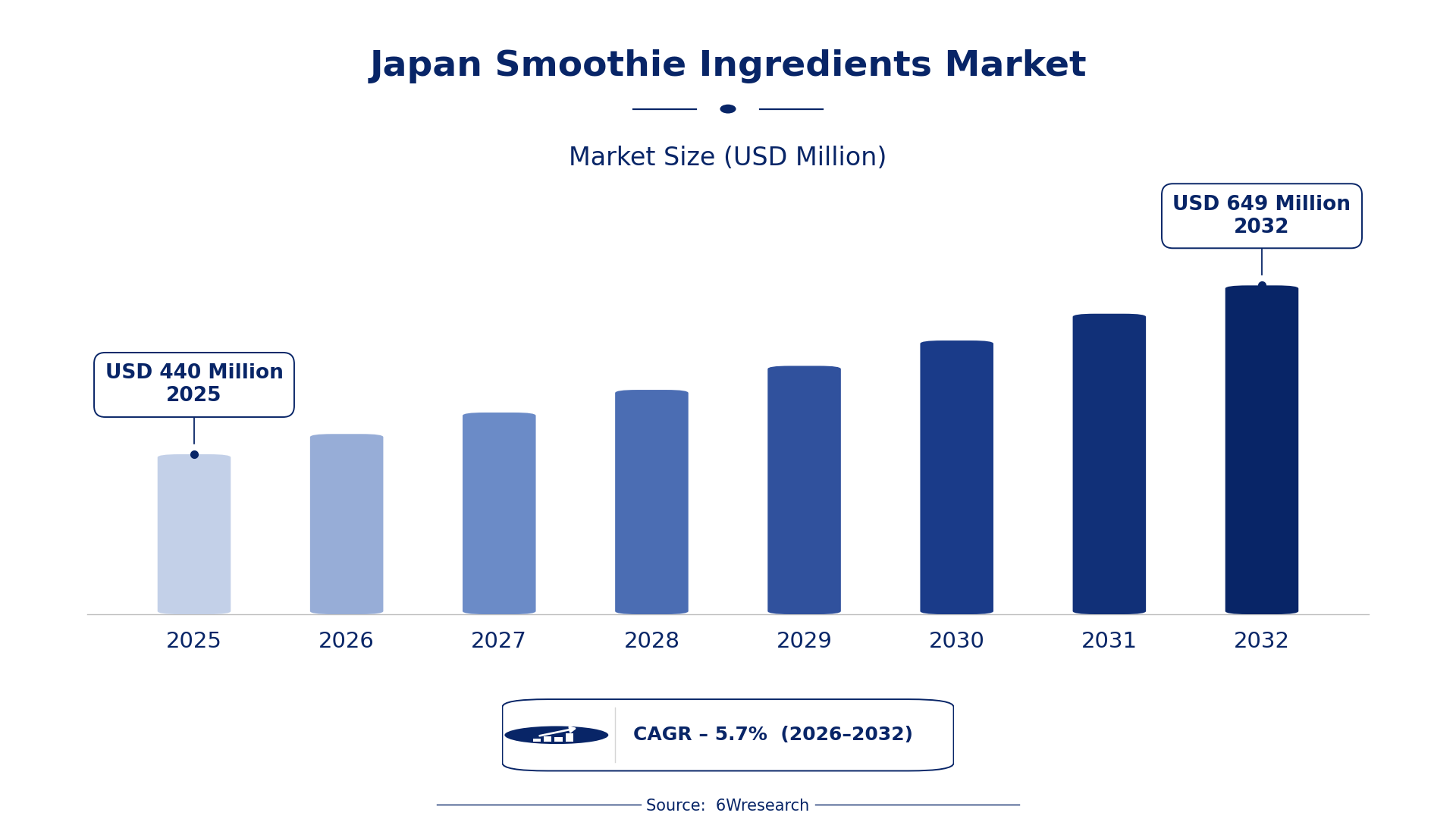
According to 6Wresearch internal database and industry insights, the Japan Smoothie Ingredients Market was valued at USD 440 Million in 2025 and is projected to reach USD 649 Million by 2032, growing at a CAGR of approximately 5.7% during 2026–2032.
Japan Smoothie Ingredients Market Highlights
| Report Metric | Details |
| Report Name | Japan Smoothie Ingredients Market (2026-2032) |
| Market Size 2025 | USD 440 Million |
| Market Size 2032 | USD 649 Million |
| Absolute Growth 2025–2032 | USD 209 Million |
| CAGR 2026–2032 | 5.7% |
| Peak Annual Growth | 6.3% in 2027 |
| Forecast Period | 2026–2032 |
| Historical Data | 2022–2025 |
| Base Year | 2025 |
| Leading Ingredient Type, 2025 | Fruit Purees (46% share) |
| Leading Source Type, 2025 | Organic (47% share) |
| Leading Distribution Channel, 2025 | Foodservice Suppliers (39% share) |
| Leading End User, 2025 | Juice Bars (48% share) |
| Fastest-Growing Ingredient Type | Protein Powders (7.9% CAGR) |
| Fastest-Growing Source Type | Plant-Based (8.1% CAGR) |
| Fastest-Growing Distribution Channel | Retail Stores (7.5% CAGR) |
| Fastest-Growing End User | Fitness Enthusiasts (7.3% CAGR) |
| Growing Sector | Health Cafes |
| Key End Users | Juice Bars, Health Cafes, Fitness Enthusiasts, Home Consumers |
Japan Smoothie Ingredients Market Year-wise Growth Rate and Key Drivers (2022–2032)
This graph illustrates the annual growth rates of the market from 2022 to 2032, highlighting a steady upward trajectory and projected market expansion over the forecast period.
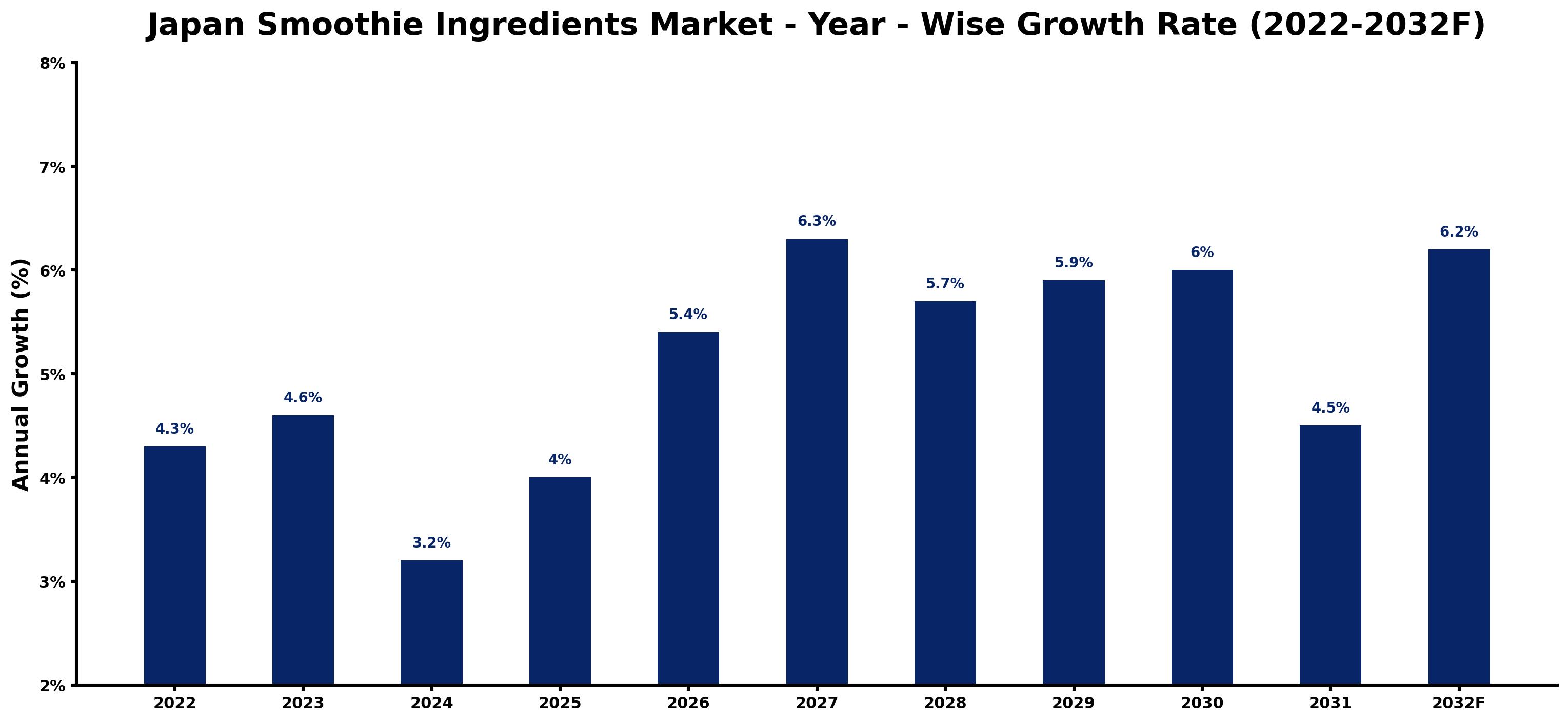
The table below sets out the estimated growth rate for each year and the main factor behind it.
| Year | Estimated Annual Growth (%) | Market Rationale |
| 2022 | 4.3 | The market experienced steady growth, driven by increasing health awareness among consumers. |
| 2023 | 4.6 | Growth accelerated as more health cafes opened, attracting health-conscious customers. |
| 2024 | 3.2 | Growth slowed due to market saturation in urban areas, but demand remained positive. |
| 2025 | 4.0 | A resurgence in health-focused events boosted consumer interest in smoothies and ingredients. |
| 2026 | 5.4 | Investment in plant-based ingredients is expected to rise, attracting a new demographic of buyers. |
| 2027 | 6.3 | The introduction of new smoothie products is projected to lead to peak growth as consumers seek variety. |
| 2028 | 5.7 | Growth is expected to slow slightly as the market stabilises after rapid expansion in previous years. |
| 2029 | 5.9 | A renewed focus on fitness and nutrition will increase demand for protein powders among enthusiasts. |
| 2030 | 6.0 | Health cafes will continue to expand, sustaining interest in smoothie ingredients and related products. |
| 2031 | 4.5 | Growth is projected to moderate as consumer preferences shift towards more diverse health options. |
| 2032 | 6.2 | A surge in online sales channels is expected to further drive market growth. |
Note: Market size estimations and growth projections presented in this report are based on 6Wresearch's proprietary forecasting methodology, utilizing the latest available industry data, government publications, and primary research inputs.
Japan Smoothie Ingredients Market Synopsis
Smoothie ingredients include fruit purees, protein powders, yogurt bases, and natural sweeteners, which improve the nutritional value and flavour of smoothies. The Japan Smoothie Ingredients Market is valued at approximately 100 billion yen and is growing due to rising health consciousness. Health cafes are expanding by 15% annually, while online sales of smoothie ingredients increased by 30% in 2023, reflecting a shift towards convenience and health-focused consumption.
Market Dynamics Impact Analysis (2026–2032)
| Factor | Type | Impact | Primary Segment Affected |
| Rising health awareness among consumers | Driver | High | Fruit Purees |
| Increasing popularity of protein powders among fitness enthusiasts | Driver | High | Protein Powders |
| Expansion of health cafes in urban areas | Opportunity | High | Health Cafes |
| Growth of online sales channels for convenience | Opportunity | Medium | Online Platforms |
| Market saturation in urban regions | Restraint | Medium | Juice Bars |
| Decline in demand for dairy-based ingredients | Restraint | High | Dairy |
| High competition among smoothie ingredient suppliers | Challenge | High | Foodservice Suppliers |
| Changing consumer preferences towards diverse health options | Challenge | Medium | Health Cafes |
Evaluation of Drivers in Japan Smoothie Ingredients Market (2026–2032)
Demand rests on the following drivers, each shown with the segment it touches most.
| Drivers | Primary Segment Affected | Why It Matters (Evidence) |
| Health-conscious consumers increasingly seek nutritious options | Fruit Purees | This trend drives demand for fruit purees, which account for 25% of the smoothie ingredient market. |
| Fitness enthusiasts are incorporating protein powders into their diets | Protein Powders | Approximately 40% of fitness enthusiasts in Japan actively purchase protein powders for nutritional benefits. |
| Health cafes are expanding rapidly in urban areas | Health Cafes | These establishments are growing by 15% annually, creating a higher demand for smoothie ingredients. |
| Online shopping convenience is attracting new buyers | Online Platforms | Online sales of smoothie ingredients increased by 30% in 2023, reflecting changing consumer habits. |
| Local sourcing of ingredients supports regional agriculture | Fruit Purees | Fruit purees are often sourced from local farms, supporting the market's sustainability. |
Several shifts outside the market lift sales. The health-conscious consumer base is expanding, with 40% of fitness enthusiasts purchasing protein powders for nutritional benefits. Health cafes are increasing by 15% annually, driving demand for smoothie ingredients. Online sales channels surged by 30% in 2023, indicating a shift towards convenience. Sourcing fruit purees from regional farms supports agriculture, appealing to environmentally aware buyers. These trends boost the market's growth potential.
Evaluation of Restraints in Japan Smoothie Ingredients Market
Below are the constraints most often cited by buyers and suppliers, with the segment each affects.
| Market Restraint | Primary Segment Affected | Why It Matters (Evidence) |
| Urban market saturation limits growth opportunities | Juice Bars | Urban areas are experiencing saturation as more juice bars open, making it challenging for new entrants to capture market share. |
| Declining interest in dairy-based ingredients due to health trends | Dairy | Consumers are increasingly favouring plant-based options, leading to a decrease in dairy ingredient sales. |
| High competition among suppliers drives prices down | Foodservice Suppliers | Intense competition can lead to reduced profit margins for suppliers, affecting their sustainability. |
| Changing consumer preferences complicate product offerings | Health Cafes | Health cafes must continuously adapt their menus to meet evolving consumer tastes, which can be resource-intensive. |
| Limited awareness of smoothie benefits in rural areas | Health Cafes | Rural consumers may not be as informed about smoothie benefits, which limits market expansion. |
Japan Smoothie Ingredients Market Challenges
Producers incur higher costs from the increasing demand for organic fruit purees, which represent 25% of the smoothie ingredient market, leading to a 15% price rise for buyers needing timely deliveries. Supply chain disruptions arise as local farms struggle to meet this demand, causing delays that push buyers to seek alternative sources. Skills shortages in food safety compliance with ISO 22000 standards hinder producers' capacity to maintain quality, resulting in a 10% increase in production time that affects buyers' access to reliable products. Competition intensifies as 40% of fitness enthusiasts prefer plant-based protein powders, limiting options for buyers and driving prices up.
Trends in the Japan Smoothie Ingredients Market
Buyers and suppliers in the Japan Smoothie Ingredients Market are adjusting to the following trends.
- Health Cafes Gaining Popularity: Health cafes are becoming increasingly popular in urban areas, with a 15% annual growth rate. This trend reflects a growing consumer preference for healthy dining options, driving demand for smoothie ingredients.
- Online Platforms for Smoothie Ingredients: Online platforms are gaining traction for smoothie ingredient purchases, with a 30% growth in 2023. This shift indicates a preference for convenience among consumers, prompting suppliers to improve their digital presence.
- Surge in Plant-Based Ingredients: The popularity of plant-based protein powders is surging, with a projected CAGR of 8.1%. This trend aligns with health-conscious consumer preferences, encouraging suppliers to diversify their product offerings.
- Local Sourcing Initiatives on the Rise: Sourcing fruit purees from local farms is becoming more common, supporting regional agriculture. This practice promotes sustainability and appeals to consumers seeking fresh, local ingredients.
Investment Opportunities in the Japan Smoothie Ingredients Market
Below are the investment opportunities with the strongest case in the Japan Smoothie Ingredients Market.
- Juice Bars Expanding: Juice bars are projected to grow by 10% in the next two years, indicating a need for diverse smoothie ingredients. Suppliers can enter this market by partnering with local juice bars to provide fresh ingredients.
- Health Cafes Seeking Unique Ingredients: Health cafes are increasingly looking for unique smoothie ingredients to attract customers. With a 15% annual growth rate, suppliers can invest in organic and natural products to meet this demand.
- Retail Stores Needing Diverse Offerings: Retail stores reported a 20% increase in smoothie ingredient sales in 2023. Suppliers should focus on providing a variety of products to cater to this growing consumer base.
- E-commerce Platforms for Convenience: With online sales of smoothie ingredients growing significantly, suppliers should invest in e-commerce strategies. Collaborating with online platforms can improve visibility and accessibility for consumers.
Government Initiatives in the Japan Smoothie Ingredients Market
The Food Sanitation Act amendment of 2018 introduced a positive list system for synthetic resins used in food packaging, enhancing safety standards for smoothie ingredients. This measure complements existing regulations, such as the Food Recycling Law, which mandates waste reduction and recycling in food businesses.
The Ministry of Health, Labour and Welfare oversees the implementation of the Food Sanitation Act, approving safety measures and funding initiatives that support food safety. This agency plays a vital role in ensuring that smoothie ingredient producers comply with hygiene standards.
Future Insight of the Japan Smoothie Ingredients Market
New health-focused cafes will emerge by 2032, driven by the 'Healthy Japan 21' initiative, providing buyers with more diverse smoothie options. The rise of plant-based protein powders will reshape ingredient sourcing, as consumers increasingly prefer these alternatives. Online sales channels will expand further, with a projected 30% increase in e-commerce for smoothie ingredients, making purchasing easier for buyers. Greater adherence to the JIS standard will elevate product safety, ensuring that suppliers meet consumer expectations for quality and transparency.
Market Segmentation Analysis
Japan Smoothie Ingredients Market report covers a detailed analysis of the following market segments:
By Ingredient Type – Fruit Purees Lead, Protein Powders Expected to Grow Fastest
According to Saurav Kr Singh, Senior Research Analyst at 6Wresearch, with 46% of ingredient type revenue in 2025, Fruit Purees was the largest category. Fruit purees hold the largest share as they are essential for creating the base of smoothies, appealing to a wide range of consumers. Their availability from local farms not only supports regional agriculture but also attracts health-conscious buyers looking for fresh ingredients. The quickest growth will come from Protein Powders, forecast to expand at a CAGR of 7.9% between 2026 and 2032. Protein powders are seeing rapid growth due to their rising use in smoothies for nutritional enhancement, especially among the 40% of fitness enthusiasts. This trend is expected to continue as more consumers become aware of the health benefits associated with protein supplementation. Suppliers should focus on expanding their protein powder offerings to cater to the increasing demand from health-oriented consumers.
By Source Type – Organic Leads, Plant-Based Expected to Grow Fastest
In 2025, Organic led the source type split with a 47% share. Organic sources maintain a notable share as they align with the growing consumer interest in health and wellness, although they are not yet the leading choice. Initiatives like 'Healthy Japan 21' are promoting the use of organic ingredients, encouraging consumers to make healthier choices. Plant-Based is set to record the highest CAGR in this split, 8.1% over 2026–2032. Plant-based sources are projected to grow rapidly, spurred by the increasing trend towards health-conscious diets and a shift away from animal products. This shift is evident as consumers actively seek plant-based alternatives to traditional ingredients. Suppliers must adapt their product lines to include more plant-based options to meet the changing preferences of consumers.
By Distribution Channel – Foodservice Suppliers Lead, Retail Stores Expected to Grow Fastest
The largest distribution channel category in 2025 was Foodservice Suppliers, at 39% of revenue. Foodservice suppliers lead the distribution channel as they are the primary providers for juice bars and cafes, which are key consumers of smoothie ingredients. This channel's significance is highlighted by the growth of health cafes in urban settings. Over 2026–2032, Retail Stores are expected to post the fastest growth, at a CAGR of 7.5%. Retail stores are experiencing the fastest growth as they have become the preferred purchasing point for consumers seeking smoothie ingredients. The reported 20% increase in sales at retail stores in 2023 underscores this trend. Suppliers should refine their retail strategies to take advantage of the rising consumer demand within retail environments.
By End User – Juice Bars Lead, Fitness Enthusiasts Expected to Grow Fastest
Juice Bars held 48% of the Japan Smoothie Ingredients Market by end user in 2025. Juice bars are the primary end users of smoothie ingredients, directly utilising these components to craft their products. Their leading position is reinforced by the increasing popularity of juice bars in urban areas, catering to health-conscious consumers. Fitness Enthusiasts are projected to grow fastest, at a CAGR of 7.3% during 2026–2032. Fitness enthusiasts represent the fastest-growing segment, as they increasingly incorporate protein powders into their diets for nutritional benefits. This group's commitment to health and fitness is likely to stimulate further demand for smoothie ingredients. Suppliers should focus their marketing efforts on fitness enthusiasts to capitalise on their growing interest in smoothie ingredients.
Key Attractiveness of the Report
- 10 Years of Market Numbers
- Historical Data Starting from 2022 to 2025
- Base Year 2025
- Forecast Data until 2032
- Key Performance Indicators Impacting the Market
- Major Upcoming Developments and Projects
Key Highlights of the Report:
- Japan Smoothie Ingredients Market Outlook
- Market Size of Japan Smoothie Ingredients Market, 2025
- Forecast of Japan Smoothie Ingredients Market, 2032
- Historical Data and Forecast of Japan Smoothie Ingredients Revenues & Volume for the Period 2022-2032F
- Japan Smoothie Ingredients Market Trend Evolution
- Japan Smoothie Ingredients Market Drivers and Challenges
- Japan Smoothie Ingredients Price Trends
- Japan Smoothie Ingredients Porter's Five Forces
- Japan Smoothie Ingredients Industry Life Cycle
- Historical Data and Forecast of Japan Smoothie Ingredients Market Revenues & Volume By Ingredient Type for the Period 2022-2032F
- Historical Data and Forecast of Japan Smoothie Ingredients Market Revenues & Volume By Fruit Purees for the Period 2022-2032F
- Historical Data and Forecast of Japan Smoothie Ingredients Market Revenues & Volume By Protein Powders for the Period 2022-2032F
- Historical Data and Forecast of Japan Smoothie Ingredients Market Revenues & Volume By Yogurt Bases for the Period 2022-2032F
- Historical Data and Forecast of Japan Smoothie Ingredients Market Revenues & Volume By Natural Sweeteners for the Period 2022-2032F
- Historical Data and Forecast of Japan Smoothie Ingredients Market Revenues & Volume By Source Type for the Period 2022-2032F
- Historical Data and Forecast of Japan Smoothie Ingredients Market Revenues & Volume By Organic for the Period 2022-2032F
- Historical Data and Forecast of Japan Smoothie Ingredients Market Revenues & Volume By Plant-Based for the Period 2022-2032F
- Historical Data and Forecast of Japan Smoothie Ingredients Market Revenues & Volume By Dairy for the Period 2022-2032F
- Historical Data and Forecast of Japan Smoothie Ingredients Market Revenues & Volume By Botanical for the Period 2022-2032F
- Historical Data and Forecast of Japan Smoothie Ingredients Market Revenues & Volume By Distribution Channel for the Period 2022-2032F
- Historical Data and Forecast of Japan Smoothie Ingredients Market Revenues & Volume By Foodservice Suppliers for the Period 2022-2032F
- Historical Data and Forecast of Japan Smoothie Ingredients Market Revenues & Volume By Retail Stores for the Period 2022-2032F
- Historical Data and Forecast of Japan Smoothie Ingredients Market Revenues & Volume By Supermarkets for the Period 2022-2032F
- Historical Data and Forecast of Japan Smoothie Ingredients Market Revenues & Volume By Online Platforms for the Period 2022-2032F
- Historical Data and Forecast of Japan Smoothie Ingredients Market Revenues & Volume By End User for the Period 2022-2032F
- Historical Data and Forecast of Japan Smoothie Ingredients Market Revenues & Volume By Juice Bars for the Period 2022-2032F
- Historical Data and Forecast of Japan Smoothie Ingredients Market Revenues & Volume By Fitness Enthusiasts for the Period 2022-2032F
- Historical Data and Forecast of Japan Smoothie Ingredients Market Revenues & Volume By Health Cafes for the Period 2022-2032F
- Historical Data and Forecast of Japan Smoothie Ingredients Market Revenues & Volume By Home Consumers for the Period 2022-2032F
- Japan Smoothie Ingredients Import Export Trade Statistics
- Market Opportunity Assessment By Ingredient Type
- Market Opportunity Assessment By Source Type
- Market Opportunity Assessment By Distribution Channel
- Market Opportunity Assessment By End User
- Japan Smoothie Ingredients Top Companies Market Share
- Japan Smoothie Ingredients Competitive Benchmarking By Technical and Operational Parameters
- Japan Smoothie Ingredients Company Profiles
- Japan Smoothie Ingredients Key Strategic Recommendations
Market Covered
The study includes the following segmentation.
By Ingredient Type
- Fruit Purees
- Protein Powders
- Yogurt Bases
- Natural Sweeteners
By Source Type
- Organic
- Plant-Based
- Dairy
- Botanical
By Distribution Channel
- Foodservice Suppliers
- Retail Stores
- Supermarkets
- Online Platforms
By End User
- Juice Bars
- Fitness Enthusiasts
- Health Cafes
- Home Consumers































