Japan Soft Structured Carriers Market Size & Growth Rate
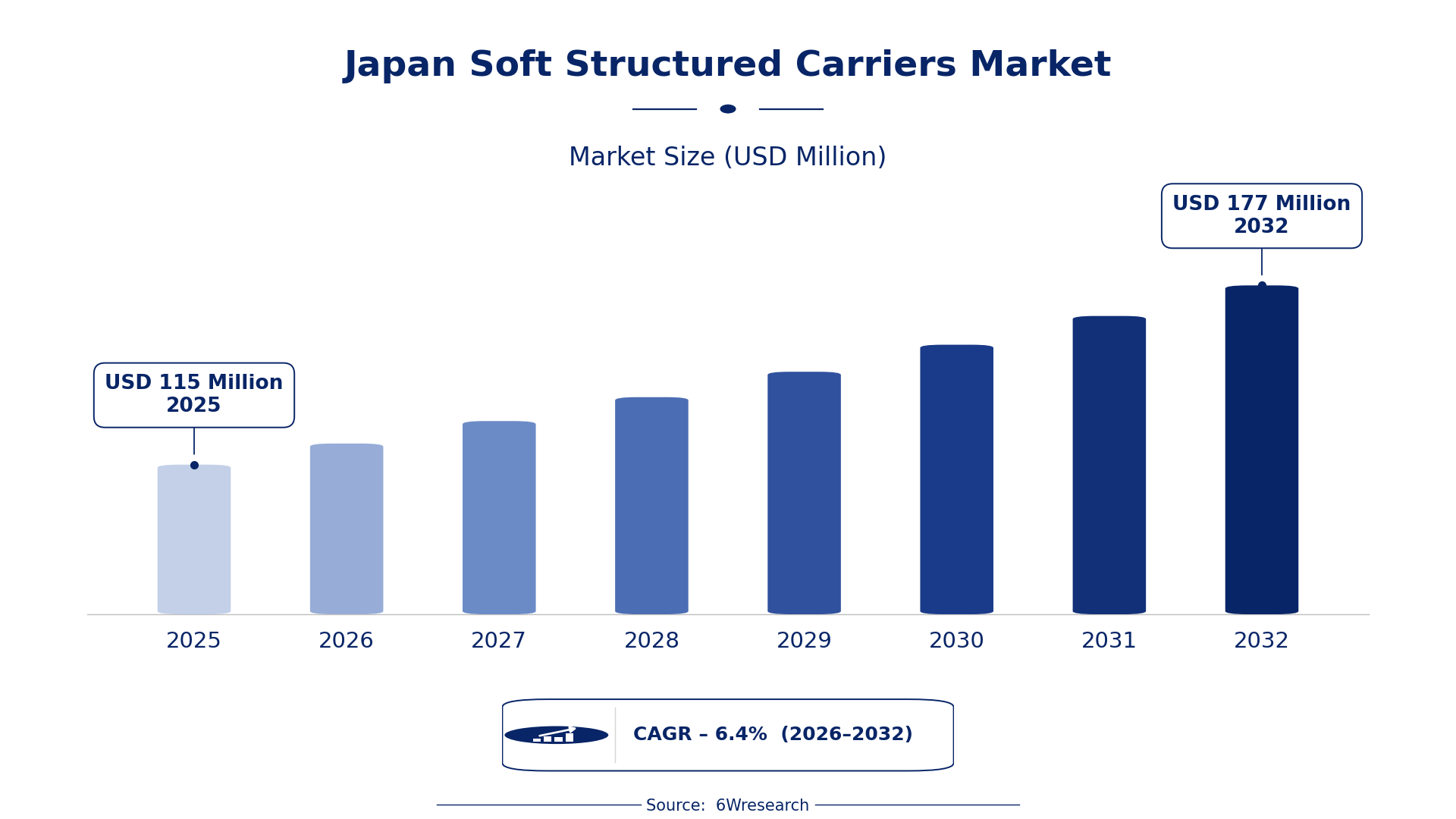
According to 6Wresearch internal database and industry insights, the Japan Soft Structured Carriers Market was valued at USD 115 Million in 2025 and is projected to reach USD 177 Million by 2032, growing at a CAGR of approximately 6.4% during 2026–2032.
Japan Soft Structured Carriers Market Highlights
| Report Metric | Details |
| Report Name | Japan Soft Structured Carriers Market (2026-2032) |
| Market Size 2025 | USD 115 Million |
| Market Size 2032 | USD 177 Million |
| Absolute Growth 2025–2032 | USD 62 Million |
| CAGR 2026–2032 | 6.4% |
| Peak Annual Growth | 7.3% in 2028 |
| Forecast Period | 2026–2032 |
| Historical Data | 2022–2025 |
| Base Year | 2025 |
| Leading Carrier Type, 2025 | Front-Facing Carrier (46% share) |
| Leading Weight Capacity, 2025 | Up to 15 kg (42% share) |
| Leading Material Type, 2025 | Cotton/Polyester Blend (47% share) |
| Leading End User, 2025 | New Parents (47% share) |
| Fastest-Growing Carrier Type | Hip Seat Carrier (9.0% CAGR) |
| Fastest-Growing Weight Capacity | Up to 20 kg (7.7% CAGR) |
| Fastest-Growing Material Type | Breathable Mesh (9.4% CAGR) |
| Fastest-Growing End User | Travel Families (8.2% CAGR) |
| Growing Sector | Baby Products |
| Key End Users | New Parents, Urban Parents, Baby Product Retailers |
Japan Soft Structured Carriers Market Year-wise Growth Rate and Key Drivers (2022–2032)
This graph illustrates the annual growth rates of the market from 2022 to 2032, highlighting a steady upward trajectory and projected market expansion over the forecast period.
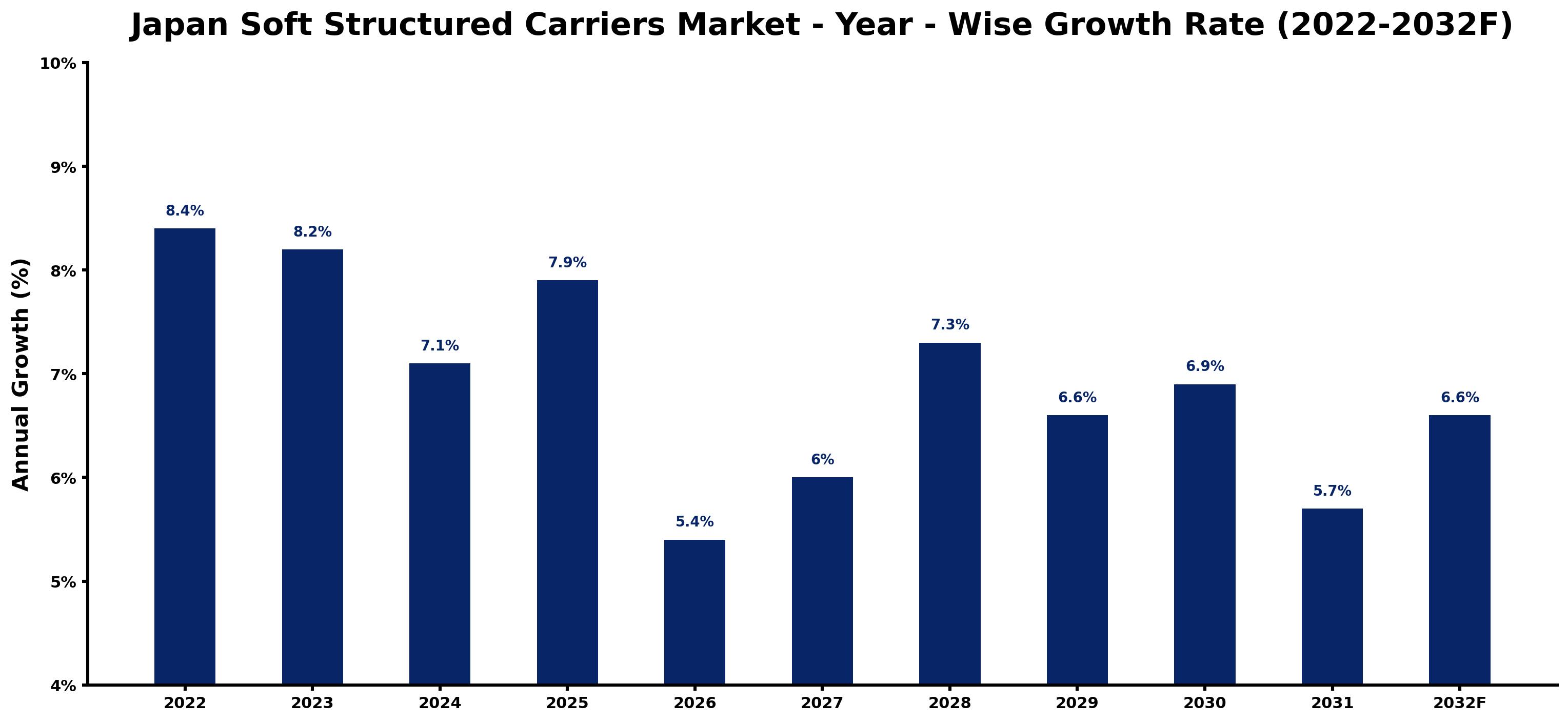
Annual growth estimates for each year appear below with the principal reason behind them, explaining the shifts that set the pace of the market.
| Year | Estimated Annual Growth (%) | Market Rationale |
| 2022 | 8.4 | The market experienced strong demand due to high birth rates and urbanisation. |
| 2023 | 8.2 | Growth slowed slightly as consumer preferences shifted towards eco-friendly materials. |
| 2024 | 7.1 | Demand continued to decelerate as competition increased among manufacturers. |
| 2025 | 7.9 | A resurgence in demand occurred as new parents sought versatile carrier options. |
| 2026 | 5.4 | Growth slowed due to market saturation and increased price sensitivity among buyers. |
| 2027 | 6.0 | Demand picked up as ergonomic designs gained popularity among urban parents. |
| 2028 | 7.3 | The market peaked as innovative designs attracted a broader consumer base. |
| 2029 | 6.6 | Growth slowed again as economic factors influenced consumer spending habits. |
| 2030 | 6.9 | Demand increased with the introduction of new safety standards for carriers. |
| 2031 | 5.7 | Growth decelerated as the market stabilised with established brands dominating. |
| 2032 | 6.6 | A renewed interest in sustainable products drove demand for eco-friendly carriers. |
Note: Market size estimations and growth projections presented in this report are based on 6Wresearch's proprietary forecasting methodology, utilizing the latest available industry data, government publications, and primary research inputs.
Japan Soft Structured Carriers Market Synopsis
Soft Structured Carriers are designed for comfort and ease of use, typically made from fabrics like cotton or polyester blends. They are primarily used for carrying infants or toddlers, promoting bonding between caregivers and children. The Japan Soft Structured Carriers Market is growing, driven by high birth rates and increasing urbanisation, with approximately 840,000 infants born in 2023. Demand is further supported by a rising interest in ergonomic designs and eco-friendly materials, particularly in urban areas like Tokyo and Osaka.
Market Dynamics Impact Analysis (2026–2032)
| Factor | Type | Impact | Primary Segment Affected |
| High birth rates and urbanisation lead to increased demand for baby carriers. | Driver | High | Ergonomic Carrier |
| Growing interest in eco-friendly materials drives demand for sustainable products. | Driver | High | Organic Cotton |
| Urbanisation trends create a need for portable and convenient carrying solutions. | Opportunity | High | Convertible Carrier |
| Increased awareness of safety standards opens new market segments. | Opportunity | Medium | Breathable Mesh |
| Market saturation limits growth potential for new entrants. | Restraint | High | Front-Facing Carrier |
| Price sensitivity among consumers affects purchasing decisions. | Restraint | Medium | Hip Seat Carrier |
| Competition from alternative baby products challenges market share. | Challenge | High | Front-Facing Carrier |
| Economic fluctuations may impact consumer spending on non-essential items. | Challenge | Medium | Front-Facing Carrier |
Evaluation of Drivers in Japan Soft Structured Carriers Market (2026–2032)
Below are the drivers that matter most for revenue growth, with supporting evidence.
| Drivers | Primary Segment Affected | Why It Matters (Evidence) |
| High birth rates in Japan create a consistent demand for baby carriers. | Ergonomic Carrier | In 2023, Japan recorded approximately 840,000 births, driving purchases among new parents. |
| Urbanisation increases the need for portable carrying solutions for families. | Convertible Carrier | Urban areas like Tokyo show high adoption rates of baby carriers, supporting market growth. |
| Growing interest in eco-friendly materials boosts demand for sustainable carriers. | Organic Cotton | The Eco-Friendly Fabric segment is gaining traction as sustainability trends increase. |
| Safety standards promoted by associations build consumer confidence in products. | Breathable Mesh | The Japan Baby Products Association promotes safety standards for baby carriers. |
| Increased production capacity by local manufacturers meets rising demand. | Hip Seat Carrier | Local manufacturers are ramping up production of ergonomic carriers to meet demand. |
High birth rates are the strongest driver of demand, with approximately 840,000 infants born in 2023, prompting new parents to seek reliable baby carriers. Urbanisation in regions such as Tokyo increases the need for portable solutions, especially for families on the go. The growing interest in eco-friendly materials is clear as the Organic Cotton segment gains traction among environmentally conscious buyers. Local manufacturers are ramping up production capacity to meet demand for ergonomic options, while safety standards promoted by associations build consumer confidence. This combination of elements is expected to sustain market growth in the coming years.
Evaluation of Restraints in Japan Soft Structured Carriers Market
The key brakes on demand, and where they bite hardest, are shown below.
| Market Restraint | Primary Segment Affected | Why It Matters (Evidence) |
| Market saturation limits growth potential for new entrants. | Front-Facing Carrier | With over 1,000 baby product retailers in Japan, competition is fierce. |
| Price sensitivity among consumers affects purchasing decisions. | Hip Seat Carrier | The average price range for soft structured carriers is between ¥5,000 and ¥20,000. |
| Consumer preference for lighter carriers may limit heavier options. | Up to 25 kg | Most users prefer lighter options, which affects the sales of heavier carriers. |
| Economic fluctuations may impact consumer spending on non-essential items. | Front-Facing Carrier | Economic uncertainty can lead to reduced spending on baby products. |
| Competition from alternative baby products challenges market share. | Front-Facing Carrier | The demand for alternative baby products is increasing, impacting carrier sales. |
Japan Soft Structured Carriers Market Challenges
High-quality organic cotton sourcing presents a major obstacle for producers, as inconsistent supply can inflate production costs by 15% within a year. Families face rising prices, with average soft structured carrier costs between ¥5,000 and ¥20,000, making it difficult for them to purchase reliable products. A shortage of skilled ergonomic designers hampers product development, causing delays of up to six months for new releases, which restricts options for retailers. Increased competition from imported carriers pressures local manufacturers to lower prices, potentially compromising quality and squeezing profit margins for producers.
Trends in the Japan Soft Structured Carriers Market
The shifts below are changing how Japan Soft Structured Carriers Market products are bought and supplied.
- Urban Parents Embracing Ergonomic Carriers: Urban parents are increasingly opting for ergonomic carriers that provide comfort and support, with designs endorsed by pediatricians. In 2023, the average age of first-time parents in Japan was 30 years.
- Increasing Demand for Eco-Friendly Materials: The demand for organic cotton carriers is rising among eco-conscious parents, reflecting a shift towards sustainability. This segment is expected to grow as awareness increases.
- Breathable Mesh Carriers Gaining Popularity: Breathable mesh carriers are becoming a preferred choice during summer months, offering better airflow. Urban areas like Osaka are seeing a notable increase in their adoption.
- Convertible Carriers Gaining Traction: Convertible carriers are increasingly popular among families for their versatility, allowing various carrying styles. Their adoption is particularly high in urban settings, catering to diverse needs.
Investment Opportunities in the Japan Soft Structured Carriers Market
Where to invest in the Japan Soft Structured Carriers Market: the main openings are set out below.
- Sustainability Trends Creating Investment Potential: With sustainability trends gaining momentum, there is a strong opportunity to invest in organic cotton carriers. New parents in urban areas are particularly interested in these options, reflecting changing consumer preferences.
- Expansion in Urban Retail Spaces: The timing is ripe for expanding retail presence in urban areas like Tokyo, where demand is high. Collaborating with local baby product retailers can enhance market entry and visibility.
- Investing in Ergonomic Designs: Investing in ergonomic carrier designs will meet the increasing demand for comfort and support. Urban parents are prioritising these features in their purchasing decisions, creating a market gap.
- Utilising Safety Standards for Market Entry: The introduction of new safety standards presents an opportunity for manufacturers to differentiate their products. Engaging with the Japan Consumer Product Safety Association can facilitate compliance and build trust.
Government Initiatives in the Japan Soft Structured Carriers Market
The Industrial Standardization Act, amended in 2019, governs product safety standards for baby carriers, ensuring that manufacturers adhere to strict guidelines. This law protects consumers and promotes quality in the Japan Soft Structured Carriers Market, contributing to safer products for families.
The Consumer Affairs Agency administers the Act against Unjustifiable Premiums and Misleading Representations, which prohibits misleading labelling and advertising of goods. These measures ensure that buyers can trust the information presented about soft structured carriers, enhancing market integrity.
Future Insight of the Japan Soft Structured Carriers Market
The rollout of new ergonomic design guidelines will commence by 2032, driven by government initiatives and consumer demand for improved safety. Urban areas will see a surge in specialised baby product expos, enhancing visibility for local manufacturers. The shift towards sustainable materials will reshape product offerings as eco-conscious parents prioritise greener alternatives. By 2032, the birth rate is projected to stabilise around 850,000 infants annually, ensuring a steady market for soft structured carriers.
Market Segmentation Analysis
Japan Soft Structured Carriers Market report covers a detailed analysis of the following market segments:
By Carrier Type – Front-Facing Carrier Leads, Hip Seat Carrier Expected to Grow Fastest
According to Saurav Kr Singh, Senior Research Analyst at 6Wresearch, Front-Facing Carrier held 46% of the Japan Soft Structured Carriers Market by carrier type in 2025. The Front-Facing Carrier holds the largest share due to its design that facilitates easy access and interaction with the child, appealing to new parents who value bonding. This type of carrier is particularly popular in urban areas like Tokyo, where families often seek convenience in their daily routines. The quickest growth will come from Hip Seat Carrier, forecast to expand at a CAGR of 9.0% between 2026 and 2032. The Hip Seat Carrier is experiencing rapid growth because it provides ergonomic support for carrying children comfortably, a feature that is increasingly important to families. This segment's expansion is supported by a growing awareness of child safety and comfort, which positions it as a preferred option among parents. This trend indicates that suppliers should focus on promoting ergonomic features to attract health-conscious parents looking for comfort in their choices.
By Weight Capacity – Up to 15 kg Leads, Up to 20 kg Expected to Grow Fastest
Up to 15 kg took 42% of weight capacity revenue in 2025, more than any other category. The Up to 15 kg segment leads the market as it is ideal for younger infants and lighter toddlers, catering effectively to new parents' needs. This weight capacity aligns well with the demographic of families with infants, which is substantial in Japan. Up to 20 kg is set to record the highest CAGR in this split, 7.7% over 2026–2032. The Up to 20 kg segment is expanding rapidly as it accommodates a wider range of toddler weights, appealing to parents as their children grow. This adaptability allows for prolonged usage, making it an attractive choice for families. Manufacturers should consider increasing their product range in the higher weight capacity segment to satisfy changing consumer preferences.
By Material Type – Cotton/Polyester Blend Leads, Breathable Mesh Expected to Grow Fastest
With 47% of material type revenue in 2025, Cotton/Polyester Blend was the largest category. The Cotton/Polyester Blend is the leading material type due to its durability and comfort, which are essential for parents looking for reliable baby carriers. This blend is widely accepted among consumers, particularly in regions with high demand for baby products like Tokyo. Over 2026–2032, Breathable Mesh is expected to post the fastest growth, at a CAGR of 9.4%. Breathable Mesh is gaining traction rapidly as it is preferred for hot weather and airflow, addressing the needs of parents during summer months. The increasing focus on comfort during warmer seasons is driving this segment's growth. Suppliers may benefit from investing in breathable materials to cater to seasonal demands.
By End User – New Parents Lead, Travel Families Expected to Grow Fastest
The largest end user category in 2025 was New Parents, at 47% of revenue. New Parents represent the largest segment as they are the primary target audience for baby carriers, driven by the high birth rate in Japan. This group actively seeks products that facilitate convenience and bonding with their infants. Travel Families are projected to grow fastest, at a CAGR of 8.2% during 2026–2032. Travel Families are the fastest-growing segment as they often seek portable and convenient carrying solutions for their journeys. The rising trend of family travel is contributing to the increasing demand for carriers that offer ease of use and comfort. Retailers should tailor their marketing strategies to highlight the benefits of carriers for travel purposes.
Key Attractiveness of the Report
- 10 Years of Market Numbers
- Historical Data Starting from 2022 to 2025
- Base Year 2025
- Forecast Data until 2032
- Key Performance Indicators Impacting the Market
- Major Upcoming Developments and Projects
Key Highlights of the Report:
- Japan Soft Structured Carriers Market Outlook
- Market Size of Japan Soft Structured Carriers Market, 2025
- Forecast of Japan Soft Structured Carriers Market, 2032
- Historical Data and Forecast of Japan Soft Structured Carriers Revenues & Volume for the Period 2022-2032F
- Japan Soft Structured Carriers Market Trend Evolution
- Japan Soft Structured Carriers Market Drivers and Challenges
- Japan Soft Structured Carriers Price Trends
- Japan Soft Structured Carriers Porter's Five Forces
- Japan Soft Structured Carriers Industry Life Cycle
- Historical Data and Forecast of Japan Soft Structured Carriers Market Revenues & Volume By Carrier Type for the Period 2022-2032F
- Historical Data and Forecast of Japan Soft Structured Carriers Market Revenues & Volume By Front-Facing Carrier for the Period 2022-2032F
- Historical Data and Forecast of Japan Soft Structured Carriers Market Revenues & Volume By Hip Seat Carrier for the Period 2022-2032F
- Historical Data and Forecast of Japan Soft Structured Carriers Market Revenues & Volume By Ergonomic Carrier for the Period 2022-2032F
- Historical Data and Forecast of Japan Soft Structured Carriers Market Revenues & Volume By Convertible Carrier for the Period 2022-2032F
- Historical Data and Forecast of Japan Soft Structured Carriers Market Revenues & Volume By Weight Capacity for the Period 2022-2032F
- Historical Data and Forecast of Japan Soft Structured Carriers Market Revenues & Volume By Up to 15 kg for the Period 2022-2032F
- Historical Data and Forecast of Japan Soft Structured Carriers Market Revenues & Volume By Up to 20 kg for the Period 2022-2032F
- Historical Data and Forecast of Japan Soft Structured Carriers Market Revenues & Volume By Up to 25 kg for the Period 2022-2032F
- Historical Data and Forecast of Japan Soft Structured Carriers Market Revenues & Volume By Multi-Position for the Period 2022-2032F
- Historical Data and Forecast of Japan Soft Structured Carriers Market Revenues & Volume By Material Type for the Period 2022-2032F
- Historical Data and Forecast of Japan Soft Structured Carriers Market Revenues & Volume By Cotton/Polyester Blend for the Period 2022-2032F
- Historical Data and Forecast of Japan Soft Structured Carriers Market Revenues & Volume By Breathable Mesh for the Period 2022-2032F
- Historical Data and Forecast of Japan Soft Structured Carriers Market Revenues & Volume By Organic Cotton for the Period 2022-2032F
- Historical Data and Forecast of Japan Soft Structured Carriers Market Revenues & Volume By Eco-Friendly Fabric for the Period 2022-2032F
- Historical Data and Forecast of Japan Soft Structured Carriers Market Revenues & Volume By End User for the Period 2022-2032F
- Historical Data and Forecast of Japan Soft Structured Carriers Market Revenues & Volume By New Parents for the Period 2022-2032F
- Historical Data and Forecast of Japan Soft Structured Carriers Market Revenues & Volume By Travel Families for the Period 2022-2032F
- Historical Data and Forecast of Japan Soft Structured Carriers Market Revenues & Volume By Urban Parents for the Period 2022-2032F
- Historical Data and Forecast of Japan Soft Structured Carriers Market Revenues & Volume By Baby Product Retailers for the Period 2022-2032F
- Japan Soft Structured Carriers Import Export Trade Statistics
- Market Opportunity Assessment By Carrier Type
- Market Opportunity Assessment By Weight Capacity
- Market Opportunity Assessment By Material Type
- Market Opportunity Assessment By End User
- Japan Soft Structured Carriers Top Companies Market Share
- Japan Soft Structured Carriers Competitive Benchmarking By Technical and Operational Parameters
- Japan Soft Structured Carriers Company Profiles
- Japan Soft Structured Carriers Key Strategic Recommendations
Market Covered
Coverage by segment is as follows.
By Carrier Type
- Front-Facing Carrier
- Hip Seat Carrier
- Ergonomic Carrier
- Convertible Carrier
By Weight Capacity
- Up to 15 kg
- Up to 20 kg
- Up to 25 kg
- Multi-Position
By Material Type
- Cotton/Polyester Blend
- Breathable Mesh
- Organic Cotton
- Eco-Friendly Fabric
By End User
- New Parents
- Travel Families
- Urban Parents
- Baby Product Retailers































