Japan Solar Energy Harvesting System Market Size & Growth Rate
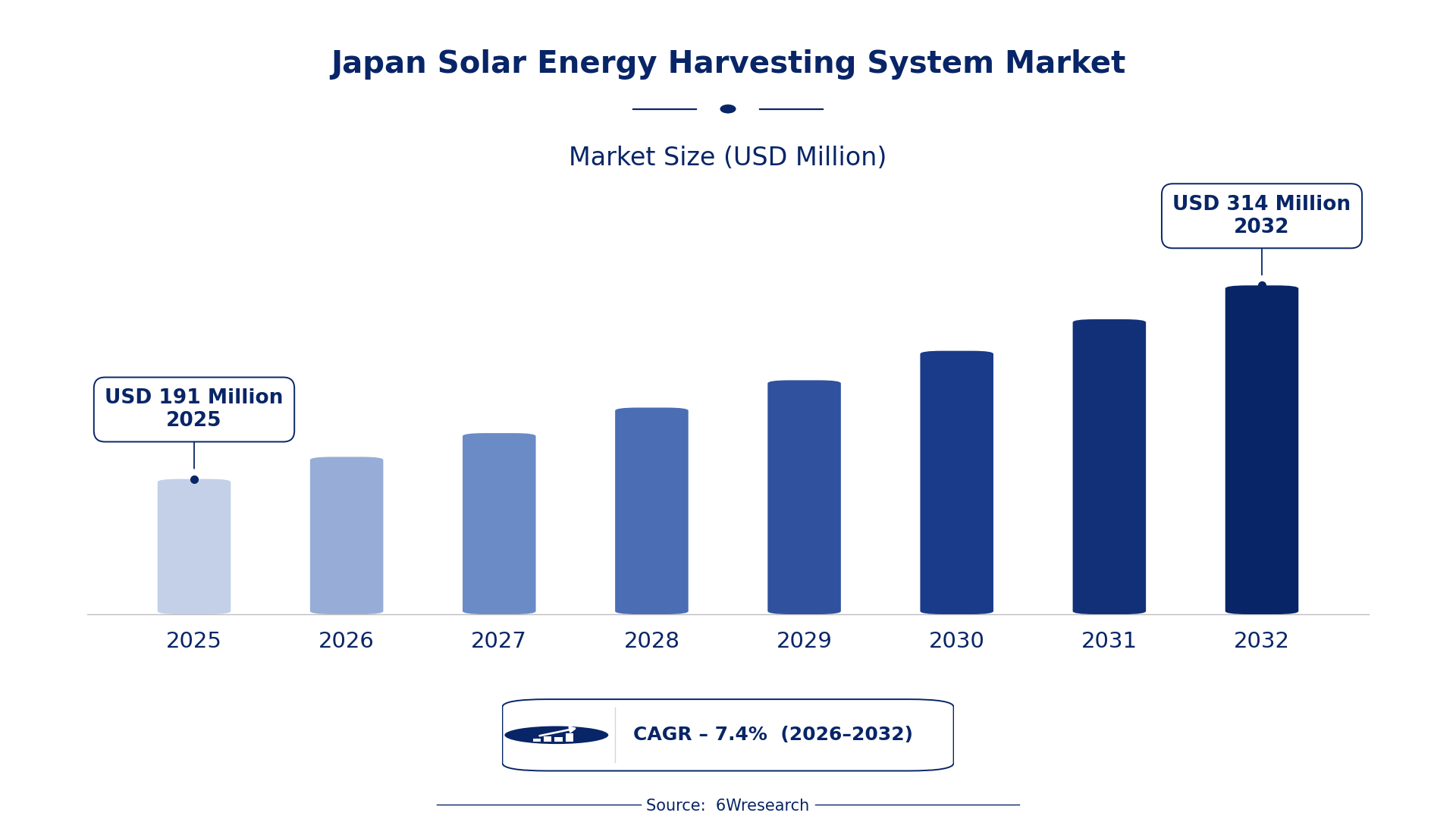
According to 6Wresearch internal database and industry insights, the Japan Solar Energy Harvesting System Market was valued at USD 191 Million in 2025 and is projected to reach USD 314 Million by 2032, growing at a CAGR of approximately 7.4% during 2026–2032.
Japan Solar Energy Harvesting System Market Highlights
| Report Metric | Details |
| Report Name | Japan Solar Energy Harvesting System Market (2026-2032) |
| Market Size 2025 | USD 191 Million |
| Market Size 2032 | USD 314 Million |
| Absolute Growth 2025–2032 | USD 123 Million |
| CAGR 2026–2032 | 7.4% |
| Peak Annual Growth | 8.6% in 2026 |
| Forecast Period | 2026–2032 |
| Historical Data | 2022–2025 |
| Base Year | 2025 |
| Leading System Type, 2025 | PV Panels + Batteries (36% share) |
| Leading Energy Conversion, 2025 | DC to AC (40% share) |
| Leading Application Area, 2025 | Rooftop/Grid-Tied (41% share) |
| Leading End User, 2025 | Rural Households (48% share) |
| Fastest-Growing System Type | PV with Supercapacitors (10.6% CAGR) |
| Fastest-Growing Energy Conversion | DC/DC (9.5% CAGR) |
| Fastest-Growing Application Area | Industrial Equipment (9.2% CAGR) |
| Fastest-Growing End User | Telecom Towers (9.3% CAGR) |
| Growing Sector | Residential Energy Generation |
| Key End Users | Households, Industrial Manufacturers, Environmental Projects, Rural Communities |
Japan Solar Energy Harvesting System Market Year-wise Growth Rate and Key Drivers (2022–2032)
This graph illustrates the annual growth rates of the market from 2022 to 2032, highlighting a steady upward trajectory and projected market expansion over the forecast period.
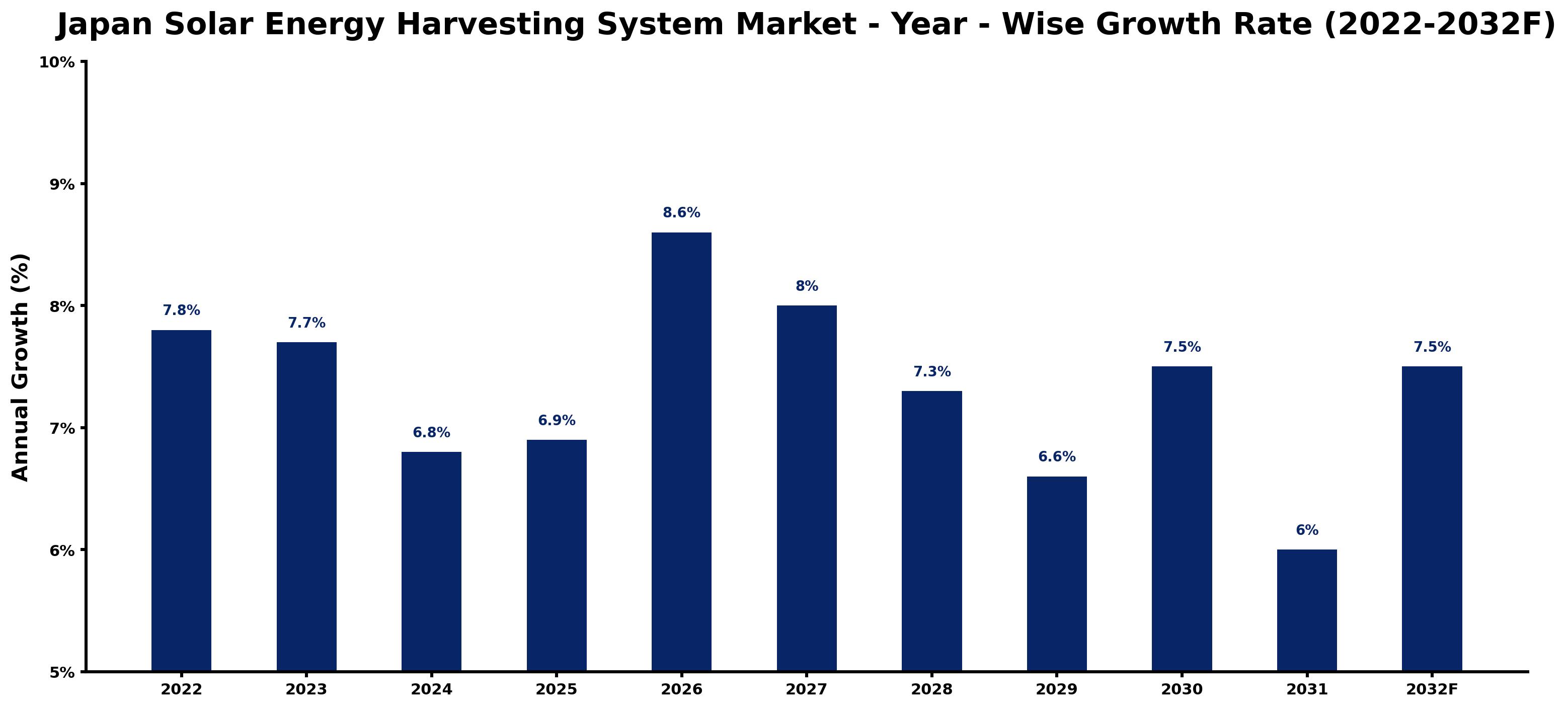
The yearly estimates that follow link every growth rate to its principal driver, so readers can see why the pace changed in each period.
| Year | Estimated Annual Growth (%) | Market Rationale |
| 2022 | 7.8 | The market showed strong performance with substantial installations across urban areas. |
| 2023 | 7.7 | Growth slowed slightly due to market saturation in some regions and increased competition. |
| 2024 | 6.8 | Demand continued to decelerate as new installations faced regulatory hurdles and higher costs. |
| 2025 | 6.9 | A slight increase in growth was observed as new projects gained momentum in urban sectors. |
| 2026 | 8.6 | The market peaked with heightened investments in advanced solar technologies and infrastructure. |
| 2027 | 8.0 | Growth slowed as the market adjusted to the previous year's peak performance and competition intensified. |
| 2028 | 7.3 | Demand continued to decelerate as consumers became more selective in their technology choices. |
| 2029 | 6.6 | A further slowdown occurred as the market stabilised after several years of rapid expansion. |
| 2030 | 7.5 | Growth picked up again as new policies incentivised solar adoption in rural areas. |
| 2031 | 6.0 | The market experienced a slowdown as buyers faced rising installation costs and limited incentives. |
| 2032 | 7.5 | A recovery in growth is anticipated as technological advancements lower costs and improve efficiency. |
Note: Market size estimations and growth projections presented in this report are based on 6Wresearch's proprietary forecasting methodology, utilizing the latest available industry data, government publications, and primary research inputs.
Japan Solar Energy Harvesting System Market Synopsis
Solar Energy Harvesting Systems in Japan consist of photovoltaic panels, batteries, and hybrid systems that convert solar energy into electricity. The market is experiencing growth due to rising demand from residential users and industrial applications. Significant investments in decarbonisation and government initiatives, such as the Green Growth Strategy, are driving this trend. With over 3 million households utilizing solar systems, the market is expected to expand further as technology advances and costs decrease.
Market Dynamics Impact Analysis (2026–2032)
| Factor | Type | Impact | Primary Segment Affected |
| Rising demand for renewable energy sources | Driver | High | PV Panels + Batteries |
| Government incentives for solar installations | Driver | High | Rooftop/Grid-Tied |
| Increased interest in energy efficiency solutions | Opportunity | High | Hybrid PV Systems |
| Growing need for off-grid energy solutions | Opportunity | High | Off-Grid Installations |
| High initial investment costs for solar systems | Restraint | High | PV Panels + Batteries |
| Regulatory complexities in installation processes | Restraint | Medium | Rooftop/Grid-Tied |
| Competition from alternative energy sources | Challenge | Medium | Industrial Equipment |
| Fluctuations in material costs affecting pricing | Challenge | Medium | PV Panels + Batteries |
Evaluation of Drivers in Japan Solar Energy Harvesting System Market (2026–2032)
The following drivers explain most of the expected growth.
| Drivers | Primary Segment Affected | Why It Matters (Evidence) |
| Increased residential solar installations | Rooftop/Grid-Tied | Over 3 million households in Japan utilized solar energy systems as of 2023, driving demand for rooftop installations. |
| Support through the Feed-in Tariff program | PV Panels + Batteries | This program has incentivised solar energy adoption since 2012, leading to an increase in installed capacity by encouraging investments. |
| Technological advancements in solar efficiency | Hybrid PV Systems | The adoption of hybrid systems is rising, with improved efficiency and energy storage capabilities attracting more buyers. |
| Growing industrial demand for sustainable energy solutions | Industrial Equipment | Manufacturing sectors are increasingly adopting solar systems to meet sustainability targets and reduce operational costs. |
| Rising awareness of environmental issues | Environmental Projects | Japan's commitment to a 46% reduction in greenhouse-gas emissions by 2030 has heightened interest in solar energy solutions. |
What keeps demand rising is the growing number of residential solar installations, with over 3 million households in Japan using solar energy systems as of 2023. Recent advancements in solar technology have spurred the adoption of hybrid systems, which provide enhanced energy storage capabilities. Industrial sectors are increasingly integrating solar systems to achieve sustainability targets and lower operational costs. Japan's goal to reduce greenhouse gas emissions by 46% by 2030 has intensified interest in solar energy solutions, driving market growth.
Evaluation of Restraints in Japan Solar Energy Harvesting System Market
Several factors work against faster growth; the main ones are summarised below.
| Market Restraint | Primary Segment Affected | Why It Matters (Evidence) |
| High initial investment costs for solar systems | PV Panels + Batteries | The average cost of solar PV systems in Japan is approximately ¥200,000 per kW, which can deter potential buyers. |
| Regulatory complexities in installation processes | Rooftop/Grid-Tied | Navigating local regulations can delay installations and increase costs for residential users, impacting adoption rates. |
| Competition from alternative energy sources | Industrial Equipment | The presence of other renewable options can limit the market share of solar energy in industrial applications, affecting growth. |
| Fluctuations in material costs affecting pricing | PV Panels + Batteries | Volatility in the prices of silicon and other materials can impact the affordability of solar systems, influencing buyer decisions. |
| Limited consumer awareness about solar benefits | Rooftop/Grid-Tied | Many potential buyers remain uninformed about the advantages of solar energy, hindering market growth and adoption. |
Japan Solar Energy Harvesting System Market Challenges
Kyushu's solar energy generation faces supply chain disruptions due to limited domestic silicon production, causing delays in project completions for installers. Rising costs of solar PV systems, averaging ¥200,000 per kW, strain budgets for over 3 million households, forcing many to reconsider their energy investments. Regulatory hurdles arise from compliance with JIS standards, which can extend project timelines for developers, impacting their ability to meet market demand. Shortages in skilled technicians for advanced solar technologies hinder growth, leaving producers unable to fully capitalise on Japan's target of a 46% emissions reduction by 2030.
Trends in the Japan Solar Energy Harvesting System Market
The trends below show where the Japan Solar Energy Harvesting System Market is heading.
- Shift in Residential Energy Solutions: Residential households are increasingly adopting rooftop solar installations, particularly in urban areas. Tokyo has the highest concentration of these systems, with over 40% of new energy installations being solar-based.
- Emergence of Hybrid Systems: Hybrid PV systems are gaining traction in Japan, with a CAGR of 10.6% from 2026 to 2032. This trend reflects the growing demand for energy-efficient solutions that combine solar and battery technologies.
- Growing Adoption of Solar in Industrial Sectors: Industrial equipment is becoming a prominent application area for solar energy, with a CAGR of 9.2% anticipated. This shift is driven by manufacturers seeking sustainable energy solutions to meet regulatory requirements.
- Increased Focus on Off-Grid Solutions: Off-grid installations are becoming essential for rural electrification, particularly in remote areas. The demand for such systems is projected to rise as more rural households seek reliable energy access.
Investment Opportunities in the Japan Solar Energy Harvesting System Market
The following opportunities in the Japan Solar Energy Harvesting System Market pair current demand with a clear way in.
- Rural Electrification Initiatives: Rural households in Japan are increasingly pursuing off-grid solar solutions, with the government allocating ¥1 billion for solar energy research initiatives in 2023, making this an ideal time for suppliers to invest.
- Investment in Hybrid Technologies: The current emphasis on energy efficiency presents an opportunity to provide hybrid solar systems. Industrial equipment manufacturers are searching for sustainable solutions, creating a demand for advanced technologies.
- Expansion of Rooftop Installations: With urban areas leading in solar adoption, there is a pressing need for rooftop solar systems. Suppliers can enter this market by collaborating with local installers to offer tailored solutions.
- Support for Environmental Projects: Environmental projects are increasingly incorporating solar energy solutions, driven by Japan's commitment to sustainability. This trend opens opportunities for suppliers to engage with government-funded initiatives.
Government Initiatives in the Japan Solar Energy Harvesting System Market
The Act on the Rational Use of Energy, established in 1979, requires large energy users to improve energy efficiency and report their consumption. This law has facilitated the integration of solar energy systems into energy management practices, promoting a shift towards renewable sources. In 2023, the government allocated ¥1 billion for solar energy research initiatives, further supporting the development of solar technologies.
The Ministry of the Environment promotes solar energy through the Green Growth Strategy, which aims to achieve carbon neutrality by 2050. This strategy includes funding for solar energy research initiatives, with ¥1 billion allocated in 2023 to support projects that improve solar technology and its applications.
Future Insight of the Japan Solar Energy Harvesting System Market
Households will increasingly adopt solar energy systems as Japan targets net zero emissions by 2050. By 2032, advancements in photovoltaic efficiency will substantially lower installation costs, benefiting both buyers and suppliers. The government’s ¥1 billion allocation for solar energy research initiatives will drive innovation and improve technology. Enhanced quality assurance through JIS standards will ensure greater reliability and performance in energy systems, building increased consumer confidence.
Market Segmentation Analysis
Japan Solar Energy Harvesting System Market report covers a detailed analysis of the following market segments:
By System Type – PV Panels + Batteries Lead, PV with Supercapacitors Expected to Grow Fastest
According to Saurav Kr Singh, Senior Research Analyst at 6Wresearch, in 2025, PV Panels + Batteries led the system type split with a 36% share. PV panels combined with batteries dominate the market due to their critical function in energy storage and usage, particularly within residential settings. For example, over 3 million households in Japan depend on these systems to effectively harness solar energy. Over 2026–2032, PV with Supercapacitors are expected to post the fastest growth, at a CAGR of 10.6%. The adoption of PV systems with supercapacitors is increasing as they offer efficient energy buffering, particularly in applications that require rapid charge and discharge cycles. This trend aligns with Japan's ongoing commitment to advanced energy technologies. Suppliers should prioritise the integration of supercapacitors in their products to address rising demand.
By Energy Conversion – DC to AC Leads, DC/DC Expected to Grow Fastest
The largest energy conversion category in 2025 was DC to AC, at 40% of revenue. DC to AC conversion systems hold the largest share as they are essential for making solar power usable in homes and businesses. This conversion is fundamental for the widespread adoption of solar energy in urban areas, where demand is particularly high. DC/DC is set to record the highest CAGR in this split, 9.5% over 2026–2032. The DC/DC conversion segment is experiencing rapid growth due to its specific applications in optimising energy use across various devices. As more electronic devices utilise solar power, the need for efficient DC/DC solutions will continue to rise. Buyers should explore DC/DC solutions to maximise energy efficiency in their solar applications.
By Application Area – Rooftop/Grid-Tied Leads, Industrial Equipment Expected to Grow Fastest
Rooftop/Grid-Tied took 41% of application area revenue in 2025, more than any other category. Rooftop/grid-tied installations dominate the market due to their prevalence in urban residential areas, allowing households to generate their own electricity efficiently. The support from government initiatives, particularly in regions like Tokyo, further solidifies their leading position. Industrial Equipment is projected to grow fastest, at a CAGR of 9.2% during 2026–2032. The industrial equipment sector is experiencing rapid growth as manufacturers increasingly adopt solar power to meet rising energy demands and reduce operational costs. This trend is amplified by the industry's commitment to sustainability and energy efficiency. Suppliers should prioritise the industrial sector with customised solutions to meet the increasing demand for solar energy.
By End User – Rural Households Lead, Telecom Towers Expected to Grow Fastest
With 48% of end user revenue in 2025, Rural Households was the largest category. Rural households constitute the largest end-user group, as solar energy systems are essential for providing energy access in remote locations. Government initiatives aimed at promoting renewable energy have significantly benefitted this demographic, ensuring their continued reliance on solar solutions. The quickest growth will come from Telecom Towers, forecast to expand at a CAGR of 9.3% between 2026 and 2032. Telecom towers represent the fastest-growing end-user segment, driven by the increasing need for reliable power sources in communication infrastructure. The expansion of mobile networks in rural areas is a key factor propelling this demand for solar energy solutions. Suppliers should focus on developing specialised products for telecom applications to capitalise on this growing market.
Key Attractiveness of the Report
- 10 Years of Market Numbers
- Historical Data Starting from 2022 to 2025
- Base Year 2025
- Forecast Data until 2032
- Key Performance Indicators Impacting the Market
- Major Upcoming Developments and Projects
Key Highlights of the Report:
- Japan Solar Energy Harvesting System Market Outlook
- Market Size of Japan Solar Energy Harvesting System Market, 2025
- Forecast of Japan Solar Energy Harvesting System Market, 2032
- Historical Data and Forecast of Japan Solar Energy Harvesting System Revenues & Volume for the Period 2022-2032F
- Japan Solar Energy Harvesting System Market Trend Evolution
- Japan Solar Energy Harvesting System Market Drivers and Challenges
- Japan Solar Energy Harvesting System Price Trends
- Japan Solar Energy Harvesting System Porter's Five Forces
- Japan Solar Energy Harvesting System Industry Life Cycle
- Historical Data and Forecast of Japan Solar Energy Harvesting System Market Revenues & Volume By System Type for the Period 2022-2032F
- Historical Data and Forecast of Japan Solar Energy Harvesting System Market Revenues & Volume By PV Panels + Batteries for the Period 2022-2032F
- Historical Data and Forecast of Japan Solar Energy Harvesting System Market Revenues & Volume By PV with Supercapacitors for the Period 2022-2032F
- Historical Data and Forecast of Japan Solar Energy Harvesting System Market Revenues & Volume By Thermoelectric Panels for the Period 2022-2032F
- Historical Data and Forecast of Japan Solar Energy Harvesting System Market Revenues & Volume By Hybrid PV Systems for the Period 2022-2032F
- Historical Data and Forecast of Japan Solar Energy Harvesting System Market Revenues & Volume By Energy Conversion for the Period 2022-2032F
- Historical Data and Forecast of Japan Solar Energy Harvesting System Market Revenues & Volume By DC to AC for the Period 2022-2032F
- Historical Data and Forecast of Japan Solar Energy Harvesting System Market Revenues & Volume By DC/DC for the Period 2022-2032F
- Historical Data and Forecast of Japan Solar Energy Harvesting System Market Revenues & Volume By Heat-Based for the Period 2022-2032F
- Historical Data and Forecast of Japan Solar Energy Harvesting System Market Revenues & Volume By PV + Wind for the Period 2022-2032F
- Historical Data and Forecast of Japan Solar Energy Harvesting System Market Revenues & Volume By Application Area for the Period 2022-2032F
- Historical Data and Forecast of Japan Solar Energy Harvesting System Market Revenues & Volume By Rooftop/Grid-Tied for the Period 2022-2032F
- Historical Data and Forecast of Japan Solar Energy Harvesting System Market Revenues & Volume By Industrial Equipment for the Period 2022-2032F
- Historical Data and Forecast of Japan Solar Energy Harvesting System Market Revenues & Volume By Remote Sensors for the Period 2022-2032F
- Historical Data and Forecast of Japan Solar Energy Harvesting System Market Revenues & Volume By Off-Grid Installations for the Period 2022-2032F
- Historical Data and Forecast of Japan Solar Energy Harvesting System Market Revenues & Volume By End User for the Period 2022-2032F
- Historical Data and Forecast of Japan Solar Energy Harvesting System Market Revenues & Volume By Rural Households for the Period 2022-2032F
- Historical Data and Forecast of Japan Solar Energy Harvesting System Market Revenues & Volume By Telecom Towers for the Period 2022-2032F
- Historical Data and Forecast of Japan Solar Energy Harvesting System Market Revenues & Volume By Environmental Projects for the Period 2022-2032F
- Historical Data and Forecast of Japan Solar Energy Harvesting System Market Revenues & Volume By Research Facilities for the Period 2022-2032F
- Japan Solar Energy Harvesting System Import Export Trade Statistics
- Market Opportunity Assessment By System Type
- Market Opportunity Assessment By Energy Conversion
- Market Opportunity Assessment By Application Area
- Market Opportunity Assessment By End User
- Japan Solar Energy Harvesting System Top Companies Market Share
- Japan Solar Energy Harvesting System Competitive Benchmarking By Technical and Operational Parameters
- Japan Solar Energy Harvesting System Company Profiles
- Japan Solar Energy Harvesting System Key Strategic Recommendations
Market Covered
Coverage by segment is as follows.
By System Type
- PV Panels + Batteries
- PV with Supercapacitors
- Thermoelectric Panels
- Hybrid PV Systems
By Energy Conversion
- DC to AC
- DC/DC
- Heat-Based
- PV + Wind
By Application Area
- Rooftop/Grid-Tied
- Industrial Equipment
- Remote Sensors
- Off-Grid Installations
By End User
- Rural Households
- Telecom Towers
- Environmental Projects
- Research Facilities































