Japan Soy Protein in Feed Market Size & Growth Rate
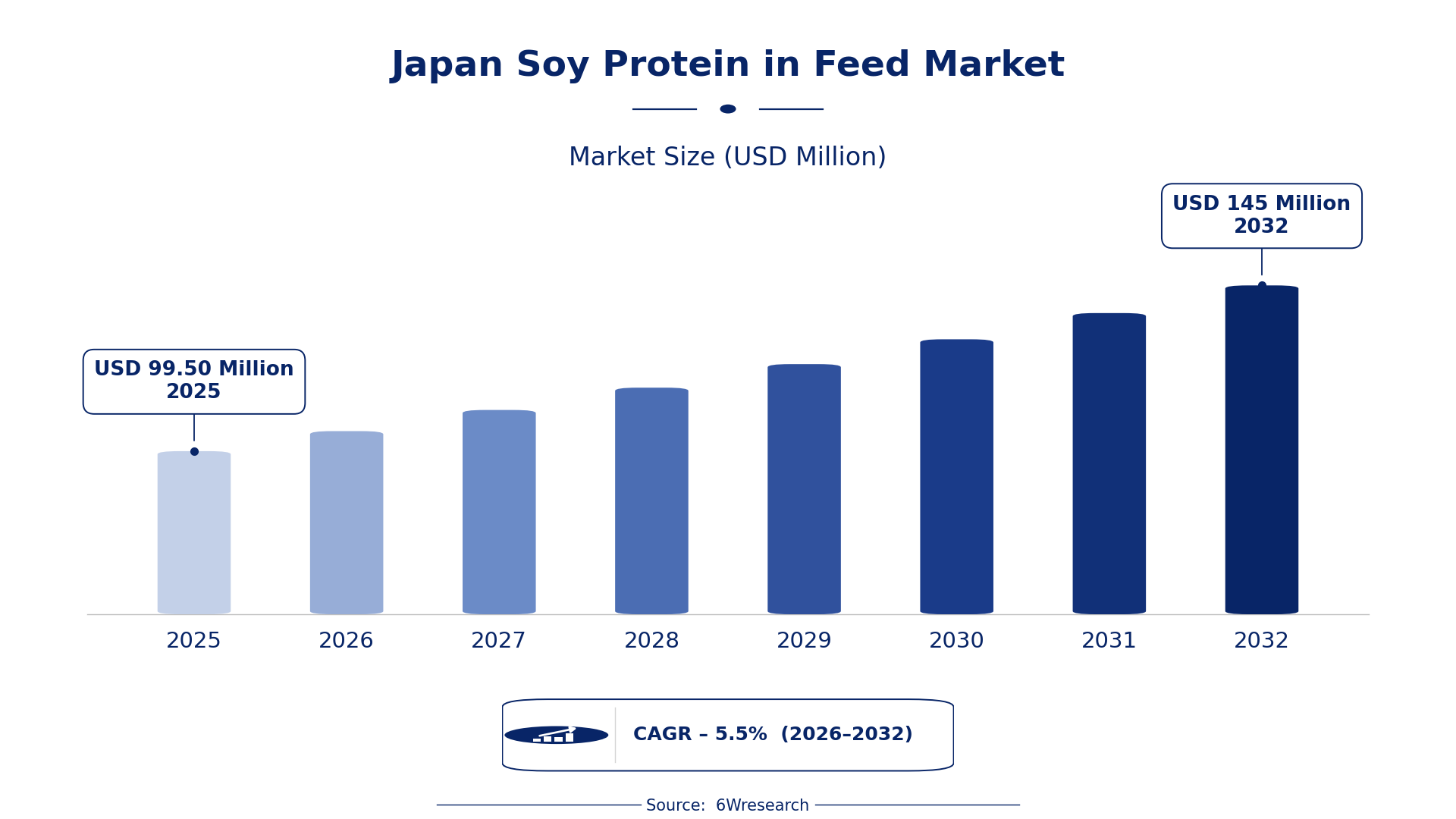
According to 6Wresearch internal database and industry insights, the Japan Soy Protein in Feed Market was valued at USD 99.50 Million in 2025 and is projected to reach USD 145 Million by 2032, growing at a CAGR of approximately 5.5% during 2026–2032.
Japan Soy Protein in Feed Market Highlights
| Report Metric | Details |
| Report Name | Japan Soy Protein in Feed Market (2026-2032) |
| Market Size 2025 | USD 99.50 Million |
| Market Size 2032 | USD 145 Million |
| Absolute Growth 2025–2032 | USD 45.50 Million |
| CAGR 2026–2032 | 5.5% |
| Peak Annual Growth | 7.1% in 2032 |
| Forecast Period | 2026–2032 |
| Historical Data | 2022–2025 |
| Base Year | 2025 |
| Leading Protein Type, 2025 | Soy Protein Concentrate (37% share) |
| Leading Processing Form, 2025 | Powdered (42% share) |
| Leading Animal Type, 2025 | Poultry (42% share) |
| Leading End User, 2025 | Feed Mills (40% share) |
| Fastest-Growing Protein Type | Soy Protein Isolate (7.8% CAGR) |
| Fastest-Growing Processing Form | Liquid or Meal (8.2% CAGR) |
| Fastest-Growing Animal Type | Swine (8.6% CAGR) |
| Fastest-Growing End User | Livestock Farms (7.2% CAGR) |
| Growing Sector | livestock feed |
| Key End Users | feed mills, livestock farms, dairy farmers, fish feed producers |
Japan Soy Protein in Feed Market Year-wise Growth Rate and Key Drivers (2022–2032)
This graph illustrates the annual growth rates of the market from 2022 to 2032, highlighting a steady upward trajectory and projected market expansion over the forecast period.
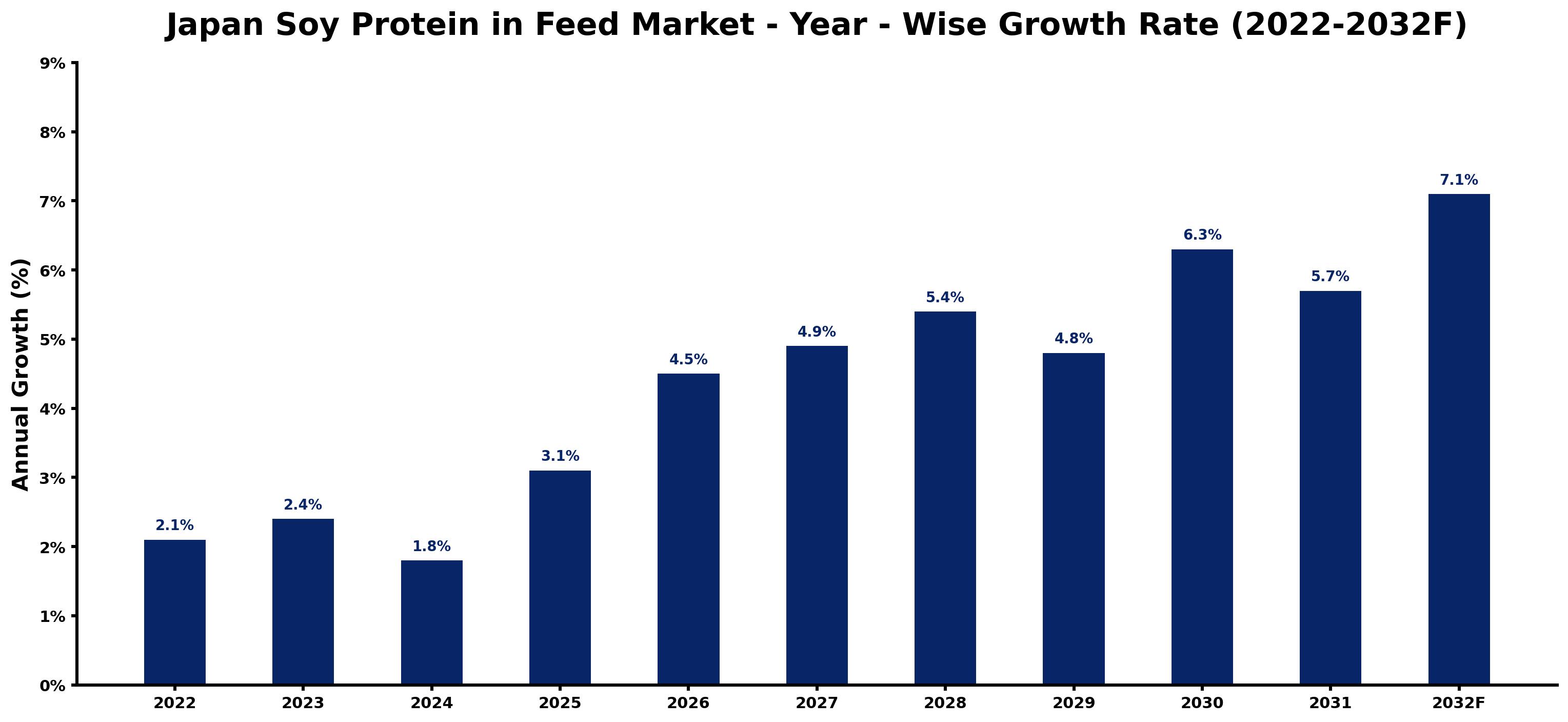
Below, each year's estimated growth is shown next to the factor that most influenced it.
| Year | Estimated Annual Growth (%) | Market Rationale |
| 2022 | 2.1 | The market showed steady growth, reflecting consistent demand from livestock sectors. |
| 2023 | 2.4 | Demand for soy protein in feed rose, driven by increased poultry production. |
| 2024 | 1.8 | Growth slowed as feed mills adjusted to market conditions and pricing. |
| 2025 | 3.1 | The poultry industry's expansion led to faster growth in soy protein usage. |
| 2026 | 4.5 | Rising aquaculture production is expected to boost demand for high-quality soy protein. |
| 2027 | 4.9 | Increased investments in livestock health will drive further demand for soy protein. |
| 2028 | 5.4 | Demand is projected to continue rising as feed mills seek sustainable ingredients. |
| 2029 | 4.8 | Market growth is expected to slow slightly as feed prices stabilise and competition increases. |
| 2030 | 6.3 | Higher demand for dairy and beef cattle feed will spur growth in soy protein. |
| 2031 | 5.7 | The market is projected to experience a slowdown as supply chains face challenges. |
| 2032 | 7.1 | Increased aquaculture production and innovations in feed formulations will drive growth. |
Note: Market size estimations and growth projections presented in this report are based on 6Wresearch's proprietary forecasting methodology, utilizing the latest available industry data, government publications, and primary research inputs.
Japan Soy Protein in Feed Market Synopsis
Derived from soybeans, soy protein in feed is processed to enhance its protein content for various livestock applications. It serves as a key ingredient in animal feed for poultry, swine, cattle, and aquaculture. The Japan Soy Protein in Feed Market is expanding due to rising poultry production, increased aquaculture output, and a focus on sustainable practices. The poultry industry, valued at approximately 1 trillion yen, contributes to this demand, alongside initiatives from the Ministry of Agriculture, Forestry and Fisheries to promote local soy production.
Market Dynamics Impact Analysis (2026–2032)
| Factor | Type | Impact | Primary Segment Affected |
| Rising poultry production drives demand for soy protein concentrate. | Driver | High | Soy Protein Concentrate |
| Increasing aquaculture production requires high-quality soy protein for fish feed. | Driver | High | Soy Protein Isolate |
| The growing trend towards sustainable feed practices presents new market opportunities. | Opportunity | High | Textured Soy Protein |
| Feed mills are seeking innovative formulations to meet changing consumer preferences. | Opportunity | Medium | Powdered |
| Fluctuating raw material prices can impact profit margins for feed producers. | Restraint | High | Soy Protein Concentrate |
| Competition from alternative protein sources may limit market share. | Restraint | Medium | Textured Soy Protein |
| High costs associated with compliance to food safety regulations can hinder growth. | Challenge | High | Soy Protein Isolate |
| Supply chain disruptions can delay product availability for feed mills. | Challenge | Medium | Powdered |
Evaluation of Drivers in Japan Soy Protein in Feed Market (2026–2032)
Key forces behind demand, with the segment each one moves most, are listed below.
| Drivers | Primary Segment Affected | Why It Matters (Evidence) |
| Increased poultry production drives demand for soy protein concentrate. | Soy Protein Concentrate | The poultry industry in Japan, valued at approximately 1 trillion yen, boosts soy protein concentrate purchases. |
| Aquaculture growth necessitates high-quality soy protein for fish feeds. | Soy Protein Isolate | Japan's aquaculture production reached 600,000 tons in 2022, increasing demand for soy protein isolate. |
| Sustainable feed practices are becoming a priority for feed mills. | Textured Soy Protein | Incorporating textured soy protein aligns with the growing focus on sustainability in feed formulations. |
| Feed mills are innovating formulations to improve nutritional profiles. | Powdered | With over 10 million tons of feed produced annually, feed mills are driving demand for powdered soy protein. |
| Rising consumer awareness about livestock health supports soy protein use. | Fermented Soymeal | Fermented soymeal is gaining popularity for its probiotic benefits, appealing to health-conscious livestock producers. |
The strongest pull on demand comes from increased poultry production, which drives purchases of soy protein concentrate. The poultry industry, valued at approximately 1 trillion yen, leads to higher demand for soy protein in formulations. Growth in aquaculture necessitates high-quality soy protein, with production reaching 600,000 tons in 2022, increasing the need for soy protein isolate. Innovations in feed formulations are essential as feed mills produce over 10 million tons of feed annually, driving demand for powdered soy protein. Additionally, rising awareness about livestock health is making fermented soymeal more appealing to producers focused on improving animal nutrition.
Evaluation of Restraints in Japan Soy Protein in Feed Market
The key brakes on demand, and where they bite hardest, are shown below.
| Market Restraint | Primary Segment Affected | Why It Matters (Evidence) |
| Fluctuating raw material prices impact profit margins for feed producers. | Soy Protein Concentrate | The average protein content in soy protein concentrate is around 65%, and price volatility affects purchasing decisions. |
| Competition from alternative protein sources may limit market share. | Textured Soy Protein | As alternative proteins gain popularity, textured soy protein faces challenges in maintaining its market position. |
| High compliance costs with food safety regulations hinder growth. | Soy Protein Isolate | Compliance with the Food Sanitation Act amendment increases operational costs for producers. |
| Supply chain disruptions delay product availability for feed mills. | Powdered | Timely deliveries are crucial for feed mills, and disruptions can lead to production delays. |
| Limited awareness of the benefits of fermented soymeal restricts its uptake. | Fermented Soymeal | Despite its probiotic advantages, many producers remain unaware of fermented soymeal's potential benefits. |
Japan Soy Protein in Feed Market Challenges
Producers of poultry feed in Japan encounter rising costs due to fluctuating soybean prices, which can elevate feed expenses by up to 15% within a quarter, affecting profit margins for buyers. Skills shortages in the livestock sector impede the adoption of advanced production techniques, delaying efficiency improvements for producers. Technology gaps in processing methods restrict the ability to increase protein content, causing buyers to miss premium pricing opportunities. Competition from imported feed alternatives poses a threat to local producers, as buyers may choose cheaper options, potentially reducing domestic market share by 10%.
Trends in the Japan Soy Protein in Feed Market
The shifts below are changing how Japan Soy Protein in Feed Market products are bought and supplied.
- Shift towards Sustainable Feed Practices: The Ministry of Agriculture, Forestry and Fisheries advocates for sustainable feed practices, resulting in greater use of soy protein in formulations. Approximately 10 million tons of feed are produced annually, reflecting an increasing emphasis on sustainability.
- Transition from Conventional to Fermented Soymeal: Fermented soymeal is gaining popularity as livestock producers pursue probiotic benefits. Its appeal is rising, particularly among dairy farmers aiming to enhance cattle health, with demand increasing markedly.
- Emergence of Textured Soy Protein in Alternative Feeds: Textured soy protein is becoming more prevalent in alternative protein sources for livestock. This trend is fuelled by the rising demand for meat alternatives, prompting feed mills to adapt formulations to align with consumer preferences.
- Growth of Aquaculture Feed Innovations: Aquaculture feed formulations are advancing, with soy protein isolate emerging as a key ingredient. Japan's aquaculture production reached 600,000 tons in 2022, driving innovation in feed formulations.
Investment Opportunities in the Japan Soy Protein in Feed Market
Investors looking at the Japan Soy Protein in Feed Market should consider the following areas.
- Feed Mills Seeking Sustainable Ingredients: Feed mills are increasingly looking for sustainable ingredients to meet consumer demand. The total livestock feed market in Japan is projected to reach 1.5 trillion yen by 2025, creating opportunities for suppliers to provide sustainable soy protein.
- Hokkaido's Feed Mills Expanding Production: Hokkaido's feed mills are expanding production capacities to meet rising demand. Investment in local soy protein sourcing can help suppliers enter this growing market, especially as feed production increases.
- Growing Demand for Fermented Soymeal: There is a rising opportunity to supply fermented soymeal as livestock producers seek probiotic benefits. The increasing focus on animal health creates a pathway for suppliers to engage with dairy farmers looking for effective feed solutions.
- Entry through Local Partnerships: Local partnerships with feed mills can facilitate entry into the market. Collaborating with established players can help navigate regulatory requirements and improve distribution channels.
Government Initiatives in the Japan Soy Protein in Feed Market
The Food Sanitation Act amendment, fully implemented in June 2021, mandates HACCP-based hygiene management for food businesses, impacting producers of soy protein in feed. Adhering to these regulations ensures product safety and quality, which is crucial for maintaining market trust and consumer confidence.
The GX Basic Policy, adopted in 2023, targets approximately JPY 150 trillion in public-private decarbonisation investment over the next decade. The Ministry of Agriculture, Forestry and Fisheries oversees initiatives to promote sustainable feed practices, supporting local soy production and decreasing reliance on imports.
Future Insight of the Japan Soy Protein in Feed Market
New feed quality assurance programmes will establish higher safety and standards in production facilities, benefiting both buyers and suppliers. By 2032, advancements in extraction technology will enable higher protein yields from soy, raising the average protein content in formulations to around 70%. The government's push for local soy production will reduce dependence on imports, strengthening the domestic supply chain. Sustainable practices promoted by the Ministry of Agriculture, Forestry and Fisheries will align with global trends, driving innovation in formulations.
Market Segmentation Analysis
Japan Soy Protein in Feed Market report covers a detailed analysis of the following market segments:
By Protein Type – Soy Protein Concentrate Leads, Soy Protein Isolate Expected to Grow Fastest
According to Saurav Kr Singh, Senior Research Analyst at 6Wresearch, Soy Protein Concentrate took 37% of protein type revenue in 2025, more than any other category. Soy protein concentrate commands the largest share because it offers high protein content, making it ideal for livestock feed. With an average protein content of around 65%, it effectively meets the nutritional demands of various livestock sectors in Japan. Soy Protein Isolate is set to record the highest CAGR in this split, 7.8% over 2026–2032. The growth of soy protein isolate is driven by its rising application in high-value aquaculture feeds, particularly for species like tilapia and trout. As Japan's aquaculture production reached 600,000 tons in 2022, this trend is expected to continue, further increasing demand for soy protein isolate. Suppliers should enhance the availability of soy protein isolate to meet the rising needs of the aquaculture market.
By Processing Form – Powdered Leads, Liquid or Meal Expected to Grow Fastest
Powdered held 42% of the Japan Soy Protein in Feed Market by processing form in 2025. Powdered soy protein is the leading form due to its ease of incorporation into various feed formulations, which enhances its versatility. This characteristic is particularly advantageous for feed mills producing over 10 million tons of feed annually, ensuring widespread adoption across the industry. Liquid or Meal is projected to grow fastest, at a CAGR of 8.2% during 2026–2032. Liquid or meal forms are experiencing the fastest growth as they provide alternative options for feed formulations, albeit being less common. The growing interest in diverse feed formulations is driving this segment's expansion, reflecting a shift in buyer preferences. Buyers may consider liquid or meal forms to diversify their feed offerings and address specific nutritional needs.
By Animal Type – Poultry Leads, Swine Expected to Grow Fastest
With 42% of animal type revenue in 2025, Poultry was the largest category. Poultry is the dominant segment as soy protein serves as a major feed component for birds, crucial for the poultry industry valued at approximately 1 trillion yen. This strong demand from poultry farmers ensures a robust market presence and consistent sales for suppliers. Over 2026–2032, Swine is expected to post the fastest growth, at a CAGR of 8.6%. Swine is the fastest-growing segment due to the critical role of soy protein in pig nutrition, essential for maintaining healthy livestock. With approximately 9 million swine in Japan, this highlights significant growth potential in this area. Suppliers should focus on the swine segment to capitalise on the increasing demand for nutritious feed.
By End User – Feed Mills Lead, Livestock Farms Expected to Grow Fastest
Feed Mills accounted for 40% of the market by end user in 2025. Feed mills are the primary users of soy protein, which allows them to produce tailored feed formulations for various livestock. Their central role in the feed production process solidifies their leading position in the market. The quickest growth will come from Livestock Farms, forecast to expand at a CAGR of 7.2% between 2026 and 2032. Livestock farms are experiencing the fastest growth as they directly apply soy protein in animal diets, reflecting a shift towards more integrated feeding practices. This trend is supported by the government's promotion of local soy production. Suppliers must strengthen relationships with livestock farms to ensure their products meet the evolving dietary needs of animals.
Key Attractiveness of the Report
- 10 Years of Market Numbers
- Historical Data Starting from 2022 to 2025
- Base Year 2025
- Forecast Data until 2032
- Key Performance Indicators Impacting the Market
- Major Upcoming Developments and Projects
Key Highlights of the Report:
- Japan Soy Protein in Feed Market Outlook
- Market Size of Japan Soy Protein in Feed Market, 2025
- Forecast of Japan Soy Protein in Feed Market, 2032
- Historical Data and Forecast of Japan Soy Protein in Feed Revenues & Volume for the Period 2022-2032F
- Japan Soy Protein in Feed Market Trend Evolution
- Japan Soy Protein in Feed Market Drivers and Challenges
- Japan Soy Protein in Feed Price Trends
- Japan Soy Protein in Feed Porter's Five Forces
- Japan Soy Protein in Feed Industry Life Cycle
- Historical Data and Forecast of Japan Soy Protein in Feed Market Revenues & Volume By Protein Type for the Period 2022-2032F
- Historical Data and Forecast of Japan Soy Protein in Feed Market Revenues & Volume By Soy Protein Concentrate for the Period 2022-2032F
- Historical Data and Forecast of Japan Soy Protein in Feed Market Revenues & Volume By Soy Protein Isolate for the Period 2022-2032F
- Historical Data and Forecast of Japan Soy Protein in Feed Market Revenues & Volume By Textured Soy Protein for the Period 2022-2032F
- Historical Data and Forecast of Japan Soy Protein in Feed Market Revenues & Volume By Fermented Soymeal for the Period 2022-2032F
- Historical Data and Forecast of Japan Soy Protein in Feed Market Revenues & Volume By Processing Form for the Period 2022-2032F
- Historical Data and Forecast of Japan Soy Protein in Feed Market Revenues & Volume By Powdered for the Period 2022-2032F
- Historical Data and Forecast of Japan Soy Protein in Feed Market Revenues & Volume By Liquid or Meal for the Period 2022-2032F
- Historical Data and Forecast of Japan Soy Protein in Feed Market Revenues & Volume By Pelletized for the Period 2022-2032F
- Historical Data and Forecast of Japan Soy Protein in Feed Market Revenues & Volume By Granulated for the Period 2022-2032F
- Historical Data and Forecast of Japan Soy Protein in Feed Market Revenues & Volume By Animal Type for the Period 2022-2032F
- Historical Data and Forecast of Japan Soy Protein in Feed Market Revenues & Volume By Poultry for the Period 2022-2032F
- Historical Data and Forecast of Japan Soy Protein in Feed Market Revenues & Volume By Swine for the Period 2022-2032F
- Historical Data and Forecast of Japan Soy Protein in Feed Market Revenues & Volume By Cattle for the Period 2022-2032F
- Historical Data and Forecast of Japan Soy Protein in Feed Market Revenues & Volume By Aquaculture for the Period 2022-2032F
- Historical Data and Forecast of Japan Soy Protein in Feed Market Revenues & Volume By End User for the Period 2022-2032F
- Historical Data and Forecast of Japan Soy Protein in Feed Market Revenues & Volume By Feed Mills for the Period 2022-2032F
- Historical Data and Forecast of Japan Soy Protein in Feed Market Revenues & Volume By Livestock Farms for the Period 2022-2032F
- Historical Data and Forecast of Japan Soy Protein in Feed Market Revenues & Volume By Dairy Farmers for the Period 2022-2032F
- Historical Data and Forecast of Japan Soy Protein in Feed Market Revenues & Volume By Fish Feed Producers for the Period 2022-2032F
- Japan Soy Protein in Feed Import Export Trade Statistics
- Market Opportunity Assessment By Protein Type
- Market Opportunity Assessment By Processing Form
- Market Opportunity Assessment By Animal Type
- Market Opportunity Assessment By End User
- Japan Soy Protein in Feed Top Companies Market Share
- Japan Soy Protein in Feed Competitive Benchmarking By Technical and Operational Parameters
- Japan Soy Protein in Feed Company Profiles
- Japan Soy Protein in Feed Key Strategic Recommendations
Market Covered
This report examines the market across the segments below.
By Protein Type
- Soy Protein Concentrate
- Soy Protein Isolate
- Textured Soy Protein
- Fermented Soymeal
By Processing Form
- Powdered
- Liquid or Meal
- Pelletized
- Granulated
By Animal Type
- Poultry
- Swine
- Cattle
- Aquaculture
By End User
- Feed Mills
- Livestock Farms
- Dairy Farmers
- Fish Feed Producers































