Japan Specialized Baby Food Market Size & Growth Rate
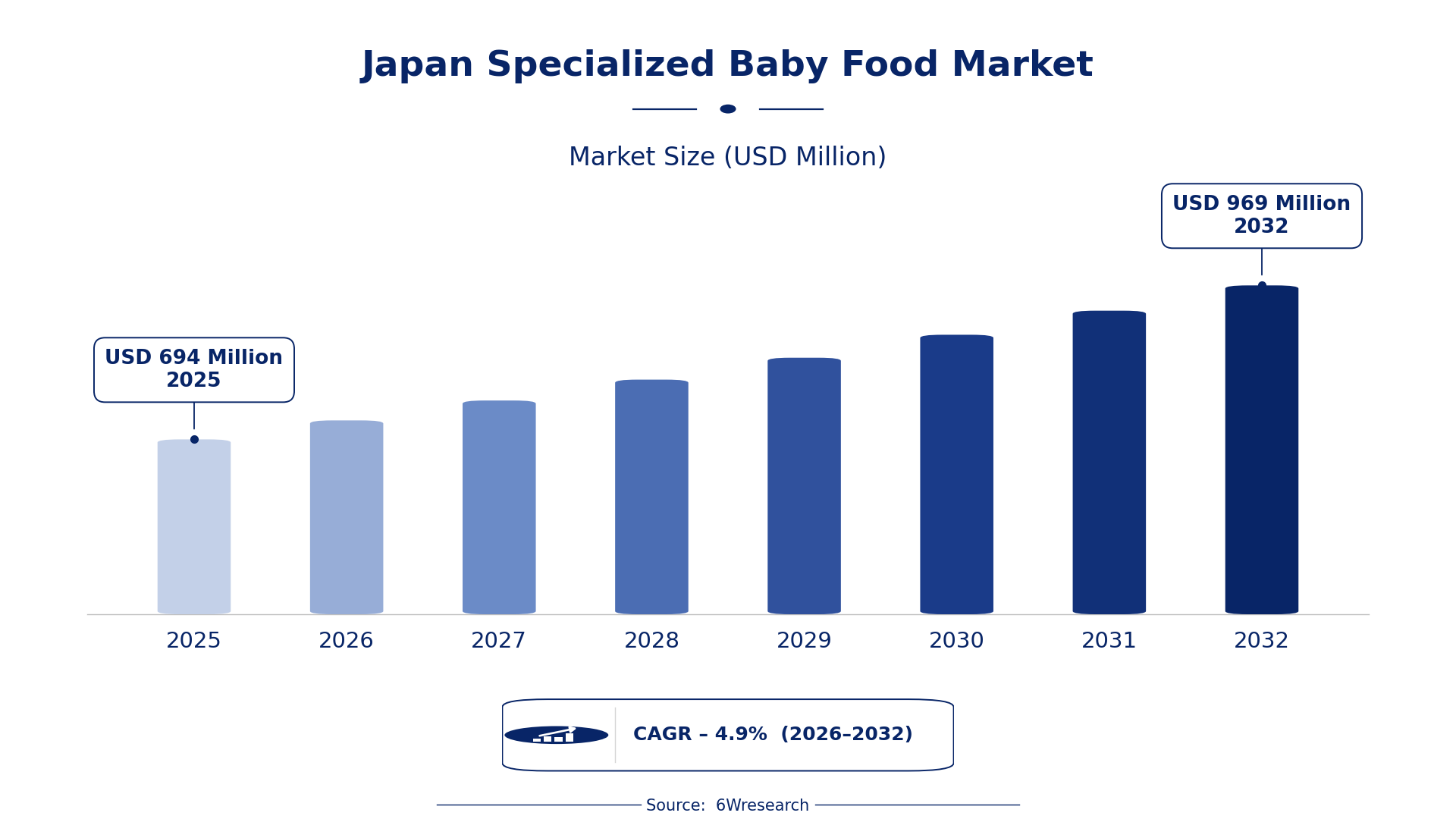
According to 6Wresearch internal database and industry insights, the Japan Specialized Baby Food Market was valued at USD 694 Million in 2025 and is projected to reach USD 969 Million by 2032, growing at a CAGR of approximately 4.9% during 2026–2032.
Japan Specialized Baby Food Market Highlights
| Report Metric | Details |
| Report Name | Japan Specialized Baby Food Market (2026-2032) |
| Market Size 2025 | USD 694 Million |
| Market Size 2032 | USD 969 Million |
| Absolute Growth 2025–2032 | USD 275 Million |
| CAGR 2026–2032 | 4.9% |
| Peak Annual Growth | 6.0% in 2029 |
| Forecast Period | 2026–2032 |
| Historical Data | 2022–2025 |
| Base Year | 2025 |
| Leading Product Type, 2025 | Infant Formula (39% share) |
| Leading Nutrition Specialty, 2025 | Lactose-Free/Iron-Rich (42% share) |
| Leading Packaging Type, 2025 | Jars/Pouches (40% share) |
| Leading End User, 2025 | Hospitals & Clinics (51% share) |
| Fastest-Growing Product Type | Organic Baby Purees (6.9% CAGR) |
| Fastest-Growing Nutrition Specialty | Probiotic-Enriched (6.8% CAGR) |
| Fastest-Growing Packaging Type | Bite-Sized Packs (7.0% CAGR) |
| Fastest-Growing End User | Online Retailers (6.6% CAGR) |
| Growing Sector | Pediatric Nutrition |
| Key End Users | Parents, Hospitals, Clinics, Online Retailers |
Japan Specialized Baby Food Market Year-wise Growth Rate and Key Drivers (2022–2032)
This graph illustrates the annual growth rates of the market from 2022 to 2032, highlighting a steady upward trajectory and projected market expansion over the forecast period.
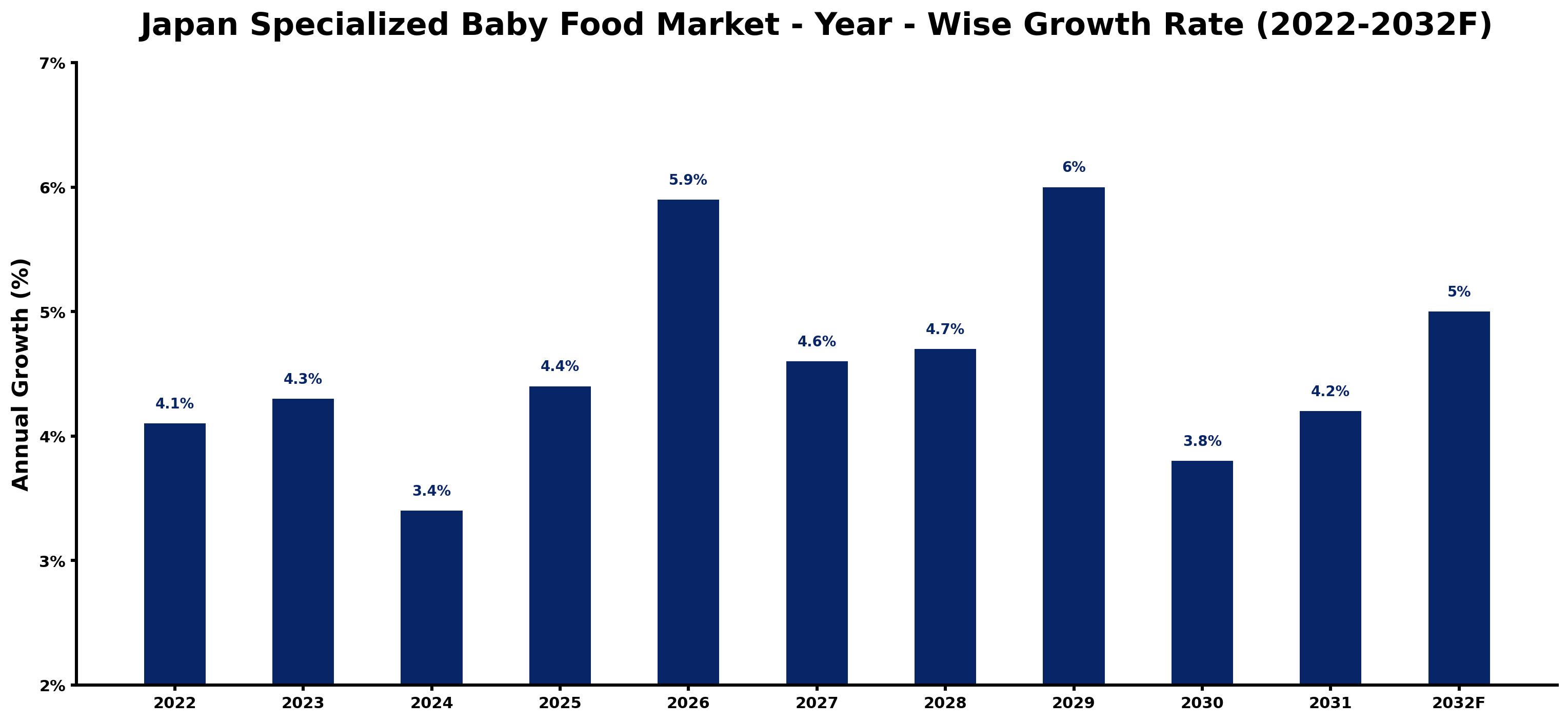
The yearly estimates that follow link every growth rate to its principal driver, so readers can see why the pace changed in each period.
| Year | Estimated Annual Growth (%) | Market Rationale |
| 2022 | 4.1 | The market showed steady growth as parents increasingly sought specialized nutrition for their children. |
| 2023 | 4.3 | Demand rose due to higher awareness among parents about dietary needs for infants. |
| 2024 | 3.4 | Growth slowed as market saturation began to affect new product introductions. |
| 2025 | 4.4 | Sales increased again as hospitals expanded pediatric nutrition programs across the country. |
| 2026 | 5.9 | A surge is expected as online retail channels gain popularity among parents. |
| 2027 | 4.6 | Growth is projected to slow slightly as competition intensifies among specialized baby food brands. |
| 2028 | 4.7 | Demand is expected to pick up as organic baby food options become more widely available. |
| 2029 | 6.0 | The market is projected to peak as health-conscious parents seek higher-quality baby food options. |
| 2030 | 3.8 | Growth is expected to slow due to increased market competition and price sensitivity among consumers. |
| 2031 | 4.2 | Sales are projected to rise again as hospitals promote specialized nutrition for infants. |
| 2032 | 5.0 | The market is expected to grow as more parents opt for tailored baby food solutions. |
Note: Market size estimations and growth projections presented in this report are based on 6Wresearch's proprietary forecasting methodology, utilizing the latest available industry data, government publications, and primary research inputs.
Japan Specialized Baby Food Market Synopsis
Specialized baby food includes products tailored for specific dietary needs, such as hypoallergenic and organic options. It is primarily made from pureed fruits, vegetables, and grains, fortified with essential nutrients. The Japan Specialized Baby Food Market is growing as parents become more aware of dietary restrictions for infants, with a notable 15% increase in organic baby food sales in 2023. The expansion of pediatric nutrition programs in hospitals further fuels demand, alongside over 50% of parents using online retailers for purchases.
Market Dynamics Impact Analysis (2026–2032)
| Factor | Type | Impact | Primary Segment Affected |
| Rising health consciousness among parents | Driver | High | Hypoallergenic Food |
| Increasing availability of organic products | Driver | High | Organic Baby Purees |
| Expansion of pediatric nutrition programs in hospitals | Opportunity | High | Infant Formula |
| Growth of online retail channels for baby food | Opportunity | High | Functional Baby Snacks |
| Market saturation affecting new product introductions | Restraint | Medium | Organic Baby Purees |
| Intense competition among specialized brands | Restraint | Medium | Hypoallergenic Food |
| Rising costs of organic ingredients | Challenge | High | Organic Baby Purees |
| Regulatory compliance costs for baby food safety | Challenge | High | Infant Formula |
Evaluation of Drivers in Japan Specialized Baby Food Market (2026–2032)
The following drivers explain most of the expected growth.
| Drivers | Primary Segment Affected | Why It Matters (Evidence) |
| Increased health awareness among parents | Hypoallergenic Food | This awareness leads to higher purchases of specialized products, with pediatricians recommending hypoallergenic formulas for infants with allergies. |
| Growing demand for organic options | Organic Baby Purees | The rise in health-conscious consumers drives sales, with organic baby food sales increasing by 15% in 2023. |
| Expansion of pediatric nutrition programs | Infant Formula | More hospitals are offering specialized nutrition support, increasing the demand for infant formula, which accounted for 40% of the market in 2023. |
| Rising online retail usage | Functional Baby Snacks | More than half of parents reported using online retailers for baby food purchases, boosting demand for convenient snack options. |
| Focus on nutritional guidelines by health authorities | Lactose-Free/Iron-Rich | Nutritional guidelines promote the adoption of lactose-free and iron-rich products among parents. |
Purchasing is picking up as health awareness rises among parents, leading to increased demand for hypoallergenic food options. In 2023, organic baby food sales surged by 15%, reflecting a shift towards healthier choices. More than half of parents now prefer online retailers for purchasing baby food, improving access to functional snacks. Guidelines from health authorities further encourage the adoption of lactose-free and iron-rich products, boosting overall market growth.
Evaluation of Restraints in Japan Specialized Baby Food Market
The main factors holding the market back are set out below.
| Market Restraint | Primary Segment Affected | Why It Matters (Evidence) |
| Market saturation limiting new product introductions | Organic Baby Purees | As many brands compete, the introduction of new products has slowed, affecting overall sales growth. |
| Intense competition among specialized brands | Hypoallergenic Food | The presence of numerous brands increases price competition, which may deter new entrants and limit growth. |
| Rising costs of organic ingredients | Organic Baby Purees | Higher prices for organic inputs can lead to increased retail prices, affecting consumer purchasing decisions. |
| Regulatory compliance costs for safety standards | Infant Formula | Meeting stringent safety regulations can be costly for producers, impacting their pricing strategies. |
| Limited awareness of specialized options among some parents | Functional Baby Snacks | Not all parents are informed about the benefits of specialized snacks, hindering market growth. |
Japan Specialized Baby Food Market Challenges
High production costs burden specialized baby food manufacturers, as raw materials and compliance with safety standards inflate expenses, leading to average prices of 300 yen per pouch for organic options. Limited technological advancements in processing restrict efficiency, causing delays in product launches that hinder suppliers' ability to compete effectively. Parents face confusion over dietary options, with over 50% relying on online retailers, complicating their purchasing decisions and potentially delaying their choices. A shortage of skilled nutritionists in pediatric healthcare hampers hospitals' capacity to provide tailored nutritional programs, limiting support for families with specific dietary needs.
Trends in the Japan Specialized Baby Food Market
The trends below show where the Japan Specialized Baby Food Market is heading.
- Shift towards Organic Baby Food: Organic baby food sales increased by 15% in 2023, driven by health-conscious parents seeking natural options. This trend is reflected in the growing number of organic baby food producers in Japan.
- Increase in Online Retail Purchases: In 2023, over 50% of parents opted for online retailers for baby food purchases, reflecting a shift in buying behaviour. This trend improves convenience and access to a wider range of products.
- Focus on Nutritional Guidelines: The Ministry of Health, Labour and Welfare's campaign to promote healthy eating for infants began in 2023, aiming to educate parents on nutritional needs. This initiative is projected to positively influence purchasing decisions.
- Rising Popularity of Functional Snacks: Functional baby snacks are gaining traction among parents seeking convenience. This trend is supported by the increasing number of pediatric nutrition brands offering such products.
Investment Opportunities in the Japan Specialized Baby Food Market
Below are the investment opportunities with the strongest case in the Japan Specialized Baby Food Market.
- Partner with Pediatric Healthcare Facilities: Collaborating with hospitals can strengthen market presence, particularly for infant formula, which is essential for nutritional support. The number of hospitals offering specialized programs reached 1,200 in 2023.
- Supply Organic Baby Food Products: With organic baby food sales rising, investing in organic product lines is timely. The Japan Organic & Natural Foods Association supports producers in this sector.
- Expand Online Retail Channels: Establishing partnerships with online retailers can tap into the rising demand for convenience. More than half of parents are now purchasing baby food online.
- Develop Lactose-Free and Iron-Rich Options: The expanding awareness of dietary needs presents an opportunity to supply specialized products. Hospitals and clinics are increasingly recommending these options.
Government Initiatives in the Japan Specialized Baby Food Market
The Food Sanitation Act amendment introduced in 2018 mandates HACCP-based hygiene management for food businesses, ensuring that producers of specialized baby food adhere to strict safety standards. This regulation impacts how manufacturers operate, requiring them to invest in compliance measures to ensure product safety and quality.
In 2023, a campaign was launched to promote healthy eating for infants, led by the Ministry of Health, Labour and Welfare. This initiative aims to improve nutritional awareness among parents, facilitating better choices in specialized baby food.
Future Insight of the Japan Specialized Baby Food Market
New specialised pediatric nutrition programmes will launch in hospitals by 2032, enhancing access for families seeking tailored dietary solutions. The rise in organic baby food sales by 15% in 2023 indicates a growing market for health-conscious products. Technological advancements will enable producers to develop diverse baby food options, catering to specific dietary needs. Government campaigns promoting healthy eating for infants will drive parents towards specialised products, significantly increasing demand across the sector.
Market Segmentation Analysis
Japan Specialized Baby Food Market report covers a detailed analysis of the following market segments:
By Product Type – Infant Formula Leads, Organic Baby Purees Expected to Grow Fastest
According to Saurav Kr Singh, Senior Research Analyst at 6Wresearch, the largest product type category in 2025 was Infant Formula, at 39% of revenue. Infant formula holds a dominant position as it is crucial for infant nutrition, particularly in hospitals and clinics where it is the primary food source for many infants. The substantial population of approximately 4.5 million children under five in 2022 underscores the ongoing demand for this essential product. Over 2026–2032, Organic Baby Purees are expected to post the fastest growth, at a CAGR of 6.9%. Organic baby purees are experiencing significant growth as parents increasingly seek organic and healthy options, evidenced by a 15% increase in sales in 2023 compared to 2022. This trend is likely to persist as awareness of nutritional quality continues to rise among consumers. Suppliers should focus on expanding their organic product lines to meet the increasing consumer demand for healthier options.
By Nutrition Specialty – Lactose-Free/Iron-Rich Leads, Probiotic-Enriched Expected to Grow Fastest
Lactose-Free/Iron-Rich took 42% of nutrition specialty revenue in 2025, more than any other category. Lactose-free and iron-rich baby food leads this segment as it addresses specific dietary needs for infants, particularly those with lactose intolerance or iron deficiency. Pediatricians frequently recommend these products, contributing to their widespread acceptance among parents. The quickest growth will come from Probiotic-Enriched, forecast to expand at a CAGR of 6.8% between 2026 and 2032. Probiotic-enriched baby foods are gaining traction as parents become more aware of the importance of digestive health for infants, leading to increased marketing efforts and consumer interest. This segment's growth is expected to accelerate as more parents seek out these health benefits. Suppliers need to invest in marketing and product development for probiotic options to capitalise on this growing trend.
By Packaging Type – Jars/Pouches Lead, Bite-Sized Packs Expected to Grow Fastest
With 40% of packaging type revenue in 2025, Jars/Pouches was the largest category. Jars and pouches dominate the packaging type due to their convenience and suitability for pureed baby food, making them a common choice among parents. This format is widely accepted in hospitals and clinics, where ease of use is paramount. Bite-Sized Packs are set to record the highest CAGR in this split, 7.0% over 2026–2032. Bite-sized packs are becoming popular as parents look for convenient snack options for their toddlers, reflecting a shift towards on-the-go feeding solutions. This trend is likely to expand as busy lifestyles become more prevalent among families. Suppliers should consider diversifying their packaging options to include more bite-sized formats to attract modern consumers.
By End User – Hospitals & Clinics Lead, Online Retailers Expected to Grow Fastest
In 2025, Hospitals & Clinics led the end user split with a 51% share. Hospitals and clinics are the leading end users of specialized baby food, providing essential nutritional support for infants in various healthcare settings. The high concentration of pediatric healthcare facilities in regions such as Tokyo further solidifies this segment's importance. Online Retailers are projected to grow fastest, at a CAGR of 6.6% during 2026–2032. Online retailers are rapidly becoming the fastest-growing channel for baby food purchases, with over 50% of parents opting for this method in 2023. The convenience and ease of online shopping resonate well with busy parents, propelling this segment's growth. Suppliers need to enhance their online marketing and distribution strategies to effectively reach the growing number of consumers purchasing baby food online.
Key Attractiveness of the Report
- 10 Years of Market Numbers
- Historical Data Starting from 2022 to 2025
- Base Year 2025
- Forecast Data until 2032
- Key Performance Indicators Impacting the Market
- Major Upcoming Developments and Projects
Key Highlights of the Report:
- Japan Specialized Baby Food Market Outlook
- Market Size of Japan Specialized Baby Food Market, 2025
- Forecast of Japan Specialized Baby Food Market, 2032
- Historical Data and Forecast of Japan Specialized Baby Food Revenues & Volume for the Period 2022-2032F
- Japan Specialized Baby Food Market Trend Evolution
- Japan Specialized Baby Food Market Drivers and Challenges
- Japan Specialized Baby Food Price Trends
- Japan Specialized Baby Food Porter's Five Forces
- Japan Specialized Baby Food Industry Life Cycle
- Historical Data and Forecast of Japan Specialized Baby Food Market Revenues & Volume By Product Type for the Period 2022-2032F
- Historical Data and Forecast of Japan Specialized Baby Food Market Revenues & Volume By Hypoallergenic Food for the Period 2022-2032F
- Historical Data and Forecast of Japan Specialized Baby Food Market Revenues & Volume By Organic Baby Purees for the Period 2022-2032F
- Historical Data and Forecast of Japan Specialized Baby Food Market Revenues & Volume By Infant Formula for the Period 2022-2032F
- Historical Data and Forecast of Japan Specialized Baby Food Market Revenues & Volume By Functional Baby Snacks for the Period 2022-2032F
- Historical Data and Forecast of Japan Specialized Baby Food Market Revenues & Volume By Nutrition Specialty for the Period 2022-2032F
- Historical Data and Forecast of Japan Specialized Baby Food Market Revenues & Volume By Dairy-Free/Gluten-Free for the Period 2022-2032F
- Historical Data and Forecast of Japan Specialized Baby Food Market Revenues & Volume By No Preservatives for the Period 2022-2032F
- Historical Data and Forecast of Japan Specialized Baby Food Market Revenues & Volume By Lactose-Free/Iron-Rich for the Period 2022-2032F
- Historical Data and Forecast of Japan Specialized Baby Food Market Revenues & Volume By Probiotic-Enriched for the Period 2022-2032F
- Historical Data and Forecast of Japan Specialized Baby Food Market Revenues & Volume By Packaging Type for the Period 2022-2032F
- Historical Data and Forecast of Japan Specialized Baby Food Market Revenues & Volume By Jars/Pouches for the Period 2022-2032F
- Historical Data and Forecast of Japan Specialized Baby Food Market Revenues & Volume By Squeeze Tubes for the Period 2022-2032F
- Historical Data and Forecast of Japan Specialized Baby Food Market Revenues & Volume By Powder/Ready-to-Feed for the Period 2022-2032F
- Historical Data and Forecast of Japan Specialized Baby Food Market Revenues & Volume By Bite-Sized Packs for the Period 2022-2032F
- Historical Data and Forecast of Japan Specialized Baby Food Market Revenues & Volume By End User for the Period 2022-2032F
- Historical Data and Forecast of Japan Specialized Baby Food Market Revenues & Volume By Pediatric Nutrition Brands for the Period 2022-2032F
- Historical Data and Forecast of Japan Specialized Baby Food Market Revenues & Volume By Baby Food Manufacturers for the Period 2022-2032F
- Historical Data and Forecast of Japan Specialized Baby Food Market Revenues & Volume By Hospitals & Clinics for the Period 2022-2032F
- Historical Data and Forecast of Japan Specialized Baby Food Market Revenues & Volume By Online Retailers for the Period 2022-2032F
- Japan Specialized Baby Food Import Export Trade Statistics
- Market Opportunity Assessment By Product Type
- Market Opportunity Assessment By Nutrition Specialty
- Market Opportunity Assessment By Packaging Type
- Market Opportunity Assessment By End User
- Japan Specialized Baby Food Top Companies Market Share
- Japan Specialized Baby Food Competitive Benchmarking By Technical and Operational Parameters
- Japan Specialized Baby Food Company Profiles
- Japan Specialized Baby Food Key Strategic Recommendations
Market Covered
The report covers the following segments.
By Product Type
- Hypoallergenic Food
- Organic Baby Purees
- Infant Formula
- Functional Baby Snacks
By Nutrition Specialty
- Dairy-Free/Gluten-Free
- No Preservatives
- Lactose-Free/Iron-Rich
- Probiotic-Enriched
By Packaging Type
- Jars/Pouches
- Squeeze Tubes
- Powder/Ready-to-Feed
- Bite-Sized Packs
By End User
- Pediatric Nutrition Brands
- Baby Food Manufacturers
- Hospitals & Clinics
- Online Retailers































