Japan Specialty Bread Market Size & Growth Rate
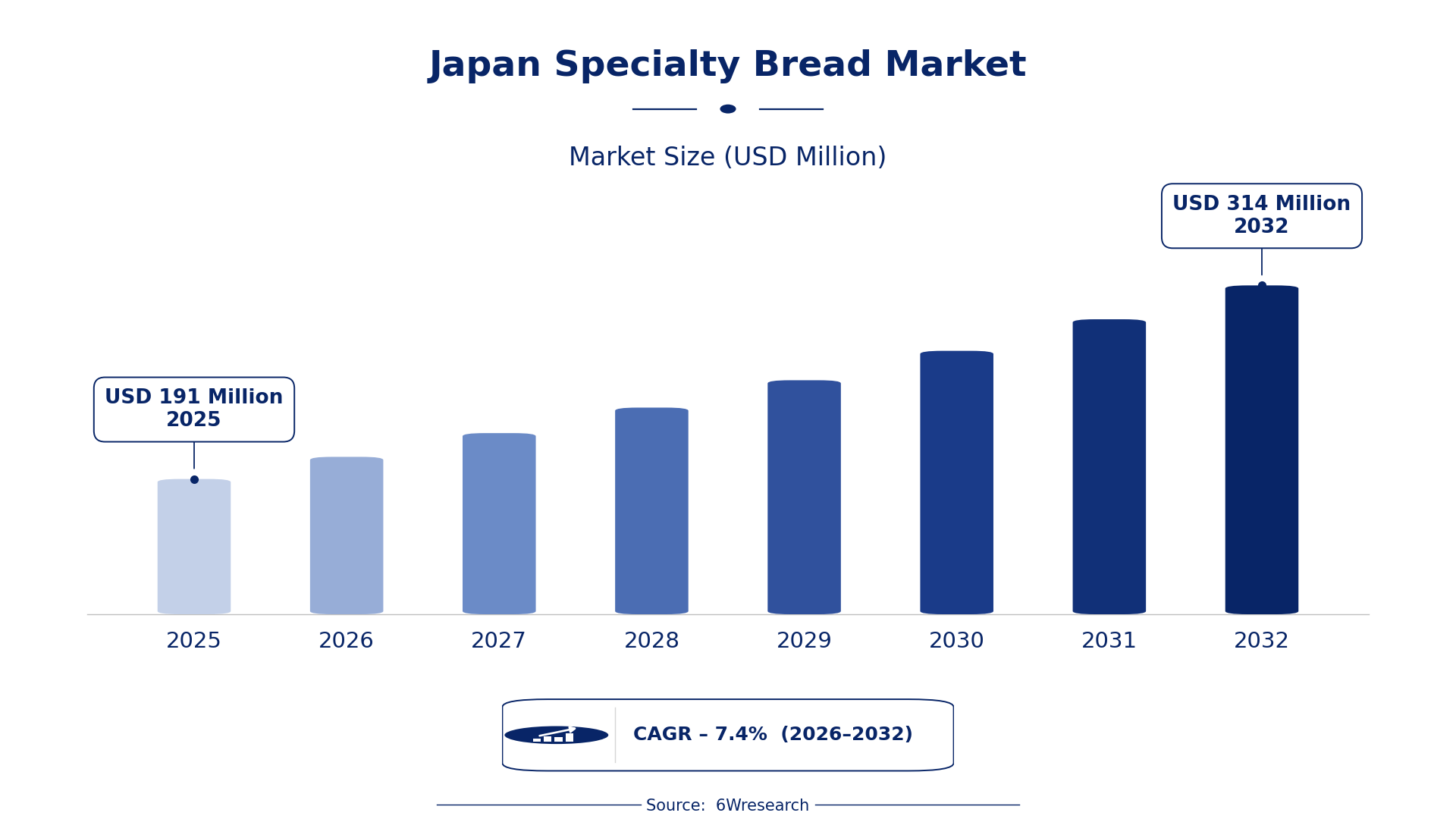
According to 6Wresearch internal database and industry insights, the Japan Specialty Bread Market was valued at USD 191 Million in 2025 and is projected to reach USD 314 Million by 2032, growing at a CAGR of approximately 7.4% during 2026–2032.
Japan Specialty Bread Market Highlights
| Report Metric | Details |
| Report Name | Japan Specialty Bread Market (2026-2032) |
| Market Size 2025 | USD 191 Million |
| Market Size 2032 | USD 314 Million |
| Absolute Growth 2025–2032 | USD 123 Million |
| CAGR 2026–2032 | 7.4% |
| Peak Annual Growth | 8.7% in 2028 |
| Forecast Period | 2026–2032 |
| Historical Data | 2022–2025 |
| Base Year | 2025 |
| Leading Bread Type, 2025 | Sourdough (55% share) |
| Leading Key Ingredient, 2025 | Whole Grain (42% share) |
| Leading Dietary Focus, 2025 | Celiac/Allergy Diet (43% share) |
| Leading End User, 2025 | Artisan Bakeries (54% share) |
| Fastest-Growing Bread Type | Gluten-Free Bread (10.4% CAGR) |
| Fastest-Growing Key Ingredient | Rice/Tapioca Flour (9.8% CAGR) |
| Fastest-Growing Dietary Focus | High Fiber (10.0% CAGR) |
| Fastest-Growing End User | Health Food Chains (9.6% CAGR) |
| Growing Sector | Artisan Bakeries |
| Key End Users | Health Food Chains, Artisan Bakeries, Supermarkets, Delicatessens |
Japan Specialty Bread Market Year-wise Growth Rate and Key Drivers (2022–2032)
This graph illustrates the annual growth rates of the market from 2022 to 2032, highlighting a steady upward trajectory and projected market expansion over the forecast period.
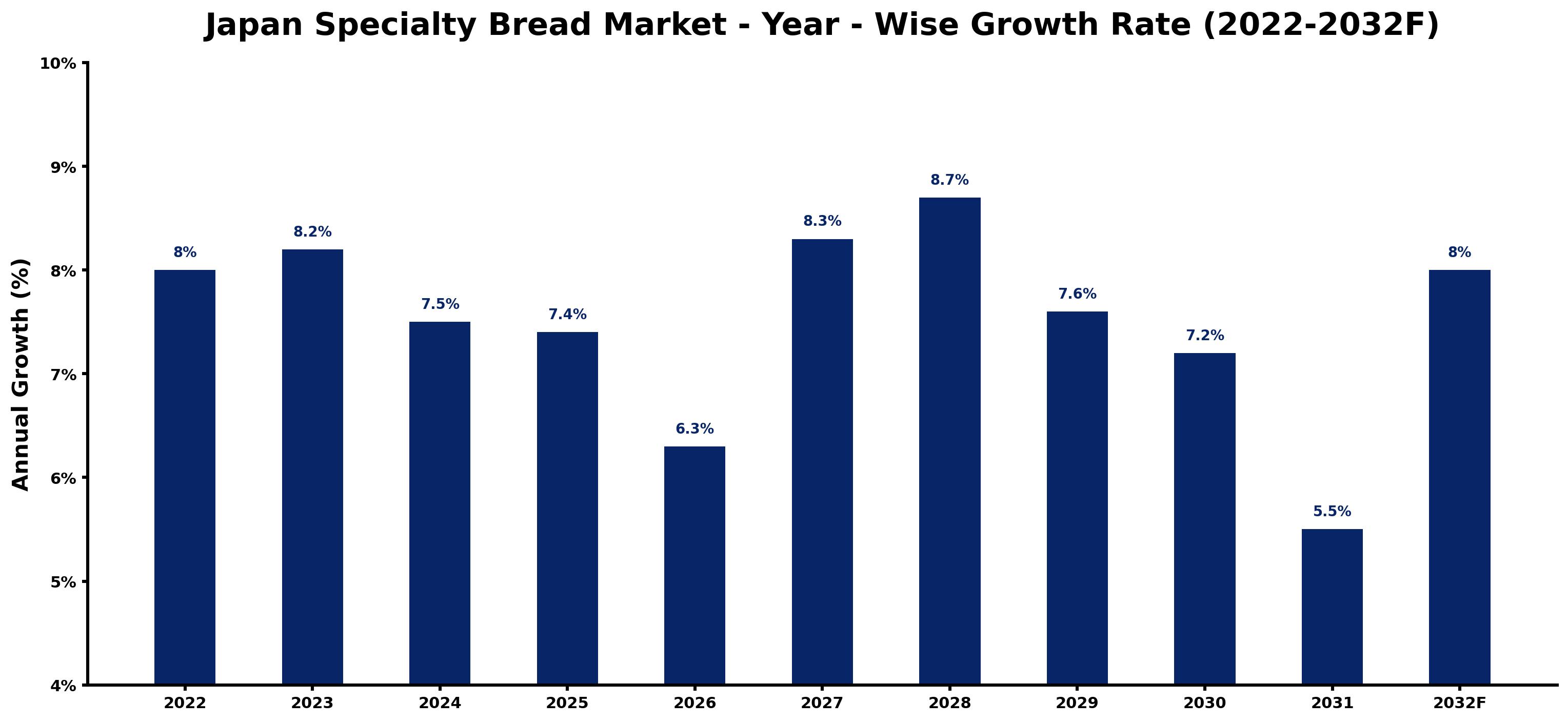
Each row of the following table gives one year's estimated growth and the event or demand shift that explains it.
| Year | Estimated Annual Growth (%) | Market Rationale |
| 2022 | 8.0 | The market experienced steady growth as consumer interest in specialty breads increased. |
| 2023 | 8.2 | Demand accelerated due to heightened awareness of health benefits associated with specialty breads. |
| 2024 | 7.5 | Growth slowed slightly as consumer preferences began to stabilise after rapid changes. |
| 2025 | 7.4 | Market growth continued to moderate as competition intensified among producers. |
| 2026 | 6.3 | Growth is expected to decelerate due to market saturation in urban areas and changing consumer habits. |
| 2027 | 8.3 | Demand is projected to rebound as health food trends gain traction among urban consumers. |
| 2028 | 8.7 | The market is expected to peak with increased investments in artisan baking techniques and health-focused products. |
| 2029 | 7.6 | Growth is projected to slow as consumer choices diversify, leading to a broader range of options. |
| 2030 | 7.2 | Market expansion is expected to continue decelerating as consumers become more selective in their purchases. |
| 2031 | 5.5 | Growth is projected to slow further as the market matures and competition intensifies. |
| 2032 | 8.0 | Demand is expected to surge again as new products capture consumer interest. |
Note: Market size estimations and growth projections presented in this report are based on 6Wresearch's proprietary forecasting methodology, utilizing the latest available industry data, government publications, and primary research inputs.
Japan Specialty Bread Market Synopsis
Specialty bread encompasses a variety of artisanal and health-oriented breads crafted through traditional methods. Its popularity is on the rise among households, cafes, and restaurants, fuelled by a health-conscious consumer base. The Japan Specialty Bread Market is growing as interest in unique and nutritious options increases, with over 30% of consumers buying specialty bread weekly. This expansion is supported by a surge in offerings from health food chains and the popularity of artisan bakeries, particularly in urban centres like Tokyo.
Market Dynamics Impact Analysis (2026–2032)
| Factor | Type | Impact | Primary Segment Affected |
| Increased health consciousness among consumers | Driver | High | Whole Grain |
| Growth of artisan bakeries in urban areas | Driver | High | Sourdough |
| Rising interest in gluten-free options | Opportunity | High | Gluten-Free Bread |
| Expansion of health food chains | Opportunity | High | Health Food Chains |
| Competition from mass-produced bread | Restraint | Medium | Multigrain Loaf |
| Price sensitivity among consumers | Restraint | Medium | Rye Bread |
| High production costs for specialty ingredients | Challenge | High | Artisan Bakeries |
| Limited distribution channels for specialty breads | Challenge | Medium | Delicatessens |
Evaluation of Drivers in Japan Specialty Bread Market (2026–2032)
Key forces behind demand, with the segment each one moves most, are listed below.
| Drivers | Primary Segment Affected | Why It Matters (Evidence) |
| Increased consumer demand for health-focused products | Whole Grain | Whole grain breads are sought after for their nutritional benefits, leading to higher sales in health food chains. |
| Growth in artisan bakery establishments | Sourdough | With over 2,000 artisan bakeries in Tokyo, the popularity of sourdough continues to rise, boosting local sales. |
| Surge in gluten-free product offerings | Gluten-Free Bread | A 25% increase in gluten-free lines at health food chains has driven higher consumer purchases of gluten-free bread. |
| Urban health trends influencing bread choices | Multigrain Loaf | Health-conscious consumers in urban areas are increasingly opting for multigrain options, boosting market demand. |
| Rising interest in unique bread types | Rye Bread | Rye bread's popularity due to its high fiber content has led to a consistent increase in consumer purchases. |
Spending rises because consumer health trends are driving demand for specialty breads. In 2023, health food chains reported a 15% increase in specialty bread offerings, reflecting a growing focus on nutritious options. The expansion of artisan bakeries has led to higher sales of sourdough, which is widely consumed for its unique flavour. Gluten-free bread sales surged by 20% last year, catering to those with dietary restrictions. Consumers are increasingly choosing multigrain loaves, which are favoured for their health benefits, further boosting market demand.
Evaluation of Restraints in Japan Specialty Bread Market
These are the pressures that could keep growth below its potential.
| Market Restraint | Primary Segment Affected | Why It Matters (Evidence) |
| Competition from lower-priced mass-produced bread | Multigrain Loaf | Mass-produced bread options often undercut prices, limiting the market share of specialty multigrain loaves. |
| Price sensitivity among consumers | Rye Bread | Consumers may opt for cheaper alternatives, impacting sales of higher-priced specialty rye bread. |
| High costs of specialty ingredients | Artisan Bakeries | Artisan bakeries face increased production costs, which can limit their pricing flexibility and market reach. |
| Limited distribution channels for specialty products | Delicatessens | Delicatessens may struggle to stock a diverse range of specialty breads, affecting availability for consumers. |
| Consumer preference for convenience foods | Gluten-Free Bread | As consumers seek convenience, gluten-free bread may face competition from quicker meal options. |
Japan Specialty Bread Market Challenges
Artisan bakeries face strict regulatory oversight from the Japanese Food Safety Commission, which can delay product launches and cost producers up to six months in market entry. High production costs arise from sourcing premium ingredients, resulting in an average price of 400 yen per loaf, which may alienate budget-conscious buyers. Competition intensifies as health food chains increase specialty bread offerings by 15% in 2023, compelling smaller producers to innovate or risk losing market share. Supply chain disruptions affect ingredient availability, particularly for unique bread types, forcing importers to raise prices and potentially losing sales to more competitive brands.
Trends in the Japan Specialty Bread Market
These developments are changing demand patterns in the Japan Specialty Bread Market.
- Shift towards Health-Conscious Offerings: Health food chains are prioritising specialty bread, with a 15% rise in offerings in 2023. This trend reflects the growing consumer demand for nutritious options, prompting suppliers to adapt their product lines.
- Rise of Artisan Bakeries: Artisan bakeries are becoming more prevalent, particularly in urban areas like Tokyo, where over 2,000 establishments thrive. This growth supports a diverse range of specialty breads, catering to various consumer tastes.
- Increased Popularity of Gluten-Free Products: The gluten-free bread segment is gaining traction, with a 20% increase in sales last year. This shift indicates a growing awareness of dietary restrictions among consumers, prompting bakeries to expand their gluten-free offerings.
- Focus on Nutritional Value: In 2023, seed mixes are increasingly used in specialty breads to improve nutritional value. This change aligns with consumer preferences for healthier options, influencing production methods.
Investment Opportunities in the Japan Specialty Bread Market
The opportunities below stand out in the Japan Specialty Bread Market for new entrants and existing suppliers.
- Health Food Chains Expanding Offerings: Health food chains are currently increasing their specialty bread selections, with a 15% rise noted. This presents opportunities for suppliers to introduce new products catering to health-conscious consumers.
- Urban Areas Seeking Unique Bread Types: Urban centres, particularly Tokyo, show a significant demand for artisan breads, with over 2,000 bakeries. Suppliers can enter this market by partnering with local bakeries to offer unique products.
- Growing Demand for Gluten-Free Options: With gluten-free bread sales rising, there is a clear gap in the market. Suppliers can focus on developing diverse gluten-free products to meet consumer needs.
- Rising Interest in Whole Grain Breads: Whole grain breads are gaining traction, especially among health-conscious consumers. Suppliers should target health food chains and supermarkets to expand their whole grain offerings.
Government Initiatives in the Japan Specialty Bread Market
The Food Recycling Law, enacted in 2000, mandates food businesses to reduce waste and recycle it into feed and energy. This law encourages producers to adopt sustainable practices, benefiting specialty bread producers by promoting local ingredients. The Food Sanitation Act amendments in 2018 further established hygiene standards, ensuring that specialty bread meets safety requirements, thus protecting consumers and enhancing market credibility.
The Japan Food Safety Commission oversees the implementation of food safety standards, approving various health initiatives. It funds projects aimed at improving dietary health, which include promoting specialty bread production. The Japan Bakers Association supports innovation in bread-making techniques, facilitating the development of new products that align with health trends.
Future Insight of the Japan Specialty Bread Market
New health-focused facilities will emerge by 2032, driven by local food production initiatives and subsidies from the Tokyo Metropolitan Government. Programmes promoting dietary health will elevate the profile of specialty breads, increasing consumer demand for diverse options. Advanced baking technologies will enhance production efficiency, enabling suppliers to respond swiftly to changing consumer preferences. By 2032, gluten-free product lines are projected to grow by 25%, ensuring buyers have access to a wider array of health-conscious choices.
Market Segmentation Analysis
Japan Specialty Bread Market report covers a detailed analysis of the following market segments:
By Bread Type – Sourdough Leads, Gluten-Free Bread Expected to Grow Fastest
According to Saurav Kr Singh, Senior Research Analyst at 6Wresearch, in 2025, Sourdough led the bread type split with a 55% share. Sourdough leads the market as it is widely consumed for its unique flavour and texture, appealing to a diverse range of consumers. Artisan bakeries in urban centres, especially Tokyo, have embraced this trend, showcasing various sourdough styles. Over 2026–2032, Gluten-Free Bread is expected to post the fastest growth, at a CAGR of 10.4%. The gluten-free bread segment is rapidly expanding, driven by increasing consumer awareness of gluten allergies and dietary restrictions. Health food chains reported a 25% rise in gluten-free product lines in 2023, reflecting the growing demand for these options. Suppliers must prioritise gluten-free offerings to cater to the rising number of health-conscious consumers.
By Key Ingredient – Whole Grain Leads, Rice/Tapioca Flour Expected to Grow Fastest
Whole Grain held 42% of the Japan Specialty Bread Market by key ingredient in 2025. Whole grain is the leading ingredient as it is highly sought after for its health benefits and nutritional value. Consumers increasingly prefer whole grain options, reflecting a broader trend towards healthier eating habits. Rice/Tapioca Flour is set to record the highest CAGR in this split, 9.8% over 2026–2032. Rice and tapioca flour are gaining traction as essential ingredients in gluten-free bread production. This shift is driven by the rising number of consumers seeking gluten-free alternatives, further expanding the market. Suppliers must consider incorporating rice and tapioca flour to cater to the growing gluten-free segment.
By Dietary Focus – Celiac/Allergy Diet Leads, High Fiber Expected to Grow Fastest
With 43% of dietary focus revenue in 2025, Celiac/Allergy Diet was the largest category. The celiac/allergy diet segment holds the largest share as it caters to the critical needs of gluten-sensitive individuals. This focus is essential for meeting dietary requirements, particularly as over 30% of consumers report purchasing specialty bread weekly. High Fiber is projected to grow fastest, at a CAGR of 10.0% during 2026–2032. High fiber options are experiencing rapid growth, as health-conscious consumers increasingly seek nutritious choices. The 25% increase in gluten-free product lines within health food chains highlights the rising demand for healthier bread alternatives. Suppliers should expand their offerings of gluten-free and high-fiber products to meet the growing consumer demand.
By End User – Artisan Bakeries Lead, Health Food Chains Expected to Grow Fastest
Artisan Bakeries accounted for 54% of the market by end user in 2025. Artisan bakeries lead the market as they are the primary producers of specialty bread, employing traditional methods to create high-quality products. Their prevalence in urban areas, especially Tokyo, solidifies their dominance in the specialty bread sector. The quickest growth will come from Health Food Chains, forecast to expand at a CAGR of 9.6% between 2026 and 2032. Health food chains are expanding quickly, prioritising nutritious bread options that appeal to health-conscious consumers. The 15% increase in specialty bread offerings within these chains indicates their growing influence in the market. Suppliers should consider partnerships with health food chains to enhance distribution and reach a broader customer base.
Key Attractiveness of the Report
- 10 Years of Market Numbers
- Historical Data Starting from 2022 to 2025
- Base Year 2025
- Forecast Data until 2032
- Key Performance Indicators Impacting the Market
- Major Upcoming Developments and Projects
Key Highlights of the Report:
- Japan Specialty Bread Market Outlook
- Market Size of Japan Specialty Bread Market, 2025
- Forecast of Japan Specialty Bread Market, 2032
- Historical Data and Forecast of Japan Specialty Bread Revenues & Volume for the Period 2022-2032F
- Japan Specialty Bread Market Trend Evolution
- Japan Specialty Bread Market Drivers and Challenges
- Japan Specialty Bread Price Trends
- Japan Specialty Bread Porter's Five Forces
- Japan Specialty Bread Industry Life Cycle
- Historical Data and Forecast of Japan Specialty Bread Market Revenues & Volume By Bread Type for the Period 2022-2032F
- Historical Data and Forecast of Japan Specialty Bread Market Revenues & Volume By Sourdough for the Period 2022-2032F
- Historical Data and Forecast of Japan Specialty Bread Market Revenues & Volume By Rye Bread for the Period 2022-2032F
- Historical Data and Forecast of Japan Specialty Bread Market Revenues & Volume By Multigrain Loaf for the Period 2022-2032F
- Historical Data and Forecast of Japan Specialty Bread Market Revenues & Volume By Gluten-Free Bread for the Period 2022-2032F
- Historical Data and Forecast of Japan Specialty Bread Market Revenues & Volume By Key Ingredient for the Period 2022-2032F
- Historical Data and Forecast of Japan Specialty Bread Market Revenues & Volume By Fermented Starter for the Period 2022-2032F
- Historical Data and Forecast of Japan Specialty Bread Market Revenues & Volume By Whole Grain for the Period 2022-2032F
- Historical Data and Forecast of Japan Specialty Bread Market Revenues & Volume By Seed Mix for the Period 2022-2032F
- Historical Data and Forecast of Japan Specialty Bread Market Revenues & Volume By Rice/Tapioca Flour for the Period 2022-2032F
- Historical Data and Forecast of Japan Specialty Bread Market Revenues & Volume By Dietary Focus for the Period 2022-2032F
- Historical Data and Forecast of Japan Specialty Bread Market Revenues & Volume By Digestive Health for the Period 2022-2032F
- Historical Data and Forecast of Japan Specialty Bread Market Revenues & Volume By High Fiber for the Period 2022-2032F
- Historical Data and Forecast of Japan Specialty Bread Market Revenues & Volume By Nutritional Boost for the Period 2022-2032F
- Historical Data and Forecast of Japan Specialty Bread Market Revenues & Volume By Celiac/Allergy Diet for the Period 2022-2032F
- Historical Data and Forecast of Japan Specialty Bread Market Revenues & Volume By End User for the Period 2022-2032F
- Historical Data and Forecast of Japan Specialty Bread Market Revenues & Volume By Artisan Bakeries for the Period 2022-2032F
- Historical Data and Forecast of Japan Specialty Bread Market Revenues & Volume By Delicatessens for the Period 2022-2032F
- Historical Data and Forecast of Japan Specialty Bread Market Revenues & Volume By Supermarkets for the Period 2022-2032F
- Historical Data and Forecast of Japan Specialty Bread Market Revenues & Volume By Health Food Chains for the Period 2022-2032F
- Japan Specialty Bread Import Export Trade Statistics
- Market Opportunity Assessment By Bread Type
- Market Opportunity Assessment By Key Ingredient
- Market Opportunity Assessment By Dietary Focus
- Market Opportunity Assessment By End User
- Japan Specialty Bread Top Companies Market Share
- Japan Specialty Bread Competitive Benchmarking By Technical and Operational Parameters
- Japan Specialty Bread Company Profiles
- Japan Specialty Bread Key Strategic Recommendations
Market Covered
This report examines the market across the segments below.
By Bread Type
- Sourdough
- Rye Bread
- Multigrain Loaf
- Gluten-Free Bread
By Key Ingredient
- Fermented Starter
- Whole Grain
- Seed Mix
- Rice/Tapioca Flour
By Dietary Focus
- Digestive Health
- High Fiber
- Nutritional Boost
- Celiac/Allergy Diet
By End User
- Artisan Bakeries
- Delicatessens
- Supermarkets
- Health Food Chains































