Japan Specialty Grains Market Size & Growth Rate
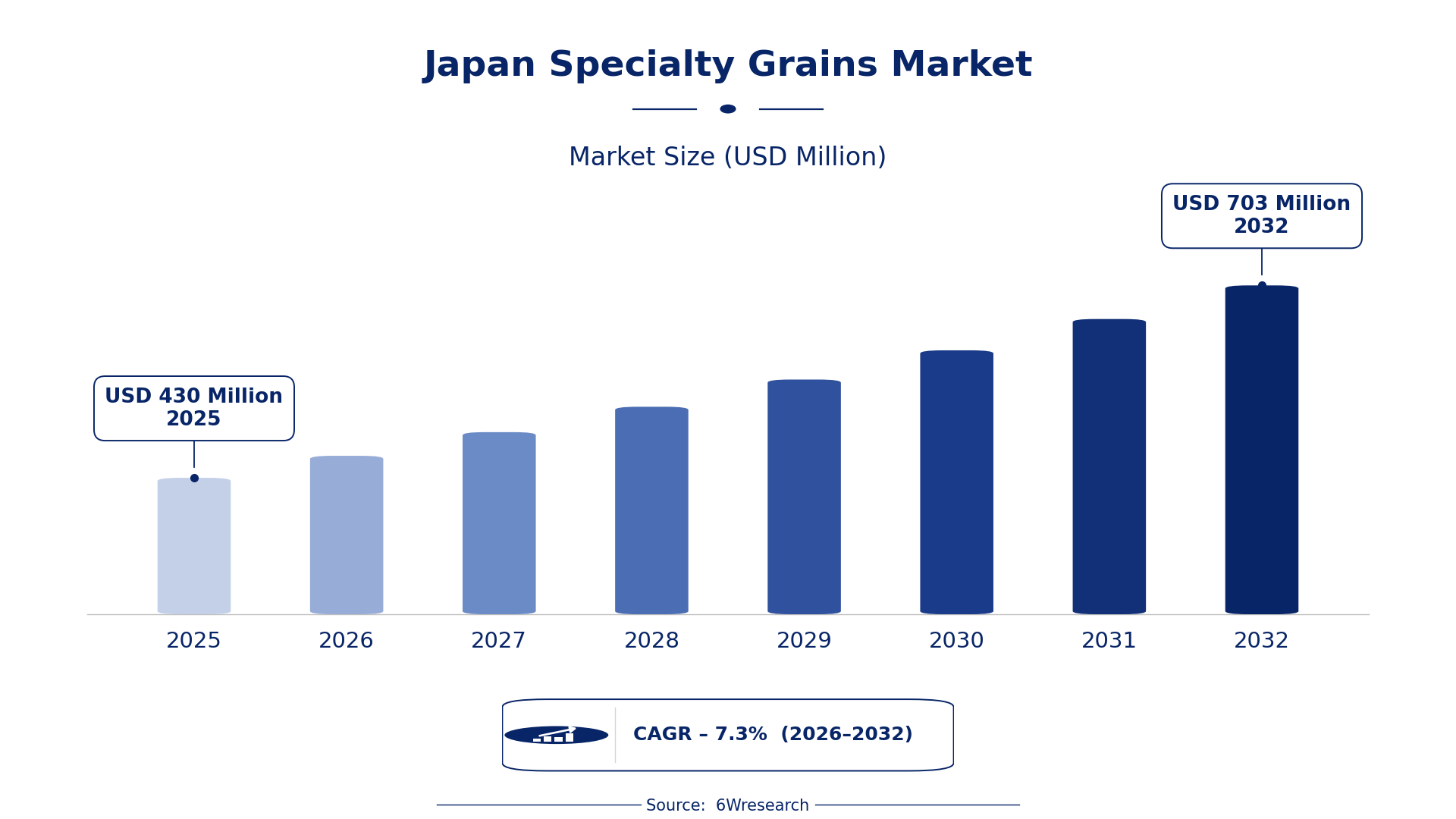
According to 6Wresearch internal database and industry insights, the Japan Specialty Grains Market was valued at USD 430 Million in 2025 and is projected to reach USD 703 Million by 2032, growing at a CAGR of approximately 7.3% during 2026–2032.
Japan Specialty Grains Market Highlights
| Report Metric | Details |
| Report Name | Japan Specialty Grains Market (2026-2032) |
| Market Size 2025 | USD 430 Million |
| Market Size 2032 | USD 703 Million |
| Absolute Growth 2025–2032 | USD 273 Million |
| CAGR 2026–2032 | 7.3% |
| Peak Annual Growth | 8.0% in 2031 |
| Forecast Period | 2026–2032 |
| Historical Data | 2022–2025 |
| Base Year | 2025 |
| Leading Grain Type, 2025 | Quinoa (52% share) |
| Leading Nutritional Feature, 2025 | High Protein (52% share) |
| Leading Processing Form, 2025 | Whole/Frozen (38% share) |
| Leading End User, 2025 | Healthy Food Retailers (35% share) |
| Fastest-Growing Grain Type | Amaranth (10.3% CAGR) |
| Fastest-Growing Nutritional Feature | Iron-Rich (10.0% CAGR) |
| Fastest-Growing Processing Form | Ready-to-Cook (10.6% CAGR) |
| Fastest-Growing End User | Functional Food Brands (9.5% CAGR) |
| Growing Sector | Health Foods |
| Key End Users | Healthy Food Retailers, Functional Food Brands, Cereal Manufacturers |
Japan Specialty Grains Market Year-wise Growth Rate and Key Drivers (2022–2032)
This graph illustrates the annual growth rates of the market from 2022 to 2032, highlighting a steady upward trajectory and projected market expansion over the forecast period.
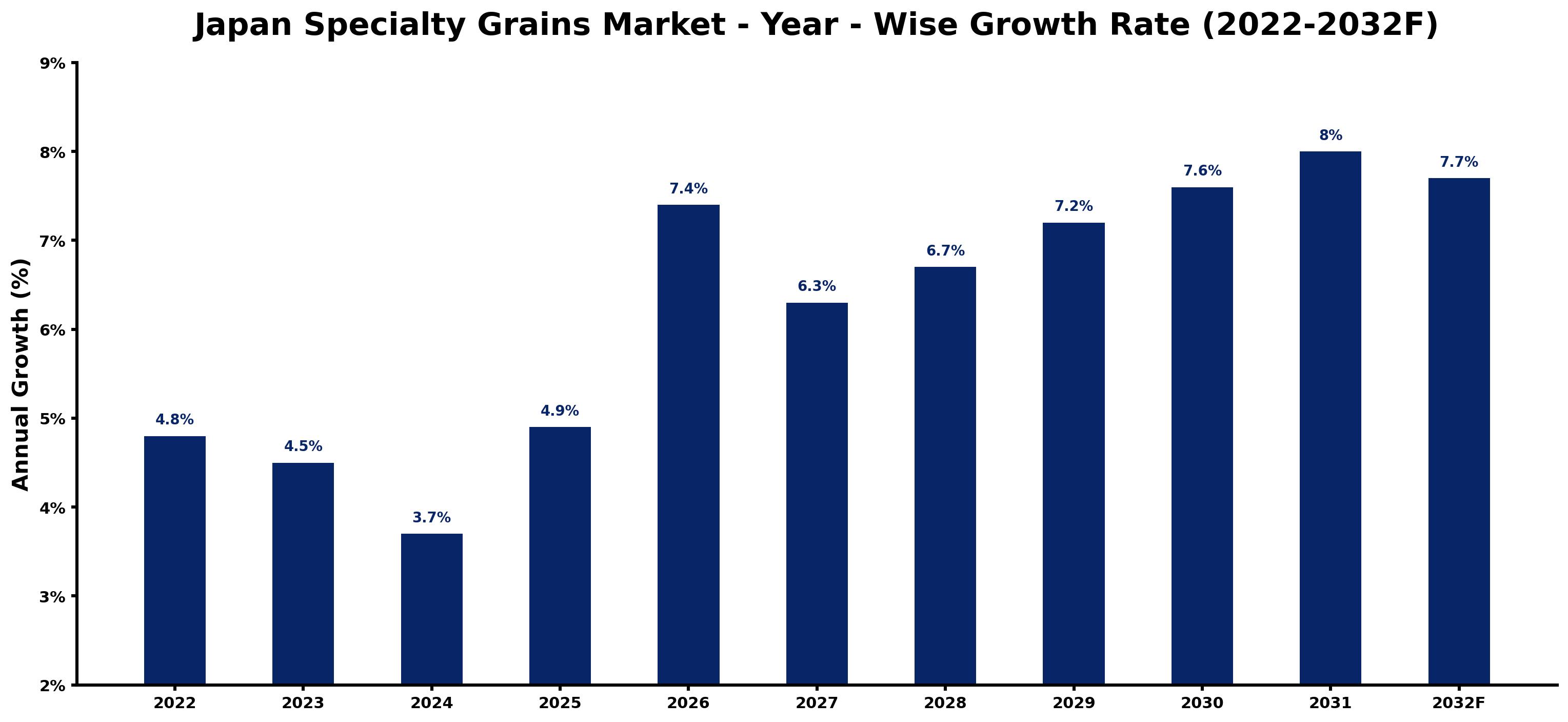
The table below sets out the estimated growth rate for each year and the main factor behind it.
| Year | Estimated Annual Growth (%) | Market Rationale |
| 2022 | 4.8 | Demand for specialty grains was strong, driven by health trends among consumers. |
| 2023 | 4.5 | Growth slowed slightly as market adjustments occurred following the previous year's surge. |
| 2024 | 3.7 | Continued interest in gluten-free products contributed to a further slowdown in growth. |
| 2025 | 4.9 | Growth accelerated as health food retailers expanded their offerings of specialty grains. |
| 2026 | 7.4 | Investment in processing facilities is expected to increase, leading to a rise in product availability. |
| 2027 | 6.3 | Growth is projected to slow as market saturation begins to affect new product introductions. |
| 2028 | 6.7 | Consumer interest in convenient meal options will boost growth in ready-to-cook products. |
| 2029 | 7.2 | Health-conscious trends will continue to drive demand for specialty grains, particularly amaranth. |
| 2030 | 7.6 | Increased consumer awareness of nutritional benefits is expected to support steady growth in the market. |
| 2031 | 8.0 | The market is projected to peak as specialty grains gain mainstream acceptance among various buyer groups. |
| 2032 | 7.7 | Growth will slow as competition intensifies and market maturity sets in. |
Note: Market size estimations and growth projections presented in this report are based on 6Wresearch's proprietary forecasting methodology, utilizing the latest available industry data, government publications, and primary research inputs.
Japan Specialty Grains Market Synopsis
Specialty grains such as quinoa, amaranth, millet, and teff are cultivated for their unique nutritional profiles and processed into various forms like flour and ready-to-cook products. The Japan Specialty Grains Market is thriving, driven by a health-conscious population and a health food market valued at over 1 trillion yen. This growth is propelled by rising consumer demand for gluten-free and functional foods, particularly in urban centres like Tokyo, where specialty grains are increasingly popular among health food retailers.
Market Dynamics Impact Analysis (2026–2032)
| Factor | Type | Impact | Primary Segment Affected |
| Rising health consciousness among consumers drives demand for gluten-free options. | Driver | High | Gluten-Free |
| Investment in processing capabilities is expanding product offerings and availability. | Driver | High | Ready-to-Cook |
| Growing interest in high-protein foods presents opportunities for specialty grains. | Opportunity | High | High Protein |
| The expanding gluten-free market opens avenues for new product development. | Opportunity | High | Gluten-Free |
| Limited awareness of specialty grains among traditional consumers restricts market growth. | Restraint | Medium | Quinoa |
| High competition from established grains may hinder new entrants into the market. | Restraint | Medium | Amaranth |
| High production costs for specialty grains can deter potential suppliers. | Challenge | High | Teff |
| Regulatory compliance costs may burden smaller producers in the market. | Challenge | Medium | Millet |
Evaluation of Drivers in Japan Specialty Grains Market (2026–2032)
The following drivers explain most of the expected growth.
| Drivers | Primary Segment Affected | Why It Matters (Evidence) |
| Increased consumer demand for gluten-free products boosts specialty grain sales. | Gluten-Free | The gluten-free market in Japan is projected to grow significantly by 2025. |
| Health food retailers are expanding their product lines to include specialty grains. | High Protein | Health-conscious consumers make up 40% of the specialty grains market. |
| Investment in processing facilities improves product availability and variety. | Ready-to-Cook | Tokyo is a major hub for specialty grain retailers, enhancing access to products. |
| Rising awareness of nutritional benefits drives demand for ancient grains. | Teff | Teff is gaining traction in the health food sector for its iron content. |
| Functional food brands are increasingly incorporating specialty grains into their products. | Functional Food Brands | Functional food brands are expanding their offerings to include specialty grains. |
Spending rises because health-conscious consumers increasingly seek nutritious options, with 30% prioritising high-fiber diets. The health food market in Japan, valued at over 1 trillion yen, fuels demand for specialty grains. As health food retailers diversify their offerings, they incorporate specialty grains for added nutritional benefits, further driving demand. The gluten-free market is projected to grow significantly by 2025, prompting more retailers to include these products in their lines. Additionally, rising awareness of the health benefits of ancient grains like teff contributes to increased consumer interest.
Evaluation of Restraints in Japan Specialty Grains Market
These restraints slow adoption and weigh on supplier margins.
| Market Restraint | Primary Segment Affected | Why It Matters (Evidence) |
| Limited consumer awareness of specialty grains restricts market growth. | Quinoa | Despite health benefits, many traditional consumers remain unaware of specialty grains' advantages. |
| High competition from established grains may hinder new entrants into the market. | Amaranth | Established grains dominate the market, making it challenging for specialty grains to gain traction. |
| Production costs for specialty grains can deter potential suppliers from entering the market. | Teff | The higher costs associated with cultivating and processing specialty grains can limit supplier participation. |
| Regulatory compliance costs may burden smaller producers in the market. | Millet | Smaller producers often struggle to meet compliance requirements, impacting their competitiveness. |
| Market saturation may slow growth as new product introductions face challenges. | Ready-to-Cook | As the market matures, the introduction of new products becomes increasingly difficult. |
Japan Specialty Grains Market Challenges
Supply chain disruptions arise from inconsistent seed quality, limiting producers' ability to cultivate specialty grains efficiently. This issue stems from a reliance on traditional farming methods, which can delay supply to retailers by up to three months. Importers face intense competition from local growers, compelling them to reduce prices and risking profit margins that can shrink by 15%. Regulatory compliance with ISO 22000 standards imposes additional burdens on distributors, necessitating costly quality control investments that can extend product launch timelines by several weeks. Rising transportation costs exert financial pressure on buyers, leading to increased prices for specialty grains that may deter purchases.
Trends in the Japan Specialty Grains Market
These developments are changing demand patterns in the Japan Specialty Grains Market.
- Shift towards Ready-to-Cook Specialty Grains: A growing demand for convenience has led to a shift towards ready-to-cook specialty grains. This trend began in 2026, with health food retailers adapting to busy lifestyles. The ready-to-cook segment is projected to grow at a CAGR of 10.6%.
- Growing Popularity of Ancient Grains: Interest in ancient grains like teff has surged as consumers seek nutritious options. This trend has been clear since 2022, with health food brands increasingly incorporating these grains into their products. Teff's iron content appeals to health-conscious consumers, driving its popularity.
- Expansion of Gluten-Free Offerings: The gluten-free market is evolving, with a notable increase in specialty grain options. This shift started in 2023, as consumer awareness of gluten intolerance rises. The gluten-free market is projected to grow significantly by 2025.
- Health Food Retailers Diversifying Product Lines: Health food retailers are diversifying their product lines to include specialty grains. This trend has been prominent since 2025, as consumer demand for nutritious foods rises. Retailers are responding by offering a wider range of specialty grain products.
Investment Opportunities in the Japan Specialty Grains Market
The following opportunities in the Japan Specialty Grains Market pair current demand with a clear way in.
- Gap in High-Protein Product Offerings: With 40% of consumers prioritising high-protein diets, there is a gap in specialty grain offerings. Now is the time for producers to invest in high-protein grain products, targeting health food retailers looking to expand their selections.
- Timing for Gluten-Free Product Development: The gluten-free market is projected to grow significantly by 2025, presenting a timely opportunity for investment. Companies should focus on developing gluten-free specialty grain products to cater to health-conscious consumers seeking alternatives.
- Entry into the Ready-to-Cook Segment: The ready-to-cook specialty grains segment is experiencing rapid growth, with a CAGR of 10.6%. Producers should consider partnerships with health food retailers to enter this market and meet consumer demand for convenience.
- Expansion in Health-Conscious Consumer Base: The increasing focus on health among consumers creates opportunities for specialty grains. With the health food market valued at over 1 trillion yen, suppliers can target health food retailers to meet rising demand.
Government Initiatives in the Japan Specialty Grains Market
The Food Recycling Law, enacted in 2000, mandates food businesses to reduce waste and recycle it into feed, fertiliser, and energy. This legislation encourages the use of specialty grains in food production, promoting sustainability and reducing waste. The Food Sanitation Act amendment of 2018 established a positive list system for synthetic resins used in food packaging, ensuring safety in grain processing and boosting consumer confidence in specialty grain products.
Specialty grain producers benefit from the HACCP-based hygiene management requirements of the Food Sanitation Act, which ensures food safety standards are met. The Japan Grain Inspection Association oversees quality standards, ensuring that specialty grain products comply with safety regulations. These measures support consumer confidence and encourage the growth of the specialty grains market.
Future Insight of the Japan Specialty Grains Market
By 2032, the investment pipeline in precision farming technologies will reshape grain production, responding to the demands of health-conscious consumers. The gluten-free market will expand, with new product lines incorporating specialty grains to meet dietary preferences. Support from the Ministry of Agriculture for ancient grain cultivation will enhance local production, increasing availability for suppliers. Tokyo's role as a retail hub will grow, facilitating greater access for suppliers to connect with health-focused buyers throughout the region.
Market Segmentation Analysis
Japan Specialty Grains Market report covers a detailed analysis of the following market segments:
By Grain Type – Quinoa Leads, Amaranth Expected to Grow Fastest
According to Saurav Kr Singh, Senior Research Analyst at 6Wresearch, the largest grain type category in 2025 was Quinoa, at 52% of revenue. Quinoa holds the largest share due to its high nutritional value and the increasing demand for gluten-free options among health-conscious consumers. In 2022, Japan imported approximately 5,000 tons of quinoa, reflecting its popularity in the market. Amaranth is set to record the highest CAGR in this split, 10.3% over 2026–2032. Amaranth is experiencing rapid growth as it gains popularity in health food markets, appealing to consumers seeking high-protein options. The rising awareness of its nutritional benefits, including a protein content of around 14% by weight, is driving this trend. Suppliers should focus on promoting amaranth to capitalise on its growth potential.
By Nutritional Feature – High Protein Leads, Iron-Rich Expected to Grow Fastest
High Protein accounted for 52% of the market by nutritional feature in 2025. High protein content is the top nutritional feature as it appeals to fitness-conscious consumers who actively seek protein-rich foods. This preference is supported by the increasing popularity of health foods in Japan, where a significant portion of the population prioritises protein intake. Iron-Rich is projected to grow fastest, at a CAGR of 10.0% during 2026–2032. Iron-rich grains are rapidly gaining traction due to their role in addressing dietary deficiencies, particularly among those looking to boost their iron levels. This growing focus on nutritional adequacy is propelling the demand for iron-rich options in the specialty grains market. Suppliers should focus on promoting iron-rich grains to align with consumer health priorities.
By Processing Form – Whole/Frozen Leads, Ready-to-Cook Expected to Grow Fastest
In 2025, Whole/Frozen led the processing form split with a 38% share. Whole and frozen specialty grains dominate the market as they are commonly used in meal preparation and convenience foods, appealing to busy consumers. Their versatility in various culinary applications further solidifies their leading position. Over 2026–2032, Ready-to-Cook is expected to post the fastest growth, at a CAGR of 10.6%. Ready-to-cook products are the fastest-growing segment, driven by the demand for convenience among consumers with hectic lifestyles. This trend indicates a shift towards more accessible meal options in the specialty grains market. Suppliers must invest in ready-to-cook product development to align with consumer preferences for convenience.
By End User – Healthy Food Retailers Lead, Functional Food Brands Expected to Grow Fastest
Healthy Food Retailers held 35% of the Japan Specialty Grains Market by end user in 2025. Healthy food retailers dominate the market as they are the main distribution channel for specialty grains, meeting the rising demand for nutritious products. Their presence in urban centres like Tokyo facilitates access to health-oriented options for consumers. The quickest growth will come from Functional Food Brands, forecast to expand at a CAGR of 9.5% between 2026 and 2032. Functional food brands are swiftly adopting specialty grains to enhance their product offerings, reflecting the increasing consumer interest in health-focused foods. This shift indicates a growing trend towards incorporating specialty grains into everyday diets. Suppliers should collaborate with functional food brands to leverage this trend and increase product visibility.
Key Attractiveness of the Report
- 10 Years of Market Numbers
- Historical Data Starting from 2022 to 2025
- Base Year 2025
- Forecast Data until 2032
- Key Performance Indicators Impacting the Market
- Major Upcoming Developments and Projects
Key Highlights of the Report:
- Japan Specialty Grains Market Outlook
- Market Size of Japan Specialty Grains Market, 2025
- Forecast of Japan Specialty Grains Market, 2032
- Historical Data and Forecast of Japan Specialty Grains Revenues & Volume for the Period 2022-2032F
- Japan Specialty Grains Market Trend Evolution
- Japan Specialty Grains Market Drivers and Challenges
- Japan Specialty Grains Price Trends
- Japan Specialty Grains Porter's Five Forces
- Japan Specialty Grains Industry Life Cycle
- Historical Data and Forecast of Japan Specialty Grains Market Revenues & Volume By Grain Type for the Period 2022-2032F
- Historical Data and Forecast of Japan Specialty Grains Market Revenues & Volume By Quinoa for the Period 2022-2032F
- Historical Data and Forecast of Japan Specialty Grains Market Revenues & Volume By Amaranth for the Period 2022-2032F
- Historical Data and Forecast of Japan Specialty Grains Market Revenues & Volume By Millet for the Period 2022-2032F
- Historical Data and Forecast of Japan Specialty Grains Market Revenues & Volume By Teff for the Period 2022-2032F
- Historical Data and Forecast of Japan Specialty Grains Market Revenues & Volume By Nutritional Feature for the Period 2022-2032F
- Historical Data and Forecast of Japan Specialty Grains Market Revenues & Volume By High Protein for the Period 2022-2032F
- Historical Data and Forecast of Japan Specialty Grains Market Revenues & Volume By Gluten-Free for the Period 2022-2032F
- Historical Data and Forecast of Japan Specialty Grains Market Revenues & Volume By Rich in Fiber for the Period 2022-2032F
- Historical Data and Forecast of Japan Specialty Grains Market Revenues & Volume By Iron-Rich for the Period 2022-2032F
- Historical Data and Forecast of Japan Specialty Grains Market Revenues & Volume By Processing Form for the Period 2022-2032F
- Historical Data and Forecast of Japan Specialty Grains Market Revenues & Volume By Whole/Frozen for the Period 2022-2032F
- Historical Data and Forecast of Japan Specialty Grains Market Revenues & Volume By Puffed/Flour for the Period 2022-2032F
- Historical Data and Forecast of Japan Specialty Grains Market Revenues & Volume By Ready-to-Cook for the Period 2022-2032F
- Historical Data and Forecast of Japan Specialty Grains Market Revenues & Volume By Flour for the Period 2022-2032F
- Historical Data and Forecast of Japan Specialty Grains Market Revenues & Volume By End User for the Period 2022-2032F
- Historical Data and Forecast of Japan Specialty Grains Market Revenues & Volume By Healthy Food Retailers for the Period 2022-2032F
- Historical Data and Forecast of Japan Specialty Grains Market Revenues & Volume By Cereal Manufacturers for the Period 2022-2032F
- Historical Data and Forecast of Japan Specialty Grains Market Revenues & Volume By Functional Food Brands for the Period 2022-2032F
- Historical Data and Forecast of Japan Specialty Grains Market Revenues & Volume By Baking Industry for the Period 2022-2032F
- Japan Specialty Grains Import Export Trade Statistics
- Market Opportunity Assessment By Grain Type
- Market Opportunity Assessment By Nutritional Feature
- Market Opportunity Assessment By Processing Form
- Market Opportunity Assessment By End User
- Japan Specialty Grains Top Companies Market Share
- Japan Specialty Grains Competitive Benchmarking By Technical and Operational Parameters
- Japan Specialty Grains Company Profiles
- Japan Specialty Grains Key Strategic Recommendations
Market Covered
This report examines the market across the segments below.
By Grain Type
- Quinoa
- Amaranth
- Millet
- Teff
By Nutritional Feature
- High Protein
- Gluten-Free
- Rich in Fiber
- Iron-Rich
By Processing Form
- Whole/Frozen
- Puffed/Flour
- Ready-to-Cook
- Flour
By End User
- Healthy Food Retailers
- Cereal Manufacturers
- Functional Food Brands
- Baking Industry































