Japan Sports Food Market Size & Growth Rate
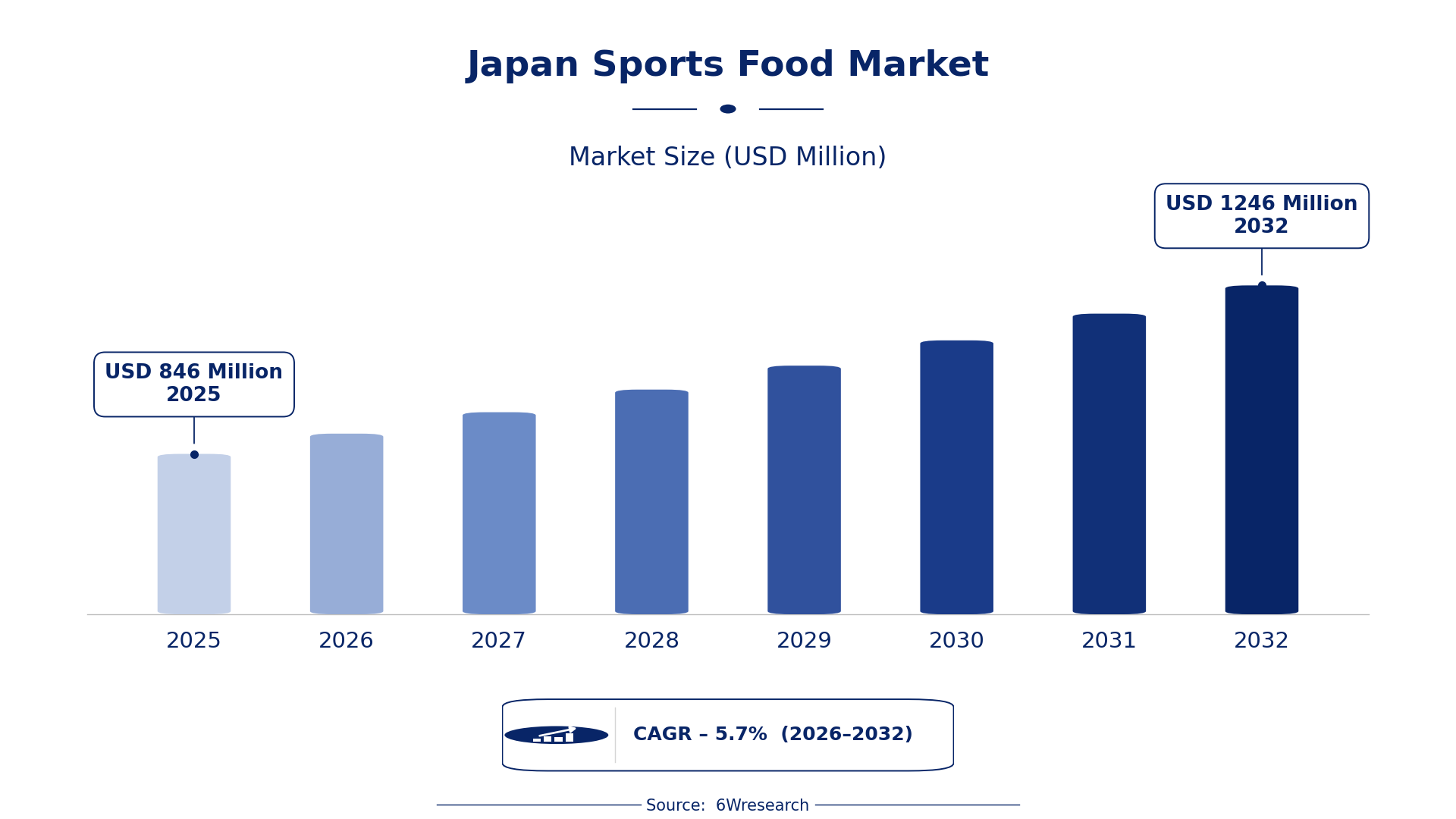
According to 6Wresearch internal database and industry insights, the Japan Sports Food Market was valued at USD 846 Million in 2025 and is projected to reach USD 1,246 Million by 2032, growing at a CAGR of approximately 5.7% during 2026–2032.
Japan Sports Food Market Highlights
| Report Metric | Details |
| Report Name | Japan Sports Food Market (2026-2032) |
| Market Size 2025 | USD 846 Million |
| Market Size 2032 | USD 1,246 Million |
| Absolute Growth 2025–2032 | USD 400 Million |
| CAGR 2026–2032 | 5.7% |
| Peak Annual Growth | 6.7% in 2026 |
| Forecast Period | 2026–2032 |
| Historical Data | 2022–2025 |
| Base Year | 2025 |
| Leading Product Type, 2025 | Protein Powders (44% share) |
| Leading Nutrition Focus, 2025 | Muscle Recovery (47% share) |
| Leading Format, 2025 | Powder Mix (38% share) |
| Leading End User, 2025 | Gym-Goers (54% share) |
| Fastest-Growing Product Type | Electrolyte Drinks (7.6% CAGR) |
| Fastest-Growing Nutrition Focus | Hydration Support (7.2% CAGR) |
| Fastest-Growing Format | Liquid/Powder (7.9% CAGR) |
| Fastest-Growing End User | Runners & Cyclists (7.1% CAGR) |
| Growing Sector | Nutritional products for athletes |
| Key End Users | Athletes, Gym-Goers, Runners & Cyclists, Bodybuilders |
Japan Sports Food Market Year-wise Growth Rate and Key Drivers (2022–2032)
This graph illustrates the annual growth rates of the market from 2022 to 2032, highlighting a steady upward trajectory and projected market expansion over the forecast period.
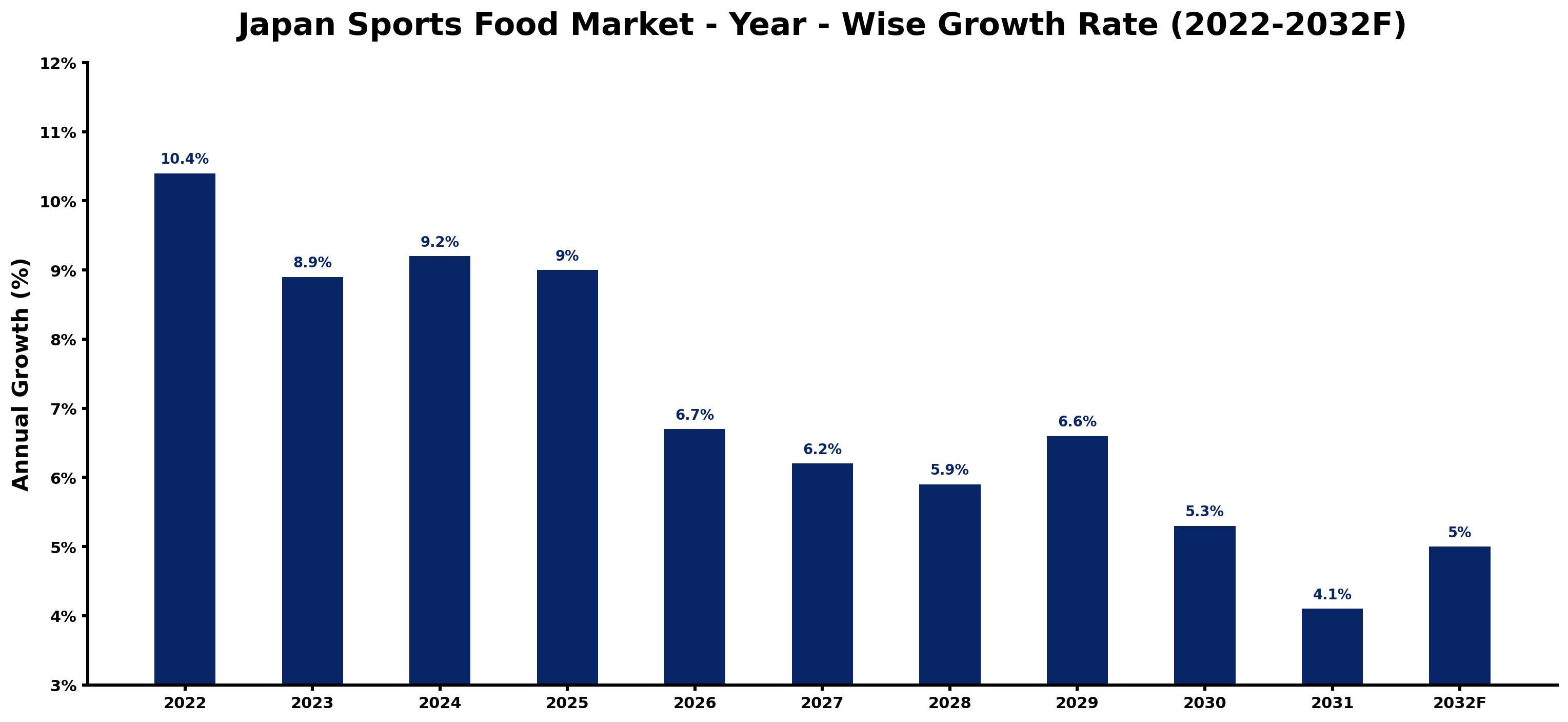
Each row of the following table gives one year's estimated growth and the event or demand shift that explains it.
| Year | Estimated Annual Growth (%) | Market Rationale |
| 2022 | 10.4 | The market experienced strong demand due to heightened awareness of sports nutrition following the Tokyo 2020 Olympic Games. |
| 2023 | 8.9 | Growth slowed as the market adjusted after the previous year's peak performance. |
| 2024 | 9.2 | Demand increased with more gym-goers seeking effective recovery solutions and energy replenishment. |
| 2025 | 9.0 | Growth slowed again as market saturation began to affect purchasing patterns among consumers. |
| 2026 | 6.7 | The market is expected to see a slowdown as consumers become more selective in their sports food choices. |
| 2027 | 6.2 | Growth will continue to slow as competition intensifies among various product types. |
| 2028 | 5.9 | Demand is projected to slow further as consumers shift focus towards plant-based options in sports nutrition. |
| 2029 | 6.6 | Growth is expected to pick up again as urban runners increase their consumption of energy bars and hydration products. |
| 2030 | 5.3 | A slowdown will occur as the market begins to stabilise after fluctuations in demand. |
| 2031 | 4.1 | Growth will slow further as the market matures and consumer preferences become more defined. |
| 2032 | 5.0 | Demand is expected to rise again as new innovations in sports food attract attention. |
Note: Market size estimations and growth projections presented in this report are based on 6Wresearch's proprietary forecasting methodology, utilizing the latest available industry data, government publications, and primary research inputs.
Japan Sports Food Market Synopsis
Sports food encompasses nutritional products aimed at improving athletic performance and recovery, primarily made from proteins, carbohydrates, and electrolytes. Japan's sports food market is valued at approximately 200 billion yen, driven by a growing population of gym-goers, estimated at 10 million. Increased awareness of nutrition, particularly following the Tokyo 2020 Olympic Games, has led to higher consumption rates, with the average athlete consuming 2-3 servings daily. The demand for protein powders, which account for 40% of the market, is particularly strong, supported by urban runners and fitness enthusiasts.
Market Dynamics Impact Analysis (2026–2032)
| Factor | Type | Impact | Primary Segment Affected |
| Growing population of gym-goers | Driver | High | Gym-Goers |
| Increased awareness of sports nutrition | Driver | High | Athletes |
| Rising demand for plant-based sports food | Opportunity | Medium | Protein Powders |
| Expansion of sports nutrition education initiatives | Opportunity | Medium | Energy Bars |
| High competition among product types | Restraint | High | Electrolyte Drinks |
| Market saturation affecting growth rates | Restraint | High | Creatine Products |
| Rising costs of raw materials | Challenge | High | Protein Powders |
| Regulatory compliance for food safety standards | Challenge | Medium | Energy Bars |
Evaluation of Drivers in Japan Sports Food Market (2026–2032)
The factors lifting demand, and the evidence behind each, are summarised below.
| Drivers | Primary Segment Affected | Why It Matters (Evidence) |
| Increase in gym memberships | Gym-Goers | With approximately 10 million gym-goers in Japan, demand for sports food products has surged as fitness enthusiasts seek effective nutrition solutions. |
| Growing popularity of endurance sports | Runners & Cyclists | The rise in running events and cycling competitions has led to higher consumption of energy bars and electrolyte drinks for hydration and energy. |
| Focus on muscle recovery | Muscle Recovery | The average athlete consumes 2-3 servings of sports food daily, driving demand for products that aid in recovery after workouts. |
| Awareness from major sporting events | Athletes | Major sporting events have boosted awareness of sports nutrition, leading to increased sales of various sports food products. |
| Shift towards convenience in formats | Powder Mix | Consumers prefer convenient formats like powder mixes, which accounted for a large share of the market, facilitating easy consumption. |
Most of the extra volume comes from the increasing number of gym-goers, estimated at 10 million, who are actively seeking effective recovery solutions. This demographic drives demand for protein powders, which hold a 40% market share, as they are essential for muscle recovery. The growing popularity of endurance sports, particularly among urban runners, has led to a rise in the consumption of energy bars and electrolyte drinks. The average athlete consumes 2-3 servings of sports food daily, reflecting a shift towards healthier lifestyles. Awareness from major sporting events has also influenced purchasing behaviour, promoting a greater focus on nutrition.
Evaluation of Restraints in Japan Sports Food Market
The table below lists the restraints and the evidence behind each.
| Market Restraint | Primary Segment Affected | Why It Matters (Evidence) |
| High competition impacting pricing strategies | Electrolyte Drinks | Intense competition among brands has resulted in price wars, affecting profitability for producers and limiting investment in innovation. |
| Market saturation limiting growth potential | Creatine Products | As the market matures, saturation has led to slower growth rates, making it challenging for new entrants to gain market share. |
| Rising costs of raw materials | Protein Powders | The increasing costs of key ingredients have pressured margins, impacting pricing strategies for producers in the sports food sector. |
| Regulatory compliance challenges | Energy Bars | Producers face stringent regulatory requirements, such as those under the Food Sanitation Act, which can delay product launches. |
| Consumer preference shifts towards plant-based options | Muscle Recovery | As consumers increasingly favour plant-based products, traditional protein sources may see reduced demand, affecting sales. |
Japan Sports Food Market Challenges
Japan's sports food market faces compliance challenges with ISO 22000, which can delay product launches for producers by up to six months, limiting new options for buyers. A shortage of registered sports nutritionists, currently at over 1,000, restricts producers' ability to develop tailored products, reducing choices for consumers. Many producers rely on outdated technology, causing delays in product availability for buyers seeking modern solutions. Increased competition from imported products pressures local producers to cut prices, potentially shrinking profit margins by 15%, which threatens the sustainability of local brands for consumers.
Trends in the Japan Sports Food Market
The shifts below are changing how Japan Sports Food Market products are bought and supplied.
- Shift Towards Plant-Based Sports Foods: The Japanese market is experiencing a shift towards plant-based sports foods, with consumers increasingly preferring these options for health reasons. In 2023, the number of plant-based sports food products increased by 15%, reflecting changing consumer preferences.
- Increase in On-the-Go Nutrition Formats: There is a noticeable increase in demand for on-the-go nutrition formats, particularly among urban runners. Energy bars have seen a surge in popularity, with sales rising by 20% in 2023, catering to the busy lifestyles of consumers.
- Growing Focus on Hydration Solutions: The focus on hydration solutions is intensifying, especially during summer months when electrolyte drinks become essential. In 2023, sales of electrolyte drinks increased by 25% as athletes prioritise hydration during intense physical activities.
- Rise in Sports Nutrition Education Initiatives: The Japan Dietetic Association has ramped up efforts in sports nutrition education, promoting awareness among athletes and fitness enthusiasts. In 2023, over 1,000 registered sports nutritionists were active in Japan, enhancing knowledge and product usage.
Investment Opportunities in the Japan Sports Food Market
Investors looking at the Japan Sports Food Market should consider the following areas.
- Partnerships with Local Gyms: Establishing partnerships with local gyms can facilitate product introductions, especially for protein powders. With 10 million gym-goers, this presents a notable market opportunity for suppliers.
- Investment in Plant-Based Products: With the market for plant-based sports foods growing by 15%, investing in this segment offers a lucrative opportunity. Runners and cyclists are particularly interested in these healthier options.
- Expansion of Online Sales Channels: The rise of e-commerce provides a pathway for reaching consumers directly. In 2023, online sales of sports food products increased by 30%, highlighting the potential for growth.
- Development of Innovative Hydration Solutions: Investing in innovative hydration solutions can meet the needs of athletes during summer months. The increasing demand for electrolyte drinks indicates a gap that can be filled by suppliers.
Government Initiatives in the Japan Sports Food Market
The Food Sanitation Act amendment of 2018, fully applied in June 2021, mandates HACCP-based hygiene management for food businesses, ensuring higher safety standards for sports food producers. Compliance with this law requires manufacturers to implement rigorous safety protocols, which can increase operational costs but ultimately boosts consumer trust in sports nutrition products.
The Ministry of Health, Labour and Welfare oversees the approval of nutrition education programmes, which aim to promote healthy eating habits through sports nutrition. This agency supports initiatives that educate consumers about sports food benefits, contributing to a more informed market and potentially increasing demand for compliant products.
Future Insight of the Japan Sports Food Market
The launch of new nutrition education programmes will enhance producers' capabilities to meet evolving consumer demands. By 2032, advancements in food technology, such as enhanced processing methods, will improve product quality and diversity, benefiting consumers. A government initiative aimed at boosting sports participation will drive demand for nutrition products, particularly in urban centres. The Tokyo region is poised to experience a rise in plant-based options, appealing to the growing health-conscious segment of the population.
Market Segmentation Analysis
Japan Sports Food Market report covers a detailed analysis of the following market segments:
By Product Type – Protein Powders Lead, Electrolyte Drinks Expected to Grow Fastest
According to Saurav Kr Singh, Senior Research Analyst at 6Wresearch, with 44% of product type revenue in 2025, Protein Powders was the largest category. Protein powders dominate the market as they are widely utilised by fitness enthusiasts for muscle recovery and strength building. This segment's significance is highlighted by the average athlete consuming 2-3 servings daily, reinforcing its strong foothold in Japan. The quickest growth will come from Electrolyte Drinks, forecast to expand at a CAGR of 7.6% between 2026 and 2032. Electrolyte drinks are experiencing rapid growth due to their essential role in hydration during intense physical activities, particularly in summer. The increasing population of gym-goers, estimated at 10 million, is driving the demand for these hydration solutions. Suppliers should focus on developing electrolyte drink products to address the rising demand from active consumers.
By Nutrition Focus – Muscle Recovery Leads, Hydration Support Expected to Grow Fastest
The largest nutrition focus category in 2025 was Muscle Recovery, at 47% of revenue. Muscle recovery is the leading focus as it is critical for post-exercise recovery among athletes, ensuring they can perform at their best. The Ministry of Health, Labour and Welfare's promotion of healthy eating through sports nutrition further solidifies this segment's importance. Over 2026–2032, Hydration Support is expected to post the fastest growth, at a CAGR of 7.2%. Hydration support is growing rapidly, driven by the vital need for maintaining fluid balance during exercise, especially in urban environments. The increasing popularity of running and cycling among fitness enthusiasts is propelling this segment's growth. Buyers will benefit from a wider range of hydration support products as suppliers respond to the rising demand.
By Format – Powder Mix Leads, Liquid/Powder Expected to Grow Fastest
Powder Mix accounted for 38% of the market by format in 2025. Powder mix formats are the most popular due to their ease of consumption and customization options, appealing to a broad range of users. This format aligns well with the preferences of gym-goers who seek convenience in their nutrition. Liquid/Powder is projected to grow fastest, at a CAGR of 7.9% during 2026–2032. Liquid/powder formats are gaining traction as they offer versatile solutions for hydration and nutrition, catering to the needs of active individuals. The rising trend of on-the-go consumption among fitness enthusiasts is fuelling this growth. Suppliers should consider expanding their product lines to include more liquid/powder options to meet changing consumer preferences.
By End User – Gym-Goers Lead, Runners & Cyclists Expected to Grow Fastest
Gym-Goers held 54% of the Japan Sports Food Market by end user in 2025. Gym-goers represent the largest segment of sports food consumers, actively seeking nutritional products to enhance their exercise routines. This group, with an average age of 35, is particularly committed to optimising their performance and recovery through dietary choices. Runners & Cyclists are set to record the highest CAGR in this split, 7.1% over 2026–2032. Runners and cyclists are the fastest-growing user segment, motivated by their need for energy and hydration during physical exertion. The growing participation in running events and cycling activities is significantly influencing this segment's growth trajectory. Suppliers should tailor their offerings to meet the specific needs of runners and cyclists.
Key Attractiveness of the Report
- 10 Years of Market Numbers
- Historical Data Starting from 2022 to 2025
- Base Year 2025
- Forecast Data until 2032
- Key Performance Indicators Impacting the Market
- Major Upcoming Developments and Projects
Key Highlights of the Report:
- Japan Sports Food Market Outlook
- Market Size of Japan Sports Food Market, 2025
- Forecast of Japan Sports Food Market, 2032
- Historical Data and Forecast of Japan Sports Food Revenues & Volume for the Period 2022-2032F
- Japan Sports Food Market Trend Evolution
- Japan Sports Food Market Drivers and Challenges
- Japan Sports Food Price Trends
- Japan Sports Food Porter's Five Forces
- Japan Sports Food Industry Life Cycle
- Historical Data and Forecast of Japan Sports Food Market Revenues & Volume By Product Type for the Period 2022-2032F
- Historical Data and Forecast of Japan Sports Food Market Revenues & Volume By Protein Powders for the Period 2022-2032F
- Historical Data and Forecast of Japan Sports Food Market Revenues & Volume By Energy Bars for the Period 2022-2032F
- Historical Data and Forecast of Japan Sports Food Market Revenues & Volume By Electrolyte Drinks for the Period 2022-2032F
- Historical Data and Forecast of Japan Sports Food Market Revenues & Volume By Creatine Products for the Period 2022-2032F
- Historical Data and Forecast of Japan Sports Food Market Revenues & Volume By Nutrition Focus for the Period 2022-2032F
- Historical Data and Forecast of Japan Sports Food Market Revenues & Volume By Muscle Recovery for the Period 2022-2032F
- Historical Data and Forecast of Japan Sports Food Market Revenues & Volume By Pre-Workout Energy for the Period 2022-2032F
- Historical Data and Forecast of Japan Sports Food Market Revenues & Volume By Hydration Support for the Period 2022-2032F
- Historical Data and Forecast of Japan Sports Food Market Revenues & Volume By Power & Strength for the Period 2022-2032F
- Historical Data and Forecast of Japan Sports Food Market Revenues & Volume By Format for the Period 2022-2032F
- Historical Data and Forecast of Japan Sports Food Market Revenues & Volume By Powder Mix for the Period 2022-2032F
- Historical Data and Forecast of Japan Sports Food Market Revenues & Volume By Bar for the Period 2022-2032F
- Historical Data and Forecast of Japan Sports Food Market Revenues & Volume By Liquid/Powder for the Period 2022-2032F
- Historical Data and Forecast of Japan Sports Food Market Revenues & Volume By Capsules/Powders for the Period 2022-2032F
- Historical Data and Forecast of Japan Sports Food Market Revenues & Volume By End User for the Period 2022-2032F
- Historical Data and Forecast of Japan Sports Food Market Revenues & Volume By Gym-Goers for the Period 2022-2032F
- Historical Data and Forecast of Japan Sports Food Market Revenues & Volume By Runners & Cyclists for the Period 2022-2032F
- Historical Data and Forecast of Japan Sports Food Market Revenues & Volume By Athletes for the Period 2022-2032F
- Historical Data and Forecast of Japan Sports Food Market Revenues & Volume By Bodybuilders for the Period 2022-2032F
- Japan Sports Food Import Export Trade Statistics
- Market Opportunity Assessment By Product Type
- Market Opportunity Assessment By Nutrition Focus
- Market Opportunity Assessment By Format
- Market Opportunity Assessment By End User
- Japan Sports Food Top Companies Market Share
- Japan Sports Food Competitive Benchmarking By Technical and Operational Parameters
- Japan Sports Food Company Profiles
- Japan Sports Food Key Strategic Recommendations
Market Covered
The following segment groups are covered in the report.
By Product Type
- Protein Powders
- Energy Bars
- Electrolyte Drinks
- Creatine Products
By Nutrition Focus
- Muscle Recovery
- Pre-Workout Energy
- Hydration Support
- Power & Strength
By Format
- Powder Mix
- Bar
- Liquid/Powder
- Capsules/Powders
By End User
- Gym-Goers
- Runners & Cyclists
- Athletes
- Bodybuilders































