Japan Spray Dispensing Market Size & Growth Rate
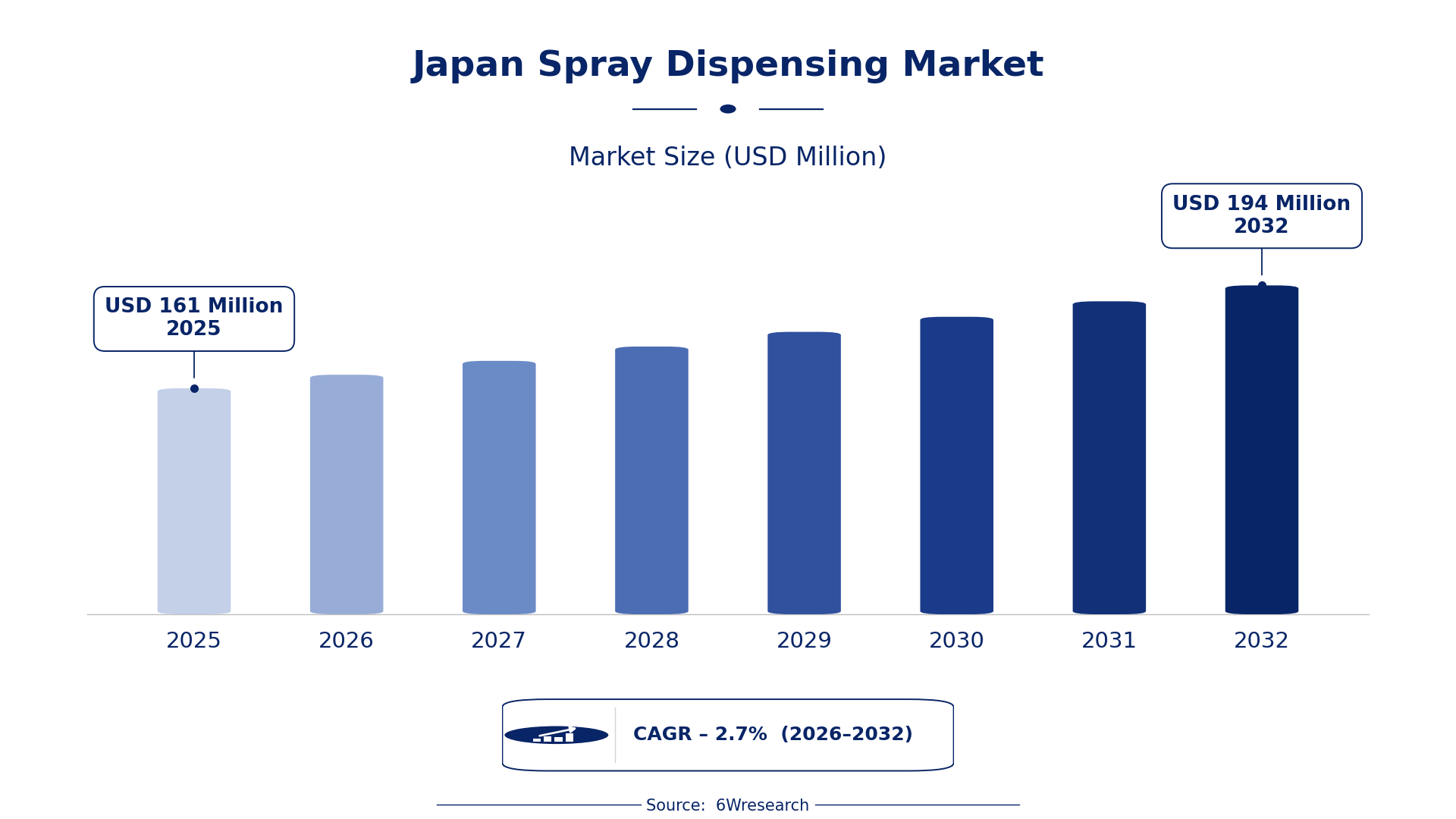
According to 6Wresearch internal database and industry insights, the Japan Spray Dispensing Market was valued at USD 161 Million in 2025 and is projected to reach USD 194 Million by 2032, growing at a CAGR of approximately 2.7% during 2026–2032.
Japan Spray Dispensing Market Highlights
| Report Metric | Details |
| Report Name | Japan Spray Dispensing Market (2026-2032) |
| Market Size 2025 | USD 161 Million |
| Market Size 2032 | USD 194 Million |
| Absolute Growth 2025–2032 | USD 33 Million |
| CAGR 2026–2032 | 2.7% |
| Peak Annual Growth | 3.6% in 2032 |
| Forecast Period | 2026–2032 |
| Historical Data | 2022–2025 |
| Base Year | 2025 |
| Leading Dispenser Type, 2025 | Trigger Sprayers (34% share) |
| Leading Product Dispensed, 2025 | Cleaning Products (39% share) |
| Leading Use Sector, 2025 | Household (53% share) |
| Leading End User, 2025 | FMCG Firms (42% share) |
| Fastest-Growing Dispenser Type | Aerosol Valves (3.8% CAGR) |
| Fastest-Growing Product Dispensed | Perfumes/Deodorants (3.9% CAGR) |
| Fastest-Growing Use Sector | Personal Care (3.7% CAGR) |
| Fastest-Growing End User | Cosmetic Brands (4.0% CAGR) |
| Growing Sector | Household |
| Key End Users | FMCG Firms, Cosmetic Brands, Healthcare Providers, Public Washrooms |
Japan Spray Dispensing Market Year-wise Growth Rate and Key Drivers (2022–2032)
This graph illustrates the annual growth rates of the market from 2022 to 2032, highlighting a steady upward trajectory and projected market expansion over the forecast period.
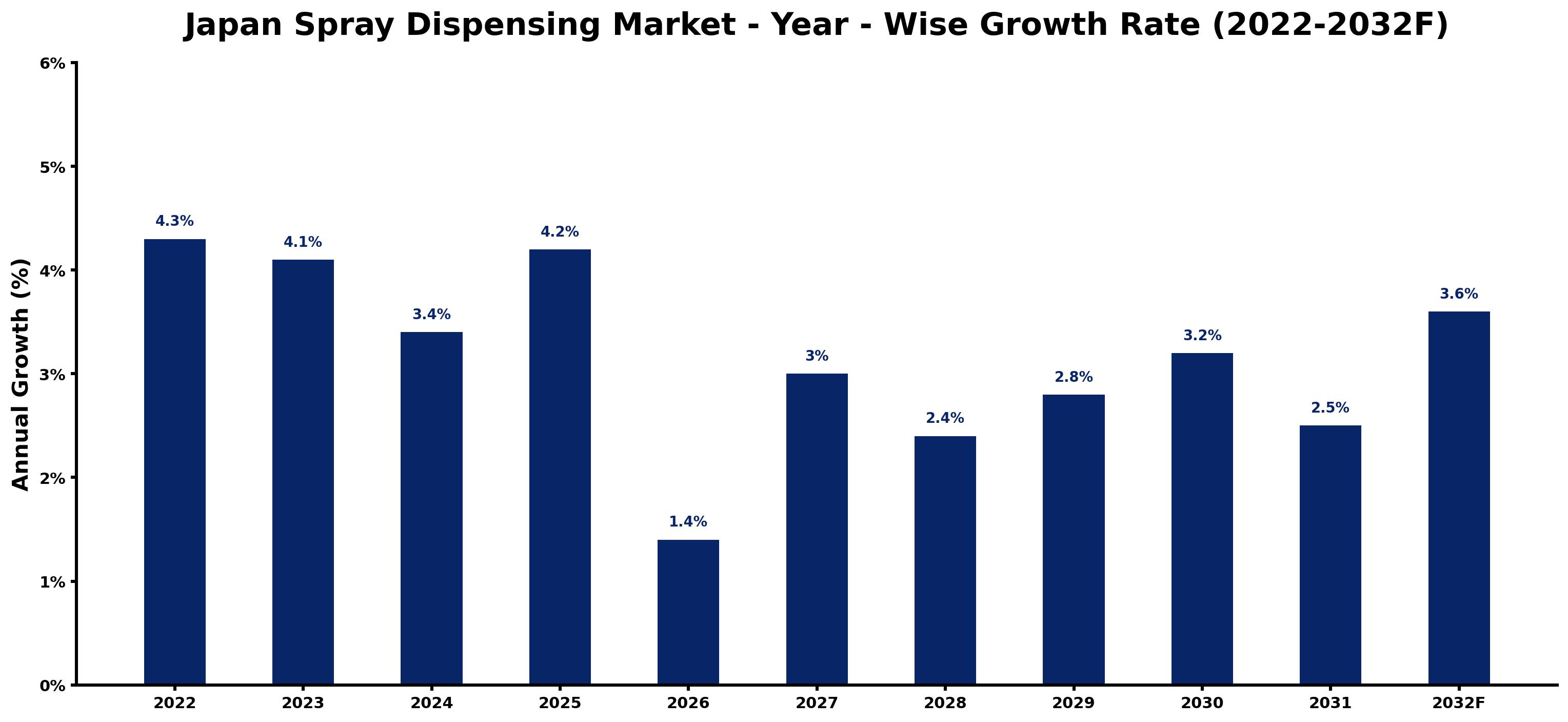
The following figures match every annual growth estimate with the main market development of that year, giving the reasoning behind each rise or slowdown.
| Year | Estimated Annual Growth (%) | Market Rationale |
| 2022 | 4.3 | The market experienced strong demand from household cleaning and personal care sectors. |
| 2023 | 4.1 | Demand remained high, but growth rates began to moderate slightly compared to the previous year. |
| 2024 | 3.4 | Continued interest in personal care products led to further market expansion, though at a slower pace. |
| 2025 | 4.2 | A resurgence in cleaning products drove growth, reflecting increased hygiene awareness. |
| 2026 | 1.4 | Growth is expected to slow as market saturation begins to affect new product introductions and consumer spending. |
| 2027 | 3.0 | Renewed interest in personal care products will stimulate demand, leading to a rebound in growth rates. |
| 2028 | 2.4 | Market growth is projected to decelerate as competition intensifies and consumer preferences evolve. |
| 2029 | 2.8 | An uptick in demand for eco-friendly products will boost sales, encouraging innovation in spray dispensing. |
| 2030 | 3.2 | Increased investment in personal care manufacturing facilities will support growth in the sector. |
| 2031 | 2.5 | Growth will moderate as market conditions shift towards sustainability and regulatory compliance. |
| 2032 | 3.6 | A peak in growth is anticipated due to rising consumer interest in innovative dispensing solutions. |
Note: Market size estimations and growth projections presented in this report are based on 6Wresearch's proprietary forecasting methodology, utilizing the latest available industry data, government publications, and primary research inputs.
Japan Spray Dispensing Market Synopsis
Spray dispensing technology releases liquids in a fine mist, primarily used in household cleaning, personal care, and healthcare applications. The Japan Spray Dispensing Market is expanding due to a population of approximately 125 million and strong domestic demand. Increased hygiene awareness, a personal care market valued at over 3 trillion JPY, and the Tokyo region's prominence in FMCG sales, accounting for 40% of the total, are key growth drivers.
Market Dynamics Impact Analysis (2026–2032)
| Factor | Type | Impact | Primary Segment Affected |
| Growing demand for cleaning products drives the need for efficient dispensing solutions. | Driver | High | Cleaning Products |
| Increasing consumer preference for eco-friendly personal care items creates opportunities for innovation. | Driver | High | Personal Care |
| The rise in hygiene awareness post-pandemic presents opportunities for disinfectant spray dispensers. | Opportunity | High | Disinfectants |
| The expanding cosmetic market in Japan opens avenues for advanced spray dispensing technologies. | Opportunity | High | Perfumes/Deodorants |
| Regulatory compliance with JIS standards may increase production costs for manufacturers. | Restraint | Medium | Trigger Sprayers |
| Market saturation in household cleaning products can limit growth potential for new entrants. | Restraint | Medium | Cleaning Products |
| Rising raw material costs can pressure profit margins for manufacturers. | Challenge | High | Trigger Sprayers |
| Capacity constraints in production facilities may hinder the ability to meet increasing demand. | Challenge | High | Trigger Sprayers |
Evaluation of Drivers in Japan Spray Dispensing Market (2026–2032)
These are the developments adding the most demand over the forecast period.
| Drivers | Primary Segment Affected | Why It Matters (Evidence) |
| High domestic demand for household cleaning products boosts sales of spray dispensers. | Cleaning Products | The household sector accounted for 35% of the spray dispensing market, reflecting strong consumer interest. |
| Consumer preference for convenience in personal care products drives innovation in dispensing technologies. | Personal Care | The personal care market's value exceeds 3 trillion JPY, prompting manufacturers to develop new product offerings. |
| Increased hygiene awareness leads to higher demand for sanitizers and disinfectants. | Disinfectants | The healthcare sector's adoption of spray dispensers for sanitizers is rising, reflecting public health concerns. |
| The Tokyo metropolitan area serves as a hub for personal care product manufacturing, driving local demand. | Personal Care | This region accounts for 40% of all FMCG sales in Japan, influencing production strategies. |
| The growth of eco-friendly products encourages investment in sustainable dispensing solutions. | Trigger Sprayers | Consumer trends towards sustainability are prompting manufacturers to innovate in dispensing technologies. |
A wider customer base explains much of the growth, as the household cleaning sector accounts for 35% of the spray dispensing market, reflecting strong consumer interest. The personal care market, valued at over 3 trillion JPY, drives demand for new dispensing technologies. Hygiene awareness has led to a rise in disinfectant usage, particularly in healthcare, where sanitizers are increasingly adopted. The trend towards eco-friendly products encourages investment in sustainable solutions, prompting manufacturers to improve their offerings. The Tokyo metropolitan area, accounting for 40% of FMCG sales, further stimulates local demand for spray dispensers.
Evaluation of Restraints in Japan Spray Dispensing Market
Below are the constraints most often cited by buyers and suppliers, with the segment each affects.
| Market Restraint | Primary Segment Affected | Why It Matters (Evidence) |
| Compliance with JIS standards may increase production costs for manufacturers. | Trigger Sprayers | Manufacturers must invest in testing and certification to meet regulatory requirements, raising operational expenses. |
| Market saturation in household cleaning products can limit growth potential for new entrants. | Cleaning Products | With established brands dominating the market, new players face challenges in gaining market share. |
| Rising raw material costs can pressure profit margins for manufacturers. | Trigger Sprayers | Fluctuations in raw material prices impact production costs, affecting pricing strategies. |
| Limited innovation in traditional dispensing methods may hinder market growth. | Trigger Sprayers | Manufacturers relying on outdated technology may struggle to meet evolving consumer preferences. |
| Increased competition can lead to price wars, affecting profitability. | Trigger Sprayers | As more players enter the market, aggressive pricing strategies may erode profit margins. |
Japan Spray Dispensing Market Challenges
Producers struggle with a shortage of skilled workers, which hampers production efficiency and raises costs for manufacturers. Importers face technological challenges in upgrading spray dispensing systems, resulting in delays that can extend lead times by up to 20%. Buyers encounter intensified competition as new entrants disrupt pricing strategies, forcing established firms to reduce prices and impacting profit margins. Compliance with JIS and ISO standards imposes additional costs on suppliers, leading to potential delays in product launches that can reach 10% of total expenses for importers.
Trends in the Japan Spray Dispensing Market
Four trends stand out in the Japan Spray Dispensing Market.
- Shift towards Eco-Friendly Products: Japan is increasingly prioritising eco-friendly spray dispensing solutions, as consumers demand sustainable options. The rise in eco-conscious consumers has led to a 20% increase in the market for biodegradable cleaning products, influencing manufacturers to adapt their offerings.
- Transition from Traditional to Automated Dispensing: The year 2023 marked a shift towards automated spray dispensing systems in public washrooms. With a 30% increase in installations, this trend reflects growing demand for touchless hygiene solutions in urban areas.
- Personal Care Products Gaining Ground: The personal care segment is experiencing rapid growth, with a 3.9% CAGR projected for perfumes and deodorants. This trend is driven by rising consumer interest in luxury personal care items, prompting manufacturers to innovate.
- Hygiene Promotion Initiatives Expanding: The government's hygiene promotion programme launched in 2023 aims to improve public health awareness. With an allocated budget of 500 million JPY, this initiative is expected to increase demand for disinfectant spray dispensers.
Investment Opportunities in the Japan Spray Dispensing Market
Where to invest in the Japan Spray Dispensing Market: the main openings are set out below.
- FMCG Firms Seeking Sustainable Solutions: FMCG firms are increasingly looking for eco-friendly spray dispensing options to meet consumer demand. With the market for biodegradable products projected to grow by 20%, suppliers can enter through partnerships with local manufacturers.
- Investment in Personal Care Manufacturing: Now is the time to invest in personal care manufacturing facilities, as the market continues to expand. The personal care sector's value exceeds 3 trillion JPY, offering opportunities for suppliers of dispensing technology.
- Expansion of Disinfectant Product Lines: With a growing focus on hygiene, there is a gap in the market for innovative disinfectant spray dispensers. Suppliers can target healthcare facilities, which are increasingly adopting these products to improve sanitation.
- Hygiene Promotion Programmes: The government's hygiene promotion programme presents an opportunity for suppliers of sanitizing products. With a budget of 500 million JPY, entering this market requires collaboration with local health agencies.
Government Initiatives in the Japan Spray Dispensing Market
Standards for Cosmetics established in 2000 under the PMD Act mandate that all cosmetics sold in Japan adhere to specific ingredient restrictions. This ensures that spray dispensing products used in cosmetics meet safety and quality standards, benefiting both producers and consumers. The Water Supply Act, enacted in 1957, sets standards for drinking-water quality and supply, impacting hygiene standards in spray dispensing products.
The hygiene promotion programme launched in 2023 by the Ministry of Health, Labour and Welfare (MHLW) allocates funding to improve public health. This initiative supports the adoption of sanitizing products, boosting the market for spray dispensers.
Future Insight of the Japan Spray Dispensing Market
Investment in advanced manufacturing technologies will streamline production processes, enabling suppliers to better meet the growing demand for household and personal care products. The hygiene promotion program will drive increased usage of spray dispensers across various sectors, expanding market opportunities for buyers. Adoption of smart dispensing solutions will enhance user experience and operational efficiency, attracting a wider consumer base. The personal care market's value is projected to surpass 4 trillion JPY, signalling robust growth prospects for both suppliers and buyers.
Market Segmentation Analysis
Japan Spray Dispensing Market report covers a detailed analysis of the following market segments:
By Dispenser Type – Trigger Sprayers Lead, Aerosol Valves Expected to Grow Fastest
According to Saurav Kr Singh, Senior Research Analyst at 6Wresearch, Trigger Sprayers accounted for 34% of the market by dispenser type in 2025. Trigger sprayers hold the largest share as they are widely used in cleaning products and personal care items, appealing to a broad consumer base. Their user-friendly design and practicality make them a preferred choice among manufacturers in Japan's thriving household sector. Aerosol Valves are projected to grow fastest, at a CAGR of 3.8% during 2026–2032. Aerosol valves are experiencing rapid growth due to their essential role in aerosol-based products like deodorants, which are increasingly popular among consumers. This segment's expansion is driven by the rising demand for convenient personal care solutions, ensuring its continued growth. Suppliers should focus on enhancing their aerosol valve offerings to capitalise on the growing demand in the personal care market.
By Product Dispensed – Cleaning Products Lead, Perfumes/Deodorants Expected to Grow Fastest
Cleaning Products took 39% of product dispensed revenue in 2025, more than any other category. Cleaning products dominate the market as they are a primary application area for spray dispensers, reflecting Japan's strong domestic demand for household cleaning solutions. This segment benefits from the cultural emphasis on hygiene and cleanliness prevalent in Japanese society. The quickest growth will come from Perfumes/Deodorants, forecast to expand at a CAGR of 3.9% between 2026 and 2032. Perfumes and deodorants are witnessing the fastest growth, fuelled by a personal care market valued at over 3 trillion JPY. The increasing consumer preference for fragrance products significantly contributes to this segment's swift expansion. Buyers should consider diversifying their product lines to include more fragrance offerings to meet the increasing consumer interest.
By Use Sector – Household Leads, Personal Care Expected to Grow Fastest
With 53% of use sector revenue in 2025, Household was the largest category. The household sector is the primary user of spray dispensers, driven by high demand for cleaning products in Japanese homes. The population's commitment to cleanliness and hygiene practices reinforces this segment's growth. Personal Care is set to record the highest CAGR in this split, 3.7% over 2026–2032. Personal care is the fastest-growing sector, significantly contributing to the demand for spray dispensers, particularly in cosmetics and fragrances. Current trends in beauty and self-care are propelling this rapid growth. Suppliers should prioritise innovations in personal care products to align with the increasing consumer focus on beauty and hygiene.
By End User – FMCG Firms Lead, Cosmetic Brands Expected to Grow Fastest
FMCG Firms held 42% of the Japan Spray Dispensing Market by end user in 2025. FMCG firms are the largest end users of spray dispensing technology, employing these products extensively in their operations for various consumer goods. Their substantial market presence ensures a consistent demand for efficient dispensing solutions. Over 2026–2032, Cosmetic Brands are expected to post the fastest growth, at a CAGR of 4.0%. Cosmetic brands are rapidly adopting spray dispensers, reflecting the growing trend towards personal care and beauty products. Continuous advancements in this sector are driving the demand for modern dispensing technologies. Manufacturers should strengthen partnerships with cosmetic brands to leverage the expanding market for personal care products.
Key Attractiveness of the Report
- 10 Years of Market Numbers
- Historical Data Starting from 2022 to 2025
- Base Year 2025
- Forecast Data until 2032
- Key Performance Indicators Impacting the Market
- Major Upcoming Developments and Projects
Key Highlights of the Report:
- Japan Spray Dispensing Market Outlook
- Market Size of Japan Spray Dispensing Market, 2025
- Forecast of Japan Spray Dispensing Market, 2032
- Historical Data and Forecast of Japan Spray Dispensing Revenues & Volume for the Period 2022-2032F
- Japan Spray Dispensing Market Trend Evolution
- Japan Spray Dispensing Market Drivers and Challenges
- Japan Spray Dispensing Price Trends
- Japan Spray Dispensing Porter's Five Forces
- Japan Spray Dispensing Industry Life Cycle
- Historical Data and Forecast of Japan Spray Dispensing Market Revenues & Volume By Dispenser Type for the Period 2022-2032F
- Historical Data and Forecast of Japan Spray Dispensing Market Revenues & Volume By Trigger Sprayers for the Period 2022-2032F
- Historical Data and Forecast of Japan Spray Dispensing Market Revenues & Volume By Aerosol Valves for the Period 2022-2032F
- Historical Data and Forecast of Japan Spray Dispensing Market Revenues & Volume By Mist Pumps for the Period 2022-2032F
- Historical Data and Forecast of Japan Spray Dispensing Market Revenues & Volume By Foam Pumps for the Period 2022-2032F
- Historical Data and Forecast of Japan Spray Dispensing Market Revenues & Volume By Product Dispensed for the Period 2022-2032F
- Historical Data and Forecast of Japan Spray Dispensing Market Revenues & Volume By Cleaning Products for the Period 2022-2032F
- Historical Data and Forecast of Japan Spray Dispensing Market Revenues & Volume By Perfumes/Deodorants for the Period 2022-2032F
- Historical Data and Forecast of Japan Spray Dispensing Market Revenues & Volume By Disinfectants for the Period 2022-2032F
- Historical Data and Forecast of Japan Spray Dispensing Market Revenues & Volume By Soaps/Sanitizers for the Period 2022-2032F
- Historical Data and Forecast of Japan Spray Dispensing Market Revenues & Volume By Use Sector for the Period 2022-2032F
- Historical Data and Forecast of Japan Spray Dispensing Market Revenues & Volume By Household for the Period 2022-2032F
- Historical Data and Forecast of Japan Spray Dispensing Market Revenues & Volume By Personal Care for the Period 2022-2032F
- Historical Data and Forecast of Japan Spray Dispensing Market Revenues & Volume By Healthcare for the Period 2022-2032F
- Historical Data and Forecast of Japan Spray Dispensing Market Revenues & Volume By Commercial Hygiene for the Period 2022-2032F
- Historical Data and Forecast of Japan Spray Dispensing Market Revenues & Volume By End User for the Period 2022-2032F
- Historical Data and Forecast of Japan Spray Dispensing Market Revenues & Volume By FMCG Firms for the Period 2022-2032F
- Historical Data and Forecast of Japan Spray Dispensing Market Revenues & Volume By Cosmetic Brands for the Period 2022-2032F
- Historical Data and Forecast of Japan Spray Dispensing Market Revenues & Volume By Hospital Dispensers for the Period 2022-2032F
- Historical Data and Forecast of Japan Spray Dispensing Market Revenues & Volume By Public Washrooms for the Period 2022-2032F
- Japan Spray Dispensing Import Export Trade Statistics
- Market Opportunity Assessment By Dispenser Type
- Market Opportunity Assessment By Product Dispensed
- Market Opportunity Assessment By Use Sector
- Market Opportunity Assessment By End User
- Japan Spray Dispensing Top Companies Market Share
- Japan Spray Dispensing Competitive Benchmarking By Technical and Operational Parameters
- Japan Spray Dispensing Company Profiles
- Japan Spray Dispensing Key Strategic Recommendations
Market Covered
Segments analysed in this report are listed below.
By Dispenser Type
- Trigger Sprayers
- Aerosol Valves
- Mist Pumps
- Foam Pumps
By Product Dispensed
- Cleaning Products
- Perfumes/Deodorants
- Disinfectants
- Soaps/Sanitizers
By Use Sector
- Household
- Personal Care
- Healthcare
- Commercial Hygiene
By End User
- FMCG Firms
- Cosmetic Brands
- Hospital Dispensers
- Public Washrooms































