Japan Squeeze Tube Market Size & Growth Rate
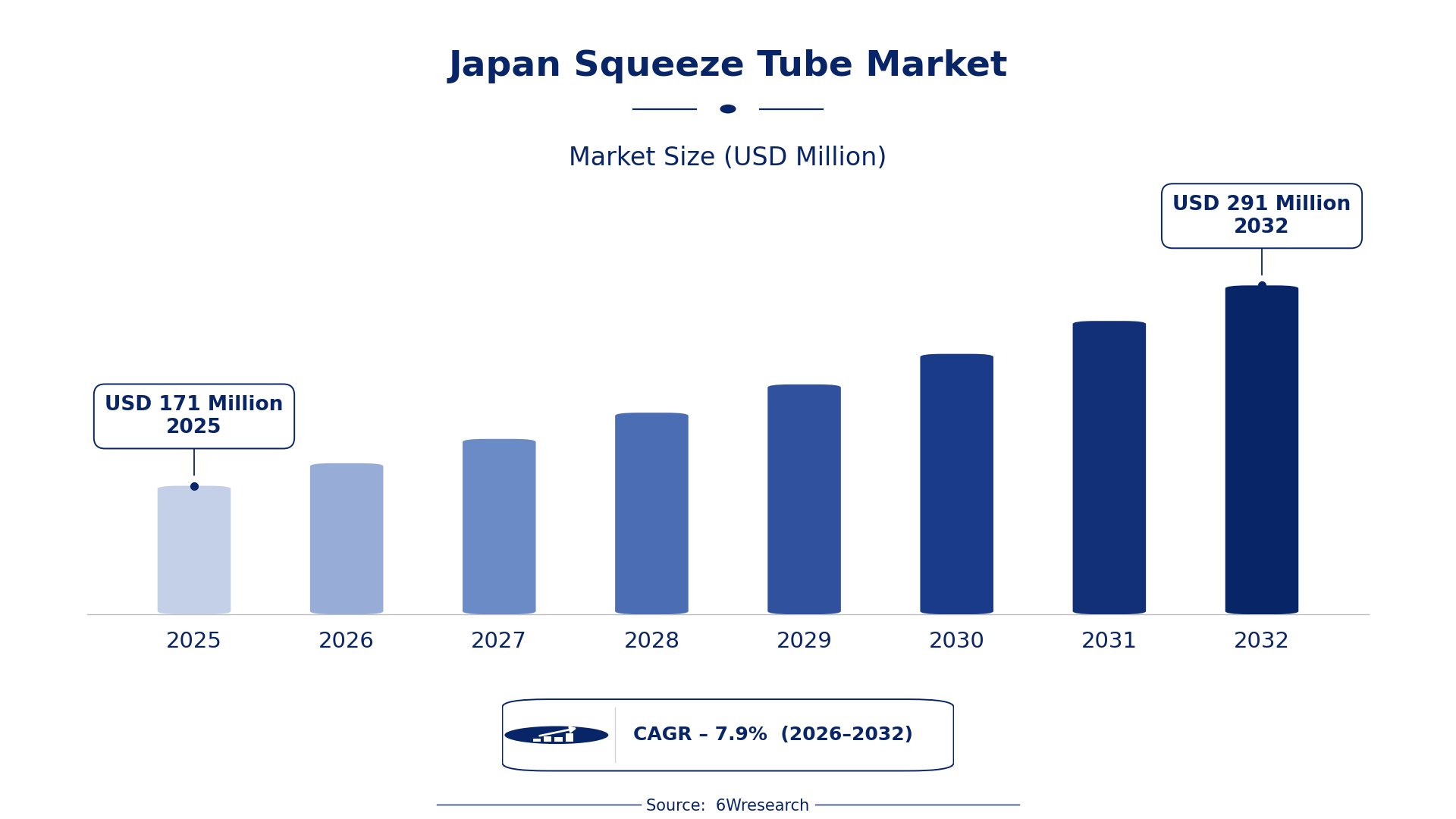
According to 6Wresearch internal database and industry insights, the Japan Squeeze Tube Market was valued at USD 171 Million in 2025 and is projected to reach USD 291 Million by 2032, growing at a CAGR of approximately 7.9% during 2026–2032.
Japan Squeeze Tube Market Highlights
| Report Metric | Details |
| Report Name | Japan Squeeze Tube Market (2026-2032) |
| Market Size 2025 | USD 171 Million |
| Market Size 2032 | USD 291 Million |
| Absolute Growth 2025–2032 | USD 120 Million |
| CAGR 2026–2032 | 7.9% |
| Peak Annual Growth | 9.0% in 2032 |
| Forecast Period | 2026–2032 |
| Historical Data | 2022–2025 |
| Base Year | 2025 |
| Leading Tube Type, 2025 | Plastic Squeeze Tubes (47% share) |
| Leading Material Used, 2025 | Plastic/Aluminum (44% share) |
| Leading Product Category, 2025 | Toothpaste/Cosmetics (37% share) |
| Leading End User, 2025 | FMCG Companies (49% share) |
| Fastest-Growing Tube Type | Eco-Friendly Tubes (10.9% CAGR) |
| Fastest-Growing Material Used | Biodegradable PLA (11.7% CAGR) |
| Fastest-Growing Product Category | Natural Cosmetics (11.2% CAGR) |
| Fastest-Growing End User | Organic Product Brands (10.4% CAGR) |
| Growing Sector | Natural Cosmetics |
| Key End Users | FMCG Companies, Pharmaceutical Firms, Organic Product Brands, Healthcare OEMs |
Japan Squeeze Tube Market Year-wise Growth Rate and Key Drivers (2022–2032)
This graph illustrates the annual growth rates of the market from 2022 to 2032, highlighting a steady upward trajectory and projected market expansion over the forecast period.
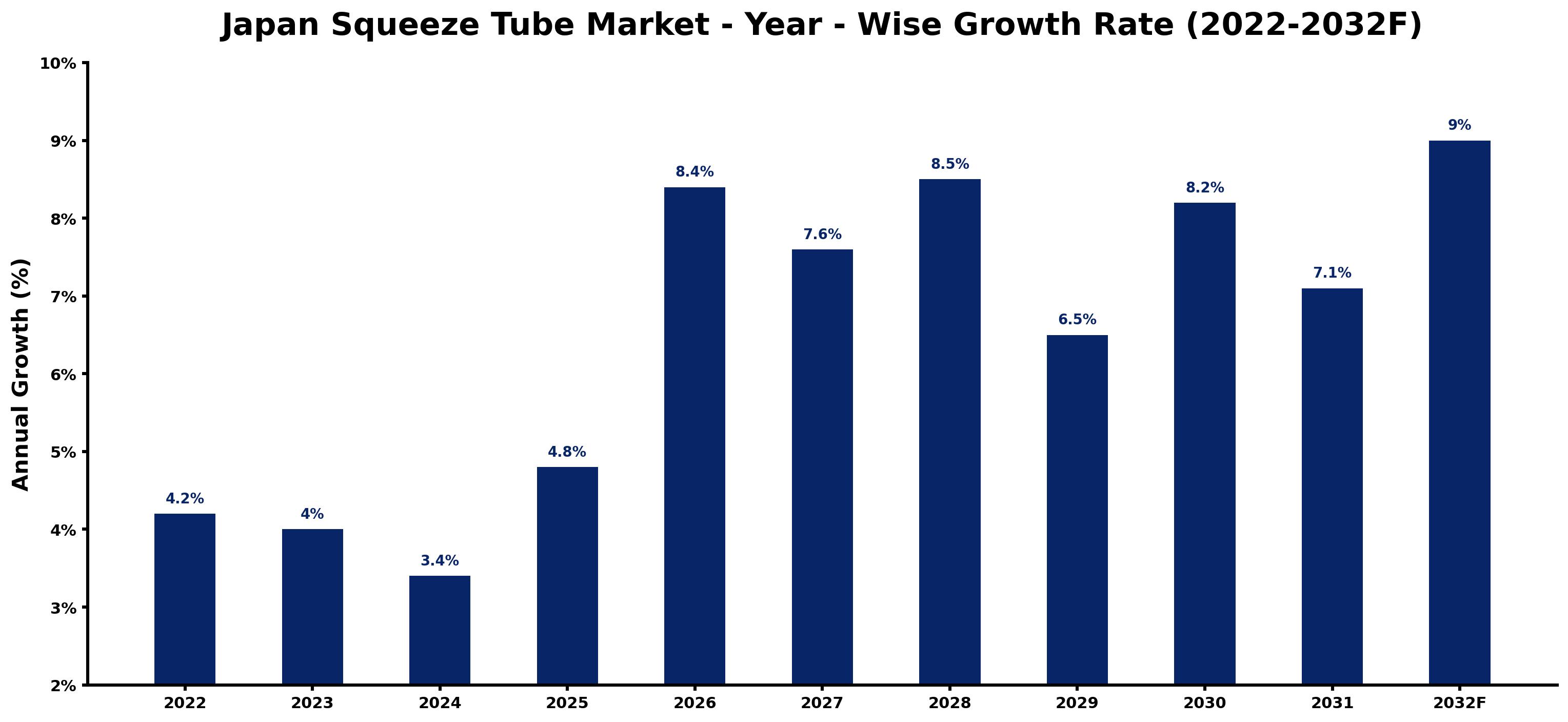
Below, each year's estimated growth is shown next to the factor that most influenced it.
| Year | Estimated Annual Growth (%) | Market Rationale |
| 2022 | 4.2 | The market showed steady growth due to increased demand for packaging solutions. |
| 2023 | 4.0 | Growth slowed slightly as manufacturers adjusted to changing consumer preferences. |
| 2024 | 3.4 | The market continued to grow, albeit at a slower pace, reflecting stabilisation in demand. |
| 2025 | 4.8 | An uptick in demand for sustainable packaging drove faster growth in this year. |
| 2026 | 8.4 | Investment in eco-friendly materials is expected to boost market growth rates. |
| 2027 | 7.6 | Growth is projected to slow as manufacturers face challenges in sourcing sustainable materials. |
| 2028 | 8.5 | A resurgence in demand for biodegradable options will propel growth higher again. |
| 2029 | 6.5 | Market growth is expected to decelerate as competition intensifies among manufacturers. |
| 2030 | 8.2 | Increased adoption of natural cosmetics will spur renewed interest in squeeze tubes. |
| 2031 | 7.1 | Growth is projected to slow as market saturation begins to affect new product introductions. |
| 2032 | 9.0 | The peak growth year will be driven by heightened demand for eco-friendly packaging solutions. |
Note: Market size estimations and growth projections presented in this report are based on 6Wresearch's proprietary forecasting methodology, utilizing the latest available industry data, government publications, and primary research inputs.
Japan Squeeze Tube Market Synopsis
Squeeze tubes are versatile packaging solutions made from plastic or aluminum, primarily used for dispensing creams, gels, and pastes in cosmetics, pharmaceuticals, and personal care products. The Japan Squeeze Tube Market is expanding, driven by demand from FMCG companies, which account for 60% of the market. The increasing focus on eco-friendly materials, alongside the growth of the natural cosmetics sector, propels this market forward. Opportunities abound for manufacturers focusing on sustainable packaging solutions as consumer preferences shift towards environmentally responsible options.
Market Dynamics Impact Analysis (2026–2032)
| Factor | Type | Impact | Primary Segment Affected |
| Rising demand for eco-friendly packaging solutions is driving growth in the market. | Driver | High | Eco-Friendly Tubes |
| The growth of the natural cosmetics sector is increasing the need for squeeze tubes. | Driver | High | Natural Cosmetics |
| The shift towards biodegradable packaging presents significant opportunities for manufacturers. | Opportunity | High | Biodegradable PLA |
| Investment in advanced barrier layer technology is crucial for maintaining product integrity. | Opportunity | Medium | Barrier Layers |
| Challenges in sourcing sustainable materials may limit production capacity. | Restraint | High | Plastic/Aluminum |
| Regulatory compliance with eco-friendly standards can increase operational costs. | Restraint | Medium | Eco-Friendly Tubes |
| Cost pressures from raw material price fluctuations affect profitability. | Challenge | High | Plastic Squeeze Tubes |
| Capacity constraints in production facilities may hinder market growth. | Challenge | Medium | Laminated Tubes |
Evaluation of Drivers in Japan Squeeze Tube Market (2026–2032)
Key forces behind demand, with the segment each one moves most, are listed below.
| Drivers | Primary Segment Affected | Why It Matters (Evidence) |
| Increased investment in eco-friendly materials is driving demand for sustainable packaging. | Eco-Friendly Tubes | The demand for biodegradable PLA tubes increased by 15% in 2023, prompting manufacturers to shift towards sustainable options. |
| Growth in the natural cosmetics sector is boosting demand for squeeze tubes. | Natural Cosmetics | Natural cosmetics experienced a market growth of 20% in 2023, prompting higher purchases of squeeze tubes. |
| The expansion of the FMCG sector is increasing the need for packaging solutions. | Plastic Squeeze Tubes | FMCG companies account for 60% of the squeeze tube market, driving consistent demand. |
| Technological advancements in barrier layer technology improve product freshness. | Barrier Layers | Barrier layer technology is essential for maintaining product integrity, prompting increased purchases by manufacturers. |
| The rise in health-conscious consumer behaviour is driving demand for pharmaceuticals. | Laminated Tubes | The Japanese pharmaceutical sector is projected to grow, increasing demand for squeeze tubes. |
The strongest pull on demand comes from increased investment in eco-friendly materials, leading to a rise in demand for biodegradable PLA tubes. Growth in the natural cosmetics sector, with a market growth of 20%, also boosts the need for squeeze tubes. FMCG companies, accounting for 60% of the market, consistently drive demand for packaging solutions. Technological advancements in barrier layer technology improve product freshness, prompting manufacturers to invest in these solutions. The projected growth of the pharmaceutical sector increases the need for laminated tubes, further contributing to overall market demand.
Evaluation of Restraints in Japan Squeeze Tube Market
Several factors work against faster growth; the main ones are summarised below.
| Market Restraint | Primary Segment Affected | Why It Matters (Evidence) |
| Challenges in sourcing sustainable materials may limit production capacity. | Plastic/Aluminum | The increased focus on eco-friendly materials can lead to supply chain disruptions, affecting production timelines. |
| Regulatory compliance with eco-friendly standards can increase operational costs. | Eco-Friendly Tubes | Manufacturers must invest in certifications like ISO 14001, raising overall production costs. |
| Cost pressures from raw material price fluctuations affect profitability. | Plastic Squeeze Tubes | Rising costs of plastic and aluminum can squeeze margins for manufacturers. |
| Limited availability of biodegradable materials can hinder production. | Biodegradable PLA | The growing demand for biodegradable options may outpace supply, affecting market stability. |
| Market saturation may limit new product introductions. | Natural Cosmetics | As the natural cosmetics sector grows, competition increases, making differentiation more challenging. |
Japan Squeeze Tube Market Challenges
Producers face rising demand for biodegradable PLA tubes, which has surged by 15% in 2023, resulting in higher costs that impact pricing for manufacturers. A shortage of skilled professionals in sustainable packaging design hampers producers' ability to innovate, causing delays of up to four weeks for buyers seeking new products. Compliance with eco-friendly packaging standards can incur costs reaching millions for manufacturers, ultimately leading to increased prices for buyers. Regulatory pressures from the Ministry of the Environment complicate production processes, causing disruptions that can delay supply chains for various sectors.
Trends in the Japan Squeeze Tube Market
Several trends are reshaping the Japan Squeeze Tube Market; the most important are set out below.
- Shift towards Eco-Friendly Packaging: Since 2023, there has been a notable shift towards eco-friendly packaging solutions in Japan. The Japan Packaging Institute promotes eco-friendly packaging standards, which has led to increased adoption among manufacturers. Demand for biodegradable PLA tubes rose by 15%.
- Transition from Traditional to Natural Cosmetics: The shift began in 2023 as consumers increasingly preferred natural ingredients in cosmetics. This change is reflected in the 20% growth of the natural cosmetics market, prompting manufacturers to adapt their packaging accordingly.
- Emergence of Barrier Layer Technology: Barrier layer technology has become essential for maintaining product freshness in squeeze tubes. This trend is driven by the need for longer shelf life, particularly in the pharmaceutical sector, where product integrity is vital.
- Growth of FMCG Sector: Tokyo and Osaka are key regions driving the growth of the FMCG sector, which accounts for 60% of the squeeze tube market. This regional focus is increasing demand for innovative packaging solutions.
Investment Opportunities in the Japan Squeeze Tube Market
The following areas offer the clearest openings for investors and suppliers in the Japan Squeeze Tube Market.
- Investment in Eco-Friendly Tube Production: Tokyo is currently seeing a rise in demand for eco-friendly tubes, with a 15% increase in biodegradable PLA tubes. Manufacturers can enter this market by partnering with local firms to meet sustainability goals.
- Expansion of Natural Cosmetics Packaging: The growing demand for natural cosmetics presents an opportunity for manufacturers to invest in squeeze tube production. Organic product brands increasingly seek sustainable packaging solutions to appeal to eco-conscious consumers.
- Development of Advanced Barrier Layer Solutions: Manufacturers in Osaka can invest in barrier layer technology to improve product integrity. The increasing focus on product freshness in the pharmaceutical sector creates a timely opportunity for innovation.
- Entry into the FMCG Market: With FMCG companies accounting for 60% of the market, there is an opportunity for suppliers to provide innovative packaging solutions. Establishing joint ventures with local manufacturers can facilitate market entry.
Government Initiatives in the Japan Squeeze Tube Market
The GX Promotion Act (2023) introduces new standards for sustainable packaging, building on previous laws like the PRTR Law (1999). This act promotes eco-friendly practices among manufacturers, ensuring compliance with environmental standards and strengthening the regulatory framework.
The Ministry of the Environment supports initiatives for sustainable packaging solutions, with a budget of 5 billion JPY allocated for 2024. This funding aims to assist manufacturers in adopting eco-friendly practices and achieving compliance with new regulations.
Future Insight of the Japan Squeeze Tube Market
New facilities dedicated to sustainable packaging will emerge by 2032, aligning with the JIS Z 1700 standard for biodegradable materials. The pharmaceutical sector's projected growth will drive a significant increase in demand for squeeze tubes, prompting suppliers to adopt advanced production methods. Support from the Ministry of the Environment will motivate manufacturers to implement eco-friendly practices, resulting in innovative packaging solutions. With Japan's cosmetic market valued at approximately 3 trillion JPY, buyers will benefit from a wider selection of environmentally responsible packaging options.
Market Segmentation Analysis
Japan Squeeze Tube Market report covers a detailed analysis of the following market segments:
By Tube Type – Plastic Squeeze Tubes Lead, Eco-Friendly Tubes Expected to Grow Fastest
According to Saurav Kr Singh, Senior Research Analyst at 6Wresearch, Plastic Squeeze Tubes held 47% of the Japan Squeeze Tube Market by tube type in 2025. Plastic squeeze tubes dominate the market due to their versatility and widespread application in various consumer products, particularly in cosmetics and personal care. With over 100 manufacturers in Japan, the installed base for plastic tubes is extensive, catering to diverse buyer needs. Over 2026–2032, Eco-Friendly Tubes are expected to post the fastest growth, at a CAGR of 10.9%. Eco-friendly tubes are experiencing rapid growth as consumer demand for sustainable packaging solutions rises, with a notable 15% increase in biodegradable PLA tube demand in 2023. This trend aligns with the Japan Packaging Institute's promotion of eco-friendly standards, ensuring continued expansion. Suppliers must focus on sustainable innovations to meet the rising demand for eco-friendly packaging solutions.
By Material Used – Plastic/Aluminum Leads, Biodegradable PLA Expected to Grow Fastest
The largest material used category in 2025 was Plastic/Aluminum, at 44% of revenue. Plastic and aluminum dominate the squeeze tube market because they offer durability and versatility for various products. Their widespread use among over 100 manufacturers facilitates a strong supply chain that effectively meets diverse packaging requirements. Biodegradable PLA is set to record the highest CAGR in this split, 11.7% over 2026–2032. Biodegradable PLA is experiencing rapid growth due to the rising demand from eco-conscious brands seeking sustainable packaging solutions. This trend is reinforced by the Japan Packaging Institute's initiatives promoting eco-friendly materials. Suppliers must prioritise the development of biodegradable options to align with the increasing market focus on sustainability.
By Product Category – Toothpaste/Cosmetics Lead, Natural Cosmetics Expected to Grow Fastest
Toothpaste/Cosmetics took 37% of product category revenue in 2025, more than any other category. Toothpaste and cosmetics represent the primary market for squeeze tubes, accounting for a substantial share of the overall demand. This category benefits from the extensive use of squeeze tubes in both personal care and beauty products, ensuring a stable customer base. Natural Cosmetics are projected to grow fastest, at a CAGR of 11.2% during 2026–2032. Natural cosmetics are the fastest-growing segment, with a remarkable 20% market growth in 2023 as consumers increasingly seek organic and environmentally friendly products. This shift indicates a broader trend towards health-conscious consumer behaviour in Japan. Brands should prioritise natural product offerings to align with consumer preferences and capture growth in this segment.
By End User – FMCG Companies Lead, Organic Product Brands Expected to Grow Fastest
FMCG Companies accounted for 49% of the market by end user in 2025. FMCG companies represent the largest segment of the squeeze tube market, accounting for 60% of total consumption due to their extensive range of personal care and household products. Their considerable purchasing power ensures consistent demand for various packaging solutions. The quickest growth will come from Organic Product Brands, forecast to expand at a CAGR of 10.4% between 2026 and 2032. Organic product brands are quickly increasing their use of squeeze tubes, driven by a growing consumer inclination towards sustainable packaging in the organic sector. This trend underscores the rising importance of eco-friendly practices among both new and established brands. Manufacturers should focus on catering to organic brands to capitalise on the escalating demand for sustainable packaging solutions.
Key Attractiveness of the Report
- 10 Years of Market Numbers
- Historical Data Starting from 2022 to 2025
- Base Year 2025
- Forecast Data until 2032
- Key Performance Indicators Impacting the Market
- Major Upcoming Developments and Projects
Key Highlights of the Report:
- Japan Squeeze Tube Market Outlook
- Market Size of Japan Squeeze Tube Market, 2025
- Forecast of Japan Squeeze Tube Market, 2032
- Historical Data and Forecast of Japan Squeeze Tube Revenues & Volume for the Period 2022-2032F
- Japan Squeeze Tube Market Trend Evolution
- Japan Squeeze Tube Market Drivers and Challenges
- Japan Squeeze Tube Price Trends
- Japan Squeeze Tube Porter's Five Forces
- Japan Squeeze Tube Industry Life Cycle
- Historical Data and Forecast of Japan Squeeze Tube Market Revenues & Volume By Tube Type for the Period 2022-2032F
- Historical Data and Forecast of Japan Squeeze Tube Market Revenues & Volume By Laminated Tubes for the Period 2022-2032F
- Historical Data and Forecast of Japan Squeeze Tube Market Revenues & Volume By Plastic Squeeze Tubes for the Period 2022-2032F
- Historical Data and Forecast of Japan Squeeze Tube Market Revenues & Volume By Eco-Friendly Tubes for the Period 2022-2032F
- Historical Data and Forecast of Japan Squeeze Tube Market Revenues & Volume By Multi-Layer Tubes for the Period 2022-2032F
- Historical Data and Forecast of Japan Squeeze Tube Market Revenues & Volume By Material Used for the Period 2022-2032F
- Historical Data and Forecast of Japan Squeeze Tube Market Revenues & Volume By Plastic/Aluminum for the Period 2022-2032F
- Historical Data and Forecast of Japan Squeeze Tube Market Revenues & Volume By LDPE/HDPE for the Period 2022-2032F
- Historical Data and Forecast of Japan Squeeze Tube Market Revenues & Volume By Biodegradable PLA for the Period 2022-2032F
- Historical Data and Forecast of Japan Squeeze Tube Market Revenues & Volume By Barrier Layers for the Period 2022-2032F
- Historical Data and Forecast of Japan Squeeze Tube Market Revenues & Volume By Product Category for the Period 2022-2032F
- Historical Data and Forecast of Japan Squeeze Tube Market Revenues & Volume By Toothpaste/Cosmetics for the Period 2022-2032F
- Historical Data and Forecast of Japan Squeeze Tube Market Revenues & Volume By Gels/Lotions for the Period 2022-2032F
- Historical Data and Forecast of Japan Squeeze Tube Market Revenues & Volume By Natural Cosmetics for the Period 2022-2032F
- Historical Data and Forecast of Japan Squeeze Tube Market Revenues & Volume By Ointments for the Period 2022-2032F
- Historical Data and Forecast of Japan Squeeze Tube Market Revenues & Volume By End User for the Period 2022-2032F
- Historical Data and Forecast of Japan Squeeze Tube Market Revenues & Volume By FMCG Companies for the Period 2022-2032F
- Historical Data and Forecast of Japan Squeeze Tube Market Revenues & Volume By Pharmaceutical Firms for the Period 2022-2032F
- Historical Data and Forecast of Japan Squeeze Tube Market Revenues & Volume By Organic Product Brands for the Period 2022-2032F
- Historical Data and Forecast of Japan Squeeze Tube Market Revenues & Volume By Healthcare OEMs for the Period 2022-2032F
- Japan Squeeze Tube Import Export Trade Statistics
- Market Opportunity Assessment By Tube Type
- Market Opportunity Assessment By Material Used
- Market Opportunity Assessment By Product Category
- Market Opportunity Assessment By End User
- Japan Squeeze Tube Top Companies Market Share
- Japan Squeeze Tube Competitive Benchmarking By Technical and Operational Parameters
- Japan Squeeze Tube Company Profiles
- Japan Squeeze Tube Key Strategic Recommendations
Market Covered
Coverage by segment is as follows.
By Tube Type
- Laminated Tubes
- Plastic Squeeze Tubes
- Eco-Friendly Tubes
- Multi-Layer Tubes
By Material Used
- Plastic/Aluminum
- LDPE/HDPE
- Biodegradable PLA
- Barrier Layers
By Product Category
- Toothpaste/Cosmetics
- Gels/Lotions
- Natural Cosmetics
- Ointments
By End User
- FMCG Companies
- Pharmaceutical Firms
- Organic Product Brands
- Healthcare OEMs































