Japan Staircase Railing Market Size & Growth Rate
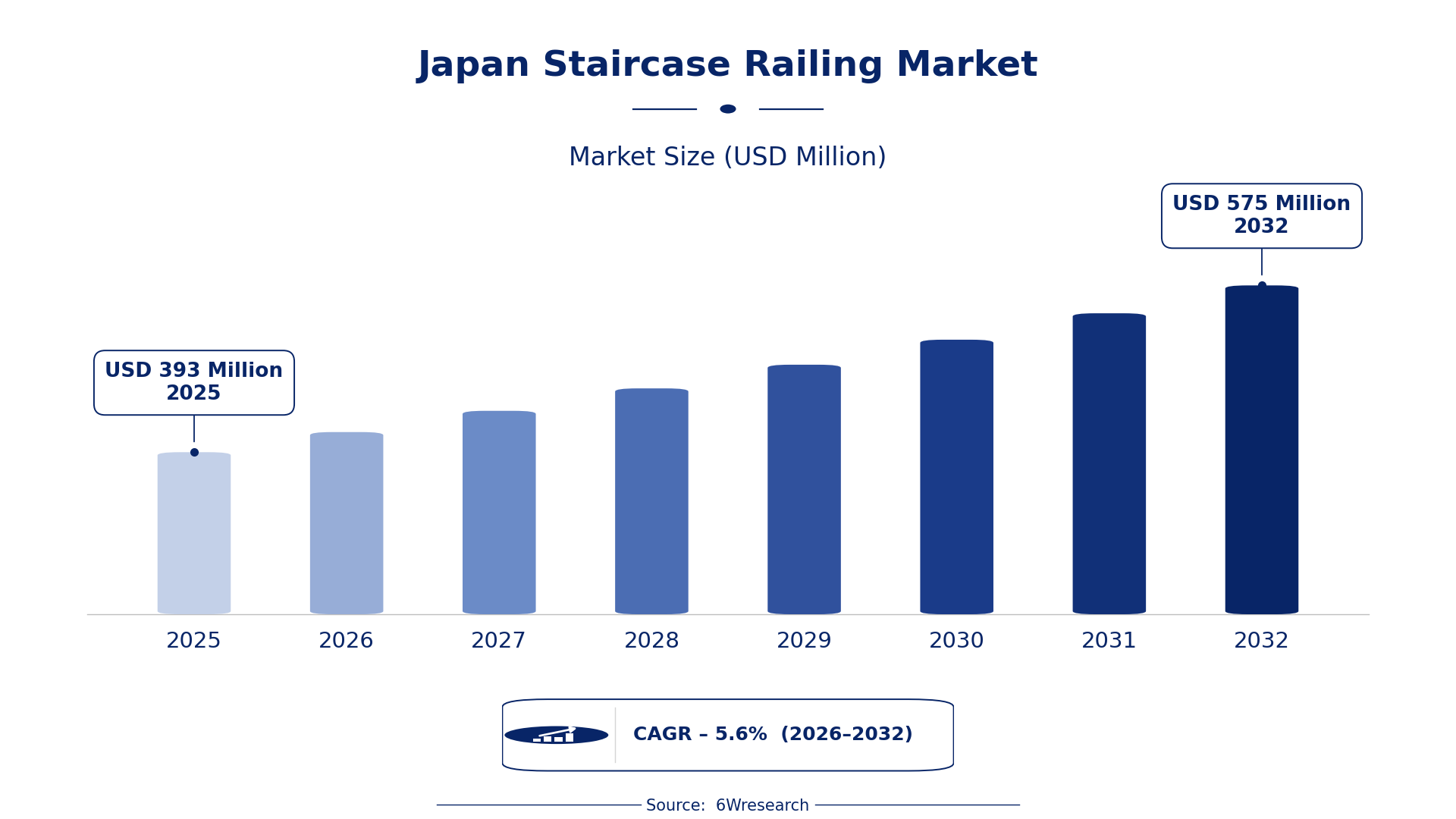
According to 6Wresearch internal database and industry insights, the Japan Staircase Railing Market was valued at USD 393 Million in 2025 and is projected to reach USD 575 Million by 2032, growing at a CAGR of approximately 5.6% during 2026–2032.
Japan Staircase Railing Market Highlights
| Report Metric | Details |
| Report Name | Japan Staircase Railing Market (2026-2032) |
| Market Size 2025 | USD 393 Million |
| Market Size 2032 | USD 575 Million |
| Absolute Growth 2025–2032 | USD 182 Million |
| CAGR 2026–2032 | 5.6% |
| Peak Annual Growth | 6.6% in 2028 |
| Forecast Period | 2026–2032 |
| Historical Data | 2022–2025 |
| Base Year | 2025 |
| Leading Railing Type, 2025 | Steel Railings (40% share) |
| Leading Material Type, 2025 | Stainless/Coated (44% share) |
| Leading Design Style, 2025 | Modern/Industrial (42% share) |
| Leading End User, 2025 | Residential Contractors (35% share) |
| Fastest-Growing Railing Type | Glass Railings (7.7% CAGR) |
| Fastest-Growing Material Type | Frameless/Framed (8.2% CAGR) |
| Fastest-Growing Design Style | Minimalist (7.3% CAGR) |
| Fastest-Growing End User | Architects (7.1% CAGR) |
| Growing Sector | Residential construction |
| Key End Users | Residential Contractors, Commercial Builders, Architects |
Japan Staircase Railing Market Year-wise Growth Rate and Key Drivers (2022–2032)
This graph illustrates the annual growth rates of the market from 2022 to 2032, highlighting a steady upward trajectory and projected market expansion over the forecast period.
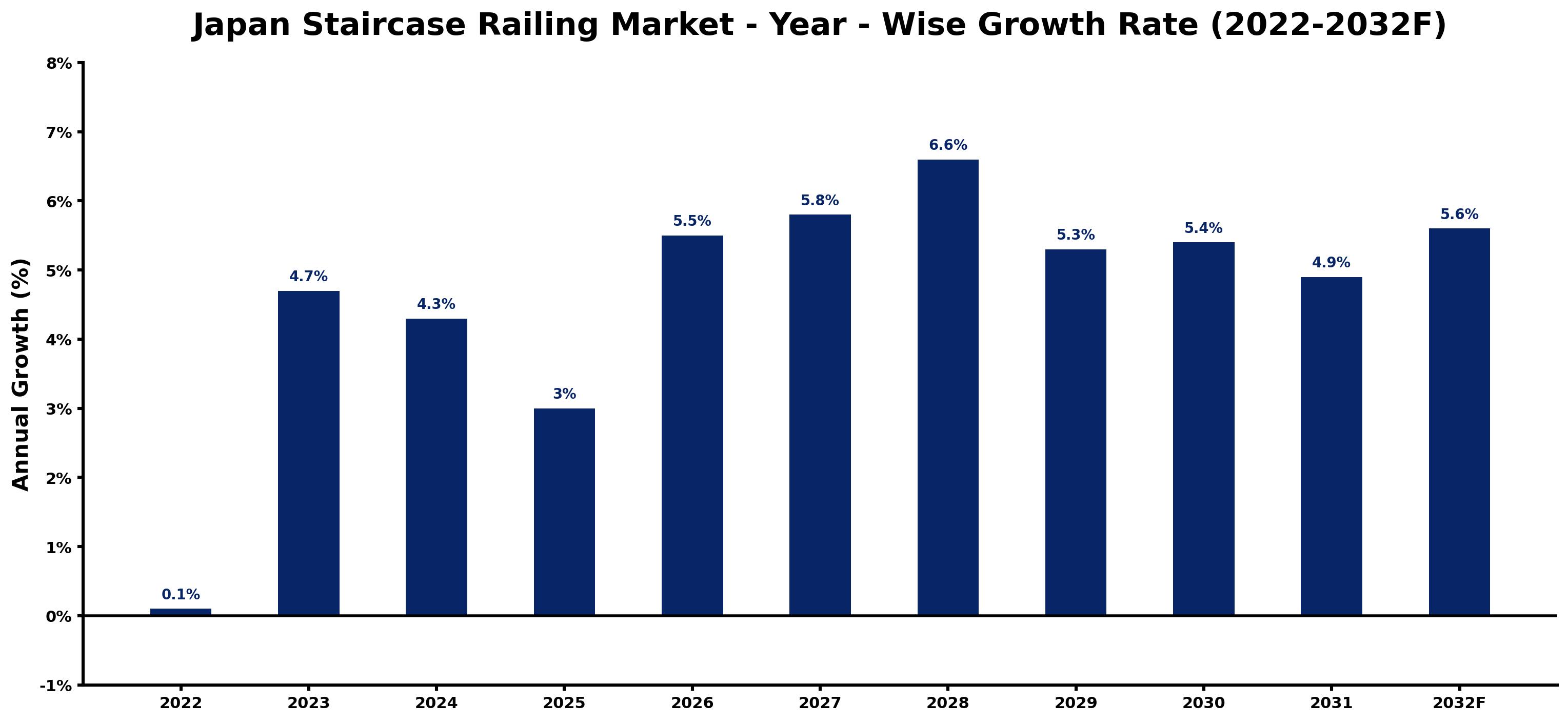
Each row of the following table gives one year's estimated growth and the event or demand shift that explains it.
| Year | Estimated Annual Growth (%) | Market Rationale |
| 2022 | 0.1 | The market showed minimal growth due to recovery in construction activities following disruptions. |
| 2023 | 4.7 | Demand surged as urban development projects gained momentum in major cities. |
| 2024 | 4.3 | Growth slowed as supply chain issues affected material availability and delivery times. |
| 2025 | 3.0 | Market expansion continued but at a reduced pace due to rising material costs. |
| 2026 | 5.5 | Demand is expected to increase as residential construction projects resume following economic stability. |
| 2027 | 5.8 | Growth will accelerate with the introduction of new architectural trends and designs. |
| 2028 | 6.6 | The market is projected to peak as urban infrastructure projects reach their peak implementation phase. |
| 2029 | 5.3 | Growth is expected to slow as the market begins to stabilise after the peak demand period. |
| 2030 | 5.4 | Demand will increase again due to new government initiatives promoting urban development. |
| 2031 | 4.9 | Growth will decelerate as the market adjusts to the previous years' rapid expansion. |
| 2032 | 5.6 | The market is expected to grow steadily as construction activity remains strong. |
Note: Market size estimations and growth projections presented in this report are based on 6Wresearch's proprietary forecasting methodology, utilizing the latest available industry data, government publications, and primary research inputs.
Japan Staircase Railing Market Synopsis
Staircase railings are structural components made from materials such as steel, glass, and wood, designed to ensure safety on staircases. The Japan Staircase Railing Market is expanding, propelled by a construction sector valued at over 6 trillion yen in 2022, with rising demand from residential contractors and commercial builders. Urban development initiatives, including the 'Smart City' programme, are boosting interest in modern railing designs, particularly in major cities like Tokyo and Osaka.
Market Dynamics Impact Analysis (2026–2032)
| Factor | Type | Impact | Primary Segment Affected |
| Growing urban development projects drive demand for staircase railings in residential buildings. | Driver | High | Steel Railings |
| Architectural trends favouring modern aesthetics increase the use of glass railings. | Driver | High | Glass Railings |
| The rising popularity of minimalist designs creates opportunities for frameless railings. | Opportunity | High | Frameless/Framed |
| Increased investments in infrastructure development support demand for various railing types. | Opportunity | High | Aluminum Railings |
| Rising material costs may limit the affordability of high-quality railings. | Restraint | Medium | Wood Railings |
| Supply chain disruptions can delay the availability of essential railing materials. | Restraint | Medium | Stainless/Coated |
| Compliance with stringent building regulations can increase production costs. | Challenge | High | Glass Railings |
| Limited skilled labour in the construction sector can hinder project timelines. | Challenge | Medium | Steel Railings |
Evaluation of Drivers in Japan Staircase Railing Market (2026–2032)
Below are the drivers that matter most for revenue growth, with supporting evidence.
| Drivers | Primary Segment Affected | Why It Matters (Evidence) |
| Increased residential construction activity drives demand for staircase railings. | Steel Railings | Japan's population of approximately 125 million supports ongoing residential projects. |
| Architectural trends favouring modern aesthetics boost the use of glass railings. | Glass Railings | In urban areas, glass railings are preferred for their aesthetic appeal, accounting for a notable share of installations. |
| The push for sustainable building practices increases demand for aluminum railings. | Aluminum Railings | Sustainable materials are increasingly promoted in construction projects, leading to higher adoption rates. |
| Growing interest in modern designs boosts the market for frameless railings. | Frameless/Framed | Architectural trends favour unobstructed views in contemporary designs, enhancing market appeal. |
| The rise of urbanisation leads to increased demand for staircase railings in public infrastructure. | Wood Railings | Urban development projects often require durable and aesthetically pleasing railings. |
Much of the new demand traces back to the active construction sector, which was valued at over 6 trillion yen in 2022. The rising population of approximately 125 million supports ongoing residential projects, leading to increased purchases of staircase railings. The focus on sustainable building practices encourages the use of aluminium railings, while architectural trends favouring minimalist designs drive the popularity of frameless railings in contemporary constructions.
Evaluation of Restraints in Japan Staircase Railing Market
The main factors holding the market back are set out below.
| Market Restraint | Primary Segment Affected | Why It Matters (Evidence) |
| Rising material costs can limit the affordability of high-quality railings. | Wood Railings | Increased prices for raw materials affect purchasing decisions among contractors. |
| Supply chain disruptions can delay the availability of essential railing materials. | Stainless/Coated | Material shortages can hinder timely project completion for builders. |
| Compliance with stringent building regulations can increase production costs. | Glass Railings | Manufacturers must invest in quality assurance to meet JIS standards. |
| Limited skilled labour in the construction sector can hinder project timelines. | Steel Railings | A shortage of qualified workers can delay installations and increase costs. |
| Economic fluctuations may impact overall construction spending. | Aluminum Railings | Changes in market conditions can affect investment in new projects. |
Japan Staircase Railing Market Challenges
In Tokyo, residential contractors struggle to obtain enough staircase railings, delaying project completions. This issue stems from Japan's rising population, which drives demand for housing, leading to potential penalties of up to 10% of contract value for late deliveries. A lack of skilled workers in the construction sector lengthens project timelines by an average of 20%, impacting profitability for contractors. Heightened competition among producers for quality materials raises costs, forcing buyers to pay as much as 15% more for railings, straining their budgets and project timelines.
Trends in the Japan Staircase Railing Market
The following changes are redrawing the Japan Staircase Railing Market.
- Shift towards Minimalist Design: Architectural trends in Japan are increasingly favouring minimalist designs, particularly in residential buildings. This shift is reflected in the rising demand for frameless railings, which are projected to grow at a CAGR of 8.2% as homeowners seek sleek and unobtrusive aesthetics.
- Growing Preference for Glass Railings: Commercial builders are increasingly opting for glass railings due to their modern appeal and safety features. In 2022, glass railings accounted for a notable share of installations in urban areas, reflecting a broader trend towards contemporary design.
- Rise of Sustainable Building Practices: The Tokyo Metropolitan Government's support for sustainable building practices is influencing material choices in construction. This initiative is driving a higher adoption rate of aluminum railings, which are lightweight and corrosion-resistant, suitable for outdoor applications.
- Increasing Urban Development Initiatives: Urban development initiatives, such as the 'Smart City' programme, are driving demand for modern staircase railings. With the government allocating 500 billion yen for infrastructure development in 2023, the market is set to benefit from these investments.
Investment Opportunities in the Japan Staircase Railing Market
The following opportunities in the Japan Staircase Railing Market pair current demand with a clear way in.
- 500 billion yen allocated for infrastructure development: The recent allocation of 500 billion yen for infrastructure development presents an opportunity for suppliers of staircase railings. Residential contractors in urban areas are looking for durable and modern railing solutions to meet growing demand.
- Increasing urbanisation in Tokyo and Osaka: Tokyo and Osaka are experiencing rapid urbanisation, creating a significant demand for staircase railings. Suppliers can enter this market by partnering with local contractors to provide tailored solutions.
- Architects seeking modern railing solutions: Architects are increasingly looking for innovative railing designs that align with contemporary aesthetics. Suppliers can capitalise on this trend by offering a range of stylish and functional railing options.
- Approval pathways for sustainable materials: The push for sustainable materials in construction creates opportunities for suppliers of aluminium railings. Establishing joint ventures with local manufacturers can facilitate market entry and compliance with regulations.
Government Initiatives in the Japan Staircase Railing Market
The Economic Security Promotion Act, enacted in 2022, strengthens supply-chain resilience for critical products, including staircase railings. This law complements existing regulations, such as the PRTR Law, which requires businesses to report chemical substances, ensuring safety and compliance in manufacturing processes. The act aims to enhance the reliability of material supply chains, benefiting both producers and buyers by reducing risks associated with material shortages.
The Ministry of Land, Infrastructure, Transport and Tourism oversees building regulations and approves construction projects. Their funding initiatives support infrastructure development, ensuring that projects adhere to safety standards and promoting the use of quality materials in construction. This oversight helps maintain high standards for staircase railings, benefiting both manufacturers and end-users.
Future Insight of the Japan Staircase Railing Market
Upcoming infrastructure projects will prioritise the integration of advanced materials and technologies in staircase railings, enhancing safety and aesthetics. The government will maintain its commitment to infrastructure development, with substantial funding allocated for new initiatives. Buyers will benefit from innovative designs that align with contemporary architectural trends, while suppliers will adapt to evolving JIS standards for material quality. The emphasis on sustainable building practices will drive producers to develop solutions that cater to the market's specific requirements.
Market Segmentation Analysis
Japan Staircase Railing Market report covers a detailed analysis of the following market segments:
By Railing Type – Steel Railings Lead, Glass Railings Expected to Grow Fastest
According to Saurav Kr Singh, Senior Research Analyst at 6Wresearch, Steel Railings held 40% of the Japan Staircase Railing Market by railing type in 2025. Steel railings dominate the market due to their strength and durability, making them a preferred choice for various types of buildings. Their extensive use in both residential and commercial constructions, particularly in urban areas like Tokyo, solidifies their leading position. Over 2026–2032, Glass Railings are expected to post the fastest growth, at a CAGR of 7.7%. The rapid growth of glass railings is attributed to their popularity in modern aesthetics, particularly in residential and commercial environments. This trend is further amplified by architectural designs that favour transparency and sleekness, appealing to contemporary tastes. Suppliers should focus on expanding their glass railing product lines to capitalise on the increasing demand for modern design.
By Material Type – Stainless/Coated Leads, Frameless/Framed Expected to Grow Fastest
In 2025, Stainless/Coated led the material type split with a 44% share. Stainless/coated railings hold the largest share as they are preferred for their durability and low maintenance, making them suitable for various environments. Their widespread use in residential and commercial buildings underscores their importance in the market. The quickest growth will come from Frameless/Framed, forecast to expand at a CAGR of 8.2% between 2026 and 2032. Frameless/framed railings are experiencing the fastest growth due to their appeal in modern designs that offer unobstructed views. This aligns with the architectural shift towards minimalist aesthetics in urban settings, further boosting their demand. Buyers should consider investing in frameless/framed options to stay aligned with current design trends.
By Design Style – Modern/Industrial Leads, Minimalist Expected to Grow Fastest
The largest design style category in 2025 was Modern/Industrial, at 42% of revenue. The modern/industrial design style leads the market as it resonates with current architectural trends in urban settings. Its popularity stems from builders and homeowners seeking styles that enhance the appeal of modern structures. Minimalist is set to record the highest CAGR in this split, 7.3% over 2026–2032. Minimalist design is gaining traction due to its emphasis on simplicity and elegance, making it a preferred choice in contemporary architecture. This trend is particularly evident in new residential projects that prioritise clean lines and open spaces. Suppliers must adapt their offerings to include minimalist designs to meet the evolving preferences of consumers.
By End User – Residential Contractors Lead, Architects Expected to Grow Fastest
With 35% of end user revenue in 2025, Residential Contractors was the largest category. Residential contractors are the primary users in the staircase railing market, driving demand through their involvement in home construction and renovation. Their significant role in the housing sector ensures a consistent need for various railing types. Architects are projected to grow fastest, at a CAGR of 7.1% during 2026–2032. Architects are the fastest-growing end user group, playing a crucial role in shaping design choices for new projects. Their increasing influence in modern building practices highlights the necessity for suppliers to provide advanced railing solutions. Suppliers should engage with architects to ensure their products align with the latest design trends.
Key Attractiveness of the Report
- 10 Years of Market Numbers
- Historical Data Starting from 2022 to 2025
- Base Year 2025
- Forecast Data until 2032
- Key Performance Indicators Impacting the Market
- Major Upcoming Developments and Projects
Key Highlights of the Report:
- Japan Staircase Railing Market Outlook
- Market Size of Japan Staircase Railing Market, 2025
- Forecast of Japan Staircase Railing Market, 2032
- Historical Data and Forecast of Japan Staircase Railing Revenues & Volume for the Period 2022-2032F
- Japan Staircase Railing Market Trend Evolution
- Japan Staircase Railing Market Drivers and Challenges
- Japan Staircase Railing Price Trends
- Japan Staircase Railing Porter's Five Forces
- Japan Staircase Railing Industry Life Cycle
- Historical Data and Forecast of Japan Staircase Railing Market Revenues & Volume By Railing Type for the Period 2022-2032F
- Historical Data and Forecast of Japan Staircase Railing Market Revenues & Volume By Steel Railings for the Period 2022-2032F
- Historical Data and Forecast of Japan Staircase Railing Market Revenues & Volume By Glass Railings for the Period 2022-2032F
- Historical Data and Forecast of Japan Staircase Railing Market Revenues & Volume By Wood Railings for the Period 2022-2032F
- Historical Data and Forecast of Japan Staircase Railing Market Revenues & Volume By Aluminum Railings for the Period 2022-2032F
- Historical Data and Forecast of Japan Staircase Railing Market Revenues & Volume By Material Type for the Period 2022-2032F
- Historical Data and Forecast of Japan Staircase Railing Market Revenues & Volume By Stainless/Coated for the Period 2022-2032F
- Historical Data and Forecast of Japan Staircase Railing Market Revenues & Volume By Frameless/Framed for the Period 2022-2032F
- Historical Data and Forecast of Japan Staircase Railing Market Revenues & Volume By Teak/Oak for the Period 2022-2032F
- Historical Data and Forecast of Japan Staircase Railing Market Revenues & Volume By Lightweight/Coated for the Period 2022-2032F
- Historical Data and Forecast of Japan Staircase Railing Market Revenues & Volume By Design Style for the Period 2022-2032F
- Historical Data and Forecast of Japan Staircase Railing Market Revenues & Volume By Modern/Industrial for the Period 2022-2032F
- Historical Data and Forecast of Japan Staircase Railing Market Revenues & Volume By Contemporary for the Period 2022-2032F
- Historical Data and Forecast of Japan Staircase Railing Market Revenues & Volume By Traditional for the Period 2022-2032F
- Historical Data and Forecast of Japan Staircase Railing Market Revenues & Volume By Minimalist for the Period 2022-2032F
- Historical Data and Forecast of Japan Staircase Railing Market Revenues & Volume By End User for the Period 2022-2032F
- Historical Data and Forecast of Japan Staircase Railing Market Revenues & Volume By Residential Contractors for the Period 2022-2032F
- Historical Data and Forecast of Japan Staircase Railing Market Revenues & Volume By Architects for the Period 2022-2032F
- Historical Data and Forecast of Japan Staircase Railing Market Revenues & Volume By Furniture Companies for the Period 2022-2032F
- Historical Data and Forecast of Japan Staircase Railing Market Revenues & Volume By Commercial Builders for the Period 2022-2032F
- Japan Staircase Railing Import Export Trade Statistics
- Market Opportunity Assessment By Railing Type
- Market Opportunity Assessment By Material Type
- Market Opportunity Assessment By Design Style
- Market Opportunity Assessment By End User
- Japan Staircase Railing Top Companies Market Share
- Japan Staircase Railing Competitive Benchmarking By Technical and Operational Parameters
- Japan Staircase Railing Company Profiles
- Japan Staircase Railing Key Strategic Recommendations
Market Covered
The following segment groups are covered in the report.
By Railing Type
- Steel Railings
- Glass Railings
- Wood Railings
- Aluminum Railings
By Material Type
- Stainless/Coated
- Frameless/Framed
- Teak/Oak
- Lightweight/Coated
By Design Style
- Modern/Industrial
- Contemporary
- Traditional
- Minimalist
By End User
- Residential Contractors
- Architects
- Furniture Companies
- Commercial Builders































