Japan Standby Power Systems Market Size & Growth Rate
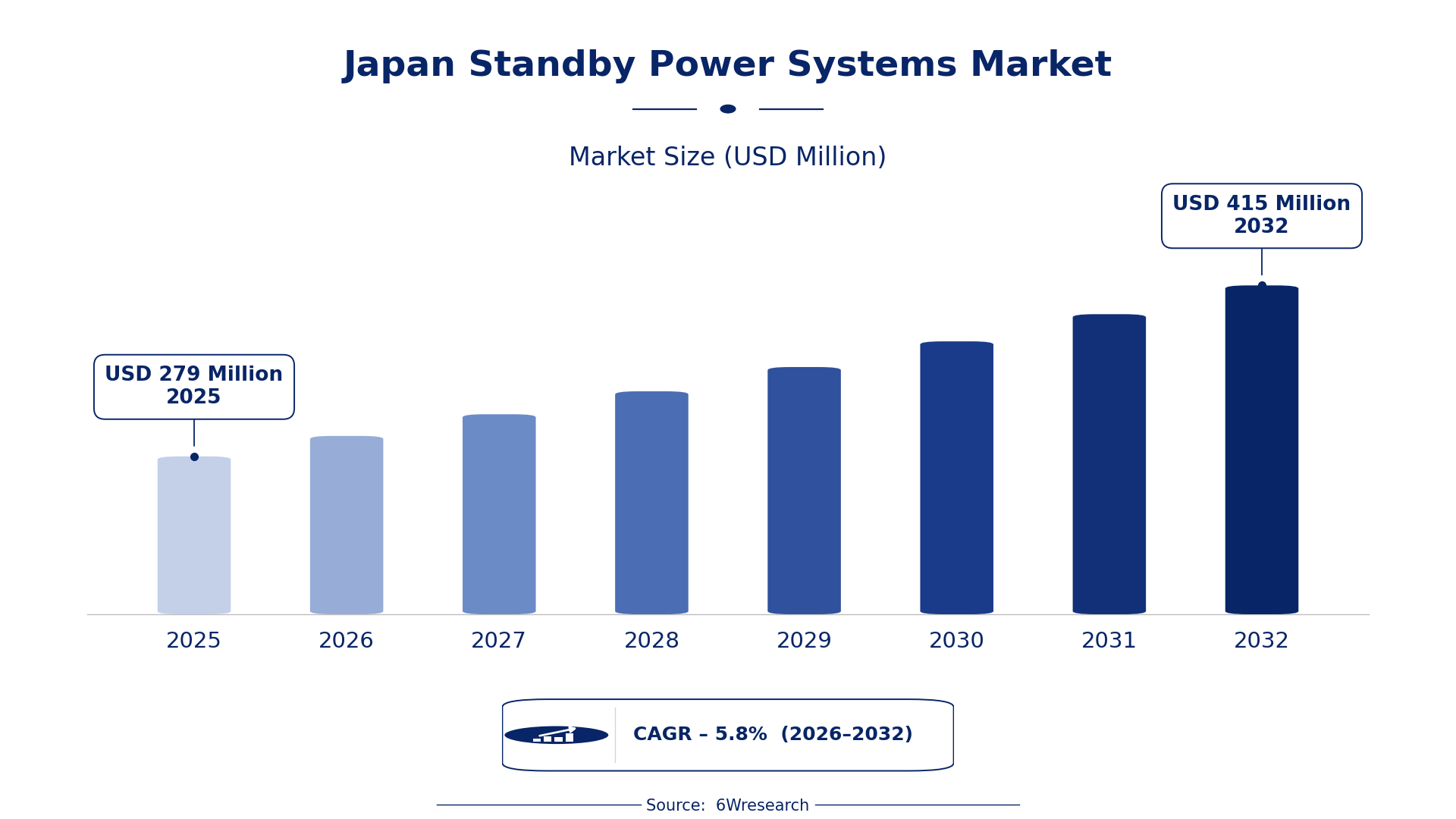
According to 6Wresearch internal database and industry insights, the Japan Standby Power Systems Market was valued at USD 279 Million in 2025 and is projected to reach USD 415 Million by 2032, growing at a CAGR of approximately 5.8% during 2026–2032.
Japan Standby Power Systems Market Highlights
| Report Metric | Details |
| Report Name | Japan Standby Power Systems Market (2026-2032) |
| Market Size 2025 | USD 279 Million |
| Market Size 2032 | USD 415 Million |
| Absolute Growth 2025–2032 | USD 136 Million |
| CAGR 2026–2032 | 5.8% |
| Peak Annual Growth | 6.9% in 2032 |
| Forecast Period | 2026–2032 |
| Historical Data | 2022–2025 |
| Base Year | 2025 |
| Leading System Type, 2025 | Diesel Generators (49% share) |
| Leading Power Source, 2025 | Fuel-Based (37% share) |
| Leading Application Area, 2025 | Industrial (35% share) |
| Leading End User, 2025 | Healthcare Facilities (45% share) |
| Fastest-Growing System Type | Solar + Battery (8.6% CAGR) |
| Fastest-Growing Power Source | Battery-Backed (8.8% CAGR) |
| Fastest-Growing Application Area | Commercial Buildings (7.0% CAGR) |
| Growing Sector | Healthcare Facilities |
| Key End Users | Healthcare Facilities, Data Centers, Commercial Buildings, Telecom Companies |
Japan Standby Power Systems Market Year-wise Growth Rate and Key Drivers (2022–2032)
This graph illustrates the annual growth rates of the market from 2022 to 2032, highlighting a steady upward trajectory and projected market expansion over the forecast period.
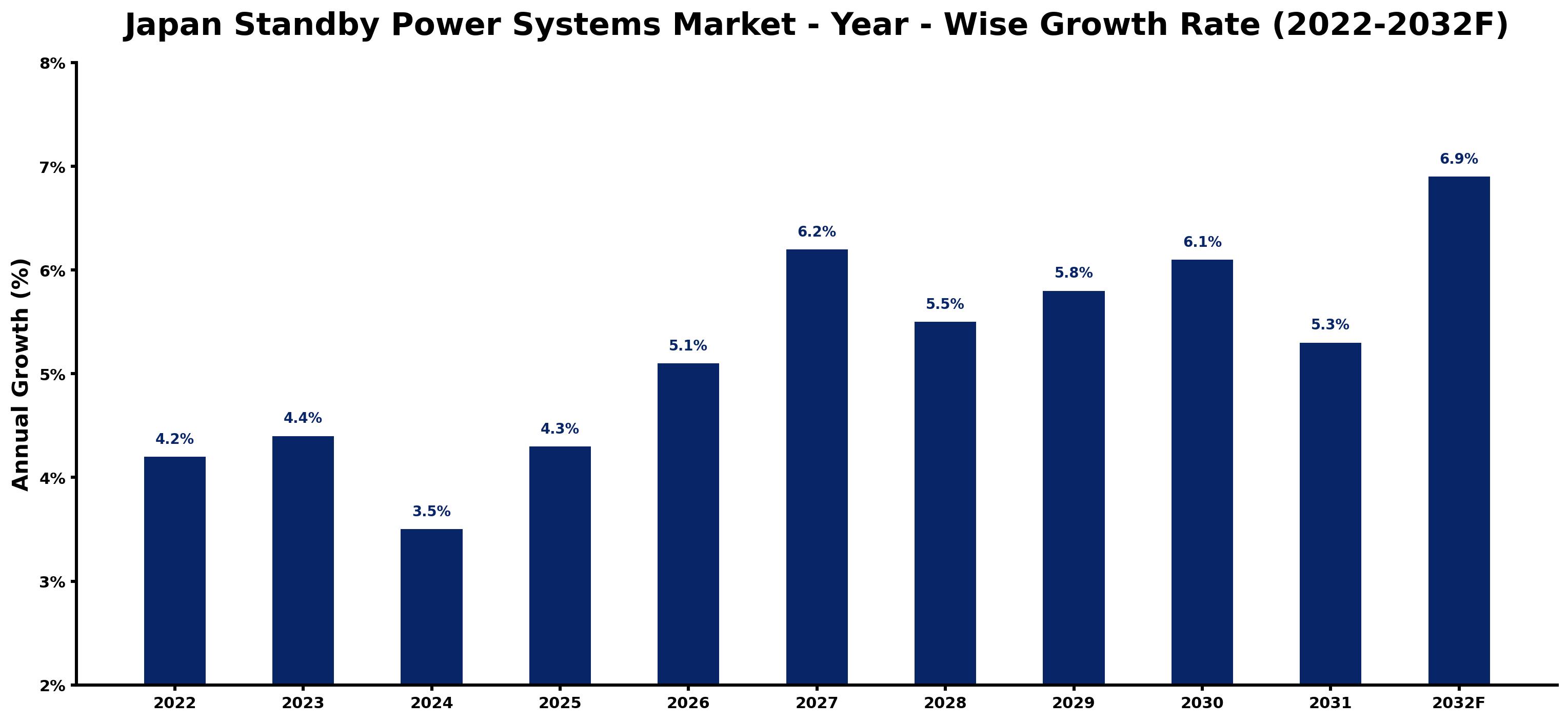
Year by year, the estimates below pair each growth rate with the development that shaped it.
| Year | Estimated Annual Growth (%) | Market Rationale |
| 2022 | 4.2 | The market experienced solid demand due to ongoing industrial operations. |
| 2023 | 4.4 | Growth accelerated as healthcare facilities expanded their backup power needs. |
| 2024 | 3.5 | Demand slowed slightly as some sectors adjusted to previous expansions. |
| 2025 | 4.3 | Increased adoption of solar plus battery systems contributed to growth. |
| 2026 | 5.1 | Rising investments in energy efficiency will drive faster growth in standby systems. |
| 2027 | 6.2 | The market will continue to grow as data centers expand their operations. |
| 2028 | 5.5 | Growth is expected to slow as the market matures and competition intensifies. |
| 2029 | 5.8 | Demand will rise again as hospitals upgrade their power systems for reliability. |
| 2030 | 6.1 | Increased government support for renewable energy will boost market growth. |
| 2031 | 5.3 | Growth will moderate as the market stabilises after rapid expansions. |
| 2032 | 6.9 | Demand will surge as the government promotes energy resilience initiatives. |
Note: Market size estimations and growth projections presented in this report are based on 6Wresearch's proprietary forecasting methodology, utilizing the latest available industry data, government publications, and primary research inputs.
Japan Standby Power Systems Market Synopsis
Standby power systems include diesel generators, UPS systems, gas generators, and solar plus battery systems, essential for providing backup power during outages. The Japan Standby Power Systems Market is expanding due to rising demand from healthcare facilities, which require reliable power for over 8,000 hospitals. The government's commitment to decarbonisation, targeting JPY 150 trillion in investments, drives the adoption of energy-efficient solutions across various sectors, including data centers and commercial buildings.
Market Dynamics Impact Analysis (2026–2032)
| Factor | Type | Impact | Primary Segment Affected |
| Increasing healthcare facility requirements for reliable power solutions | Driver | High | Healthcare Facilities |
| Growing adoption of solar plus battery systems for sustainability | Driver | High | Solar + Battery |
| Rising investments in energy-efficient standby systems | Opportunity | High | UPS Systems |
| Expansion of data centers necessitating reliable backup power | Opportunity | High | Data Centers |
| High initial investment costs for standby power systems | Restraint | Medium | Diesel Generators |
| Limited awareness of hybrid systems among potential users | Restraint | Medium | Hybrid Systems |
| Competition from alternative energy solutions affecting market share | Challenge | High | Gas Generators |
| Supply chain disruptions impacting availability of components | Challenge | Medium | UPS Systems |
Evaluation of Drivers in Japan Standby Power Systems Market (2026–2032)
The factors lifting demand, and the evidence behind each, are summarised below.
| Drivers | Primary Segment Affected | Why It Matters (Evidence) |
| Increased demand for reliable power in healthcare facilities | UPS Systems | Over 8,000 hospitals in Japan require uninterrupted power supply, driving UPS system purchases. |
| Growing adoption of solar plus battery systems | Solar + Battery | The commercial building sector is rapidly adopting these systems for sustainability, leading to increased sales. |
| Expansion of data centers in Japan | Data Centers | With approximately 1,200 data centers, the need for reliable backup power solutions is rising. |
| Government initiatives promoting energy efficiency | Hybrid Systems | The Ministry of the Environment supports hybrid systems, which encourages investment and adoption. |
| Rising population creating demand for reliable power | Healthcare Facilities | Japan's population of approximately 126 million necessitates dependable power solutions across sectors. |
Orders keep climbing as healthcare facilities increasingly require reliable UPS systems, with over 8,000 hospitals demanding uninterrupted power. The commercial building sector is rapidly adopting solar plus battery systems, contributing to a growing market. The expansion of data centers in Japan necessitates reliable backup power solutions, which boosts the market as investments in energy efficiency rise.
Evaluation of Restraints in Japan Standby Power Systems Market
The main factors holding the market back are set out below.
| Market Restraint | Primary Segment Affected | Why It Matters (Evidence) |
| High initial investment costs for standby power systems | Diesel Generators | The substantial upfront costs deter some potential buyers from investing in reliable power solutions. |
| Limited awareness of hybrid systems among potential users | Hybrid Systems | Many buyers are unfamiliar with hybrid systems, which slows adoption rates in the market. |
| Competition from alternative energy solutions affecting market share | Gas Generators | As renewable energy sources gain traction, gas generators face increased competition that impacts sales. |
| Supply chain disruptions impacting availability of components | UPS Systems | Ongoing supply chain issues delay the delivery of essential components, hindering system availability. |
| Regulatory compliance costs for manufacturers | Solar + Battery | Manufacturers must invest in compliance with standards, which increases operational costs. |
Japan Standby Power Systems Market Challenges
High operational costs burden hospitals in Japan due to frequent power outages, risking patient care and increasing expenses. Buyers experience delays from supply chain disruptions caused by the limited availability of critical components for standby power systems, which can extend project timelines by up to six months. Producers face intense competition as they strive to meet the ISO 8528 standard, leading to increased compliance costs that may raise prices by 15%. Rising raw material costs for renewable energy technologies are squeezing margins, forcing buyers to reconsider their investment strategies in energy solutions.
Trends in the Japan Standby Power Systems Market
Below are the shifts with the largest effect on the Japan Standby Power Systems Market.
- Shift towards Renewable Energy Solutions: The Kansai region is experiencing a shift towards solar plus battery systems, with a 50% increase in adoption since 2022. This trend reflects the government's push for sustainability and energy resilience.
- Healthcare Facilities Upgrading Power Systems: Healthcare facilities are increasingly investing in advanced UPS systems, with a 7.7% growth projected through 2032. This trend is driven by the critical need for uninterrupted power supply during emergencies.
- Commercial Buildings Embracing Energy Efficiency: Since 2022, commercial buildings have rapidly adopted solar plus battery systems, with a 7.0% CAGR expected. This shift aligns with Japan's goal to increase renewable energy usage by 50% by 2030.
- Data Centers Expanding Backup Power Needs: The number of data centers in Japan has grown to approximately 1,200, leading to a 6.2% annual increase in demand for UPS systems. This growth underscores the critical need for reliable power solutions.
Investment Opportunities in the Japan Standby Power Systems Market
Below are the investment opportunities with the strongest case in the Japan Standby Power Systems Market.
- Investment in Energy-Efficient Standby Systems: The government allocated ¥10 billion for energy efficiency programs, creating opportunities for suppliers. This funding supports hospitals and data centers in upgrading their standby power systems.
- Expansion of Solar Plus Battery Systems: With a 50% increase in adoption, there is a growing opportunity to supply solar plus battery systems. Commercial buildings in urban areas are key targets for partnerships and installations.
- Development of Hybrid Systems for Industrial Use: The Kansai region is investing in hybrid systems to improve grid stability. Suppliers can enter this market through local partnerships and compliance with energy standards.
- Support for Healthcare Facility Upgrades: The healthcare sector's critical need for reliable power creates opportunities for suppliers of UPS systems. Engaging with hospitals and healthcare providers will be essential for market entry.
Government Initiatives in the Japan Standby Power Systems Market
The GX Promotion Act (2023) establishes a framework for decarbonisation, directly impacting standby power systems. This law mandates improvements in energy efficiency, compelling manufacturers to innovate and comply with new standards to meet market demands.
The Act on the Rational Use of Energy requires large energy users to enhance their energy efficiency. This regulation ensures that healthcare facilities and industrial users invest in reliable standby power systems to meet compliance requirements.
Future Insight of the Japan Standby Power Systems Market
Investment in energy-efficient standby power systems will surge as Japan allocates ¥10 billion for energy efficiency programs by 2023. The shift towards hybrid systems will enhance grid stability and support the integration of renewable energy sources. Government initiatives will drive the adoption of sustainable power solutions, particularly in the healthcare sector and commercial buildings. With over 200,000 diesel generators currently installed, a significant transition towards solar plus battery systems is expected as regulations promote cleaner energy alternatives.
Market Segmentation Analysis
Japan Standby Power Systems Market report covers a detailed analysis of the following market segments:
By System Type – Diesel Generators Lead, Solar + Battery Expected to Grow Fastest
According to Saurav Kr Singh, Senior Research Analyst at 6Wresearch, with 49% of system type revenue in 2025, Diesel Generators was the largest category. Diesel generators dominate the market as they are extensively utilised in industrial applications, ensuring uninterrupted operations. Their reliability is underscored by an installed base exceeding 200,000 units, making them a preferred choice for sectors needing consistent energy supply. The quickest growth will come from Solar + Battery, forecast to expand at a CAGR of 8.6% between 2026 and 2032. Solar plus battery systems are rapidly gaining traction, particularly in residential and commercial sectors prioritising sustainability. Government initiatives aimed at increasing renewable energy usage are significantly propelling this growth. Suppliers should focus on expanding their solar plus battery system offerings to align with the increasing demand for sustainable energy solutions.
By Power Source – Fuel-Based Leads, Battery-Backed Expected to Grow Fastest
In 2025, Fuel-Based led the power source split with a 37% share. Fuel-based systems serve as the primary power source for standby systems in industrial environments, providing dependable energy solutions. Their strong presence is reinforced by a significant installed base, particularly in sectors reliant on consistent power supply. Battery-Backed is set to record the highest CAGR in this split, 8.8% over 2026–2032. Battery-backed systems are becoming increasingly vital, especially for UPS systems in healthcare and data centres where reliability is paramount. The push towards energy efficiency is accelerating their adoption in these critical areas. Buyers should consider integrating battery-backed solutions to improve energy resilience and meet their operational demands.
By Application Area – Industrial Leads, Commercial Buildings Expected to Grow Fastest
The largest application area category in 2025 was Industrial, at 35% of revenue. The industrial sector is the largest consumer of standby systems, relying on them to maintain continuous operations and avoid costly downtimes. The demand stems from the critical need for uninterrupted power in manufacturing processes. Commercial Buildings are projected to grow fastest, at a CAGR of 7.0% during 2026–2032. Commercial buildings are swiftly adopting standby systems to guarantee reliable power supply, driven by the necessity for consistent energy in various business activities. This trend is likely to continue as energy efficiency becomes increasingly important. Suppliers must adapt their products to address the specific reliability needs of commercial buildings to seize growth opportunities.
By End User – Healthcare Facilities Lead and Record the Fastest Growth
Healthcare Facilities took 45% of end user revenue in 2025, more than any other category. Healthcare facilities are the leading end users of standby power systems, as they are essential for ensuring uninterrupted patient care. The presence of over 8,000 hospitals in Japan underscores the critical need for reliable power solutions in this sector. Healthcare Facilities are also forecast to expand faster than any other category, at a CAGR of 7.7% over 2026–2032. Healthcare facilities also represent the fastest-growing segment, as the demand for uninterrupted power continues to rise in response to increasing standards of patient care. Their ongoing reliance on advanced power solutions will further drive market growth. Suppliers should prioritise innovations that improve power reliability in healthcare settings to align with the sector's expanding requirements.
Key Attractiveness of the Report
- 10 Years of Market Numbers
- Historical Data Starting from 2022 to 2025
- Base Year 2025
- Forecast Data until 2032
- Key Performance Indicators Impacting the Market
- Major Upcoming Developments and Projects
Key Highlights of the Report:
- Japan Standby Power Systems Market Outlook
- Market Size of Japan Standby Power Systems Market, 2025
- Forecast of Japan Standby Power Systems Market, 2032
- Historical Data and Forecast of Japan Standby Power Systems Revenues & Volume for the Period 2022-2032F
- Japan Standby Power Systems Market Trend Evolution
- Japan Standby Power Systems Market Drivers and Challenges
- Japan Standby Power Systems Price Trends
- Japan Standby Power Systems Porter's Five Forces
- Japan Standby Power Systems Industry Life Cycle
- Historical Data and Forecast of Japan Standby Power Systems Market Revenues & Volume By System Type for the Period 2022-2032F
- Historical Data and Forecast of Japan Standby Power Systems Market Revenues & Volume By Diesel Generators for the Period 2022-2032F
- Historical Data and Forecast of Japan Standby Power Systems Market Revenues & Volume By UPS Systems for the Period 2022-2032F
- Historical Data and Forecast of Japan Standby Power Systems Market Revenues & Volume By Gas Generators for the Period 2022-2032F
- Historical Data and Forecast of Japan Standby Power Systems Market Revenues & Volume By Solar + Battery for the Period 2022-2032F
- Historical Data and Forecast of Japan Standby Power Systems Market Revenues & Volume By Power Source for the Period 2022-2032F
- Historical Data and Forecast of Japan Standby Power Systems Market Revenues & Volume By Fuel-Based for the Period 2022-2032F
- Historical Data and Forecast of Japan Standby Power Systems Market Revenues & Volume By Battery-Backed for the Period 2022-2032F
- Historical Data and Forecast of Japan Standby Power Systems Market Revenues & Volume By Natural Gas for the Period 2022-2032F
- Historical Data and Forecast of Japan Standby Power Systems Market Revenues & Volume By Hybrid Systems for the Period 2022-2032F
- Historical Data and Forecast of Japan Standby Power Systems Market Revenues & Volume By Application Area for the Period 2022-2032F
- Historical Data and Forecast of Japan Standby Power Systems Market Revenues & Volume By Industrial for the Period 2022-2032F
- Historical Data and Forecast of Japan Standby Power Systems Market Revenues & Volume By Commercial Buildings for the Period 2022-2032F
- Historical Data and Forecast of Japan Standby Power Systems Market Revenues & Volume By Hospitals for the Period 2022-2032F
- Historical Data and Forecast of Japan Standby Power Systems Market Revenues & Volume By Remote Sites for the Period 2022-2032F
- Historical Data and Forecast of Japan Standby Power Systems Market Revenues & Volume By End User for the Period 2022-2032F
- Historical Data and Forecast of Japan Standby Power Systems Market Revenues & Volume By Data Centers for the Period 2022-2032F
- Historical Data and Forecast of Japan Standby Power Systems Market Revenues & Volume By Telecom Companies for the Period 2022-2032F
- Historical Data and Forecast of Japan Standby Power Systems Market Revenues & Volume By Healthcare Facilities for the Period 2022-2032F
- Historical Data and Forecast of Japan Standby Power Systems Market Revenues & Volume By Energy Service Providers for the Period 2022-2032F
- Japan Standby Power Systems Import Export Trade Statistics
- Market Opportunity Assessment By System Type
- Market Opportunity Assessment By Power Source
- Market Opportunity Assessment By Application Area
- Market Opportunity Assessment By End User
- Japan Standby Power Systems Top Companies Market Share
- Japan Standby Power Systems Competitive Benchmarking By Technical and Operational Parameters
- Japan Standby Power Systems Company Profiles
- Japan Standby Power Systems Key Strategic Recommendations
Market Covered
The following segment groups are covered in the report.
By System Type
- Diesel Generators
- UPS Systems
- Gas Generators
- Solar + Battery
By Power Source
- Fuel-Based
- Battery-Backed
- Natural Gas
- Hybrid Systems
By Application Area
- Industrial
- Commercial Buildings
- Hospitals
- Remote Sites
By End User
- Data Centers
- Telecom Companies
- Healthcare Facilities
- Energy Service Providers































