Japan Substructure Waterproofing Market Size & Growth Rate
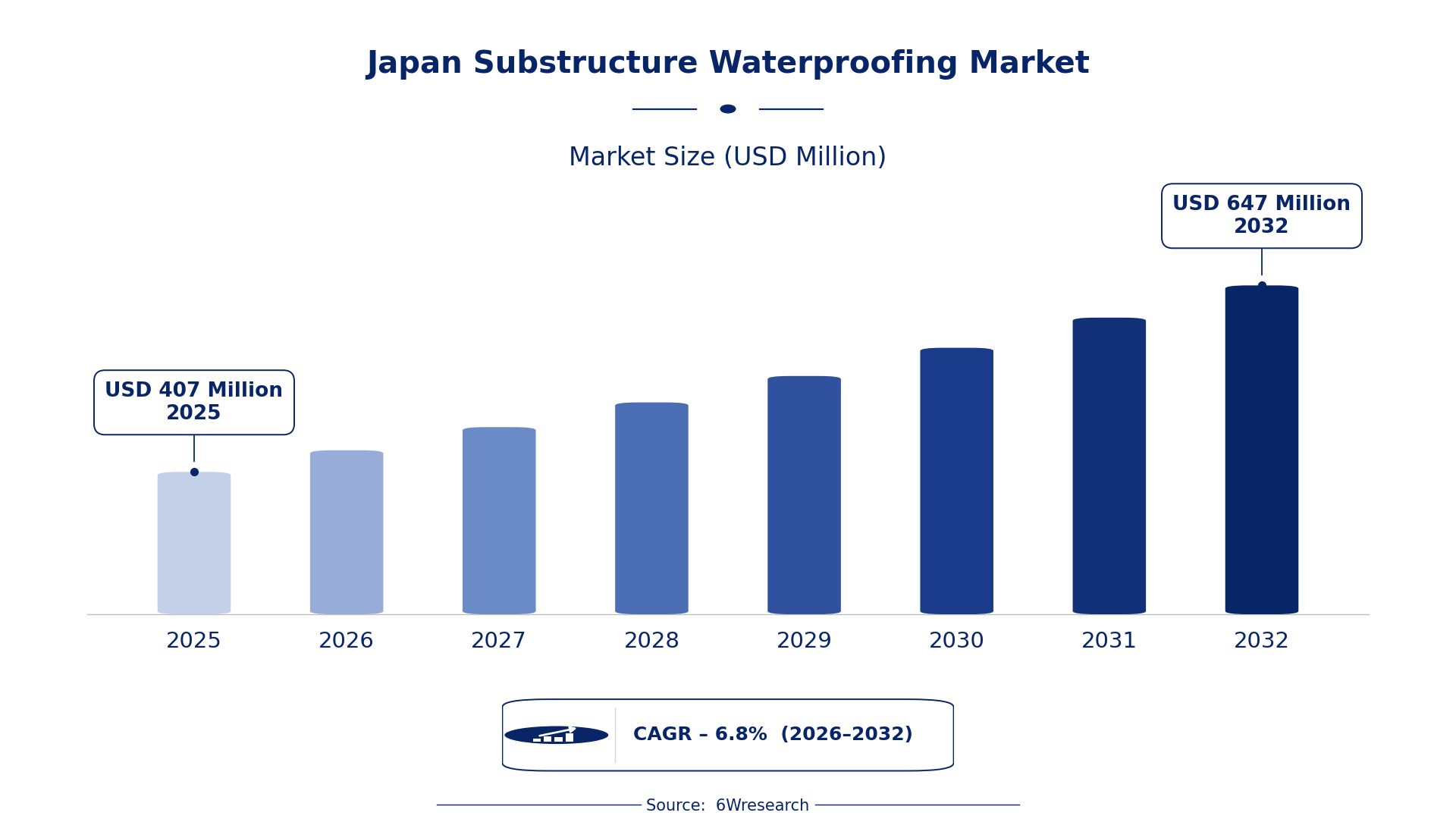
According to 6Wresearch internal database and industry insights, the Japan Substructure Waterproofing Market was valued at USD 407 Million in 2025 and is projected to reach USD 647 Million by 2032, growing at a CAGR of approximately 6.8% during 2026–2032.
Japan Substructure Waterproofing Market Highlights
| Report Metric | Details |
| Report Name | Japan Substructure Waterproofing Market (2026-2032) |
| Market Size 2025 | USD 407 Million |
| Market Size 2032 | USD 647 Million |
| Absolute Growth 2025–2032 | USD 240 Million |
| CAGR 2026–2032 | 6.8% |
| Peak Annual Growth | 8.0% in 2026 |
| Forecast Period | 2026–2032 |
| Historical Data | 2022–2025 |
| Base Year | 2025 |
| Leading Waterproofing Type, 2025 | Membrane Systems (46% share) |
| Leading Material Type, 2025 | Bituminous (44% share) |
| Leading Structure Type, 2025 | Foundations (40% share) |
| Leading End User, 2025 | Residential Developers (50% share) |
| Fastest-Growing Waterproofing Type | Liquid Waterproofing (9.2% CAGR) |
| Fastest-Growing Material Type | Polyurethane (9.7% CAGR) |
| Fastest-Growing Structure Type | Tunnels (9.4% CAGR) |
| Fastest-Growing End User | Civil Engineers (8.5% CAGR) |
| Growing Sector | Residential Construction |
| Key End Users | Residential Developers, Civil Engineers, Infrastructure Builders, Basement Contractors |
Japan Substructure Waterproofing Market Year-wise Growth Rate and Key Drivers (2022–2032)
This graph illustrates the annual growth rates of the market from 2022 to 2032, highlighting a steady upward trajectory and projected market expansion over the forecast period.
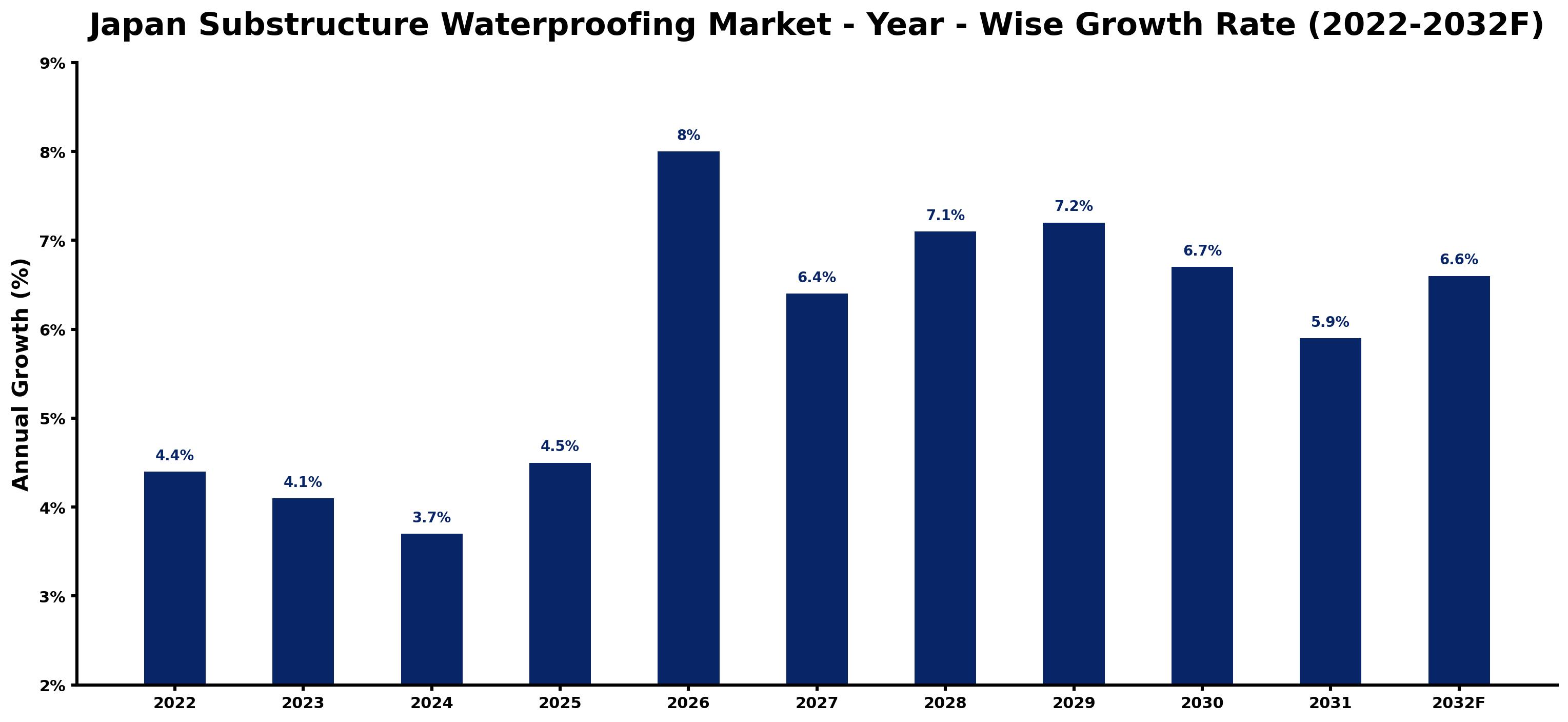
The following figures match every annual growth estimate with the main market development of that year, giving the reasoning behind each rise or slowdown.
| Year | Estimated Annual Growth (%) | Market Rationale |
| 2022 | 4.4 | The market experienced steady growth due to ongoing construction activities. |
| 2023 | 4.1 | Growth slowed as residential development faced temporary challenges in project initiation. |
| 2024 | 3.7 | The market continued to grow but at a slower pace due to market saturation. |
| 2025 | 4.5 | Growth accelerated as new residential projects were launched across urban areas. |
| 2026 | 8.0 | The peak growth year is expected to be driven by increased infrastructure investments and urban development. |
| 2027 | 6.4 | Growth is projected to slow slightly as the market begins to stabilise after peak demand. |
| 2028 | 7.1 | Demand is expected to increase again, supported by ongoing urban transit projects and infrastructure upgrades. |
| 2029 | 7.2 | The market is projected to maintain growth as new residential buildings continue to rise. |
| 2030 | 6.7 | Growth is expected to slow as the market adjusts to previous high levels of activity. |
| 2031 | 5.9 | The market will continue to grow at a slower rate as demand stabilises. |
| 2032 | 6.6 | Growth is expected to pick up again, driven by new construction standards and energy efficiency initiatives. |
Note: Market size estimations and growth projections presented in this report are based on 6Wresearch's proprietary forecasting methodology, utilizing the latest available industry data, government publications, and primary research inputs.
Japan Substructure Waterproofing Market Synopsis
Substructure waterproofing technologies prevent water ingress in below-ground structures using materials like membranes, coatings, and clay sheets. The Japan Substructure Waterproofing Market is growing due to strong demand from residential developers and infrastructure builders, particularly in urban areas like Tokyo and Osaka. Ongoing urban transit projects and government initiatives to improve infrastructure resilience are driving new demand, creating opportunities for suppliers in this sector.
Market Dynamics Impact Analysis (2026–2032)
| Factor | Type | Impact | Primary Segment Affected |
| Increasing urbanisation and residential development drive demand for waterproofing solutions. | Driver | High | Membrane Systems |
| The rise in infrastructure projects necessitates effective waterproofing for tunnels and foundations. | Driver | High | Tunnels |
| Growing adoption of energy-efficient building materials creates opportunities for innovative waterproofing solutions. | Opportunity | High | Liquid Waterproofing |
| The demand for eco-friendly construction practices opens avenues for natural waterproofing materials. | Opportunity | Medium | Natural Clay |
| High competition among suppliers can lead to price wars, affecting profitability. | Restraint | High | Bituminous |
| The average lifespan of waterproofing materials limits repeat purchases in the short term. | Restraint | Medium | Cementitious |
| Supply chain disruptions can delay project timelines for construction firms. | Challenge | High | Civil Engineers |
| Regulatory changes may require additional certifications, increasing compliance costs for suppliers. | Challenge | Medium | Basement Contractors |
Evaluation of Drivers in Japan Substructure Waterproofing Market (2026–2032)
These are the developments adding the most demand over the forecast period.
| Drivers | Primary Segment Affected | Why It Matters (Evidence) |
| Investment in urban infrastructure projects is increasing demand for waterproofing solutions. | Tunnels | The government has allocated significant funds for infrastructure improvements, leading to a surge in tunnel construction. |
| Residential development is driving the need for effective waterproofing in foundations. | Foundations | The total number of new residential buildings in Japan reached 900,000 in 2023, boosting demand for waterproofing solutions. |
| Growing adoption of liquid waterproofing solutions is creating new market opportunities. | Liquid Waterproofing | Liquid waterproofing solutions are increasingly adopted in residential construction due to their ease of application. |
| The popularity of energy-efficient building materials is creating new demand for waterproofing. | Polyurethane | In 2023, the government initiated a subsidy program for energy-efficient building materials, including waterproofing solutions. |
| The ongoing urbanisation in key regions like Tokyo drives demand for waterproofing technologies. | Membrane Systems | Tokyo's population of approximately 14 million is a major factor in residential development. |
Spending rises as urban infrastructure projects increase, boosting demand for waterproofing solutions. Substantial funds allocated for infrastructure improvements are advancing tunnel construction, driving the need for waterproofing in this segment. In 2023, the total number of new residential buildings reached 900,000, heightening the need for effective waterproofing in foundations. As urbanisation accelerates, the demand for advanced waterproofing solutions continues to rise, particularly in metropolitan areas.
Evaluation of Restraints in Japan Substructure Waterproofing Market
Below are the constraints most often cited by buyers and suppliers, with the segment each affects.
| Market Restraint | Primary Segment Affected | Why It Matters (Evidence) |
| High competition among suppliers can lead to price wars, affecting profitability. | Bituminous | The intense competition in the waterproofing market pressures suppliers to lower prices, impacting margins. |
| The average lifespan of waterproofing materials limits repeat purchases in the short term. | Cementitious | With an estimated lifespan of 10-20 years, customers may delay repurchasing waterproofing materials. |
| Supply chain disruptions can delay project timelines for construction firms. | Civil Engineers | Material shortages can hinder project completion, affecting timelines and budgets. |
| Regulatory changes may require additional certifications, increasing compliance costs for suppliers. | Basement Contractors | New regulations can impose additional financial burdens on contractors, affecting their operational costs. |
| Economic fluctuations can impact construction budgets, limiting waterproofing expenditures. | Residential Developers | Economic downturns may lead to reduced budgets for construction projects, affecting waterproofing demand. |
Japan Substructure Waterproofing Market Challenges
High material costs challenge producers, as raw material prices have increased by 15%, eroding profit margins. Buyers face project delays due to lengthy approval processes for waterproofing standards, which can extend timelines by an average of three months. Limited adoption of new waterproofing technologies constrains producers, forcing buyers to rely on outdated methods that may not meet current requirements. Supply chain disruptions for specialised materials can delay projects, resulting in penalties and lost revenue for contractors, jeopardising their financial stability.
Trends in the Japan Substructure Waterproofing Market
Below are the shifts with the largest effect on the Japan Substructure Waterproofing Market.
- Growing Demand for Waterproofing in Urban Transit Projects: Infrastructure Builders are focusing on waterproofing solutions for tunnels as urban transit projects expand. The demand for waterproofing in tunnels is driven by ongoing projects, with investments of over USD 200 million allocated for improvements.
- Transition from Traditional to Liquid Waterproofing Solutions: The construction industry is moving towards liquid waterproofing solutions due to their ease of application. In 2023, liquid waterproofing adoption increased by 15%, particularly in residential projects, as builders seek efficient methods.
- Emergence of Eco-Friendly Waterproofing Practices: Civil Engineers are prioritising eco-friendly waterproofing materials in response to growing environmental concerns. The use of natural clay in specific applications has gained traction, reflecting a shift towards sustainability in construction, with a 20% increase in usage.
- Shift towards Energy-Efficient Building Materials: Residential Developers are increasingly adopting energy-efficient building materials, including waterproofing solutions, driven by government subsidies. In 2023, the government initiated a program to support energy-efficient construction, leading to a rise in demand for advanced waterproofing technologies.
Investment Opportunities in the Japan Substructure Waterproofing Market
Where to invest in the Japan Substructure Waterproofing Market: the main openings are set out below.
- Focus on Tunnel Waterproofing Solutions: Infrastructure Builders are driving demand for waterproofing in tunnels, particularly in mountainous regions. Suppliers can capitalise on this opportunity by providing advanced waterproofing technologies tailored for tunnel applications, with a projected market growth of 10%.
- Supply of Effective Waterproofing Technologies: Liquid waterproofing solutions are increasingly in demand, especially in residential construction. Suppliers can enter this market through partnerships with local contractors to meet the growing need for effective applications, with a 15% increase in demand expected.
- Expansion into Eco-Friendly Products: Natural waterproofing materials are gaining popularity, particularly in eco-friendly projects. Suppliers can invest in developing these materials to cater to environmentally conscious buyers, especially in urban areas, where demand is projected to grow by 25%.
- Investment in Urban Infrastructure: Tokyo is a key region for urban infrastructure projects, presenting opportunities for waterproofing suppliers. The government has allocated over USD 300 million for infrastructure improvements, creating a gap in the market for effective waterproofing solutions.
Government Initiatives in the Japan Substructure Waterproofing Market
The Building Energy Efficiency Act, amended in 2022, mandates that all new buildings must meet energy standards from April 2025. This law affects producers as they must adapt their waterproofing solutions to comply with these standards, ensuring energy efficiency in construction materials. The act aims to reduce energy consumption in buildings by 30% by 2030, impacting the waterproofing sector significantly.
The Japan Society of Civil Engineers oversees standards for construction materials, including waterproofing. This agency is responsible for approving new waterproofing technologies and ensuring they meet safety and performance criteria, benefiting both producers and buyers. In 2023, the agency approved 15 new waterproofing products, enhancing market competitiveness.
Future Insight of the Japan Substructure Waterproofing Market
A policy-driven emphasis on infrastructure resilience will reshape the waterproofing market by 2032, encouraging suppliers to adopt advanced technologies. The government's subsidy program for energy-efficient materials will motivate buyers to invest in sustainable waterproofing solutions. Civil engineering projects are set to increase by 5% in 2024, leading to heightened demand for waterproofing in high-rise buildings. As urbanisation progresses, integrating smart technologies into waterproofing systems will become essential for both buyers and suppliers.
Market Segmentation Analysis
Japan Substructure Waterproofing Market report covers a detailed analysis of the following market segments:
By Waterproofing Type – Membrane Systems Lead, Liquid Waterproofing Expected to Grow Fastest
According to Saurav Kr Singh, Senior Research Analyst at 6Wresearch, with 46% of waterproofing type revenue in 2025, Membrane Systems was the largest category. Membrane systems are prevalent in the market due to their extensive use in waterproofing foundations and underground structures, particularly in urban areas like Tokyo. Their established presence is reinforced by compliance with standards set by the Japan Society of Civil Engineers, ensuring reliability. Liquid Waterproofing is set to record the highest CAGR in this split, 9.2% over 2026–2032. Liquid waterproofing is experiencing rapid growth, especially in residential construction, where its seamless application is highly sought after. The increase in new residential buildings, which reached 900,000 in 2023, significantly boosts the demand for these solutions. Suppliers should enhance their liquid waterproofing offerings to effectively meet the rising demand from the residential sector.
By Material Type – Bituminous Leads, Polyurethane Expected to Grow Fastest
Bituminous held 44% of the Japan Substructure Waterproofing Market by material type in 2025. Bituminous materials dominate the market owing to their durability and effectiveness in waterproofing applications, making them a preferred choice for various construction projects. Their reliability has solidified their status as a fundamental component in waterproofing, especially in urban developments. Over 2026–2032, Polyurethane is expected to post the fastest growth, at a CAGR of 9.7%. Polyurethane is the fastest-growing material, valued for its flexibility and resistance to water, which is essential for adapting to varying environmental conditions. This material's unique characteristics align well with the increasing requirements of construction projects, driving its adoption. Suppliers should focus on promoting polyurethane solutions to leverage the growing demand for adaptable waterproofing materials.
By Structure Type – Foundations Lead, Tunnels Expected to Grow Fastest
Foundations took 40% of structure type revenue in 2025, more than any other category. Foundations are the largest segment as they are crucial for preventing water damage to buildings, particularly in densely populated regions like Tokyo. The emphasis on effective foundation waterproofing is vital for maintaining structural integrity in urban environments. The quickest growth will come from Tunnels, forecast to expand at a CAGR of 9.4% between 2026 and 2032. Tunnels represent the fastest-growing segment due to their importance in infrastructure projects, especially in urban transit systems. With civil engineering projects projected to increase by 5% in 2024, the demand for tunnel waterproofing will continue to rise. Suppliers must prioritise tunnel waterproofing solutions to capitalise on the anticipated growth in infrastructure projects.
By End User – Residential Developers Lead, Civil Engineers Expected to Grow Fastest
In 2025, Residential Developers led the end user split with a 50% share. Residential developers account for the largest share as they generate substantial demand for waterproofing solutions in housing projects throughout Japan. The ongoing residential construction boom, particularly in urban centres, reinforces their role as key market players. Civil Engineers are projected to grow fastest, at a CAGR of 8.5% during 2026–2032. Civil engineers are the fastest-growing end user group, as they are essential in designing and specifying waterproofing systems for various projects. Their increasing participation in new construction initiatives directly correlates with the rising demand for effective waterproofing solutions. Suppliers should engage more with civil engineers to align their products with the specifications and requirements of modern construction projects.
Key Attractiveness of the Report
- 10 Years of Market Numbers
- Historical Data Starting from 2022 to 2025
- Base Year 2025
- Forecast Data until 2032
- Key Performance Indicators Impacting the Market
- Major Upcoming Developments and Projects
Key Highlights of the Report:
- Japan Substructure Waterproofing Market Outlook
- Market Size of Japan Substructure Waterproofing Market, 2025
- Forecast of Japan Substructure Waterproofing Market, 2032
- Historical Data and Forecast of Japan Substructure Waterproofing Revenues & Volume for the Period 2022-2032F
- Japan Substructure Waterproofing Market Trend Evolution
- Japan Substructure Waterproofing Market Drivers and Challenges
- Japan Substructure Waterproofing Price Trends
- Japan Substructure Waterproofing Porter's Five Forces
- Japan Substructure Waterproofing Industry Life Cycle
- Historical Data and Forecast of Japan Substructure Waterproofing Market Revenues & Volume By Waterproofing Type for the Period 2022-2032F
- Historical Data and Forecast of Japan Substructure Waterproofing Market Revenues & Volume By Membrane Systems for the Period 2022-2032F
- Historical Data and Forecast of Japan Substructure Waterproofing Market Revenues & Volume By Crystalline Coatings for the Period 2022-2032F
- Historical Data and Forecast of Japan Substructure Waterproofing Market Revenues & Volume By Liquid Waterproofing for the Period 2022-2032F
- Historical Data and Forecast of Japan Substructure Waterproofing Market Revenues & Volume By Bentonite Clay Sheets for the Period 2022-2032F
- Historical Data and Forecast of Japan Substructure Waterproofing Market Revenues & Volume By Material Type for the Period 2022-2032F
- Historical Data and Forecast of Japan Substructure Waterproofing Market Revenues & Volume By Bituminous for the Period 2022-2032F
- Historical Data and Forecast of Japan Substructure Waterproofing Market Revenues & Volume By Cementitious for the Period 2022-2032F
- Historical Data and Forecast of Japan Substructure Waterproofing Market Revenues & Volume By Polyurethane for the Period 2022-2032F
- Historical Data and Forecast of Japan Substructure Waterproofing Market Revenues & Volume By Natural Clay for the Period 2022-2032F
- Historical Data and Forecast of Japan Substructure Waterproofing Market Revenues & Volume By Structure Type for the Period 2022-2032F
- Historical Data and Forecast of Japan Substructure Waterproofing Market Revenues & Volume By Foundations for the Period 2022-2032F
- Historical Data and Forecast of Japan Substructure Waterproofing Market Revenues & Volume By Underground Walls for the Period 2022-2032F
- Historical Data and Forecast of Japan Substructure Waterproofing Market Revenues & Volume By Tunnels for the Period 2022-2032F
- Historical Data and Forecast of Japan Substructure Waterproofing Market Revenues & Volume By Below-Grade Slabs for the Period 2022-2032F
- Historical Data and Forecast of Japan Substructure Waterproofing Market Revenues & Volume By End User for the Period 2022-2032F
- Historical Data and Forecast of Japan Substructure Waterproofing Market Revenues & Volume By Basement Contractors for the Period 2022-2032F
- Historical Data and Forecast of Japan Substructure Waterproofing Market Revenues & Volume By Civil Engineers for the Period 2022-2032F
- Historical Data and Forecast of Japan Substructure Waterproofing Market Revenues & Volume By Infrastructure Builders for the Period 2022-2032F
- Historical Data and Forecast of Japan Substructure Waterproofing Market Revenues & Volume By Residential Developers for the Period 2022-2032F
- Japan Substructure Waterproofing Import Export Trade Statistics
- Market Opportunity Assessment By Waterproofing Type
- Market Opportunity Assessment By Material Type
- Market Opportunity Assessment By Structure Type
- Market Opportunity Assessment By End User
- Japan Substructure Waterproofing Top Companies Market Share
- Japan Substructure Waterproofing Competitive Benchmarking By Technical and Operational Parameters
- Japan Substructure Waterproofing Company Profiles
- Japan Substructure Waterproofing Key Strategic Recommendations
Market Covered
Segments analysed in this report are listed below.
By Waterproofing Type
- Membrane Systems
- Crystalline Coatings
- Liquid Waterproofing
- Bentonite Clay Sheets
By Material Type
- Bituminous
- Cementitious
- Polyurethane
- Natural Clay
By Structure Type
- Foundations
- Underground Walls
- Tunnels
- Below-Grade Slabs
By End User
- Basement Contractors
- Civil Engineers
- Infrastructure Builders
- Residential Developers































