Japan Sustainable Ag Inputs Market Size & Growth Rate
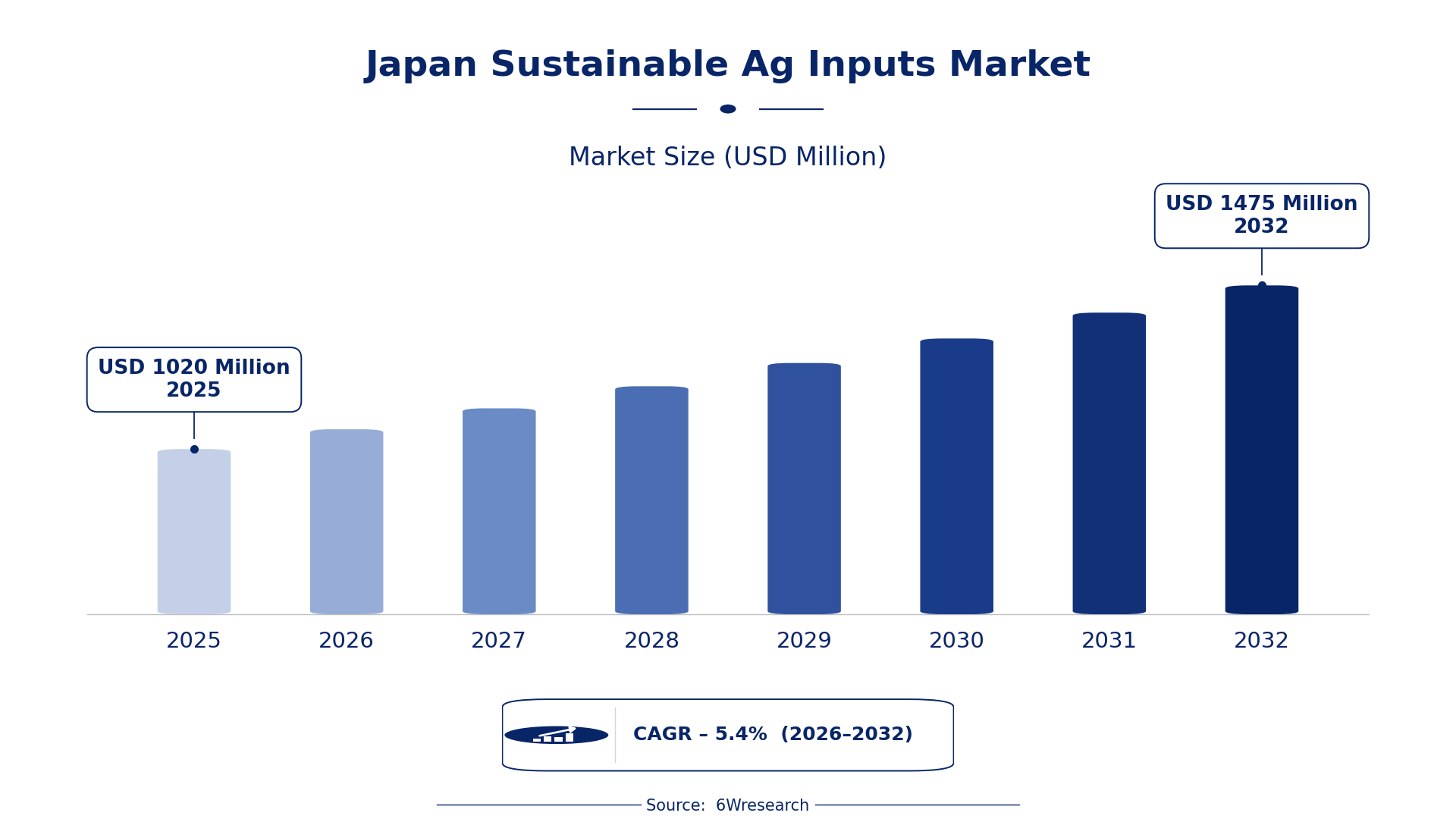
According to 6Wresearch internal database and industry insights, the Japan Sustainable Ag Inputs Market was valued at USD 1,020 Million in 2025 and is projected to reach USD 1,475 Million by 2032, growing at a CAGR of approximately 5.4% during 2026–2032.
Japan Sustainable Ag Inputs Market Highlights
| Report Metric | Details |
| Report Name | Japan Sustainable Ag Inputs Market (2026-2032) |
| Market Size 2025 | USD 1,020 Million |
| Market Size 2032 | USD 1,475 Million |
| Absolute Growth 2025–2032 | USD 455 Million |
| CAGR 2026–2032 | 5.4% |
| Peak Annual Growth | 6.5% in 2029 |
| Forecast Period | 2026–2032 |
| Historical Data | 2022–2025 |
| Base Year | 2025 |
| Leading Input Type, 2025 | Biofertilizers (47% share) |
| Leading Source Type, 2025 | Microbial/Plant-Based (33% share) |
| Leading Application Type, 2025 | Soil Improvement (48% share) |
| Leading End User, 2025 | Organic Farmers (41% share) |
| Fastest-Growing Input Type | Biopesticides (7.9% CAGR) |
| Fastest-Growing Source Type | Botanical/Insecticidal (8.1% CAGR) |
| Fastest-Growing Application Type | Soil Health (7.3% CAGR) |
| Fastest-Growing End User | Sustainable Ag Firms (7.4% CAGR) |
| Growing Sector | Organic Farming |
| Key End Users | Organic Farmers, Agricultural Cooperatives, Sustainable Ag Firms, Smallholder Farmers |
Japan Sustainable Ag Inputs Market Year-wise Growth Rate and Key Drivers (2022–2032)
This graph illustrates the annual growth rates of the market from 2022 to 2032, highlighting a steady upward trajectory and projected market expansion over the forecast period.
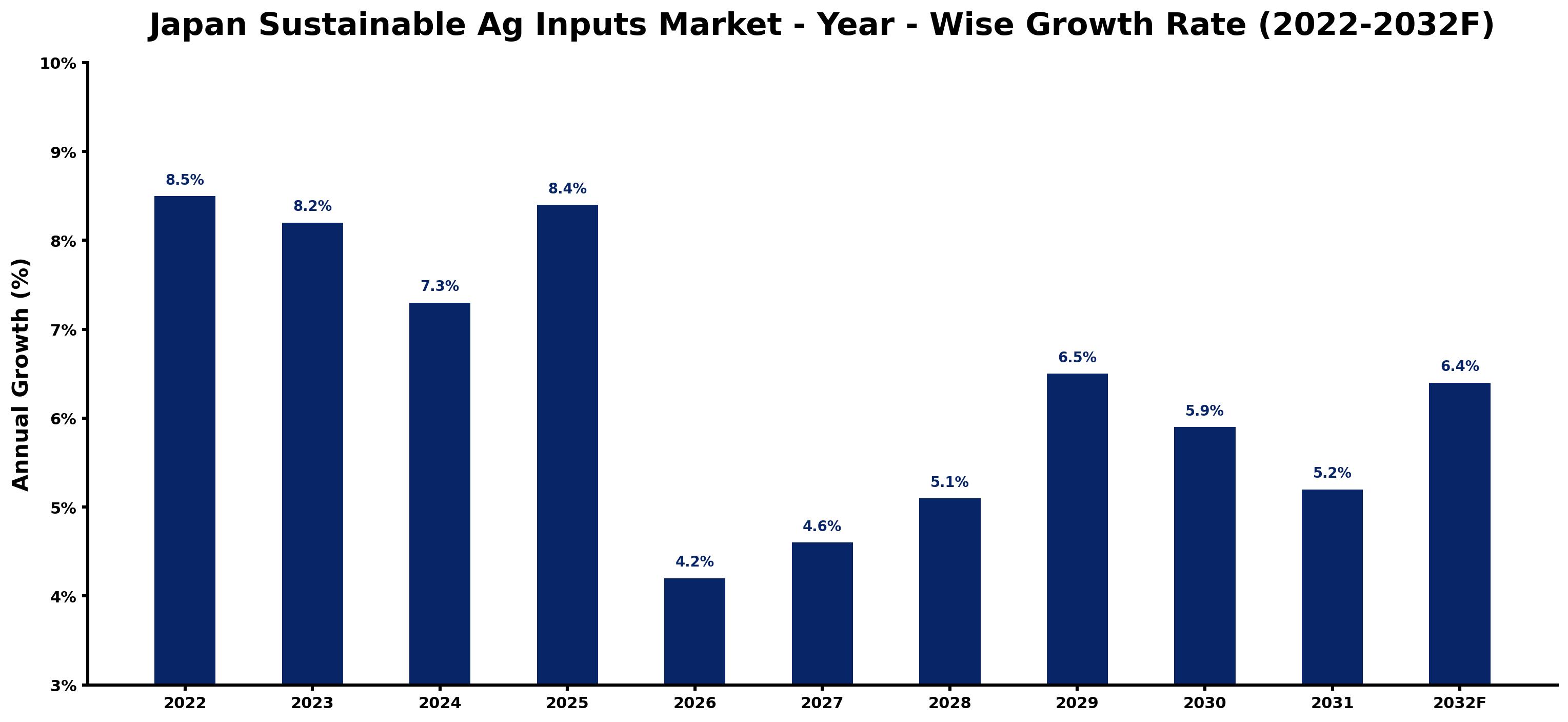
Annual growth estimates for each year appear below with the principal reason behind them, explaining the shifts that set the pace of the market.
| Year | Estimated Annual Growth (%) | Market Rationale |
| 2022 | 8.5 | The market showed strong performance due to heightened awareness of eco-friendly practices. |
| 2023 | 8.2 | Growth slowed as supply chains adjusted to rising demand for sustainable inputs. |
| 2024 | 7.3 | Demand continued to rise, but at a slower pace as market saturation began to set in. |
| 2025 | 8.4 | Growth accelerated again as more farmers adopted eco-friendly practices and inputs. |
| 2026 | 4.2 | The market growth rate is expected to decrease as competition intensifies among suppliers. |
| 2027 | 4.6 | A slight increase in growth will occur as technological advancements improve product effectiveness. |
| 2028 | 5.1 | Demand will rise further as organic farming practices gain popularity among consumers. |
| 2029 | 6.5 | The market is projected to peak with investments in sustainable agriculture technology. |
| 2030 | 5.9 | Growth is expected to slow as the market matures and competition increases. |
| 2031 | 5.2 | A further slowdown will be observed as buyers become more selective in their purchases. |
| 2032 | 6.4 | Demand is expected to rise again as new technologies improve product offerings. |
Note: Market size estimations and growth projections presented in this report are based on 6Wresearch's proprietary forecasting methodology, utilizing the latest available industry data, government publications, and primary research inputs.
Japan Sustainable Ag Inputs Market Synopsis
Sustainable Ag Inputs in Japan include biofertilizers and biopesticides made from natural materials, aimed at improving soil fertility and protecting crops. The Japan Sustainable Ag Inputs Market is expanding due to rising demand from organic farmers and agricultural cooperatives. Key growth factors include Japan's target to increase organic farmland to 5% by 2030 and support from the Ministry of Agriculture, Forestry and Fisheries, driving more purchases of eco-friendly products.
Market Dynamics Impact Analysis (2026–2032)
| Factor | Type | Impact | Primary Segment Affected |
| Increasing organic farmland targets | Driver | High | Biofertilizers |
| Rising consumer preference for organic products | Driver | High | Biopesticides |
| Growing demand for eco-friendly farming solutions | Opportunity | Medium | Organic Soil Conditioners |
| Expansion of agricultural cooperatives supporting organic farmers | Opportunity | Medium | Natural Growth Promoters |
| Regulatory challenges for new product approvals | Restraint | High | Microbial/Plant-Based |
| Limited awareness among traditional farmers | Restraint | Medium | Botanical/Insecticidal |
| Competition from conventional agricultural inputs | Challenge | High | Compost/Vermicompost |
| High initial investment costs for sustainable practices | Challenge | Medium | Seaweed/Protein Hydrolysate |
Evaluation of Drivers in Japan Sustainable Ag Inputs Market (2026–2032)
The table below links each growth driver to the segment it affects and the evidence for it.
| Drivers | Primary Segment Affected | Why It Matters (Evidence) |
| Government initiatives promoting organic farming | Biofertilizers | Support from authorities has led to a 30% contribution of biofertilizers to sustainable ag inputs. |
| Consumer demand for organic produce | Biopesticides | As organic farming area reached 200,000 hectares in 2022, demand for biopesticides increased significantly. |
| Technological advancements in sustainable agriculture | Organic Soil Conditioners | Innovations in soil improvement techniques have led to increased usage of organic soil conditioners in various regions. |
| Support from agricultural cooperatives | Natural Growth Promoters | Agricultural cooperatives provide access to sustainable inputs for farmers, boosting adoption rates. |
| Rising awareness of environmental issues | Microbial/Plant-Based | Growing environmental concerns increase demand for microbial and plant-based inputs among farmers. |
Several shifts outside the market lift sales. Demand for sustainable agricultural practices is rising as more farmers recognise the benefits of eco-friendly inputs. In 2022, the organic farming area reached 200,000 hectares, which increased the need for biopesticides. Technological advancements have improved the effectiveness of organic soil conditioners, particularly in regions like Hokkaido and Kumamoto. Agricultural cooperatives provide better access to these inputs, while growing consumer awareness of environmental issues drives demand for microbial and plant-based solutions.
Evaluation of Restraints in Japan Sustainable Ag Inputs Market
The table below lists the restraints and the evidence behind each.
| Market Restraint | Primary Segment Affected | Why It Matters (Evidence) |
| Regulatory challenges for new product approvals | Microbial/Plant-Based | Compliance with existing regulations creates delays in bringing new products to market, impacting supply. |
| Limited awareness among traditional farmers | Botanical/Insecticidal | Many traditional farmers lack knowledge about sustainable inputs, hindering adoption rates and market growth. |
| High initial investment costs for sustainable practices | Compost/Vermicompost | Transitioning to sustainable practices incurs costs that deter farmers from adopting these inputs. |
| Competition from conventional agricultural inputs | Seaweed/Protein Hydrolysate | Conventional inputs are often cheaper and more familiar to farmers, limiting the market's growth potential. |
| Market saturation in certain regions | Organic Soil Conditioners | In areas with high organic farming, the market for soil conditioners is becoming saturated, reducing growth opportunities. |
Japan Sustainable Ag Inputs Market Challenges
Buyers of sustainable ag inputs in Japan encounter high costs due to the limited availability of organic materials, which have inflated prices by 25% this year. Competition among producers is intensifying as new entrants enter the market, resulting in price wars that can diminish profit margins by 15% for smaller firms. Regulatory hurdles create delays; compliance with the Agricultural Chemicals Regulation Law can extend product approval times by six months, affecting supply for farmers. Technology adoption lags, with only 30% of producers employing advanced farming techniques, restricting efficiency and growth for the sector.
Trends in the Japan Sustainable Ag Inputs Market
The shifts below are changing how Japan Sustainable Ag Inputs Market products are bought and supplied.
- Shift from Conventional to Sustainable Inputs: Since 2022, there has been a notable shift towards sustainable agricultural inputs in Japan, particularly among organic farmers. In 2023, 40% of organic farmers reported using biofertilizers regularly, reflecting this change.
- Emergence of Biopesticides as Preferred Solutions: The trend towards biopesticides has gained traction, especially in Hokkaido, where regulations support their use. In 2022, biopesticides accounted for a significant portion of sustainable inputs, indicating a shift in pest control methods.
- Increased Adoption of Organic Soil Conditioners: Organic soil conditioners are becoming increasingly popular among farmers, particularly in Kumamoto. The growing focus on soil health has led to a rise in their usage, with a notable increase reported in 2023.
- Focus on Microbial and Plant-Based Solutions: The demand for microbial and plant-based inputs is on the rise, driven by consumer preferences for sustainable practices. In 2022, these inputs contributed significantly to the overall market for sustainable ag inputs.
Investment Opportunities in the Japan Sustainable Ag Inputs Market
Where to invest in the Japan Sustainable Ag Inputs Market: the main openings are set out below.
- Investment in Biofertilizers: With 30% of sustainable ag inputs being biofertilizers, there is a strong opportunity for investment in this area. Organic farmers in rural regions are particularly keen to adopt these products.
- Expansion of Agricultural Cooperatives: The growth of agricultural cooperatives presents an opportunity for partnerships. By collaborating with local cooperatives, suppliers can improve distribution and access to sustainable inputs.
- Development of Innovative Biopesticides: The increasing demand for biopesticides creates a gap for innovative solutions. Suppliers can target organic farmers who are looking for effective pest control methods.
- Enhancement of Soil Health Products: The focus on soil health is driving demand for organic soil conditioners. Suppliers can enter this market by partnering with local agricultural institutions.
Government Initiatives in the Japan Sustainable Ag Inputs Market
The Sustainable Agricultural Promotion Act encourages eco-friendly farming practices and supports the development of sustainable ag inputs. This act complements the Waste Management and Public Cleansing Act, which regulates waste disposal, ensuring that agricultural practices remain environmentally friendly. The government aims to increase organic farmland to 5% by 2030, promoting sustainable agriculture across the country.
The Ministry of Agriculture, Forestry and Fisheries oversees the implementation of various initiatives to support sustainable agriculture. This agency funds projects aimed at increasing organic farming practices and approves standards for sustainable inputs, ensuring quality and safety for consumers and producers alike.
Future Insight of the Japan Sustainable Ag Inputs Market
Emerging technologies such as precision farming will reshape demand for sustainable ag inputs, enabling farmers to optimise resource use effectively. New quality standards set by the JIS will improve product reliability, benefiting buyers and suppliers alike. Japan's goal to increase organic farmland to 5% by 2030 will expand the area dedicated to sustainable practices. Support from the Ministry of Agriculture, Forestry and Fisheries will further encourage eco-friendly methods, creating new opportunities for producers.
Market Segmentation Analysis
Japan Sustainable Ag Inputs Market report covers a detailed analysis of the following market segments:
By Input Type – Biofertilizers Lead, Biopesticides Expected to Grow Fastest
According to Saurav Kr Singh, Senior Research Analyst at 6Wresearch, Biofertilizers accounted for 47% of the market by input type in 2025. Biofertilizers hold the largest market share as they are vital for enhancing soil fertility and crop yield, particularly among organic farmers. With 40% of organic farmers using biofertilizers regularly, their importance in sustainable agriculture is evident. Biopesticides are set to record the highest CAGR in this split, 7.9% over 2026–2032. Biopesticides are witnessing rapid growth as they provide an environmentally safe option for pest management, aligning with the increasing demand for sustainable agricultural practices. The government's Green Food System Strategy actively promotes the use of biopesticides, further accelerating their adoption. Suppliers should focus on developing biopesticides to meet the rising demand for sustainable pest control solutions.
By Source Type – Microbial/Plant-Based Leads, Botanical/Insecticidal Expected to Grow Fastest
Microbial/Plant-Based held 33% of the Japan Sustainable Ag Inputs Market by source type in 2025. Microbial/Plant-Based inputs dominate the market as they are derived from natural organisms, which are essential for promoting soil health among organic farmers. These inputs align with the Ministry of Agriculture, Forestry and Fisheries' initiatives to support sustainable agriculture. Botanical/Insecticidal is projected to grow fastest, at a CAGR of 8.1% during 2026–2032. Botanical/Insecticidal sources are rapidly gaining traction due to their effectiveness in pest control without harming the environment, appealing to eco-conscious farmers. This growth is further encouraged by the Sustainable Agricultural Promotion Act. Suppliers should prioritise the development of botanical and insecticidal products to capitalise on this growing market segment.
By Application Type – Soil Improvement Leads, Soil Health Expected to Grow Fastest
With 48% of application type revenue in 2025, Soil Improvement was the largest category. Soil Improvement applications are crucial as they significantly enhance soil quality and fertility, which are essential for successful organic farming. The increase in organic farming areas, reaching 200,000 hectares in 2022, highlights the critical need for soil improvement solutions. The quickest growth will come from Soil Health, forecast to expand at a CAGR of 7.3% between 2026 and 2032. Soil Health applications are growing rapidly as they aim to maintain and improve the soil ecosystem, which is vital for sustainable farming. The shift towards organic farming practices drives the demand for solutions that enhance soil health. This indicates that suppliers should prioritise the development of products that promote soil health to meet farmers' evolving requirements.
By End User – Organic Farmers Lead, Sustainable Ag Firms Expected to Grow Fastest
In 2025, Organic Farmers led the end user split with a 41% share. Organic Farmers represent the largest segment of users for sustainable ag inputs, being the primary adopters of environmentally friendly agricultural practices. Their significant reliance on biofertilizers illustrates their commitment to sustainable farming methods. Over 2026–2032, Sustainable Ag Firms are expected to post the fastest growth, at a CAGR of 7.4%. Sustainable Ag Firms are increasingly adopting sustainable inputs as they integrate eco-friendly practices into their operations, reflecting a broader industry transition towards sustainability. Government initiatives that promote sustainable agriculture further bolster this trend. This suggests that suppliers should engage with sustainable ag firms to expand their market reach and align with industry trends.
Key Attractiveness of the Report
- 10 Years of Market Numbers
- Historical Data Starting from 2022 to 2025
- Base Year 2025
- Forecast Data until 2032
- Key Performance Indicators Impacting the Market
- Major Upcoming Developments and Projects
Key Highlights of the Report:
- Japan Sustainable Ag Inputs Market Outlook
- Market Size of Japan Sustainable Ag Inputs Market, 2025
- Forecast of Japan Sustainable Ag Inputs Market, 2032
- Historical Data and Forecast of Japan Sustainable Ag Inputs Revenues & Volume for the Period 2022-2032F
- Japan Sustainable Ag Inputs Market Trend Evolution
- Japan Sustainable Ag Inputs Market Drivers and Challenges
- Japan Sustainable Ag Inputs Price Trends
- Japan Sustainable Ag Inputs Porter's Five Forces
- Japan Sustainable Ag Inputs Industry Life Cycle
- Historical Data and Forecast of Japan Sustainable Ag Inputs Market Revenues & Volume By Input Type for the Period 2022-2032F
- Historical Data and Forecast of Japan Sustainable Ag Inputs Market Revenues & Volume By Biofertilizers for the Period 2022-2032F
- Historical Data and Forecast of Japan Sustainable Ag Inputs Market Revenues & Volume By Biopesticides for the Period 2022-2032F
- Historical Data and Forecast of Japan Sustainable Ag Inputs Market Revenues & Volume By Organic Soil Conditioners for the Period 2022-2032F
- Historical Data and Forecast of Japan Sustainable Ag Inputs Market Revenues & Volume By Natural Growth Promoters for the Period 2022-2032F
- Historical Data and Forecast of Japan Sustainable Ag Inputs Market Revenues & Volume By Source Type for the Period 2022-2032F
- Historical Data and Forecast of Japan Sustainable Ag Inputs Market Revenues & Volume By Microbial/Plant-Based for the Period 2022-2032F
- Historical Data and Forecast of Japan Sustainable Ag Inputs Market Revenues & Volume By Botanical/Insecticidal for the Period 2022-2032F
- Historical Data and Forecast of Japan Sustainable Ag Inputs Market Revenues & Volume By Compost/Vermicompost for the Period 2022-2032F
- Historical Data and Forecast of Japan Sustainable Ag Inputs Market Revenues & Volume By Seaweed/Protein Hydrolysate for the Period 2022-2032F
- Historical Data and Forecast of Japan Sustainable Ag Inputs Market Revenues & Volume By Application Type for the Period 2022-2032F
- Historical Data and Forecast of Japan Sustainable Ag Inputs Market Revenues & Volume By Soil Improvement for the Period 2022-2032F
- Historical Data and Forecast of Japan Sustainable Ag Inputs Market Revenues & Volume By Crop Protection for the Period 2022-2032F
- Historical Data and Forecast of Japan Sustainable Ag Inputs Market Revenues & Volume By Soil Health for the Period 2022-2032F
- Historical Data and Forecast of Japan Sustainable Ag Inputs Market Revenues & Volume By Yield Boost for the Period 2022-2032F
- Historical Data and Forecast of Japan Sustainable Ag Inputs Market Revenues & Volume By End User for the Period 2022-2032F
- Historical Data and Forecast of Japan Sustainable Ag Inputs Market Revenues & Volume By Organic Farmers for the Period 2022-2032F
- Historical Data and Forecast of Japan Sustainable Ag Inputs Market Revenues & Volume By Agri Coops for the Period 2022-2032F
- Historical Data and Forecast of Japan Sustainable Ag Inputs Market Revenues & Volume By Sustainable Ag Firms for the Period 2022-2032F
- Historical Data and Forecast of Japan Sustainable Ag Inputs Market Revenues & Volume By Smallholder Farmers for the Period 2022-2032F
- Japan Sustainable Ag Inputs Import Export Trade Statistics
- Market Opportunity Assessment By Input Type
- Market Opportunity Assessment By Source Type
- Market Opportunity Assessment By Application Type
- Market Opportunity Assessment By End User
- Japan Sustainable Ag Inputs Top Companies Market Share
- Japan Sustainable Ag Inputs Competitive Benchmarking By Technical and Operational Parameters
- Japan Sustainable Ag Inputs Company Profiles
- Japan Sustainable Ag Inputs Key Strategic Recommendations
Market Covered
The study includes the following segmentation.
By Input Type
- Biofertilizers
- Biopesticides
- Organic Soil Conditioners
- Natural Growth Promoters
By Source Type
- Microbial/Plant-Based
- Botanical/Insecticidal
- Compost/Vermicompost
- Seaweed/Protein Hydrolysate
By Application Type
- Soil Improvement
- Crop Protection
- Soil Health
- Yield Boost
By End User
- Organic Farmers
- Agri Coops
- Sustainable Ag Firms
- Smallholder Farmers































