Japan Sustainable Apparel Market Size & Growth Rate
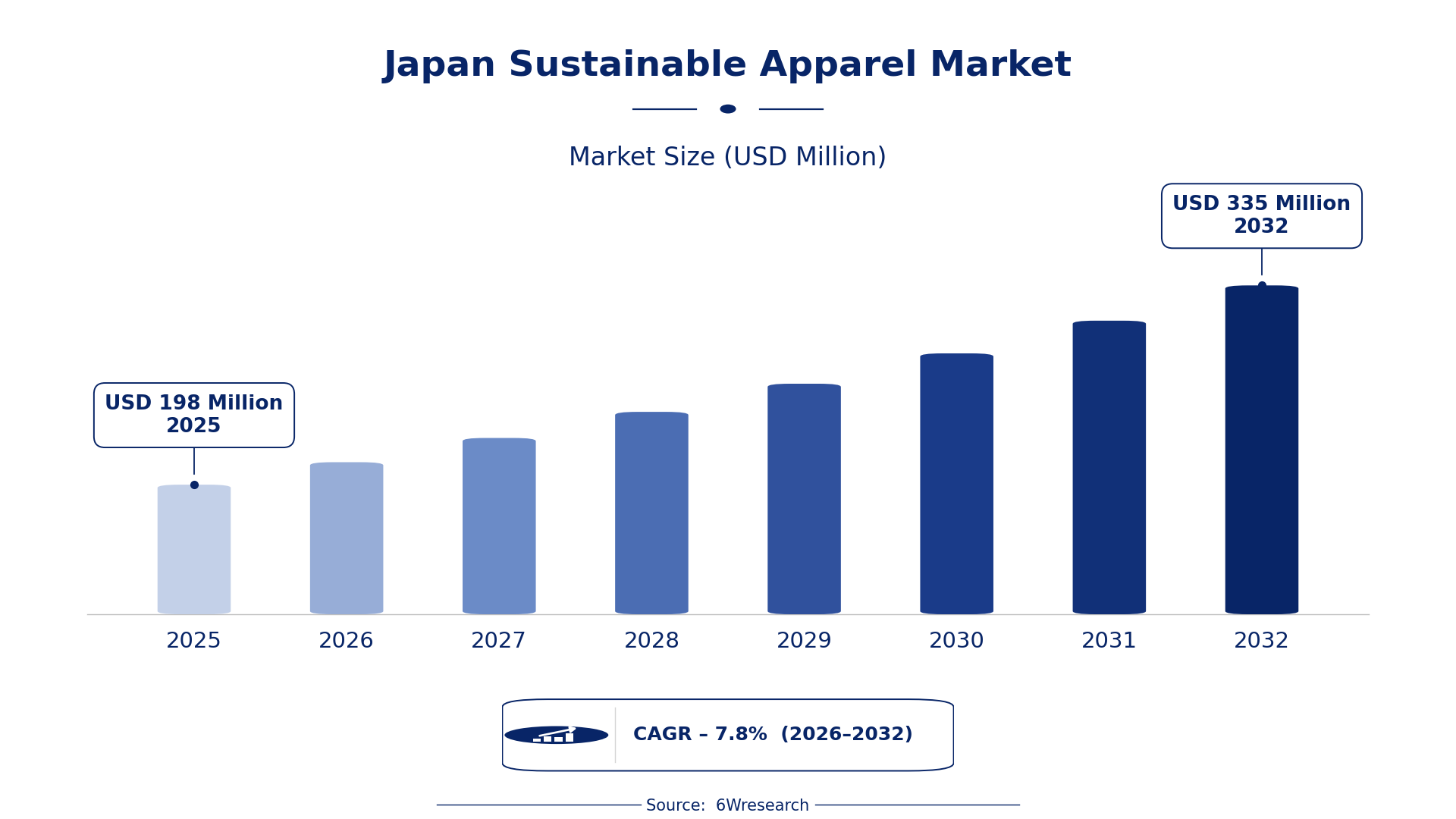
According to 6Wresearch internal database and industry insights, the Japan Sustainable Apparel Market was valued at USD 198 Million in 2025 and is projected to reach USD 335 Million by 2032, growing at a CAGR of approximately 7.8% during 2026–2032.
Japan Sustainable Apparel Market Highlights
| Report Metric | Details |
| Report Name | Japan Sustainable Apparel Market (2026-2032) |
| Market Size 2025 | USD 198 Million |
| Market Size 2032 | USD 335 Million |
| Absolute Growth 2025–2032 | USD 137 Million |
| CAGR 2026–2032 | 7.8% |
| Peak Annual Growth | 9.3% in 2032 |
| Forecast Period | 2026–2032 |
| Historical Data | 2022–2025 |
| Base Year | 2025 |
| Leading Apparel Type, 2025 | Organic Cotton Wear (37% share) |
| Leading Material Source, 2025 | GOTS Certified (40% share) |
| Leading Sustainability Focus, 2025 | Low Water Use (46% share) |
| Leading End User, 2025 | Eco-Friendly Brands (37% share) |
| Fastest-Growing Apparel Type | Recycled Polyester Gear (11.3% CAGR) |
| Fastest-Growing Material Source | PET Bottles (11.6% CAGR) |
| Fastest-Growing Sustainability Focus | Waste Reduction (10.7% CAGR) |
| Fastest-Growing End User | Activewear Companies (10.8% CAGR) |
| Growing Sector | Eco-Friendly Brands |
| Key End Users | Eco-Friendly Brands, Activewear Companies, Niche Apparel Retailers |
Japan Sustainable Apparel Market Year-wise Growth Rate and Key Drivers (2022–2032)
This graph illustrates the annual growth rates of the market from 2022 to 2032, highlighting a steady upward trajectory and projected market expansion over the forecast period.

The yearly estimates that follow link every growth rate to its principal driver, so readers can see why the pace changed in each period.
| Year | Estimated Annual Growth (%) | Market Rationale |
| 2022 | 4.2 | The market showed steady growth with rising consumer awareness of sustainability issues. |
| 2023 | 5.1 | Growth accelerated as eco-friendly brands gained traction in urban areas. |
| 2024 | 4.5 | The market experienced a slowdown as competition intensified among sustainable apparel producers. |
| 2025 | 4.0 | Consumer interest remained strong, but growth rates began to stabilise amid market saturation. |
| 2026 | 6.5 | Investment in sustainable practices is expected to surge, leading to renewed demand from eco-conscious buyers. |
| 2027 | 6.8 | The market will continue to expand as more brands adopt sustainable materials and practices. |
| 2028 | 7.2 | Consumer preferences are projected to shift further towards sustainable options, boosting overall market growth. |
| 2029 | 7.7 | The rise of eco-friendly initiatives among retailers will contribute to an increase in demand. |
| 2030 | 8.3 | Technological advancements in sustainable materials will further stimulate consumer interest and purchases. |
| 2031 | 8.8 | The market will see strong growth as awareness of environmental issues continues to rise. |
| 2032 | 9.3 | Peak growth will be driven by a combination of innovative practices and heightened consumer commitment. |
Note: Market size estimations and growth projections presented in this report are based on 6Wresearch's proprietary forecasting methodology, utilizing the latest available industry data, government publications, and primary research inputs.
Japan Sustainable Apparel Market Synopsis
Sustainable apparel consists of clothing made from eco-friendly materials and processes, including organic fibres and recycled materials. The Japan Sustainable Apparel Market is expanding rapidly as more consumers prioritise ethical fashion and sustainability. The Tokyo region acts as a central hub for sustainable apparel brands, while government initiatives that promote sustainable practices further drive demand. In 2023, eco-friendly brands saw a marked increase in consumer interest, reflecting the shift towards sustainable fashion and the need for responsible production methods.
Market Dynamics Impact Analysis (2026–2032)
| Factor | Type | Impact | Primary Segment Affected |
| Growing consumer interest in eco-friendly materials and practices | Driver | High | Eco-Friendly Brands |
| Increased focus on recycling and waste reduction in production | Driver | High | Recycled Polyester Gear |
| Rising demand for GOTS certified products among consumers | Opportunity | High | GOTS Certified |
| Expansion of sustainable fashion events in major cities | Opportunity | Medium | Niche Apparel Retailers |
| Challenges in sourcing sustainable materials at scale | Restraint | High | Organic Cotton Wear |
| Higher production costs associated with sustainable practices | Restraint | Medium | Recycled Polyester Gear |
| Limited consumer awareness in rural areas affecting sales | Challenge | High | Hemp Clothing |
| Competition from fast fashion brands undermining sustainable efforts | Challenge | Medium | Eco-Friendly Brands |
Evaluation of Drivers in Japan Sustainable Apparel Market (2026–2032)
The table below links each growth driver to the segment it affects and the evidence for it.
| Drivers | Primary Segment Affected | Why It Matters (Evidence) |
| Increased investment in sustainable production technologies | GOTS Certified | This investment leads to higher-quality products that attract eco-conscious consumers, with over 1 million PET bottles recycled annually in Japan. |
| Growing consumer demand for organic materials | Organic Cotton Wear | The rising preference for organic textiles drives purchases, as evidenced by a 20% increase in interest among eco-friendly brands in 2023. |
| Adoption of low water use practices in production | Low Water Use | This practice meets consumer expectations for sustainability, particularly among activewear companies increasingly adopting these methods. |
| Expansion of eco-friendly fashion events | Niche Apparel Retailers | These events raise awareness and encourage purchases, with annual exhibitions like 'Eco-Products 2023' showcasing sustainable innovations. |
| Support from government initiatives promoting sustainable fashion | Waste Reduction | Government backing encourages brands to adopt sustainable practices, contributing to the overall growth of the market. |
Spending rises because investment in sustainable production technologies is increasing, leading to higher-quality products that attract eco-conscious consumers. In 2023, over 1 million PET bottles were recycled annually in Japan, boosting the supply of recycled materials. The growing consumer demand for organic materials drives purchases, evidenced by a significant increase in interest among eco-friendly brands. Adoption of low water use practices in production meets consumer expectations, particularly among activewear companies. The expansion of eco-friendly fashion events raises awareness and encourages purchases, as seen in the annual 'Eco-Products 2023' exhibition showcasing sustainable innovations.
Evaluation of Restraints in Japan Sustainable Apparel Market
The key brakes on demand, and where they bite hardest, are shown below.
| Market Restraint | Primary Segment Affected | Why It Matters (Evidence) |
| Challenges in sourcing sustainable materials at scale | Organic Cotton Wear | Limited availability of organic cotton affects production capabilities, hindering growth potential in the market. |
| Higher production costs associated with sustainable practices | Recycled Polyester Gear | Increased costs can deter some brands from fully committing to sustainable practices, impacting overall market growth. |
| Limited consumer awareness in rural areas affecting sales | Hemp Clothing | Only 30% of consumers in less urbanised regions prioritise sustainability, limiting market reach for niche products. |
| Competition from fast fashion brands undermining sustainable efforts | Eco-Friendly Brands | Fast fashion's lower prices attract consumers, making it difficult for sustainable brands to compete effectively. |
| Consumer hesitation regarding the durability of sustainable products | Bamboo-Based Fabrics | Concerns about the longevity of bamboo fabrics may deter purchases, affecting market expansion. |
Japan Sustainable Apparel Market Challenges
Producers encounter high input costs due to the limited availability of organic materials, leading to a 15% increase in expenses for manufacturers. Stringent GOTS certification requirements impose substantial compliance costs, causing delays of up to six months for new brands entering the market. A shortage of skilled workers in sustainable textile production restricts growth, as only 30% of graduates from relevant programmes focus on eco-friendly practices, limiting innovation for companies. Slow technology adoption hampers efficiency, with just 25% of manufacturers employing advanced eco-friendly production methods, affecting competitiveness in the market.
Trends in the Japan Sustainable Apparel Market
Four trends stand out in the Japan Sustainable Apparel Market.
- Shift towards GOTS Certification: The adoption of GOTS certification has gained momentum since 2023, with many brands pursuing this standard to attract eco-conscious consumers. This trend is illustrated by the 40% market share held by GOTS certified products in 2025.
- Transition from Conventional to Recycled Materials: Since 2023, there has been a clear shift towards using recycled materials in apparel production. This is demonstrated by the recycling of over 1 million PET bottles annually, improving the sustainability of the industry.
- Emergence of Low Water Use Practices: Low water use practices have become increasingly prioritised among activewear companies since 2023. This shift aligns with consumer demand for sustainable production methods, driving market growth.
- Rise of Eco-Friendly Fashion Events: The trend of hosting eco-friendly fashion events has gained traction since 2023, particularly in urban areas like Tokyo. Events such as 'Eco-Products 2023' showcase innovations and engage consumers in sustainable fashion.
Investment Opportunities in the Japan Sustainable Apparel Market
The openings below show where demand in the Japan Sustainable Apparel Market is visible and how suppliers can enter.
- Gap in Sustainable Material Sourcing: With a growing market for sustainable apparel, there is a clear opportunity to invest in sustainable material sourcing. Eco-friendly brands in urban areas are actively seeking reliable suppliers to meet rising demand.
- Investment in Recycling Facilities: The Tokyo region presents a prime opportunity for establishing recycling facilities, given the annual recycling of over 1 million PET bottles. This investment can cater to the growing demand for recycled materials.
- Growing Interest in Bamboo-Based Fabrics: As bamboo-based fabrics gain traction, now is the time to invest in production capabilities. Niche apparel retailers are increasingly looking for sustainable options to meet consumer demand.
- Expansion of Sustainable Fashion Initiatives: The Japanese government's aim to reduce textile waste by 30% by 2030 presents an opportunity for investment in sustainable fashion initiatives. Collaborating with local partners can facilitate market entry.
Government Initiatives in the Japan Sustainable Apparel Market
The Waste Management and Public Cleansing Act mandates responsible waste management practices, impacting sustainable apparel producers by requiring them to manage waste effectively. Compliance with this law is essential for brands aiming to promote eco-friendly production methods, necessitating investments in sustainable practices to align with regulatory standards.
The Ministry of the Environment oversees initiatives that fund eco-friendly textile production. This includes support for projects aimed at reducing textile waste and promoting sustainable practices among manufacturers, with funding directed towards enhancing sustainable production capabilities.
Future Insight of the Japan Sustainable Apparel Market
Technological advancements in recycling will enable the conversion of 2 million PET bottles annually into sustainable fabrics by 2032, boosting supply for producers. Government initiatives will facilitate collaboration among brands and improve consumer awareness of sustainable fashion. The rise of digital platforms will enhance access to sustainable apparel, increasing visibility for eco-conscious brands. Standards like ISO 14001 will become more prevalent, prompting manufacturers to adopt environmentally responsible practices and meet growing consumer demand.
Market Segmentation Analysis
Japan Sustainable Apparel Market report covers a detailed analysis of the following market segments:
By Apparel Type – Organic Cotton Wear Leads, Recycled Polyester Gear Expected to Grow Fastest
According to Saurav Kr Singh, Senior Research Analyst at 6Wresearch, Organic Cotton Wear took 37% of apparel type revenue in 2025, more than any other category. Organic Cotton Wear holds the largest share due to its widespread acceptance among consumers who prefer environmentally friendly materials. This trend is particularly strong in urban areas like Tokyo, where eco-conscious shoppers actively seek organic options. The quickest growth will come from Recycled Polyester Gear, forecast to expand at a CAGR of 11.3% between 2026 and 2032. Recycled Polyester Gear is experiencing rapid growth as consumers become more aware of the importance of recycling and waste reduction in fashion. The sourcing of recycled polyester from over 1 million PET bottles annually in Japan highlights this shift. Suppliers should focus on expanding their offerings in recycled materials to meet the growing consumer demand.
By Material Source – GOTS Certified Leads, PET Bottles Expected to Grow Fastest
GOTS Certified accounted for 40% of the market by material source in 2025. GOTS Certified materials hold a prominent position due to their recognition as a reliable standard for organic textiles, appealing to consumers who value sustainability. This certification is widely acknowledged in Japan, which boosts consumer trust in their purchasing decisions. PET Bottles are projected to grow fastest, at a CAGR of 11.6% during 2026–2032. PET Bottles are gaining traction as a rapidly growing source for recycled polyester, spurred by the heightened focus on recycling initiatives within the apparel sector. The backing from the government for eco-friendly textile production further propels this growth. Suppliers should focus on offering GOTS Certified materials to meet the rising consumer demand for sustainable options.
By Sustainability Focus – Low Water Use Leads, Waste Reduction Expected to Grow Fastest
In 2025, Low Water Use led the sustainability focus split with a 46% share. Low Water Use practices are leading the market as manufacturers adopt these methods to address environmental concerns associated with water consumption in production. This focus is particularly relevant given Japan's commitment to sustainable practices in the fashion industry. Waste Reduction is set to record the highest CAGR in this split, 10.7% over 2026–2032. Waste Reduction strategies are rapidly gaining traction as they become integral to sustainable apparel manufacturing, reflecting a broader industry shift towards minimising environmental impact. The government's goal to reduce textile waste by 30% by 2030 reinforces this focus. Suppliers must implement waste reduction initiatives to remain competitive in the sustainable apparel market.
By End User – Eco-Friendly Brands Lead, Activewear Companies Expected to Grow Fastest
Eco-Friendly Brands held 37% of the Japan Sustainable Apparel Market by end user in 2025. Eco-Friendly Brands hold the largest market share due to their direct engagement with consumers seeking sustainable apparel. Their commitment to ethical fashion and environmental responsibility aligns with the values of a growing segment of Japanese shoppers. Over 2026–2032, Activewear Companies are expected to post the fastest growth, at a CAGR of 10.8%. Activewear Companies are experiencing rapid growth as they adopt sustainable materials in response to consumer demand for eco-friendly fitness apparel. This trend is exemplified by the increasing interest in sustainable activewear, which is becoming a priority for health-conscious buyers. Suppliers should focus on partnerships with activewear companies to leverage the increasing demand for sustainable products in the apparel market.
Key Attractiveness of the Report
- 10 Years of Market Numbers
- Historical Data Starting from 2022 to 2025
- Base Year 2025
- Forecast Data until 2032
- Key Performance Indicators Impacting the Market
- Major Upcoming Developments and Projects
Key Highlights of the Report:
- Japan Sustainable Apparel Market Outlook
- Market Size of Japan Sustainable Apparel Market, 2025
- Forecast of Japan Sustainable Apparel Market, 2032
- Historical Data and Forecast of Japan Sustainable Apparel Revenues & Volume for the Period 2022-2032F
- Japan Sustainable Apparel Market Trend Evolution
- Japan Sustainable Apparel Market Drivers and Challenges
- Japan Sustainable Apparel Price Trends
- Japan Sustainable Apparel Porter's Five Forces
- Japan Sustainable Apparel Industry Life Cycle
- Historical Data and Forecast of Japan Sustainable Apparel Market Revenues & Volume By Apparel Type for the Period 2022-2032F
- Historical Data and Forecast of Japan Sustainable Apparel Market Revenues & Volume By Organic Cotton Wear for the Period 2022-2032F
- Historical Data and Forecast of Japan Sustainable Apparel Market Revenues & Volume By Recycled Polyester Gear for the Period 2022-2032F
- Historical Data and Forecast of Japan Sustainable Apparel Market Revenues & Volume By Hemp Clothing for the Period 2022-2032F
- Historical Data and Forecast of Japan Sustainable Apparel Market Revenues & Volume By Bamboo-Based Fabrics for the Period 2022-2032F
- Historical Data and Forecast of Japan Sustainable Apparel Market Revenues & Volume By Material Source for the Period 2022-2032F
- Historical Data and Forecast of Japan Sustainable Apparel Market Revenues & Volume By GOTS Certified for the Period 2022-2032F
- Historical Data and Forecast of Japan Sustainable Apparel Market Revenues & Volume By PET Bottles for the Period 2022-2032F
- Historical Data and Forecast of Japan Sustainable Apparel Market Revenues & Volume By Natural Fiber for the Period 2022-2032F
- Historical Data and Forecast of Japan Sustainable Apparel Market Revenues & Volume By Renewable Resource for the Period 2022-2032F
- Historical Data and Forecast of Japan Sustainable Apparel Market Revenues & Volume By Sustainability Focus for the Period 2022-2032F
- Historical Data and Forecast of Japan Sustainable Apparel Market Revenues & Volume By Low Water Use for the Period 2022-2032F
- Historical Data and Forecast of Japan Sustainable Apparel Market Revenues & Volume By Waste Reduction for the Period 2022-2032F
- Historical Data and Forecast of Japan Sustainable Apparel Market Revenues & Volume By Biodegradable for the Period 2022-2032F
- Historical Data and Forecast of Japan Sustainable Apparel Market Revenues & Volume By Antimicrobial for the Period 2022-2032F
- Historical Data and Forecast of Japan Sustainable Apparel Market Revenues & Volume By End User for the Period 2022-2032F
- Historical Data and Forecast of Japan Sustainable Apparel Market Revenues & Volume By Eco-Friendly Brands for the Period 2022-2032F
- Historical Data and Forecast of Japan Sustainable Apparel Market Revenues & Volume By Activewear Companies for the Period 2022-2032F
- Historical Data and Forecast of Japan Sustainable Apparel Market Revenues & Volume By Niche Apparel Retailers for the Period 2022-2032F
- Historical Data and Forecast of Japan Sustainable Apparel Market Revenues & Volume By Sustainable Fashion Labels for the Period 2022-2032F
- Japan Sustainable Apparel Import Export Trade Statistics
- Market Opportunity Assessment By Apparel Type
- Market Opportunity Assessment By Material Source
- Market Opportunity Assessment By Sustainability Focus
- Market Opportunity Assessment By End User
- Japan Sustainable Apparel Top Companies Market Share
- Japan Sustainable Apparel Competitive Benchmarking By Technical and Operational Parameters
- Japan Sustainable Apparel Company Profiles
- Japan Sustainable Apparel Key Strategic Recommendations
Market Covered
The report covers the following segments.
By Apparel Type
- Organic Cotton Wear
- Recycled Polyester Gear
- Hemp Clothing
- Bamboo-Based Fabrics
By Material Source
- GOTS Certified
- PET Bottles
- Natural Fiber
- Renewable Resource
By Sustainability Focus
- Low Water Use
- Waste Reduction
- Biodegradable
- Antimicrobial
By End User
- Eco-Friendly Brands
- Activewear Companies
- Niche Apparel Retailers
- Sustainable Fashion Labels































