Japan Sustainable Cosmetics Market Size & Growth Rate
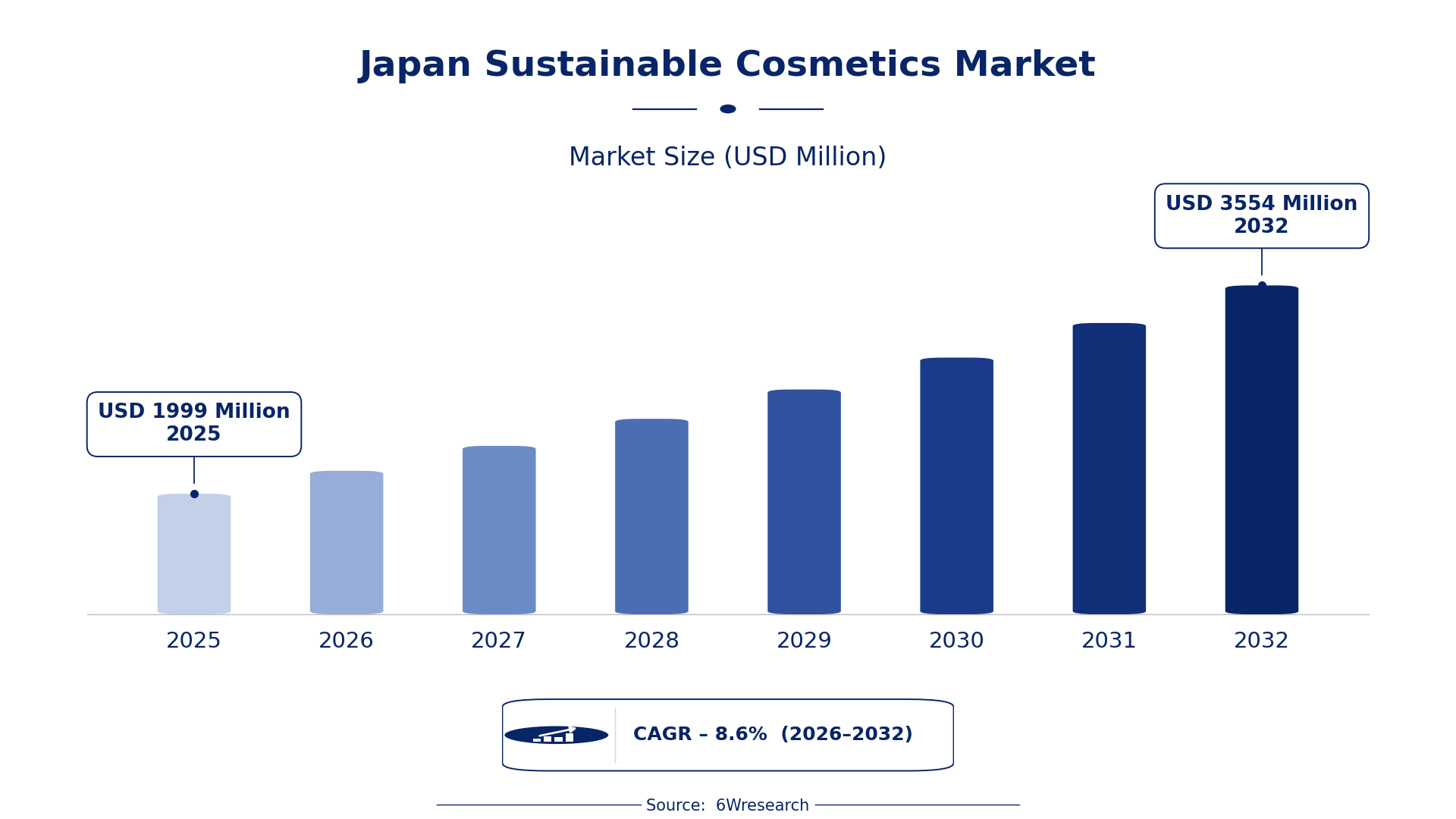
According to 6Wresearch internal database and industry insights, the Japan Sustainable Cosmetics Market was valued at USD 1,999 Million in 2025 and is projected to reach USD 3,554 Million by 2032, growing at a CAGR of approximately 8.6% during 2026–2032.
Japan Sustainable Cosmetics Market Highlights
| Report Metric | Details |
| Report Name | Japan Sustainable Cosmetics Market (2026-2032) |
| Market Size 2025 | USD 1,999 Million |
| Market Size 2032 | USD 3,554 Million |
| Absolute Growth 2025–2032 | USD 1,555 Million |
| CAGR 2026–2032 | 8.6% |
| Peak Annual Growth | 9.6% in 2032 |
| Forecast Period | 2026–2032 |
| Historical Data | 2022–2025 |
| Base Year | 2025 |
| Leading Product Type, 2025 | Lipsticks (43% share) |
| Leading Certification, 2025 | Cruelty-Free (35% share) |
| Leading Packaging Type, 2025 | Refillable/Glass Tubes (49% share) |
| Leading End User, 2025 | Natural Beauty Brands (51% share) |
| Fastest-Growing Product Type | Moisturizers (12.1% CAGR) |
| Fastest-Growing Certification | Vegan Certified (11.7% CAGR) |
| Fastest-Growing Packaging Type | Biodegradable Tubes (12.6% CAGR) |
| Fastest-Growing End User | Sustainable Makeup Lines (11.6% CAGR) |
| Growing Sector | Sustainable Makeup Lines |
| Key End Users | Natural Beauty Brands, Clean Cosmetics Retailers, Sustainable Makeup Lines |
Japan Sustainable Cosmetics Market Year-wise Growth Rate and Key Drivers (2022–2032)
This graph illustrates the annual growth rates of the market from 2022 to 2032, highlighting a steady upward trajectory and projected market expansion over the forecast period.
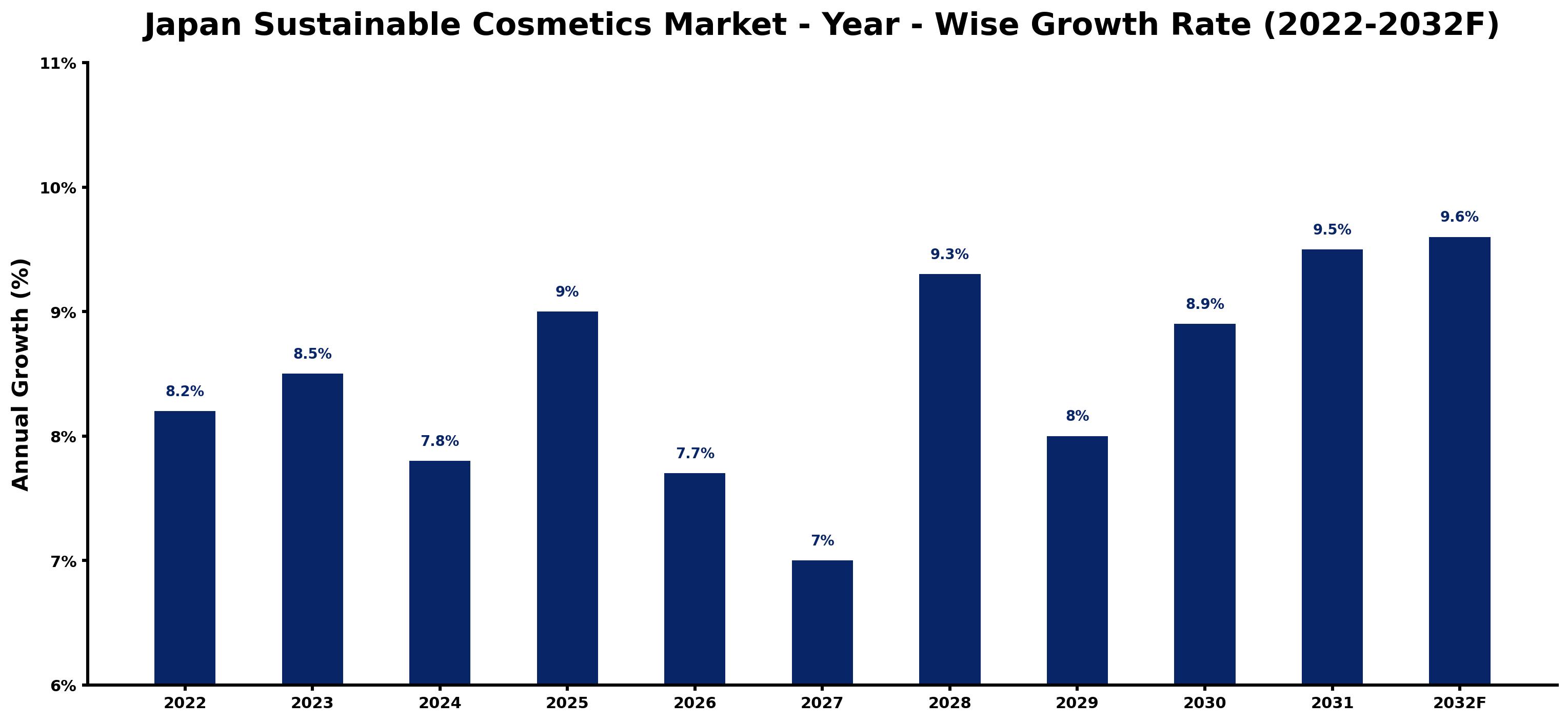
The yearly estimates that follow link every growth rate to its principal driver, so readers can see why the pace changed in each period.
| Year | Estimated Annual Growth (%) | Market Rationale |
| 2022 | 8.2 | The market experienced steady growth with increasing consumer interest in eco-friendly products. |
| 2023 | 8.5 | Growth accelerated as more brands launched sustainable offerings and consumers sought eco-friendly options. |
| 2024 | 7.8 | Growth slowed slightly due to market saturation, yet demand for sustainable cosmetics remained strong. |
| 2025 | 9.0 | A surge in new product launches contributed to faster growth, attracting more consumers to sustainable choices. |
| 2026 | 7.7 | Growth is expected to slow again as competition intensifies, but eco-conscious consumers will continue to drive demand. |
| 2027 | 7.0 | The market is projected to see a further slowdown as brands adjust strategies to maintain consumer interest. |
| 2028 | 9.3 | Growth is expected to rebound with new packaging solutions appealing to environmentally aware buyers. |
| 2029 | 8.0 | A slight slowdown is anticipated as consumers become more discerning about sustainable claims. |
| 2030 | 8.9 | Growth is projected to pick up again as brands improve transparency in ingredient sourcing, attracting more buyers. |
| 2031 | 9.5 | Continued consumer education on sustainability will lead to increased demand for eco-friendly cosmetics. |
| 2032 | 9.6 | The market is expected to peak as consumer awareness and demand for sustainable products reach new heights. |
Note: Market size estimations and growth projections presented in this report are based on 6Wresearch's proprietary forecasting methodology, utilizing the latest available industry data, government publications, and primary research inputs.
Japan Sustainable Cosmetics Market Synopsis
Sustainable cosmetics utilise eco-friendly ingredients and practices aimed at minimising environmental impact. These products are primarily used in personal care and beauty routines, promoting a sustainable lifestyle. The Japan Sustainable Cosmetics Market is expanding due to rising consumer awareness of environmental issues, with over 60% of consumers preferring eco-friendly certifications. The Tokyo region serves as a major hub for sustainable beauty brands, while the growing number of vegan certified products reflects the increasing demand for ethical cosmetics.
Market Dynamics Impact Analysis (2026–2032)
| Factor | Type | Impact | Primary Segment Affected |
| Growing consumer preference for eco-friendly products | Driver | High | Sustainable Makeup Lines |
| Increase in vegan certified products | Driver | High | Vegan Certified |
| Rising demand for refillable packaging | Opportunity | Medium | Refillable/Glass Tubes |
| Expansion of sustainable beauty brands in urban areas | Opportunity | Medium | Natural Beauty Brands |
| Competition among brands leading to market saturation | Restraint | High | Sustainable Makeup Lines |
| Consumer scepticism towards sustainability claims | Restraint | High | Cruelty-Free |
| Supply chain disruptions affecting product availability | Challenge | Medium | Moisturizers |
| Rising costs of sustainable ingredients | Challenge | Medium | Foundations |
Evaluation of Drivers in Japan Sustainable Cosmetics Market (2026–2032)
Demand rests on the following drivers, each shown with the segment it touches most.
| Drivers | Primary Segment Affected | Why It Matters (Evidence) |
| Increased consumer awareness of environmental issues | Sustainable Makeup Lines | Over 60% of consumers prefer eco-friendly certifications, driving demand for sustainable products. |
| Growth in vegan certified products | Vegan Certified | A 25% increase in vegan certified products from 2022 to 2023 indicates rising consumer interest. |
| Demand for refillable packaging options | Refillable/Glass Tubes | In 2023, 30% of cosmetics retailers offered refillable packaging, appealing to eco-conscious consumers. |
| Expansion of sustainable beauty brands | Natural Beauty Brands | The Tokyo region is a major hub for sustainable beauty brands, increasing market visibility. |
| Launch of new sustainable product lines | Sustainable Makeup Lines | 40% of new cosmetic launches in 2023 featured sustainable packaging, attracting more buyers. |
Purchasing is picking up as consumer awareness of environmental issues has intensified over the past five years. In 2023, over 60% of consumers preferred eco-friendly certifications, prompting brands to innovate. The number of vegan certified products increased by 25% from 2022 to 2023, reflecting rising demand. Retailers are responding by offering 30% refillable packaging options, appealing to eco-conscious buyers. This shift towards sustainability is driving growth in the market, particularly for sustainable makeup lines.
Evaluation of Restraints in Japan Sustainable Cosmetics Market
These are the pressures that could keep growth below its potential.
| Market Restraint | Primary Segment Affected | Why It Matters (Evidence) |
| Market saturation leading to intense competition | Sustainable Makeup Lines | Market saturation has made it difficult for brands to differentiate their products, impacting sales. |
| Consumer scepticism towards sustainability claims | Cruelty-Free | Scepticism about the authenticity of sustainability claims can deter potential buyers. |
| Supply chain disruptions impacting ingredient availability | Moisturizers | Supply chain disruptions have made sourcing sustainable ingredients more challenging. |
| Rising costs of sustainable ingredients | Foundations | Higher costs associated with sustainable ingredients can limit profit margins for producers. |
| Limited consumer understanding of eco-certifications | Vegan Certified | Many consumers lack knowledge about eco-certifications, leading to confusion and hesitancy. |
Japan Sustainable Cosmetics Market Challenges
Japan's sustainable cosmetics market is valued at approximately 300 billion yen in 2023, yet producers face high costs due to the sourcing of eco-friendly ingredients, inflating production expenses by up to 20%. Buyers experience delays in product availability as over 60% of consumers prefer eco-friendly certifications, compelling brands to invest more time in compliance processes. Skills shortages hinder producers, as the demand for sustainable practices outpaces the availability of trained professionals, resulting in a slower product development cycle. Increased competition from new entrants, with 40% of new launches featuring sustainable packaging, pressures existing brands to innovate rapidly or risk losing market share.
Trends in the Japan Sustainable Cosmetics Market
Below are the shifts with the largest effect on the Japan Sustainable Cosmetics Market.
- Rise in Refillable Packaging: In 2023, 30% of cosmetics retailers in Japan offered refillable packaging options, reflecting a growing trend towards sustainability. This shift appeals to eco-conscious consumers who prefer reducing waste.
- Increase in Vegan Certified Products: The number of vegan certified products increased by 25% from 2022 to 2023, indicating a shift in consumer preferences towards ethical cosmetics. This trend is reshaping product offerings in the market.
- Growing Preference for Eco-Friendly Certifications: Since 2023, over 60% of consumers prefer products with eco-friendly certifications, driving brands to adopt sustainable practices. This trend is essential for attracting environmentally aware buyers.
- Expansion of Sustainable Makeup Lines: Sustainable makeup lines are expected to grow by 15% annually through 2025, highlighting a shift in consumer demand. This growth is driven by increasing awareness of environmental issues.
Investment Opportunities in the Japan Sustainable Cosmetics Market
The opportunities below stand out in the Japan Sustainable Cosmetics Market for new entrants and existing suppliers.
- Ideal Timing for Sustainable Product Launches: With a market valued at approximately 300 billion yen in 2023, now is an ideal time to invest in sustainable cosmetics. Natural beauty brands are actively seeking new products to meet consumer demand.
- Entry through Local Partnerships: Forming joint ventures with local sustainable beauty brands can facilitate market entry. The Tokyo region is a key area for collaboration, enhancing visibility and distribution.
- Focus on Eco-Friendly Packaging Solutions: The increasing demand for refillable packaging presents an opportunity for suppliers to innovate. Clean cosmetics retailers are looking for sustainable packaging options to attract eco-conscious consumers.
- Investment in Vegan Certified Products: The rise in vegan certified products offers a lucrative opportunity for investment. Brands can target natural beauty brands that are expanding their vegan product lines.
Government Initiatives in the Japan Sustainable Cosmetics Market
The Standards for Cosmetics established under the PMD Act in 2000 require that all cosmetics sold in Japan adhere to strict ingredient regulations. This measure ensures that products are safe for consumers and promotes transparency in ingredient sourcing, benefiting buyers who seek reliable options.
The Plastic Resource Circulation Act, enacted in 2021, encourages the reduction, reuse, and recycling of plastics in the cosmetics industry. This law supports sustainable practices, enabling brands to innovate in packaging while meeting consumer demand for eco-friendly products.
Future Insight of the Japan Sustainable Cosmetics Market
The investment pipeline for sustainable cosmetics will expand, driven by government initiatives and rising consumer demand for eco-friendly products. This shift will lead to a rise in the number of new cosmetic launches featuring sustainable packaging, with 40% already in 2023. The adoption of ISO 16128 will standardise formulations, promoting transparency and consumer trust. By 2032, the market will likely see a transformation as more brands adopt refillable packaging options, currently offered by 30% of retailers, pushing suppliers to align with these changing preferences.
Market Segmentation Analysis
Japan Sustainable Cosmetics Market report covers a detailed analysis of the following market segments:
By Product Type – Lipsticks Lead, Moisturizers Expected to Grow Fastest
According to Saurav Kr Singh, Senior Research Analyst at 6Wresearch, Lipsticks accounted for 43% of the market by product type in 2025. Lipsticks hold the largest share due to their popularity for everyday use among consumers, particularly in urban areas like Tokyo. This segment benefits from a strong installed base, with many brands offering a variety of eco-friendly options. The quickest growth will come from Moisturizers, forecast to expand at a CAGR of 12.1% between 2026 and 2032. Moisturizers are experiencing rapid growth as they are fundamental for skincare, with a projected annual increase of 15% through 2025. This growth is driven by rising consumer awareness of the importance of hydration and skin health. Suppliers should focus on expanding their moisturiser offerings to capture the growing demand.
By Certification – Cruelty-Free Leads, Vegan Certified Expected to Grow Fastest
Cruelty-Free took 35% of certification revenue in 2025, more than any other category. Cruelty-Free certification leads the market as it is a direct concern for consumers prioritising ethical considerations in their purchases. The increasing number of brands adopting this certification reflects a strong commitment to humane practices. Vegan Certified is set to record the highest CAGR in this split, 11.7% over 2026–2032. Vegan Certified products are growing quickly as they are increasingly sought after by consumers who are more conscious of their environmental impact. This trend is supported by a 25% increase in vegan certified products from 2022 to 2023. Brands should consider obtaining vegan certifications to align with consumer preferences and boost market presence.
By Packaging Type – Refillable/Glass Tubes Lead, Biodegradable Tubes Expected to Grow Fastest
Refillable/Glass Tubes held 49% of the Japan Sustainable Cosmetics Market by packaging type in 2025. Refillable/Glass Tubes hold the largest market share due to their appeal to eco-conscious consumers seeking sustainable options. The presence of 30% of retailers offering refillable packaging illustrates a clear consumer preference for these solutions. Biodegradable Tubes are projected to grow fastest, at a CAGR of 12.6% during 2026–2032. Biodegradable Tubes are experiencing rapid growth as they resonate with consumers prioritising eco-friendly materials. This surge is part of a larger movement within the cosmetics industry aimed at minimising plastic waste. Suppliers must focus on developing biodegradable packaging to align with the increasing consumer demand for sustainable products.
By End User – Natural Beauty Brands Lead, Sustainable Makeup Lines Expected to Grow Fastest
The largest end user category in 2025 was Natural Beauty Brands, at 51% of revenue. Natural Beauty Brands hold the largest share due to their role as primary producers of sustainable cosmetics, appealing to environmentally conscious consumers. Their established presence in the Tokyo region and commitment to eco-friendly practices contribute to their strong market position. Over 2026–2032, Sustainable Makeup Lines are expected to post the fastest growth, at a CAGR of 11.6%. Sustainable Makeup Lines are experiencing rapid growth as they align with the increasing consumer preference for eco-conscious beauty products, with a projected annual growth rate of 15% through 2025. This trend reflects a broader shift towards sustainability in the cosmetics industry. Suppliers must focus on developing and promoting sustainable makeup products to meet the rising demand for eco-friendly cosmetics.
Key Attractiveness of the Report
- 10 Years of Market Numbers
- Historical Data Starting from 2022 to 2025
- Base Year 2025
- Forecast Data until 2032
- Key Performance Indicators Impacting the Market
- Major Upcoming Developments and Projects
Key Highlights of the Report:
- Japan Sustainable Cosmetics Market Outlook
- Market Size of Japan Sustainable Cosmetics Market, 2025
- Forecast of Japan Sustainable Cosmetics Market, 2032
- Historical Data and Forecast of Japan Sustainable Cosmetics Revenues & Volume for the Period 2022-2032F
- Japan Sustainable Cosmetics Market Trend Evolution
- Japan Sustainable Cosmetics Market Drivers and Challenges
- Japan Sustainable Cosmetics Price Trends
- Japan Sustainable Cosmetics Porter's Five Forces
- Japan Sustainable Cosmetics Industry Life Cycle
- Historical Data and Forecast of Japan Sustainable Cosmetics Market Revenues & Volume By Product Type for the Period 2022-2032F
- Historical Data and Forecast of Japan Sustainable Cosmetics Market Revenues & Volume By Lipsticks for the Period 2022-2032F
- Historical Data and Forecast of Japan Sustainable Cosmetics Market Revenues & Volume By Foundations for the Period 2022-2032F
- Historical Data and Forecast of Japan Sustainable Cosmetics Market Revenues & Volume By Eyeliners for the Period 2022-2032F
- Historical Data and Forecast of Japan Sustainable Cosmetics Market Revenues & Volume By Moisturizers for the Period 2022-2032F
- Historical Data and Forecast of Japan Sustainable Cosmetics Market Revenues & Volume By Certification for the Period 2022-2032F
- Historical Data and Forecast of Japan Sustainable Cosmetics Market Revenues & Volume By Vegan Certified for the Period 2022-2032F
- Historical Data and Forecast of Japan Sustainable Cosmetics Market Revenues & Volume By Cruelty-Free for the Period 2022-2032F
- Historical Data and Forecast of Japan Sustainable Cosmetics Market Revenues & Volume By Organic Pigments for the Period 2022-2032F
- Historical Data and Forecast of Japan Sustainable Cosmetics Market Revenues & Volume By EWG Verified for the Period 2022-2032F
- Historical Data and Forecast of Japan Sustainable Cosmetics Market Revenues & Volume By Packaging Type for the Period 2022-2032F
- Historical Data and Forecast of Japan Sustainable Cosmetics Market Revenues & Volume By Refillable/Glass Tubes for the Period 2022-2032F
- Historical Data and Forecast of Japan Sustainable Cosmetics Market Revenues & Volume By Biodegradable Tubes for the Period 2022-2032F
- Historical Data and Forecast of Japan Sustainable Cosmetics Market Revenues & Volume By Paper-Based Pencils for the Period 2022-2032F
- Historical Data and Forecast of Japan Sustainable Cosmetics Market Revenues & Volume By Glass Jars for the Period 2022-2032F
- Historical Data and Forecast of Japan Sustainable Cosmetics Market Revenues & Volume By End User for the Period 2022-2032F
- Historical Data and Forecast of Japan Sustainable Cosmetics Market Revenues & Volume By Natural Beauty Brands for the Period 2022-2032F
- Historical Data and Forecast of Japan Sustainable Cosmetics Market Revenues & Volume By Clean Cosmetics Retailers for the Period 2022-2032F
- Historical Data and Forecast of Japan Sustainable Cosmetics Market Revenues & Volume By Sustainable Makeup Lines for the Period 2022-2032F
- Historical Data and Forecast of Japan Sustainable Cosmetics Market Revenues & Volume By Skincare Specialists for the Period 2022-2032F
- Japan Sustainable Cosmetics Import Export Trade Statistics
- Market Opportunity Assessment By Product Type
- Market Opportunity Assessment By Certification
- Market Opportunity Assessment By Packaging Type
- Market Opportunity Assessment By End User
- Japan Sustainable Cosmetics Top Companies Market Share
- Japan Sustainable Cosmetics Competitive Benchmarking By Technical and Operational Parameters
- Japan Sustainable Cosmetics Company Profiles
- Japan Sustainable Cosmetics Key Strategic Recommendations
Market Covered
Coverage by segment is as follows.
By Product Type
- Lipsticks
- Foundations
- Eyeliners
- Moisturizers
By Certification
- Vegan Certified
- Cruelty-Free
- Organic Pigments
- EWG Verified
By Packaging Type
- Refillable/Glass Tubes
- Biodegradable Tubes
- Paper-Based Pencils
- Glass Jars
By End User
- Natural Beauty Brands
- Clean Cosmetics Retailers
- Sustainable Makeup Lines
- Skincare Specialists































